Henry V at Agincourt – St. Crispin’s Day and the triumph of the few!
On a muddy field in northern France, near the village of Agincourt, Henry V’s weary English army faced overwhelming odds. Against the flower of French chivalry, the longbow and the constricted terrain would decide the fate of kingdoms — and create one of the most enduring legends of the Hundred Years’ War.
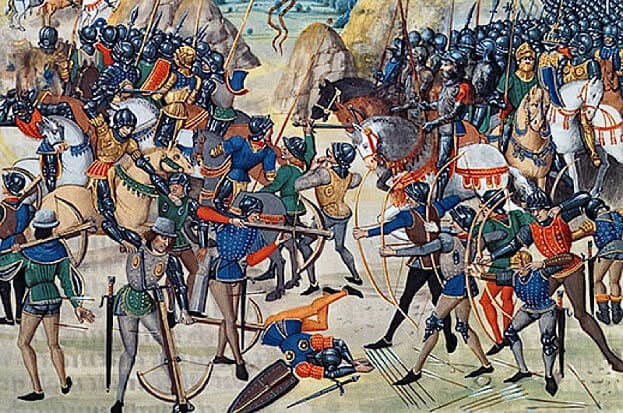
Key facts
Google Map – Location of the Battle of Agincourt
🧭🥾 Walking the Battlefield
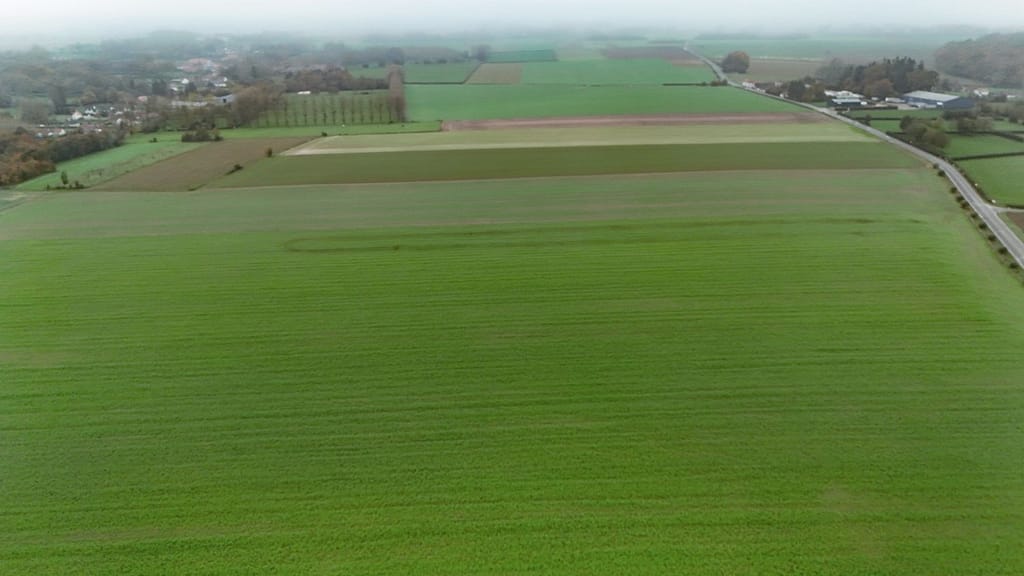
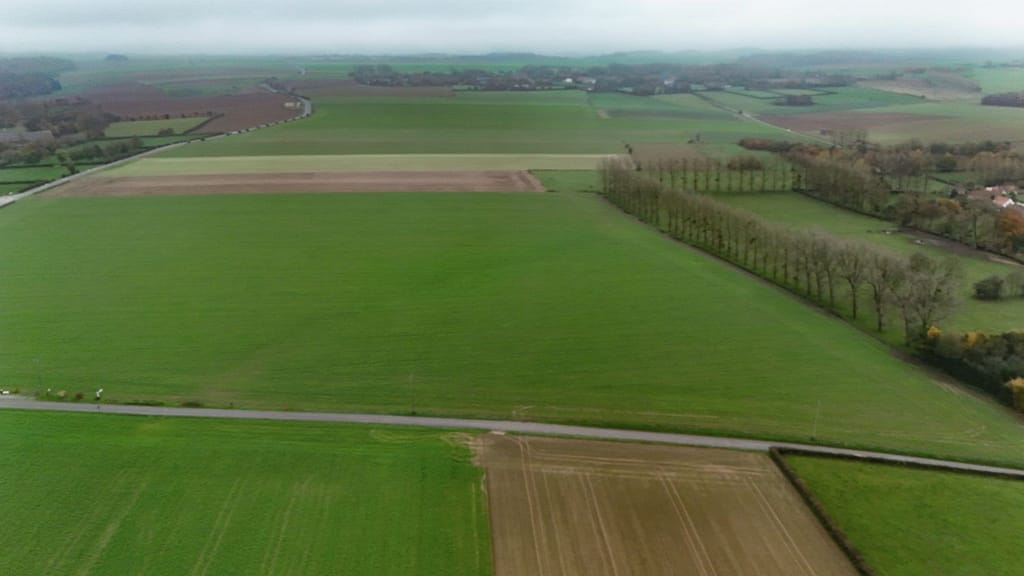
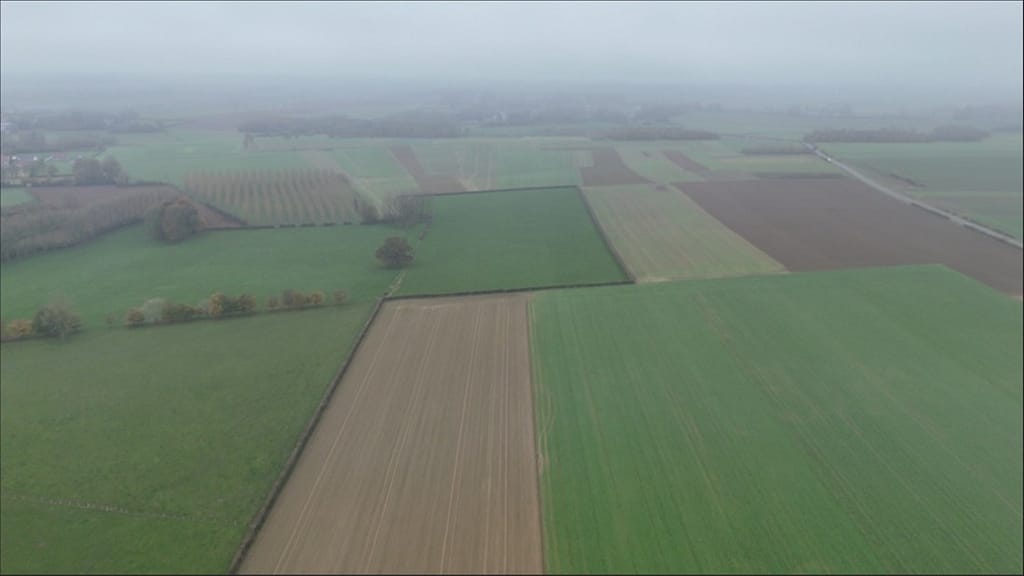
I explored the site of the Battle of Agincourt in November 2024, equipped with both medieval and secondary accounts, maps, diagrams, and my own pre-prepared GIS mapping tools. The terrain has changed little since the battle. The woods of Azincourt, Tramecourt and Maisoncelles are still roughly where they were in 1415, and still define the battlefield. The battlefield is astride the road Henry took from Harfleur to Calais, so the French knew he must come that way. From the French side of the battle site, the terrain and the flanking forests act like a funnel, progressively constricting the French frontage as they advanced southwards against the English line.
There are a few alternate theories as to the battle site, but all rely on weak threads of evidence (eg, Cassini drew a map in 1744 that showed the battle site further west) or a lack of evidence (eg, the lack of arrowheads or other evidence at the site proves the battle didn’t happen here). The people who fought at Agincourt say that it happened right here, between the forest of Azincourt and the forest of Tramecourt.
We few, we happy few, we band of brothers;
Shakespeare ‘Henry V’
For he to-day that sheds his blood with me
Shall be my brother; be he ne’er so vile,
This day shall gentle his condition:
And gentlemen in England now a-bed
Shall think themselves accursed they were not here,
And hold their manhoods cheap whiles any speaks
That fought with us upon Saint Crispin’s day.
Strategic context: the Hundred Years War
The Battle of Agincourt (25 October 1415) was fought in the middle phase of the Hundred Years’ War, a conflict rooted in dynastic claims, feudal allegiances, and the economic rivalry between England and France. By 1415, the war had been grinding on for nearly 80 years, marked by alternating English successes and French recoveries.
Henry V’s aims
Henry V had ascended to the English throne in 1413. His legitimacy was still shadowed by the way his father, Henry IV, had usurped Richard II. A successful foreign war was both a means of uniting his nobles behind him and of strengthening his claim to rule. The English monarchy also had long-standing claims to the French crown, derived from Edward III’s maternal line. Henry revived these claims not just as a bargaining tool but as a central plank of his kingship.
In the summer of 1415, Henry led a major expedition to France, intending to demonstrate English strength and force concessions. His initial goal was to secure a bridgehead in Normandy, beginning with the port of Harfleur.
The Siege of Harfleur
Henry landed at Chef-de-Caux in mid-August with around 12,000 men — a mixture of men-at-arms and archers, organised into companies under captains bound by indenture contracts. The siege of Harfleur lasted more than a month. The garrison held out stubbornly, and dysentery swept through the English army. By the time the town fell on 22 September, perhaps a third of Henry’s force was dead or incapacitated.
Despite these losses, Henry refused the option to return to England. Instead, he conceived a bold march across northern France to Calais, the last great English enclave on the continent. His aim was to demonstrate that, even weakened, the English could move at will across enemy territory — a challenge to French prestige and a test of the chivalric code.
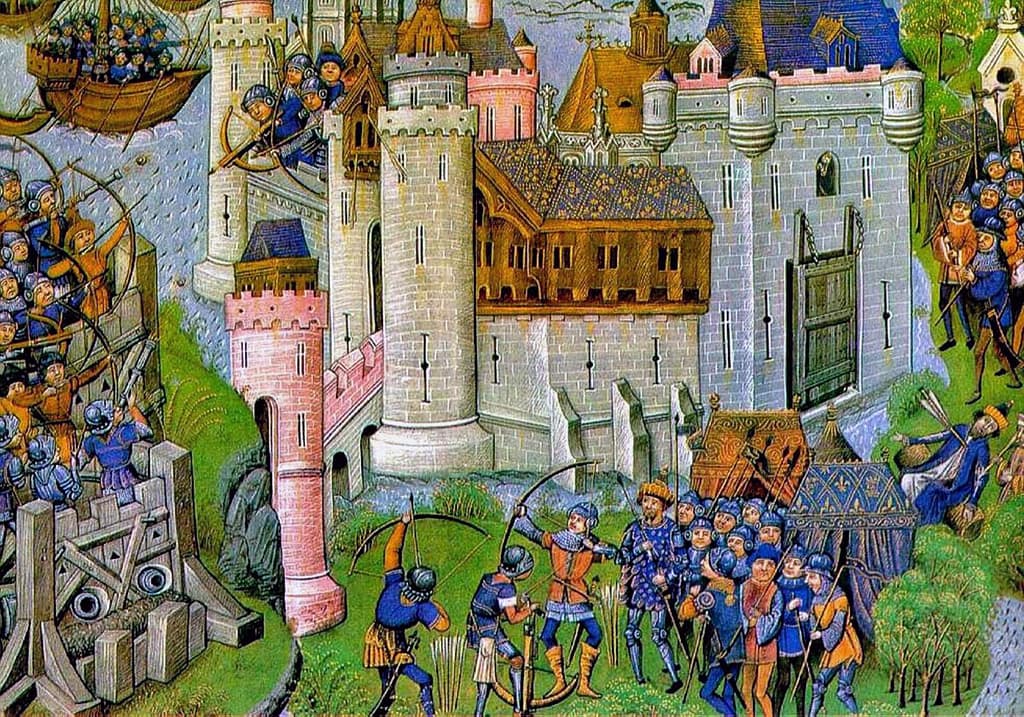
French strategy
Internal divisions weakened the French crown at this time. King Charles VI suffered from recurrent bouts of mental illness, leaving rival factions to compete for influence: the Armagnacs and the Burgundians. This disunity crippled French strategic direction. Still, when news came of Henry’s march, nobles across France rallied to defend their kingdom.
The French plan was simple: raise a massive feudal host, concentrate superior numbers, and block Henry’s advance on Calais. By early October the English were shadowed by French forces. After weeks of pursuit, the two armies finally confronted each other near the small village of Agincourt, on the road between Abbeville and Calais.
Terrain setting
The chosen ground was narrow — a shallow valley about 900 yards wide, flanked by the woods of Tramecourt to the east and Agincourt to the west. This constrained the French frontage and nullified the French advantage in numbers. The terrain forced the French men-at-arms into deep, narrow columns. Recent rains had turned the ploughed fields into mud, compounding the difficulty of advancing in heavy armour.
The stage was thus set for a decisive clash: a reduced but disciplined English army led by a determined king, facing a numerically superior but faction-ridden French host on ground that would amplify every tactical mistake.
Opposing Forces: English archers vs French Men-at-Arms
 English Army
 English Army
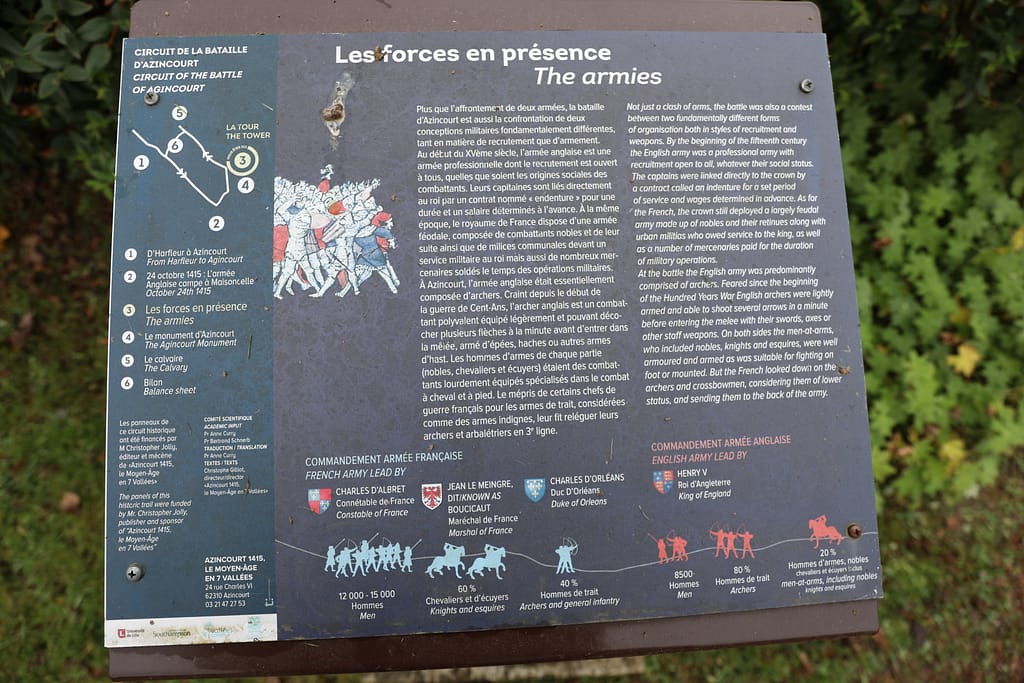
Henry V’s army was much reduced by the autumn march to Calais, numbering perhaps 6,000–8,500 men. Its composition reflected the typical English order of war in the late Hundred Years’ War:
- Men-at-Arms (1,500–2,000): Knights and squires, dismounted to fight on foot in the continental style, heavily armoured with plate and mail. They formed the solid centre of the line, arranged in three “battles” (divisions) under the King, the Duke of York, and Lord Camoys.
- Archers (5,000–6,000): The backbone of the English host. Each was equipped with the longbow, capable of 10–12 aimed shots per minute and a maximum range exceeding 250 yards. Archers carried mallets and knives for close fighting and were protected by wooden stakes (“palings”) driven into the ground against cavalry charges.
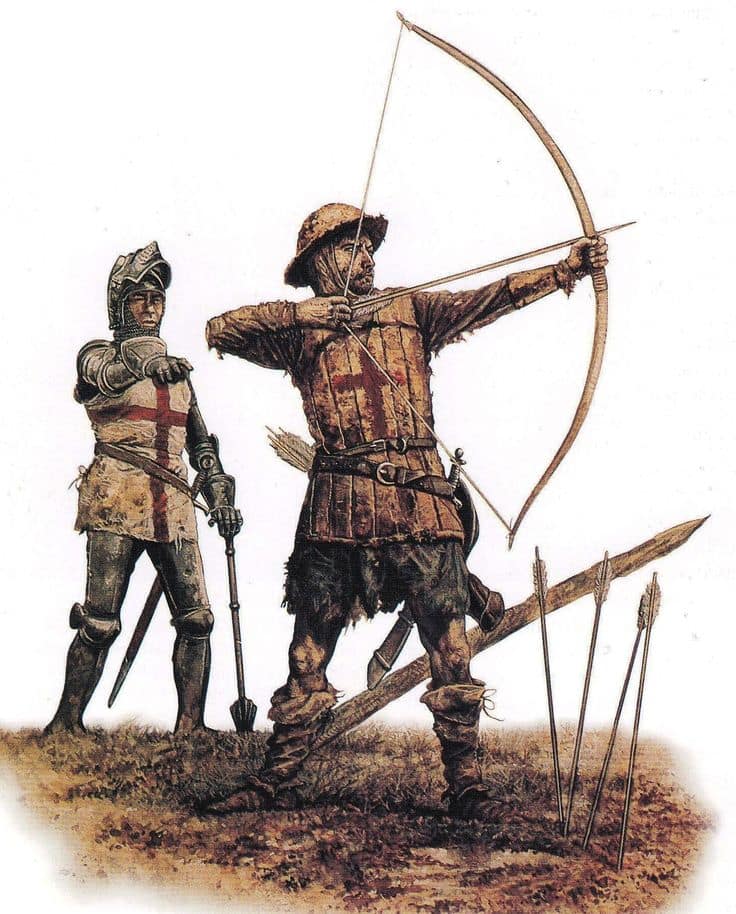
Organisation: Henry drew up his army in a narrow front between two woods, forcing the French to attack head-on. The three “battles” stood side by side, with archers on the flanks and in advance, angled slightly forward.
The English army was cohesive, hardened by the long siege of Harfleur and the gruelling march. Fatigue and illness were widespread, but morale was sustained by Henry’s presence and by religious fervour. The archers were particularly effective in rough terrain, and Henry’s insistence on defensive tactics maximised their strengths.
 French Army
 French Army
The French host was vast, possibly 20,000–25,000 strong, though estimates vary. It was drawn from feudal levies, noble contingents, and retinues raised across northern France.
- Men-at-Arms (12,000+): The bulk of the French force. Most were mounted knights and nobles, though many dismounted for the assault. They were equipped with the finest plate armour of the age, but were often hampered by a lack of discipline and by the press of numbers.
- Infantry & Crossbowmen (8,000+): A mixture of foot soldiers armed with polearms, swords, or crossbows. These were poorly coordinated with the noble cavalry and generally relegated to supporting roles.
- Command Structure: The French army was notionally under Charles d’Albret, Constable of France, but rivalries among dukes, counts, and great nobles produced a fractured command. Many lords insisted on taking positions in the front line for reasons of honour, rather than tactical utility.
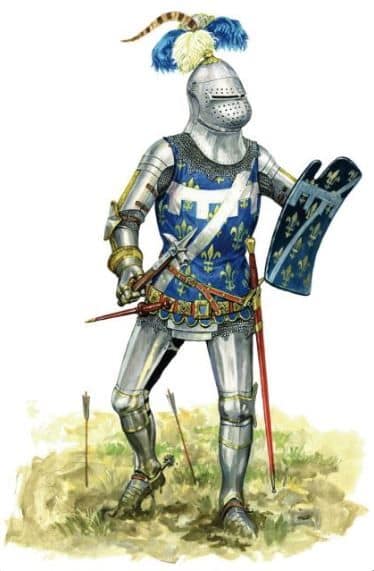
- Deployment: The French arranged themselves in three “battles” in depth:
- Vanguard: Led by the Constable d’Albret and Marshal Boucicaut.
- Main Battle: Under the Duke of Bar, Duke of Alençon, and Duke of Brabant.
- Rearguard: Under the Dukes of Orleans and Bourbon.
- A cavalry detachment was also positioned on the flanks, intended to ride down the English archers.
A clash of doctrines
The battle represented two contrasting approaches. The English, drawing on experience at Crécy (1346) and Poitiers (1356), emphasised defensive tactics, dismounted men-at-arms, and massed longbow fire from strong defensive terrain. The French, still committed to the chivalric ethos, relied on the weight of armoured men-at-arms charging to break the English line, with insufficient integration of missile troops or manoeuvre. This imbalance of doctrine, when combined with unfavourable terrain, would prove disastrous for France.
Phase I: The standoff (early morning, 25 October 1415)
At dawn on St. Crispin’s Day, Henry V arrayed his weary army in the narrow gap between the woods of Agincourt and Tramecourt. The ground had been churned into mud by autumn rains and the passage of thousands of troops and horses. Henry’s men stood in three “battles” of dismounted men-at-arms, flanked by wedges of longbowmen. Each archer drove a sharpened stake into the earth, angled forward to deter cavalry.
Across the field to the north, the French host stretched in depth. Nobles in armour pressed forward to take the place of honour in the front rank, crowding the vanguard. Their banners and surcoats created a blaze of heraldic colour. Behind them, massed lines of men-at-arms and infantry awaited the signal to advance.
For several hours, both armies faced each other in silence. Henry knew his position was precarious: his men were exhausted, outnumbered, and could not remain indefinitely without food or relief. Seizing the initiative, Henry ordered his line to advance a short distance, bringing his archers within effective range. This bold step forced the French to respond.
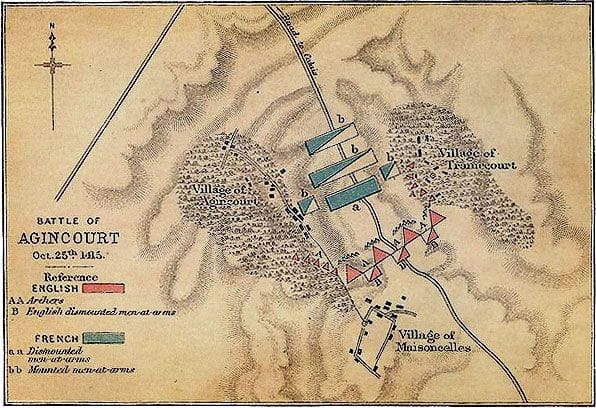
Phase II: Opening move – the English advance
As the English line crept forward, the longbowmen loosed their first arrows, arcing high over the sodden ground. The shafts fell among the French vanguard, killing horses and wounding knights. This provocation compelled the French commanders to order a general advance.
French cavalry on the flanks spurred their mounts toward the English archers, but the heavy mud quickly sapped momentum. Horses slipped and floundered, while arrows rained down on the struggling mass. Few French riders reached the English line; most were shot down or forced to retreat in disorder. The flank attack had failed, leaving the French dismounted men-at-arms to press the assault.
Phase III: Initial French assault
The main French vanguard, several thousand dismounted knights and men-at-arms, trudged forward under a relentless hail of arrows. The narrow frontage and the natural desire for some protection against the arrows caused them to bunch together. As the arrows struck home, men stumbled, fell, and were trampled by those behind.
When the French reached the English line, a brutal melee ensued. English men-at-arms fought shoulder to shoulder, their flanks protected by archers who now dropped bows and joined in with swords, mallets, and hatchets. The pressure of the French assault was immense, but the mud, the press of numbers, and the fatigue of struggling through arrow storms left them unable to break through.
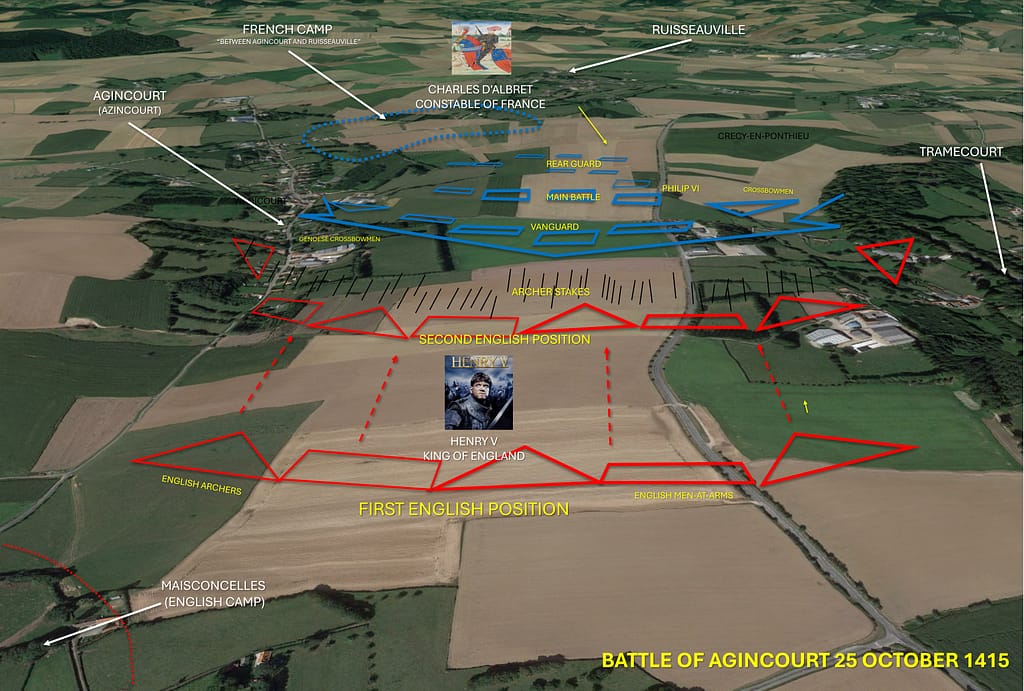
Phase IV – Collapse of the French Vanguard
As the melee ground on, the French second line attempted to join the fray. Instead of relieving their comrades, they crushed into them, adding weight to the chaos. Thousands of armoured men were now heaped together in a confined space, sinking into the mud. Many suffocated, drowned in the mire, or were unable to rise after being knocked down.
The English archers, nimble and lightly armoured, waded into the melee from the flanks, stabbing at visors, cutting throats, and clubbing the disoriented knights. Gradually, the French first and second ‘battles’ disintegrated into a mass of dead and dying.

Phase V – Henry’s crisis and the prisoner killings
At this stage, the battle was all but won, but Henry faced an unexpected crisis. A small mounted detachment of French nobles had broken through to raid the English baggage train in the rear around Maisoncelles. With his small outnumbered army still vulnerable in hostile territory, Henry may have feared this was the start of a new assault and that French prisoners might rearm and join the fight. To prevent this, Henry gave the grim order for the captured Frenchmen to be executed.
Although controversial, the order prevented any chance of revolt behind English lines. Once the raid was repulsed, the killing of prisoners ceased, but the damage to French morale was decisive. Killing prisoners on this scale was not how chivalrous warfare was conducted.
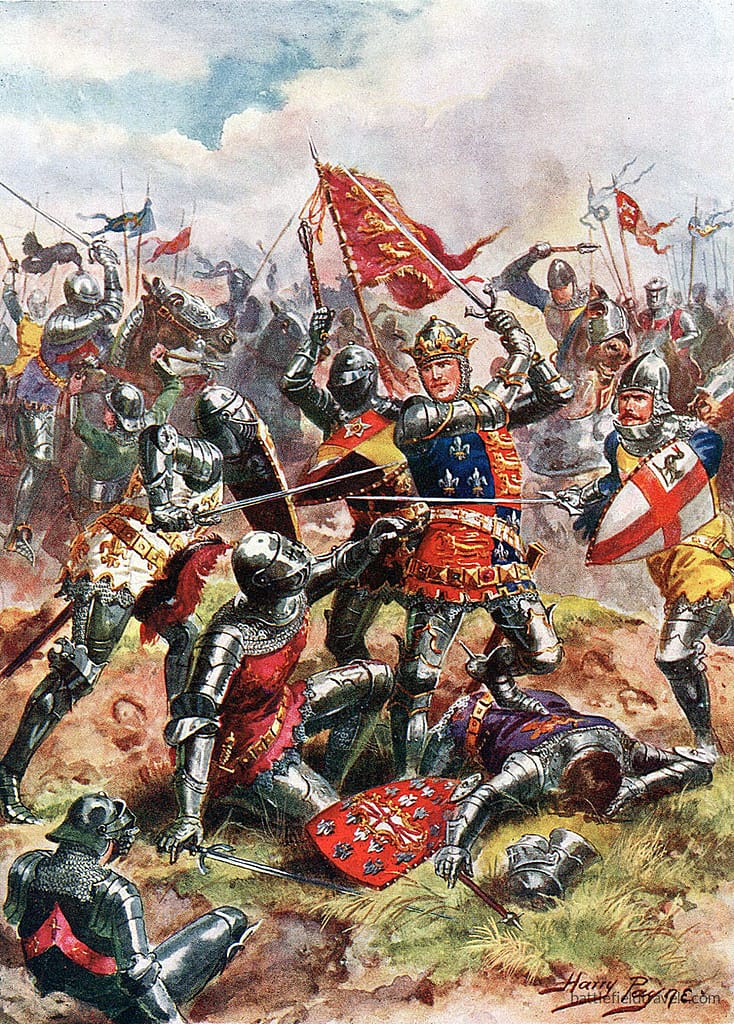
Phase VI: Final Rout and Aftermath
By late afternoon, the remnants of the French rearguard attempted to advance but found the battlefield choked with the bodies of their comrades. Exhausted and leaderless, they withdrew rather than expend more lives.
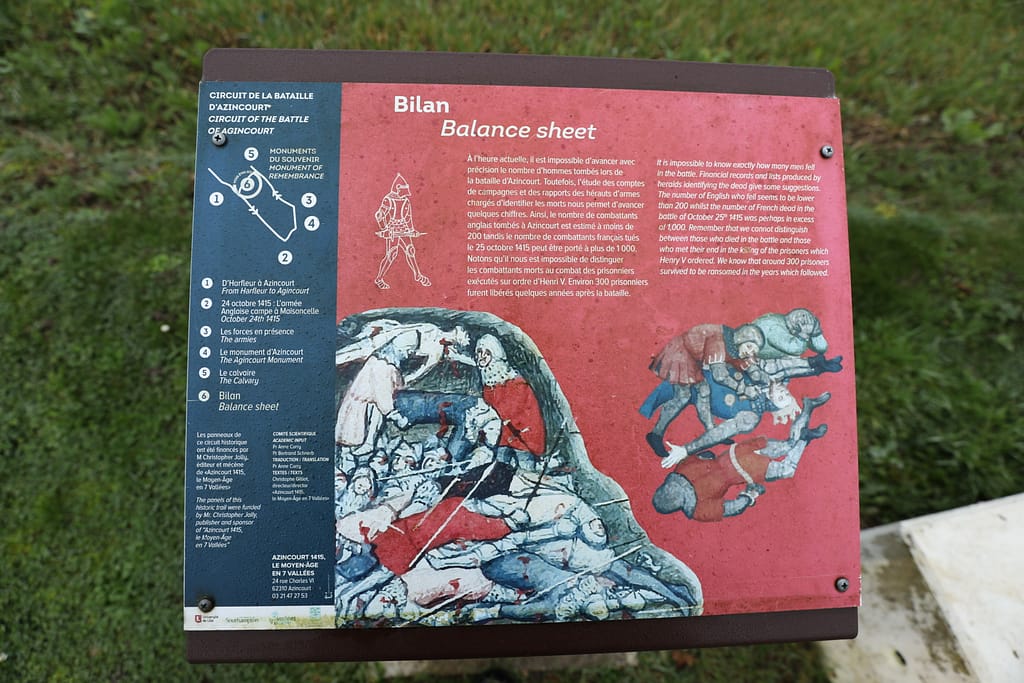
The English victory at Agincourt was staggering in its disproportionality. Facing odds of perhaps three-to-one, Henry V’s exhausted, disease-ridden force had inflicted catastrophic losses on the cream of French nobility. At least 6,000 French were killed, including much of the high nobility — the Constable of France, three dukes, nine counts, and numerous barons and knights. Many of these men were veterans of earlier campaigns, and their loss left a vacuum in leadership across France.
English casualties are harder to estimate but were minimal by comparison, perhaps 300–600 men at most. Among them was Edward, Duke of York, who suffocated in the crush of the melee. The English army remained battered and malnourished, but it had survived an encounter that, on paper, should have annihilated it.
The field was a charnel house, littered with fallen nobility whose loss reshaped the power balance of France. For Henry, the victory was more than tactical. It was a propaganda triumph, securing his reputation as the rightful king and strengthening England’s bargaining position in the Hundred Years’ War.
⚔️ Go deeper — Members get exclusive access to the Deep Research Collection, Field Notes, and monthly Research Dispatches. Try membership free for 7 days, cancel anytime. From $9/month.
Outcomes of Agincourt
Political consequences in France
For France, the defeat was catastrophic. The cream of the nobility had been slain or captured. Whole dynastic lines were extinguished in a single day. This sudden loss of leadership destabilised the already fractured kingdom.
The French monarchy itself was in crisis. King Charles VI, intermittently incapacitated by bouts of mental illness, could not provide coherent leadership. Political life had devolved into violent factional rivalry between the Armagnacs (supporters of the Dauphin, the heir to the throne) and the Burgundians (aligned with John the Fearless, Duke of Burgundy).
Agincourt intensified these divisions. Some factions blamed others for the disaster, and recriminations overshadowed any coordinated response to Henry’s success. Instead of uniting against the English, the French elite collapsed into quasi–civil war, weakening the kingdom at precisely the moment when external unity was most required.
Political consequences in England
Back in England, the victory transformed Henry V’s standing. He had already been a competent and legitimate ruler, but Agincourt made him a national hero. The victory became a potent symbol of English exceptionalism: a small, outnumbered force of disciplined common soldiers and yeoman archers humbling the flower of French nobility.
This narrative reinforced the prestige of the monarchy, bolstered national unity, and made Henry almost unassailable politically. He returned to London in triumph, hailed as the warrior-king par excellence, heir to Edward III and the Black Prince.
The psychological impact of the battle was as important as the military one: Englishmen believed, with renewed confidence, that their destiny lay across the Channel.
Long-term impacts
Agincourt did not end the Hundred Years’ War. The battle was less a war-ending blow than an opening act for Henry’s expanded ambitions. After returning to England, Henry consolidated his position, rebuilt his forces, and in 1417 launched a much larger invasion. This campaign ultimately culminated in the Treaty of Troyes (1420), in which Henry was recognised as heir and regent of France, effectively disinheriting the Dauphin.
So, the path from Agincourt led directly to Henry’s temporary dual monarchy of England and France. Though his early death in 1422 prevented this vision from being permanently realised, Agincourt had provided the foundation upon which it was built.
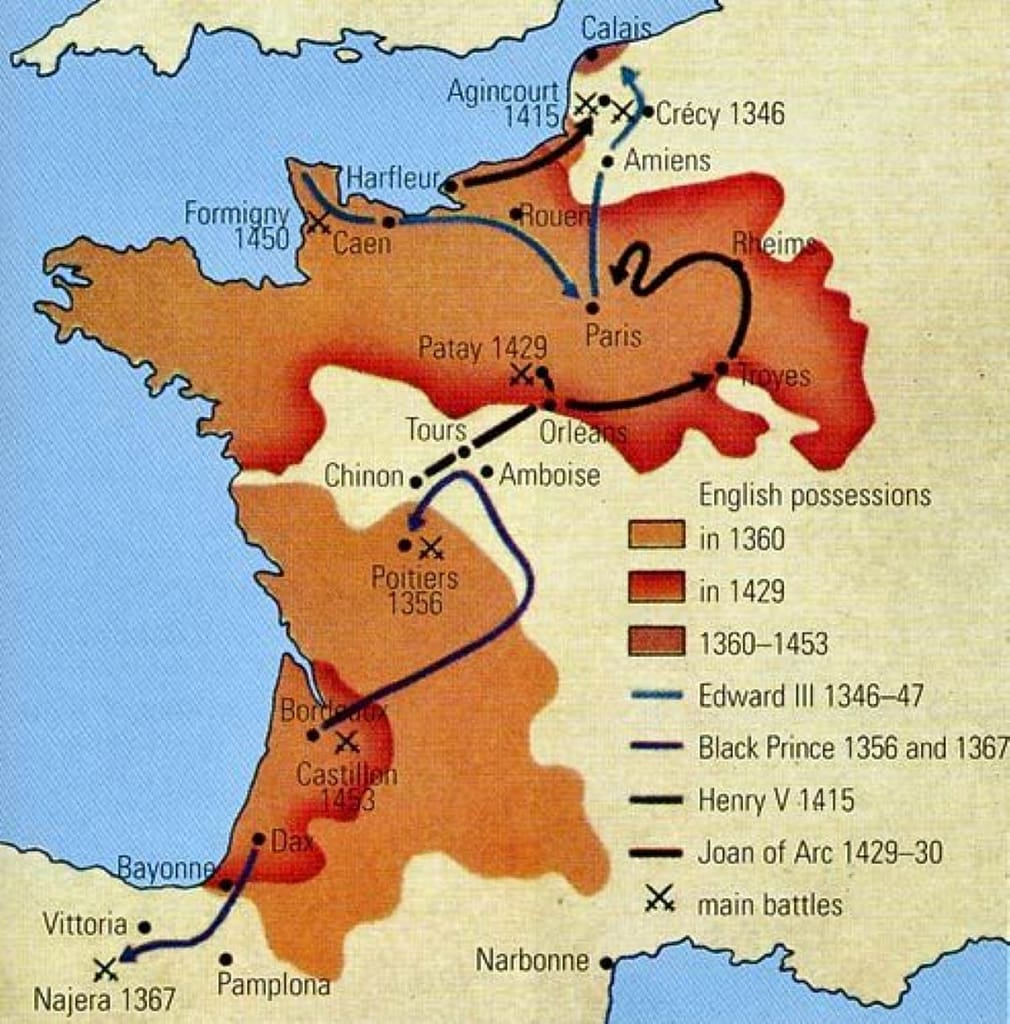
Fate of the French nobility
The social fabric of French aristocracy was torn apart by the slaughter at Agincourt. Many noble families never recovered. The absence of experienced commanders weakened France’s ability to resist future invasions.
The battle also dealt a blow to French concepts of warfare. For centuries, mounted knights had been seen as the ultimate arm of decision in European warfare. Agincourt confirmed a trend already visible at Crécy (1346) and Poitiers (1356): massed missile fire and disciplined infantry could blunt, stall, and even destroy armoured cavalry charges.
This was not the end of the chivalric class, but it was a warning shot to the old order. France would, in time, adapt by relying more on professional soldiers, artillery, and new tactical doctrines — but that process was slow and painful. At the Battle of Patay in 1429, the French cavalry was employed aggressively before the English archers could set their defensive posture. The result was an overwhelming French victory and a slaughter of the archers.
Cultural and Symbolic Legacy
Perhaps Agincourt’s greatest legacy was its cultural impact. It became a defining moment in the English national story, endlessly retold in chronicles, poems, and later in Shakespeare’s play ‘Henry V’. The “band of brothers” speech, though a product of Elizabethan theatre, enshrined the battle in myth as the epitome of courage, solidarity, and English identity.
The longbow, in particular, acquired almost legendary status. English yeomen, standing ankle-deep in mud, were celebrated as the equal, or superior, of mounted nobility. The weapon’s effectiveness was exaggerated, but its symbolic value was immense. It became shorthand for English resilience and ingenuity. For the French, by contrast, Agincourt became a story of humiliation and disaster. Generations of writers lamented the arrogance, disorganisation, and factionalism that had condemned their nobility to ruin. It stood as a warning of the costs of disunity.
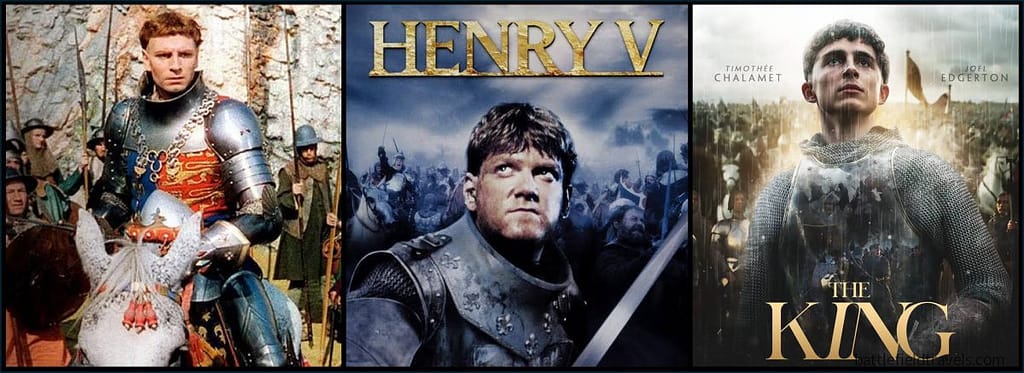
In the modern era, the Battle of Agincourt remains a popular subject for film-makers with Henry V played by Sir Lawrence Olivier in 1944, Sir Kenneth Branagh in 1989, and Timothy Chalamet in 2019.
The Agincourt battlefield today
Landscape and Setting
The battlefield of Agincourt lies in the rolling countryside of northern France, about 65 km west of Lille and not far from the Channel coast. Unlike many medieval battlefields where urban growth or industrialisation has obscured the ground, Agincourt’s rural setting has preserved much of its character. The same ridges, fields, and forests that constrained the armies in 1415 are still visible today, offering visitors a striking sense of continuity.
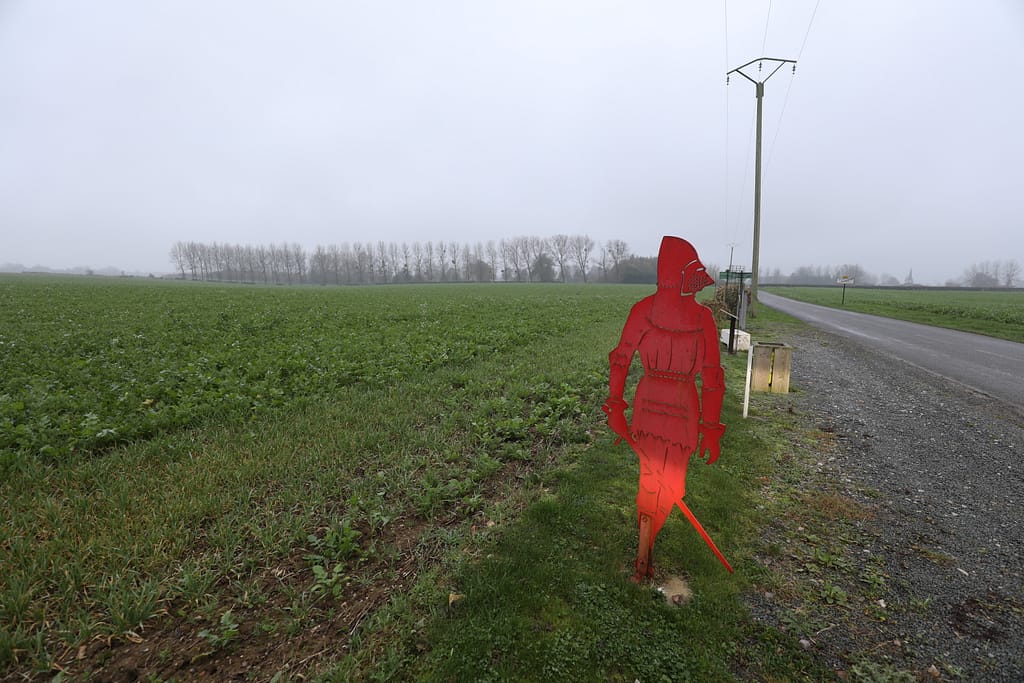
Modern agriculture has, of course, reshaped the terrain. Drainage and roadworks have smoothed some of the mud-trapping hollows, while the edges of the Azincourt and Tramecourt woods no longer align perfectly with their medieval footprints. Yet the essential topography — the narrow corridor between two woodland blocks — remains recognisable. Standing on the open fields where Henry’s archers drove in their stakes, you can still imagine the suffocating press of armoured men-at-arms as they struggled across ploughed ground.
Henry’s reading of the micro-terrain (small scale terrain features that often do not appear on maps and can only be seen when you are standing on the ground) factors around Agincourt was superior to the French. Henry had exploited the channelling terrain between Tramecourt and Agincourt to anchor his flanks an dcompress frontages. He had also exploited the dead ground to control the timing of the first engagement to his advantage. The concept of exploiting small scale terrain features in battle is examined further in the Micro-Terrain and Battlefield Decision-Making research hub.
Markers and Monuments
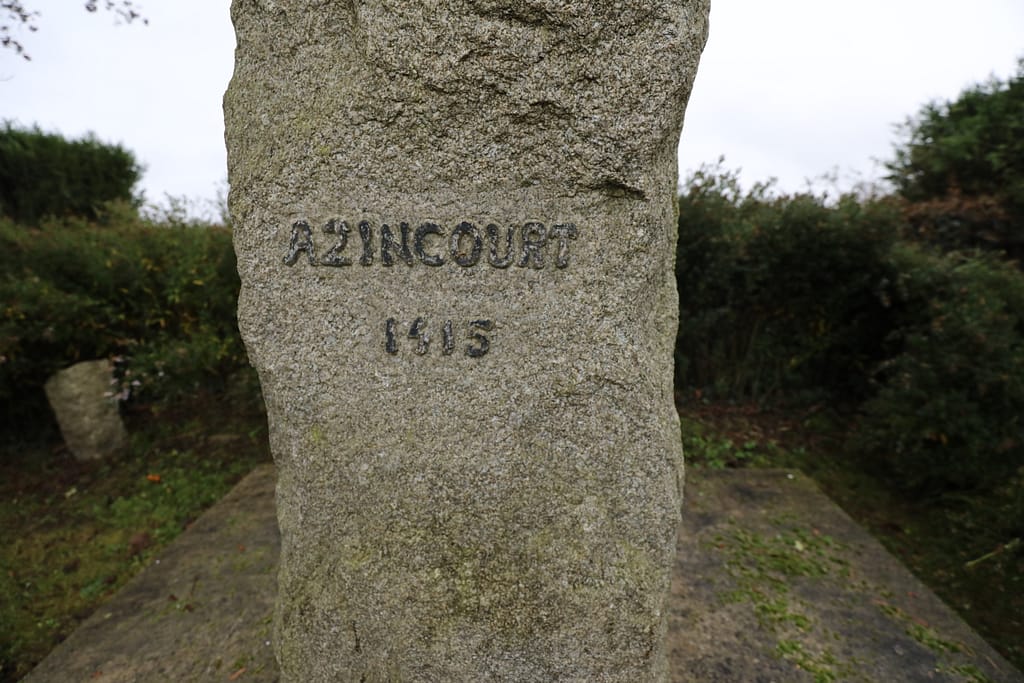
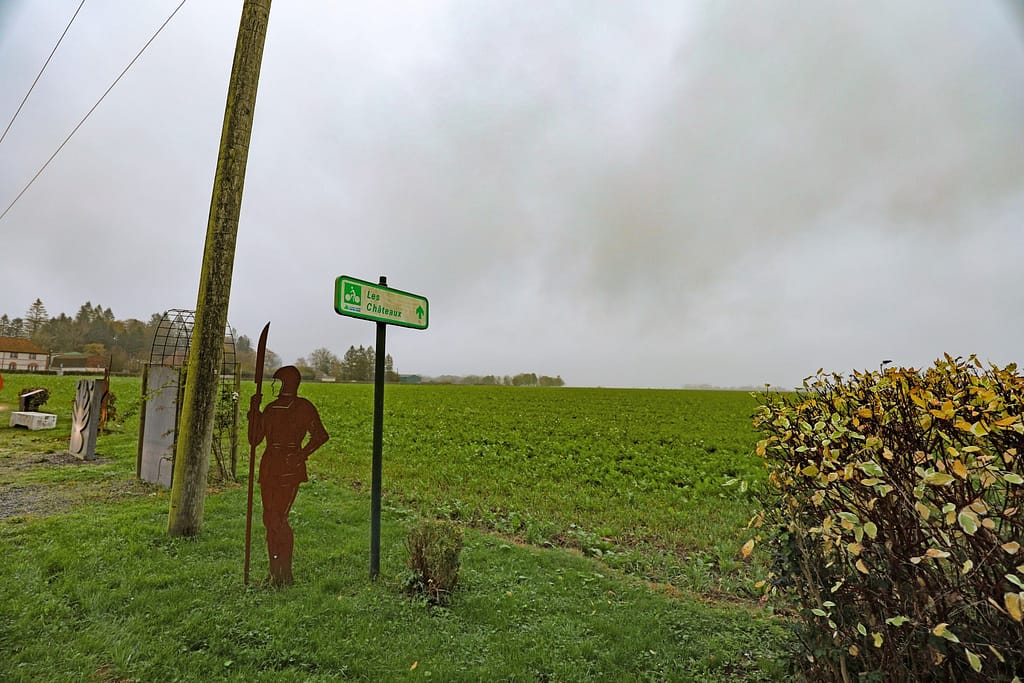
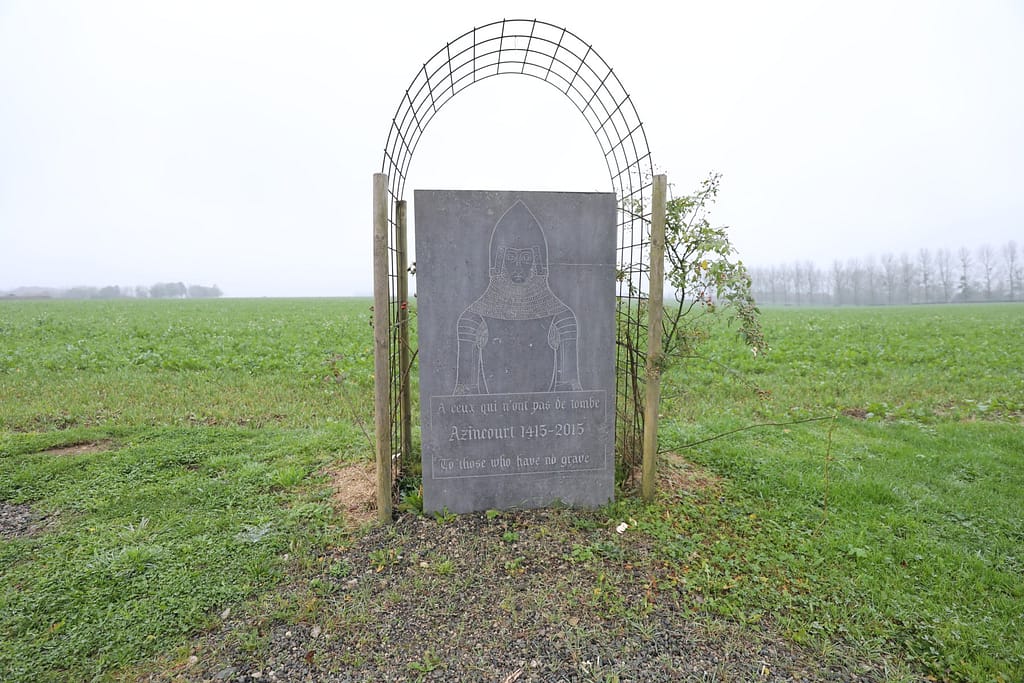
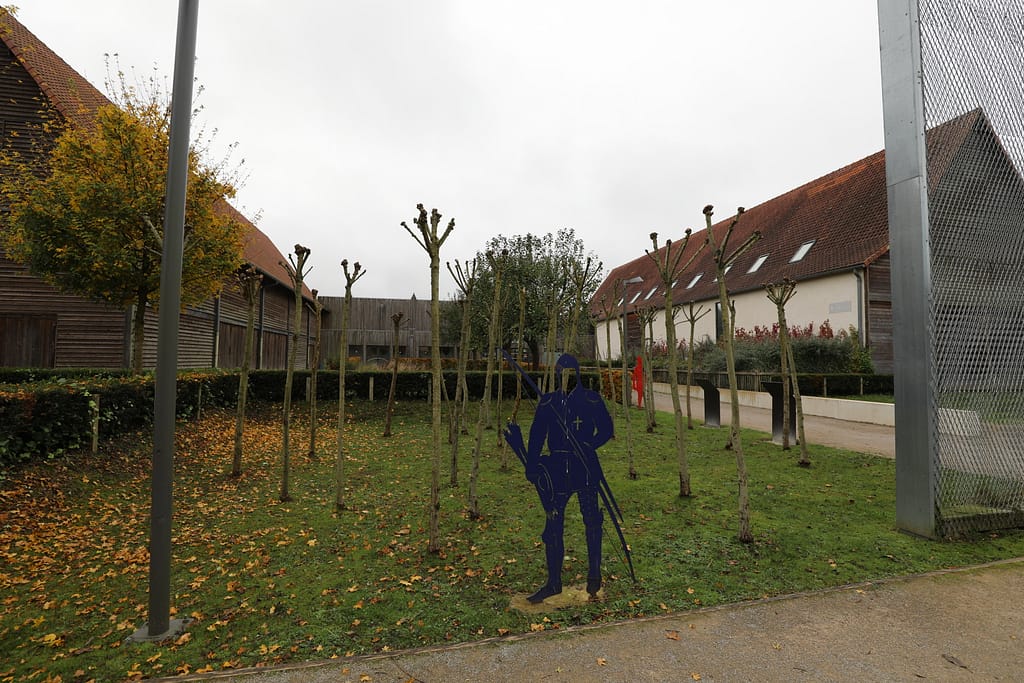
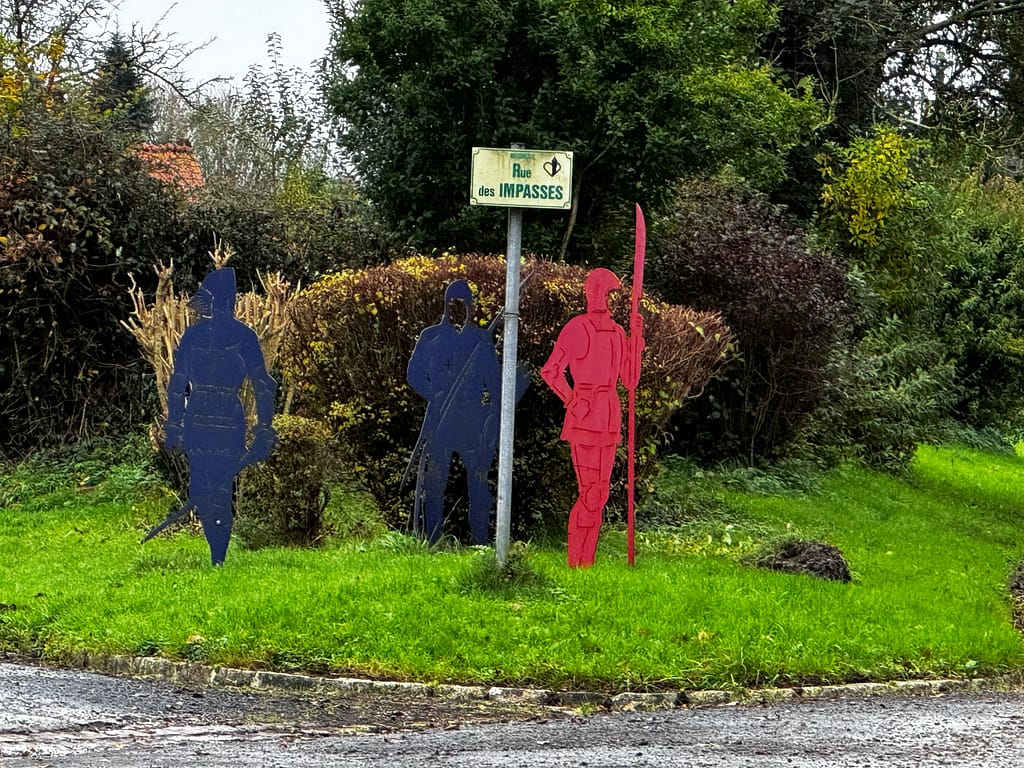
The French town of Azincourt (note the spelling difference) maintains the memory of the battle with a number of markers and monuments. A tall stone memorial and observation tower stand at the southeastern corner of the battlefield, east of Maisoncelles. The tower provides a viewpoint from what would have been behind and above the English line. ‘Rue Henry V’ crosses the battlefield at about the point where the two armies met, and there is a large stone plinth commemorating those with no known grave.
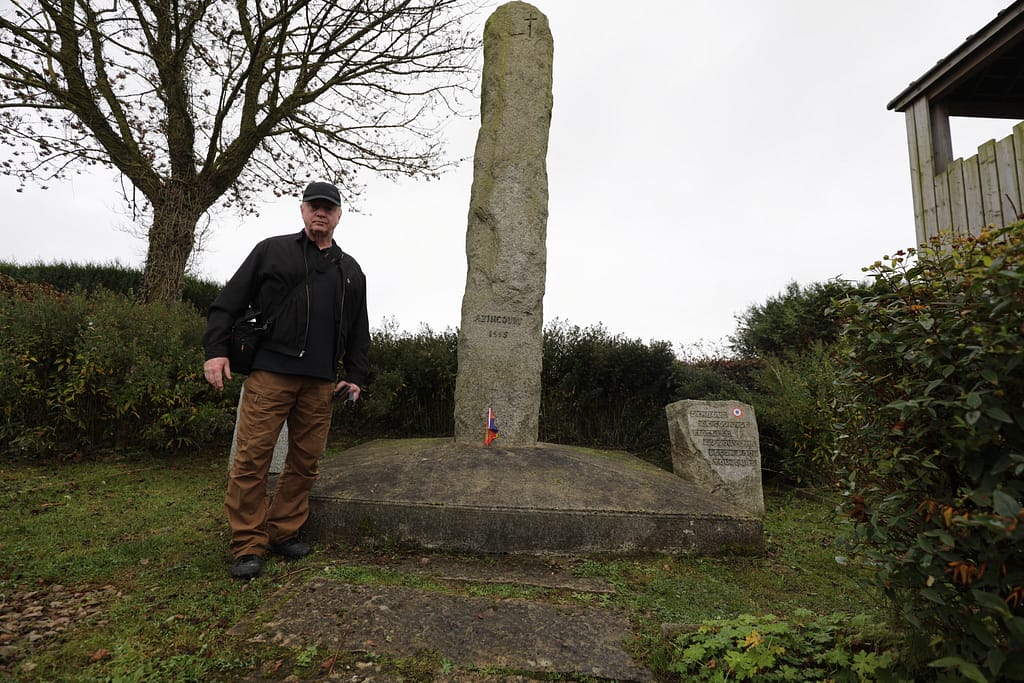
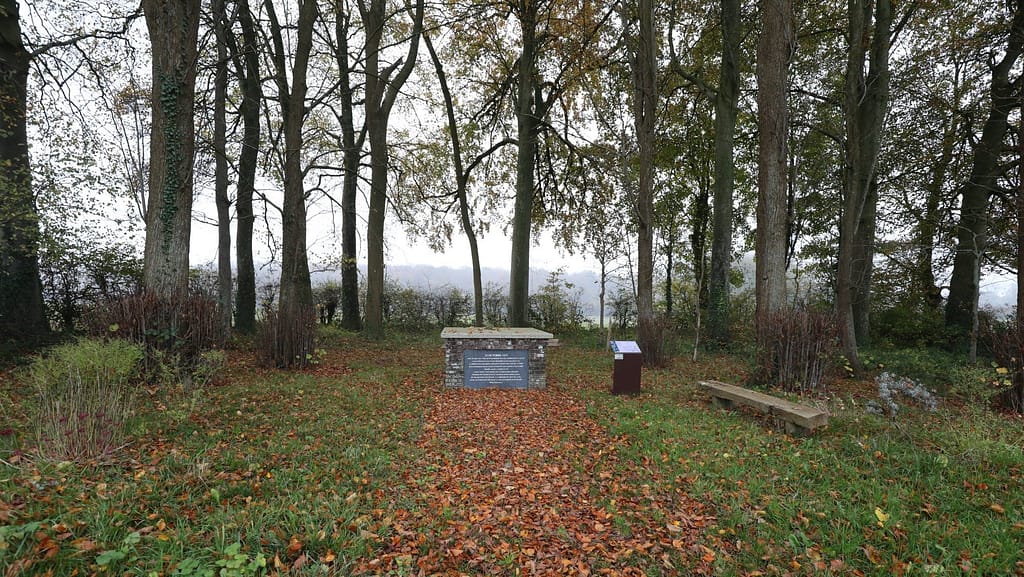
Also near the centre of the battlefield is a site known as ‘The Calvary’ which was reputedly the site where many of the French dead were buried. A church was built here in 1735 by the Vicomte de Tramecourt, but it was destroyed after the French Revolution. There is now a small memorial on the site.
The Agincourt Museum
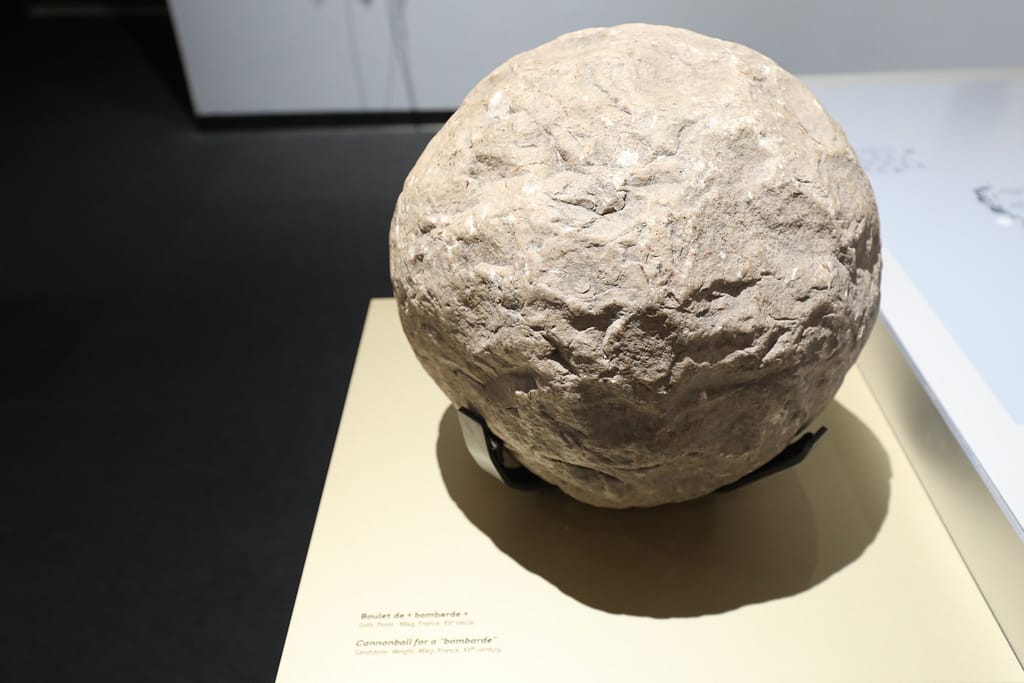
The centrepiece for visitors is the Centre Historique Médiéval d’Azincourt, often simply called the Agincourt Museum. It offers an immersive introduction to the Hundred Years’ War, the 1415 campaign, and the battle itself. The museum also depicts teh disastrous impact on the French nobility and how many family lines were extinguished at the battle. Exhibits include:
- Weapons and armour: replicas of longbows, swords, polearms, and French plate armour.
- Tactile displays: interactive reconstructions allow visitors to test the weight of armour or the draw of a bow.
- Battle recreations: multimedia presentations explain the phases of the battle using maps, models, and animated sequences.
- Archaeological context: although few artefacts have been recovered from the battlefield itself, the museum situates Agincourt within the broader material culture of medieval warfare.
The museum’s design strikes a balance between accessibility for casual visitors and depth for enthusiasts. Scholars may find the interpretations conventional, but the facility provides an excellent start point before walking the battlefield.
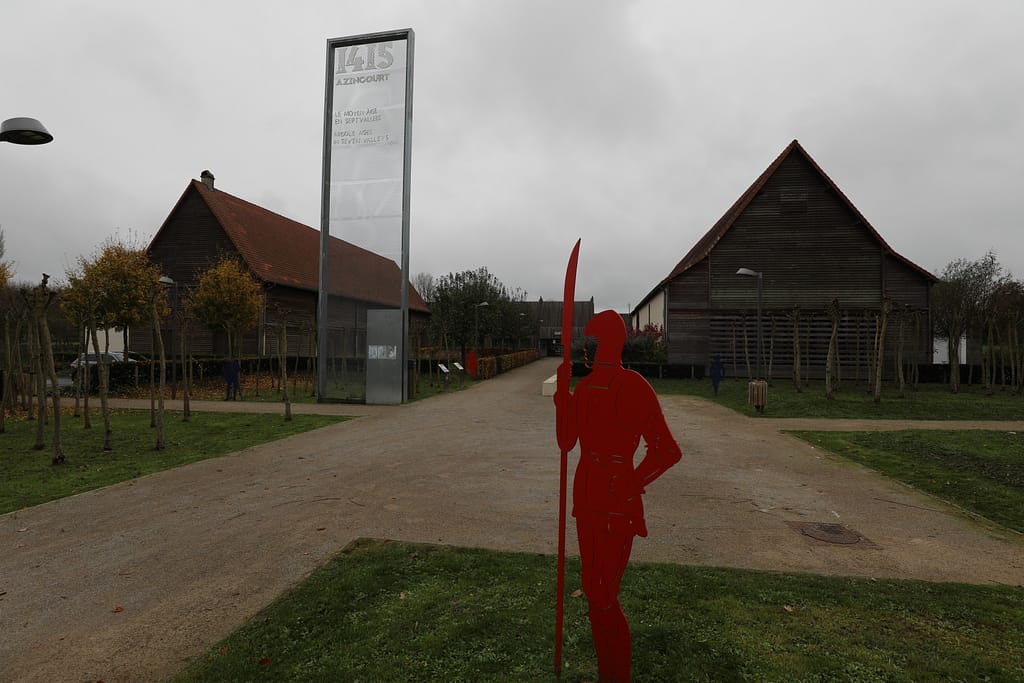
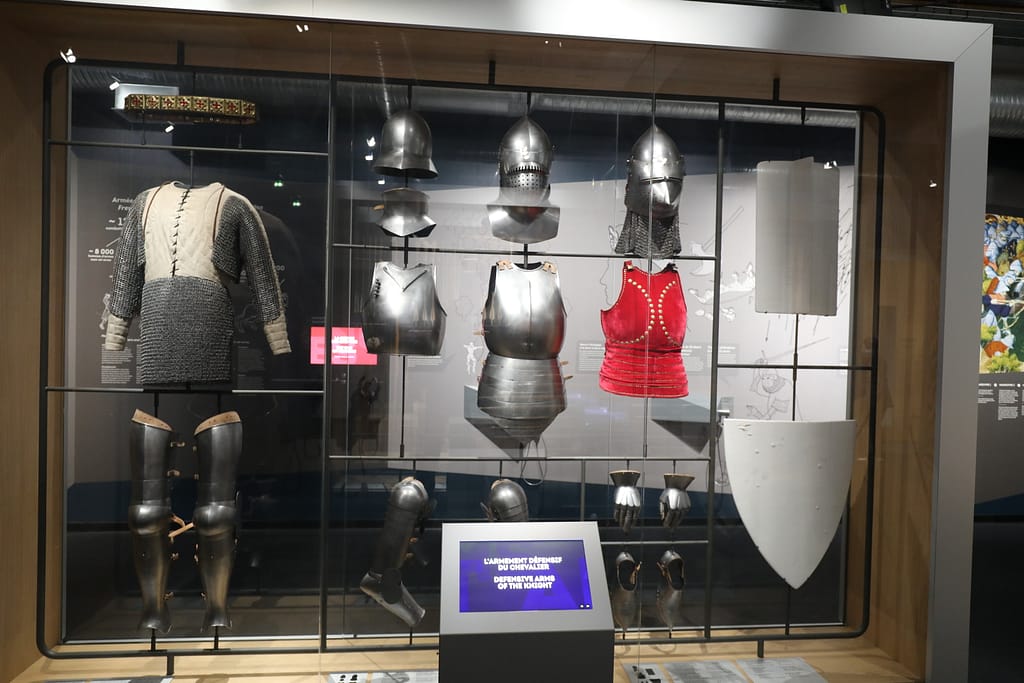
Additional Images of Agincourt battlefield

Azincourt – Museum of 1415
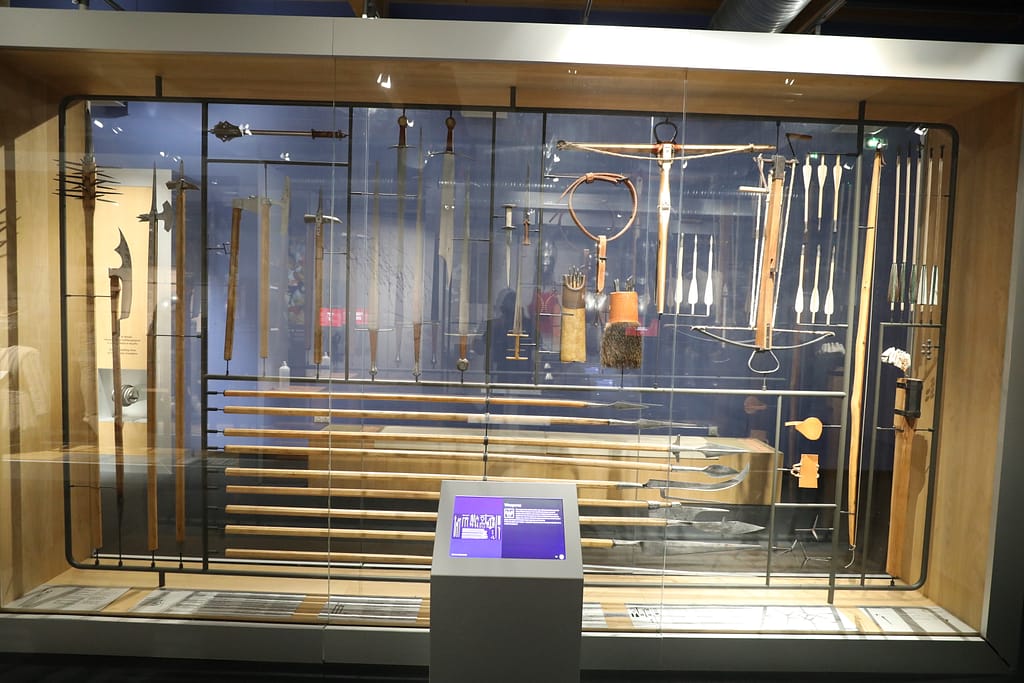
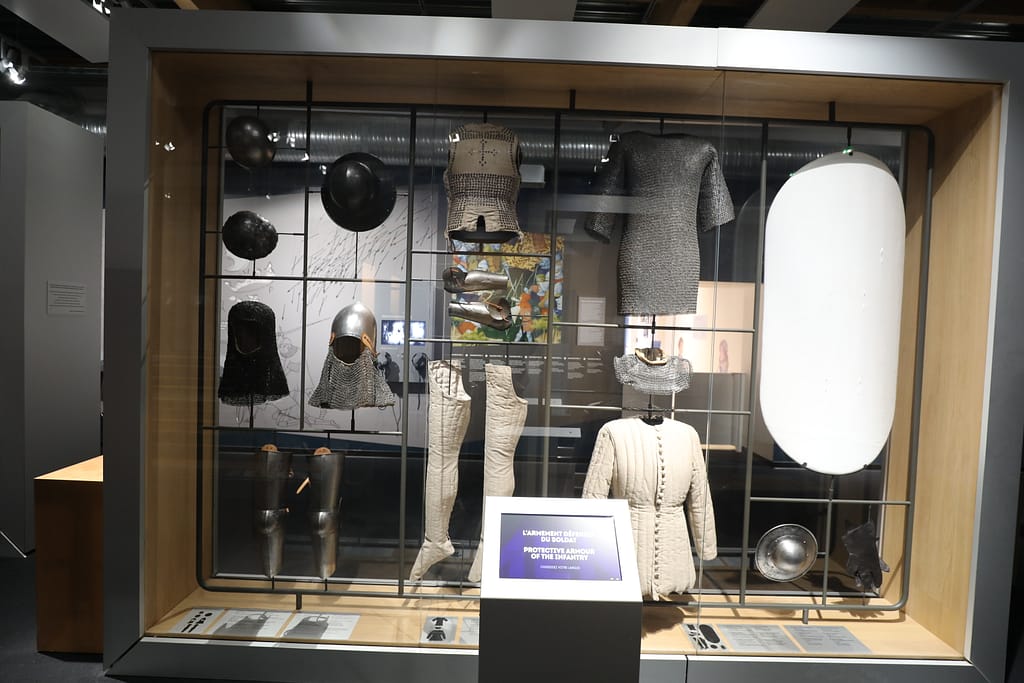
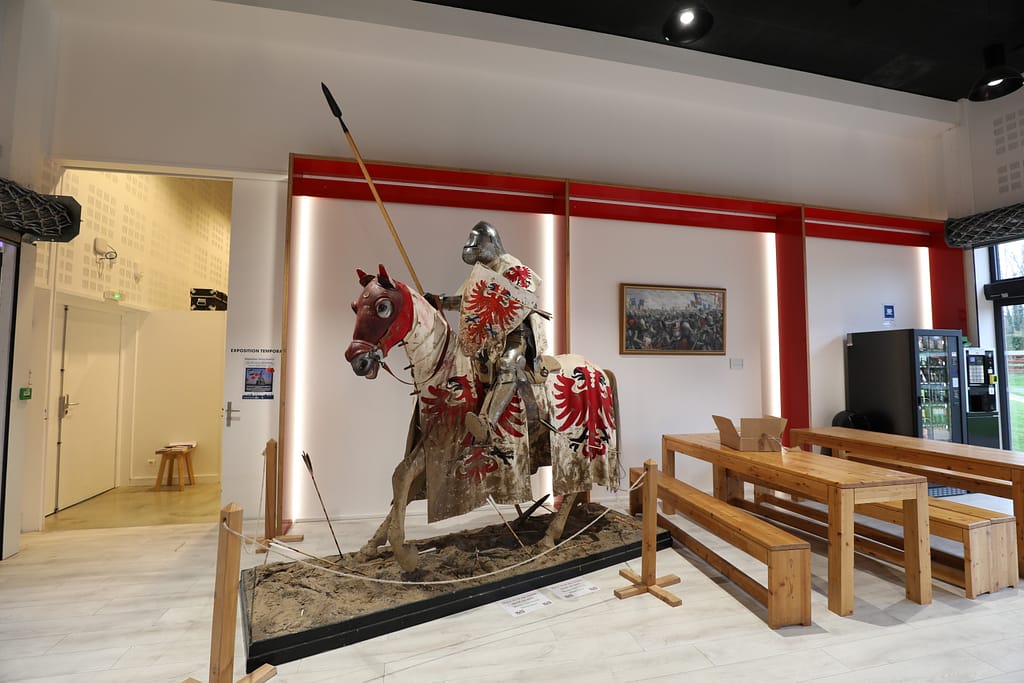
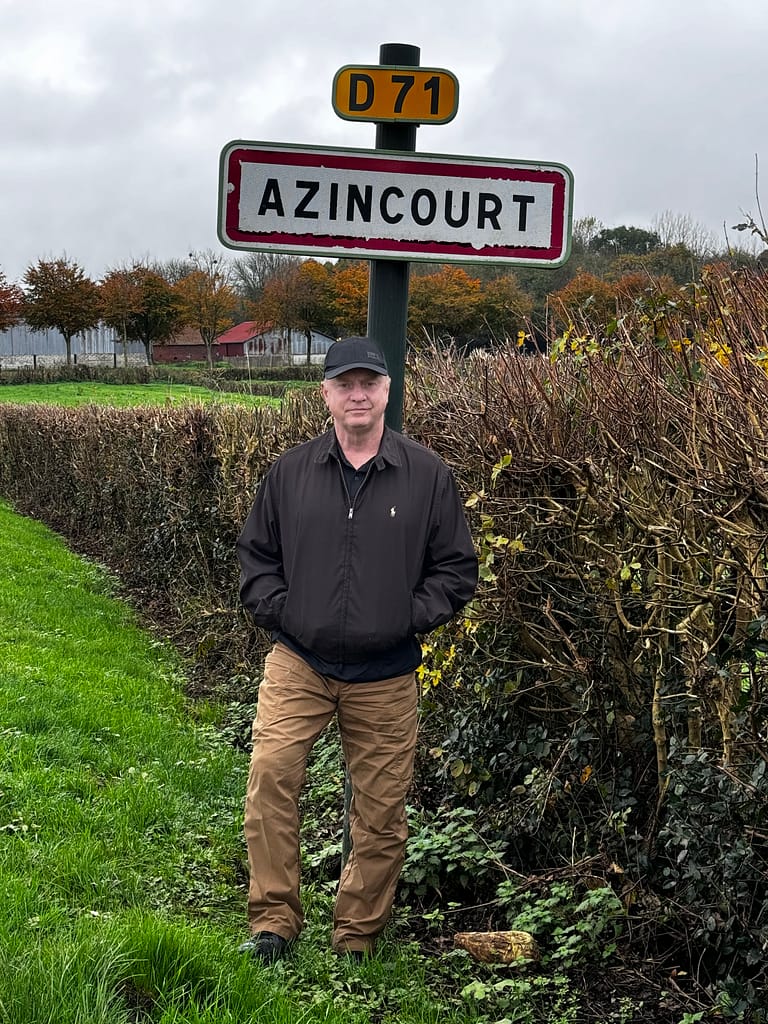

Link to the Battle of Agincourt Museum website
Found this useful? Buy me a coffee — it helps fund future battlefield research


Authored by Mick Prictor, a retired military officer with 40 years’ service, and a military historian specialising in terrain-focused analysis of tactics, doctrine, and command decision-making in land warfare. His work draws on extensive battlefield fieldwork—more than 280 sites worldwide—and one of the world’s largest private collections of historic military arms, uniforms, and equipment. About me
📚 Reference Sources – The Battle of Agincourt
- Shakespeare, William. Henry V. (1599) – The classic dramatic portrayal of the campaign and the immortal St. Crispin’s Day speech.
- Anne Curry. Agincourt: A New History. (2005) – A definitive modern scholarly account, with detailed archival research on troop numbers, logistics, and casualties.
- Juliet Barker. Agincourt: The King, the Campaign, the Battle. (2005) – A well-written narrative history, combining academic rigour with readability.
- Christopher Hibbert. Agincourt. (1964) – Still valuable as a clear, engaging overview.
- Jonathan Sumption. The Hundred Years War: Trial by Fire. (1999) – Provides wider context for Henry V’s campaign within the Hundred Years War.
- Clifford J. Rogers. “The Battle of Agincourt” in Journal of Medieval Military History, Vol. 1 (2002) – Tactical analysis of the battlefield dynamics.
- Centre Historique Médiéval d’Azincourt. – The museum at Azincourt, offering exhibits, reconstructions, and educational resources. Official website
- British Library Online: Digitised manuscripts of Henry V’s reign and campaign letters, including the Agincourt Carol.
📚 Further Reading – Hundred Years War
This battle study nests within the broader analytical framework explored in the Research Hub, where operational methods, operating environments, armies, commanders, and weapons are examined across conflicts and eras. The links below connect related studies across the wider body of battlefield analysis on the BattlefieldTravels site.
⚔️ Explore all battle studies from the Hundred Years War
🏛️Explore the Ancient and Medieval warfare weapons and equipment
The book list for this conflict includes the finest campaign studies, memoirs, and operational analyses available on the medieval warfare, selected specifically to complement this battlefield study.
📚Medieval Warfare – Recommended Reading
🗞️ For updates on new battlefield studies and research insights, you can subscribe to the Newsletter.
Related Battle Studies, Museum Pieces & Reading Resources


⚔️ Battlefield Travel Guide: Agincourt (Azincourt)
Getting There
- Location: Azincourt, Pas-de-Calais, northern France (c. 1 hr from Calais; 45–60 min from Arras).
- Transport: Best by car; A26/A16 motorways then D roads via Fruges/Saint-Omer. Nearest rail hubs: Calais-Fréthun (TGV/Eurostar), Arras, Saint-Omer.
- Parking: Free parking at the Centre Historique Médiéval d’Azincourt (museum) and lay-bys along signed battlefield viewpoints.
Site Orientation
- Key Landmarks: The corridor between the woods of Tramecourt (west) and Agincourt (east); village triangles of Azincourt, Maisoncelles, Tramecourt.
- Walking/Driving Routes: Start at the museum, then drive the signed circuit; short lanes let you walk the English line and French deployment zones.
- Best Vantage Points: Panels south of Azincourt showing the English position and the constricted approach; viewpoints toward Tramecourt for the French advance.
Museums & Visitor Centres
- Centre Historique Médiéval d’Azincourt: Excellent exhibits on the 1415 campaign, longbow, armour, and animated battle reconstructions.
- On-site Interpretation: Multilingual waysides at key points across the field; memorial cross and plaques to English/French dead.
- Nearby Context: Regional museums at Saint-Omer and Arras (medieval collections; good bases for accommodation).
On-Site Experience
- Interpretive Signage: Clear panels mark English line, French vanguard/main, and the narrowed killing ground between the woods.
- Terrain: Open farmland with wood margins; after rain the clay soil gives a sense of 1415 conditions.
- Tours: Seasonal guided walks from the museum; self-guided circuit works well with the museum map.
Nearby Points of Interest
- Crécy-en-Ponthieu (1346): Complementary longbow battlefield (c. 90 min south).
- Harfleur (Le Havre): Siege town that opens Henry’s 1415 campaign (longer day trip).
- Arras & Saint-Omer: Medieval architecture, churches, and collections; convenient bases for Agincourt.
Practical Tips
- When to Visit: Spring/autumn for walking; October weather echoes campaign conditions and adds atmosphere.
- Time Needed: 2–3 hrs for museum + viewpoints; half-day if walking multiple stops.
- Facilities: Café/shop at museum; limited services in the village — plan for fuel/food in Fruges or Saint-Omer.
- Access Notes: Respect crops/field edges; some lanes are single-track. Drones: check local regulations and museum guidance.
FAQ: Battle of Agincourt
The battle took place on 25 October 1415, during King Henry V’s invasion of France in the Hundred Years’ War.
The English army, numbering 6,000-8,500, faced a French force estimated at 20,000–25,000 composed largely of heavy cavalry and dismounted men-at-arms.
Henry deployed his longbowmen behind defensive stakes on confined, muddy ground, which disrupted the French advance and allowed massed archery to break their formations.
French casualties may have exceeded 6,000, including many nobles; English losses were around 400, with only a few dozen killed in action.
The victory established Henry V as one of England’s greatest battlefield commanders and demonstrated the tactical effectiveness of disciplined infantry and archery over feudal cavalry.
The battlefield near Azincourt in northern France is clearly marked, with a museum, observation tower, and walking trails across the original ground.
Subscribe to Battlefield Travels and receive a free E-Book Battlefield Guide
Unlock expert battlefield analysis, campaign reconstructions, and historical insights drawn from firsthand exploration and primary sources.
🗺️ You’ll receive:
🎖️ Exclusive historical insights you won’t find elsewhere
📘 A free eBook: 10 Tips for Exploring Historic Battlefields
📰 New battlefield studies straight to your inbox as they are published

⚔️ Go deeper — Members get exclusive access to the Deep Research Collection, Field Notes, and monthly Research Dispatches. Try membership free for 7 days, cancel anytime. From $9/month.
Great Review and Summary Mick simple and easy to digest .
Steve, Thought you might like this one! After I get all the other quicklook summaries posted I will come back and expand these in more detail. Watch out for the Battle of Patay 1429, revenge for Agincourt!