The Blue Division in a fighting rearguard to the last cartridge!
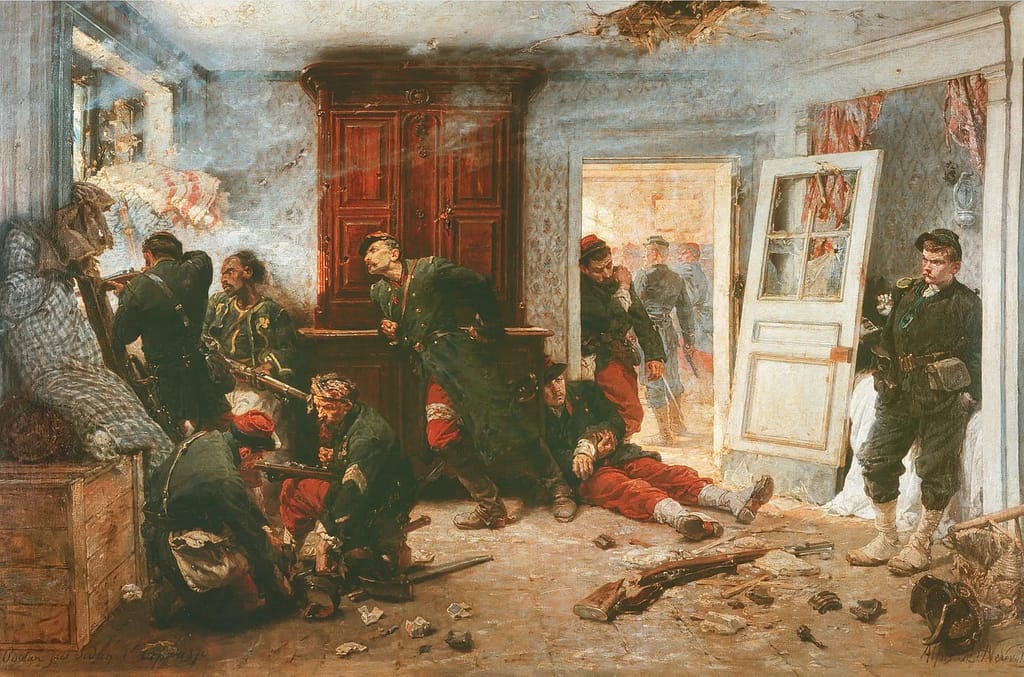
For the French Marines, Bazeilles is sacred ground. Like the Alamo to Americans or ANZAC Cove to Australians. Here, in September 1870, a small force of French Marines held back a Bavarian force that outnumbered them by approximately five-to-one. The French rearguard maintained its positions until it had expended its last cartridge, and only then withdrew.
Key facts
Google Earth map – location of the Bazeilles battlefield
Strategic Context: Franco-Prussian War
Origins of the war
The Franco–Prussian War began on 19 July 1870, driven by Bismarck’s ambition to consolidate German unity under Prussian leadership. France, still the dominant power in Europe and with a vastly experienced army in colonial warfare, went into the campaign poorly prepared. Its army was very experienced but smaller than the Prussian Army and lacking recent experience in large-scale combat operations. France also did not have a professionalised general staff. Prussia and its German allies, by contrast, had refined mobilisation plans, superior railway logistics, and a trained staff corps coordinating operations across multiple armies.
Disasters at Metz and Sedan
French forces were soon divided. Marshal Bazaine’s Army of the Rhine was trapped in Metz after defeats at Wissembourg, Spicheren, and Gravelotte. Marshal MacMahon’s newly assembled Army of Châlons, accompanied by Emperor Napoleon III himself, attempted to relieve Metz by marching east from Châlons-sur-Marne. The Germans moved more quickly. By the end of August, MacMahon’s army found itself outflanked and driven northward toward Sedan. The German intent was clear: encircle and destroy this second French field army before it could unite with Bazaine.
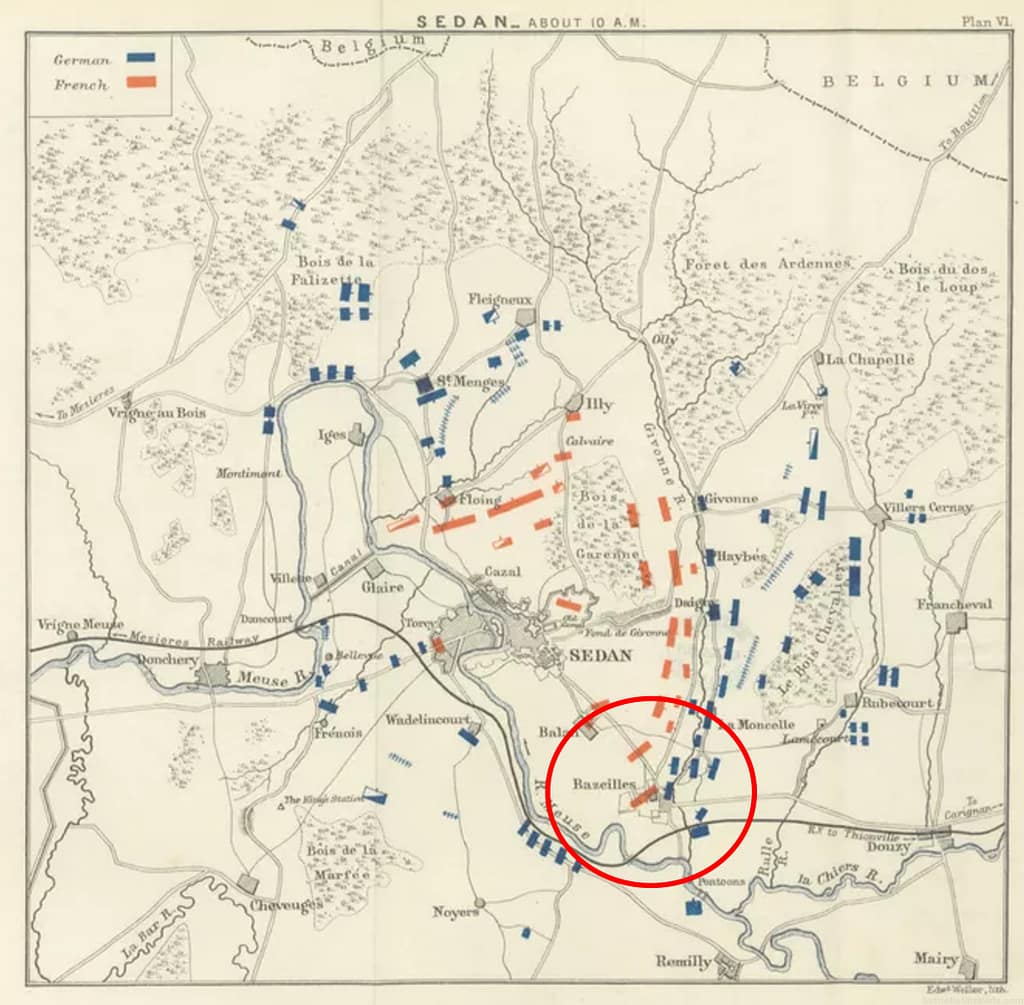
The village of Bazeilles is about 2km southeast of Sedan, and holding it was critical to preventing another encirclement. The elite Troupes de Marine ‘Blue’ Division was tasked with defending the village at all costs.
Opposing Forces: French Marines and Bavarian infantry
 French Defenders
 French Defenders
The defence of Bazeilles fell primarily to the Division Bleue (Blue Division) of the Troupes de Marine (formerly called the Naval Infantry, though by 1870 they were fully integrated into the French Army). Commanded by General Martin des Pallières, the division included roughly 7,000–8,000 men organised into two brigades. These troops were elite, battle-hardened from years of colonial campaigns in Algeria, Mexico, and Indochina. Their ethos was one of aggressive defence, with strong cohesion and high discipline. Artillery support was provided by a few batteries positioned on the Sedan perimeter, but in the streets of Bazeilles the marines relied heavily on rifles and close combat.

German Attackers
 German Attackers
The German assault on Bazeilles was spearheaded by the Bavarian I Corps under General von der Tann. The Bavarians deployed two infantry divisions, together numbering nearly 40,000 men, supported by artillery and reserves from the wider German encirclement army. The Bavarians had a reputation for fighting stubbornly, but they were inexperienced compared with their Prussian allies. Their commanders were determined to take Bazeilles quickly, since its capture would collapse the southern hinge of the French defensive perimeter around Sedan.
The numerical disparity was stark. In Bazeilles itself, perhaps 3,000 French marines initially faced 15,000 Bavarians pressing in from multiple directions. Despite this 5:1 ratio, the French held the initiative through use of defended buildings, barricades, and carefully sited fields of fire, exacting a heavy toll on the attackers.


Phase I: The first assault (31 August 1870)
On the morning of 31 August, Bavarian forward elements advanced from the south toward Bazeilles. Their intent was to seize the village quickly and unhinge the French defensive line southeast of Sedan. French marines had already prepared hasty barricades, fortified houses, and firing positions in upper-storey windows.
As the Bavarians advanced on Bazeilles, they encountered a storm of fire. The Chassepot rifle, with its superior range and accuracy, enabled the French to cut down attackers before they could close. Several Bavarian battalions were halted in front of the village, suffering heavy losses. The French held their ground through the day, counterattacking to retake isolated buildings. The struggle for possession of Bazeilles began in earnest, with the village changing hands more than once.
Phase II: Street fighting (1 September, morning)
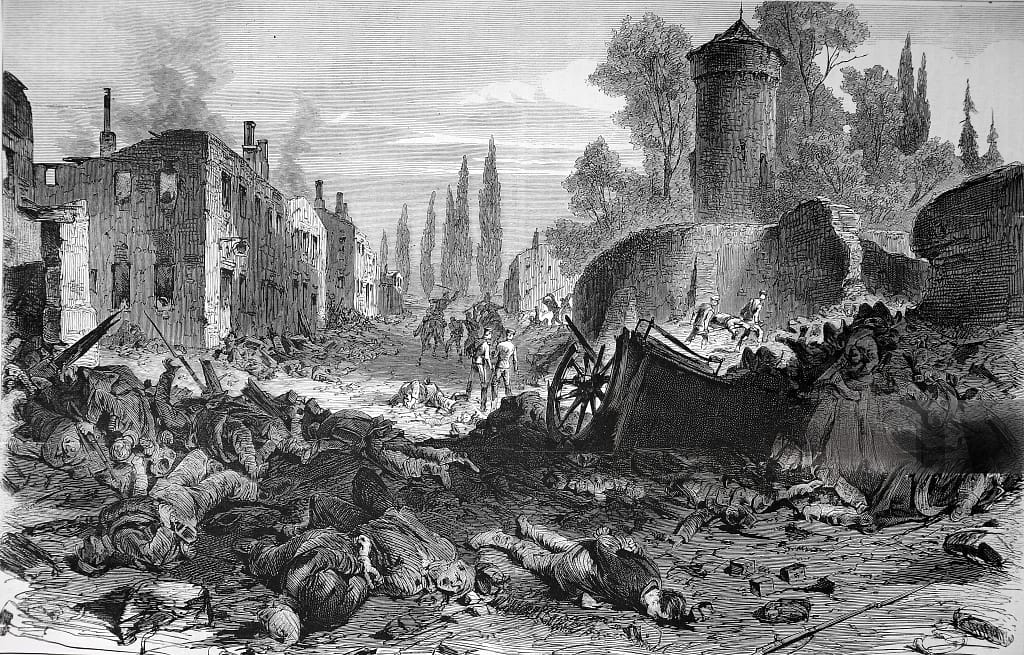
At first light on 1 September, the Bavarians renewed their attack with larger forces and heavier artillery preparation. Shells set fire to many of the houses, filling the narrow lanes with smoke and chaos. The French marines, reinforced by line infantry detachments, contested each building and street corner.
Urban combat was savage and intimate. Bayonets, rifle butts, and grenades were employed as the fighting collapsed into hand-to-hand encounters. The Bavarians advanced by storming houses one by one, while the French defenders regrouped in small groups, often counterattacking to buy time. Several times during the morning, the Bavarians forced their way into the centre of the village, only to be expelled again by French counter-assaults.
Phase III: Ammunition supply exhausted (1 September, afternoon)
By midday, the situation for the French marines became untenable. Ammunition was running out, artillery support was insufficient, and Bavarian reinforcements kept pouring in. Despite the ferocity of the defence, numbers began to tell. Gradually, the French positions contracted toward the northern edge of Bazeilles and the road toward Sedan.
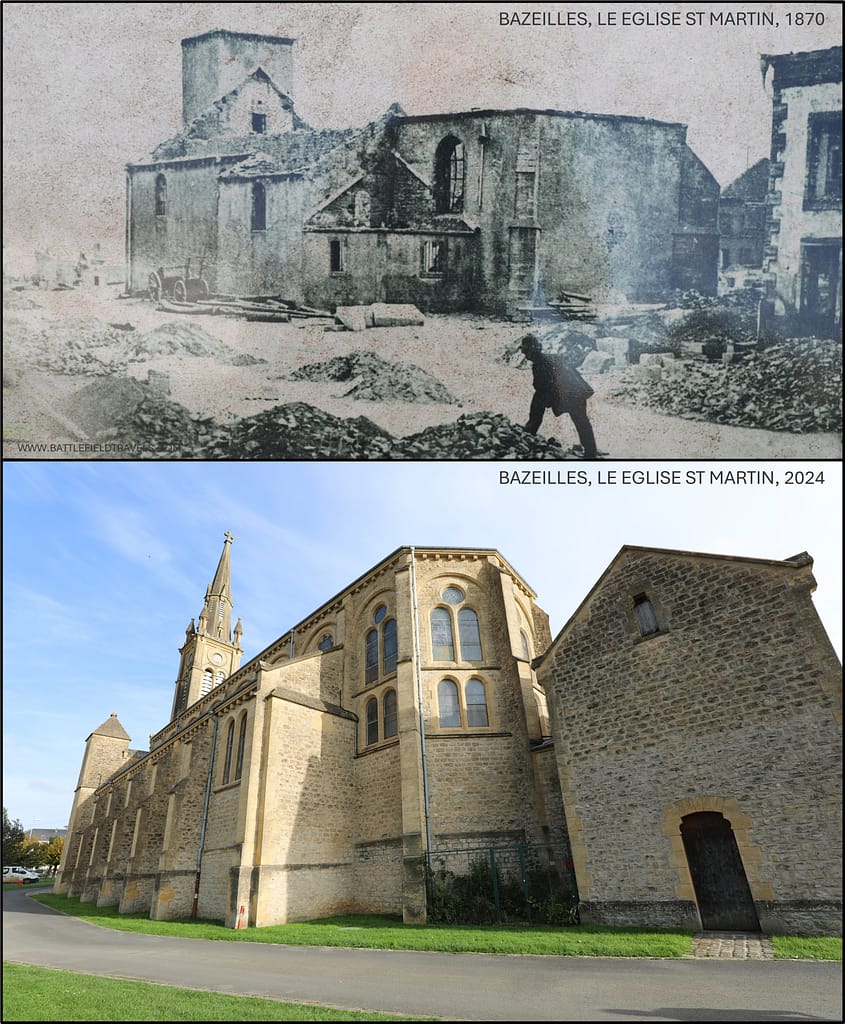
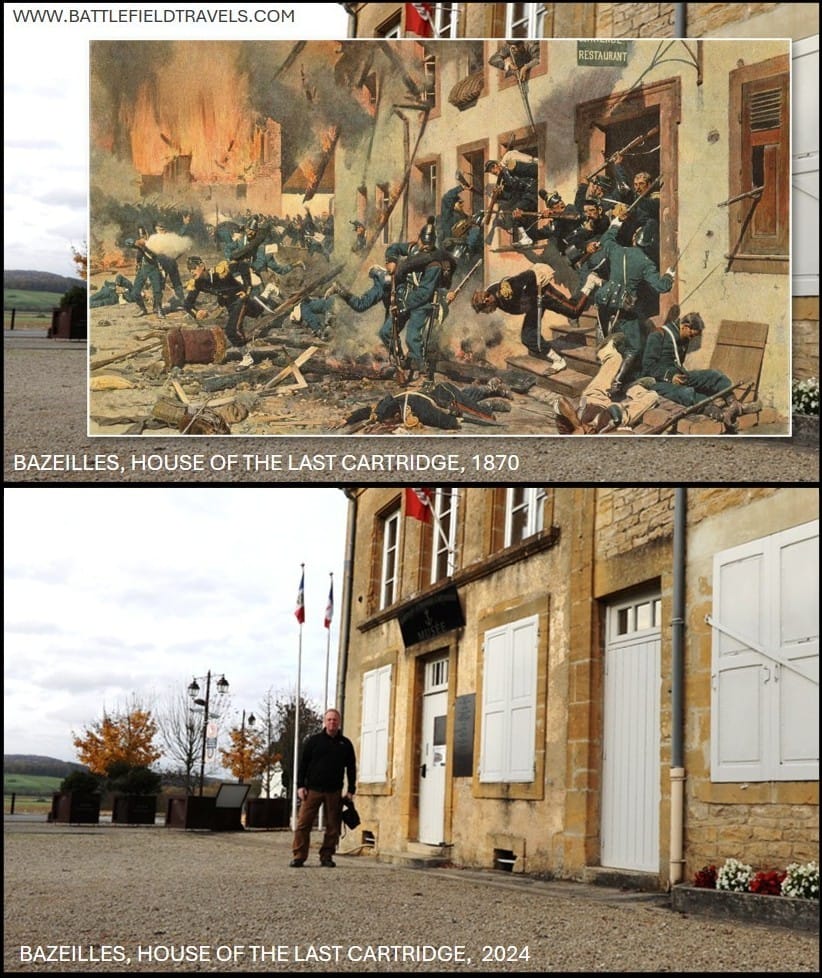
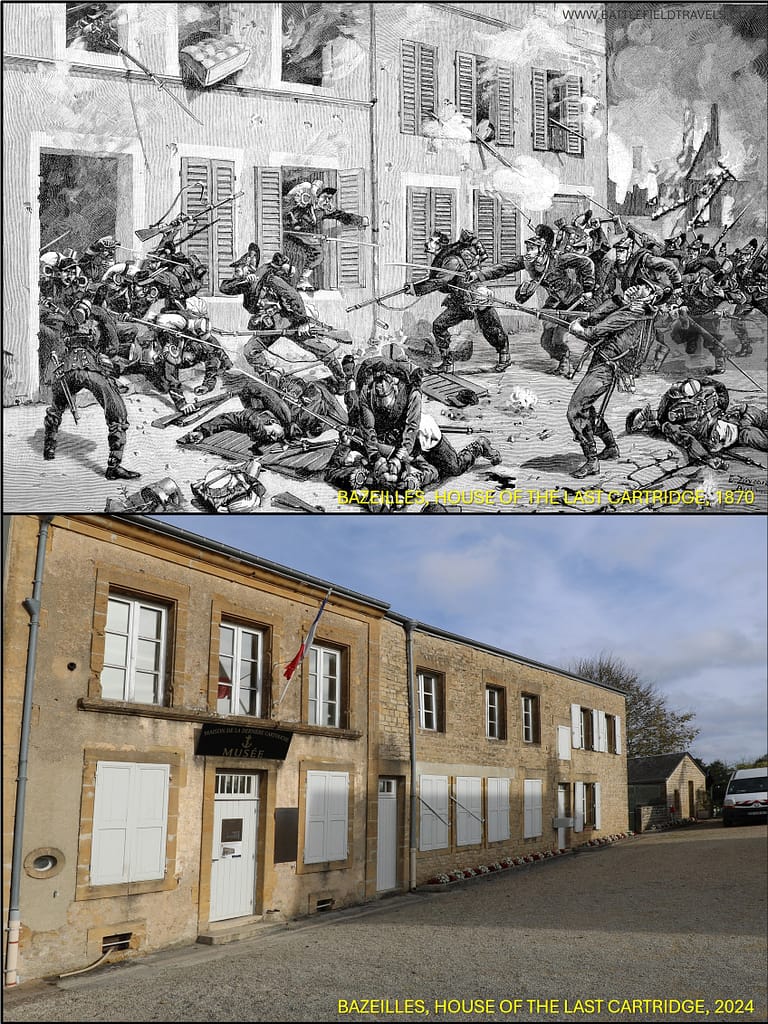
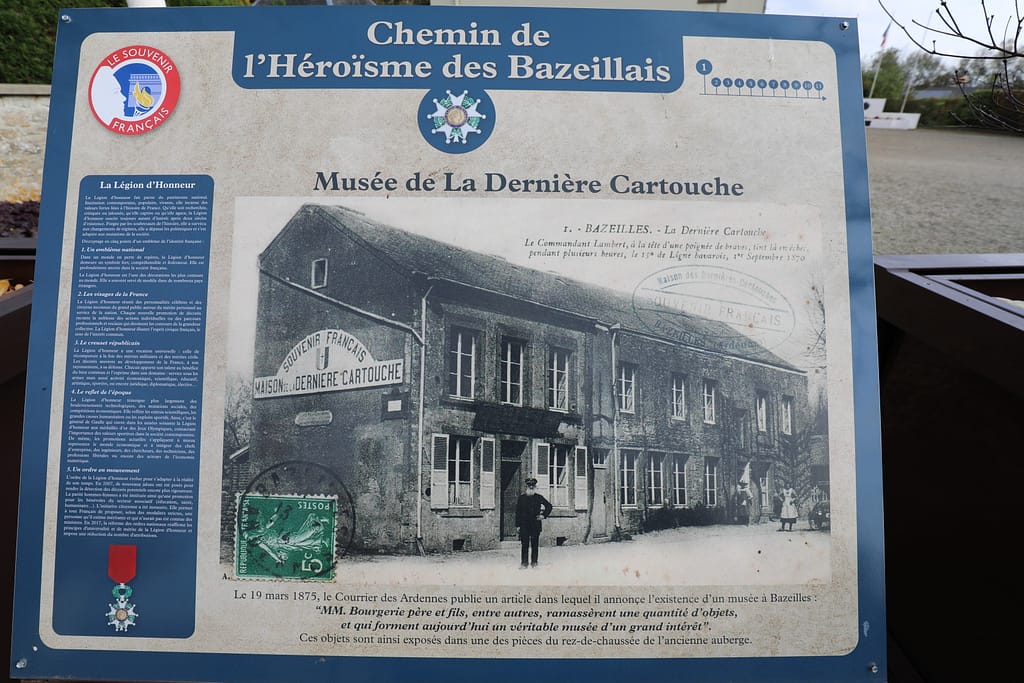
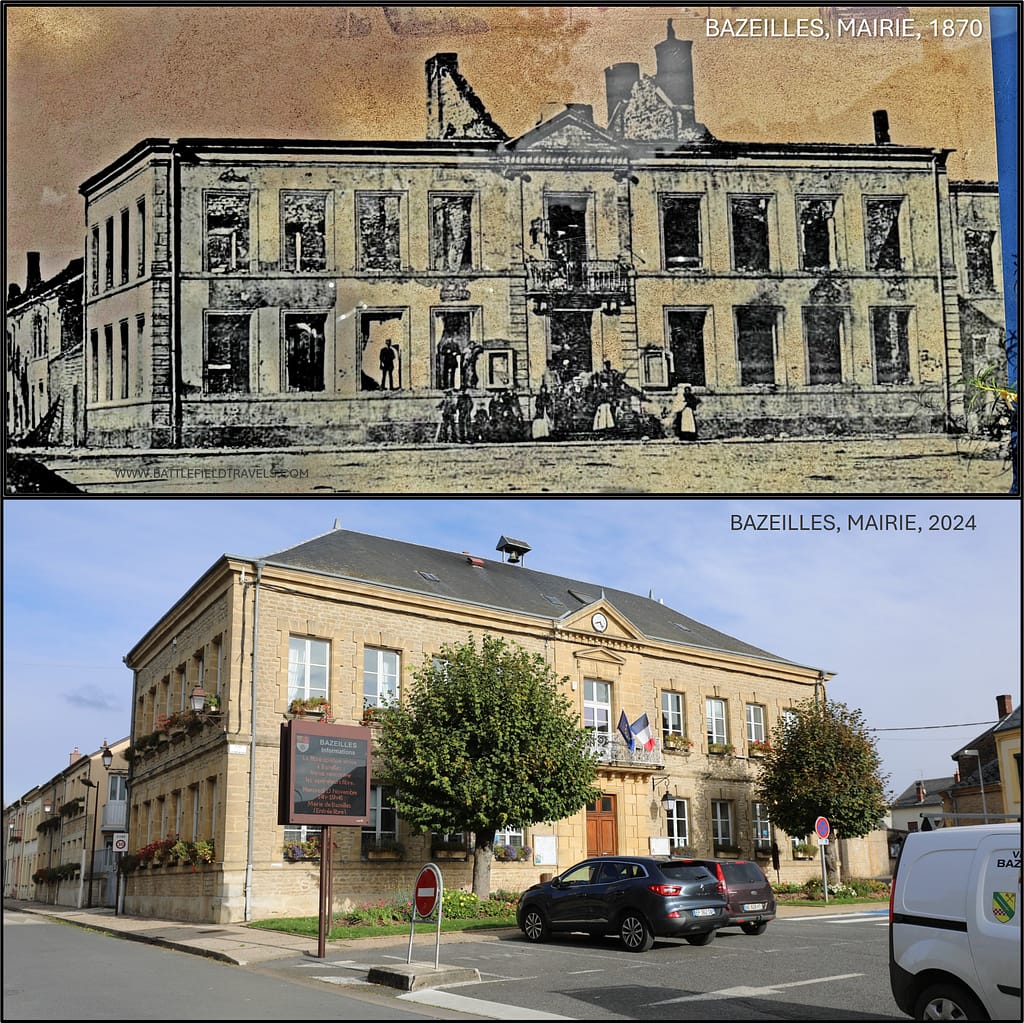
Major Arsène Lambert gathered a detachment in the inn known as the Auberge Bourgerie. Here, in what would later be remembered as the “Maison de la dernière cartouche” (House of the Last Cartridge), the marines fought to the last round. Survivors of Lambert’s command were killed, captured, or too severely wounded to resist further. The Bavarians, enraged by the resistance and their heavy losses, torched much of the village and committed reprisals against civilians and wounded soldiers.
Phase IV: Aftermath and operational impact
By late afternoon, the Bavarians had secured Bazeilles, but at crippling cost—roughly 5,000 casualties. The French marines lost around 2,600 men, including many officers and NCOs. Though outnumbered and ultimately overrun, their stand bought vital time for French forces around Sedan.
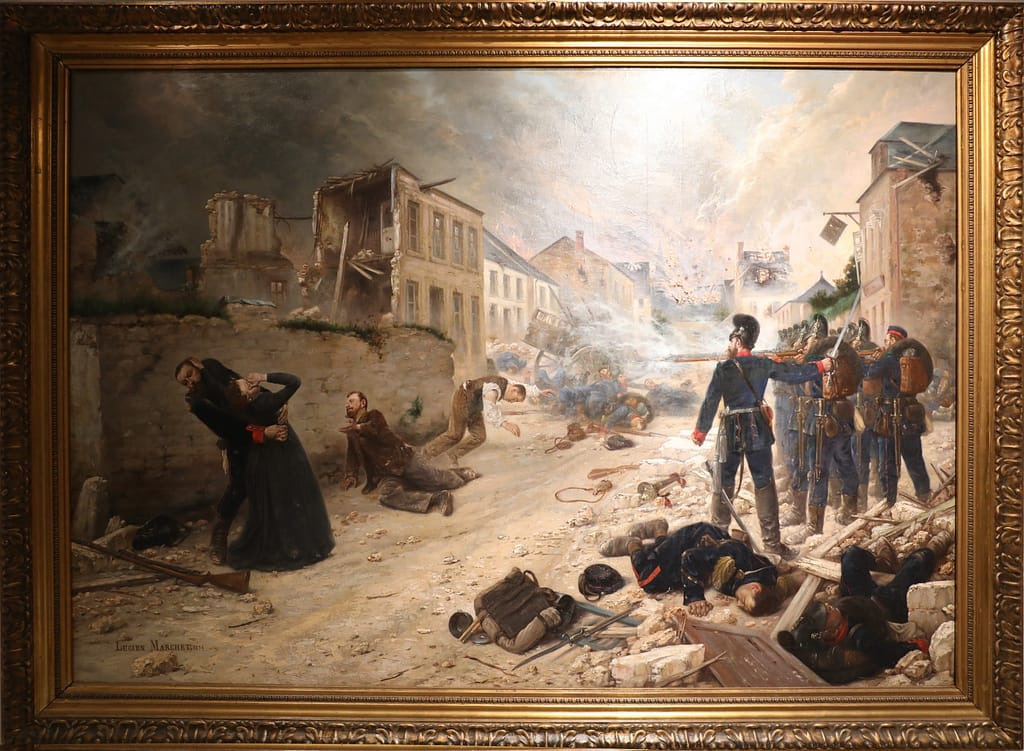
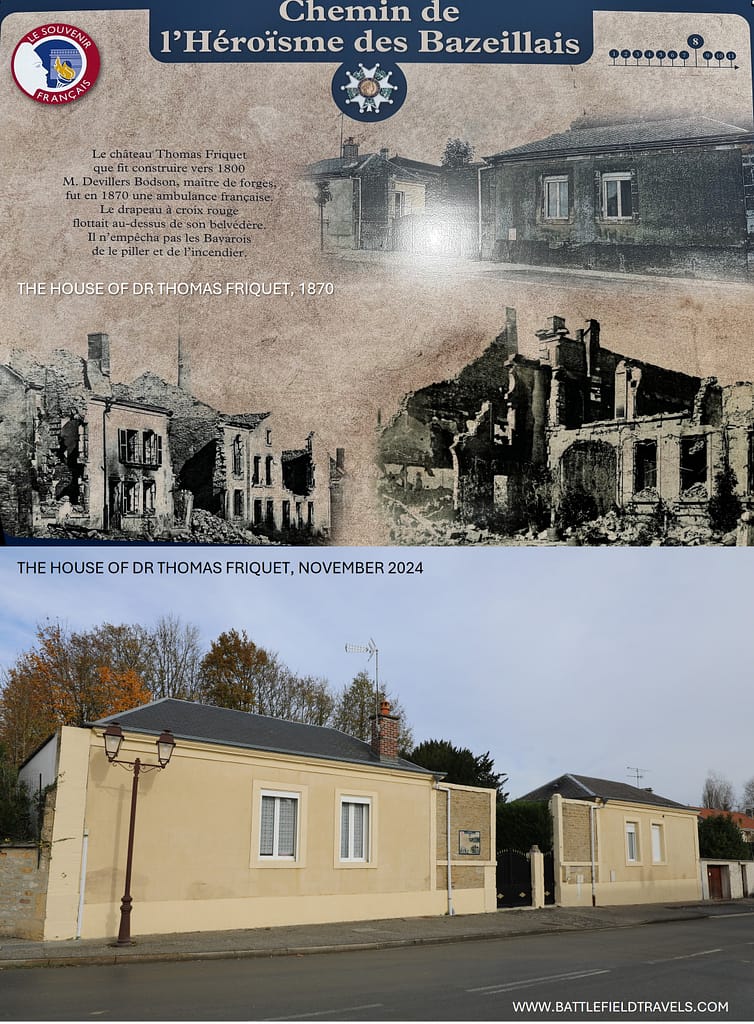
Some Bavarian troops, frustrated by their great losses and the bitter urban combat, inflicted reprisals upon the civilian population. Thomas Friquet attempted to save and treat the wounded from the battle. Friquet had draped a Red Cross flag over his house but the Bavarian soldiers burned down the house and executed more than 60 wounded French troops.
Operationally, however, the sacrifice at Bazeilles could not alter the larger battle. The Prussians and their allies completed the encirclement at Sedan, where Napoleon III and the Army of Châlons capitulated the next day with more than 100,000 troops.. Still, the stubborn defence of Bazeilles passed into legend within the French armed forces, symbolising self-sacrifice and fidelity to orders.
Outcomes: a brave but futile stand
Place in the larger war
The fall of Sedan and the capture of Napoleon III effectively ended the Second Empire and shifted the Franco-Prussian War into its second phase under the Third Republic. Yet, even in catastrophic defeat, Bazeilles stood out as an episode where French courage and tactical skill imposed disproportionate losses on the enemy. For historians, the action also highlighted the brutal nature of urban combat—foreshadowing the bloody street fighting that would become common in later wars.
⚔️ Go deeper — Members get exclusive access to the Deep Research Collection, Field Notes, and monthly Research Dispatches. Try membership free for 7 days, cancel anytime. From $9/month.
Symbolism and Memory
In defeat, the defence of Bazeilles became one of the most celebrated actions in French military history. The Troupes de Marine elevated the episode to the level of a founding myth—comparable to Thermopylae, the Alamo, or Camerone for the French Foreign Legion. The “House of the Last Cartridge” became both a shrine and a museum, commemorating the moment when Major Arsène Lambert’s men fought until their ammunition was exhausted.
The village of Bazeilles itself was honoured with the Legion d’Honneur in 1900 for its sacrifice. Annual Marine ceremonies continue to commemorate the battle, reminding successive generations of officers and troops that obedience, sacrifice, and tenacity in defence of orders remain central to their ethos.
The battlefield of Bazeilles today
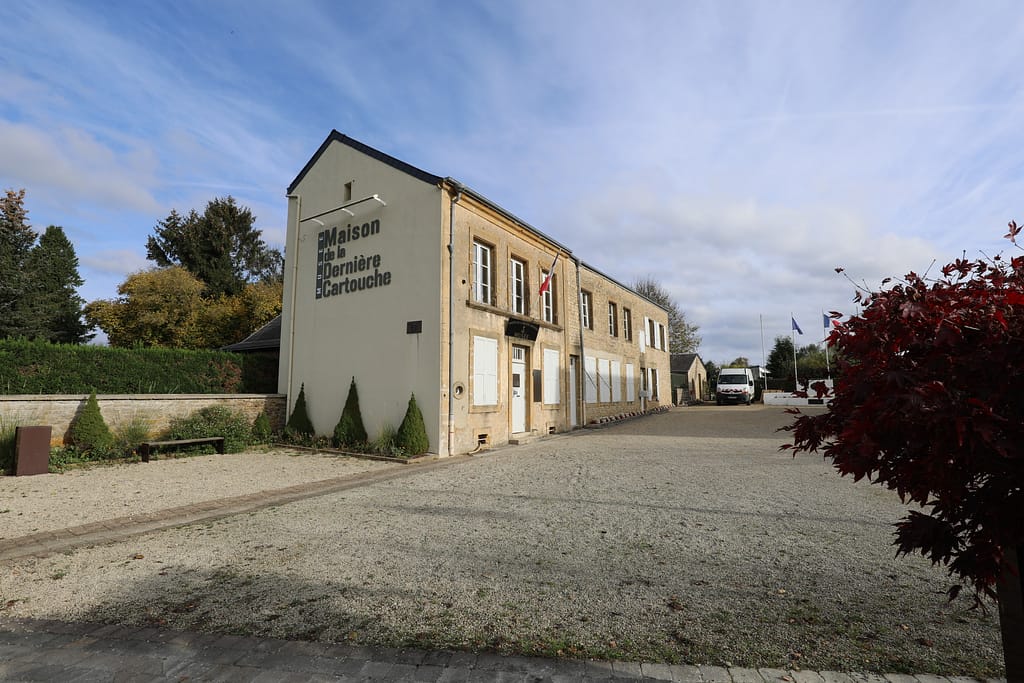
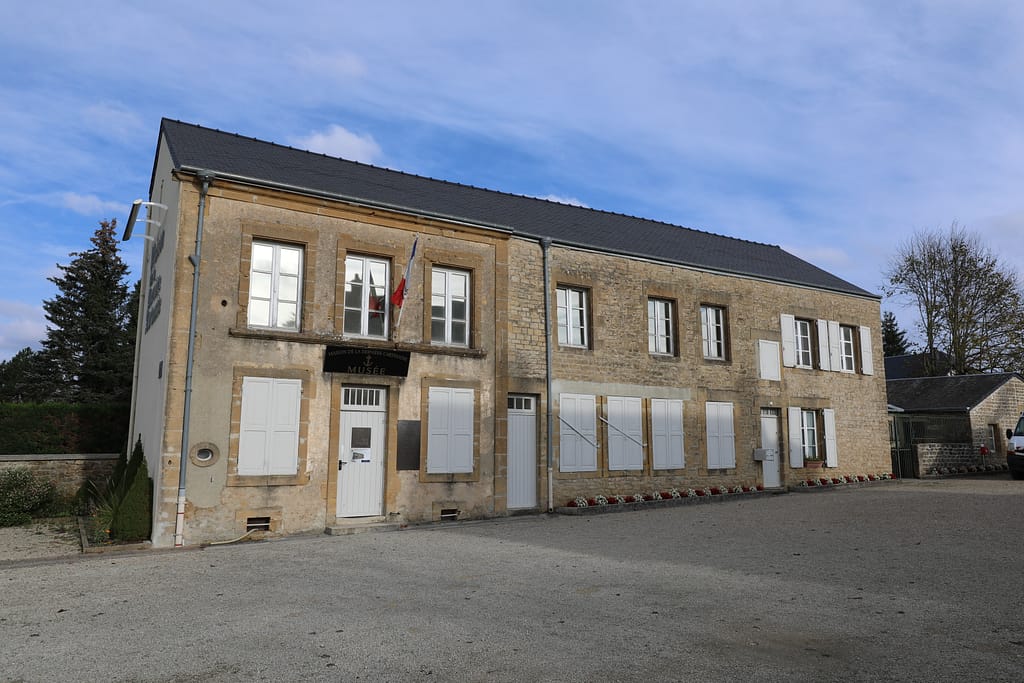
Maison de la Dernière Cartouche
The most evocative site is the Maison de la Dernière Cartouche (“House of the Last Cartridge”), the inn where Major Arsène Lambert and his marines fought until their ammunition was exhausted. Restored in 1875, the building was turned into a museum dedicated to the battle. Inside are preserved rooms scarred by bullets and shellfire, along with uniforms, weapons, and dioramas illustrating the fighting. For the Troupes de Marine, it functions both as a regimental shrine and a teaching site for new generations of officers.
House of the Last Cartridge, Bazeilles, website
Memorials and Ossuary
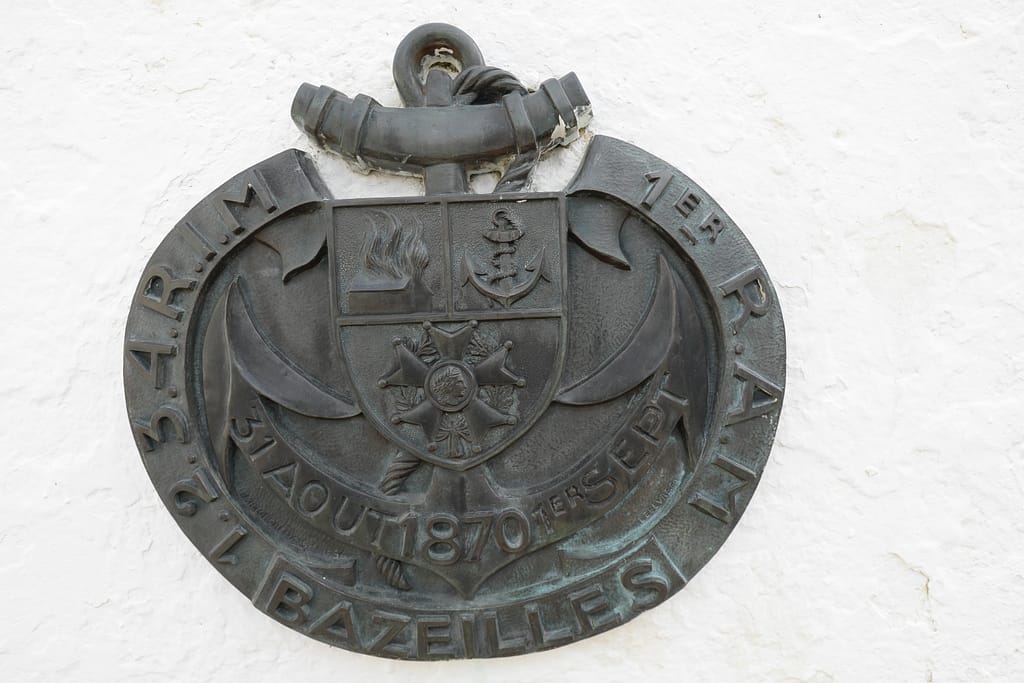
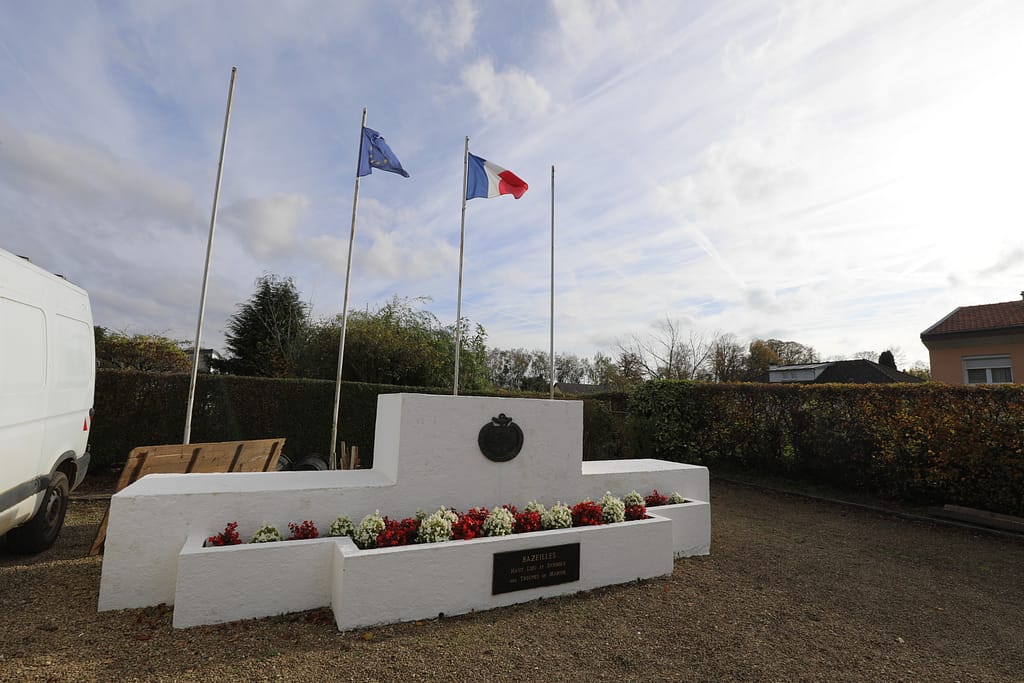
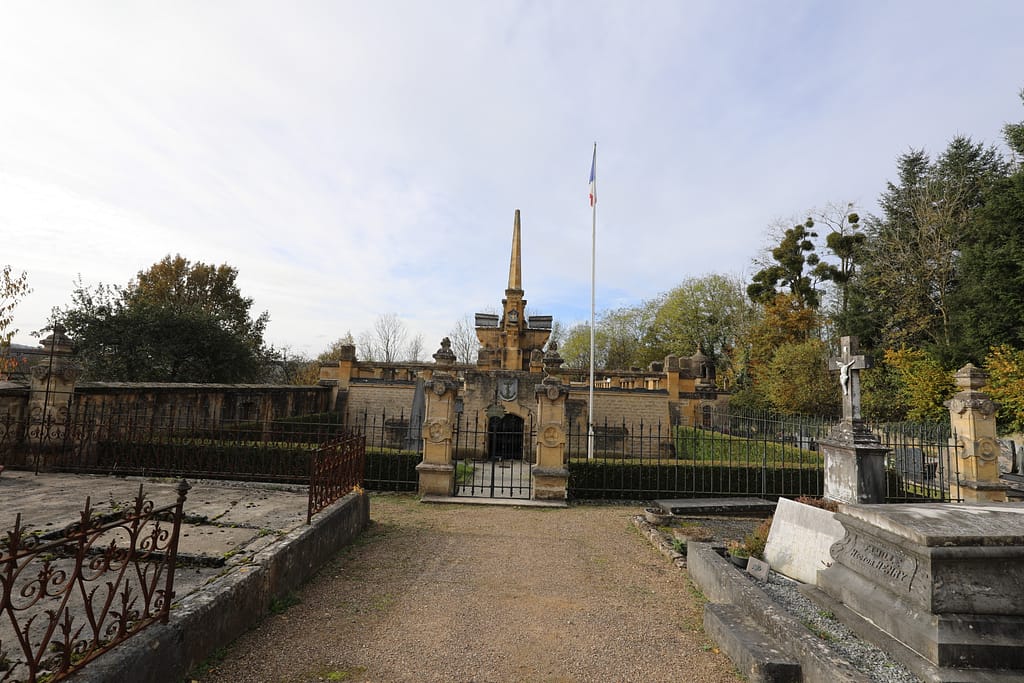
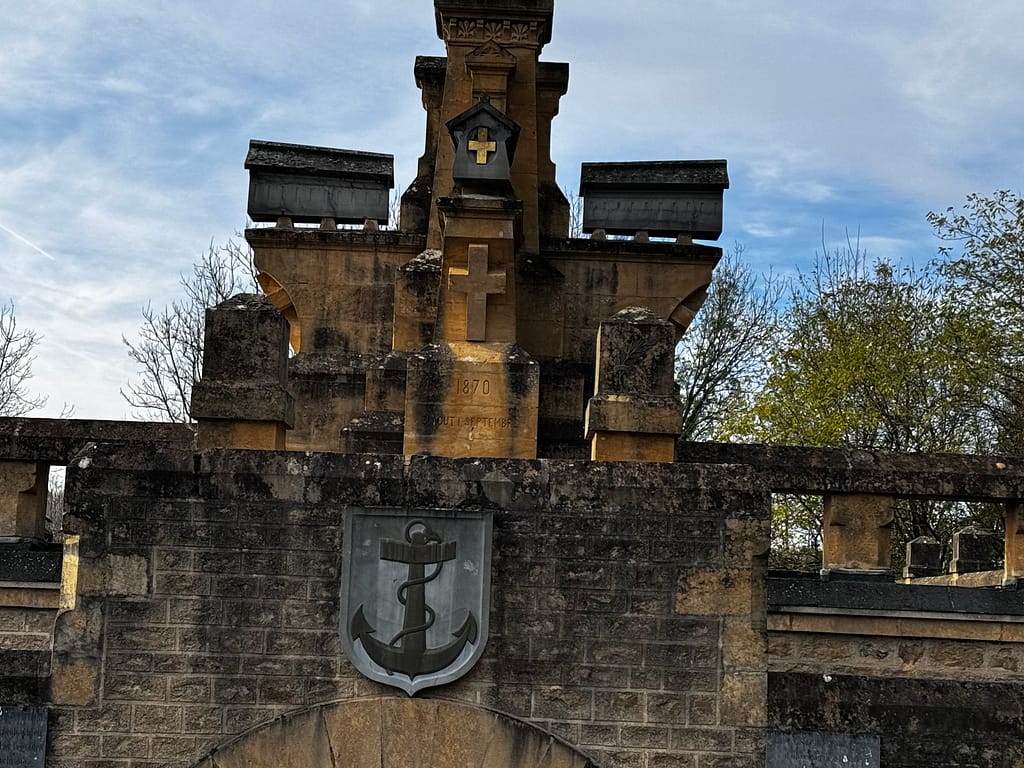
Outside the house stands a monument to the marines, while in the town square a larger memorial commemorates the wider battle. The fallen were interred in the Bazeilles Ossuary, marked by a Marine anchor, reinforcing the link between the town and the corps. The town crest itself reflects the memory of 1870: a burning house, a Marine anchor, and the Legion d’Honneur, which Bazeilles was awarded in 1900 for its sacrifice.
Urban landscape and memory
Modern Bazeilles has been rebuilt, but reminders of the destruction are embedded in its identity. Street names and plaques recall the officers and units who fought. Annual Marine commemorations are held on the site, echoing the solemn rituals of ANZAC Day at Gallipoli or Camerone Day for the Foreign Legion. The battlefield, though now absorbed into a living town, remains a symbol of the Marine ethos of sacrifice.
Additional Images of Bazeilles
Bazeilles – Maison de la dernière Cartouche (House of the Last Cartridge)
Bazeilles Town Square
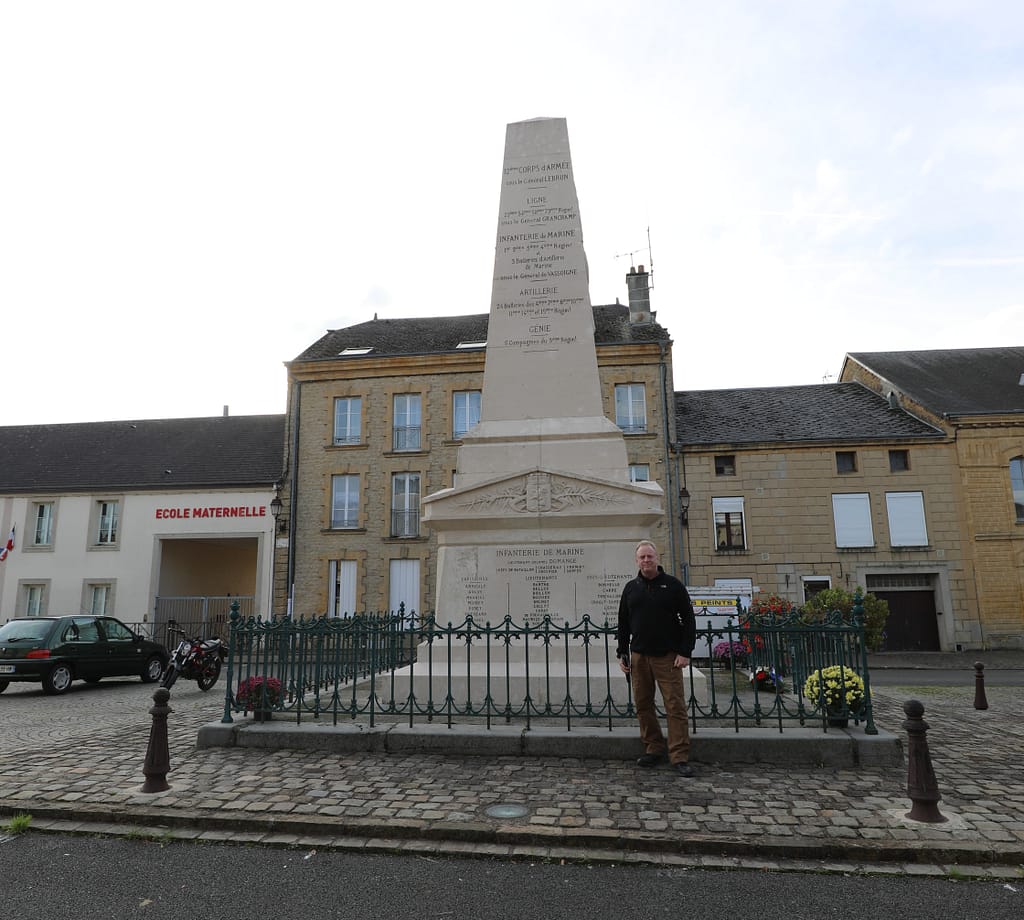
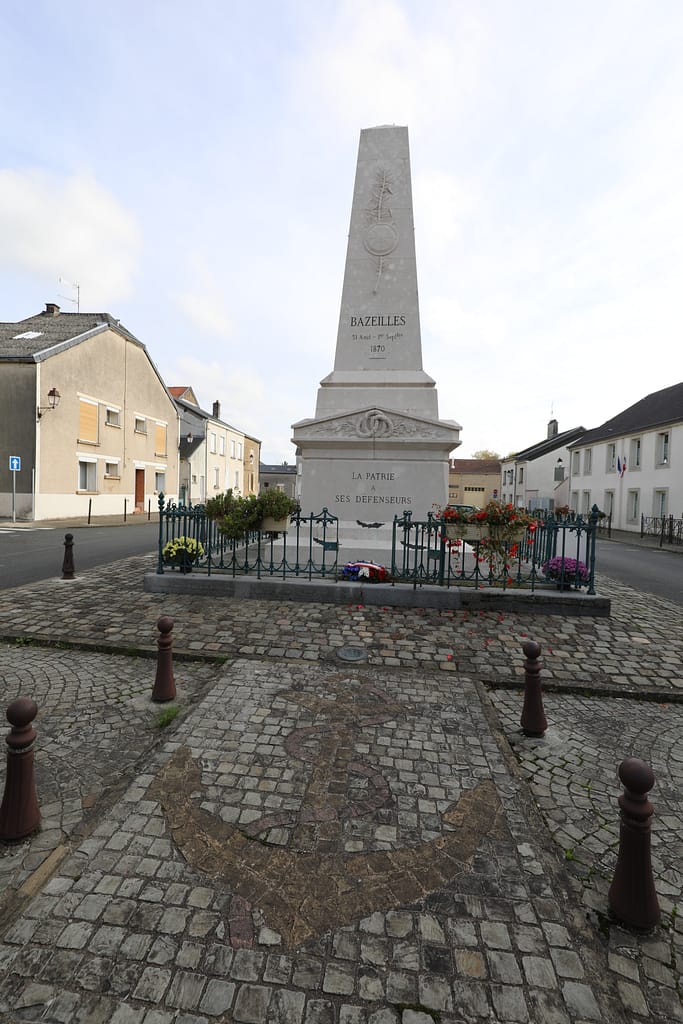
The Ossuary
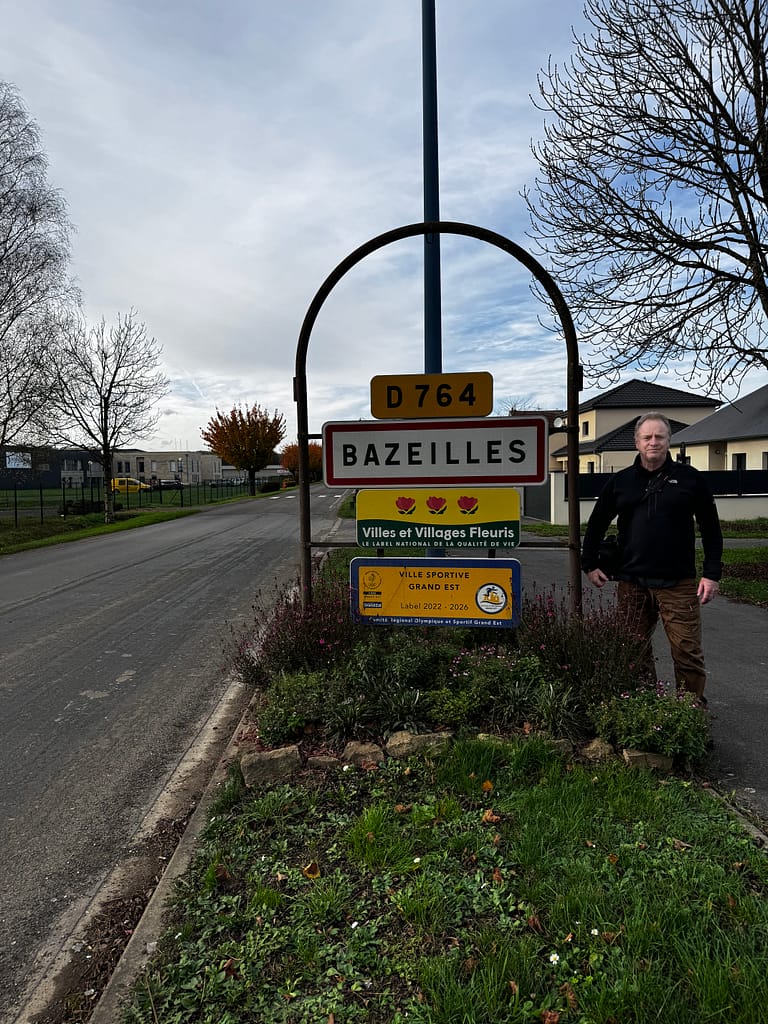
Bazeilles township
Found this useful? Buy me a coffee — it helps fund future battlefield research


Authored by Mick Prictor, a retired military officer with 40 years’ service, and a military historian specialising in terrain-focused analysis of tactics, doctrine, and command decision-making in land warfare. His work draws on extensive battlefield fieldwork—more than 280 sites worldwide—and one of the world’s largest private collections of historic military arms, uniforms, and equipment. About me
📚 Sources
Primary Sources
- Journal officiel de la République française (1870–71) – Official French wartime communiqués, including reports from Sedan and Bazeilles.
- Ernest Daudet, La Guerre de 1870: Sedan (1871) – Contemporary French account covering the Army of Châlons and the stand at Bazeilles.
- Wilhelm Rüstow, Der deutsch-französische Krieg 1870–71 – German officer’s detailed study, including Bavarian involvement at Bazeilles.
- Testimonies of the Troupes de Marine, preserved in French regimental histories, including recollections of Major Arsène Lambert’s last stand.
Secondary Works
- Michael Howard, The Franco-Prussian War: The German Invasion of France 1870–1871 (Routledge, 1961; reprints 2001).
- Geoffrey Wawro, The Franco-Prussian War: The German Conquest of France in 1870–1871 (Cambridge University Press, 2003).
- Quintin Barry, The Franco-Prussian War 1870–71. Volume 1. (Helion, 2006).
- Douglas Fermer, Sedan 1870: The Eclipse of France (Pen and Sword Military, 2016)
- François Roth, La Guerre de 1870 (Fayard, 1990) – French perspective, authoritative and detailed.
Official & Commemorative Resources
- Maison de la Dernière Cartouche (House of the Last Cartridge Museum), Bazeilles – Official museum site and archive of the battle.
- French Ministry of Armed Forces – Historical Directorate publications on the Franco-Prussian War and Marine traditions.
- Local commemorations and municipal history of Bazeilles (town crest, ossuary, monuments).
📚 Further Reading: Franco-Prussian War
This battle study nests within the broader analytical framework explored in the Research Hub, where operational methods, operating environments, armies, commanders, and weapons are examined across conflicts and eras. The links below connect related studies across the wider body of battlefield analysis on the BattlefieldTravels site.
⚔️ Explore all battle studies from the Franco-Prussian War 1870–1871
🏛️Explore the museum of Franco-Prussian War weapons and artefacts
🗞️ For updates on new battlefield studies and research insights, you can subscribe to the Newsletter.
Related Battle Studies, Museum Pieces & Reading Resources


🧭 Battlefield Travel Guide: Bazeilles
Getting There
- Nearest City: Sedan, 2 km away; Charleville-Mézières, 20 km
- Access: Bazeilles lies just southeast of Sedan, easily reached by car from the A34 motorway; local roads connect directly into the village.
- Tickets: Entry to the village itself is free; the Maison de la Dernière Cartouche museum charges a small admission fee.
Site Orientation
- Key Landmarks: Maison de la Dernière Cartouche (House of the Last Cartridge), the French Marine monument beside it, and the Bazeilles Ossuary marked with a Marine Anchor.
- Walking Routes: The village streets where the fighting occurred are compact and easily walked; the battlefield is essentially the town itself.
- Best Vantage Points: Around the Maison de la Dernière Cartouche, and in the town square where the main French memorial stands. These points give the best sense of the intense house-to-house fighting.
Museums & Visitor Centres
- On-site: Maison de la Dernière Cartouche – restored in 1875, now a museum with dioramas, artefacts, and exhibits explaining the Marines’ last stand.
- Nearby: Sedan Castle (Château de Sedan), the largest fortified castle in Europe, and the Sedan military museum covering the 1870 battle and both World Wars.
On-Site Experience
- Interpretive Signage: The museum provides detailed panels; the monuments and ossuary are marked but rely on prior reading for full context.
- Atmosphere: The compact streets, memorials, and preserved Maison give a solemn atmosphere. The site is treated with reverence by the French Marines, who commemorate it annually.
Nearby Points of Interest
- Related Sites: Sedan battlefield (1–2 September 1870), including key defensive positions and encirclement sites.
- Broader Interest: Ardennes region with WWI and WWII battlefields; the Meuse valley offers additional military and cultural sites.
Practical Tips
- When to Visit: The Maison de la Dernière Cartouche has set opening hours (check ahead, especially outside summer months). Commemorations by the French Marines occur around 31 August–1 September.
- Facilities: Facilities are limited within the museum; cafés and shops are available in Bazeilles and nearby Sedan.
FAQ: Battle of Bazeilles (1870)
During the Battle of Sedan (31 August–1 September 1870), French Marines of the Troupes de Marine held the village of Bazeilles against Bavarian forces in a desperate last stand.
It symbolises French sacrifice — the “last cartridges” legend — where the defenders fought house to house until they were overwhelmed.
The village was taken by the Bavarians after fierce fighting and burning of the village, contributing to the French defeat at Sedan.
Yes, including the “Maison de la Dernière Cartouche” museum, dedicated to the French marines’ defence.
Yes. The museum and preserved buildings, along with plaques around the village, provide a vivid sense of the action.
Subscribe to Battlefield Travels and receive a free E-Book Battlefield Guide
Unlock expert battlefield analysis, campaign reconstructions, and historical insights drawn from firsthand exploration and primary sources.
🗺️ You’ll receive:
🎖️ Exclusive historical insights you won’t find elsewhere
📘 A free eBook: 10 Tips for Exploring Historic Battlefields
📰 New battlefield studies straight to your inbox as they are published

⚔️ Go deeper — Members get exclusive access to the Deep Research Collection, Field Notes, and monthly Research Dispatches. Try membership free for 7 days, cancel anytime. From $9/month.
Thanks Mark. A small but important battlefield, especially for the Troupes de Marine!
Thanks, Mick—great stuff. I have and have played some a game on the Battle of Metz, At Any Cost.
https://boardgamegeek.com/boardgame/158815/at-any-cost-metz-1870
Jim, Bazeilles was part of the Battle of Sedan, but I also explored the battlefields of Mars-La-Tour and Saint Privat-Gravelotte which were part of the Battle of Metz. And the incredible Museum of 1870 at Gravelotte. They will be the subject of future posts as I work my way through. MIck