Brecourt Manor assault– Easy Company’s classic small unit attack on a fixed position!
On D-Day morning, a handful of 101st Airborne Division paratroopers launched one of the most famous small-unit assaults in military history: the attack on Brecourt Manor. Demonstrating initiative, courage and tactical excellence, Lieutenant Richard Winters initially led 11 men from Easy Company, reinforced by others along the way, bringing the total assault force to around 23 paratroopers. The paratroopers systematically destroyed a German artillery battery and prevented it from interdicting the causeway exits from Utah Beach.

Key facts
Google Earth map – Location of Brecourt Manor battlefield
🧭🥾 Walking the Battlefield
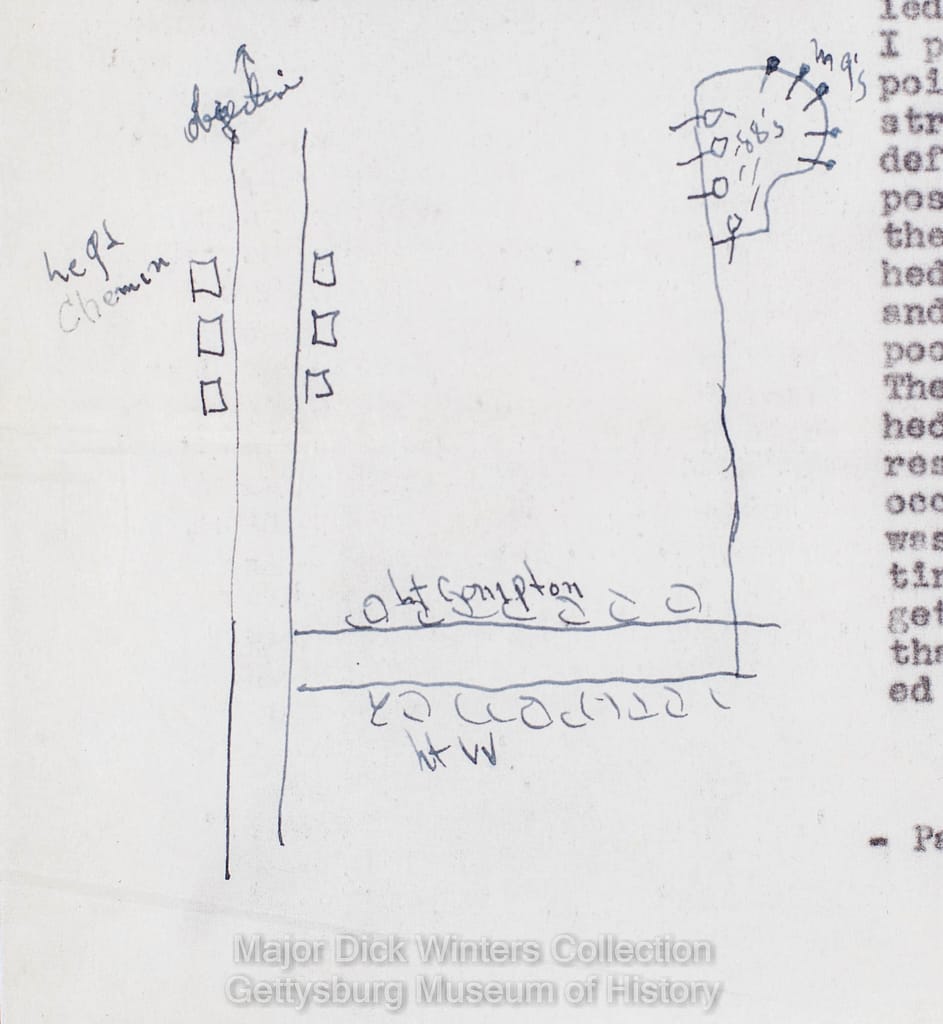
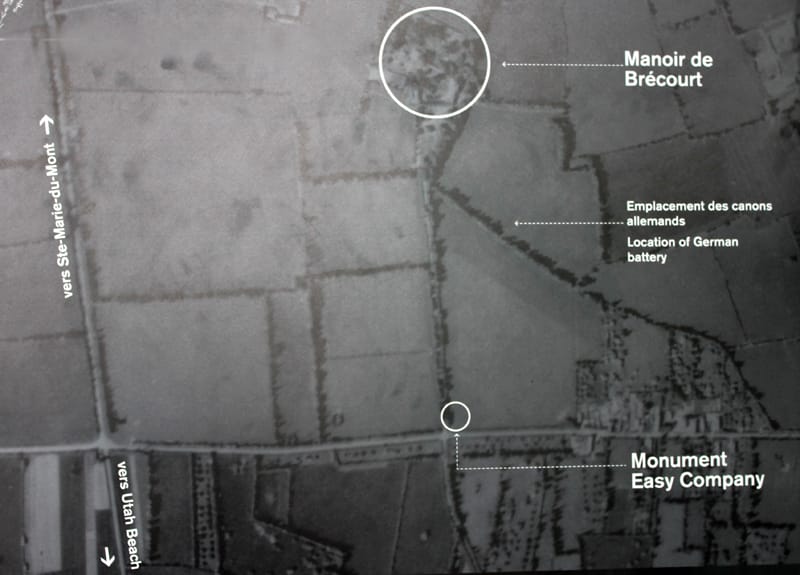
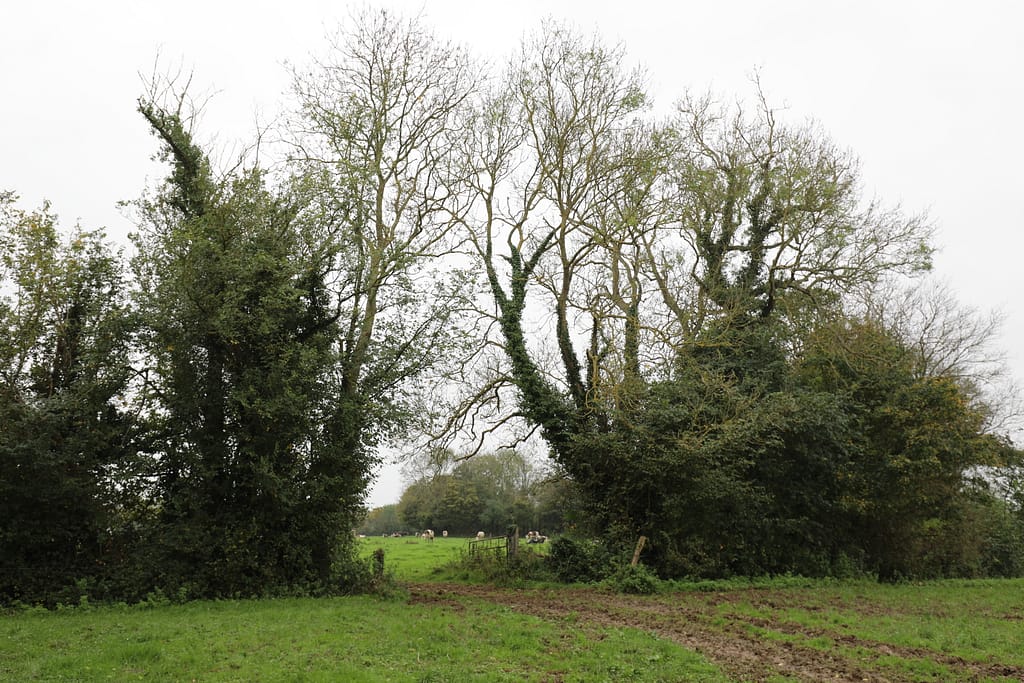
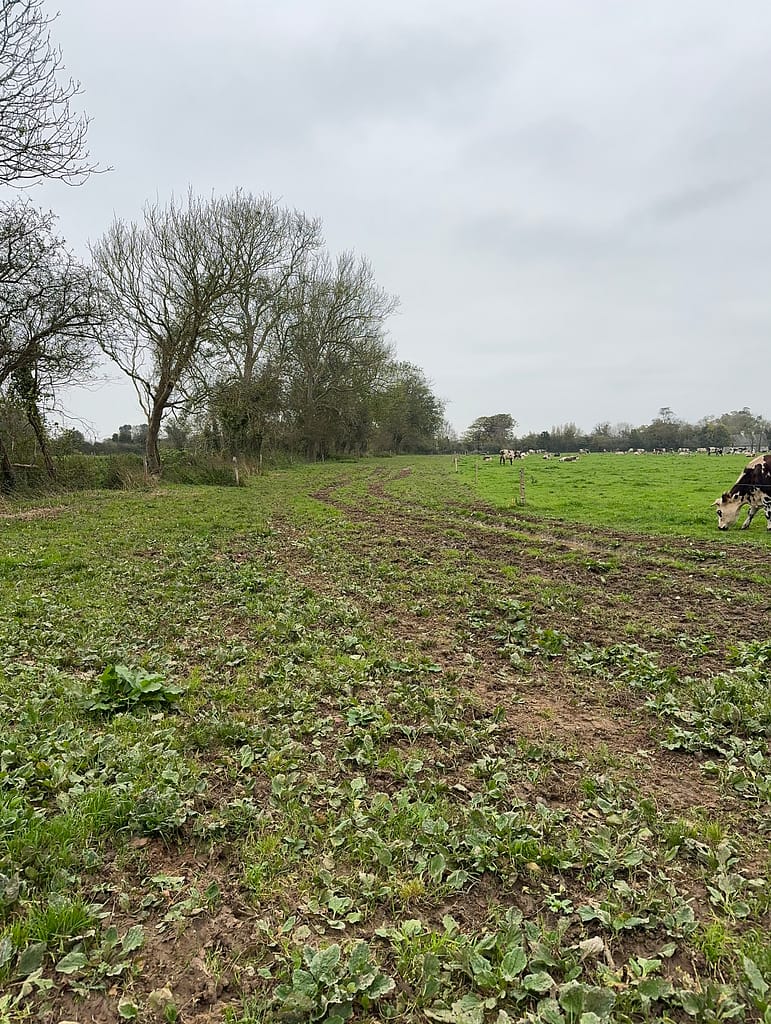
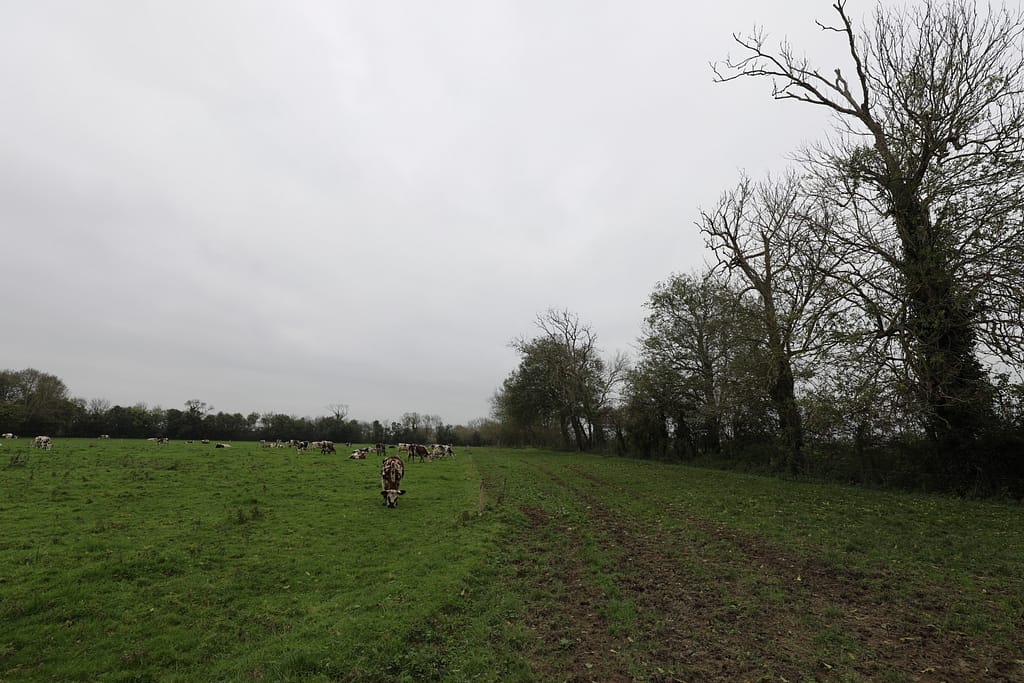
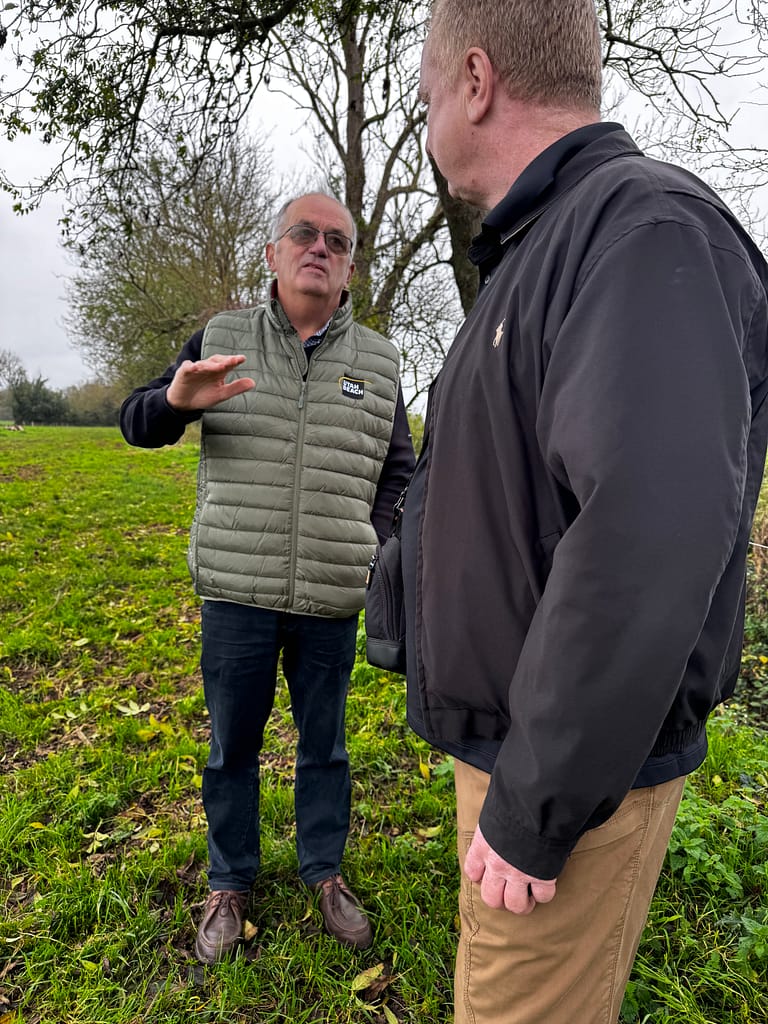
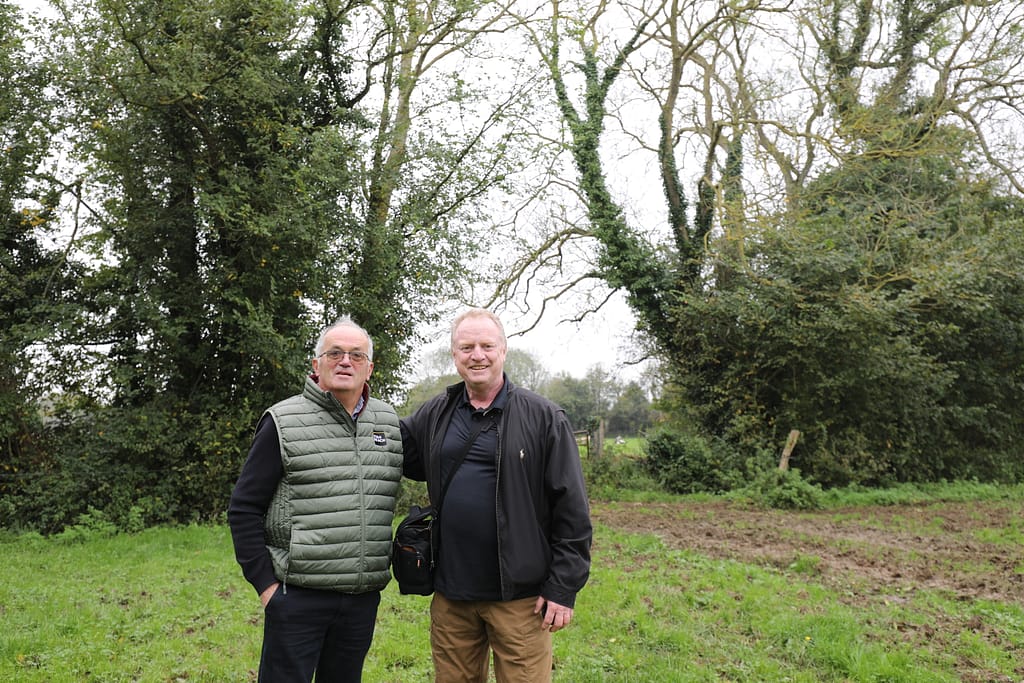
Brecourt Manor is an active dairy farm, so visitors are not permitted to enter the property. I explored the battlefield at the owner’s invitation. I was armed with first-hand accounts written by many of the Easy Company members, Dick Winters’ hand-typed notes and sketch of the position, and aerial photos of the Brecourt Manor field outlines (which match the current outlines almost perfectly). Incredibly, the battlefield is largely unchanged since 1944. The treelines and drainage ditches are in the same locations as they were in June 1944.
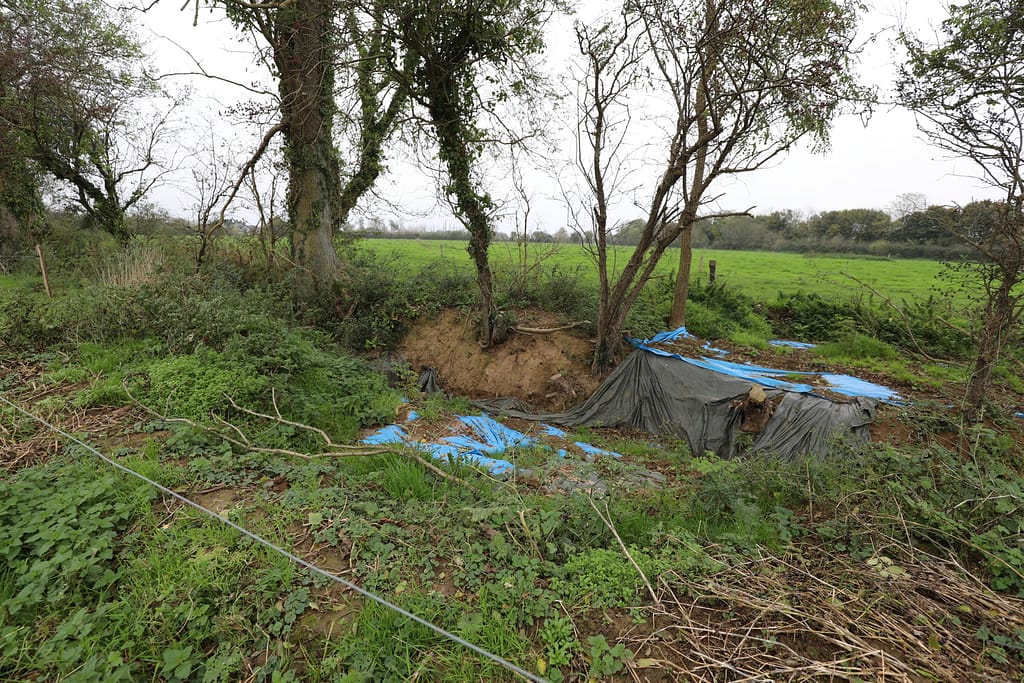
The exact locations of the artillery dugouts were lost for decades, but teams from the University of Bordeaux-Montaigne have recently excavated them. You can clearly see the gun bay and the ammunition preparation area, both identically laid out according to German doctrine of the period.
It was truly an honour and a privilege to walk this ground! Standing in those unchanged ditches and treelines, you realise why military academies still teach this action today.
Normandy series of battlefield studies
This article is part of a series exploring the D-Day airborne and amphibious battlefields on 6 June 1944 and the immediate aftermath. Click on the hotlinks to open the battlefield study.
Easy Company ‘Band of Brothers’ 2-506 PIR, Brecourt Manor assault, 6 June 1944
Overview
Here on 6 June 1944, Lieutenant Richard ‘Dick’ Winters, acting company commander for Easy Company ‘Band of Brothers’, 506th Parachute Infantry Regiment, 101st Airborne Division, led a highly successful assault on a defended German position. Winters initially led 11 men from Easy Company, reinforced by others along the way, bringing the total assault force to around 23 paratroopers.
Easy Company’s action that day was depicted in the Steven Spielberg/Tom Hanks series ‘Band of Brothers’ Episode 2 ‘Day of Days’. During my research prior to departing for France, I reached out to the owners of Brecourt Manor (which is still an active dairy farm), to see if it was possible to visit the battle site. I was very pleasantly surprised when we received an invitation from Monsieur Charles de Vallavieille to accompany him on a tour of the site!
The Brecourt Manor assault by Easy Company of the 506th Parachute Infantry Regiment is still studied as a model of small-unit tactics.
101st Airborne Division operations on D-Day
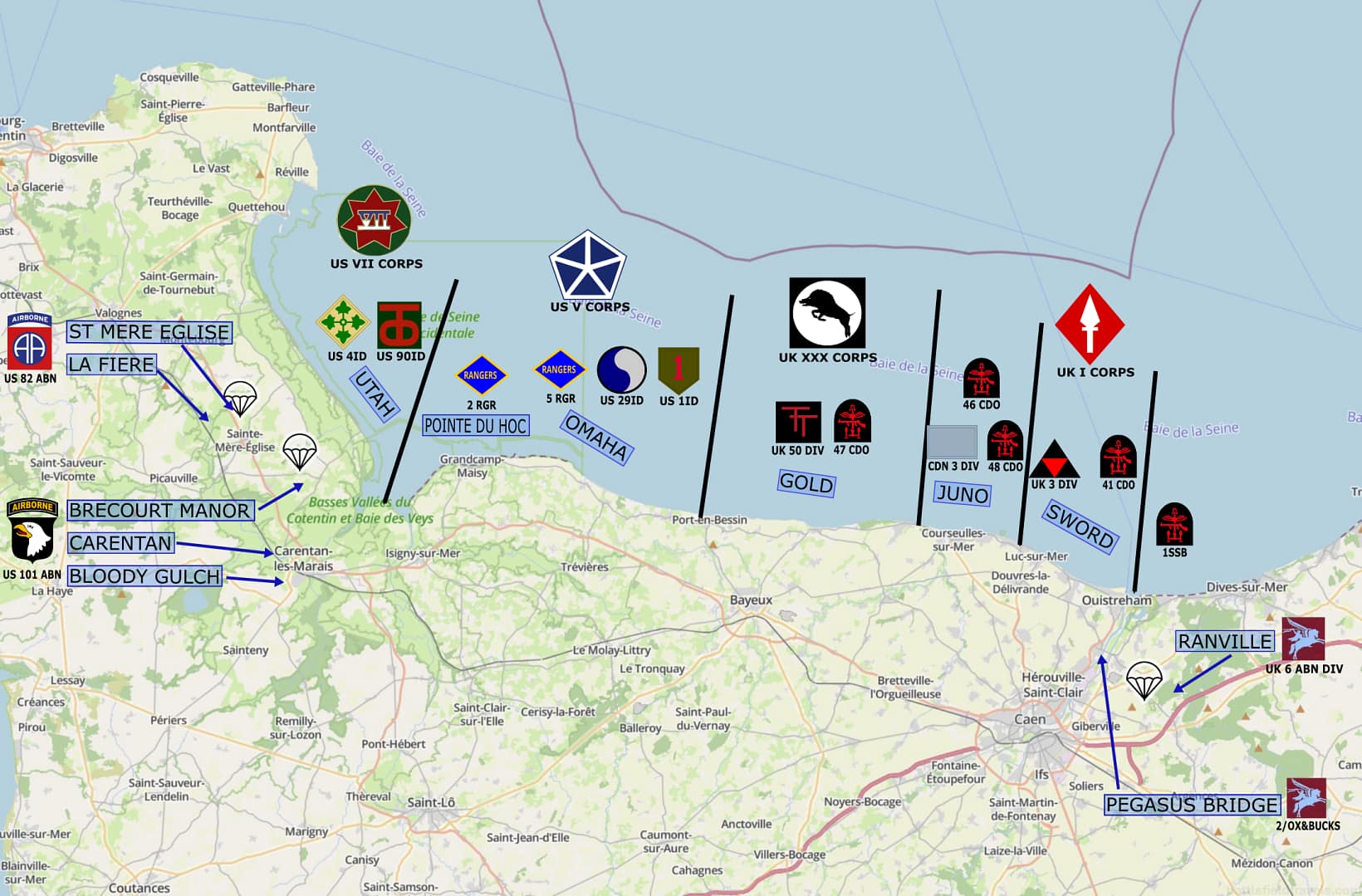
I have explored the US Airborne operations on D-Day in a separate post, so I won’t repeat the full background here. The 101st Airborne Division jumped into the area around Sainte-Marie-du-Mont in the early hours of D-Day, June 6, 1944. The Division’s mission was to secure the four causeways or beach exits from Utah Beach, and to seize the key port and transport hub of Carentan. As with the 82nd Airborne Division paratroopers, the 101st Airborne Division troops were widely scattered during the jump. Little groups of paratroopers (LGOP in airborne parlance) coalesced around junior leaders to continue with their missions.
Headquarters 506th PIR (Parachute Infantry Regiment) rallied in a farmhouse at Le Grand Chemin, north of Saint-Marie-du-Mont. The farmhouse also served as a rallying point for paratroopers from many units. From the farmhouse, the Americans could hear German artillery firing from a position about 300 metres away, near Brecourt Manor. The German 105mm artillery battery was firing on the American troops landing at Utah Beach, about 6km to the northeast.

Opposing Forces at Brecourt Manor
 American Paratroopers
 American Paratroopers
- Commander: 1st Lieutenant Richard “Dick” Winters, acting company commander for Easy Company 506th Parachute Infantry Regiment (PIR)
- Core Assault Force: 11 men from Easy Company, 2nd Battalion, 506th PIR, 101st Airborne Division.
- Attachments: Individuals from Able and Fox Companies.
- Reinforcements: 1st Lieutenant Ronald Speirs arrived mid-battle with elements of Dog Company, providing fresh momentum.
- Strength: Approximately 23–25 paratroopers in total, armed with M1919 0.30-cal machine guns, M1 Garand rifles, Thompson submachine guns, and grenades.
 German Defenders
 German Defenders
- Unit: Battery 6 / Gebirgs-Artillerie-Regiment 191, 91. Luftlande-Division.
- Guns: Four 105 mm leFH 18 howitzers dug into open fields, connected by trenches. Most of the mountain artillerymen had fled or been killed by naval bombardment, so the guns were being served by infantry replacements.
- Infantry Support: Roughly one company of 6th Fallschirmjäger Regiment (elite German paratroopers), manning machine-gun pits and rifle positions around the gun line.
- Strength: Roughly 60–80 men defending the battery at the start of the assault, supported by interlocking fields of fire.
Balance of Forces
The Americans attacked with fewer than 30 lightly equipped paratroopers against a dug-in German position manned by three to four times their number and supported by heavy weapons. Despite the imbalance, Winters’ careful use of fire-and-manoeuvre, combined with aggressive initiative by his men, allowed the paratroopers to destroy the battery and capture the position.
Approximate timeline of the Brecourt Manor assault
Discovery and decision (08:30–08:45 hrs)
From the 506th PIR rally point at Culoville (the “Holdy” farmhouse), Winters and Lt Harry Welsh clearly heard the German guns firing toward Utah Beach. Winters received a direct verbal order from Major Robert Strayer (2-506 PIR commander): “Take care of it, Winters.” No artillery or air support was possible. Winters had minutes to plan. In the absence of the Easy Company Commander, LT Thomas Meehan (later confirmed killed along with all crew and passengers when his C-47 Dakota crashed), Winters was designated as acting Company Commander.
Lieutenant Winters makes a plan (~08:30 hrs)
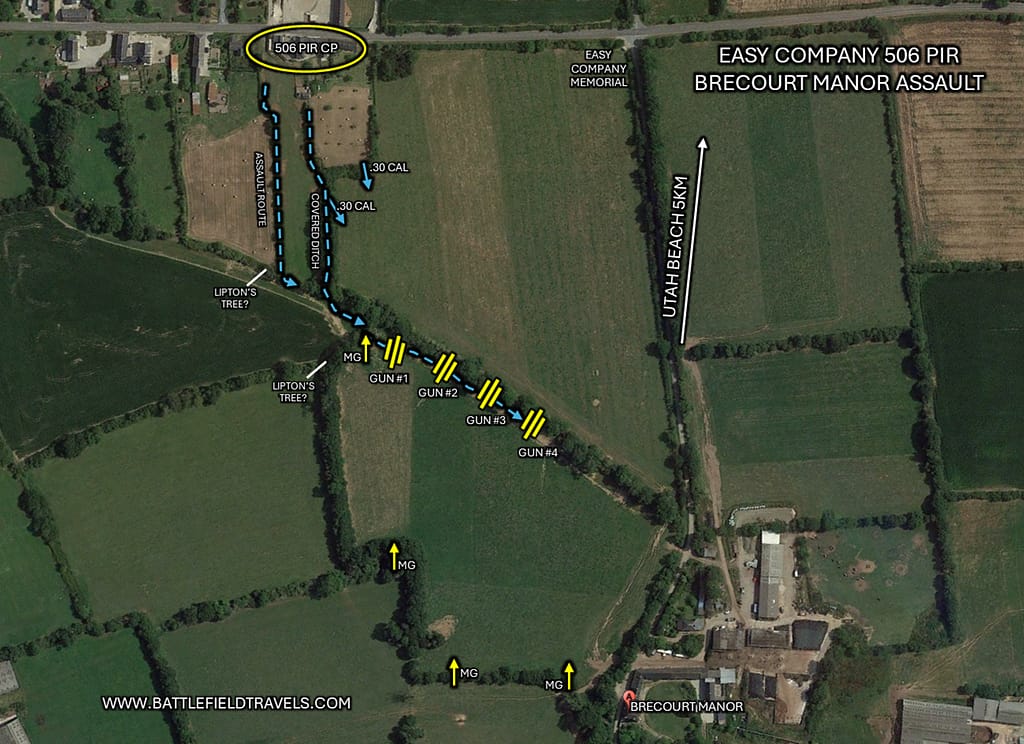
Winters gathered 11 paratroopers from Easy Company and several individuals from Able and Fox Companies and developed a quick plan. This small force would use two irrigation ditches to approach the German position, establish a base of fire, attack each gun in succession, and use explosives to destroy the guns. ( I took the opportunity to follow that same ditch – video attached below!).
The German force comprised four 10.5 cm leFH 18 (German: leichte Feldhaubitze = Light Field Howitzer), several machine guns, and about 50-60 troops. The German artillerymen had fled the position and the guns were primarily manned by infantry soldiers. The guns were dug into a treeline position, with each gun dug into a firing bay, and the bays connected by a linear trench system. The guns were well hidden from aerial view by the tree cover. An infantry platoon and several machine guns secured the flanks and rear of the German position.
Easy Company assault on the German battery
Approach march along the irrigation ditches (~08:45–09:00 hrs)
Instead of assaulting frontally across 400 m of open beet fields, Winters led the entire force south-east along a deep, hedge-lined drainage ditch that ran almost to the German left flank. This gave a covered approach to within 50 metres of Gun #1. The ditch is still there today, and you can walk the same route. In fact, the entire farm layout is almost identical to how it was in June 1944, as depicted in the aerial photos above.
Base of fire established (~09:00hrs)
As Winters and the assault team approached via the irrigation ditches, he positioned two M1919 .30-cal machine gun teams to form a base of fire for the assault. Privates Joe Liebgott and Cleveland Petty were assigned one position, while Privates John Plesha and Walter Hendrix manned the second. Sergeants Mike Ranney and Carwood Lipton were also assigned roles in fire support from a treeline further south.
Winters and the remaining troopers continued along the ditch towards the German position. Winters tasked 2LT Lynn ‘Buck’ Compton, Sergeant Bill Guarnere and Private Don Malarkey with eliminating the German machine gun position at the western end of the treeline.
Phase 1 – Neutralise the flank MG and take Gun #1 (09:05–09:15 hrs)
The assault commenced with a signal from Winters for the two .30 Cal machine guns to open fire. With the .30 Cal fire suppressing the westernmost German positions, Compton, Guarnere and Malarkey then tossed grenades and immediately assaulted the machine gun position. Once this machine gun was eliminated, Winters led the assault on the first artillery position. A grenade wounded Private Popeye Wynn, and Private Joe Toye managed to survive two grenade explosions relatively unscathed. The paratroopers spiked the gun with TNT and German stick grenades. First gun eliminated.

Phase 2 – Gun 2 and the intelligence coup (~09:15–09:30 hrs)
Moving east along the communication trench, Winters and the assault group surprised the crew of Gun #2 at close quarters. A short firefight ensued and several Germans killed, while the rest fled. In the trench behind Gun #2, Winters discovered a camouflaged command dugout containing:
• a field telephone switchboard
• a large-scale map showing every German battery on the Cotentin peninsula (invaluable – immediately sent to battalion)
• range tables and code books
Gun was #2 destroyed with TNT. PFC John D. Halls (of A Company) was killed during this assault.
Phase 3 – Gun #3, the hardest fight (~09:30–10:00 hrs)
By now, the Germans realised they were being rolled up from the flank. An MG42 80 metres further east opened fire along the trench. Winters now ordered his two .30 Cal machine gun teams forward to suppress the German machine guns.
Bill Guarnere and Don Malarkey worked their way forward with grenades and Thompson fire. Joe Toye and Mike Ranney fed ammo to the MGs. Winters personally crawled forward under fire and tossed a grenade into the Gun 3 pit, then charged it with Toye. Gun 3 was now destroyed. At this point, Winters believed there were only three guns.
At around this time, Warrant Officer Andrew Hill was shot and killed as he moved through the battle area while searching for the headquarters of the 506th PIR.
Phase 4 – Speirs and Dog Company arrive; Gun #4 (~10:00–10:30 hrs)
Lt Ronald Speirs (Dog Company) heard the firefight and force-marched a Dog Company team across the open field from the farmhouse. With the Easy Company men exhausted from the battle for the first three guns, Speirs’ arrival gave fresh momentum to the assault. His men, attacking above ground rather than along the trench, overran Gun #4 and destroyed it with captured German charges.
Stephen Ambrose says that Speirs lost two men killed during this assault: SGT Julius “Rusty” Houck from F Company, and one soldier from D Company. I have not been able to find teh name of the D Company soldier.
Consolidation and withdrawal (~10:30–11:00 hrs)
Winters and his men had now been fighting for about two hours, and a German counterattack was develping. With all the German guns successfully destroyed and his mission achieved, Winters and his team withdrew to the main American position. For his action at Brecourt Manor that day, Winters was awarded the Distinguished Service Cross, and several of the men received Silver Stars and Bronze Stars for their actions. Easy Company’s action that day is still studied in American military schools as an example of an assault on a fixed position.
⚔️ Go deeper — Members get exclusive access to the Deep Research Collection, Field Notes, and monthly Research Dispatches. Try membership free for 7 days, cancel anytime. From $9/month.
The Brecourt Manor battlefield today
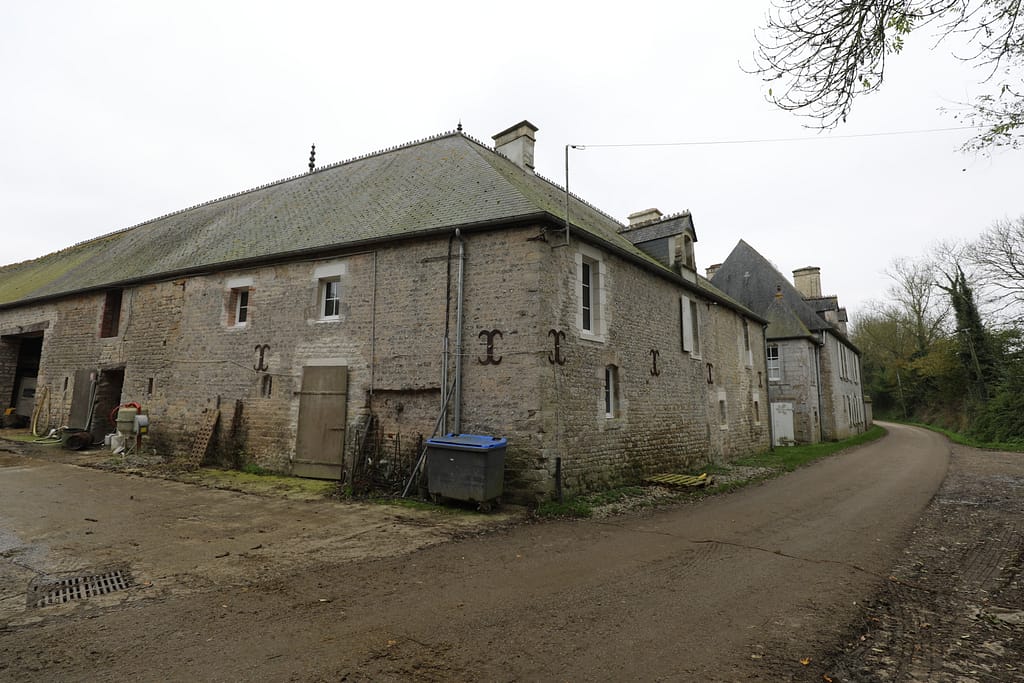
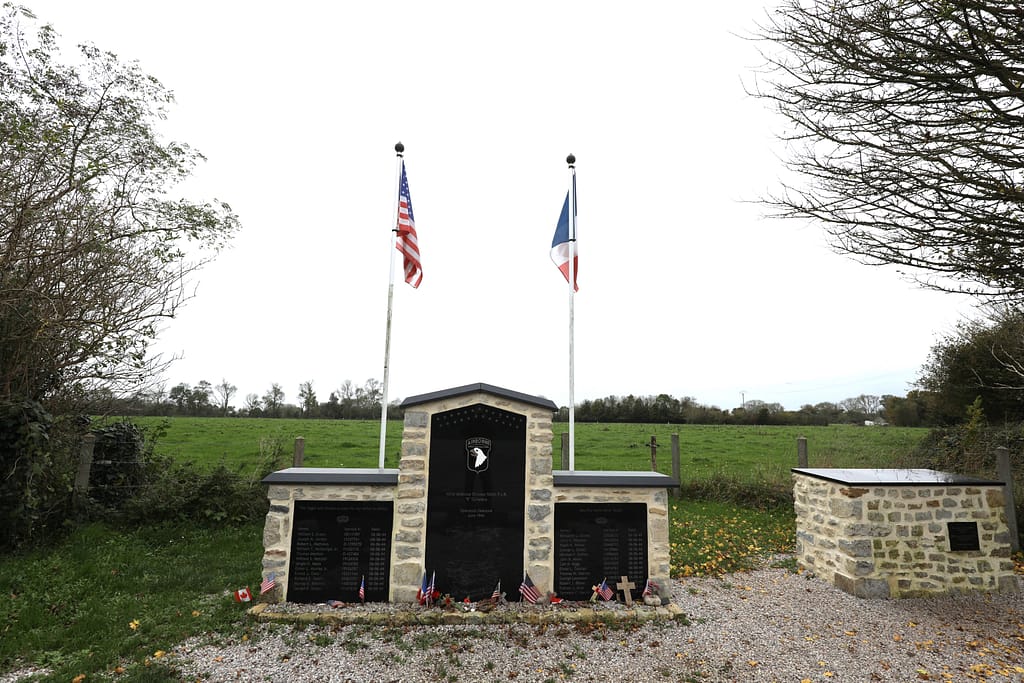
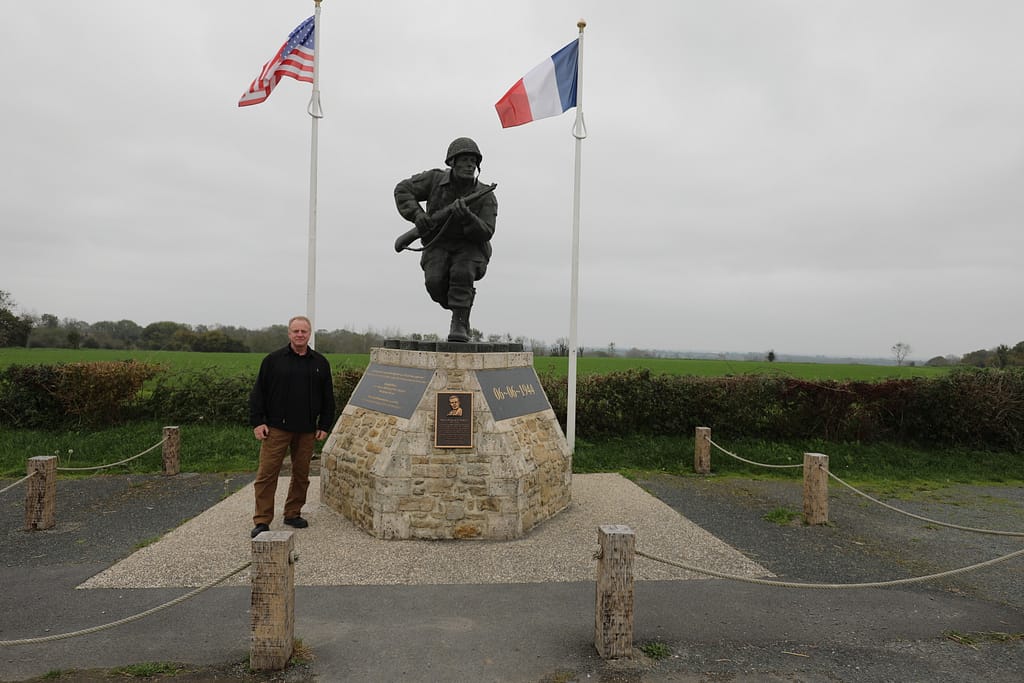
Although the battlefield is private property and not open to visitors, you can view the ground and monuments from the surrounding roads — and the outlines of the fields remain recognisably as they were in 1944.
One striking feature of the Brecourt Manor battlefield is Dick Winter’s masterful use of micro-terrain (small scale terrain features that often do not appear on maps and can only be seen when you are standing on the ground). With very little time for reconnaissance, he had moved his small force along a covered approach route and positioned his fire support at several points to achieve optimal fires geometry. He had then directed his small force in a fire-and-movement assault, using the small undulations in the ground and the German communication trench to cover his force from the much larger German force deployed around the field. The concept of exploiting small scale terrain features in battle is examined further in the Micro-Terrain and Battlefield Decision-Making research hub.
Finding the guns
The battlefield is still very recognisable. When compared to WW2 vintage photographs, the field boundaries, roads, buildings, and treelines are essentially unchanged. Brecourt Manor is still a working Dairy Farm, as it was in 1944, and is still owned by the Vallavieille family. The current owner, M. Charles de Vallavieille, is the son of Michel de Vallavieille, who was wounded here on D-Day.
The exact locations of the German guns had been lost over time, but a recent archaeological project by the University of Bordeaux-Montaigne has uncovered three (#2, #3, #4) of the four gun positions so far. The gun pits are now excavated and clearly identifiable, even down to the ammunition preparation bays in each gun pit. I told M. Vallavieille that, knowing how fastidious artillerymen are, he should just measure the distances between the other three guns, and that will tell him exactly where the fourth gun was located!
A link with history
This was a fabulous opportunity to explore a legendary battlefield, and to hear some of the firsthand stories from M. de Vallavieille! His dad, Michel, was the Mayor of Saint-Marie-du-Mont during the war years, and Charles is the current Mayor. Michel was wounded here on D-Day by stray American gunfire. After the war, Michel established the Utah Beach Landing Museum, one of the first museums to commemorate the D-Day landings.
The Brecourt Manor site has always been of interest to historians, but the interest level peaked with the release of Stephen Ambrose’s book ‘Band of Brothers’ in 1992, and peaked again with the release of the HBO series in 2001. M. Vallavieille told me of the many visits over the years by Stephen Ambrose, Tom Hanks, Stephen Spielberg, Dick Winters, Buck Compton, Bill Guarnere, Carwood Lipton, Joe Toye, Don Malarkey and many more of the Easy Company members.
Additional images at Brecourt Manor
Video walk-through of the irrigation ditch. LT WInters and his assault team moved along this ditch under cover from fire and view to their Forming Up Places
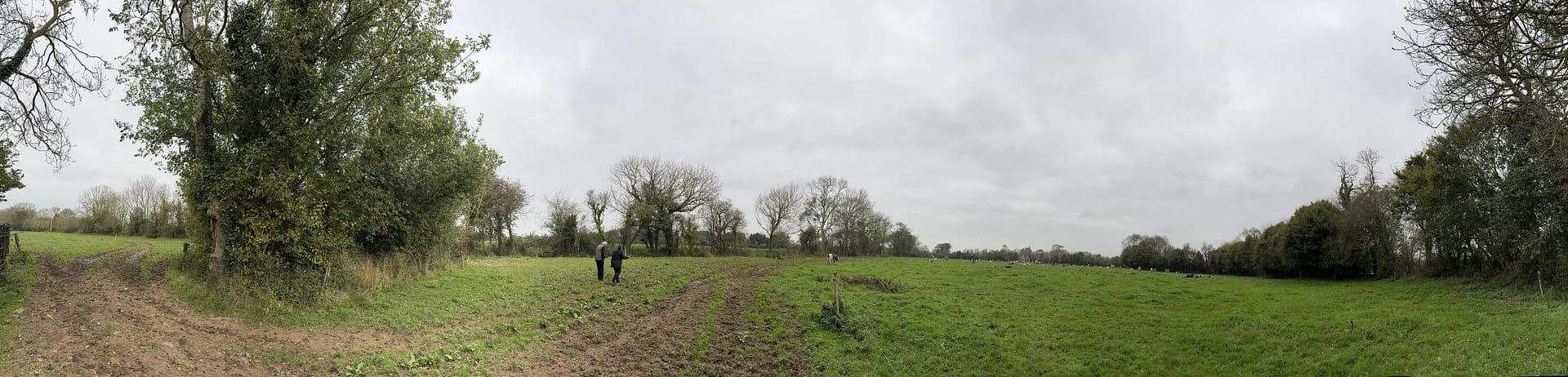
Panoramic view across the Brecourt Manor battlefield from near the #1 gun position
Walk through the excavated gun positions. The excavations are being done by a team from the University of Bordeaux-Montaigne. The gun positions and ammunition preparation areas are clearly defined
Found this useful? Buy me a coffee — it helps fund future battlefield research


Authored by Mick Prictor, a retired military officer with 40 years’ service, and a military historian specialising in terrain-focused analysis of tactics, doctrine, and command decision-making in land warfare. His work draws on extensive battlefield fieldwork—more than 280 sites worldwide—and one of the world’s largest private collections of historic military arms, uniforms, and equipment. About me
❓ Test Your D-Day Knowledge
Twenty questions covering the airborne operations, invasion beaches, commanders, forces and fighting of 6 June 1944.
20 questions · 60% to pass · expect a challenge
Sources
Memoirs & Eyewitness Accounts
- Winters, Richard D., and Cole C. Kingseed. Beyond Band of Brothers: The War Memoirs of Major Dick Winters. Berkley Caliber, 2006.
- Guarnere, William, and Edward Heffron. Brothers in Battle, Best of Friends. Berkley Caliber, 2007.
- von der Heydte, Friedrich August Freiherr. Daedalus Returned. Helios, 1979 – reflections from the German paratroop commander at Carentan.
- Donald R. Burgett. Currahee!: A Screaming Eagle at Normandy. Presidio Press, 1967.
Secondary Histories
- Ambrose, S. E. (1999). D-day, June 6, 1944: the climactic battle of World War II. Thorndike.
- Ambrose, S. E. (1992). Band of Brothers: E Company, 506th Regiment, 101st Airborne from Normandy to Hitler’s Eagle’s Nest. Touchstone, Simon & Schuster.
- Beevor, Antony. (2009). D-Day: The Battle for Normandy. Penguin Books
- Ryan, Cornelius (1959). The Longest Day: June 6, 1944. Simon and Schuster, New York.
- Niklas Zetterling (2000). Normandy 1944: German Military Organisation, Combat Power and Organisational Effectiveness, Winnipeg: J.J. Fedorowicz.
- Stephen Zaloga. US Airborne Divisions in the ETO 1944–45 (Battle Orders, 25). Osprey Publishing, 2007.
📚 Further Reading – Brecourt Manor Assault
This battle study nests within the broader analytical framework explored in the Research Hub, where operational methods, operating environments, armies, commanders, and weapons are examined across conflicts and eras. The links below connect related studies across the wider body of battlefield analysis on the BattlefieldTravels site.
⚔️ Explore all battle studies from World War Two 1939-1945
⚔️ Explore all battle studies involving Easy Company ‘Band of Brothers’ 506th PIR
🏛️Explore the museum of World War Two historic artefacts
The book list for this conflict includes the finest campaign studies, memoirs, and operational analyses available on the D-Day landings, selected specifically to complement this battlefield study.
📚World War Two – Recommended Reading
🗞️ For updates on new battlefield studies and research insights, you can subscribe to the Newsletter.
Related Battle Studies, Museum Pieces & Reading Resources
 ⚔️ D-Day: US Airborne Operations, Sainte-Mere-Eglise,
6 June 1944
 ⚔️ D-Day: Sword Beach landings,
6 June 1944
 ⚔️ D-Day: Utah Beach landings,
6 June 1944
 ⚔️ D-Day: 101st Airborne Division and the Battle of Bloody Gulch,
13 June 1944
 ⚔️ D-Day: Omaha Beach landings,
6 June 1944
 📝 🔒Field Note: XXX Corps Orders, Leopoldsburg, Belgium, 15 Sep 1944
🧭 Battlefield Travel Guide: Brecourt Manor (6 June 1944)
Getting There
- Nearest Town: Sainte-Marie-du-Mont, Normandy, France.
- Transport: Easily reached by car from Carentan or Utah Beach. Local roads are narrow farm lanes—drive with care.
- Parking: Limited roadside pull-off near the memorial markers. No on-site parking, as the farm is private property.
Site Orientation
- Key Landmarks: Memorial stone to Easy Company, plaques marking the gun positions, and views across the bocage fields that shaped the assault.
- Walking Routes: No formal trail—visitors view monuments from the roadside. The original trench lines and fields remain visible in outline.
- Best Vantage Points: The roadside markers give the clearest impression of the German battery’s arc of fire toward Utah Beach causeways.
Museums & Visitor Centres
- Airborne Museum (Sainte-Mère-Église): Extensive displays on 82nd and 101st Airborne actions, including Brecourt Manor.
- Utah Beach Museum: Exhibits on the amphibious landings and the critical role of inland gun positions like Brecourt.
- Dead Man’s Corner Museum: Focused on the 101st Airborne’s actions in the Cotentin Peninsula.
On-Site Experience
- Access: Brecourt Manor remains an active dairy farm. Visitors cannot enter the grounds or trenches, but the monuments along the roadside preserve the story.
- Atmosphere: The surrounding fields, hedgerows, and gentle slopes give a strong sense of the terrain Easy Company fought across.
- Interpretation: Simple memorials mark the site; more detailed interpretation is best gained at nearby museums.
Nearby Points of Interest
- Utah Beach: The nearest landing beach, directly connected to the purpose of the Brecourt assault.
- Sainte-Marie-du-Mont: Village with its own D-Day monuments and church tower observation points.
- Sainte-Mère-Église: Famous for the 82nd Airborne paratrooper caught on the church spire; hub for D-Day touring.
Practical Tips
- When to Visit: Accessible year-round; D-Day anniversaries (around 6 June) bring commemorative events.
- Facilities: None on site—nearest restrooms and cafés are in Sainte-Marie-du-Mont.
- Special Considerations: Respect private property. Do not attempt to enter fields or farm buildings. Monuments are safely accessible from the roadside.
FAQ: Brecourt Manor assault (6 June 1944)
Near Sainte-Marie-du-Mont, Normandy, about 3 km from Utah Beach.
Lieutenant Richard Winters led elements of Easy Company, 506th PIR, 101st Airborne Division in an attack to silence four German 105 mm guns that were firing on Utah Beach.
They used a flanking assault and fire-and-movement tactics, supported by a base of fire, sequentially knocking out each gun in turn.
It is considered a textbook small-unit attack on a defended position, and was popularised by the book and miniseries Band of Brothers.
The gun pits are preserved but on private property. A memorial to Easy Company marks the site.
Subscribe to Battlefield Travels and receive a free E-Book Battlefield Guide
Unlock expert battlefield analysis, campaign reconstructions, and historical insights drawn from firsthand exploration and primary sources.
🗺️ You’ll receive:
🎖️ Exclusive historical insights you won’t find elsewhere
📘 A free eBook: 10 Tips for Exploring Historic Battlefields
📰 New battlefield studies straight to your inbox as they are published

⚔️ Go deeper — Members get exclusive access to the Deep Research Collection, Field Notes, and monthly Research Dispatches. Try membership free for 7 days, cancel anytime. From $9/month.

Mick,
I am really enjoying your posts on Overlord actions. I did a study tour of Normandy whilst a student at USMC SAW, but we only had two days so it was basic. Will have to go back and do it properly.
Warm regards,
Mal
Thanks Mal. Two days is definitely not enough! So much happened on that one day in history – between Sainte-Mere-Eglise in the west and Pegasus Bridge/Ranville in the east. We spent 14 days just on D-Day and it still wasn’t enough. Mick
Hi Mal. Writing this in a gite next to the church at Angoville au Plaine. Having watched Band of Brothers many years ago we saw on google earth the Winters and Easy memorials just off our route to Utah Beach. We visited today taking loads of pics and have now come across your site which reveals all. Just wanted to thank you for such a great history of the site and the action. We will watch BOB again and many thanks for creating such a great battlefield web site.
Thanks Mick, Glad you enjoyed the Brecourt Manor article. It is a special place and it was a great honour to explore with M. de Vallavieille. I hope you also got to Saint Mere-Elise and Carentan. Incredible D-Day history in the area, and largely unchanged since 1944.
Mick