The largest battle of the Sri Lankan Civil War!
The First Battle of Elephant Pass in July 1991 marked a turning point in Sri Lanka’s civil war. Situated on a narrow isthmus linking the Jaffna Peninsula to the mainland, the fortified base at Elephant Pass was considered impenetrable—until it wasn’t. This was one of the most significant and most intense battles of the conflict, where terrain, firepower, and sheer determination collided in a desperate struggle that shocked the Sri Lankan military and reshaped the war’s trajectory.
Key facts
🗺️ First Battle of Elephant Pass, 10 July – 9 August 1991, Vanni district, Northern Province, Sri Lanka
⚔️ Sri Lankan Civil War, 1983 – 2009
🪖 800 Sri Lankan Army troops vs 6,000 LTTE (The Liberation Tigers of Tamil Eelam (Tamil Tigers))
🎯 Tamil Tiger attack against a strategically located Sri Lankan Army post
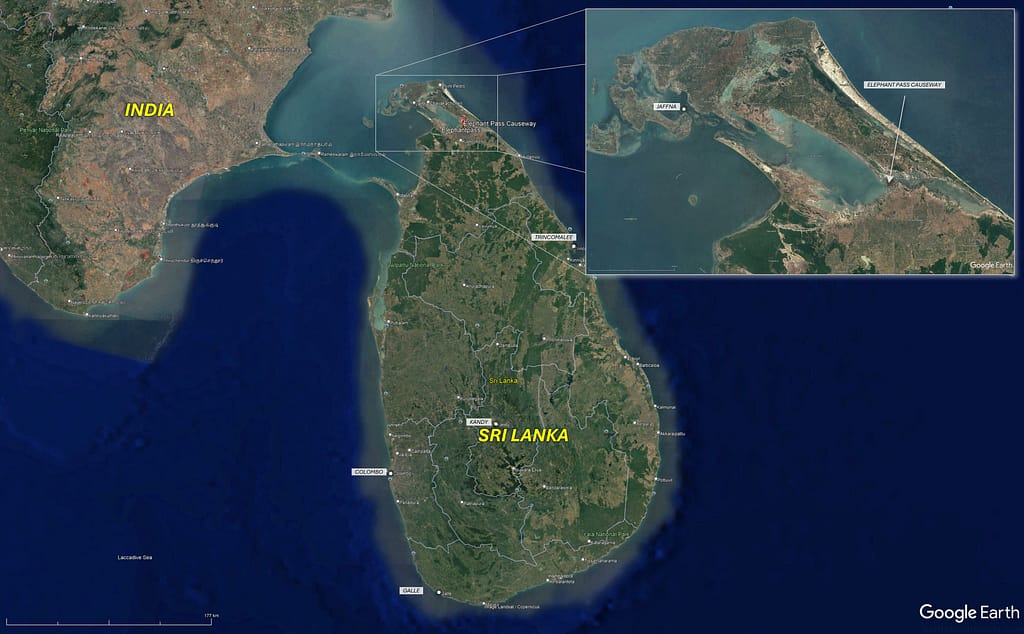
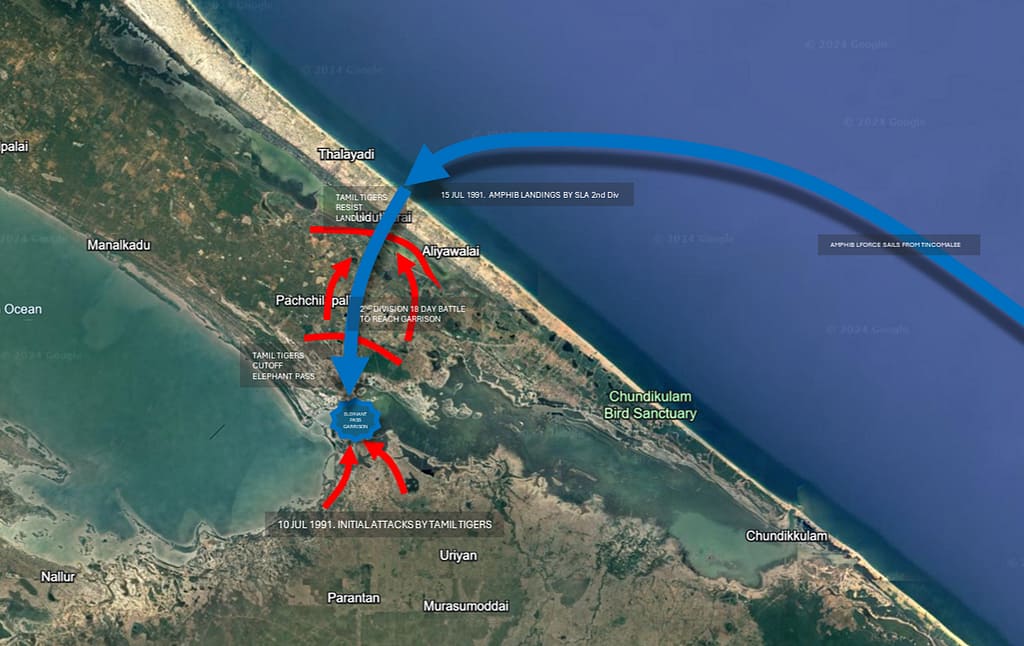
Google Earth map – Location of the Elephant Pass battle
🎧 Prefer to listen? This article is also available as a 44-minute podcast
Tip: If Podbean overlay appears after pausing, click the × in the top-right corner to return to the player controls.
🧭🥾 Walking the Battlefield
I visited the Elephant Pass battlefield and numerous other Sri Lankan Civil War battle sites in August 2014 as a guest of the Sri Lankan Army. I had followed the course of the Sri Lankan Civil War at a distance over the 1990s-2000s, especially the dramatic events of 2009 as the Sri Lankan Army’s offensive finally defeated the Tamil Tigers and ended the war. I learned a great deal more about the war as I walked the battlefields with veterans who had fought at Jaffna and Elephant Pass, and who had fought through the many Tamil Tiger defensive systems of mines, trenches and barbed wire to finally end the conflict.
Background to the Sri Lankan Civil War
Origins of the conflict
The Sri Lankan Civil War (1983–2009) was one of the most protracted and brutal insurgencies of the late 20th and early 21st centuries. At its heart was a clash between the Sinhalese-majority government of Sri Lanka and the Tamil minority concentrated in the north and east of the island. The conflict’s origins lay in decades of ethnic tension, exacerbated by government policies in the post-independence period that Tamils saw as discriminatory — such as the 1956 Sinhala Only Act, changes to university admission criteria, and perceived bias in government employment and resource allocation.
Rise of the ‘Tamil Tigers’
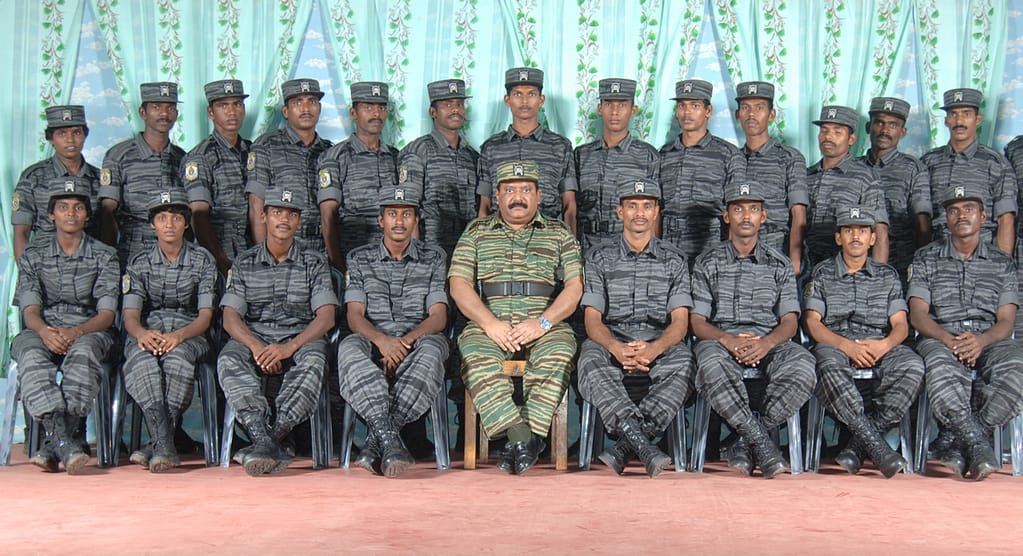
By the late 1970s, several Tamil separatist movements had emerged. Among them, the Liberation Tigers of Tamil Eelam (LTTE) under Velupillai Prabhakaran rose rapidly to dominance. The LTTE was notable not only for its ruthless elimination of rival Tamil groups, but also for its disciplined, quasi-military structure and pioneering use of unconventional tactics — from suicide bombers to amphibious ‘Sea Tiger’ raids and later, light aircraft in the so-called ‘Air Tigers.’
From the early 1980s, the LTTE sought to establish an independent Tamil state, ‘Tamil Eelam,’ encompassing the Northern and Eastern Provinces. The insurgency escalated into full-scale war in 1983, following the ‘Black July’ anti-Tamil riots. Over the next two and a half decades, the war would claim more than 28,000 Sri Lankan soldiers, 27,000 LTTE fighters, and at least 80,000 civilians — making it one of the bloodiest conflicts in Asia since the Vietnam War.
International involvement
International involvement played a complex role. India, which had its own Tamil population in Tamil Nadu, initially provided covert support to the LTTE in training and logistics. This shifted dramatically when Delhi deployed the 100,000-strong Indian Peace Keeping Force (IPKF) in 1987 under the Indo–Sri Lanka Accord. Initially tasked with disarming the LTTE, the IPKF soon found itself fighting them in a bitter urban and jungle campaign, losing 1,165 soldiers before withdrawing in 1990. The IPKF’s departure left the LTTE in a strengthened position in the north, particularly around Jaffna and the narrow Elephant Pass isthmus — the key land gateway to the peninsula.
By 1991, the LTTE controlled large swathes of the north, and the Sri Lankan Army was operating a string of fortified bases to hold critical terrain. None was more strategically important — or more vulnerable — than the base at Elephant Pass.
⚔️ Go deeper — Members get exclusive access to the Deep Research Collection, Field Notes, and monthly Research Dispatches. Try membership free for 7 days, cancel anytime. From $9/month.
Strategic importance of Elephant Pass
Gateway to the Jaffna Peninsula
Elephant Pass is located in the Vanni District of Sri Lanka’s Northern Province, where the shallow waters of the Jaffna Lagoon meet the Indian Ocean. The isthmus is only a few hundred metres wide in places, meaning any force that holds it effectively controls the sole overland route into the Jaffna Peninsula. To its west lies the vast expanse of the Jaffna lagoon; to the east, tidal flats and mangrove shallows run down to the coast. This geography funnels all road traffic through a narrow causeway — a natural chokepoint that favours the defensive power of whoever occupies it.
During the Sri Lankan Civil War, Elephant Pass became more than just a tactical strongpoint. For the Sri Lankan Army (SLA), holding the pass kept the Jaffna Peninsula supplied by land, allowing garrisons and civilian populations in Jaffna town to be reinforced and provisioned without total dependence on air or sea lift. For the LTTE, seizing Elephant Pass would sever the peninsula from the rest of the island, forcing the SLA into costly amphibious or airborne operations to sustain the region — a situation the Tigers could exploit for both military and propaganda effect.
Military presence
Elephant Pass had been fortified since the colonial era. The Sri Lankan Army maintained a substantial base there by the late 1980s, manned in mid-1991 by approximately 800 troops of the 6th Battalion, Sinha Regiment. The position was protected by bunkers, trench lines, wire obstacles, and minefields, but its isolation was a critical weakness. Once the LTTE established fire control over the causeway, the base would be dependent on resupply by air — and even that could be denied if the Tigers deployed heavy machine guns and man-portable air-defence systems (MANPADS).

Threats to the Sri Lankan Army presence
By mid-1991, the LTTE had built up its strength in the Kilinochchi and Mullaitivu areas, massing thousands of fighters within striking distance of the pass. Intelligence assessments suggested that a major offensive was imminent. The Tigers had already demonstrated sophisticated siege techniques in earlier assaults, including coordinated mortar fire, infiltration, and the use of improvised armoured vehicles. Elephant Pass was next in their sights — and the SLA garrison was about to face one of the most determined attacks of the war.
Opposing forces: Sri Lankan Army vs Tamil Tigers
 Sri Lankan Army garrison at Elephant Pass
 Sri Lankan Army garrison at Elephant Pass
Combat strength. The base was held by the 6th Battalion, Sinha Regiment, numbering roughly 800 officers and men. This infantry battalion had been rotated through the northern theatre and was familiar with the LTTE’s tactics, but was lightly equipped for a prolonged siege. The battalion occupied a series of fortified positions straddling the causeway, with the main base on the southern side of the isthmus and outlying posts providing depth to the defences.
Command. The garrison commander was Major Sanath Karunaratne, an experienced field officer with prior operational service in the north. His second-in-command was Captain Wimaladharma — killed in action on the opening day, creating an immediate strain on command continuity.
Defensive Infrastructure
- Bunkers and Firing Points: Constructed from sand-filled oil drums, timber, and steel plates, with overhead cover against mortar splinters.
- Minefields and Wire Obstacles: Double-apron barbed wire and anti-personnel mines forming the outer perimeter.
- Mortar Pits: Primarily 81mm tubes, sited for both defensive fire and harassment of LTTE assembly areas.
- Observation Posts: Elevated positions providing line-of-sight across the lagoon flats, though vulnerable to sniper and mortar fire.
Weapons and Support
- Small arms: 7.62mm FN FAL and Type 56 rifles, GPMG, and light machine guns.
- Crew-served: 81mm mortars, .50 cal Browning HMGs, and a limited number of RPG-7s for anti-armour defence.
- Sustainment: Initially dependent on overland convoy; once cut off, reliant on Sri Lanka Air Force (SLAF) for aerial resupply — a lifeline that would soon be contested.
- Water: Fresh water is a critical resource in the Elephant Pass region. Water was stored in tanks within the compound, but stocks would prove insufficient.
Liberation Tigers of Tamil Eelam (LTTE)
 Liberation Tigers of Tamil Eelam (LTTE)
Combat strength. The LTTE committed between 4,000 and 6,000 fighters to the Elephant Pass offensive — a massive concentration by their standards, drawn from cadres in Jaffna, Kilinochchi, Mullaitivu, and the Wanni. This represented one of their largest single deployments of the war to date.
Command. The operation was overseen at the highest level by Velupillai Prabhakaran himself, with battlefield direction by senior field commanders from the LTTE’s ‘Charles Anthony Brigade’ and specialised assault units.
Order of Battle
- Light Infantry Cadres: Highly mobile fighters armed with AK-pattern rifles, RPG-7s, light machine guns, and grenades.
- Sniper Units: Often operating in pairs, equipped with Dragunov SVDs or modified bolt-action rifles, targeting key SLA personnel.
- Combat Engineers: Trained in breaching minefields and wire, and in operating improvised armoured vehicles.
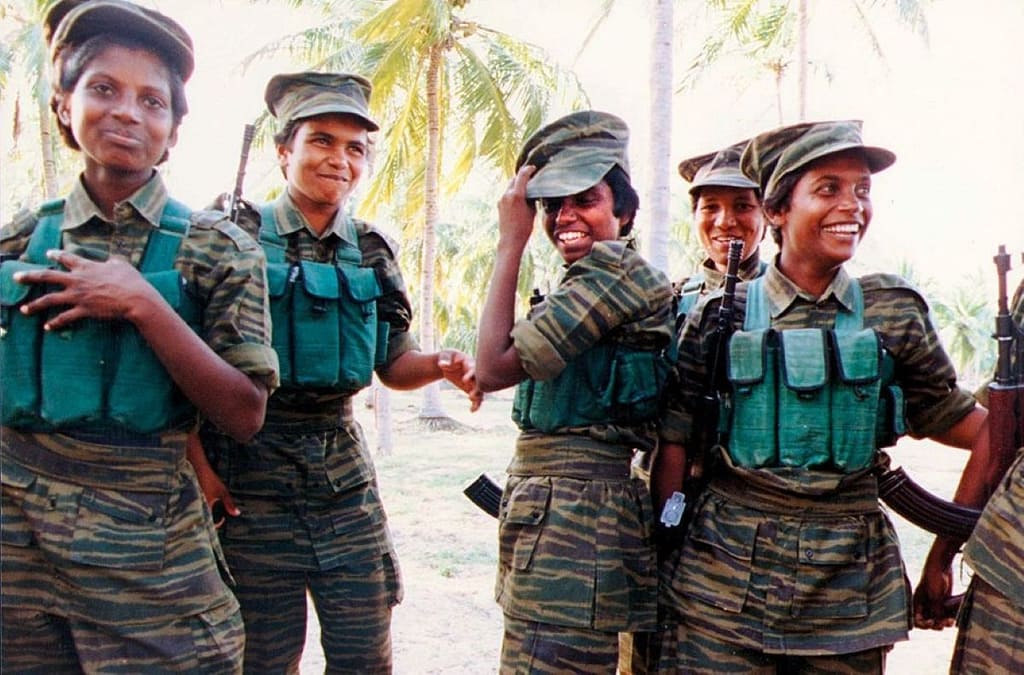
- Female Fighters: Drawn from the Women’s Front of Tamil Eelam, many of whom were battle-hardened veterans by 1991.
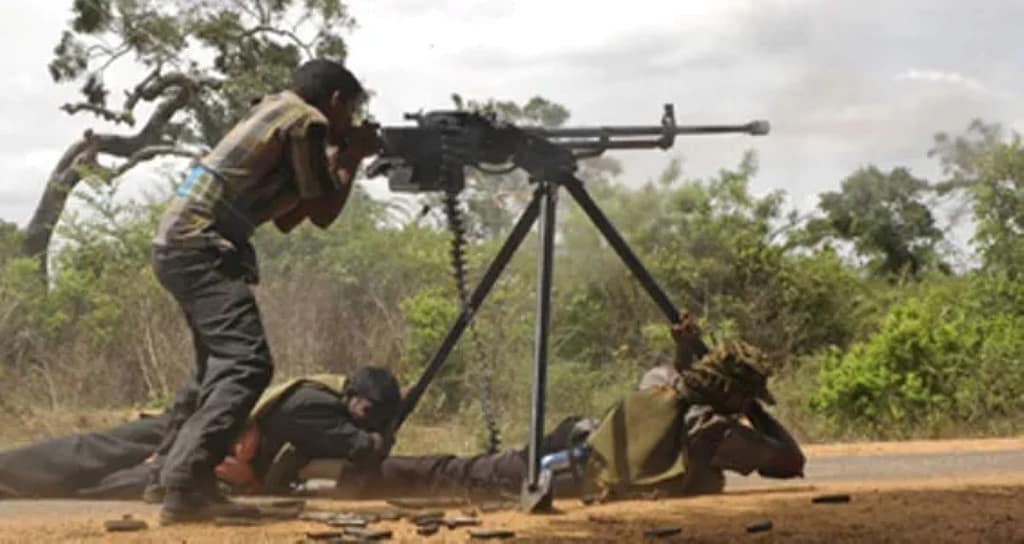
- Anti-Aircraft Teams: Equipped with 12.7mm DShK and 14.5mm KPV heavy machine guns, as well as Soviet-made SA-7 Grail MANPADS, to contest SLAF air drops.
- Indirect Fire Assets: Mortars ranging from 60mm to 120mm, some mounted on light vehicles for rapid redeployment.
Special Equipment and Innovations
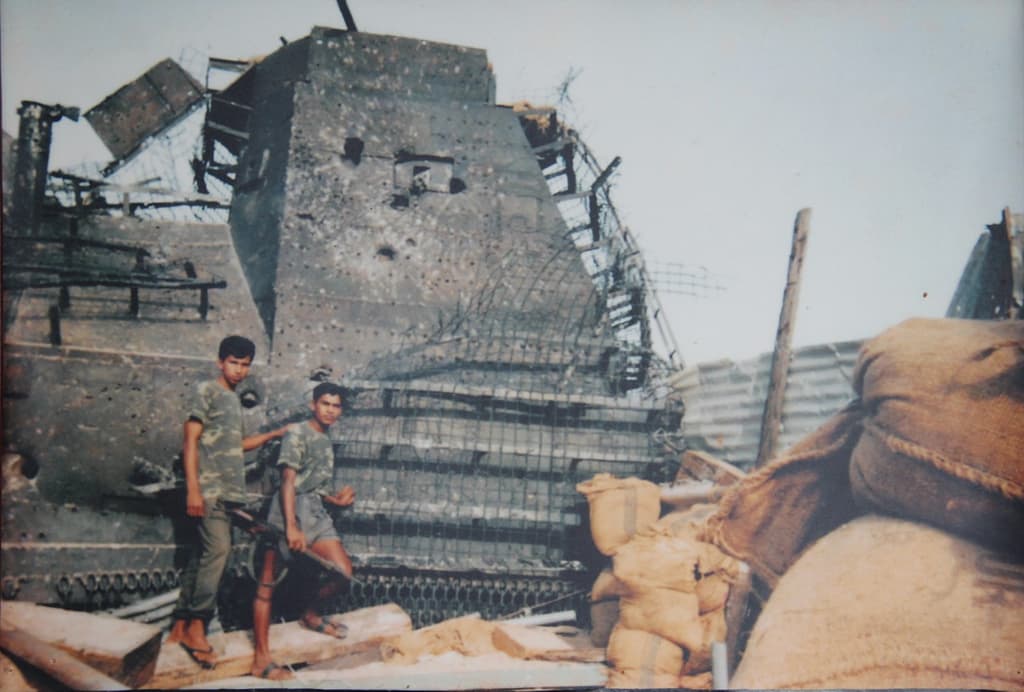
The LTTE prepared armoured bulldozers — standard civilian construction vehicles encased in welded steel plate and fitted with firing slits, barbed wire, and anti-RPG mesh. These vehicles, sometimes carrying explosives for suicide breaching, were designed to smash through fixed defences where infantry assaults might falter.
Operational Aims
- Primary Objective: Seize Elephant Pass base and thus isolate the Jaffna Peninsula.
- Secondary Objective: Inflict a major psychological blow to the SLA and demonstrate the LTTE’s ability to defeat a fortified position.
- Tertiary Objective: Capture usable SLA weapons and ammunition to sustain future operations.
The scale of the LTTE commitment and the preparation of such specialised assault equipment reflected the importance they placed on this battle. Victory here would have changed the entire strategic balance in the north.
Battle for Elephant Pass
Terrain factors
The battlefield was defined by the Elephant Pass isthmus, a narrow land corridor hemmed in by the Jaffna Lagoon to the west and the Kilali Lagoon to the east. The ground was a mix of hard-packed causeway, salt pans, shallow lagoons, and scattered Palmyrah palm groves. The flat, open expanses offered little natural cover, but the LTTE exploited every clump of vegetation, abandoned structure, and drainage ditch to stage attacks. The tropical heat amplified the garrison’s water shortages.
The base comprised a central defensive compound with satellite posts extending along both flanks of the causeway. Bunkers were interconnected by shallow trenches, and heavy weapons were sited to cover the approaches — but the openness that gave clear fields of fire also made the position highly visible to enemy observers.
Phase 1: The Siege Begins (10–11 July 1991)
At dawn on 10 July 1991, the LTTE launched its opening move: a coordinated assault combining mortar barrages, heavy machine gun fire, and infiltration tactics honed in earlier Jaffna operations.
The bombardment targeted command posts, radio masts, and suspected ammunition dumps, aiming to disrupt leadership and slow the defenders’ response. Small groups advanced under the cover of the barrage, using salt pan embankments and palm tree lines as concealment. Some wore captured SLA uniforms, sowing confusion within the perimeter. Within hours, the LTTE cut the A9 Highway to the south, isolating the garrison by land.
With access by land severed, Elephant Pass became a defensive island in a sea of hostile territory. The LTTE destroyed communication lines and targeted supply depots with mortar fire. By the end of the first day, Captain Wimaladharma, second-in-command of the base, was killed in action — a severe blow to the leadership structure.
Analytical note: The opening phase mirrored classical siege doctrine — isolate, suppress, infiltrate — but in a modern insurgent context. By cutting the causeway on Day 1, the LTTE forced the SLA into a purely defensive posture.
Phase 2: Encirclement and Assault (12–15 July)
The LTTE established control over high ground and natural cover around the base. Their fire teams used mobile mortars and sniper nests to harass any exposed movement. Crucially, they deployed anti-aircraft guns captured from earlier engagements to deny resupply by air.
Meanwhile, LTTE combat engineers began night-time infiltration, using trenches and tunnels to get close to the wire. They repurposed bulldozers with improvised armour plating — a locally developed armoured breaching system — to breach barbed wire and minefields.
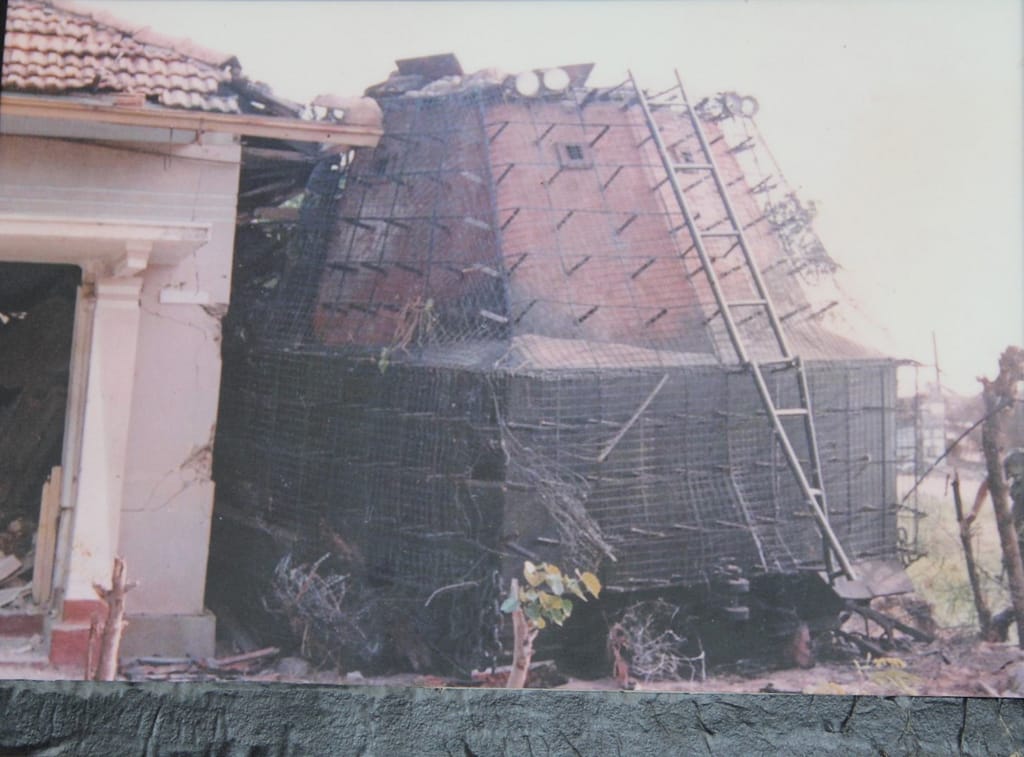
The Tigers made novel use of armoured bulldozers manned by suicide volunteers, at least one of which was packed with explosives. The dozers had metal plates welded around them for armour, with slits for viewing, and mesh and barbed wire on the outside to disrupt RPG rounds and similar weapons. One of the armoured dozers was detonated and breached the perimeter. The second armoured dozer, armed with machine guns, breached the perimeter and could not be stopped by the lightly armed Sri Lankan soldiers.
Analytical note: The LTTE’s use of armoured bulldozers foreshadowed the later adoption of similar methods by insurgent groups in Iraq and Syria — a rare case of a non-state actor fielding crude but effective armour in a modern conflict.
🏅 Hero of Elephant Pass: Lance Corporal Gamini Kularatne
“He held the line with his life.”
— Tribute to LCPL Kularatne, 6th Battalion, Sinha Regiment
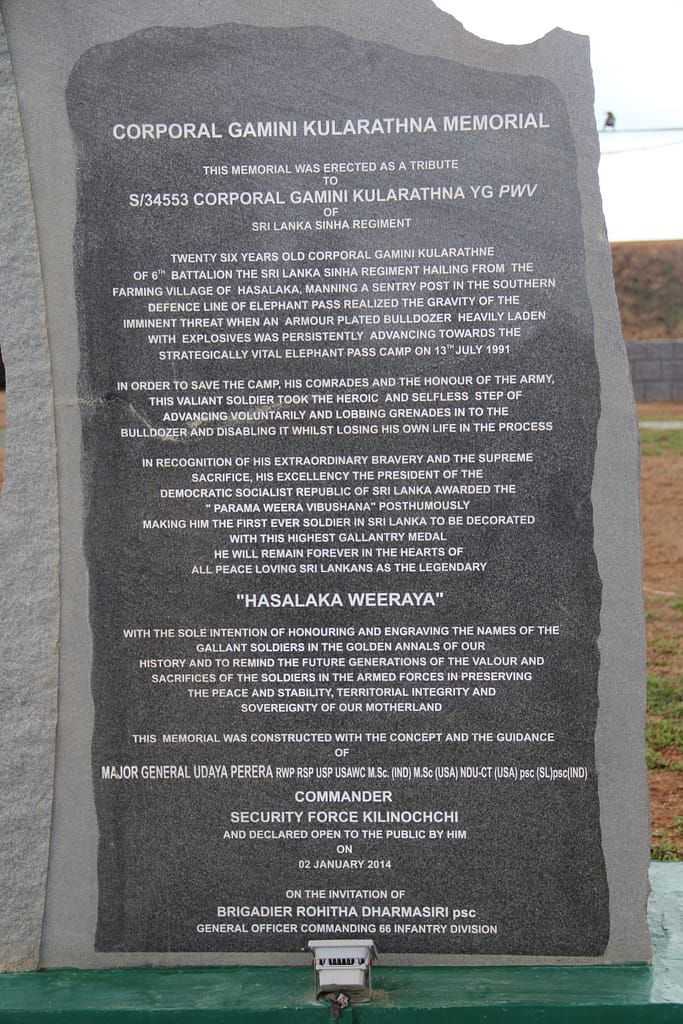
On 10 July 1991, realising the danger posed by the armoured bulldozer, Lance Corporal Gamini Kularatne of the 6th Battalion Sinha Regiment, attacked the armoured dozer single-handed. He climbed the outside of the dozer with two grenades in his hands, opened a hatch and threw the grenades inside. The grenades killed the crew, and the dozer was disabled. Lance Corporal Kularathna was killed, but the dozer was stopped from penetrating further into the position. For this extraordinary act of bravery, LCPL Kularathna was posthumously awarded the Parama Weera Vibhushanaya, Sri Lanka’s highest gallantry award – equivalent of a Victoria Cross or Medal of Honor.

Phase 3: The Fight for Survival (16–18 July)
By mid-July, the defenders were exhausted. Water had to be rationed. Only rudimentary surgical care was possible; serious casualties had to be evacuated by high-risk helicopter runs. Resupply by air had become nearly impossible due to LTTE anti-aircraft fire.
Sporadic LTTE assaults continued, with particular intensity on 17 July, when a breach in the northern perimeter was nearly exploited. Major Sanath Karunaratne personally led a counterattack to seal the gap — an action that later earned him national commendation.
Despite being vastly outnumbered, the defenders managed to hold the core of the base. The narrow, open terrain around the isthmus meant that any LTTE mass attack risked being caught in overlapping fields of fire — a tactical advantage the SLA exploited.

Phase 4: Operation Balavegaya – The Relief Force Lands (19–25 July)
Recognising that the base would fall without intervention, the Sri Lankan government launched Operation Balavegaya (‘Strength of Force’) — the largest amphibious operation in its military history. Nearly 10,000 troops from the 1st and 3rd Brigades embarked from Trincomalee and Kayts to land behind LTTE lines, supported by the Sri Lankan Navy and Air Force.
The landing began on 19 July at Vettilaikerni, just 8–10 km north of Elephant Pass. The terrain was treacherous, with marshes, lagoon edges, and mined beach approaches. LTTE resistance was fierce, and the initial landing units sustained significant casualties.
For several days, the relief force fought through hostile terrain and ambushes, using helicopter-inserted units and naval gunfire to open the road to the pass. By 25 July, forward elements of Operation Balavegaya made contact with the garrison — just in time to prevent it from being overrun.
Assessment of the Battle of Elephant Pass
The First Battle of Elephant Pass ended with the Sri Lankan Army still holding the isthmus, but the outcome was far from a clear-cut victory. The SLA garrison suffered approximately 200 killed and many more wounded, while LTTE losses were estimated at 600 killed — though exact numbers remain contested due to the Tigers’ practice of concealing casualties.
Tactical Outcomes
From a purely military standpoint, the garrison’s survival was a defensive success. The SLA’s preserved its only land corridor to the Jaffna Peninsula and prevented the LTTE from isolating government forces there. However, the battle exposed the inherent fragility of static defences in the face of determined insurgent assault, especially when supply lines are severed. The Tigers demonstrated a willingness to integrate heavy weapons, armoured improvisations, and combined-arms style coordination — unusual for a non-state actor at the time.
The defence, particularly LCpl Kularatne’s sacrifice, became a rallying point for SLA morale nationwide. Conversely, the LTTE’s ability to mount such a large-scale siege boosted their reputation among Tamil supporters. It signalled to the government that they could threaten even the most fortified positions.
Strategic Significance
The First Battle of Elephant Pass marked a turning point in the conflict. Both sides escalated in manpower, resources and operational sophistication from this point forward. For the SLA, the battle reinforced the doctrine that Elephant Pass must be held at all costs — shaping future deployments, including heavy fortification and expanded garrisons. For the LTTE, although the attack failed to capture the pass, the siege revealed SLA vulnerabilities that the Tigers would exploit in 2000, when they finally overran the base in the Second Battle of Elephant Pass.
Analytical note: The 1991 battle was essentially a rehearsal for the LTTE’s later success in 2000. The main difference lay in the Tigers’ ability, by 2000, to completely deny resupply and exploit environmental vulnerabilities (water supply), something they could not yet sustain in 1991.
How the First Battle of Elephant Pass impacted the war
Second and Third Battles of Elephant Pass
The First Battle of Elephant Pass was the largest single engagement of the Sri Lankan Civil War and resulted in about 200 soldiers and 600 Tigers being killed, with many wounded. The Sri Lankan Army remained in control of the pass. A Second Battle of Elephant Pass was fought in April 2000. The scale of fighting was less, but the Sri Lankan Army abandoned the base after the LTTE destroyed the Elephant Pass freshwater plant. The Tigers controlled Elephant Pass for the next 8 1/2 years until the Sri Lankan Army regained control in the Third Battle of Elephant Pass in January 2009.
Final defeat of the LTTE
By 2009, under President Mahinda Rajapaksa, the Sri Lankan government finally resolved to end the Civil War. In the post 9/11 era, there was far less worldwide tolerance for terrorism, and the LTTE were declared a terror organisation, which essentially cut off their sources of funding and resources. The 2004 Asian Tsunami also severely affected the LTTE-held areas and required a level of cooperation with the government.
The final military campaign, in 2008-2009, ended in the defeat of the Tamil Tigers in May 2009. My friends in the Sri Lankan Army told me that the Army was losing 2,000 soldiers per month in the final campaigns, but the country was providing them 3,000 soldiers per month. This took absolute resolve by the government and the people! The country is still dealing with the rehabilitation and reconciliation that followed the war.
The Elephant Pass battlefield today
Ongoing strategic importance
The Elephant Pass battlefield remains one of the most significant military sites in Sri Lanka. Positioned on the narrow isthmus linking the Vanni district to the Jaffna Peninsula, the pass is still a dominant terrain feature. The causeway offers unobstructed views across the shallow lagoon waters to the east and west, underscoring why this point was so fiercely contested. Any movement between the peninsula and the mainland must cross here — there are no alternative overland routes.
Memorialisation and Monuments
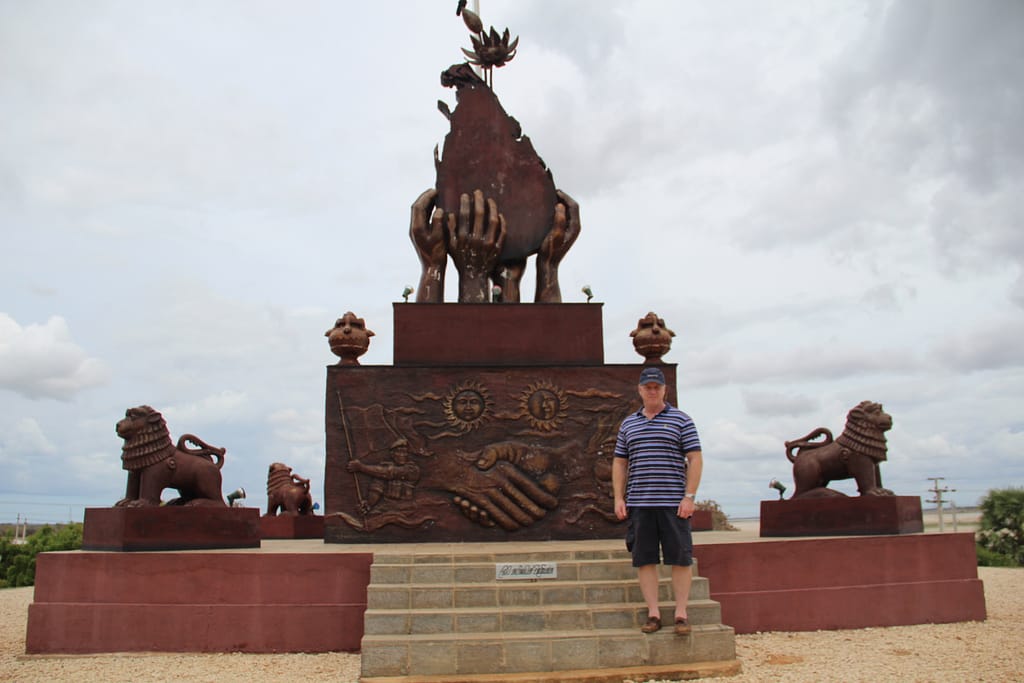
Two major memorials mark the site:
Southern Causeway Monument – At the southern end of the causeway, the most striking feature is the preserved armoured bulldozer used by the LTTE in the 1991 battle. Now mounted as a permanent display, it stands beside a statue of Lance Corporal Gamini Kularatne, commemorating his posthumous award of the Parama Weera Vibhushanaya for stopping the vehicle at the cost of his own life.

Northern Victory Monument – At the Jaffna Peninsula end, a larger commemorative complex honours the Sri Lankan Armed Forces’ eventual victory over the LTTE in 2009. Its design emphasises national unity and sacrifice, reflecting the official narrative of the war.
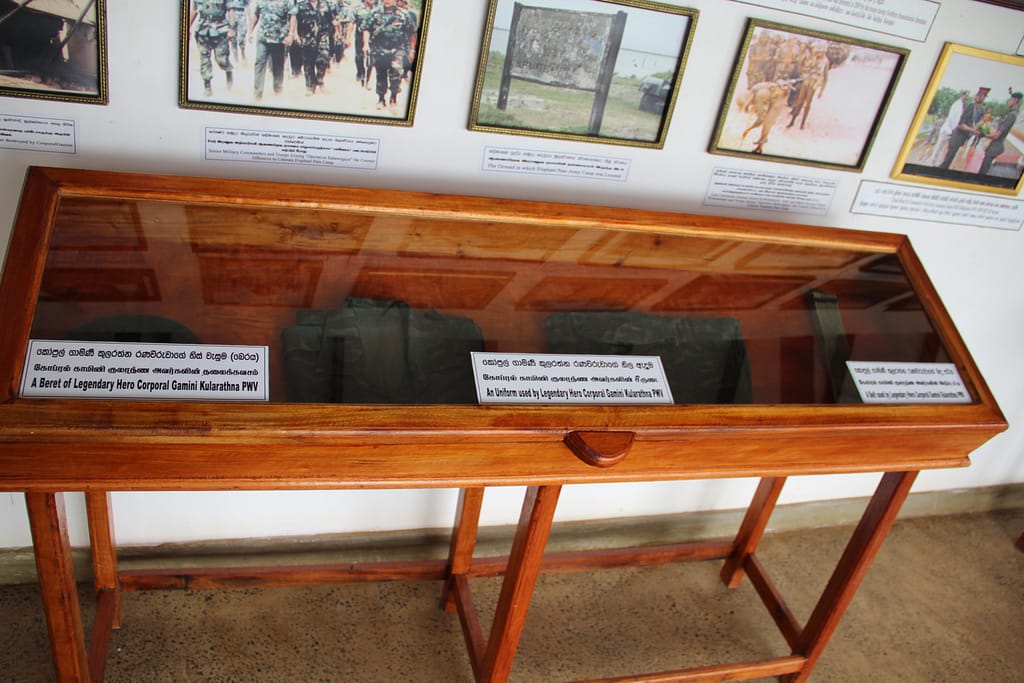
Elephant Pass military museum
Nearby, a small military museum preserves photographs, battle diagrams, and war relics — including personal equipment recovered from the battlefield. These artefacts give visitors a sense of the siege’s intensity and the harsh environment in which it was fought. Link to the Elephant Pass War Memorial website: https://www.trulysrilanka.com/attractions/elephant-pass-war-memorial.html
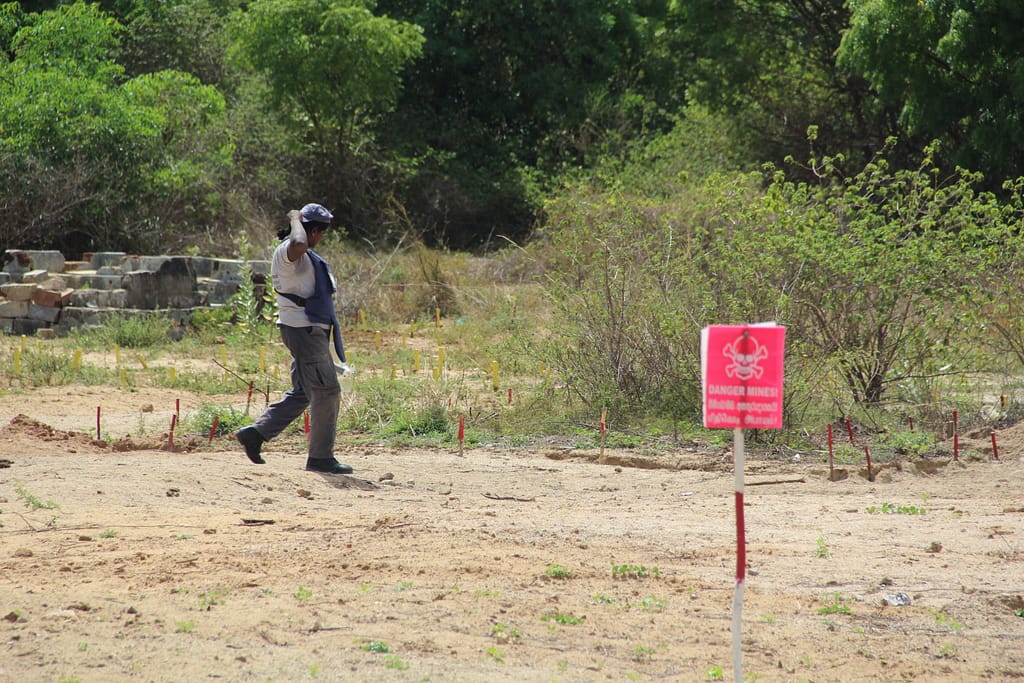
Remnants of war on the Jaffna Peninsula
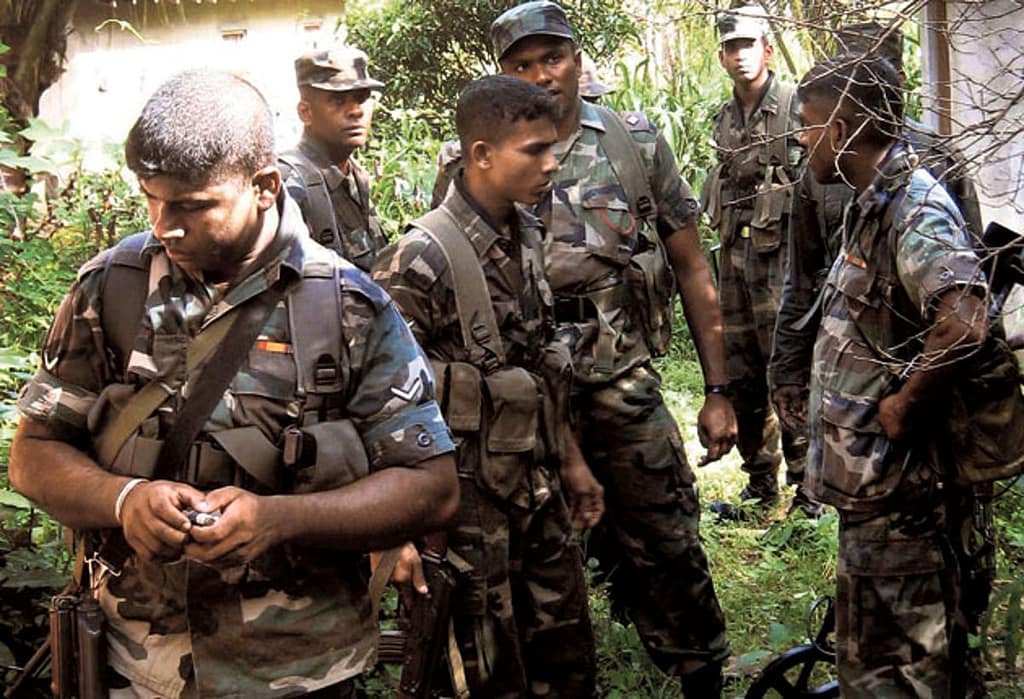
When I visited in August 2014 as a guest of the Sri Lankan Army, the area was still under military control, and certain parts of the battlefield were accessible only with escort. The roads through the pass were safe, but the landscape retained the visual scars of conflict.
Despite years of reconstruction, physical traces of the 1991 battle — and the later 2000 and 2009 battles — remain visible to the observant visitor. On either side of the main road, shallow depressions and raised earthworks can still be seen in places, marking former defensive lines. Rusted coils of wire and corroded metal fragments occasionally surface after heavy rains, a reminder of the extensive fortifications. Several areas remain fenced and signposted with minefield warnings. Although active clearance operations continue, these areas are strictly off-limits.
Additional images of the Elephant Pass battlefield
Elephant Pass



Remnants of the fighting on Jaffna Peninsula

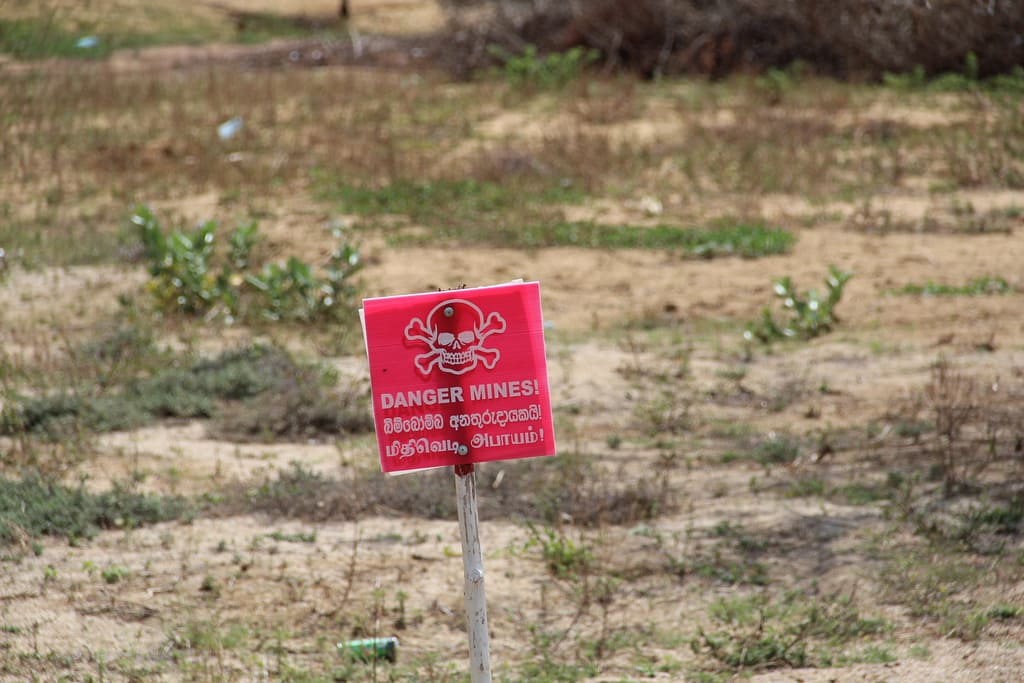
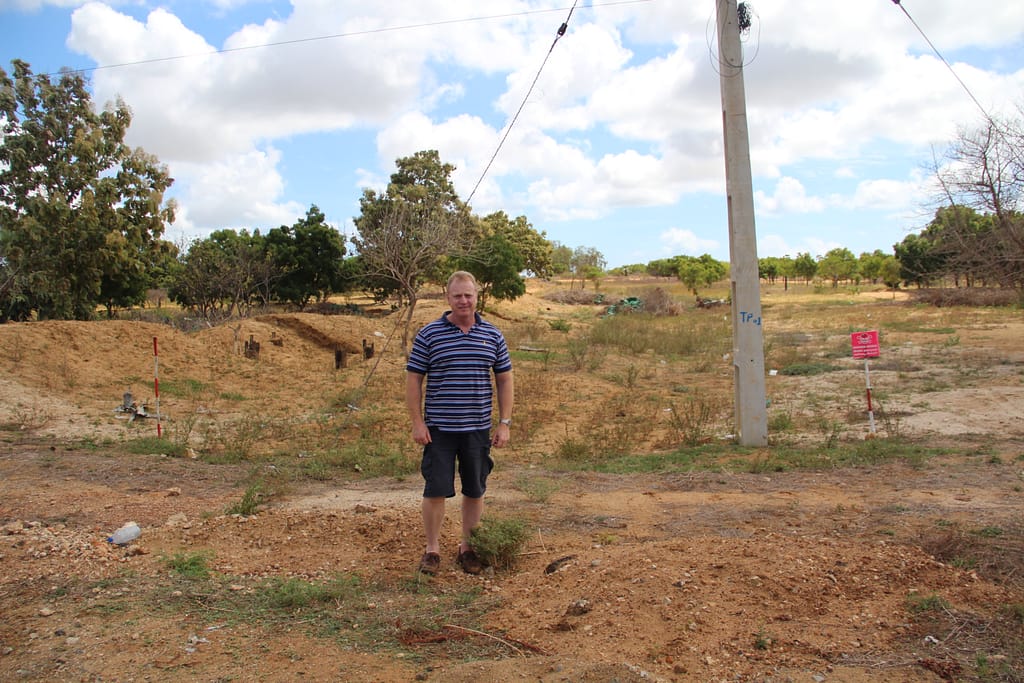
Elephant Pass Desalination Plant

Found this useful? Buy me a coffee — it helps fund future battlefield research


Authored by Mick Prictor, a retired military officer with 40 years’ service, and a military historian specialising in terrain-focused analysis of tactics, doctrine, and command decision-making in land warfare. His work draws on extensive battlefield fieldwork—more than 280 sites worldwide—and one of the world’s largest private collections of historic military arms, uniforms, and equipment. About me
Sources & Further Reading


📚 Further Reading: Sri Lankan Civil War
This battle study nests within the broader analytical framework explored in the Research Hub, where operational methods, operating environments, armies, commanders, and weapons are examined across conflicts and eras. The links below connect related studies across the wider body of battlefield analysis on the BattlefieldTravels site.
⚔️ Explore all battle studies from the Sri Lankan Civil War 1983-2009
The book list for this conflict includes the finest campaign studies, memoirs, and operational analyses available on Sri Lanka’s Civil War 1983-2009, selected specifically to complement this battlefield study.
📚Sri Lankan Civil War– Recommended Reading
🗞️ For updates on new battlefield studies and research insights, you can subscribe to the Newsletter.
Related Battle Studies, Museum Pieces & Reading Resources


🧭 Battlefield Travel Guide: Elephant Pass (Sri Lanka)
Getting There
- Nearest Town: Kilinochchi (to the north) and Mullaitivu (to the east); Jaffna is about 55 km away.
- Transport: Accessible by the A9 Highway linking Jaffna and the rest of Sri Lanka.
- Parking: Informal roadside parking available at memorials and rest stops.
Site Orientation
- Key Landmarks: Elephant Pass causeway, lagoon areas, and surviving bunkers and memorials.
- Walking Routes: No formal trails; short walks possible along the causeway and lagoon edge.
- Best Vantage Points: The main causeway gives clear views across the lagoon, illustrating the chokepoint’s strategic importance.
Museums & Visitor Centres
- Elephant Pass War Memorials: Several plaques and monuments commemorate the battles fought between the Sri Lankan Army and LTTE.
- Jaffna Archaeological Museum: Wider cultural and military history of northern Sri Lanka, located about an hour away.
- Military Sites: Some surviving bunkers and fortifications are visible but may be restricted access.
On-Site Experience
- Interpretive Signage: Limited; most understanding requires prior reading or a guide.
- Atmosphere: Windswept lagoon causeway — quiet today but evocative of the fierce battles fought here.
- Guides & Tours: Local guides in Jaffna sometimes offer war history tours including Elephant Pass.
Nearby Points of Interest
- Kilinochchi War Memorial: Monument marking LTTE’s de facto capital, with displays of destroyed vehicles.
- Jaffna Fort: Portuguese and Dutch-era fort, heavily damaged during the civil war.
- Mullaitivu: Scene of the decisive 2009 battle that ended the civil war.
Practical Tips
- When to Visit: Dry season (Dec–Apr) offers clearer views and easier travel conditions.
- Facilities: Few amenities at Elephant Pass itself; better options in Kilinochchi or Jaffna.
- Special Considerations: Some areas may remain under military control — respect restrictions and always seek local advice.
FAQ: Battle of Elephant Pass (1991)
Fought from July 10–28, 1991, it was a major LTTE offensive to capture the strategic Elephant Pass base, gateway to the Jaffna Peninsula.
About 800 Sri Lankan Army troops of the 6th Battalion, Sinha Regiment held the base, supported by artillery.
The LTTE launched a large-scale assault, surrounding the base and cutting supply routes. The defenders held out under siege for over two weeks until reinforcements arrived.
The Sri Lankan Army broke the siege with Operation Balavegaya, landing reinforcements by sea and securing the base. It was a significant government victory.
The successful defence of Elephant Pass preserved government control of the land route to Jaffna and became a symbol of determination for the Sri Lankan Army.
Subscribe to Battlefield Travels and receive a free E-Book Battlefield Guide
Unlock expert battlefield analysis, campaign reconstructions, and historical insights drawn from firsthand exploration and primary sources.
🗺️ You’ll receive:
🎖️ Exclusive historical insights you won’t find elsewhere
📘 A free eBook: 10 Tips for Exploring Historic Battlefields
📰 New battlefield studies straight to your inbox as they are published

⚔️ Go deeper — Members get exclusive access to the Deep Research Collection, Field Notes, and monthly Research Dispatches. Try membership free for 7 days, cancel anytime. From $9/month.
Another fantastic account of a tremendous fight. Brave men on both sides. Thank you for sharing your efforts!
Tom, this was pretty special. A fellow student and good friend of mine from US Army War College was a Major General in the Sri Lankan Army. We walked many of the sites from the 26 year long war.
Mick