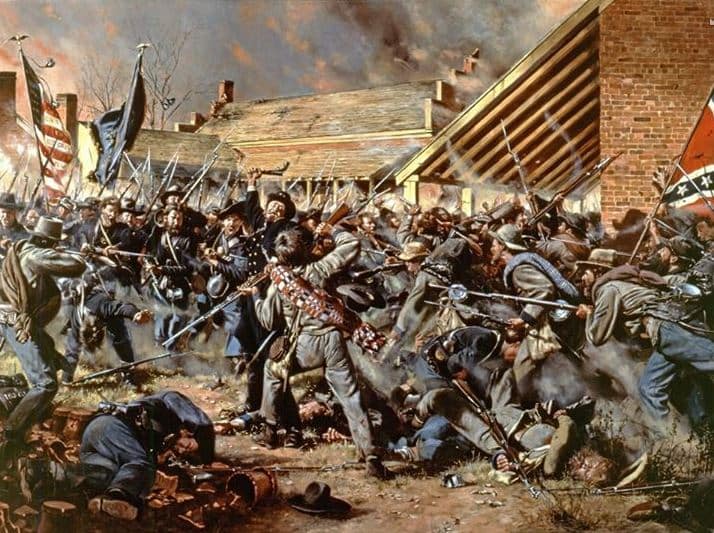
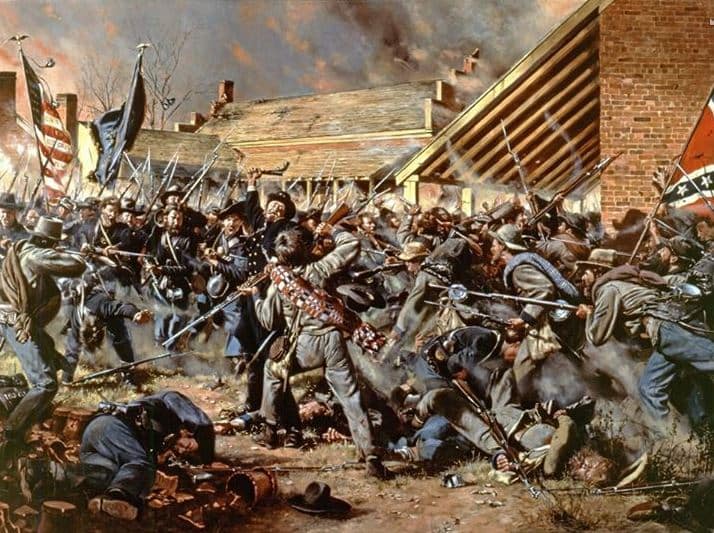
The Army of Tennessee broke against the Union entrenchments at Franklin in one of the Civil War’s most tragic episodes.
On the evening of 30 November 1864, Gen. John Bell Hood hurled his Army of Tennessee against entrenched Union forces at Franklin, Tennessee. Five hours of brutal fighting cost the Confederacy thousands of casualties and some of its finest generals. This battlefield study examines the strategy, terrain, and leadership decisions that made Franklin a decisive prelude to the Battle of Nashville.
Key facts
🗺️ Battle of Franklin, 30 November 1864
⚔️ American Civil War, 1861-1865 33,000 Confederate troops under Lieut. Gen. John Bell Hood vx 30,000 Union troops under Maj. Gen. John Schofield
🎯 Objective: Schofield was withdrawing his Army of the Ohio northwards to join with Major General Thomas’ Army of the Cumberland in Nashville. Hood aimed to fix or destroy Schofield’s army and prevent him from escaping
Visit my virtual museum of weapons, uniforms and equipment of the American Civil War
Google Earth map – location of the Franklin battlefield
🎧 Prefer to listen? This article is also available as a 45-minute podcast
Tip: If Podbean overlay appears after pausing, click the × in the top-right corner to return to the player controls.
🧭🥾 Walking the Battlefield
I have visited the Franklin battlefield twice: first in 1998, and again in 2016. Although much of the battlefield has been overtaken by urban development since 1864, several aspects make Franklin a particularly special place for me.
Hood and the invasion of Tennessee
The first is the sheer audacity of John Bell Hood’s march into Tennessee while Sherman was marching to the sea across the southern Confederate states. Hood had been severely wounded in the left arm by shrapnel during the attack on Little Round Top on the second day at Gettysburg. Less than three months later, at the Battle of Chickamauga, his right leg was shattered by a Minie ball and had to be amputated just below the hip joint. Six months later, he was back in action, leading a Corps during the Atlanta Campaign. By July 1864 he had been placed in command of the Army of Tennessee, the Confederacy’s principal army in the western theatre. With a paralysed arm and a missing leg, he then led the invasion of Union-held Tennessee. They were bred tough back then!
The scale of the attack on Franklin
The second striking aspect is the scale of Hood’s frontal attack on Schofield’s entrenched Union forces on the afternoon of 30 November 1864. With an assault force of more than 20,000 Confederate soldiers, and nearly one third of them becoming casualties, the Confederate assault at Franklin was larger than Pickett’s Charge at Gettysburg, and the Confederate losses were greater. Yet Franklin is nowhere near as well-known.
Repeating rifles
The third aspect is the prevalence of repeating rifles in Schofield’s Union force. At least two regiments in the Union front line were armed with 16-shot Henry repeating rifles. Other Union infantry regiments and much of the cavalry were armed with 7-shot Spencer repeating rifles or carbines, and yet other regiments were armed with the 5-shot Colt revolving rifle. Many Confederate accounts of the battle describe the devastating firepower of the Union defensive line.
Preservation of the Franklin battlefield
Finally, I have enormous respect for the efforts of preservation societies and volunteers first to preserve what remained of the battlefield, and then to begin reclaiming it by buying up commercial and residential properties and restoring the site to its 1864 appearance. The difference between my visits in 1998 and 2016 was striking. I think Franklin is one of the great success stories of historic preservation.
Table of Contents
- The Civil War in late 1864
- Opposing Forces at Franklin
- Geography & terrain
- Hood’s decision to attack (~4:00 pm–5:00 pm)
- Break-in and counterpenetration (~5:00 pm–7:00 pm)
- Night fighting and Union withdrawal (~7:00 pm–05:00 am)
- Outcomes & Assessment
- The Franklin battlefield today
- 📚 Notes and References
- 🧭 Battle of Franklin Battlefield Travel Guide (Tennessee, 30 November 1864)
- FAQ: Battle of Franklin, Tennessee (1864)
The Civil War in late 1864
By late 1864, the American Civil War had entered its final phase. As General-in-Chief of all Union armies, General Ulysses S. Grant pursued a strategy of coordinated action on all fronts. In the east, Generals Meade and Butler pressed the Army of Northern Virginia around Richmond and Petersburg, while Sheridan crushed the remaining Confederate force in the Shenandoah Valley. Other Union forces controlled the Mississippi, and much of the Confederacy’s Atlantic seaboard.
Western theatre
In the west, General Joseph E. Johnston had fought a series of defensive actions around Atlanta, continually frustrating Union General William T. Sherman. Johnston’s operational approach was to fight from tactically strong defensive positions and to yield ground rather than sacrifice manpower. Johnston conserved his army, but frustrated his more aggressive subordinates, and alarmed the Confederate government in Richmond.
In July 1864, President Davis sent General Braxton Bragg to assess the situation around Atlanta. Upon Bragg’s recommendation, Joseph E. Johnston was relieved of command and replaced by Lieutenant General John Bell Hood.
Lieutenant General John Bell Hood
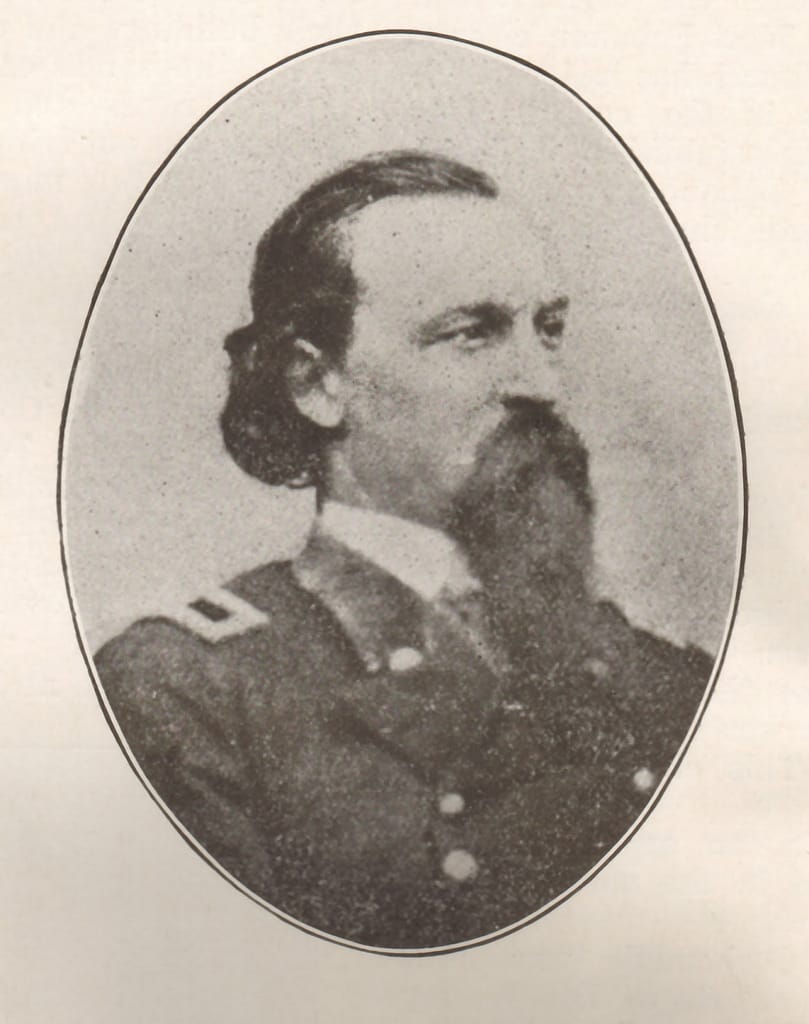
John Bell Hood was from Kentucky but had adopted Texas as his home state during the secession. Through the early years of the war, he gained a reputation for aggressive leadership. He led the Texas Brigade at Gaines Mill during the Seven Days Battle in June 1862, and saved the Confederate left flank from collapsing at Antietam in September 1862.
On the second day at Gettysburg, 2 July 1863, Hood led his division against the Union left flank at Devil’s Den and Little Round Top. He was severely wounded in the left arm by an artillery shell, which left his arm withered and useless.
By September 1863, he was back in action, leading his division at the battle of Chickamauga, where his division effectively split the Union army in two. Hood was struck by a minie ball in the right femur, and his leg was amputated close to the hip.
By early 1864, Hood was back in action as a Corps commander under Joseph E. Johnston, fighting a delaying defence against Sherman’s advance from Chattanooga to Atlanta. Hood complained to whoever would listen about Johnston’s lack of aggression. By July, Hood replaced Johnston as Commander of the Army of Tennessee.

Hood in command
Hood immediately adopted a more aggressive operational approach, launching a series of major attacks against Sherman’s army. Hood’s more aggressive approach achieved little but did cost his army massive casualties. Hood’s army was eventually driven back to Atlanta, and the city fell to Sherman on 2 September 1864.
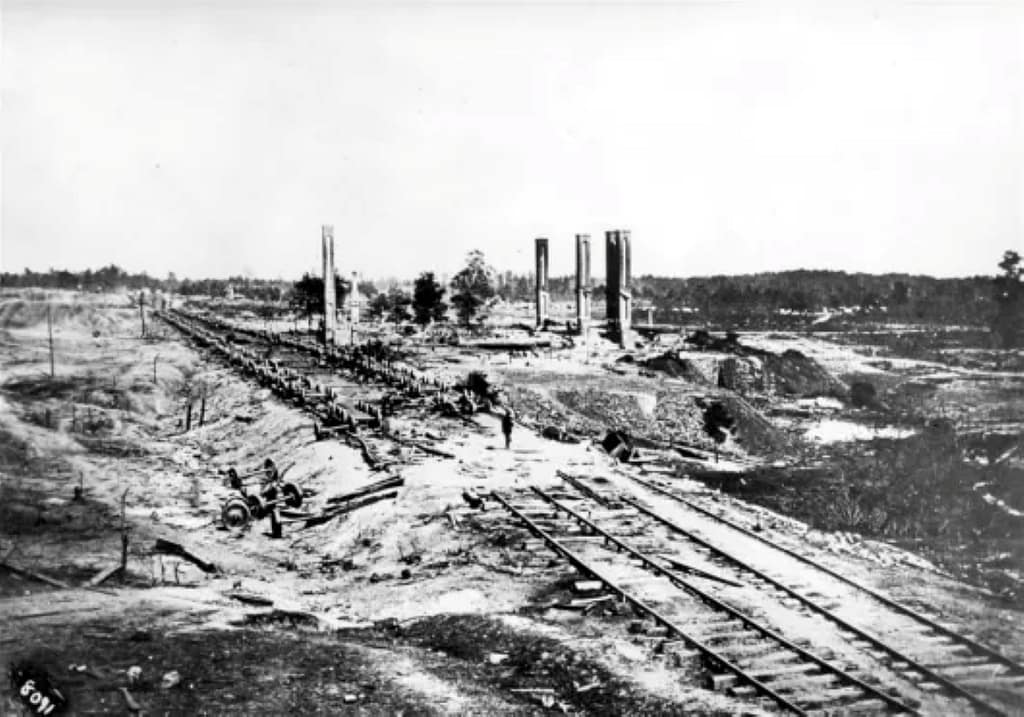
Through September and October 1864, Hood struck at Union depots and supply lines north of Atlanta, with Sherman in pursuit. However, by early November, Sherman ceased pursuing Hood. He left a small garrison in Atlanta and directed his subordinate, Major General George H. Thomas, to deal with Hood. Sherman began his march to the Sea.
Hood’s decision to invade Tennessee
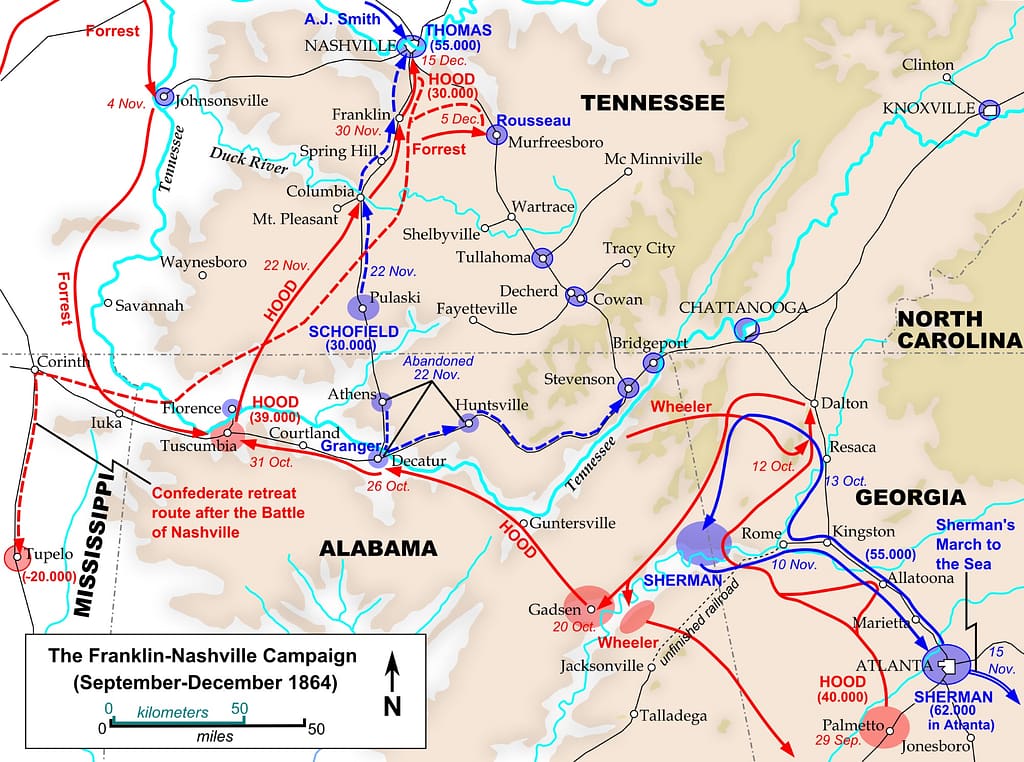
Hood saw little benefit in trying to follow Sherman and decided instead upon a bold invasion of Union-held Tennessee. Although never stated clearly, Hood’s objectives were to destroy Maj. Gen. John Schofield’s Union field force before it could concentrate with Maj. Gen. George H. Thomas at Nashville. If successful, Hood would then recapture the Tennessee state capital, disrupt Union control of the western theatre, and potentially influence Northern war-weariness at a moment when the Confederacy was fighting for strategic survival. Hood’s objectives at this stage of the war, and with the condition of his worn-out army, were probably implausible.
Hood gathered his army at Florence, Alabama, in mid-November and commenced his advance north into Tennessee on 21 November. In front of him at Pulaski, Tennessee, was the small Union Army of the Ohio (about 30,000 troops) under Major General John Schofield. In the near term, Hood’s objective was to intercept and destroy Schofield’s force before it could rejoin Major General George Thomas’ Army of the Cumberland and other Union forces gathering at Nashville, Tennessee.1McDonough, James Lee & Connelly, Thomas L., Five Tragic Hours: The Battle of Franklin (Knoxville: University of Tennessee Press, 1983). pp. 30-31.
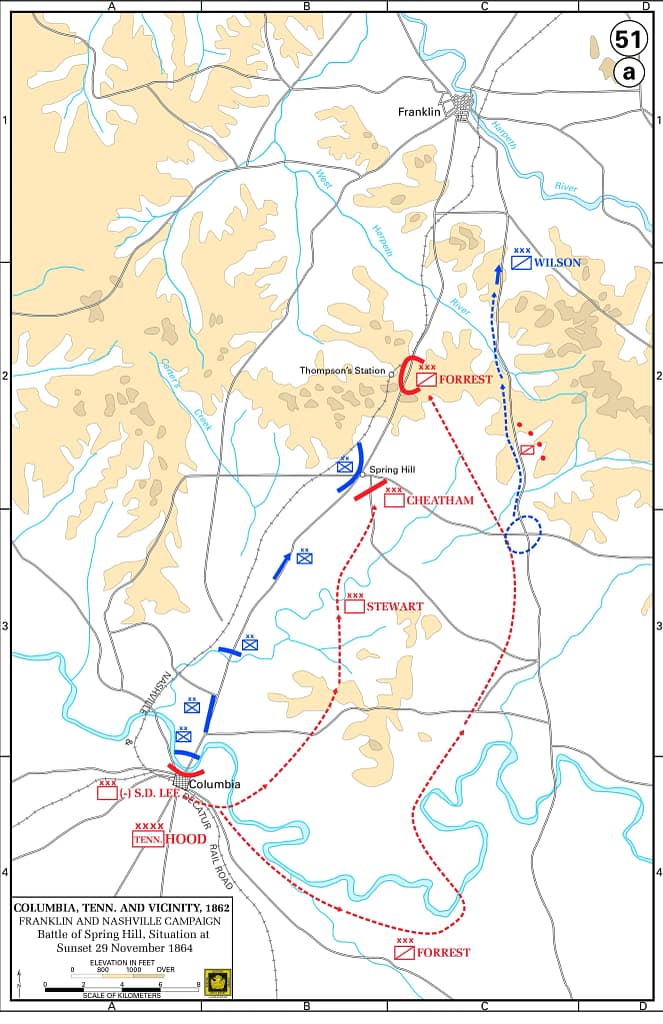
Battle of Spring Hill, Tennessee | 29 November 1864
On 29 November 1864, Hood attempted to cut off Schofield’s Army of the Ohio by seizing the Columbia Turnpike at Spring Hill, Tennessee. After forcing Schofield to withdraw from Pulaski and Columbia, Hood attempted a rapid flanking movement north of the Duck River, aiming to interpose his army between the Federals and Nashville.
Confederate cavalry under Nathan Bedford Forrest drove off Union screening forces during the morning. By midday, elements of Patrick Cleburne’s division were engaged with Union troops south of Spring Hill. Despite opportunities to press the attack, Confederate assaults were limited, piecemeal, and hampered by command confusion and uneven coordination. The Confederate forces were unable to concentrate fast enough, while Schofield’s forces, withdrawing from Pulaski, rapidly overcame the initial Confederate advantage in numbers.2 McDonough, Five Tragic Hours, p. 46-59.
As darkness fell, Hood’s forces failed to decisively secure the Columbia Turnpike. Throughout the night, Schofield’s infantry columns and wagon trains marched past Confederate positions along the road, slipping through the gap and continuing north toward Franklin.
Hood’s failure to block the Union retreat—whether through miscommunication, hesitation, or breakdown in command control—transformed what might have been a decisive Confederate interception into a strategic opportunity lost. On the following day, Hood, frustrated by the escape, would launch a costly frontal assault against Schofield’s fortified line at Franklin.
Opposing Forces at Franklin
 Confederate Army of Tennessee (~33,000)
 Confederate Army of Tennessee (~33,000)
Lieutenant General John Bell Hood commanded approximately 30,000–33,000 infantry and artillery effectives at Franklin (with Forrest’s cavalry ~5,000–6,000 operating semi-independently on the flanks, though much of it screened rather than assaulted directly).
The army was organised into three corps, but Hood’s artillery was delayed, and only one battery effectively supported the assault, leaving the infantry to advance with inadequate artillery support.
The Army of Tennessee remained dangerous at the tactical level. Veteran formations, particularly Cleburne’s division, retained cohesion and combat effectiveness. However, the army was also physically exhausted, poorly supplied, and increasingly strained by Hood’s aggressive operational tempo.
Franklin would demand a direct assault against prepared works, and several senior Confederate commanders understood the likely cost before the first line stepped off.3Sword, Wiley, The Confederacy’s Last Hurrah: Spring Hill, Franklin, and Nashville (Lawrence: University Press of Kansas, 1992). pp. 444-447.
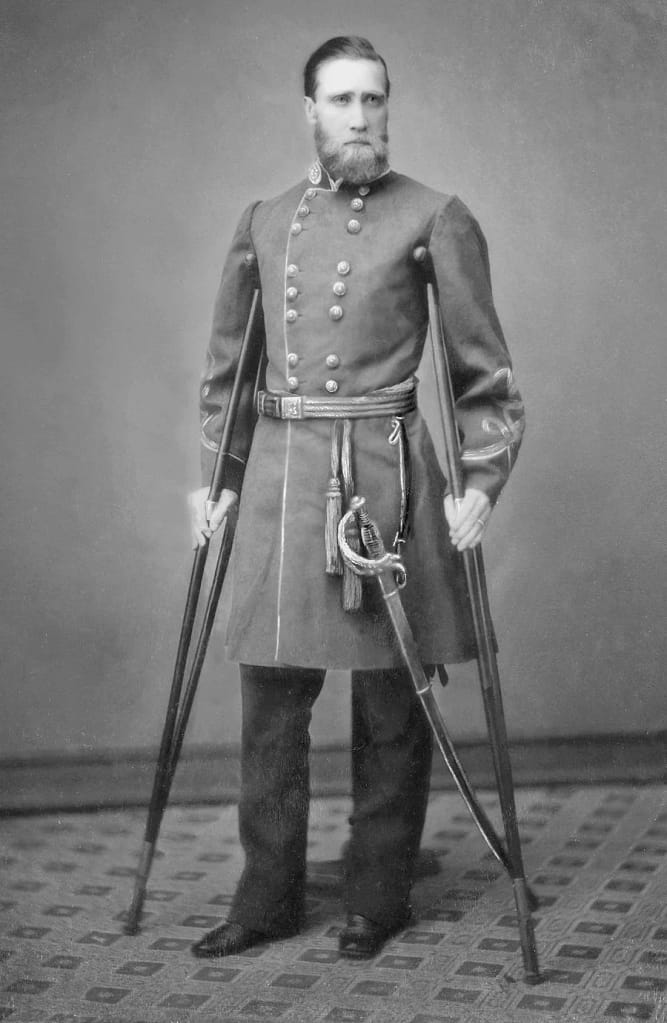
- Cheatham’s Corps – Lt. Gen. Benjamin F. Cheatham
- Maj. Gen. Patrick R. Cleburne’s Division (k) → BG James A. Smith after
- Maj. Gen. John C. Brown’s Division (w)
- Maj. Gen. William B. Bate’s Division
- Artillery. Colonel Melancthon Smith

- Stewart’s Corps – Lt. Gen. Alexander P. Stewart
- Maj. Gen. William W. Loring’s Division
- Maj. Gen. Edward Walthall’s Division
- Maj. Gen. Samuel G. French’s Division
- Artillery. Lt. Col. Samuel C. Williams

- Lee’s Corps – Lt. Gen. Stephen D. Lee (mostly in reserve/exploiting).
- Maj. Gen. Edward Johnson’s Division
- Maj. Gen. Carter L. Stevenson’s Division
- Maj. Gen. Henry D. Clayton’s Division
- Artillery. Colonel Robert Beckham
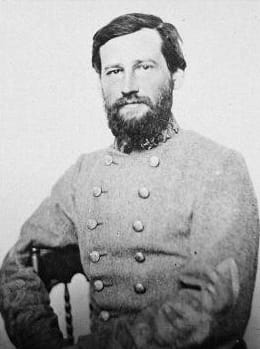
- Cavalry Corps – Maj. Gen. Nathan Bedford Forrest
- Brig. Gen. James R Chalmers’ Division
- Brig. Gen. Abraham Buford’s Division
- Brig. Gen. William H. Jackson’s Division
- Artillery. Morton’s Tennessee Battery.


For additional Civil War weapons, please visit the Museum of American Civil War weapons and equipment
 Union Army of the Ohio and Attached IV Corps (~30,000)
 Union Army of the Ohio and Attached IV Corps (~30,000)
Maj. Gen. John Schofield commanded approximately 25,000 effectives at Franklin, including his own Army of the Ohio, reinforced by Maj. Gen. David S. Stanley’s IV Corps (Army of the Cumberland). Schofield’s advantage was positional: he could fight from field fortifications, supported by concentrated artillery, while maintaining a viable withdrawal route across the Harpeth River toward Nashville.
At Franklin, the Union defensive line formed a fortified semicircle south of the Harpeth River, anchored on the riverbanks east and west of town. The Columbia Pike cut through the centre of the position, and key reference points—such as the Carter House and the Cotton Gin area—became tactical landmarks during the battle. Artillery was positioned to command the open approaches, and the fieldworks provided Union infantry with the protection and base of fire to repel repeated assaults across exposed ground.
Wagner’s Division initially held a rearguard position across the heights around Winstead Hill, but withdrew to a low ridge immediately south of the main Union position when threatened by envelopment by Stewart’s Corps.4Sword, The Confederacy’s Last Hurrah, pp. 448-451.
- IV Corps (Army of the Cumberland) – Maj. Gen. David S. Stanley (wounded early; command issues)
- Brig. Gen. George D. Wagner’s Division (advanced brigades forward)
- Brig. Gen. Nathan Kimball’s Division
- Brig. Gen. Thomas J. Wood’s Division
- Artillery. Maj. Wilbur F. Goodspeed
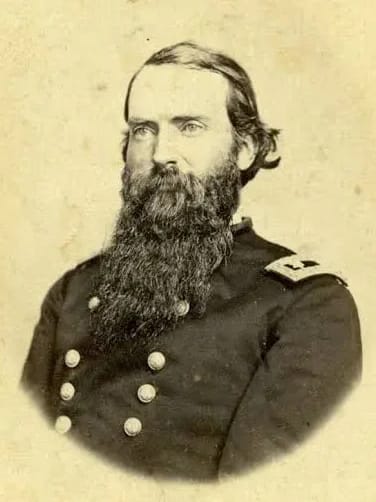
- XXIII Corps (Army of the Ohio) – Maj. Gen. Jacob D. Cox (acting commander)
- Brig. Gen. James A. Reilly’s Division
- Brig. Gen. Thomas H. Ruger’s Division (key on the Union right)
- Other brigades (e.g., Opdycke’s under Wagner but pivotal reserve)

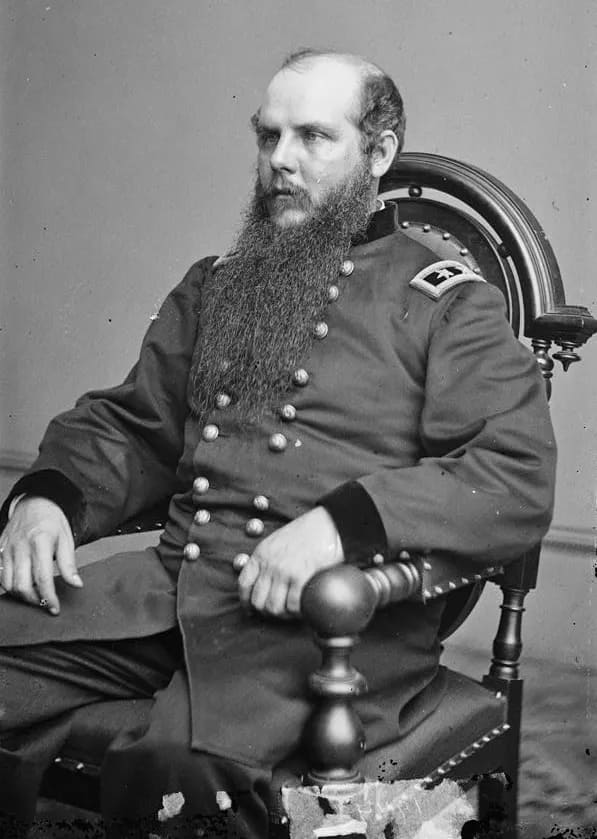
- Union Cavalry Corps – Major General James Harrison Wilson
- Brig. Gen. Edward Hatch’s Division
- Brig. Gen. Richard W. Johnson’s Division
- Not present at Franklin: Brig. Gen. Joseph F. Knipe’s Division and Brig. Gen. Edward McCook’s Division

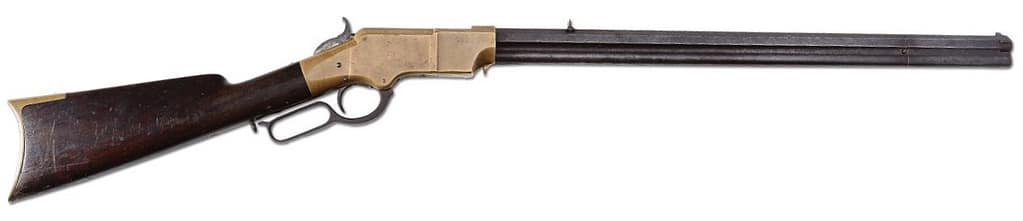
For additional Civil War weapons, please visit the Museum of American Civil War weapons and equipment.
Geography & terrain
Franklin and the Harpeth River
The town of Franklin, Tennessee, lies immediately south of the Harpeth River, astride the Columbia Pike, roughly 18 miles south of Nashville. For Schofield, the river was both protection and constraint. It anchored the Union position and limited Confederate manoeuvre, but it also meant the Union army’s freedom of action depended on a small number of bridge crossings remaining open and secure.5McDonough & Connelly, Five Tragic Hours, pp.
95–96.
Two crossings were critical: the Columbia Pike bridge and a pontoon bridge laid upstream. These were Schofield’s withdrawal route to Nashville, and the battle at Franklin was fought to hold the line long enough for men, guns, and trains to pass north.
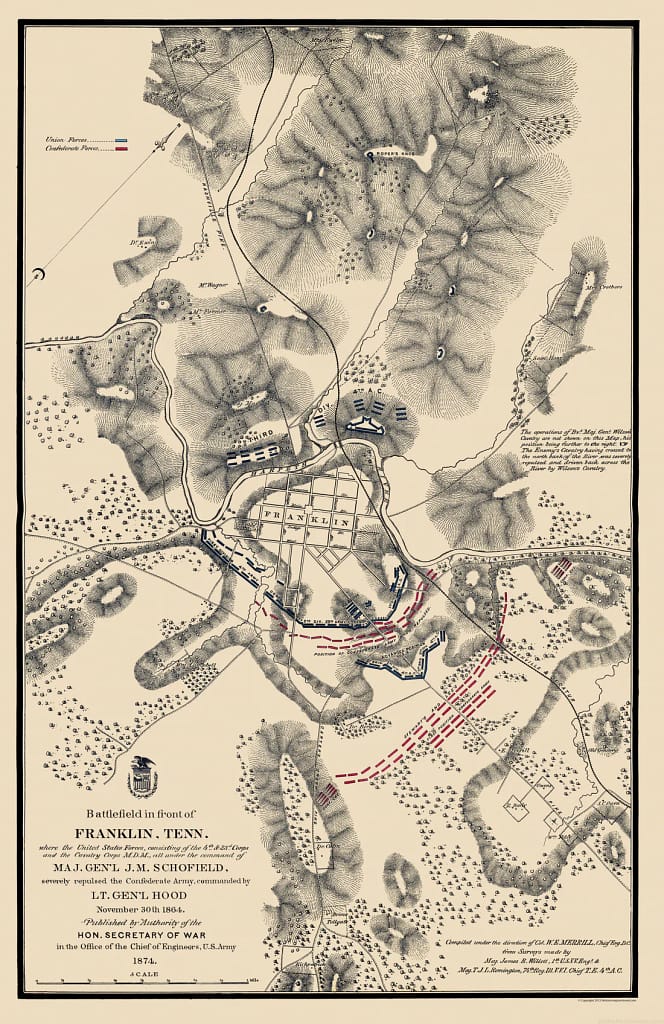
The Union defensive arc at Franklin
Schofield’s troops entrenched during the night of 29–30 November, building a fortified semicircle south of town with the Harpeth protecting the rear. The Columbia Pike ran through the centre of the position, creating both a vital movement route and a natural focus point for attack and defence.
Key terrain within the line included the Carter House and the nearby cotton gin, which served as reference points during the fighting and marked the sector where the Confederate assault would concentrate. The defensive works were, in parts, built on earlier works constructed during the war. Additional field fortifications were rapidly constructed from timber, earth, rail sleepers, and whatever else could be rapidly obtained.
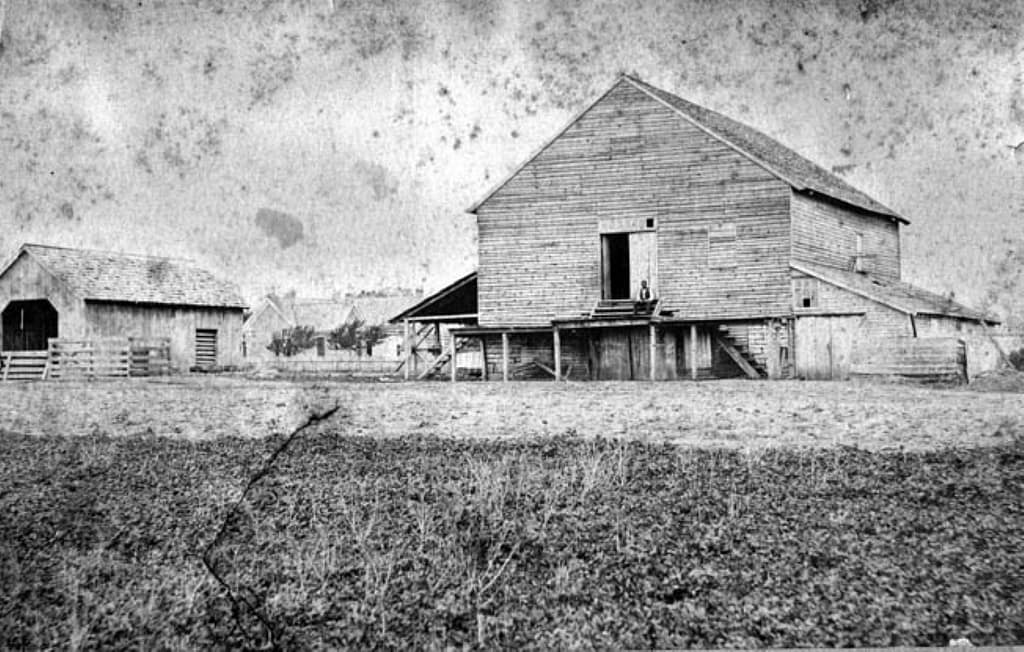
The defensive abatis and supporting artillery
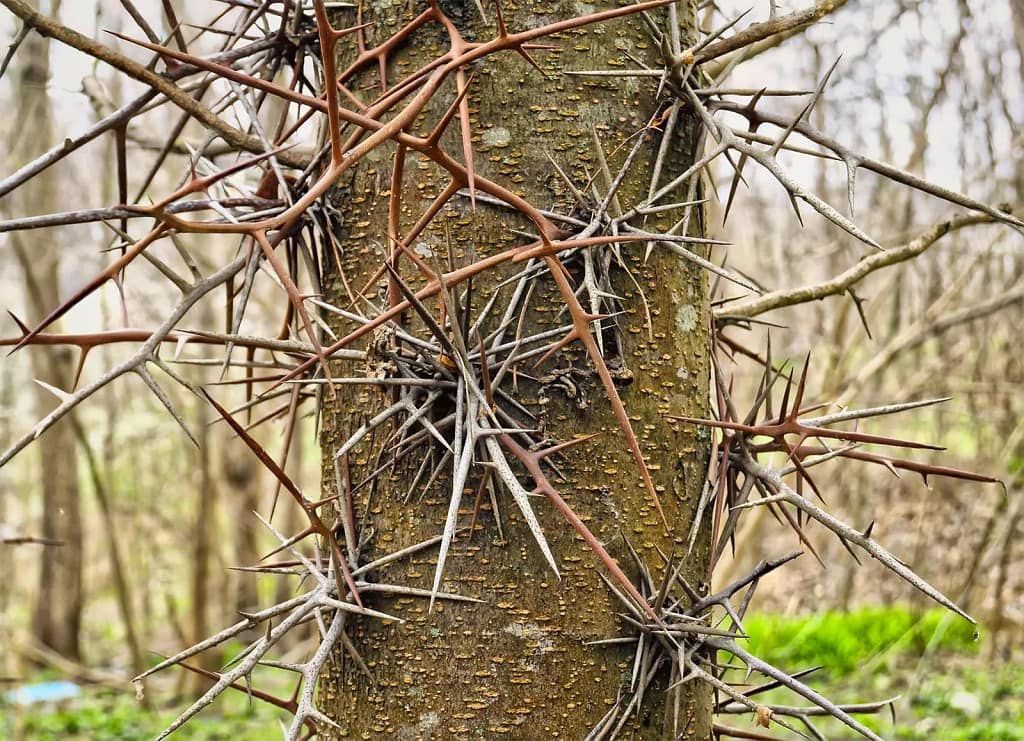
Some sectors were also protected by abatis and thick barriers of honey locust and Osage orange, which served as natural barbed wire to entangle and slow an attacking force.
On the north bank of the Harpeth, Schofield’s force held several important fortified artillery battery positions, including a position on a hill due east of the Union front line. These would prove crucial during the Confederate attack, as they could fire enfilade into the densely packed Confederate ranks.6Sword, The Confederacy’s Last Hurrah, pp. 165-169.
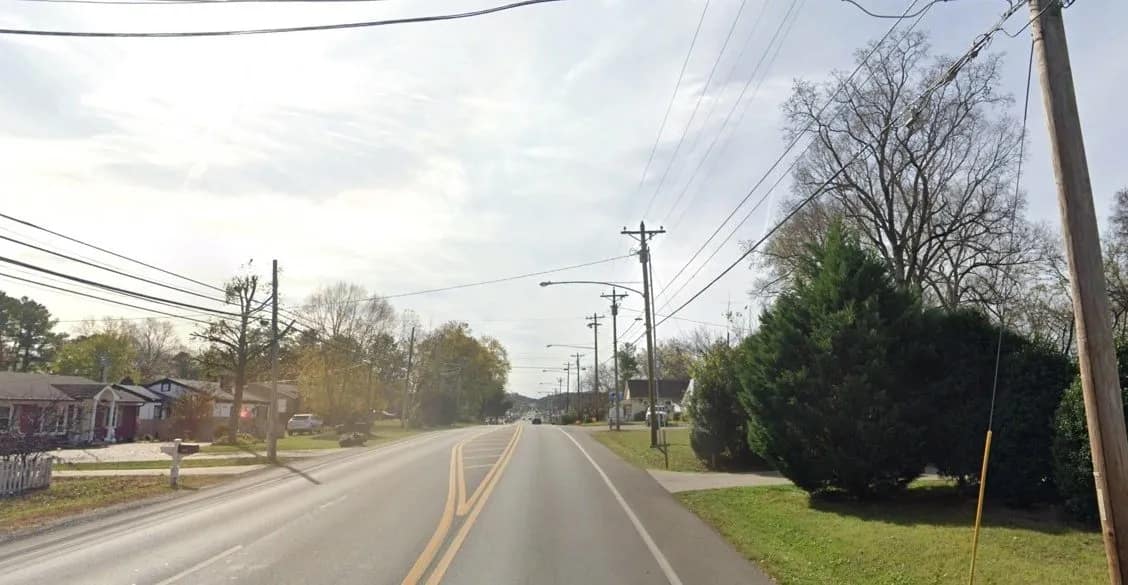
General Wagner’s forward position
A critical feature of the defensive scheme was the presence of Wagner’s advanced line south of the main works on a low ridge astride the Columbia Pike. Wagner had initially occupied the Winstead Hill ridge until threatened by Stewart’s Corps advancing past his left flank.
By about 1:00 pm, Wagner had withdrawn from the Winstead ridgeline and occupied the low ridge position with two of his brigades. His third brigade, under Colonel Emerson Opdycke, was allowed to continue marching into the main position and rested in a depression north of the Carter house. Schofield had directed Wagner’s division to occupy the position to provide early warning and impose delay on any Confederate pursuit. The position was not meant to be held against a major Confederate attack.
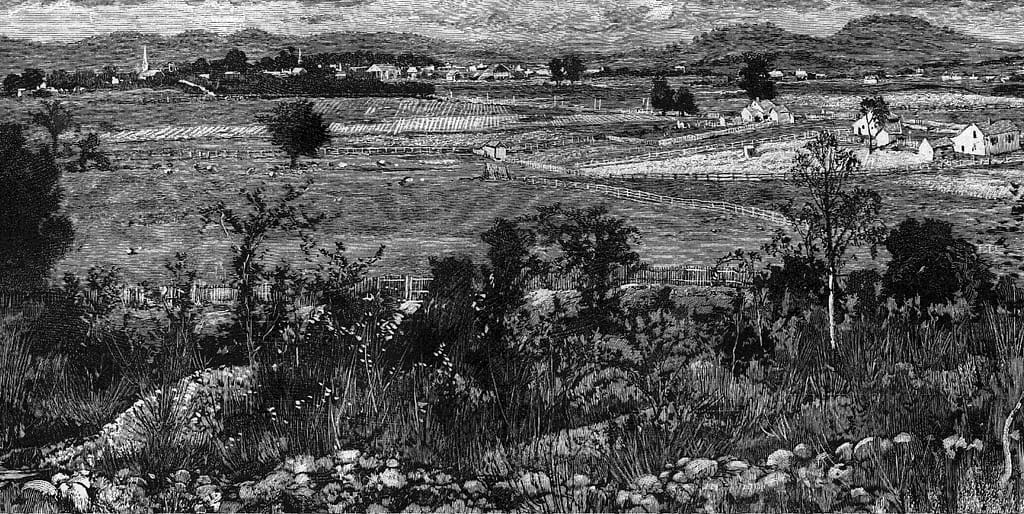
Terrain on the Confederate approach
From the Confederate forming-up area around Winstead Hill, the ground north toward Franklin was largely open farmland with only shallow folds and limited cover. Fences, drainage lines, and scattered vegetation could break formations but did not provide meaningful protection from artillery or rifle fire.
The result was a battlefield that imposed a harsh tactical reality: Confederate infantry would have to cross several hundred metres of exposed ground under ever-increasing fire, then attempt to break into a prepared defensive line anchored on a river obstacle.
Terrain implications
Franklin strongly favoured the defence. The Union position combined fieldworks, interior lines, flanking artillery support, and a protected rear boundary at the Harpeth River. Hood’s assault, by contrast, required his massed infantry to advance across open ground against a fortified enemy position, with little scope for manoeuvre once committed. Like many other attacks against fortified positions across history, Franklin would be a race for the parapet. Who would get there first?7Cozzens, Peter, The Shipwreck of Their Hopes, p. 382.
Hood’s decision to attack (~4:00 pm–5:00 pm)
Hood’s race against time
By mid-afternoon on 30 November 1864, Gen. John Bell Hood concentrated the Army of Tennessee south of Franklin and established his command post in the Harrison House on Winstead Hill. From this rise, Hood could see the Union line drawn in a broad arc south of the town, anchored on the Harpeth River crossings. Maj. Gen. John Schofield’s force had halted to repair bridges and move its wagon trains and artillery northward, and the Union infantry occupied prepared works along Carter Hill and adjacent ridgelines. Hood’s operational problem was time: if Schofield escaped across the Harpeth River intact, he would join Maj. Gen. George H. Thomas at Nashville, and the campaign would shift decisively against the Confederacy.
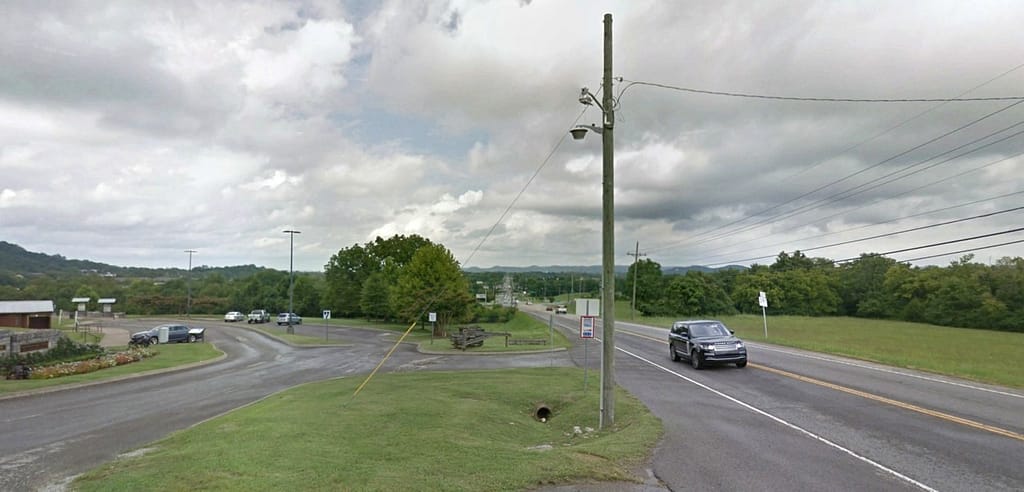
Hood’s decision and reasoning
Hood, from Winstead Hill, viewed Schofield’s works but dismissed the immense risks, driven by his rage over Spring Hill (“wrathy as a rattlesnake”), and his belief in the power of the offensive (greatly influenced by his time with Lee in the Army of Northern Virginia). He also believed that his army lacked offensive spirit and preferred to fight from behind breastworks rather than attack an entrenched enemy. His subordinates foresaw a pending disaster and protested strongly. Hood overruled them, ordering the advance despite incomplete deployment..8McDonough & Connelly, Five Tragic Hours, pp. 71–73.
The attack plan
The decision carried obvious risk. The approaches to Franklin were open and exposed, the Union position was fortified, and the Harpeth River constrained manoeuvre and retreat routes. Yet Hood’s plan relied on mass, shock, and speed: Cheatham’s Corps would assault on the left, Stewart’s Corps on the right, with S.D. Lee’s Corps committed behind to exploit success or reinforce failure. Each Confederate assault Corps would have only one artillery battery firing in support.
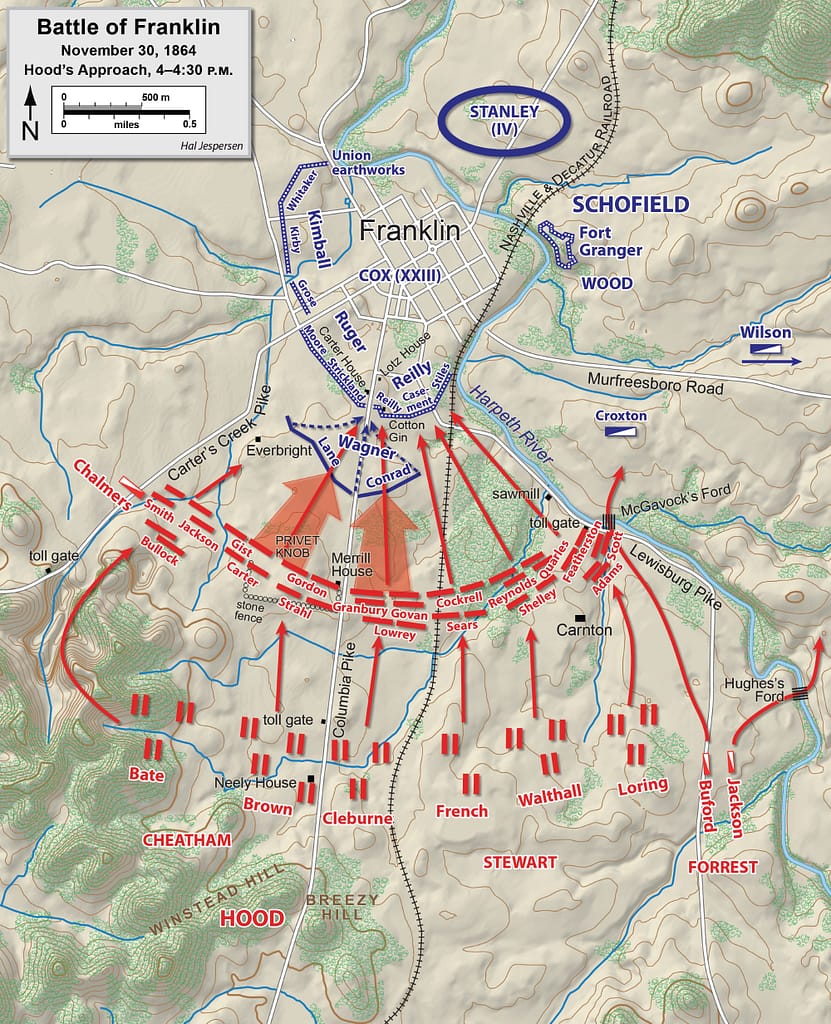
At approximately 4:00 pm, Confederate divisions began forming for the advance. The assault frontage extended for roughly two miles, with units stepping off from the area around Winstead Hill and moving north across gently rolling farmland broken by fences, shallow drainage lines, and scattered patches of cover. The ground offered little concealment. Any assault would have to cross several hundred metres under artillery and musket fire before reaching the Union works.
Confederate assault begins
At about 4:15 pm, Confederate lines moved forward in good order. To the Union troops in Wagner’s advanced position or on the defensive line at Franklin, the scale of the advance was immediately apparent: long grey lines stepping off across open ground toward a fortified position, with little opportunity for tactical manoeuvre once committed. The first Union obstacle, however, was not the main line. Schofield had placed Brig. Gen. George D. Wagner’s two advanced brigades forward of the primary works, several hundred yards south of the Carter House sector. Their purpose was to delay and disrupt the Confederate approach.
Wagner’s division breaks
The problem for Wagner was that his position was isolated. He could generate good firepower across his narrow frontage, but his flanks were hanging in the air. As Stewart’s and Cheatham’s Corps reached a point about 400 yards in front of Wagner, they halted and reformed their lines. Then they charged, breaking into a run.
The Confederate assault formation was far wider than Wagner’s line, so the attack threatened to completely envelop Wagner’s position. Individual Union soldiers began to break and run, and it soon became a rout as panicked soldiers streamed back into the main position, with several thousand soldiers attempting to get through the narrow gap around Columbia Pike and Carter House. Some Union soldiers became entangled in the abatis and honey locust barriers. The Confederates pursued them, cutting down or capturing stragglers and becoming mixed up with the blue-coated soldiers.9McDonough, Five Tragic Hours, p. 110-112
Far from imposing delay on the enemy, Wagner’s division was now a liability for the defensive design. As Wagner’s men streamed rearward, they masked Union fields of fire and created disorder along the very sector where the Confederate main effort would soon strike.
Break-in and counterpenetration (~5:00 pm–7:00 pm)
Breakthrough at the Columbia Pike / Carter House Sector
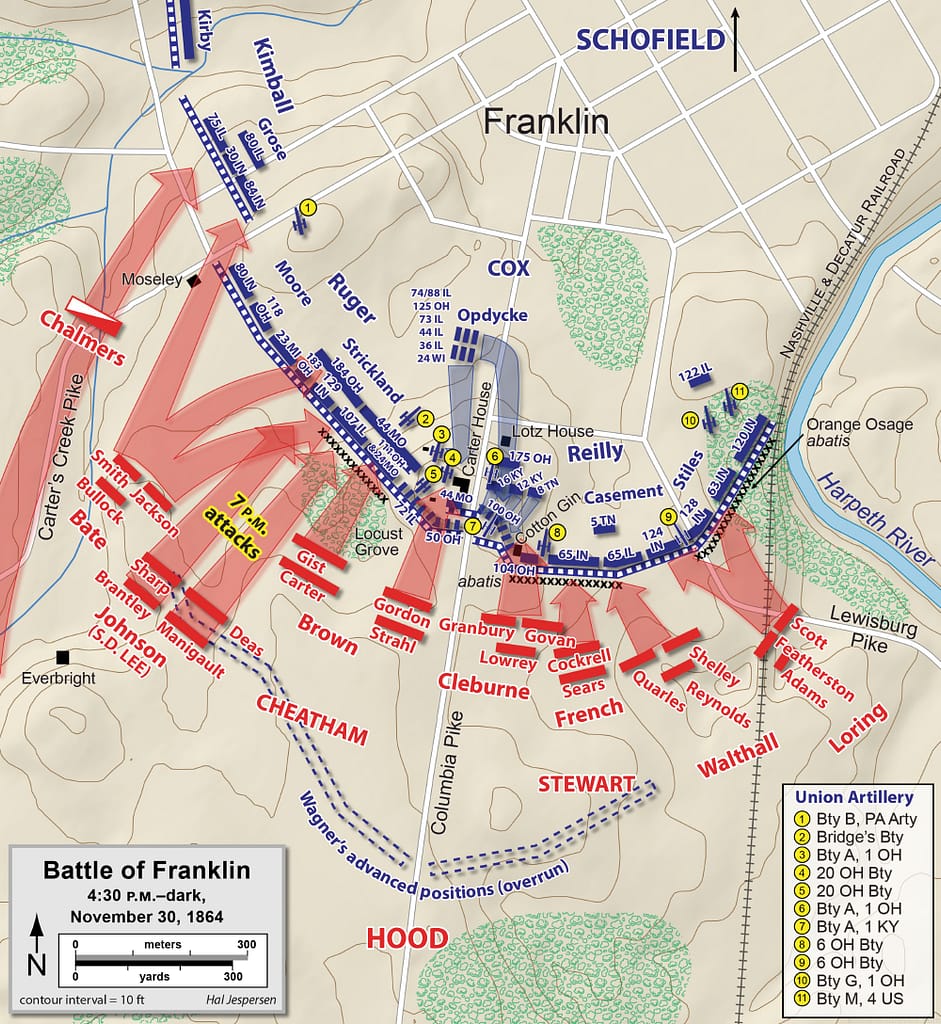
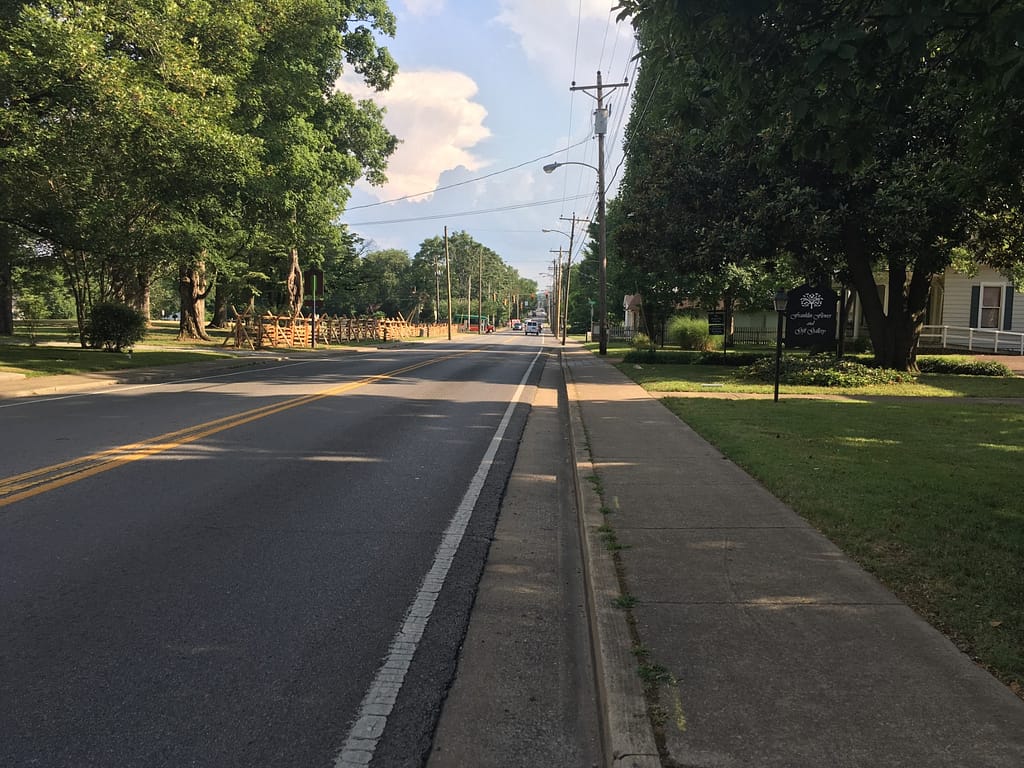
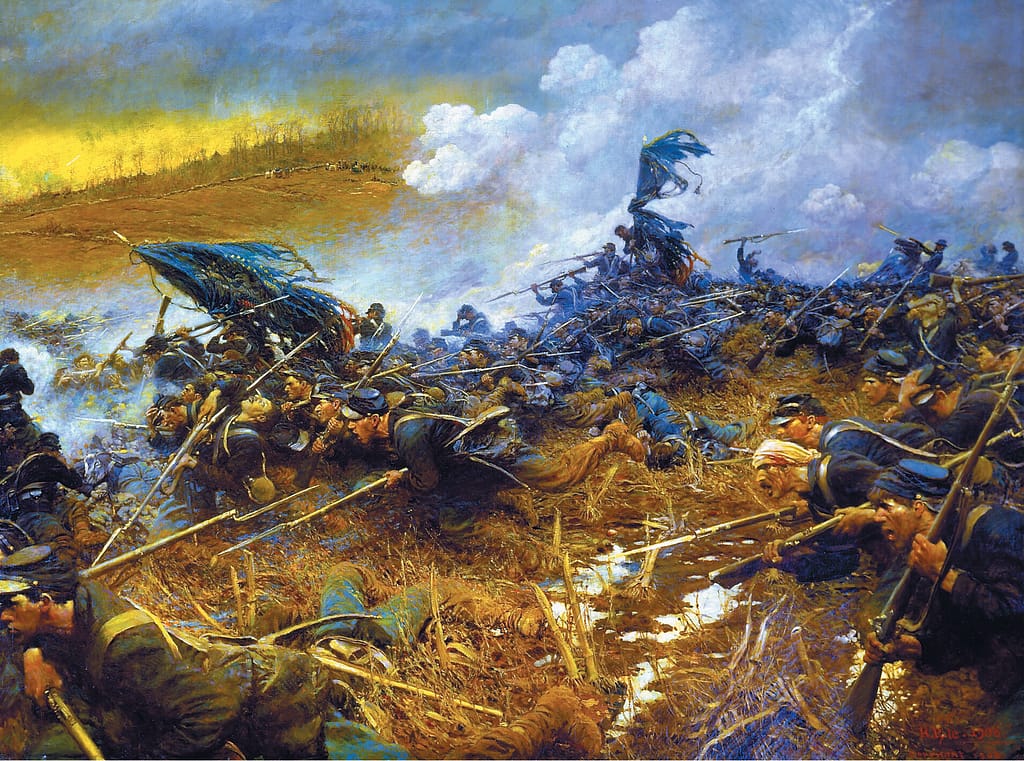
The collapse of Wagner’s position opened a dangerous gap in the Union centre along the Columbia Pike corridor near the Carter House. Confederate formations, particularly elements of Cheatham’s Corps and Stewart’s Corps, surged into the breach before Union commanders could restore cohesion. In the leading wave, Maj. Gen. Patrick R. Cleburne’s division pressed forward aggressively, closing on the works at close range. At about 4:30 pm, Confederate troops of Cleburne’s Division struck the Union line around the Carter House, held by 20th Ohio and 44th Missouri. For a brief moment, Hood’s gamble almost paid off. Cleburne’s veterans reached the entrenchments, and, for a brief period, the Union centre was at risk of being split.
Opdycke’s Tigers
The Union response was immediate and decisive. Brig. Gen. Jacob D. Cox, commanding the Union XXIII Corps, directed reinforcements into the threatened sector. Brig. Gen. Emerson Opdycke’s brigade, held in reserve behind the line near the Carter House, counterattacked into the breach. Opdycke’s four regiments arrived at the critical moment. Three regiments on the eastern side of Columbia Pike and one regiment on the western side.10Sword, The Confederacy’s Last Hurrah, pp. 199-207.
The fighting around the pike and adjacent works became close-range and chaotic: volleys fired at near-point-blank range, individuals and groups cresting the parapets, and units intermingling in the smoke and confusion of the centre.
This was the decisive moment of the battle. Had the Confederate penetration widened, Hood might have ruptured Schofield’s line and seized the bridges before the Union withdrawal could be completed. Instead, Opdycke’s counterstroke and the rapid concentration of Union infantry and artillery stabilised the centre. The Confederate assault momentum stalled at the works.
Major Arthur Macarthur, 24th Wisconsin Infantry Regiment
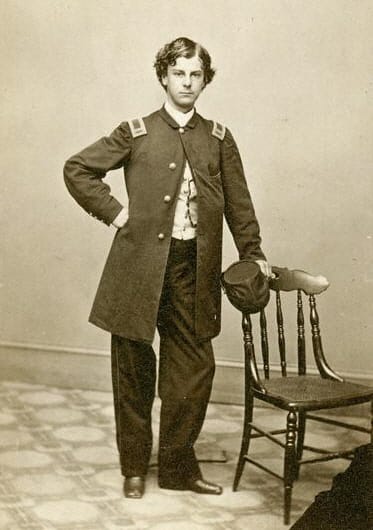
Of note, one of Opdycke’s regiments, the 24th Wisconsin, was commanded by 19-year-old Major Arthur MacArthur, Medal of Honor winner at Missionary Ridge a year earlier.
MacArthur was severely wounded at the Battle of Franklin, receiving bullet wounds to the chest and leg from a rebel officer’s pistol, but would ultimately survive.
Sixteen years after the Battle of Franklin, Arthur and his wife Mary had a son named Douglas MacArthur, who would later become the 13th Chief of Staff of the US Army, lead the Allied Southwest Pacific campaign in World War II, and lead United Nations forces in Korea.
The fight around the Cotton Gin
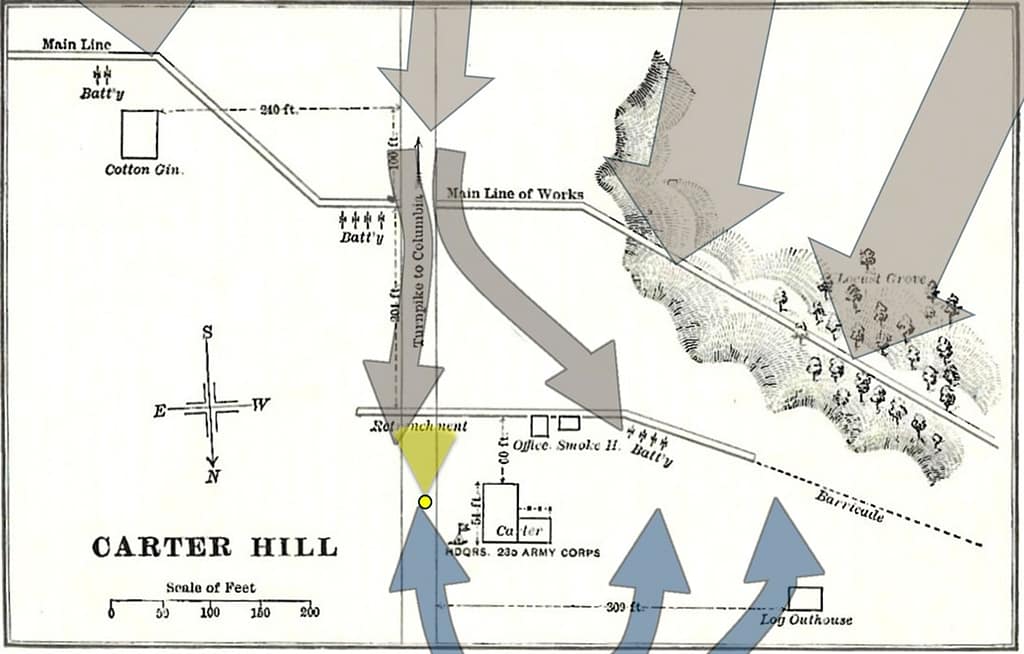
Stewart’s and Cheatham’s Corps had been drawn into the critical fight around Columbia Pike and Carter House. This allowed Union forces on either side of the breech to concentrate their fire against the Confederate breach. In particular, an angle in the Union defensive line on the eastern side of the Pike allowed massed Union infantry, some armed with 16-shot Henry Rifles, to pour fire into the Confederate flanks. So even as the lead Confederate elements were leading the break-in, follow-on elements were being slaughtered around the breach.
Confederate forces in the angle between the Cotton Gin and the Columbia Pike, and to the immediate west of Columbia Pike, faced an intense dilemma. They huddled on the southern side of the Union defensive earthworks. They could no longer move forward. Their dramatic break-in around Carter House had been contained, and any forward movement meant instant death. They could not withdraw as the ground behind them was raked with artillery fire from the flanking Union batteries. There were no reserves or supporting troops behind them. If they stayed where they were, they were shot down by the massed Union regiments that converged on the angle and were now freely firing into their flanks. After several hours of torment, the survivors eventually surrendered; in ones and twos at first, and then en masse.
Pressure along the entire Union Front
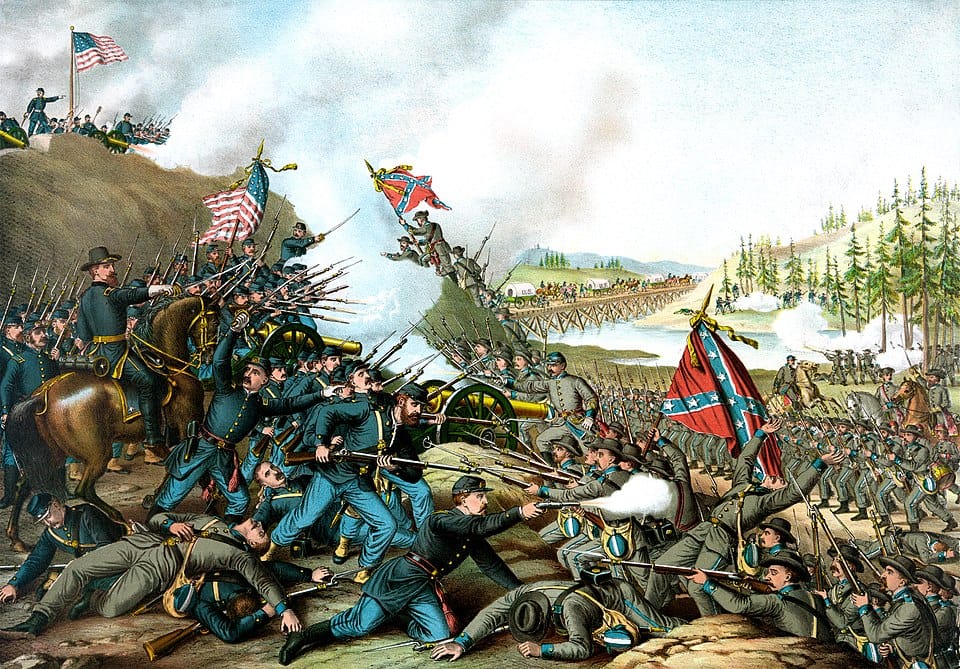
Once the initial breach was contained, the battle expanded into a series of sustained assaults across the Union arc. Between roughly 5:00 pm and 6:30 pm, Hood fed additional brigades into the fight. Cheatham’s Corps renewed pressure on the left, Stewart’s Corps attacked on the right, and Lee’s Corps committed further divisions into the centre. The Confederate assaults came in successive waves, but the terrain and fortifications imposed a brutal tactical pattern: long exposed approaches, concentrated Union fire at short range, and heavy losses for minimal gain.
Major General William Bate’s Division on the far left of Cheatham’s Corps had much further to march to its assault position, so began its assault after the main breach around Carter House had already been contained. Bate’s Division, reinforced by General James Chalmer’s weak dismounted cavalry division, faced the same problem that other Confederate units faced: strong Union defensive lines supported by flanking artillery batteries. This attack attempted to breach the Union lines around the Carter’s Creek Pike and the Bostick House, but made little headway, enduring heavy casualties from flanking batteries.11McDonough, Five Tragic Hours, pp. 139-140.
Role of the Union artillery
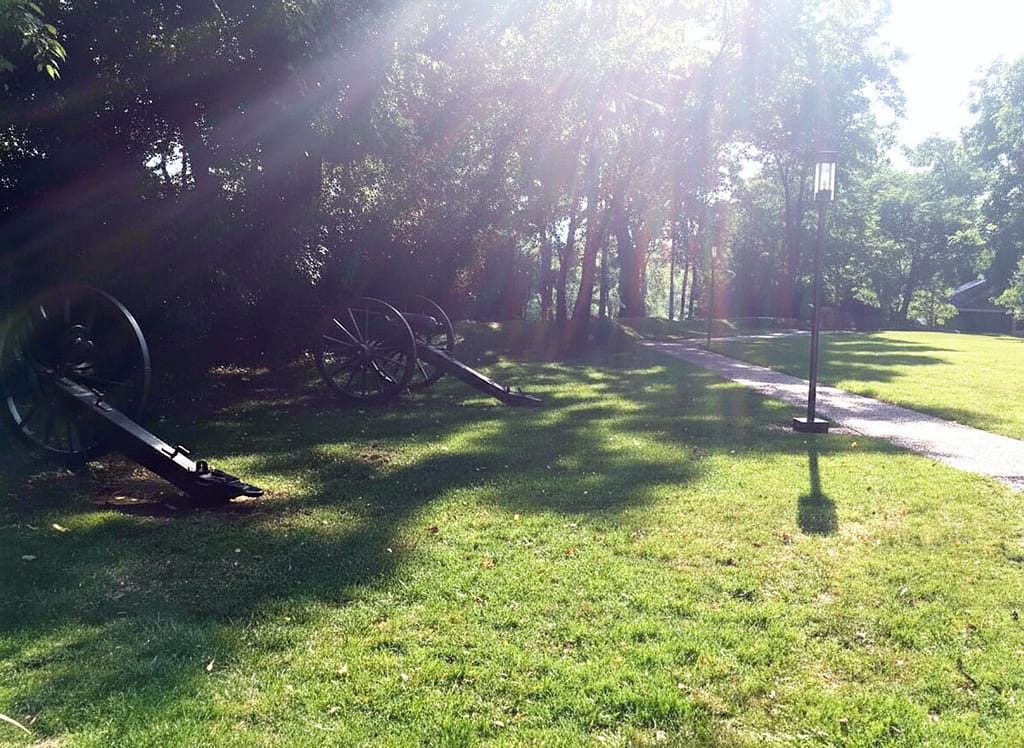
Union artillery played a critical role in breaking these attacks. Batteries positioned on interior high ground, Fort Granger, and high ground on the far side of the Harpeth River, swept the open approaches with solid shot and canister. Infantry along the defensive works delivered musket volleys into dense Confederate formations, thereby fixing them in the killing zone and allowing the artillery to do its work. Confederate units did gain temporary footholds in parts of the outer works and captured sections of the forward line, but these penetrations were rapidly sealed.
Loss of Confederate commanders
Franklin’s cost was not only measured in casualties but in the destruction of Confederate leadership. The assault stripped the Army of Tennessee of an irreplaceable cadre of experienced generals and brigade commanders. Maj. Gen. Patrick Cleburne was killed near the centre while leading the attack. Brig. Gen. Hiram B. Granbury fell in the same sector. Brig. Gen. Otho F. Strahl was killed, urging his men forward at the works. Brig. Gen. John Adams was slain in the assault, famously dying near the parapet during the attempt to break through the Union line. Brig. Gen. States Rights Gist was mortally wounded west of the Columbia Pike. Within a short period, the Confederate army suffered a level of senior loss unmatched in most Civil War battles.
The practical effect was immediate. Units continued to attack, but cohesion degraded. Brigades lost direction. Local initiative could not compensate for the lack of coordinated control across the attack frontage. Hood remained on Winstead Hill, pressing the assault, but the battle was now a series of disconnected struggles against an intact, fortified line.

Night fighting and Union withdrawal (~7:00 pm–05:00 am)
Schofield continues the move northwards
As darkness fell around 7:00 pm, the fighting did not end. The battlefield was lit by muzzle flashes and intermittent fires, and the centre around the Carter House and the cotton gin site remained a killing zone. Confederate troops continued to press into the works at several points, and in places the lines were close enough for bayonet fighting, clubbed muskets, and hand-to-hand struggle in the trenches. The Union line held, but it held under sustained pressure and heavy strain.
For Schofield, Franklin was never intended as a final stand. His operational mission was to delay: hold Hood long enough to complete the movement of trains and artillery across the Harpeth, then withdraw his force to Nashville intact. By late evening, with the main assault repulsed and the Confederate army badly mauled but still present, Schofield executed the withdrawal plan. Between approximately 02:00 am and 05:00 am on 1 December 1864, Union units disengaged methodically and crossed the repaired bridges, leaving behind pickets and minimal elements to mask movement. The retreat was disciplined and successful, preserving combat power for the decisive battle that would follow at Nashville.12McDonough, Five Tragic Hours, pp. 152-153.
Hood occupies Franklin
At daylight, Hood’s troops occupied Franklin. They held the ground, but the cost had been ruinous. The fields and works south of town were strewn with dead and wounded, and the Confederate army had expended its offensive capacity in a single evening of frontal assaults. Franklin was the moment the Army of Tennessee lost the strength and leadership required to continue the campaign on equal terms.

Outcomes & Assessment
Army of Tennessee’s offensive capacity shattered
Franklin was a clear Union defensive success and a catastrophic Confederate expenditure of lives and combat power. Schofield achieved his operational purpose: he held Hood south of the Harpeth long enough to move his trains, artillery, and infantry across the river, then withdrew intact toward Nashville during the night. Hood, by contrast, failed to rupture the Union line or seize the crossings, and the Army of Tennessee emerged from the battle badly weakened at the moment it most needed strength for the decisive phase of the campaign.
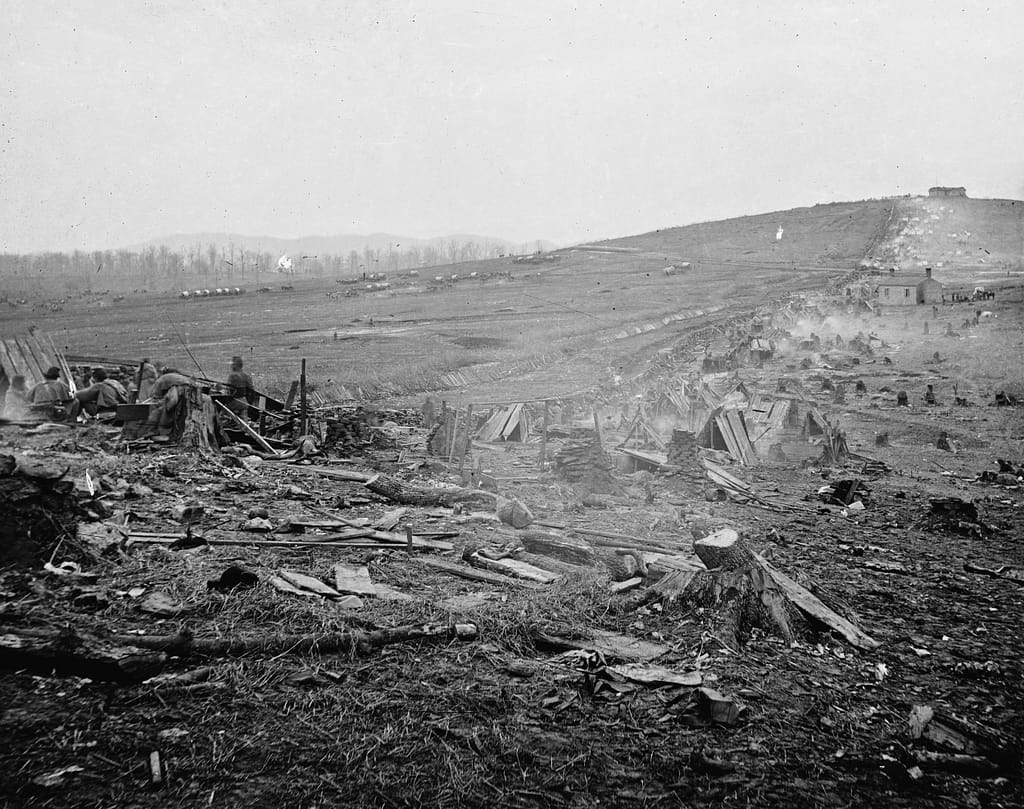
Tactically, the battle was defined by the mismatch between method and ground. Hood committed a broad frontal assault across open approaches against prepared works supported by concentrated artillery. The Confederate attack briefly penetrated the Union centre near the Columbia Pike, but rapid Union reinforcement and counterattacks restored the line and turned the breakthrough into a killing zone. Once that moment passed, the battle became a series of repeated assaults against an intact defensive arc, producing heavy losses for no operational gain.
Casualties at Franklin
The most damaging outcome for the Confederacy was the loss of experienced leadership. Franklin cost the Army of Tennessee a disproportionate number of senior officers, including divisional and brigade commanders who could not be replaced. The effect was more than symbolic: it degraded the army’s command cohesion, reduced its ability to coordinate attacks, and accelerated the decline of an already strained force. Even where Confederate units fought with determination and reached the works, they could not sustain momentum or exploit local success under fire.
Casualties:13McDonough, Five Tragic Hours, pp. 157-158.
- Union ~2,326 (189 killed, 1,033 wounded, ~1,100 missing/captured).
- Confederate ~6,252 (estimates: 1,750 killed, 3,800 wounded, 702 missing)—some sources higher (~7,000 total). Proportionally devastating; Army of Tennessee lost offensive power.
Encore to Franklin: the Battle of Nashville
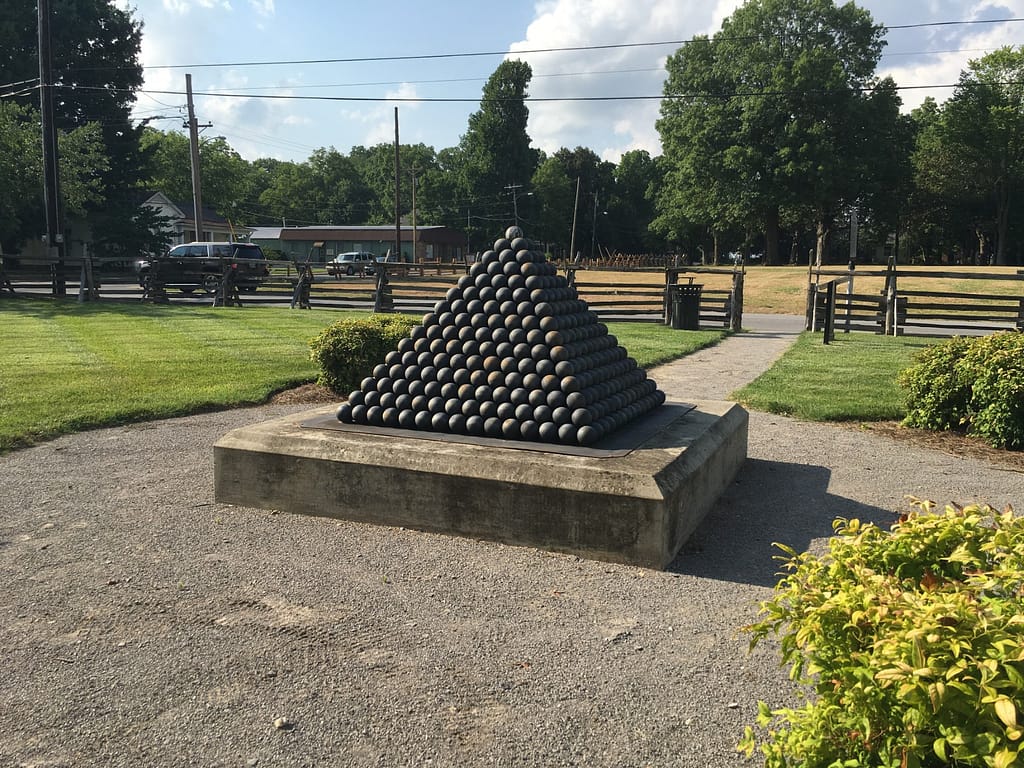
Operationally, Franklin sealed the failure of Hood’s Tennessee campaign. The opportunity to destroy Schofield before he reached Nashville had been the campaign’s decisive requirement. After Franklin, that opportunity was gone. Hood continued north, but he did so with an army that had expended its offensive capacity in a single evening. Two weeks later, outside Nashville, Thomas would destroy what remained of the Army of Tennessee as a coherent fighting force.14Sword, The Confederacy’s Last Hurrah, pp. 324-339.
Franklin was a battle where Hood’s logic of bold, aggressive action clashed with the tactical reality of fortified defence and massed repeating rifles. It is remembered not only for its violence but also for marking the moment when Hood’s campaign became irrecoverable.
The Franklin battlefield today
Battlefield preservation
The Franklin battlefield was long threatened by suburban expansion and commercial development. In the years after 1864, large portions of the field were lost beneath houses, strip malls, and even a Pizza Hut built on ground where intense fighting had occurred — a symbol of how close the historic landscape came to being erased.
When I first visited the battlefield in 1998, the Carter House was accessible, but very little else was preserved. Beginning in the early 2000s, however, local residents and preservation organisations joined national partners in an unprecedented reclamation effort to buy back and restore critical battlefield tracts.
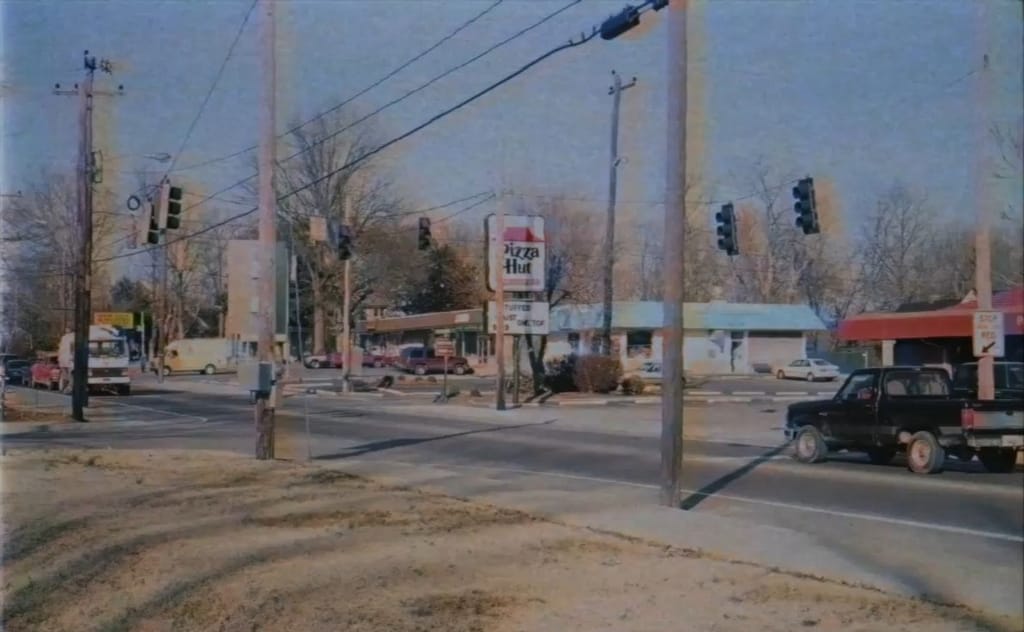
Volunteers, donors, local, state and Federal cooperation
Volunteers, donors, and groups, including Save the Franklin Battlefield, Franklin’s Charge, the Battle of Franklin Trust, and the American Battlefield Trust, have acquired multiple properties along the Columbia Pike and around the main line of Union works. Buildings on these parcels, including the Pizza Hut, were demolished to return the land to a condition more representative of the 1864 battlefield.
These efforts have preserved nearly 200 acres of battlefield and filled gaps in the historic terrain, supported by matching grants from the American Battlefield Protection Program and the Tennessee Civil War Sites Preservation Fund. Franklin’s preservation campaign is now regarded as one of the most successful Civil War battlefield reclamation movements in the United States, and work continues to acquire and interpret additional historic land for future generations.15Battle of Franklin Trust, “The Battle of Franklin Trust,” accessed March 7, 2026, https://boft.org/.
Franklin remains one of the most legible and instructive battlefields of the American Civil War because the key fighting took place around fixed reference points that still exist: the Harpeth River crossings, the Columbia Pike corridor, and the main Union defensive arc south of town. Although modern development altered parts of the field during the twentieth century, Franklin is now also a major preservation success story. Large sections of the core battlefield have been recovered, opened, and interpreted in a way that allows visitors to reconstruct the battle’s geometry and understand why the assault unfolded as it did.
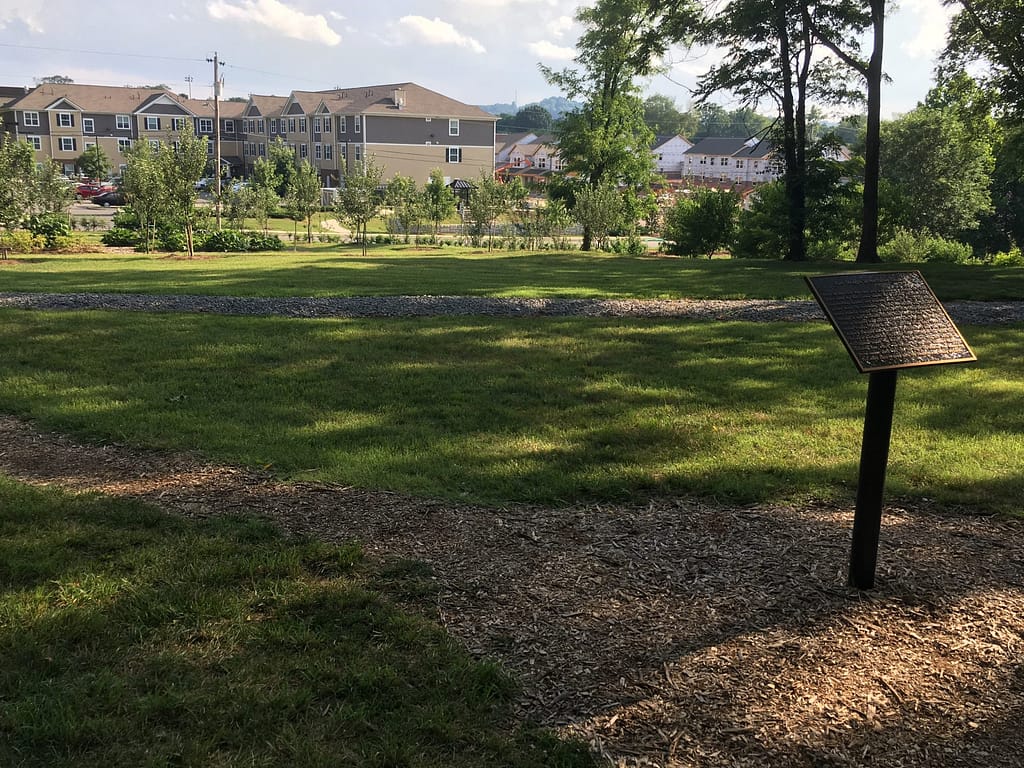
Orientation – reading the ground
A visit to Franklin is best approached as a staff ride rather than a single stop. The battle was fought across a broad semicircle of works, with the decisive action concentrated in the centre near the Columbia Pike. The key to understanding Franklin is to link three terrain relationships:
- The Harpeth River as Schofield’s operational boundary and withdrawal constraint.
- The Union fieldworks as the tactical anchor of the defence.
- The open terrain from Winstead Hill to the main line, across which 20,000 Confederate soldiers attacked on that November day in 1864.
From almost any point south of town, it becomes immediately apparent that the Confederate assault had to cross exposed ground into prepared positions with limited cover and few protected routes of approach.
Micro-terrain influence of the Battle of Franklin
Micro-terrain is the small terrain features that are too subtle or small to feature on a map, and are generally only discernible when you are standing on the ground. At Franklin, the Union force had the time to prepare and to understand the ground they would be fighting upon. The artillery batteries within the position and the flanking batteries had time to site their guns and take advantage of the enfilade angles across the Union front. The Union regiments had time to cut down and reposition deep barriers of honey locust and orange osage thorn bushes that halted Confederate infantry and kept it in the killing zone.
Hood’s decision to attack without proper reconnaissance meant the Confederate assault brigades had no time to assess the ground, understand the covered approach routes, the Union killing zones, and the obstacles they would face. They only discovered these micro-terrain factors as they walked on the ground under fire. By then, it was too late to act upon. The concept of exploiting small-scale terrain features in battle is discussed further in the Micro-Terrain and Battlefield Decision-Making research hub.
Key sites and what they show
Carter House (Union centre / breakthrough sector)
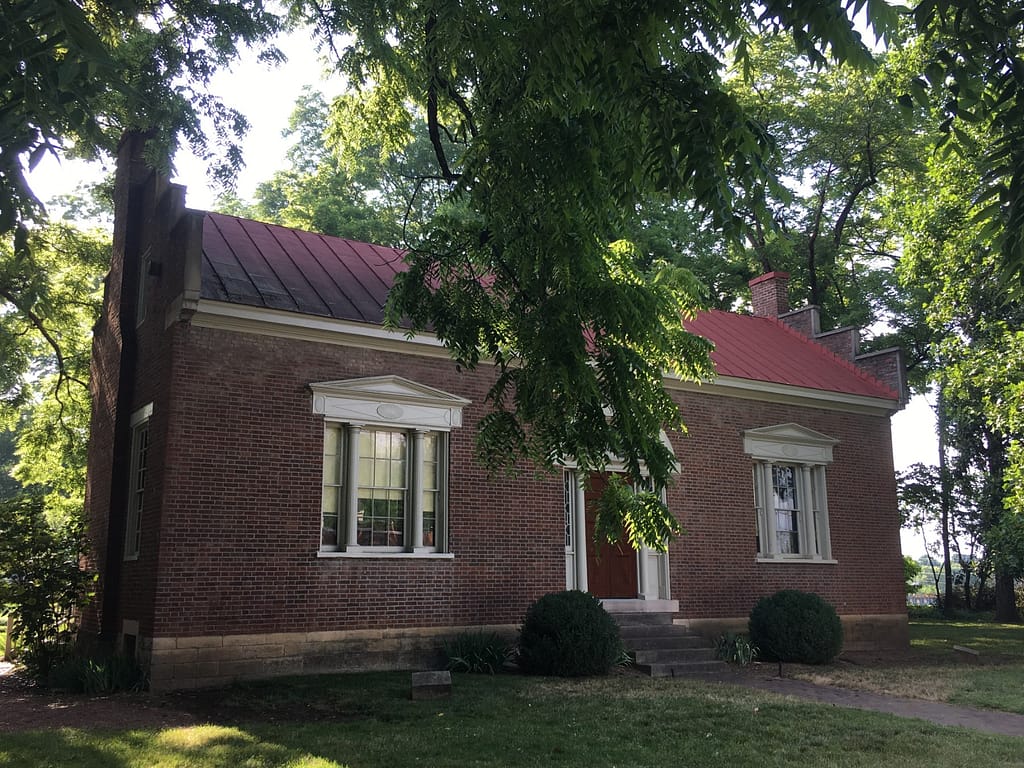
The Carter House is close to the centre of the Union line and marks the most dangerous moment of the battle. This sector includes the Columbia Pike corridor and the ground where the Confederate assault briefly penetrated the works before being contained and defeated by rapid Union reinforcement and counterattack. It is one of the best locations for appreciating the tactical effect of a fortified line under infantry assault.
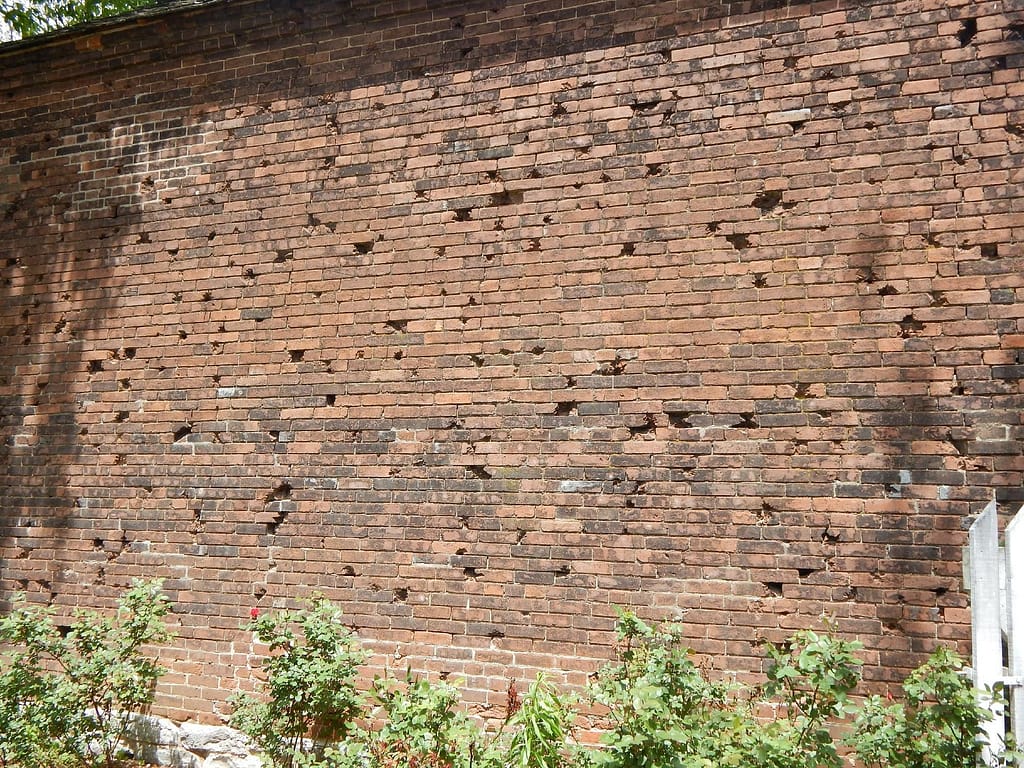
Today, the Battle of Franklin Trust operates Carter House. The house and many of its outbuildings still show damage from musket ball strikes. The Carter House offers excellent guided tours and retains its mid-19th-century feel.
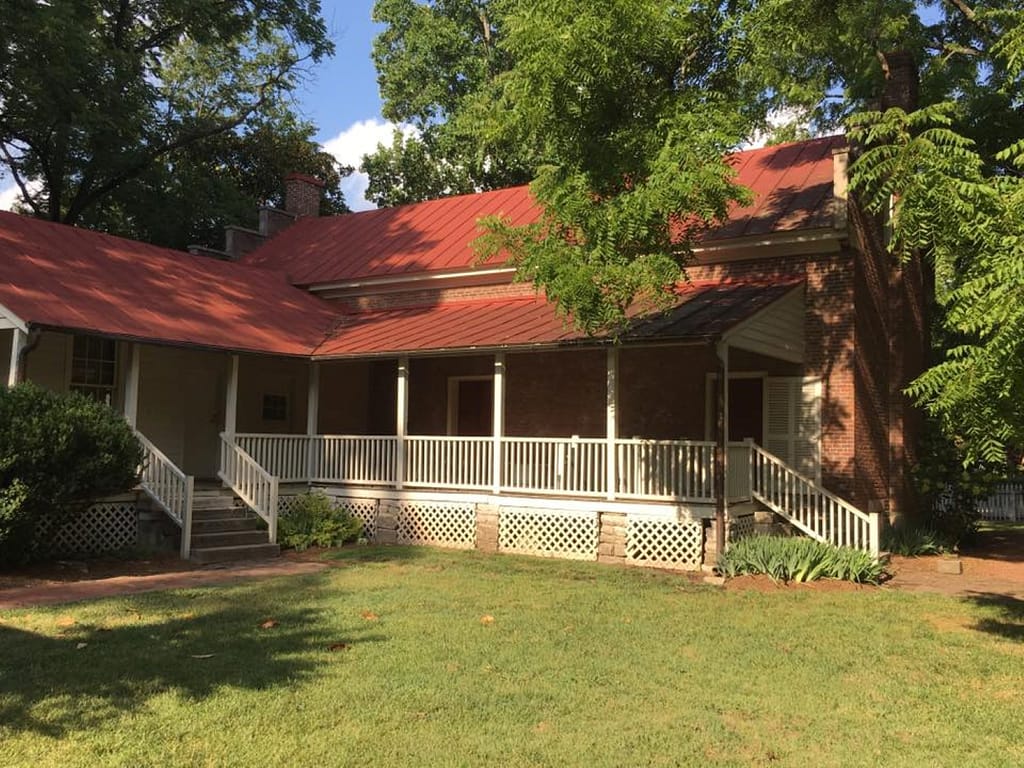
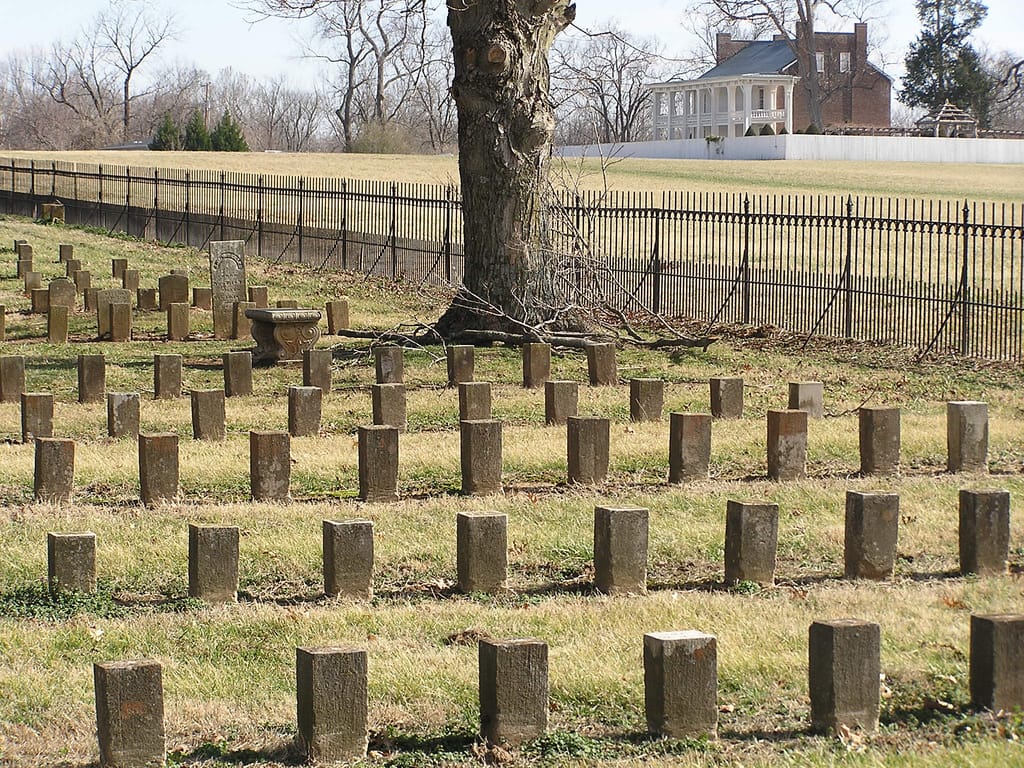
Carnton (field hospital, McGavock Confederate Cemetery with 1,481 graves)
The nearby Carnton Plantation house was built in 1826 by the McGavock family. After the battle, the McGavock family took in hundreds of wounded soldiers and used the home as a field hospital. The McGavocks coordinated the burial of nearly 1500 Confederate soldiers in a temporary cemetery. In 1866, John and Carrie McGavock donated two acres for a permanent cemetery, and the bodies were exhumed and reburied in the present McGavock Confederate Cemetery. The Carnton property remained in private hands until 1978, when it was handed over to the Carnton Association. Today, the Carnton site is managed by the Battle of Franklin Trust.
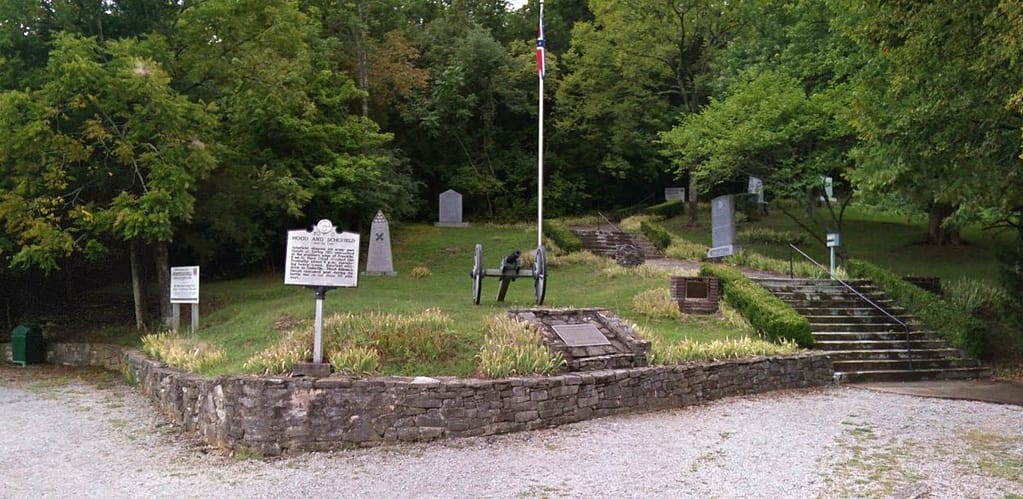
Winstead Hill (Confederate perspective and assault frontage)
Winstead Hill is the best point to begin understanding Hood’s decision-making. From this rise, the Union position was clearly visible, and the open approach over which the Confederate attack would pass is still visible across a broad frontage. The view helps visitors grasp the scale of the assault and the limited terrain options once the Confederate assault corps stepped off. It is also an ideal place to frame the battle as an operational problem: Hood was attempting to destroy Schofield before the Union force could cross the Harpeth and escape north.
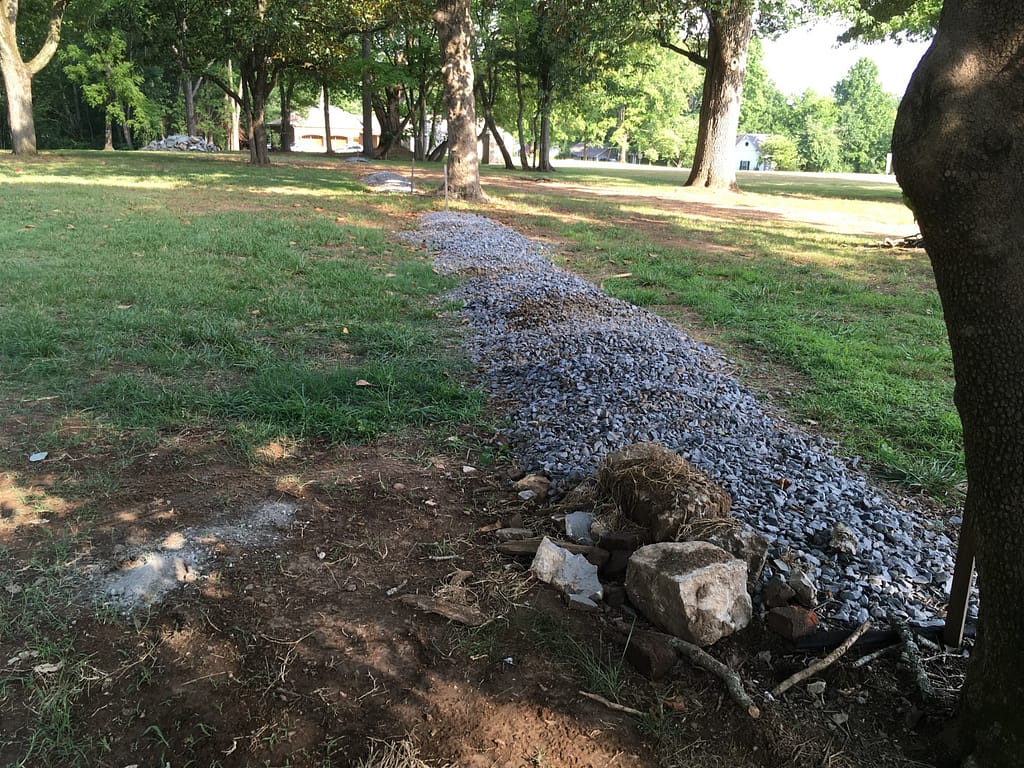
The Union defensive works and recovered battlefield
Several portions of the defensive arc can still be traced on the ground, particularly where preservation efforts have restored open space and removed later development. These recovered tracts are important not only for interpretation but also because they restore the battlefield’s essential character: an exposed approach into a fortified line anchored on a river line.
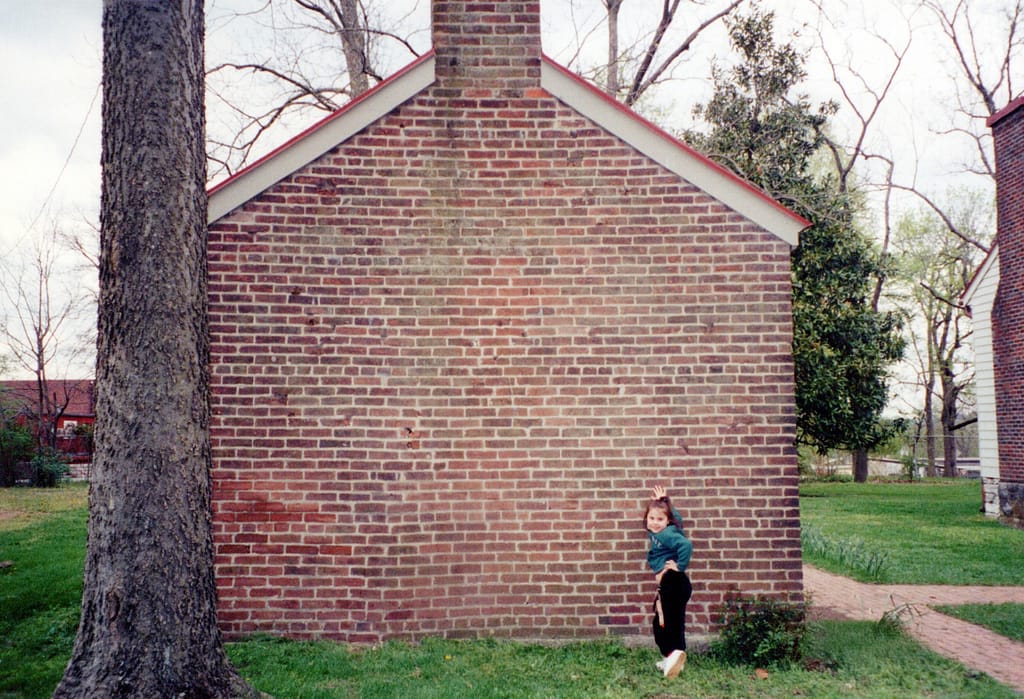
Practical visit notes
Franklin is easy to visit and rewarding even without a guide, but it benefits greatly from a map-based approach:
- Treat the battlefield as a connected route rather than isolated stops.
- Use period maps and modern satellite imagery to link the Carter House sector, the flanks of the Union line, and Winstead Hill into one battlespace.
- Walk short sections where possible to appreciate sightlines, dead ground, and distances that are difficult to judge from the road.
- Allow enough time to absorb the scale: Franklin’s assault was short, but the frontage was wide and the fighting was not confined to a single point.
Franklin is both a major Civil War battlefield and a modern case study in preservation: a place where the terrain still reads clearly, and where community recovery has ensured that the battle can be understood not only through text and maps, but through the physical landscape itself.
Found this useful? Buy me a coffee — it helps fund future battlefield research


Authored by Mick Prictor, a retired military officer with 40 years’ service, and a military historian specialising in terrain-focused analysis of tactics, doctrine, and command decision-making in land warfare. His work draws on extensive battlefield fieldwork—more than 280 sites worldwide—and one of the world’s largest private collections of historic military arms, uniforms, and equipment. About me
📚 Notes and References
Notes
- 1McDonough, James Lee & Connelly, Thomas L., Five Tragic Hours: The Battle of Franklin (Knoxville: University of Tennessee Press, 1983). pp. 30-31. ↩︎
- 2McDonough, Five Tragic Hours, p. 46-59. ↩︎
- 3Sword, Wiley, The Confederacy’s Last Hurrah: Spring Hill, Franklin, and Nashville (Lawrence: University Press of Kansas, 1992). pp. 444-447. ↩︎
- 4Sword, The Confederacy’s Last Hurrah, pp. 448-451. ↩︎
- 5McDonough & Connelly, Five Tragic Hours, pp.
95–96. ↩︎ - 6Sword, The Confederacy’s Last Hurrah, pp. 165-169. ↩︎
- 7Cozzens, Peter, The Shipwreck of Their Hopes, p. 382. ↩︎
- 8McDonough & Connelly, Five Tragic Hours, pp. 71–73. ↩︎
- 9McDonough, Five Tragic Hours, p. 110-112 ↩︎
- 10Sword, The Confederacy’s Last Hurrah, pp. 199-207. ↩︎
- 11McDonough, Five Tragic Hours, pp. 139-140. ↩︎
- 12McDonough, Five Tragic Hours, pp. 152-153. ↩︎
- 13McDonough, Five Tragic Hours, pp. 157-158. ↩︎
- 14Sword, The Confederacy’s Last Hurrah, pp. 324-339. ↩︎
- 15Battle of Franklin Trust, “The Battle of Franklin Trust,” accessed March 7, 2026, https://boft.org/. ↩︎
Primary & Official Records
- The War of the Rebellion: Official Records of the Union and Confederate Armies, Series I, Vol. XLV, Part I.
- War Department, Atlas to Accompany the Official Records (Washington, 1891).
- Diaries and letters of soldiers of the IV and XXIII Corps (Tennessee State Library & Archives).
- Hood, John Bell, Advance and Retreat (New Orleans, 1880).
Secondary Sources (Cited in Footnotes)
- Sword, Wiley, The Confederacy’s Last Hurrah: Spring Hill, Franklin, and Nashville (Lawrence: University Press of Kansas, 1992).
- McDonough, James Lee & Connelly, Thomas L., Five Tragic Hours: The Battle of Franklin (Knoxville: University of Tennessee Press, 1983).
- Cozzens, Peter, The Shipwreck of Their Hopes: The Battles for Chattanooga and the Tennessee Campaign (Urbana: University of Illinois Press, 1994).
Recommended Additional Works
- Jacobson, Eric A., For Cause and For Country: A Study of the Affair at Spring Hill and the Battle of Franklin (Franklin, TN: O’More Publishing, 2004).
- McPherson, James M., Battle Cry of Freedom: The Civil War Era (New York: Oxford University Press, 1988).
- Hattaway, Herman & Jones, Archer, How the North Won: A Military History of the Civil War (Urbana: University of Illinois Press, 1983).
- Battle of Franklin Trust, “The Battle of Franklin Trust,” accessed March 7, 2026, https://boft.org/
Cartography & Terrain Analysis
- Google Earth overlays and modern GIS mapping of Carter House, Carnton Plantation, and the Columbia Pike corridor.
- Civil War Trust battlefield maps of Franklin.
- Historic Franklin maps, Williamson County Archives.
Mapping
- 3D terrain mapping. All mapping is original and produced by battlefieldtravels.com using Google Earth and graphics tools.
You may also like
 🏛️ American Civil War (1861–1865) Weapons and Equipment
 ⚔️ Battle of Wilsons Creek, Missouri,
10 August 1861
 ⚔️ Battle of Chancellorsville, Virginia,
27 April – 6 May 1863
 ⚔️ Battle of Pea Ridge, Arkansas,
7-8 March 1862
 📝🔒 Field Note: Fredericksburg, Virginia, 13 December 1862 — Marye’s Heights
 ⚔️ 1861–1865 American Civil War, Battle Studies
🧭 Battle of Franklin Battlefield Travel Guide (Tennessee, 30 November 1864)
The Battle of Franklin was one of the most devastating frontal assaults of the American Civil War. In the late afternoon of 30 November 1864, Gen. John Bell Hood ordered the Army of Tennessee to attack fortified Union positions south of Franklin, hoping to crush Schofield’s army before it could retreat to Nashville. The result was a brutal five-hour fight across open ground, ending in catastrophic Confederate losses and the effective ruin of Hood’s offensive campaign.
Getting There
- Franklin is located about 30 km (18 miles) south of Nashville, Tennessee, and is easily reached via Interstate 65.
- The key battlefield sites sit within modern suburban Franklin, so travel between stops is short and best done by car.
- Nashville makes an excellent base for a day trip, with many related 1864 campaign sites nearby.
- If you are following the campaign route, Franklin pairs naturally with Spring Hill, Columbia, and Nashville.
Site Orientation – The Franklin Battlespace
- The battlefield lay immediately south of the Harpeth River, with the town of Franklin behind the Union defensive line.
- The Harpeth River bend and limited crossings shaped Union decision-making: Schofield’s priority was to hold long enough to withdraw north across the bridges.
- From the Confederate assembly area on Winstead Hill, Hood’s infantry had to cross open, gently rolling farmland with limited cover.
- The Columbia Pike ran directly through the centre of the Union position and became the natural axis of the Confederate assault.
- Franklin is a rare battlefield where small distances matter: the key terrain features are close together and best understood by walking between them.
Winstead Hill – Confederate Assembly and the View of the Objective
- Winstead Hill is the essential starting point for understanding Franklin, as it provides the clearest overview of the ground Hood’s army crossed.
- From here you can visualise the geometry of the attack: a broad, two-mile advance against a fortified semicircle backed by a river.
- This is the best place to appreciate the lack of meaningful cover for assaulting infantry, particularly in the central approach toward the Columbia Pike.
- Key insight: Franklin was not an improvised skirmish — it was a deliberate assault over exposed ground against prepared defences.
The Union Main Line – Earthworks and Fields of Fire
- The Union defensive line formed a semicircle south of Franklin, anchored on the Harpeth River to the east and west.
- Although constructed quickly, the earthworks were strong enough to give Union infantry protection and stable firing positions.
- Walking the line helps clarify why the assault failed: defenders could fire from cover while attackers had to close across open ground under artillery and musketry.
- Look for the relationship between the works and the shallow rises in the terrain — even modest elevation changes affected visibility and fire.
- Key insight: Franklin was a battle of controlled fields of fire, not manoeuvre space.
The Columbia Pike Corridor – The Break in the Line
- The Columbia Pike ran through the centre of the Union position and created a natural corridor for movement — and for attack.
- This central sector became the focal point of the Confederate assault and the site of the most dangerous penetration of the Union line.
- Standing here makes clear how quickly a local breach could become operationally decisive if the Union line collapsed before Schofield could withdraw.
- Key insight: the battle’s crisis point was not “everywhere at once” — it concentrated around a narrow central gap under extreme pressure.
Carter House – The Centre of the Fight
- The Carter House area sits close to the centre of the Union line and became a landmark of the battle’s most intense close-range fighting.
- This sector helps visitors understand how quickly Franklin shifted from long-range volleys into point-blank combat at the works.
- Pay attention to the short distances involved: defenders and attackers were often separated by only a few metres at the parapets.
- Key insight: Franklin’s violence was driven by terrain compression — attackers had to close on fixed fortifications, making the fight unavoidable and direct.
Carnton Plantation – Aftermath and Medical Reality
- Carnton became one of the principal field hospital sites after the battle and is closely associated with Franklin’s human cost.
- This stop is best visited after you have walked the assault ground, as it connects the tactical outcome to the physical aftermath.
- The site provides context for the scale of casualties and the collapse of Confederate senior leadership.
- Key insight: Franklin’s result was not simply “heavy losses” — it was an organisational catastrophe that the Army of Tennessee could not absorb.
The Harpeth River Crossings – Schofield’s Escape Route
- The Harpeth River crossings were operationally decisive: Schofield needed them open to retreat toward Nashville after holding Franklin through the evening.
- Viewing the river line helps explain why the Union army could not simply “fall back” during the assault — it had to hold until the withdrawal was possible.
- These crossings also highlight Franklin’s unusual geometry: a fortified defensive arc backed by a river and a town.
- Key insight: the Union position was a temporary shield, designed to buy time rather than to win a decisive battle on the spot.
Battlefield Preservation – The Recovered Ground
- Franklin is one of the best examples in the United States of modern community-led battlefield recovery.
- Over recent decades, preservation organisations and local supporters have worked to buy back key parcels of land, remove later development, and restore portions of the historic landscape.
- This matters at Franklin because the battle was fought across compact, terrain-defined spaces — recovering even small areas dramatically improves battlefield readability.
- Key insight: the battlefield you can walk today is not accidental — it is the result of deliberate preservation choices and sustained local effort.
On-Site Experience
- Allow at least half a day to visit the core sites properly; a full day is ideal if you want to walk the lines and compare viewpoints.
- The best experience comes from moving in sequence: Winstead Hill (overview) → Union line (defensive geometry) → Carter House sector (crisis point) → Carnton (aftermath).
- Franklin works exceptionally well with modern mapping tools, especially when comparing period maps to present-day street layouts.
- Because the battlefield sits within a modern town, you will often need to “read through” development and focus on micro-terrain and line-of-sight relationships.
- Key insight: Franklin is best understood as a short-distance battlefield — you learn more by walking 500 metres carefully than by driving ten kilometres.
Nearby Points of Interest
- Spring Hill – the campaign’s critical missed opportunity the day before Franklin.
- Columbia – positions and river crossings linked to the manoeuvre phase of the campaign.
- Nashville – the decisive battle two weeks later that destroyed the Army of Tennessee as an effective fighting force.
- Murfreesboro (Stones River) – another major Middle Tennessee battlefield if extending your Civil War route.
Practical Tips
- Visit in cooler months if possible; summer heat and humidity can be punishing for long walks on open ground.
- Use a battlefield map or app — Franklin’s modern development makes it easy to lose the historic geometry without reference.
- Prioritise viewpoints over “checking boxes”: Winstead Hill is the single best place to start.
- Expect some traffic and suburban movement between sites; plan your visit like a walking route with short drives between sectors.
- If you are studying the battle seriously, bring period maps and compare them directly on the ground — Franklin rewards careful terrain reading.
FAQ: Battle of Franklin, Tennessee (1864)
The Battle of Franklin was fought on 30 November 1864 in Franklin, Tennessee, during the American Civil War. It formed part of the Franklin–Nashville Campaign in the Western Theatre. Confederate General John Bell Hood ordered a frontal assault against entrenched Union forces under Major General John M. Schofield. The action resulted in severe Confederate losses and significantly weakened the Army of Tennessee before Nashville.
After failing to decisively defeat Schofield at Spring Hill on 29 November 1864, Hood sought to bring the Union force to battle before it could withdraw to Nashville. On 30 November, Hood deployed his army south of Franklin and ordered a late-afternoon assault against prepared Federal positions. The decision aimed to disrupt Schofield’s movement north and achieve operational surprise. Instead, the attack encountered strong defensive works and concentrated artillery fire.
Approximately 20,000–23,000 Confederate troops from the Army of Tennessee attacked around 18,000–20,000 Union soldiers of the Army of the Ohio. The Confederate assault began at approximately 1600 hours and continued until after dark. Multiple divisions advanced across open ground under artillery and small-arms fire. The engagement lasted roughly five hours.
The Confederate Army of Tennessee suffered approximately 6,000–7,000 casualties in a single afternoon, including six general officers killed and several others wounded or captured. Union casualties were significantly lower, approximately 2,300. The intensity of the frontal assaults against fortified positions contributed to high officer casualties. The loss of experienced leadership had long-term operational consequences.
The Confederate objective was to defeat Schofield’s force before it could unite with Major General George H. Thomas at Nashville. The Union objective was to conduct a fighting withdrawal to Nashville while preserving combat power. Schofield’s troops constructed field fortifications south of Franklin during the day on 30 November. By nightfall, the Union army successfully disengaged and continued its movement north.
The Carter House stood near the centre of the Union defensive line along the Columbia Pike. Heavy fighting occurred in its vicinity. The nearby Carnton plantation later served as a Confederate field hospital. These sites remain key terrain references for understanding the battle.
Much of the 1864 battlefield has been developed by modern urban growth. However, preserved sites include the Carter House, Carnton, and Winstead Hill. These locations provide orientation for the Union defensive line and Confederate approach routes. Interpretation emphasises terrain, lines of advance, and the operational context of the Franklin–Nashville Campaign.
Subscribe to Battlefield Travels and receive a free E-Book Battlefield Guide
Unlock expert battlefield analysis, campaign reconstructions, and historical insights drawn from firsthand exploration and primary sources.
🗺️ You’ll receive:
🎖️ Exclusive historical insights you won’t find elsewhere
📘 A free eBook: 10 Tips for Exploring Historic Battlefields
📰 New battlefield studies straight to your inbox as they are published

⚔️ Go deeper — Members get exclusive access to the Deep Research Collection, Field Notes, and monthly Research Dispatches. Try membership free for 7 days, cancel anytime. From $9/month.