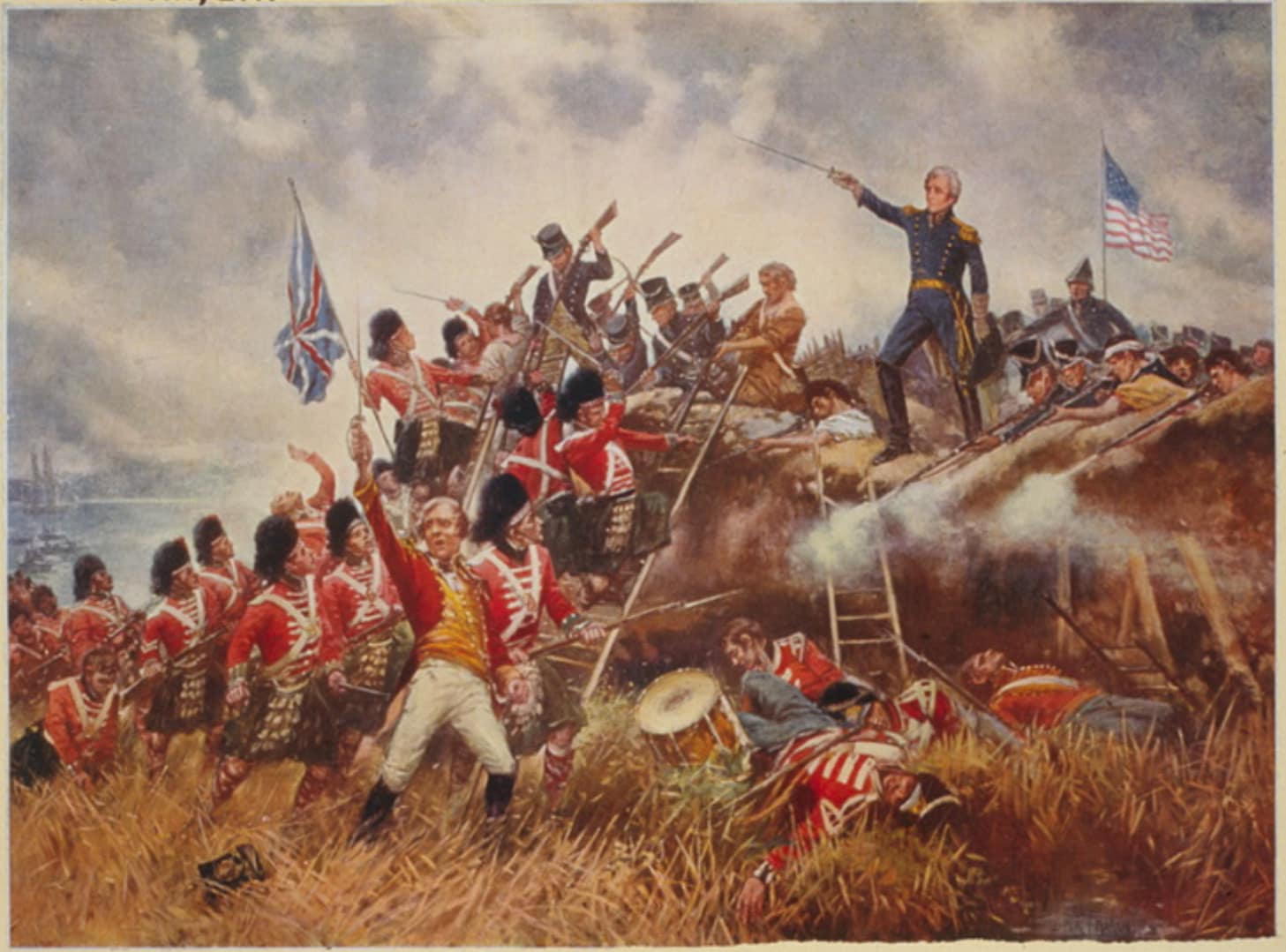
Andrew Jackson’s victory on the Mississippi!
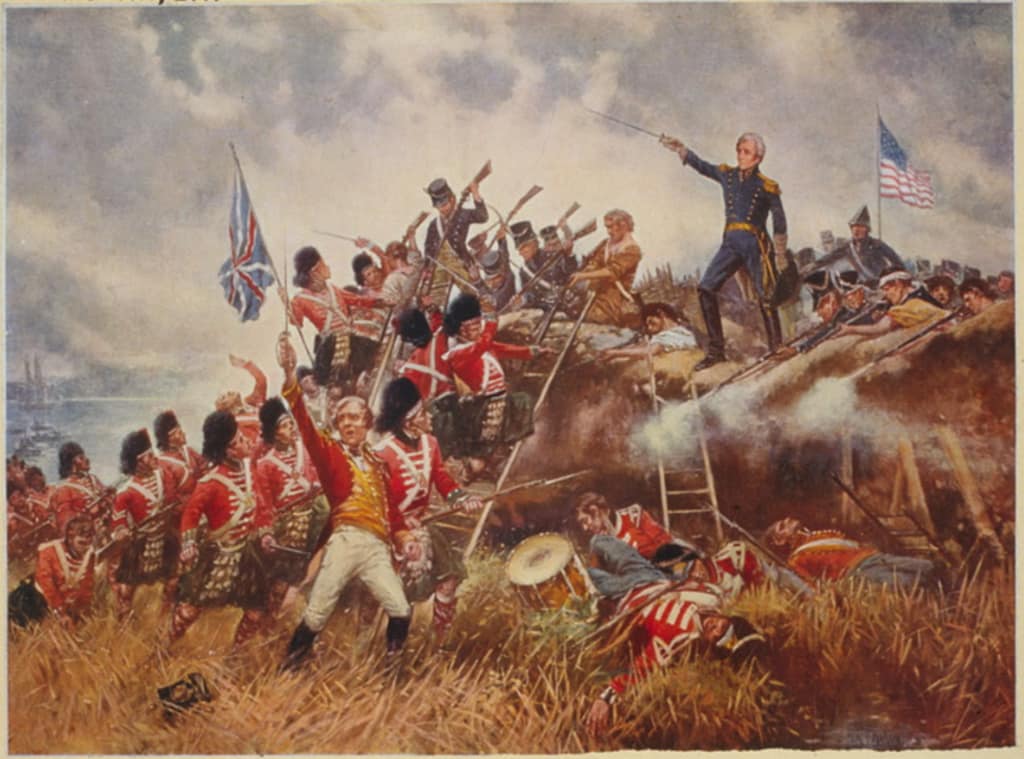
At the Battle of New Orleans on 8 January 1815, General Andrew Jackson’s American army defeated a major British attempt to seize control of the Mississippi River. Fought after the Treaty of Ghent had been signed, the battle secured the Mississippi River for the United States and became a defining moment of the War of 1812.
Key facts
Google Earth map – location of the Chalmette battlefield
Strategic context: Why New Orleans Mattered in the War of 1812
The reasons for the War of 1812 are too numerous and complex to be summarised in this brief overview. It was a combination of national insults and affronts, competing interests in Canada, and the British habit of impressing American sailors into service with the Royal Navy. The war was officially declared on 18 June 1812 and saw fighting on the US/Canadian frontier, the Great Lakes region, the US Atlantic coast, including Washington, DC, and the south.
The Battle of New Orleans took place at the very end of the war, after the Americans had attempted to invade Canada, the British had burned down the White House, Fort McHenry had been besieged, and America had created a new national anthem.
Opposing Forces: British Expeditionary Force versus Andrew Jackson’s Army
 British Forces
 British Forces
The British contingent that landed in New Orleans in late 1814 consisted of approximately 8,000 soldiers, including many experienced veterans of the Napoleonic Wars. The force was under the command of General Sir Edward Pakenham, a respected officer who had fought with the Duke of Wellington in the Peninsular War.
The British assault on New Orleans was part of a strategy to control the Mississippi River, thereby cutting off the supply lines and commercial activities critical to the American economy. The capture of New Orleans was deemed pivotal, as it would provide the British with a stronghold to exert influence over the vast territories of the Louisiana Purchase.
Despite its experience and proficiency, the British force faced serious logistical challenges. The assault on New Orleans required navigating hazardous wetlands and overcoming fortifications hastily erected by the Americans. Moreover, supply lines from the Gulf of Mexico were stretched thin, making resupply and reinforcement challenging.
 American Forces
 American Forces
The American forces led by Major General Andrew Jackson were smaller, numbering around 5,000 men. This eclectic force comprised regular Army troops, local militia, marines, and was supplemented by units from the Tennessee and Kentucky militias. Additionally, local knowledge and support were provided by Jean Lafitte and his Baratarian privateers, commonly referred to as “pirates.”
Andrew Jackson, nicknamed “Old Hickory” for his toughness, understood the strategic importance of New Orleans and focused on fortifying positions along the Rodriguez Canal in the Chalmette District, a defensive position he intended to hold against the British advance.
The Rodriguez Canal was a significant piece of micro-terrain—the small scale terrain features that often do not appear on maps and can only be seen when you are standing on the ground. Jackson took advantage of this to build his defensive position. The concept of exploiting small scale terrain features in battle is discussed further in the Micro-Terrain and Battlefield Decision-Making research hub.

Preliminary manoeuvres
Prior to the main confrontation on January 8, 1815, both American and British forces engaged in a series of manoeuvres to gain a positional advantage. On 23 December Jackson’s forces raided the British camp at Lacoste’s Plantation. The Americans then withdrew to the ‘Line Jackson’ along the Rodriguez Canal in Chalmette District – a mile-long reinforced defensive position with its right flank anchored on the Mississippi River. The American defensive plan aimed to channel British forces into prepared engagement areas.
The Royal Navy managed to cripple two American sloops – the USS Carolina and the USS Louisiana. The cannon from both ships were used to reinforce the American line.
The British also attempted a ‘Reconnaissance-in-Force’ around 28 December to test the American defences, and to break through if it was possible. The operation came close to breaching Line Jackson on the British right flank, but the British left flank fell back under heavy fire from American batteries on the left and right banks of the Mississippi.
British Assault on the American line
British plan of attack

The British battle plan for the assault on Line Jackson was a three-pronged assault:
– One force, comprised of the 85th Regiment and a Marine contingent under Colonel Thornton, was to cross the Mississippi in small boats and capture the American batteries on the right bank (western side). These guns would then be turned against the American lines along the Rodriguez Canal.
– A second force comprised of the light companies of the 43rd, 7th and 1st West Indian Regiments under Colonel Rennie was to attack along the left bank to clear the American artillery redoubt that had caused so much damage during the reconnaissance-in-force.
– With these artillery batteries out of action, the main British force, composed of the 4th Foot, 44th Foot, 21st Fusiliers, 93rd Highlanders, and 5th West Indian Regiment, would conduct a frontal assault on the American positions along the Rodriguez Canal.
⚔️ Go deeper — Members get exclusive access to the Deep Research Collection, Field Notes, and monthly Research Dispatches. Try membership free for 7 days, cancel anytime. From $9/month.
Assault on the right bank
Colonel Thornton’s assault on the right bank was delayed for many hours by difficulties in crossing the river. It was ultimately successful in driving out the American garrison and capturing the American guns, but by then the main British attack had been defeated. Thornton’s force was withdrawn. If this attack had gone ahead on time, the British would have been able to enfilade the entire length of the Rodriguez Canal.
Assault on the redoubt
Colonel Rennie’s assault against the American redoubt on the left bank captured the redoubt at great cost but did not have sufficient strength to hold the position. Rennie was killed, and American reinforcements quickly drove out his force.
Assault on the Rodriguez Canal
The main assault against Line Jackson was led by the 44th Regiment. Due to some poor leadership and administration, the assault ladders had been left behind, so even when some British troops reached the American defences, they were unable to breach them. The 93rd Highlanders were ordered to reinforce this assault, but they too were shot down by American cannon and musket fire. General Pakenham was mortally wounded during this attack.
Within about 30 minutes of the main assault commencing, the British attack was defeated. General Lambert assumed command and used the British Reserve to cover the retreat. The British forces withdrew to their camp downriver and were later extracted by the Royal Navy.
Outcomes: casualties, consequences, and the rise of Andrew Jackson
The Battle of New Orleans resulted in a resounding American victory. For the campaign, American casualties totalled 333, with 55 killed, 185 wounded, and 93 missing. British casualties totalled 2,459, with 386 killed, 1,521 wounded, and 552 missing. The disparity in casualties demonstrated the advantage of fighting a defensive battle from fortifications versus attacking over open terrain. If the British operation to seize the American guns on the right bank had progressed earlier, the result may have been different.
What neither side knew was that two weeks earlier, on 24 December 1814, the Treaty of Ghent had been signed, ending the war. Andrew Jackson went on to become President of the United States 1829-1837. The Battle of New Orleans was immortalised by Johnny Horton in his 1959 hit song ‘The Battle of New Orleans’.
The battlefield today: visiting Chalmette battlefield
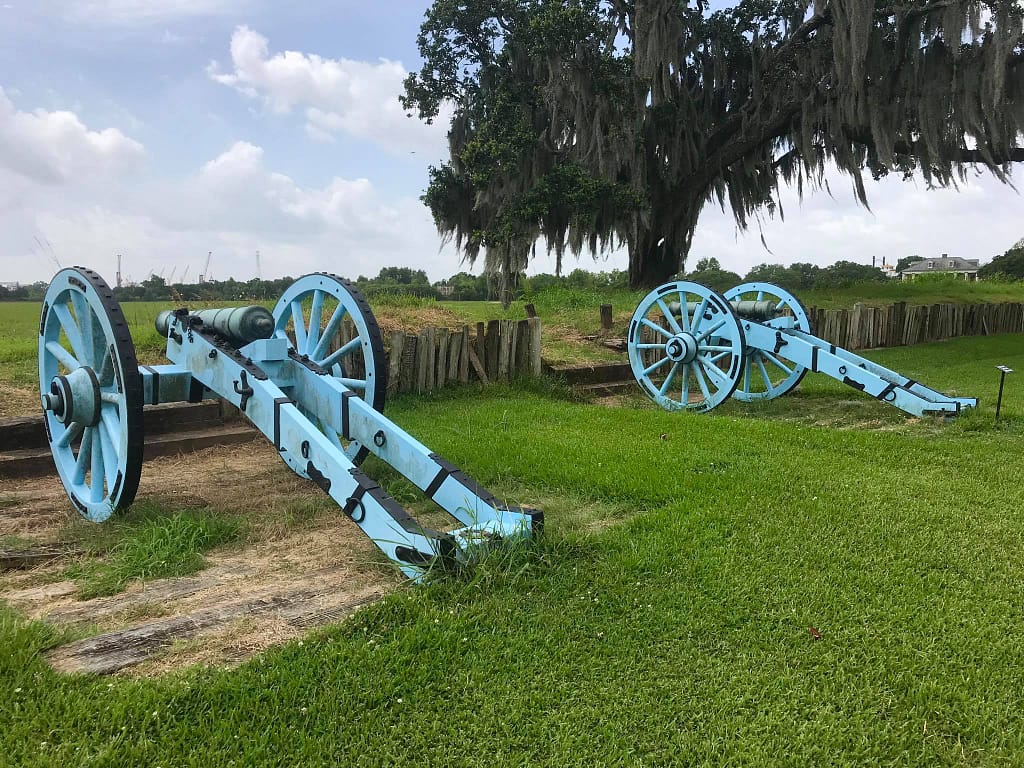
The battle site is located at Chalmette, approximately 12 kilometres downstream of the New Orleans CBD. Easy enough to get there via car, taxi, or Uber. But the best way to get there is on a paddleboat cruise down the Mississippi River to the battle site. As you pull into the dock, they play Johnny Horton’s ‘Battle of New Orleans’ over the speaker system. The paddleboat tour includes a guide to the battlefield. The battlefield itself is quite small, well-marked and easy to follow. There is a small museum and visitor centre that provides detailed guidance and multi-media presentations on the battle. The battlefield is partially restored, featuring recreated earthworks, artillery battery positions, and entrenchments.
Link to the National Park Service Chalmette Battlefield website
Johnny Horton singing his 1959 hit ‘The Battle of New Orleans’ on the Ed Sullivan Show

Additional images of the Battle of New Orleans

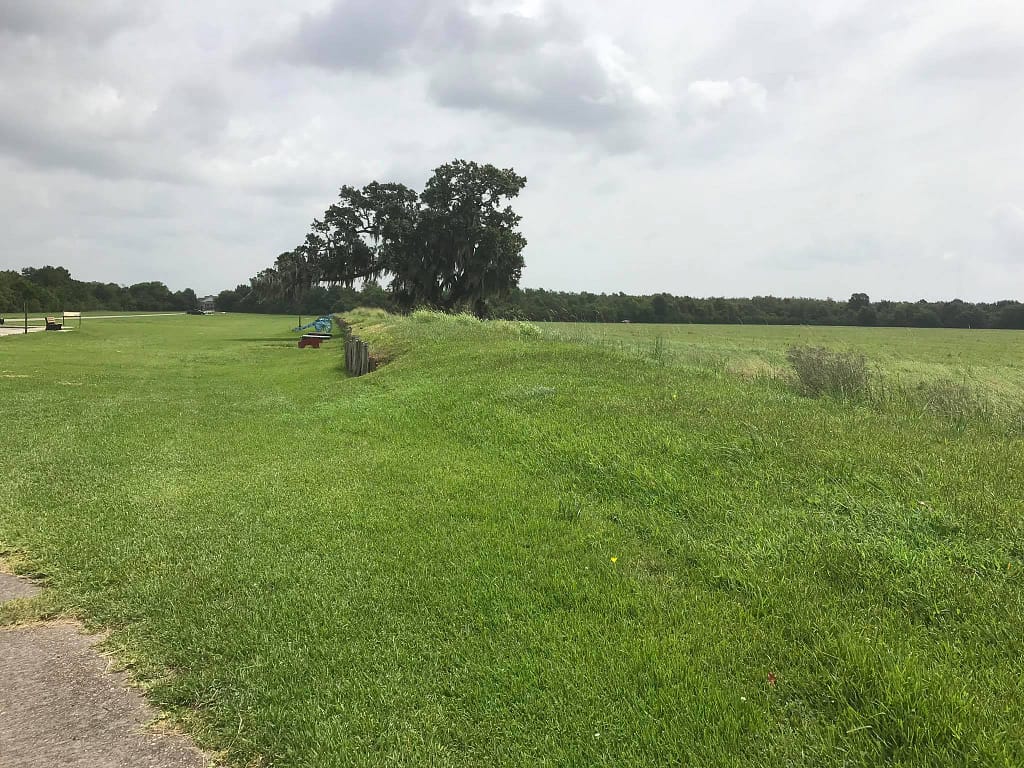
Panoramic view from the American lines, looking across the field to where the British attack developed



Found this useful? Buy me a coffee — it helps fund future battlefield research


Authored by Mick Prictor, a retired military officer with 40 years’ service, and a military historian specialising in terrain-focused analysis of tactics, doctrine, and command decision-making in land warfare. His work draws on extensive battlefield fieldwork—more than 280 sites worldwide—and one of the world’s largest private collections of historic military arms, uniforms, and equipment. About me
Sources
- William C. Davis (2006). The Pirates Laffite: The Treacherous World of the Corsairs of the Gulf. Mariner Books.
- Robert V. Remini (2001). The Battle of New Orleans: Andrew Jackson and America’s First Military Victory. Penguin Publishing Group
- Walter R. Borneman (2005). 1812: The War That Forged a Nation. Harper Perennial.
📚 Further Reading: War of 1812
This battle study nests within the broader analytical framework explored in the Research Hub, where operational methods, operating environments, armies, commanders, and weapons are examined across conflicts and eras. The links below connect related studies across the wider body of battlefield analysis on the BattlefieldTravels site.
⚔️ Explore all battle studies from the War of 1812
🏛️ Explore the museum of Napoleonic/War of 1812 era historic weapons and equipment
The book list for this conflict includes the finest campaign studies, memoirs, and operational analyses available on the War of 1812, selected specifically to complement this battlefield study.
📚War of 1812 – Recommended Reading
🗞️ For updates on new battlefield studies and research insights, you can subscribe to the Newsletter.
Related Battle Studies, Museum Pieces & Reading Resources


🧭 Battlefield Travel Guide: Battle of New Orleans (8 January 1815)
Getting There
- Nearest City: New Orleans, Louisiana, USA.
- Access: Chalmette Battlefield is located about 7 miles (11 km) southeast of downtown New Orleans, along the Mississippi River.
- Parking: Free parking available at the visitor centre and Chalmette Monument grounds.
Site Orientation
- Key Landmarks: Rodriguez Canal (American defensive line); Chalmette Monument; Malus-Beauregard House; Chalmette National Cemetery.
- Best Vantage Points: Earthwork lines along Rodriguez Canal; Chalmette Monument observation area for overview of battlefield terrain.
- Walking Routes: Interpretive trail loops connect the monument, canal line, and preserved battlefield ground.
Museums & Visitor Centres
- On-site: Chalmette Visitor Center with exhibits on the War of 1812, Andrew Jackson, and the New Orleans campaign.
- Nearby: The Historic New Orleans Collection and Louisiana State Museum offer broader coverage of the period.
On-Site Experience
- Interpretive Signage: Panels mark American and British positions, with maps explaining troop movements and the canal defences.
- Atmosphere: Open fields along the Mississippi River convey the scale of the battlefield; the preserved canal line highlights the strong defensive position.
Nearby Points of Interest
- Related Sites: Jackson Square in New Orleans (named in honour of the victory); War of 1812 exhibits in state museums.
- Local: French Quarter, Mississippi riverfront, and Creole plantation sites nearby.
Practical Tips
- When to Visit: Anniversary events held in early January; spring and autumn offer the best walking conditions.
- Facilities: Visitor centre, restrooms, picnic areas; ranger-led tours available seasonally.
- Notes: The battlefield is flat and exposed; bring sun protection. Combine with New Orleans city sites for a full day’s itinerary.
Subscribe to Battlefield Travels and receive a free E-Book Battlefield Guide
Unlock expert battlefield analysis, campaign reconstructions, and historical insights drawn from firsthand exploration and primary sources.
🗺️ You’ll receive:
🎖️ Exclusive historical insights you won’t find elsewhere
📘 A free eBook: 10 Tips for Exploring Historic Battlefields
📰 New battlefield studies straight to your inbox as they are published

⚔️ Go deeper — Members get exclusive access to the Deep Research Collection, Field Notes, and monthly Research Dispatches. Try membership free for 7 days, cancel anytime. From $9/month.