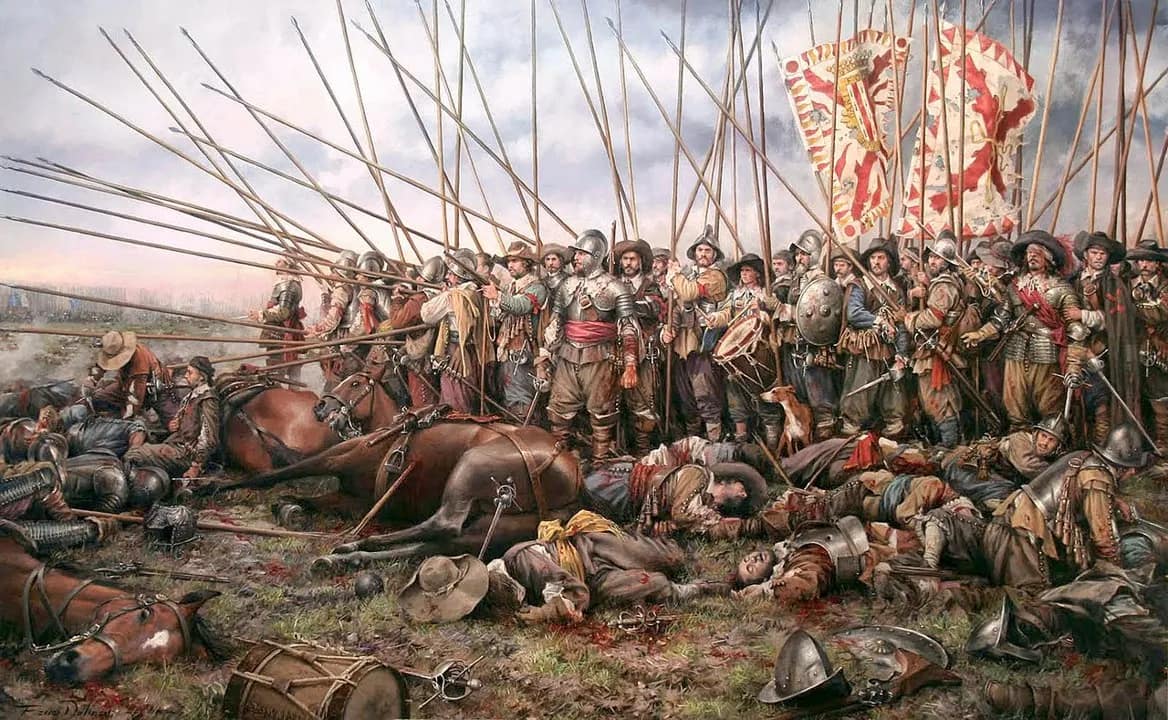
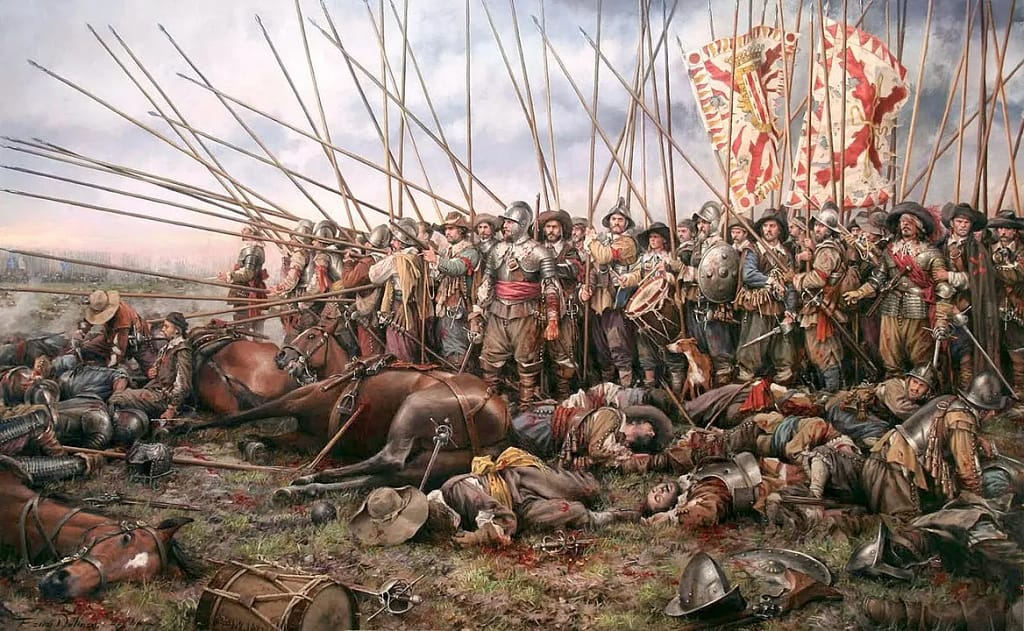
Last stand of the Spanish Tercio!
In May 1643, French and Spanish armies met on the plain south of the bastion fortress of Rocroi in what would be one of the most consequential battles of the seventeenth century. The engagement pitted France against Spain at the height of their rivalry and culminated in the defeat of the Spanish Army of Flanders. The battle marked the end of the dominance of the Spanish ‘Tercio’ (mixed blocks of pikemen, musketeers, and arquebusiers) tactics that had dominated European warfare for the previous 100 years. The battle did not end Spanish power overnight, but it marked a decisive shift in European warfare away from the dominance of the tercio system and toward more flexible linear tactics.
Key facts
Google Earth map – Location of the Rocroi battlefield
🎧 Prefer to listen? This article is available as a 45-minute podcast episode
Tip: If Podbean overlay appears after pausing, click the × in the top-right corner to return to the player controls.
🧭🥾 Walking the Battlefield
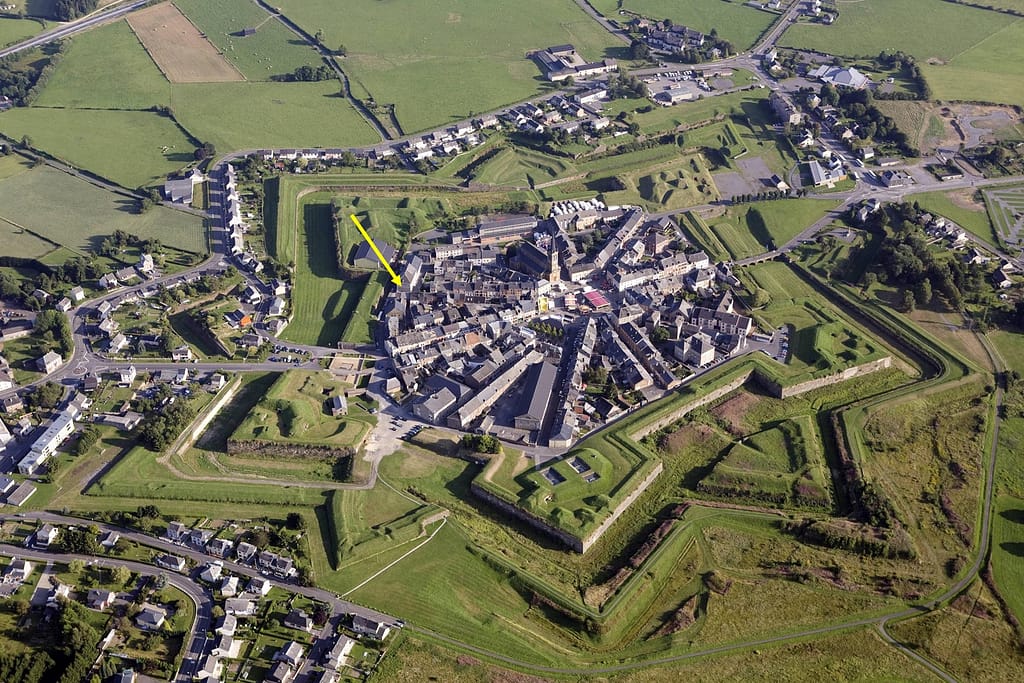
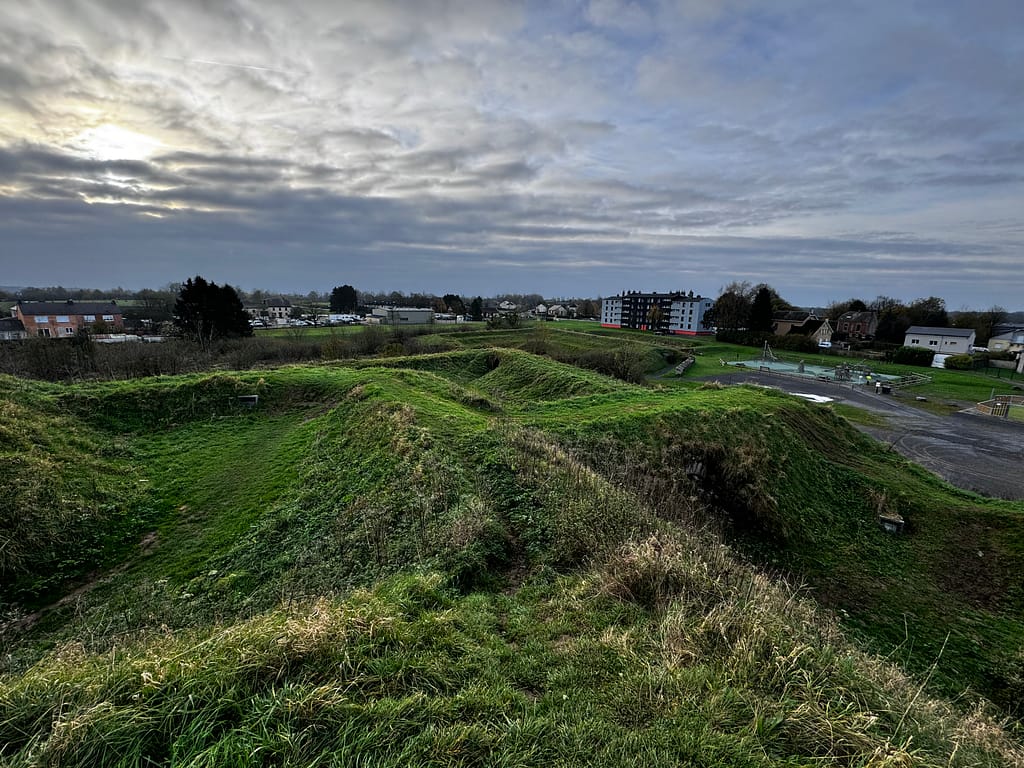
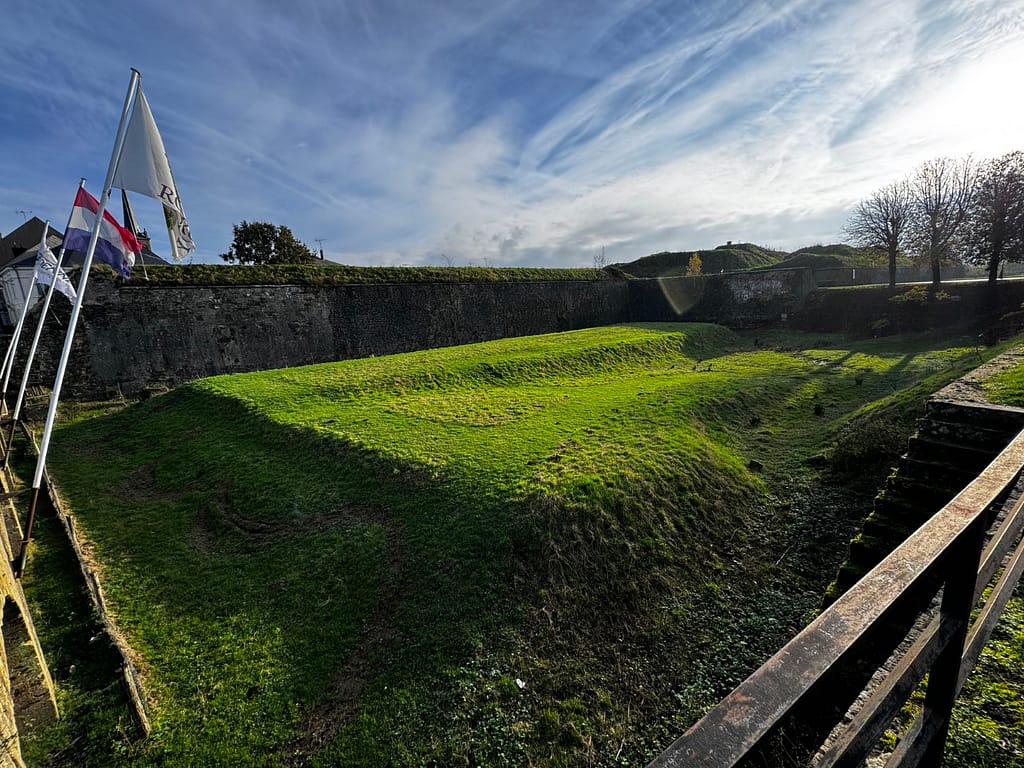
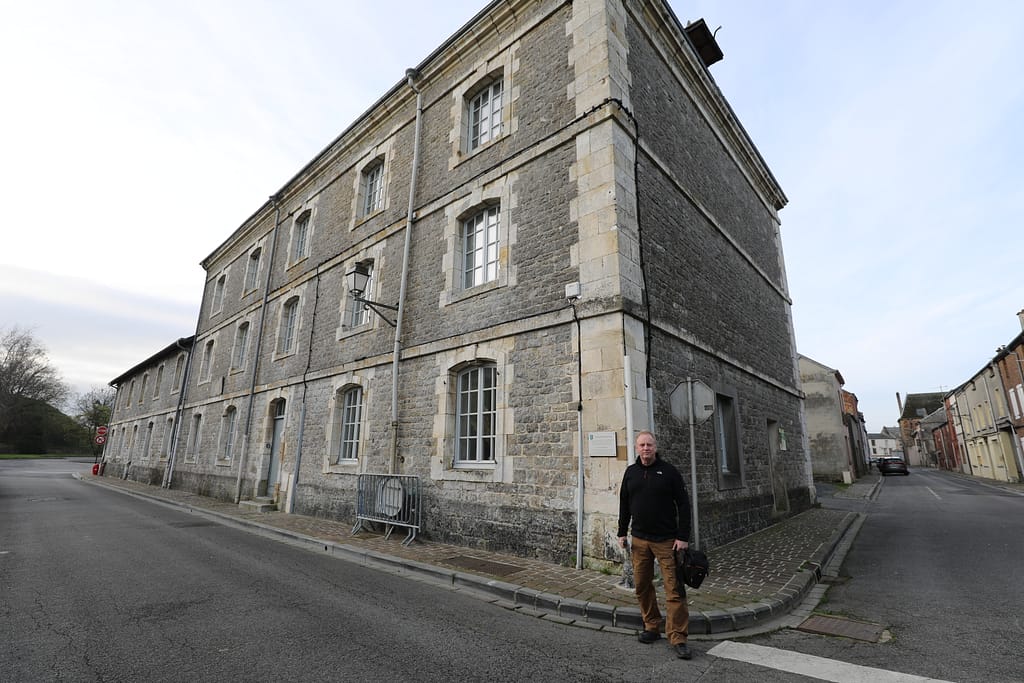
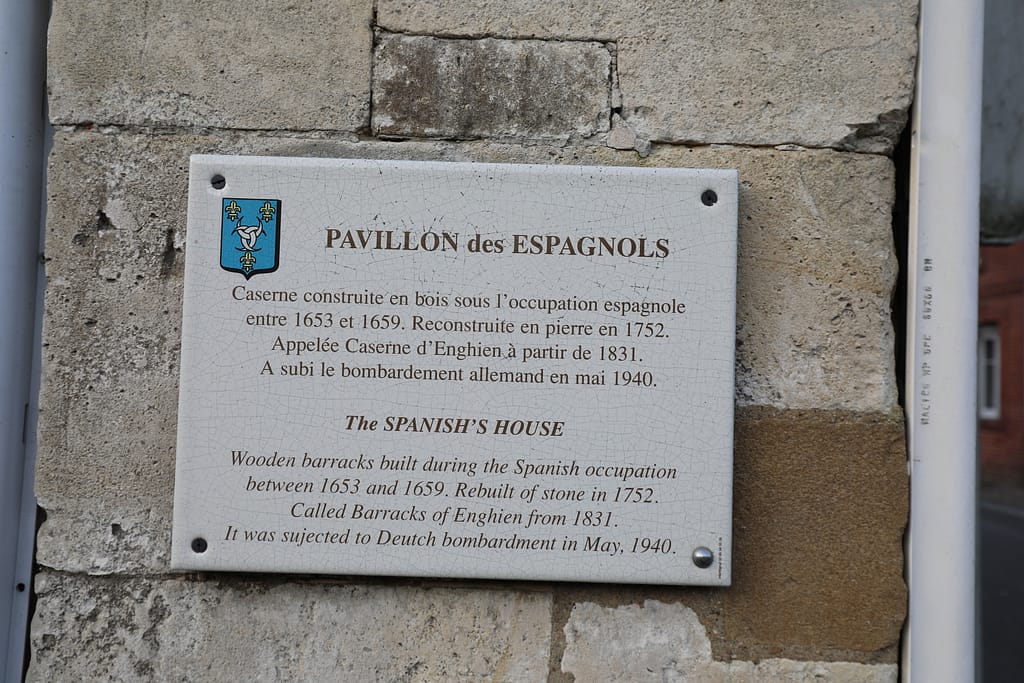
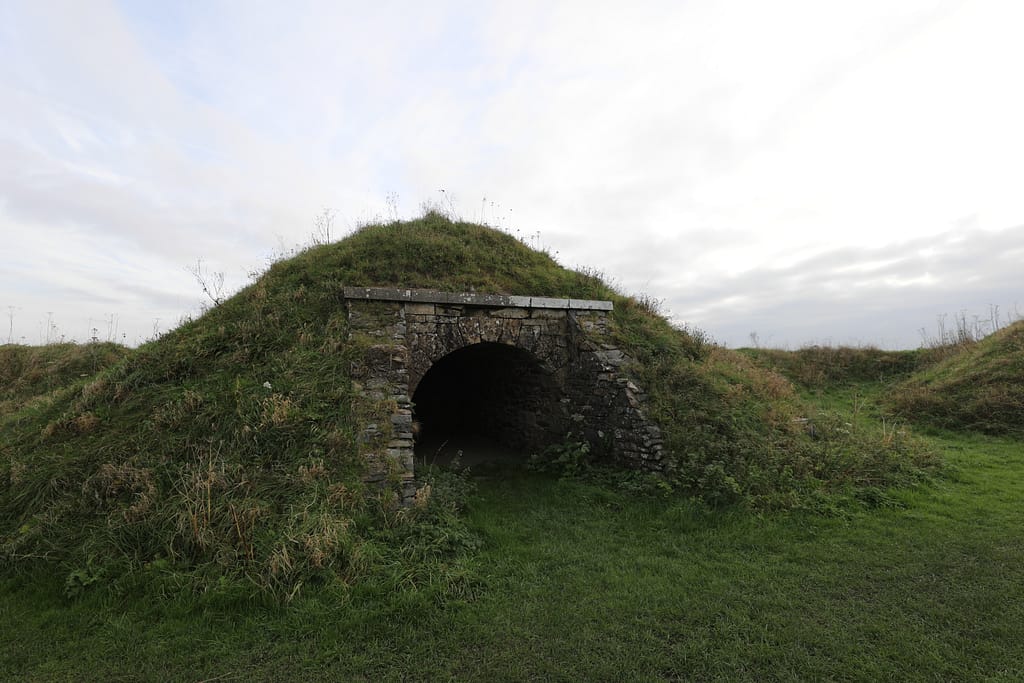
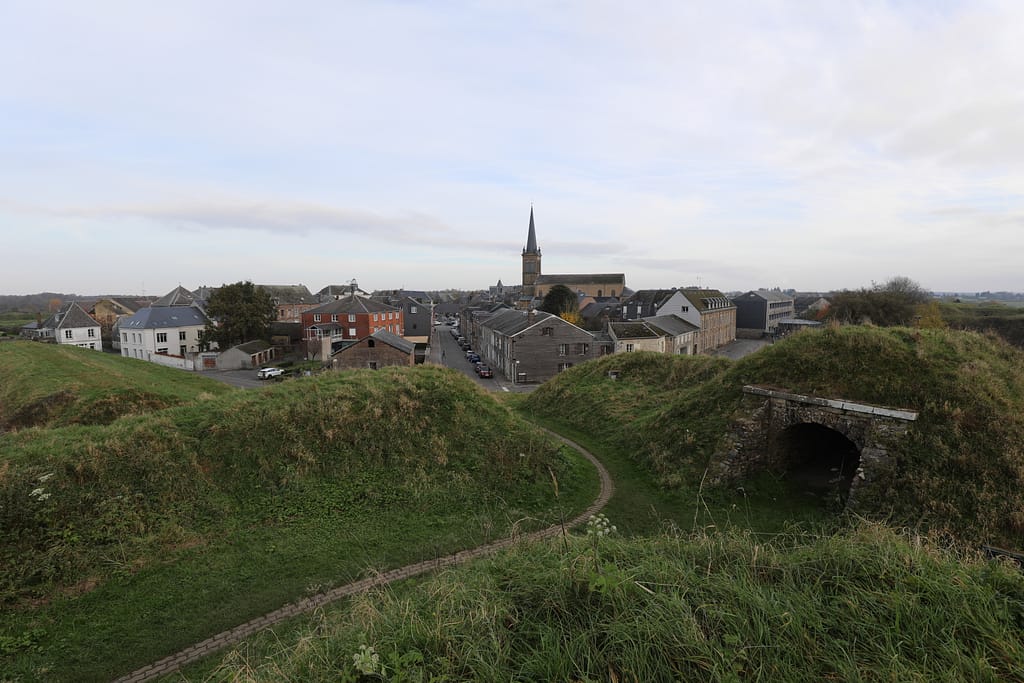
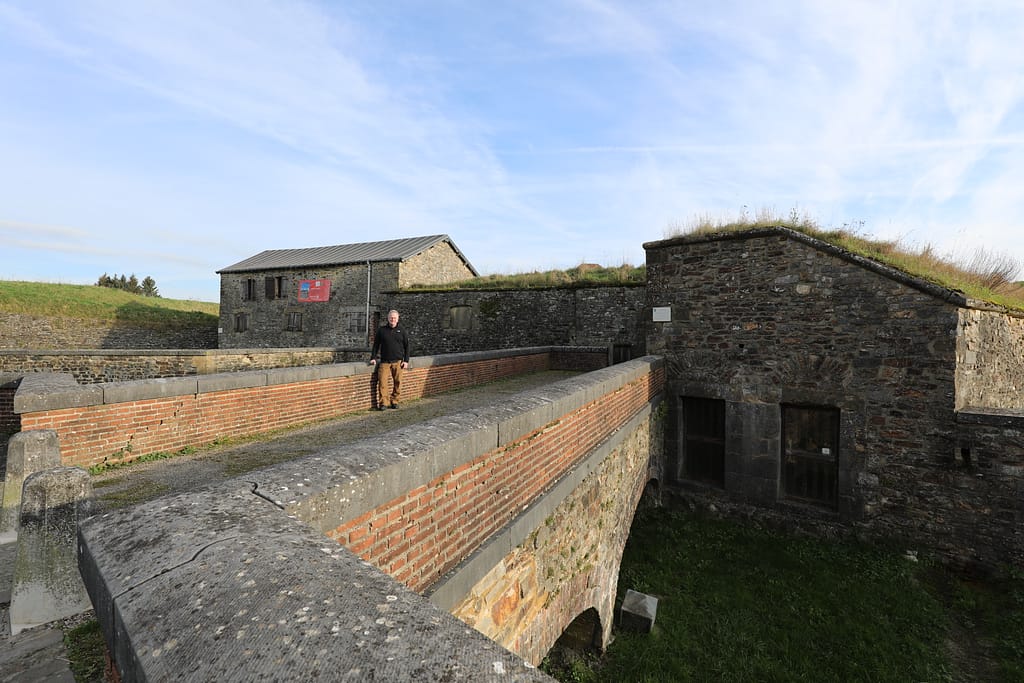
I visited Rocroi fortress and the battlefield of Rocroi in November 2024. I was armed with historical accounts, period sketches and detailed GIS analysis. I stayed in the old Spanish officer’s quarters in the incredible 1590-vintage fortress of Rocroi. Walking the fortress bastions was amazing. It is a fully functional little town, all enclosed in those late 16th – early 17th centrury defences.
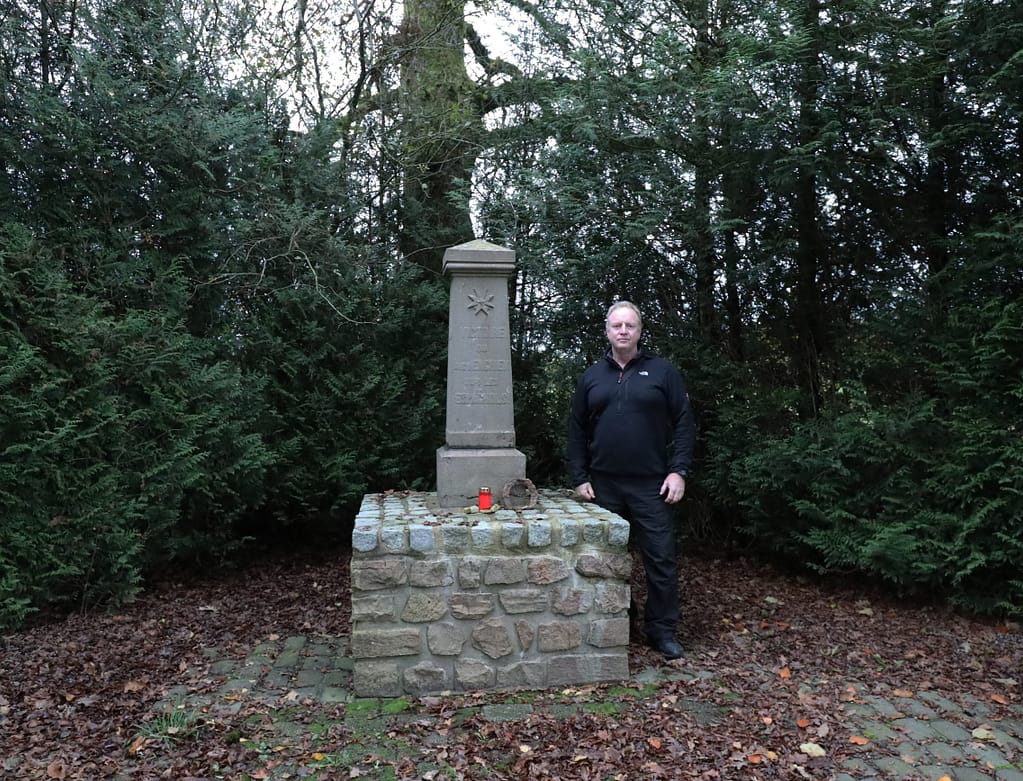
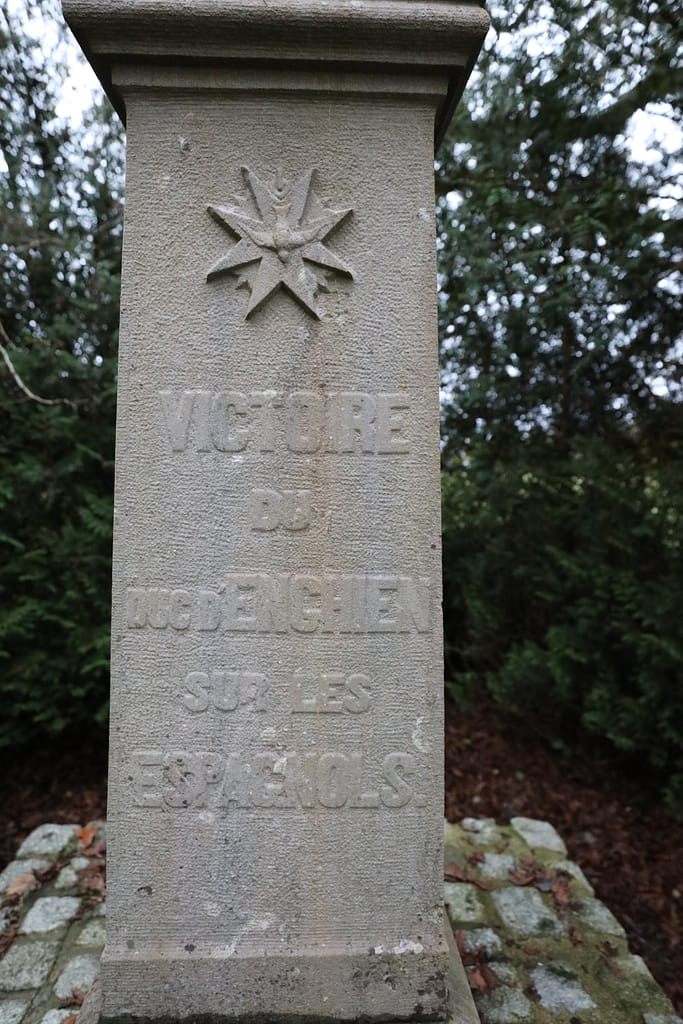
The battle site is slightly south of the fortress, where the besieging Spanish army set up its camp. Contemporary sketches and artwork are all ‘relative’ rather than geospatially accurate, but many features of the 1643 battlefield are still evident. There is a monument to the Duke of Enghien and his 1643 victory on the southern side of the battlefield.
Using secondary sources, some near-contemporary accounts and sketches, and the help of knowledgeable locals, I was able to walk the old battlefield and analyse the terrain, weapons, and tactics.
The fortress of Rocroi
The fortress of Rocroi in the French Ardennes was constructed between about 1550-1590 to defend the frontier against the threat from the Spanish Netherlands (Today most of Luxembourg and Belgium). The fort was upgraded in the late 17th century by master fortress designer Sebastien Vauban. It is incredibly well preserved and the town of Rocroi is mostly contained within the fortress.
Strategic context: The Thirty Years War
The Thirty Years War (1618-1648) started as internal conflict between Catholic and Protestant factions in the Holy Roman Empire. Habsburg Austria and Habsburg Spain, allied with Catholic German states fought to suppress the growing Protestant presence in Germany following the Reformation. External powers became involved in pursuit of their own interests and the war expanded over time. The Danes, under Christian IV, intervened in 1625 and the Swedes, under Gustavus Adolphus, invaded Germany in 1630. The main theatre of war was in what we now refer to as ‘Germany’, but was then a kaleidoscope of small principalities.
The war largely pitted Protestants against Catholics, supported by external Protestant and Catholic powers. An exception to this pattern of conflict was France’s involvement. From about 1630 onwards, Catholic France began subsidising Protestant Sweden against the Habsburgs. For French King Louis XIII, the great power rivalry with Spain was more important than the internal religious conflict in the German-speaking world.
The Spanish army besieges Rocroi
In early May 1643, a Spanish force of about 27,000 troops under General Francisco de Melo crossed the frontier from the Spanish Netherlands (today’s Belgium and Luxembourg) into France and laid siege to the border fortress of Rocroi and its 1,500-man garrison. The Spanish siege works were primarily on the plain to the south of the fortress and were placed to prevent any French relief army gaining access to the fort. Access to this plain from the southwest was via a narrow road through the dense Forest of Potées. General de Melo deployed a small force of scouts into the forest to report on French progress and ambush the French vanguard.
In response to the Spanish incursion, the French deployed an army of about 24,000 under Louis II, Duke of Enghien. In the early hours of 19 May 1643, French scouts detected the Spanish force awaiting them in the forest and rapidly overwhelmed them. The French army was able to deploy into the plain unopposed.
⚔️ Go deeper — Members get exclusive access to the Deep Research Collection, Field Notes, and monthly Research Dispatches. Try membership free for 7 days, cancel anytime. From $9/month.
The armies deploy for battle
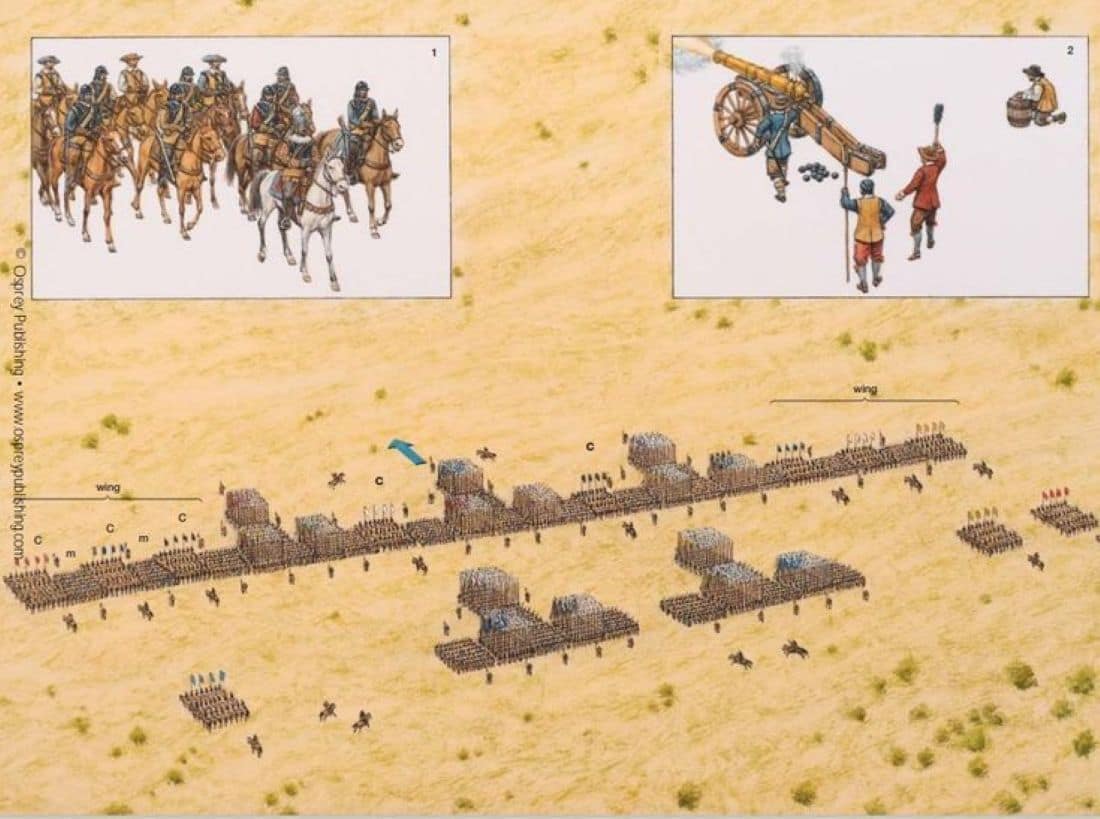
Both the French and Spanish armies deployed with their cavalry forces on the flanks, the infantry in the centre, and their artillery forward of the infantry lines. The key difference was that the French were using more linear formations of musketeers and pikemen, based on the Swedish model perfected by Gustavus Adolphus.
The Spanish Tercios
The Spanish Tercio was an adaptation to the increased use of firearms on the European battlefields. The Tercios were deep, dense formations formed with a frontage of 70 pikes and 20 ranks deep. Musketeers deployed across the front of the pike formation and arquebusiers deployed on the flanks of the Tercio. If threatened by cavalry, the musketeers and arquebusiers would fall back to the protection of the pikemen.
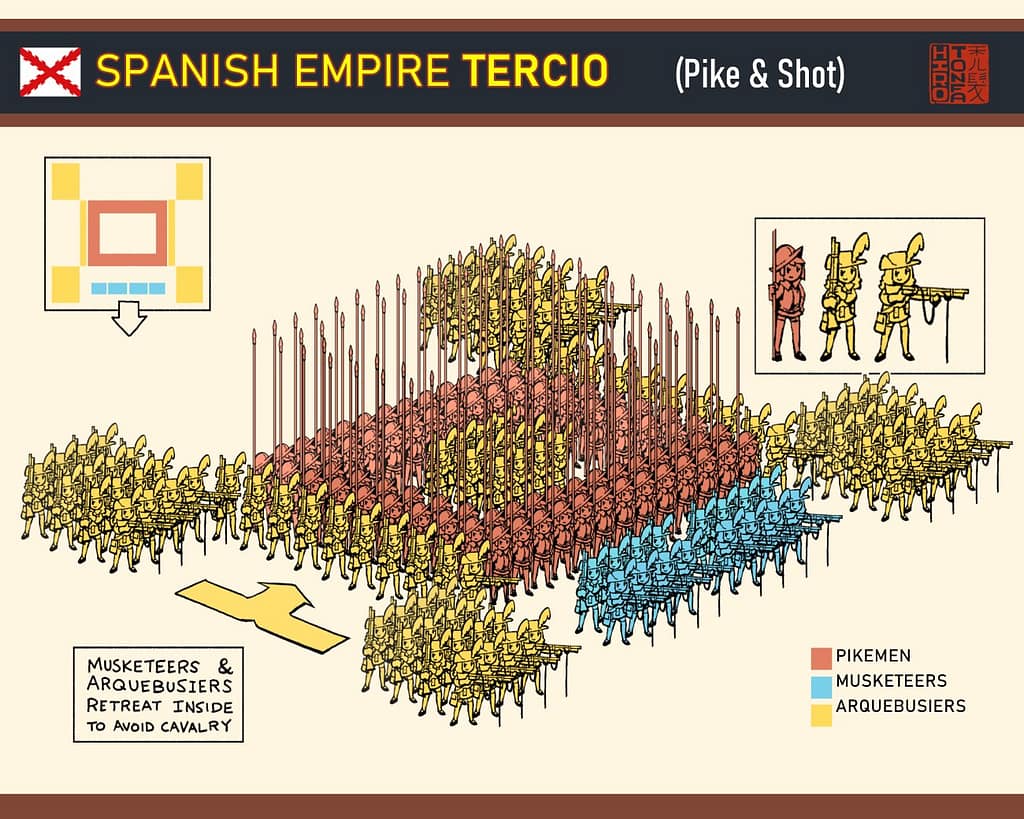
Pikeman were armed with 8-metre long pikes and could either defend against cavalry or engage in close order combat against infantry units. Musketeers were armed with heavy, large-bore, longer-range firearms that needed to be supported by a rest. The heavy muskets were intended to pierce cavalry armour. Arquebusiers were armed with lighter firearms for close-in defence. When introduced in the 1500s, the Tercio dominated the European battlefields and continued to do so for the next 100 years.
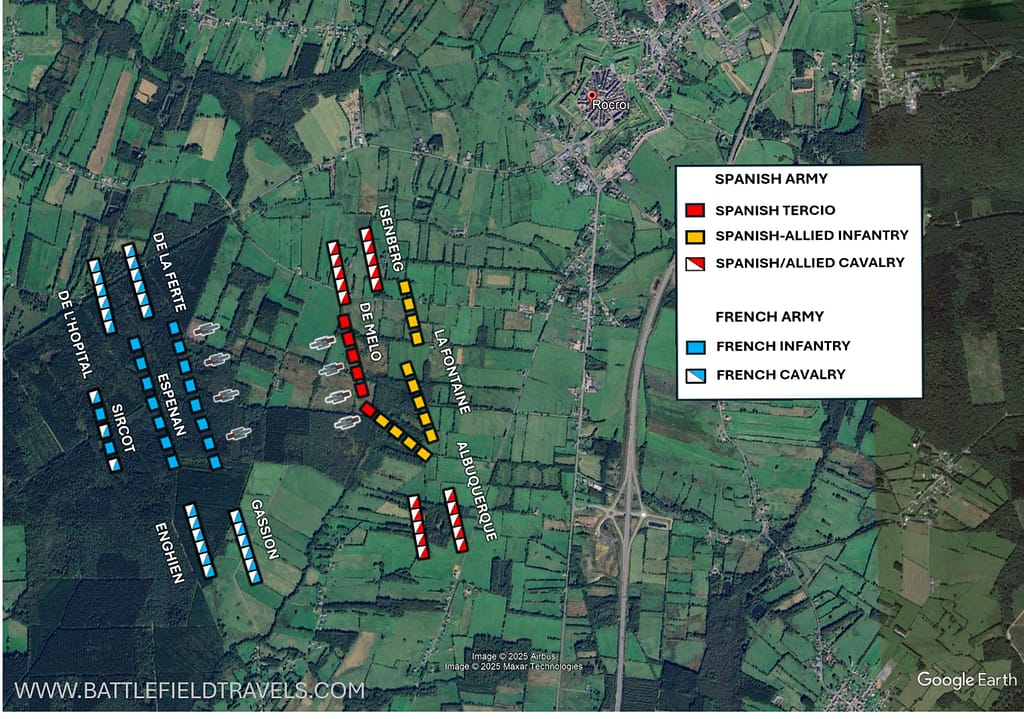
At Rocroi, the elite Spanish Tercios formed the centre of the Spanish army, while allied German, Italian and Burgundian forces formed the wings and cavalry protected the flanks.
French linear formations
By the time of the Battle of Rocroi, newer tactics had been developed, especially by the Swedes under Gustavus Adolphus. The Swedes had adopted more linear formations with a higher proportion of firearms to pikes, and their ranks alternated smaller groups of musketeers, pikemen, and light field artillery. The musketeers and artillerymen could fire their weapons and fall back to the protection of the pikes when threatened. The main advantage of these more linear formations was that for a given number of troops, the linear formation could generate more firepower and greater frontage than the dense, less-flexible Tercios.
After observing Swedish successes, the Dutch, French, and others adopted similar linear tactics. However, the professional Spanish veterans who made up the Tercios remained a formidable foe.
Battle of Rocroi
Initial deployments
The French army deployed into the plain south of Rocroi without interference from the de Melo’s Spanish army. The Spanish reoriented from the siege of Rocroi to the developing threat. De Melo also awaited reinforcement from another 4,000 troops under General Johann Beck. D’Enghien knew of Beck’s proximity and was eager to bring the Spanish to battle before Beck could reinforce.
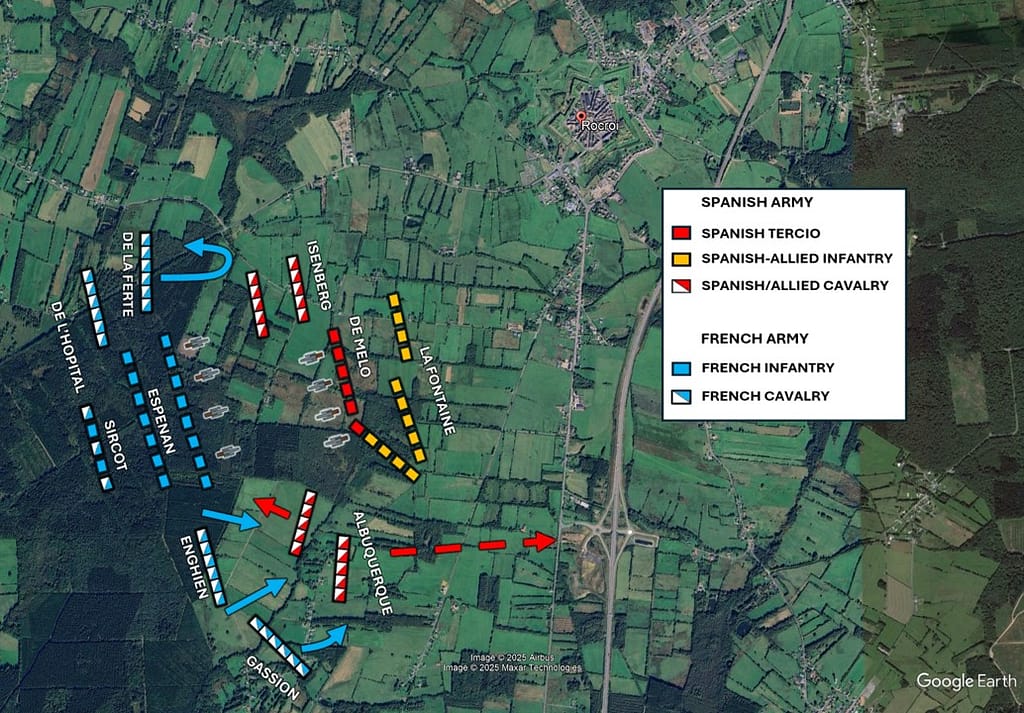
Battle on the flanks
The Battle of Rocroi opened with cavalry actions on both flanks. Initially, the French left-wing cavalry under General Henri de La Ferte-Senneterre were driven back by the Spanish-allied German cavalry under Count Ernst von Isenberg. On the French right-wing, Jean de Gassion and d’Enghien led the French curaissiers against the Wallonian cavalry that secured the Spanish left. Here the French met with greater success and were able to drive off the Wallonians. Gassion and d’Enghien then crashed through the weak Spanish second echelon infantry. They then continued to ride around the entire Spanish army until they drove into the rear in Isenberg’s German cavalry on the Spanish right flank.
Spain’s allies collapse
With its cavalry defeated, and French cavalry in its rear, the Spanish position was severely compromised. The weaker, less disciplined Italian, German and Burgundian forces on the Spanish flanks rapidly collapsed, with many fleeing the battlefield.
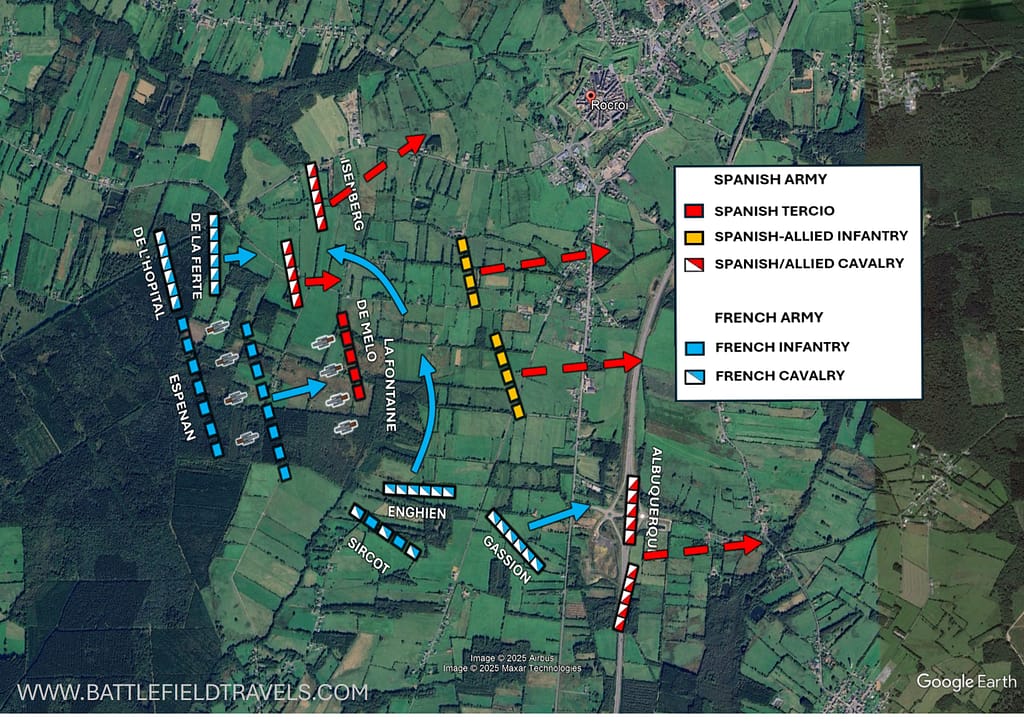
All that now remained of the Spanish army were four elite Spanish Tercios and one Burgundian Tercio, about 8,000 troops. The Spanish infantry commander, the Count of Fontaine, who was crippled and had to be carried in a sedan chair, formed the remaining Spanish forces into a single large pike square that could defend itself on all sides.
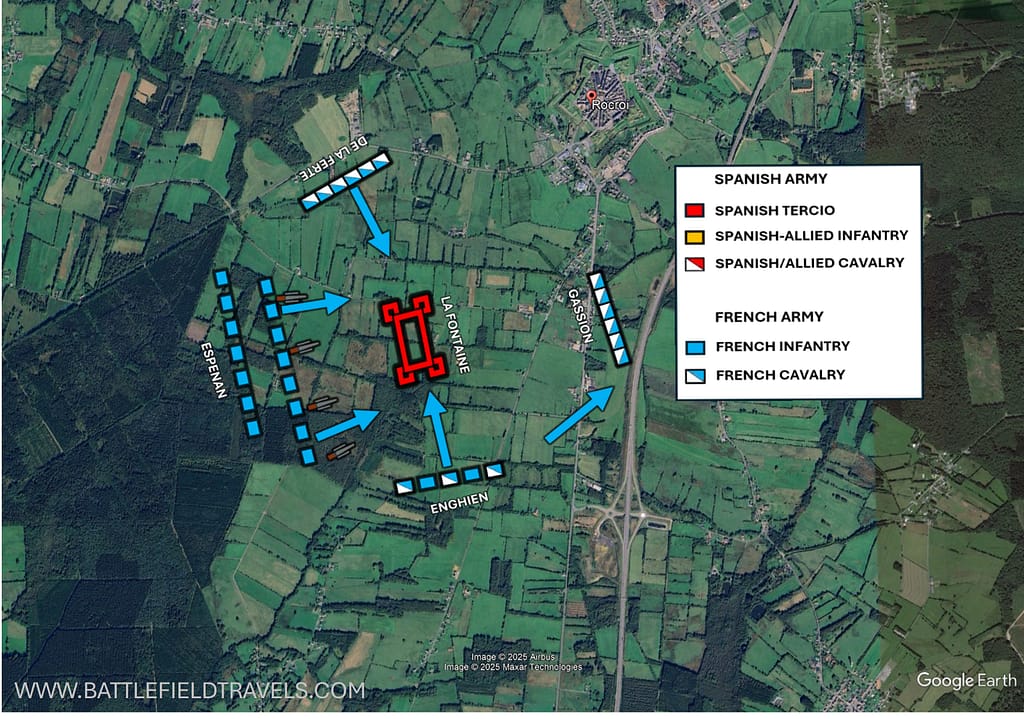
Last stand of the Spanish Tercio
With the Spanish force now concentrated in a single formation, the French artillery and ranks of French musketeers wreaked havoc on the dense Spanish ranks. D’Enghien redeployed his force to engage the Spanish square on all sides and the French cavalry attacked the Spanish baggage train to ensure there would be no relief. At some point, French artillery or musket fire killed Fontaine, the Spanish commander.
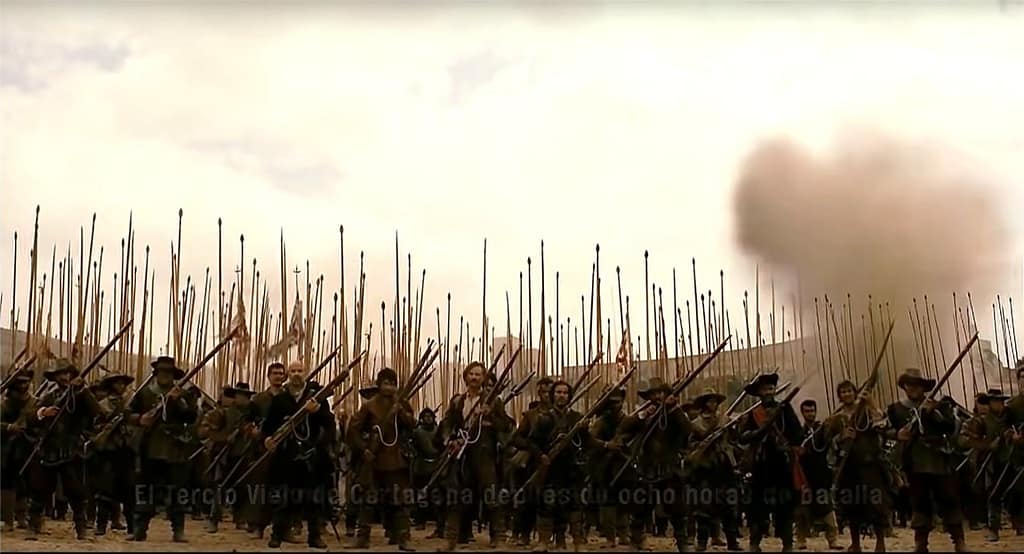
Impressed by the courage of the Spaniards, the French offered them an opportunity to lay down their arms. The Spanish discussed the terms but refused to surrender; the honour of the Tercio was more important to them. By about 0930hrs, the Spanish ranks were severely depleted and their ammunition exhausted. The Spanish colonel now in command signalled that he wished to negotiate surrender.
Spanish surrender
As D’Enghien and his command team approached the Spanish lines, some Spanish musketeers, unaware of the negotiations, opened fire. French troops, outraged by this apparent violation of a truce, attacked the Spanish square. With the Tercio broken and all cohesion lost, surviving Spanish troops begged for quarter and surrender was finally achieved. The Spanish Tercios had suffered a catastrophic defeat.
This last act of the Battle of Rocroi is depicted in the 2006 Spanish movie ‘Alatriste’, and I think it is one of the best combat sequences ever filmed.
Consequences of the Battle of Rocroi
The French inflicted catastrophic losses on the Spanish force, who suffered around 15,000 casualties, including around 8,000 killed and 7,000 prisoners. French losses were significantly lighter, estimated at 4,000–5,000.
The French victory at Rocroi shattered the myth of Spanish invincibility and marked the decline of Spain as Europe’s preeminent military power. It also established France as a rising power under the leadership of brilliant generals like d’Enghien. The battle also signalled a shift from the dominance of heavy infantry formations like the Tercios to more linear and firepower-based tactics that would dominate European warfare over the coming centuries.
The battlefield today: exploring Rocroi
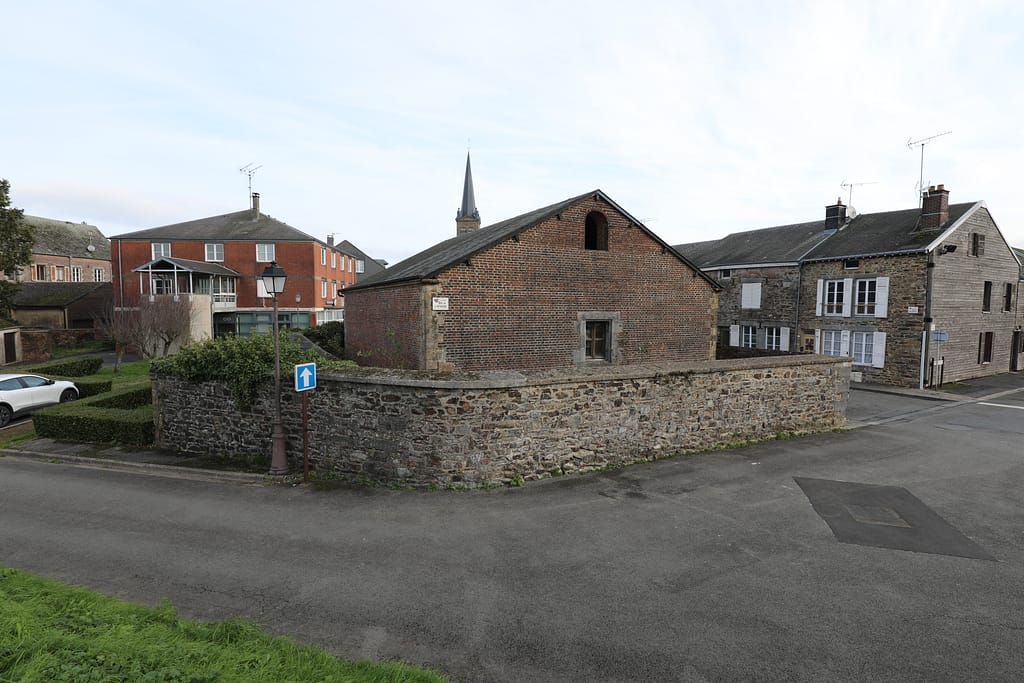
The battlefield today is well preserved, especially the fortress of Rocroi! Most of the battle area is now rural villages and farms that were not there during the battle (based on the 17th-century woodcut depictions). There is one monument to the battle south of Rocroi, about where d’Enghien broke the Spanish cavalry on the French right wing.
As I was walking around the battlefield taking photographs, an elderly French couple pulled over and asked what I was doing. In the most rudimentary French, I said we were exploring ‘la Bataille de Rocroi’. They were very happy to hear this and began pointing to a nearby field and speaking enthusiastically in French. I understood ‘Espagnol’ (Spanish) and ‘dernier’ (last), and they were drawing squares in the air. At first, I assumed they were talking about some sort of monument, but then realised they were indicating the location where the Spanish great Tercio made its last stand! What a privilege to stand on that spot, and to benefit from that local knowledge!
360 view of the site where the Spanish great Tercio made its last stand
Fortress of Rocroi
The fortress of Rocroi is incredible and not to be missed. The fortress is a typical bastion fort and was completed around 1590. In the late 17th Century, the defences were enhanced by Marshal Vauban, the great French fortress engineer. The town of Rocroi is still contained within the fortress. Our BnB accommodation was in the old Spanish officers’ quarters.
Inside the fortress is the Museum of Rocroi, which was undergoing extensive restorations when we visited in November 2024. Link to the Museum of Rocroi website
Alatriste, 2006 movie
The 2006 Spanish movie ‘Alatriste’ stars Viggo Mortensen as Capitan Diego Alatriste, a soldier in the Spanish army during the Thirty Years War. The final scene in the movie depicts the last stand of the Spanish Tercio at the Battle of Rocroi. It is one of the best-ever depictions of combat in a movie, and definitely the best depiction of the ‘pike and shot’ combat of the mid-17th century. Highly recommended!
Additional Images
Period depictions of the Battle of Rocroi
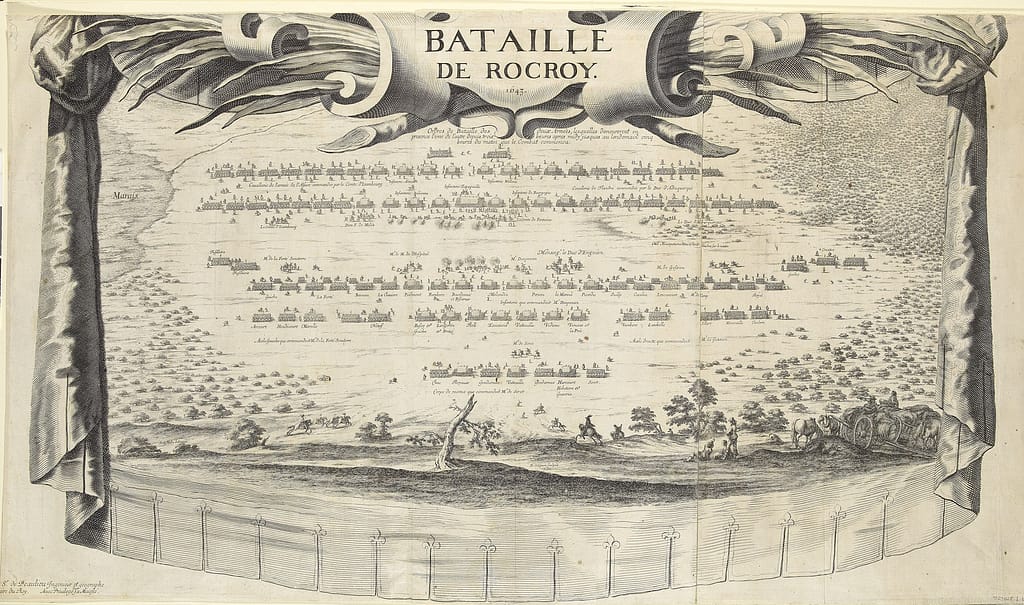

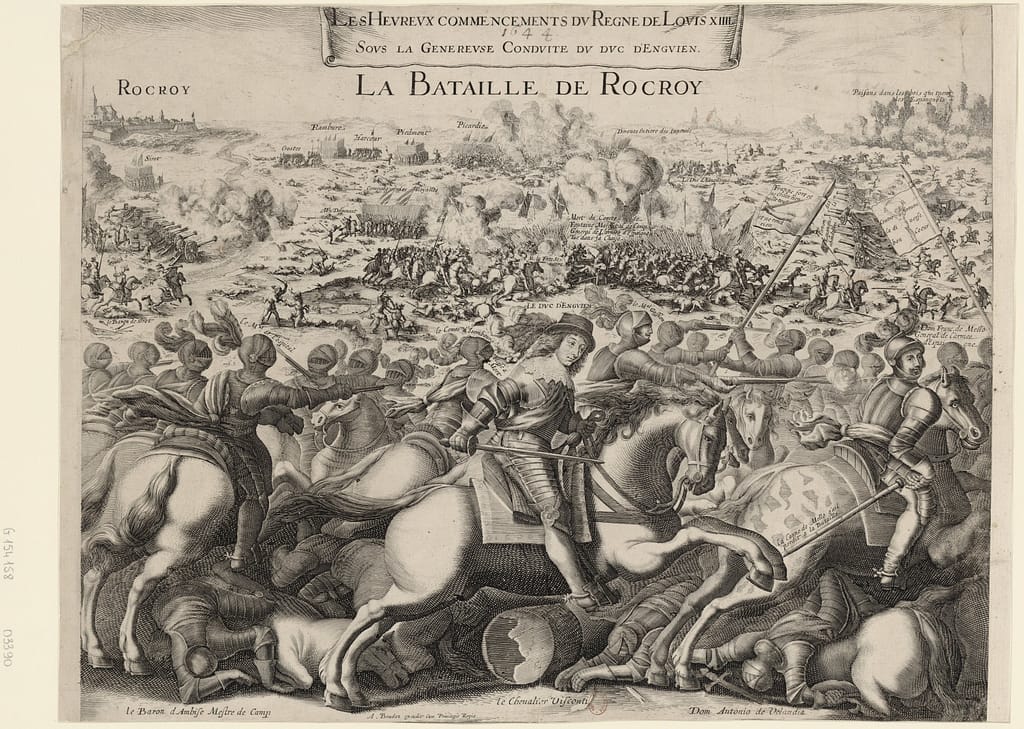
Monumen to Duc Enghien’s victory at Rocroi
Views of the battlefield


Fortress of Rocroi

360 view from the Rocroi bastions
Found this useful? Buy me a coffee — it helps fund future battlefield research


Authored by Mick Prictor, a retired military officer with 40 years’ service, and a military historian specialising in terrain-focused analysis of tactics, doctrine, and command decision-making in land warfare. His work draws on extensive battlefield fieldwork—more than 280 sites worldwide—and one of the world’s largest private collections of historic military arms, uniforms, and equipment. About me
Sources
Peter H. Wilson, 2009. The Thirty Years War. (Belknap Press)
John Pike, 2024. Gustavus v Wallenstein: Military Revolution, Rivalry and Tragedy in the Thirty Years War. (Pen and Sword Military)
Stéphane Thion, 2013. Rocroi 1643 (Men and Battles). (Histoire and Collections)
📚 Further Reading
This battle study nests within the broader analytical framework explored in the Research Hub, where operational methods, operating environments, armies, commanders, and weapons are examined across conflicts and eras. The links below connect related studies across the wider body of battlefield analysis on the BattlefieldTravels site.
⚔️ Explore all battle studies from the Thirty Years War
🏛️Explore the museum of Ancient and Medieval historic artefacts
The book list for this conflict includes the finest campaign studies, memoirs, and operational analyses available on the Thirty Years War, selected specifically to complement this battlefield study.
📚 Thirty Years War (1618-1648) – Recommended Reading
🗞️ For updates on new battlefield studies and research insights, you can subscribe to the Newsletter.
Related Battle Studies, Museum Pieces & Reading Resources


🧭 Battlefield Travel Guide: Battle of Rocroi (1643)
Getting There
- Nearest Town: Rocroi, Ardennes, Grand Est, France (near the Belgian border).
- Transport: By car via the A304/N51 from Charleville-Mézières (≈30 km). The nearest major rail hub is Charleville-Mézières; local buses/taxis reach Rocroi.
- Parking: Free parking areas around the star-fort ramparts and town gateways.
Site Orientation
- Key Landmarks: The star-shaped fortifications of Rocroi (bastions, curtains, and gates), the central Place d’Armes, and viewing points on the ramparts. The battle was fought on the open ground south/southwest of the town.
- Walking Routes: A full circuit walk atop or alongside the ramparts provides orientation; short excursions along rural lanes south of the town sample the battlefield plain (respect crops/private land).
- Best Vantage Points: Bastions on the southern face and road approaches toward Gué d’Hossus/La Chapelle let you read the open, gently rolling ground where the Spanish tercios deployed.
Museums & Visitor Centres
- Rocroi Town Information Centre: Seasonal exhibits and maps covering the fortress and the 1643 battle.
- Charleville-Mézières Museums: Regional history collections that contextualise the Franco-Spanish War and the Army of Flanders.
- On-Site Panels: Heritage boards around the ramparts explain the fort’s design and the battle’s outline; supplementary battlefield maps are useful for field study.
On-Site Experience
- Interpretive Signage: Good fortification signage; limited wayfinding on the dispersed battlefield itself.
- Atmosphere: Intact early-modern fortifications overlooking open farmland closely echo the tactical setting of May 1643.
- Guides & Tours: Local guides occasionally offer fortress walks; independent battlefield study is straightforward with period maps/GIS overlays.
Nearby Points of Interest
- Fortified Places of the Meuse/Ardennes: Sedan (vast château-fort) and Givet/Charlemont offer complementary fortress history.
- Waterloo & Namur (Belgium): Major early-modern/Napoleonic sites within day-trip range.
- Ardennes WWI/WWII Sites: Regional museums and memorials for broader military context.
Practical Tips
- When to Visit: Spring–autumn for clear views from the ramparts and open fields; mornings/late afternoons give the best light.
- Facilities: Cafés and amenities within Rocroi’s historic centre; limited services on the battlefield plain.
- Special Considerations: The battlefield is a living agricultural landscape—use public roads/paths only. A period deployment map helps visualise Condé’s envelopment and the breaking of the tercios.
FAQ: Battle of Rocroi (1643)
A battle fought on 19 May 1643 during the Thirty Years’ War, where the French army under the Duc d’Enghien defeated the Spanish Army of Flanders.
It marked the decline of Spanish military dominance and the rise of France as the leading European power.
The French used modern linear tactics, and exploited gaps in the Spanish line, encircling their infantry and forcing a surrender.
The Spanish lost most of their veteran infantry, ending the era of the feared Spanish tercios.
Yes. Rocroi has preserved fortifications and a museum with exhibits on the battle.
Subscribe to Battlefield Travels and receive a free E-Book Battlefield Guide
Unlock expert battlefield analysis, campaign reconstructions, and historical insights drawn from firsthand exploration and primary sources.
🗺️ You’ll receive:
🎖️ Exclusive historical insights you won’t find elsewhere
📘 A free eBook: 10 Tips for Exploring Historic Battlefields
📰 New battlefield studies straight to your inbox as they are published

⚔️ Go deeper — Members get exclusive access to the Deep Research Collection, Field Notes, and monthly Research Dispatches. Try membership free for 7 days, cancel anytime. From $9/month.