When tiny Finland humbled the mighty Red Army!
The Winter War’s most dramatic clash came in the forests of Suomussalmi and along the Raate Road. In December 1939 and January 1940, Colonel Hjalmar Siilasvuo’s lightly armed Finnish ski troops halted and then systematically destroyed two Soviet divisions advancing toward Oulu. What Moscow conceived as a swift thrust to cut Finland in two instead collapsed in the face of a smaller force that used terrain, climate, and tactical innovation to devastating effect.

Key facts
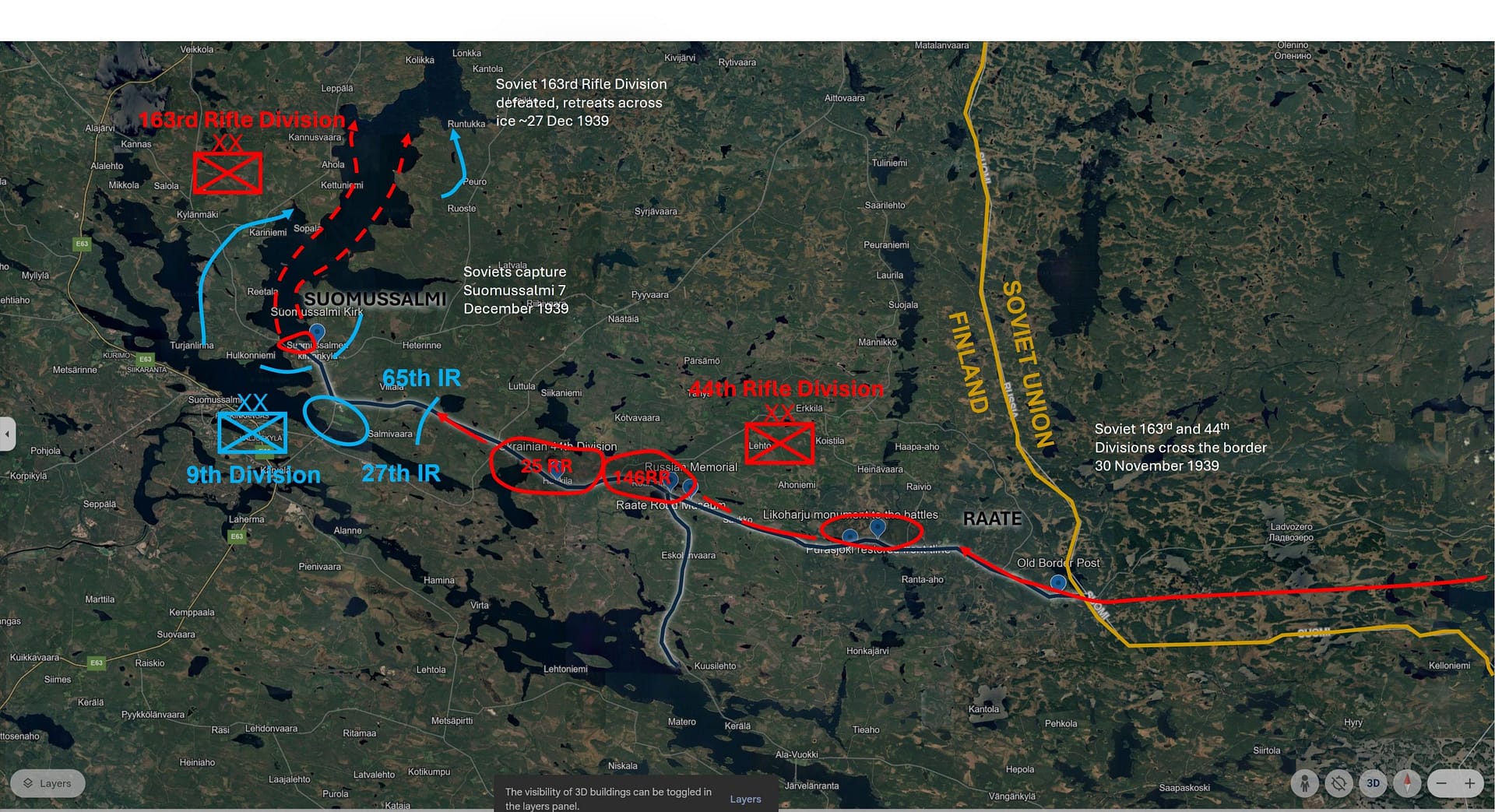
Google Earth map – Location of Suomussalmi/Raate Road battle site
🎧 Prefer to listen? This article is available as a 34-minute podcast episode
Tip: If Podbean overlay appears after pausing, click the × in the top-right corner to return to the player controls.
Strategic Context – Soviet invasion of Finland
Soviet pretext for war
The catalyst for the Winter War (30 November 1939 – 13 March 1940) was Joseph Stalin’s demands for territorial concessions from Finland, including bases on the Karelian Isthmus and control of islands in the Gulf of Finland. For Moscow, these were justified as defensive measures to protect Leningrad. For Helsinki, they represented a threat to sovereignty hard won after the Russian Revolution and Civil War. When Finland refused, the Soviet Union denounced the Finnish government, recognised a puppet regime led by Otto Kuusinen, and invaded with more than 450,000 troops across the 1,200-kilometre frontier.

Soviet strategy
On paper, the Red Army’s plan appeared overwhelming. Coordinated thrusts were intended to smash through the Mannerheim Line on the Karelian Isthmus and march on Helsinki, push westward through central Finland to cut the country in two, and advance through the north to sever links with Sweden and the vital aid routes it provided.
In reality, the Soviet command fatally underestimated Finland’s climate, terrain, and will to resist. The frozen forests and trackless wilderness were as much an adversary as the Finnish Army. Soviet forces, structured around heavy equipment and centralised command, were poorly adapted to sub-arctic warfighting.
The Northern Front
In December 1939, the Soviet 9th Army—comprising the 44th, 54th, 163rd, and later the 122nd Rifle Divisions—was ordered to advance from bases near the White Sea toward Oulu, a key port on the Gulf of Bothnia. Its capture would sever Finland in two, isolating the north from the south and choking off Swedish supply routes. The main avenue for this advance ran through the village of Suomussalmi, connected to Soviet territory by a single forest track: the Raate Road.
The 163rd Rifle Division crossed the border near Juntusranta in early December, rapidly seizing the village of Suomussalmi after fierce fighting. Yet the advance stalled almost immediately: the division was cut off, short of food and fuel, and harassed by Finnish ski detachments who destroyed isolated columns piecemeal. To relieve them, the Soviet High Command committed the 44th Rifle Division, advancing westward along the Raate Road under appalling winter conditions.
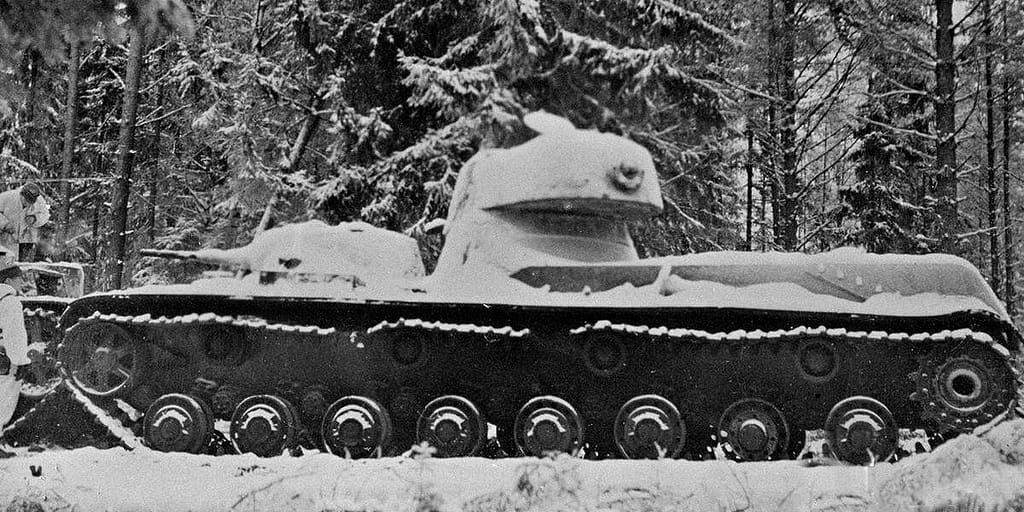
Finnish Response
The Finnish high command, under Field Marshal Carl Gustaf Emil Mannerheim, recognised that the Soviet drive toward Oulu threatened the survival of the nation. Reinforcements were rushed to Suomussalmi under Colonel Hjalmar Siilasvuo, whose 9th Division—composed largely of reservists—had intimate knowledge of the forests and were skilled in cross-country ski movement. Their task was not to hold a fixed line but to cut Soviet columns into fragments, isolating and destroying them in what the Finns called motti tactics.
By late December, the stage was set for one of the most decisive and emblematic episodes of the Winter War: the the collapse of the 163rd Division at Suomussalmi followed by the destruction of the Soviet 44th Rifle Division on the Raate Road.
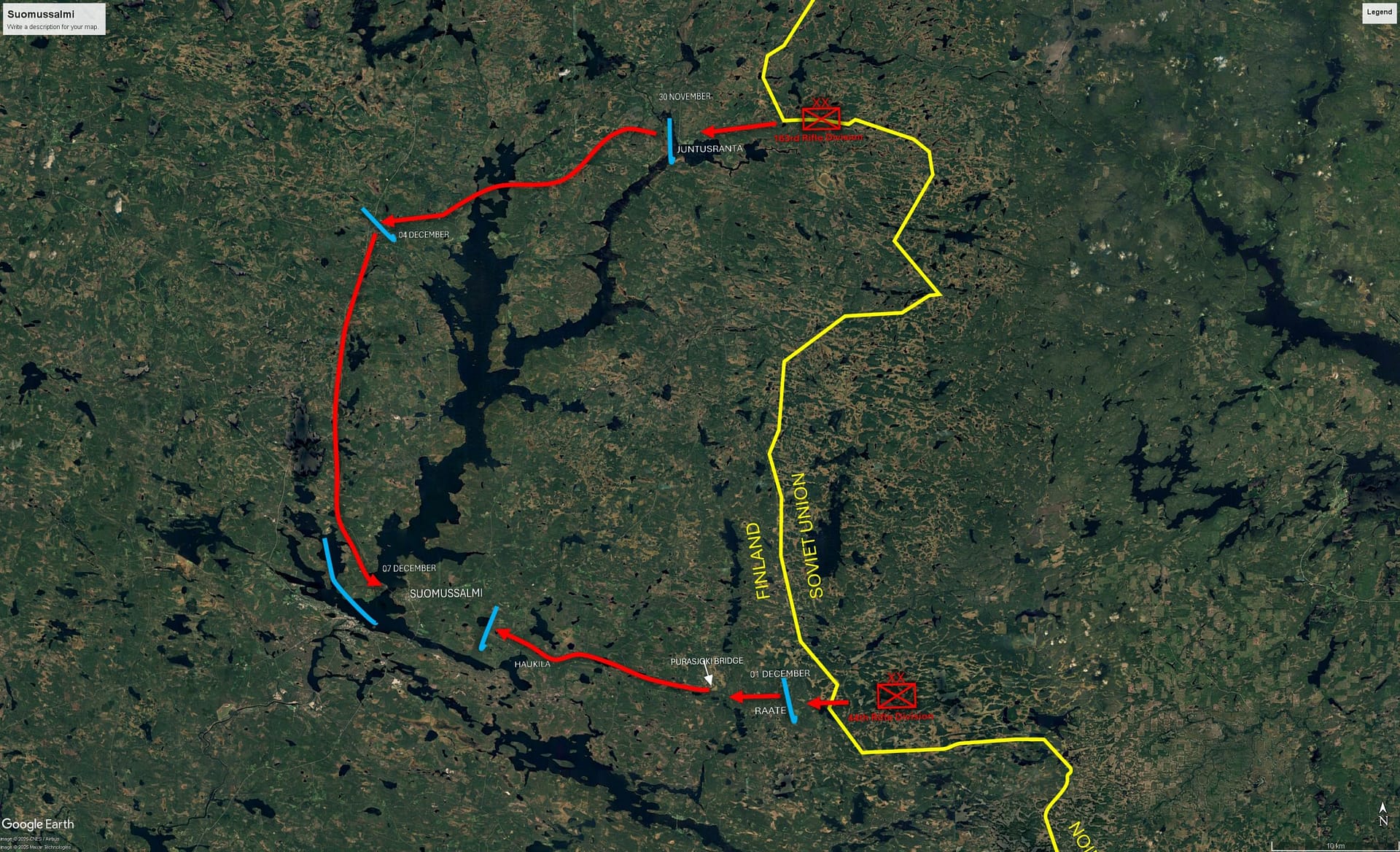
When Stalin’s Red Army invaded Finland on 30 November 1939, the two main thrusts were in the south around Lake Ladoga and the Mannerheim Line, and in central Finland focussed on Suomussalmi. In central Finland, the Russian 163rd Rifle Division and an independent tank brigade crossed the border at Juntusranta, and the 44th (Ukrainian) Rifle Division crossed at the border town of Raate. Both forces converged on Suomussalmi as their immediate objective. Their ultimate aim was to seize Oulu and cut Finland in two.
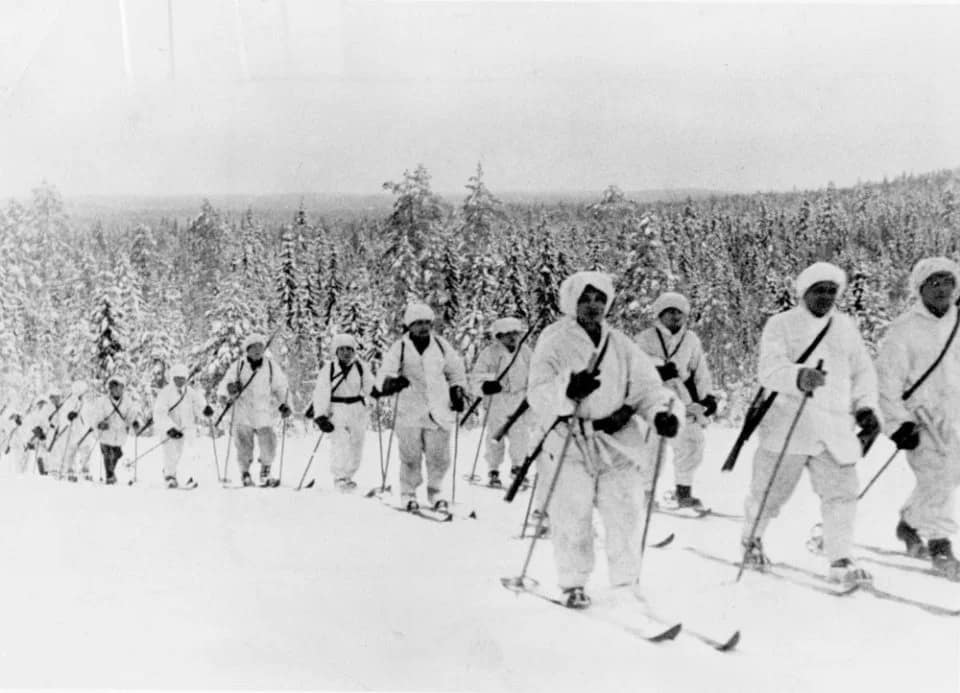
Opposing Forces: Finns versus the Red Army
 Finland – The 9th Infantry Division
 Finland – The 9th Infantry Division
The Finnish forces at Suomussalmi were under the command of Colonel Hjalmar Siilasvuo, a reservist officer who had been recalled to service at the outbreak of the Winter War. Siilasvuo commanded the 9th Infantry Division, numbering around 11,000 men by the time the battle fully developed. His division was a composite force, built from reserve infantry regiments and reinforced with local militia and volunteers from the Kainuu region. Many of these men were hunters, lumbermen, and farmers—accustomed to the forests, lakes, and winter conditions of northern Finland. The division’s main elements included:
- 27th Infantry Regiment (JR 27)
- 64th Infantry Regiment (JR 64)
- 65th Infantry Regiment (JR 65)
- Supporting artillery, engineer, and ski detachments
Crucially, the Finns lacked heavy equipment. Their artillery park was small, their anti-tank weapons few, and their motor transport limited. Yet what they lacked in firepower, they compensated for in mobility. Ski troops could cover ground rapidly, appearing and disappearing from forested trails, while local knowledge gave them an edge in maneuver.

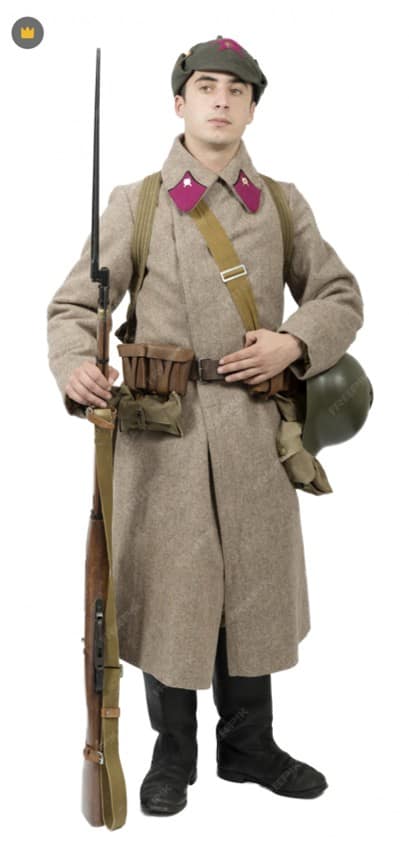
 Soviet Union – 163rd and 44th Rifle Divisions
 Soviet Union – 163rd and 44th Rifle Divisions
The Soviet forces comprised 45th Rifle Corps with about 45,000 troops, primarily from the 163rd and 44th (Ukrainian) Rifle Divisions. The Soviet forces included about 150 light and medium tanks and 335 artillery pieces. The Soviet strategy relied on overwhelming numerical superiority, combined arms tactics, and a belief that mass could quickly overwhelm Finnish resistance.
The Soviet plan assigned the conquest of Suomussalmi and advance along the Raate Road to the 163rd Rifle Division, commanded by General Andrei Zelentsov. This division, numbering some 17,000 men, advanced from Juntusranta and quickly occupied Suomussalmi village in early December. However, stretched supply lines, poor reconnaissance, and the unfamiliar winter terrain left it vulnerable.
To reinforce the offensive, the 44th Rifle Division, commanded by General Alexei Vinogradov, was sent along the Raate Road from the east. With about 15,000–17,000 men, motor transport, tanks, and artillery, it represented a formidable force on paper. But its columns—strung out on a single icy road—became an ideal target for Finnish motti tactics. Soviet supply problems were acute: horses and trucks bogged down, rations froze, and troops lacked proper winter clothing.
Red Army assault
At the outset of the war, the Finns began mobilizing new units across the entire country. For the Suomussalmi area, it was Special Battalion No. 15 covering about 650km of sparsely populated border. On 30 November, the Red Army struck in the Suomussalmi sector. At Juntusranta in the north, the Red Army’s 163rd Rifle Division attacked with the 81st and 662nd Infantry Regiments against the Finnish border posts, which were held by a few platoons. At Raate in the south, the 44th Rifle Division attacked with the 759th Infantry Regiment against the Finnish platoon defending the border town of Raate. The Soviet plan was a dual-pincer attack to seize the village of Suomussalmi. From Suomussalmi, the subsequent objective was a drive on Oulu to cut Finland in two.
Suomussalmi Phase I: 163rd Division advance on Suomussalmi (late Nov – early Dec 1939)
Suomussalmi axis
When the Winter War broke out on 30 November 1939, the Soviet high command assumed the campaign would be swift. The Karelian Isthmus, with its direct road to Helsinki, was the main axis of advance, but secondary operations were also launched across Finland’s long border. One of these thrusts was aimed at Suomussalmi, a small village deep in the forest belt of central Finland. The idea was simple: advance west along the forest roads from Juntusranta, cut Finland in two by reaching the Gulf of Bothnia, and sever the north–south railway that supplied the Finnish heartland.
The task was entrusted to the 163rd Rifle Division, around 17,000 men with supporting artillery. For such an operation, however, the Soviets had not prepared adequately. The forest roads from Juntusranta were little more than snow-covered tracks, flanked by frozen lakes and deep woods. Supply columns stretched thin, trucks broke down in sub-zero weather, and horses struggled in the snow.
Finnish response at Suomussalmi
Finnish reinforcements were fed into the battle as they arrived, and the Finns withdrew each time the Soviets threatened to encircle their heavily outnumbered forces. By 7 December, the Soviet 163rd Division had reached Suomussalmi. With only two companies available, the Finns elected to destroy the town and withdraw to the western shore of Lakes Niskanselkä and Haukiperä. The Soviets now held the town of Suomussalmi.
The occupation was a hollow victory. Instead of a stepping-stone to the west, Suomussalmi became a trap. With local civilians evacuated and infrastructure destroyed, the Soviets found themselves isolated in a burned-out village, short of shelter, food, and intelligence. Temperatures plummeted to –30°C, and frostbite became as dangerous as Finnish bullets.
360 photo – Along Raate Road, mid-January Click on the VR button for the full 360 view.
⚔️ Go deeper — Members get exclusive access to the Deep Research Collection, Field Notes, and monthly Research Dispatches. Try membership free for 7 days, cancel anytime. From $9/month.
Suomussalmi Phase II – Siilasvuo’s Counter-Moves (mid–late December 1939)
Motti tactics
Colonel Hjalmar Siilasvuo, commanding the Finnish 9th Division, recognised that he could not dislodge the Soviets through a direct frontal assault. Instead, he applied motti tactics—the Finnish method of breaking enemy columns into isolated “stacks” (like logs cut for firewood) that could then be reduced one by one. His troops, moving swiftly on skis, harassed the Soviet supply lines, ambushed convoys, and cut trails through the forests that were invisible to enemy scouts.
The 64th Infantry Regiment took the lead in severing communications between the forward Soviet units in Suomussalmi and their rear elements stretched along the roads to Juntusranta. Small Finnish ski detachments struck quickly, then melted into the woods before Soviet armour or artillery could respond. These tactics not only inflicted casualties but steadily eroded morale. Soviet troops, unused to night fighting in such conditions, reported shadows and phantom attacks that left them exhausted and jittery.
163rd Division cut off at Suomussalmi
By Christmas 1939, the noose was tightening. Soviet units in the village were low on food and ammunition. Fires for warmth betrayed their positions, yet without them men froze to death. Horses and even leather equipment were eaten to stave off hunger. Siilasvuo judged the time ripe to destroy the enemy outright.

Suomussalmi Phase III – Encirclement and Destruction of the 163rd Rifle Division (late December 1939)
Finnish assault on Suomussalmi
By the final week of December, Colonel Siilasvuo tightened his grip around Suomussalmi. His 9th Division, though numbering fewer than 12,000 men, operated with a cohesion and mobility the Soviets could not match. Ski troops cut trails through the forest, bypassing Soviet outposts and striking at weak points. Units carried little more than rifles, submachine guns, and satchel charges—light enough for rapid movement across snow.
On 27–28 December, Siilasvuo launched his long-awaited assault. Finnish detachments infiltrated around the flanks, isolating Soviet companies into disconnected “motti” pockets. Attempts by the Soviets to break out were met with devastating small arms fire. Ammunition shortages forced the Soviets to rely on poorly coordinated bayonet charges, which were easily broken up in the snow.
Destruction of the Red Army’s 163rd Division
The village of Suomussalmi became a death trap. Wooden houses and barns, which might have offered cover, were destroyed by artillery fire or set alight by Molotov cocktails. Many Soviet soldiers froze when forced into the open. The once-proud 163rd Rifle Division dissolved into fragments. By 29 December, organised resistance collapsed, and only small groups attempted to flee eastward into the forests. Few made it back.
For the Finns, the victory was stunning: a single division, using terrain, surprise, and mobility, had annihilated a Soviet force more than twice its size. Yet the threat was not over—another Soviet division was already advancing along the Raate Road.
Raate Road Phase I: 44th Rifle Division advance from Raate
Raate Road axis
The Soviet high command, stunned by the loss of the 163rd Division, ordered the 44th Rifle Division forward to relieve the survivors and resume the drive west. Numbering around 17,500 men, it was better equipped than the shattered 163rd, with tanks, artillery, and trucks. But it faced the same fundamental problem: the Raate Road. Narrow, snowbound, and hemmed in by forests, the road forced the division to stretch out in a long, vulnerable column nearly 20 km in length.

Raate Road as a Finnish ‘economy of force’ mission
While the Finns dealt with the 163rd Division around Suomussalmi, the Red Army 44th Rifle Division advanced slowly from Raate towards Suomussalmi. Unable to deal with two major Soviet thrusts concurrently, the Finns treated the 44th Division as an economy of force operation. The Finns cut the Raate Road at several points and harassed the 44th Division along the entire length of the Raate Road with small attacks and ambushes.
The Finnish operational approach was successful. By late December, the 44th Division was halted in a defensive posture around Haukila, about 10km east of Suomussalmi. The 44th Division secured its 25km long supply route back to Raate on the Russian border with platoon-sized defended outposts at 250-metre intervals, and tanks constantly patrolling between them.
Raate Road Phase II: Finnish main effort shifts to Raate Road
Once the battles to the north of Suomussalmi village had shifted decisively in the Finns’ favour, the Finnish commander, Colonel Siilasvuo, shifted all the forces he could spare against the 44th Division along Raate Road. The Finns struck on 4 January 1940.
Siilasvuo’s plan was simple: cut off the Soviet supply line to the Russian border, cut the Soviet column into ‘Motti’ (the Finnish word for chopped firewood), isolate these pockets of troops, and destroy them in place. To support this plan, the Finns opened an improvised road over the frozen lakes in the Alanteenjärvi-Vuokkijärvi area, parallel to the Raate Road on the southern side. This allowed the Finns to maneuver and resupply along the entire battle area.

44th Division trapped at Haukila
Beginning 5 January 1940, Finnish units struck at multiple points, cutting the Soviet column into isolated mottis. Ski detachments with submachine guns harassed truck convoys, while teams armed with satchel charges and Molotov cocktails destroyed stranded tanks. Artillery was dragged by hand through the woods to positions overlooking the road, pounding stalled Soviet concentrations.
Siilasvuo’s troops began their assault with a pincer attack around Haukila from the north and south. The Finns successfully cut off Raate Road on the eastern side of Haukila. This left the bulk of the 44th Division cut off west of Haukila, and small units strung out along Raate Road to the east. The Finns blew up the Purasjoki river bridge on 6 January, effectively cutting the 44th Division in two.
Raate Road Phase III: Destruction of the 44th Division along Raate Road
With three regiments of the 44th Division trapped around Haukila and the smaller detachments surrounded and immobile along the 25km road to the Russian border, the Soviet forces were facing a disaster. They could not withdraw, nor could they venture from the road. The Finns appeared to be everywhere. A captured Russian Colonel told his captors that he never saw a Finn during the entire battle, but he knew that any patrols and sentries that left the defensive perimeter would never return.

Raate Road Phase IV: Death of an army
The Soviets fought desperately, often forming hedgehog defences around clusters of vehicles. But as days passed, the cold grew more lethal. Temperatures plunged to –30°C. With supply lines shattered, Soviet soldiers starved, froze, or were shot down in piecemeal attacks. Attempts to retreat turned into massacres: the road was littered with burnt-out vehicles, dead horses, and abandoned equipment.
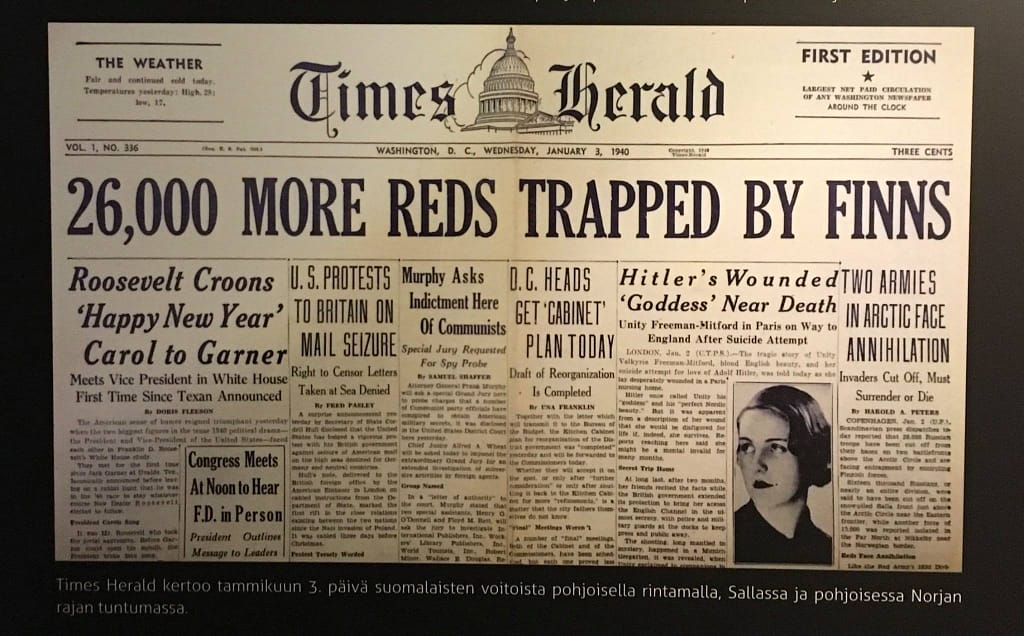
Between 6 and 8 January 1940, the last Soviet positions collapsed, surrendered, or the soldiers fled into the frozen forests. The 44th Rifle Division ceased to exist as a fighting formation. Out of nearly 17,500 men, only a fraction escaped. The Finns captured or destroyed hundreds of vehicles, dozens of tanks, and vast quantities of weapons and supplies—enough to re-equip entire Finnish battalions. The battlefield became infamous as the “Raate Road massacre.” By 10 January 1940, all significant Soviet resistance had ended. Only remnants and small patrols remained. The Soviet attempt to cut Finland in two had failed catastrophically.
360 photo – monument to the 44th Ukrainian Division of the Red Army. this division was composed of Ukrainians who did not want to fight the Finns, and who were completely unprepared for the ferocious northern winter. Click on the VR button for the full 360 view.
Consequences of the Finnish victory
Losses
Soviet losses were massive: 23,000 dead or missing, 85 tanks, 92 artillery pieces, 80 anti-tank guns, and thousands of rifles and machine guns. By contrast, the Finns lost about 800 killed. With the Soviet attack defeated, the Finnish forces redeployed to face the next Soviet thrust around Kuhmo.
11,000 Finnish troops had destroyed a Russian Army of about 45,000 in a campaign that is still studied in military academies around the world. The Finns did not win the war (that was never going to happen when the Soviet population exceeded theirs by 20:1) but they inflicted some catastrophic defeats on the Soviets, and forced the Red Army to undergo rapid reform. The Russo-Finnish War also convinced Hitler that the Russian military was incompetent and would rapidly collapse, and 15 months later the overconfident Germans attacked the Soviet Union.
Finnish mastery of the environment
The Finns were also masters in their appreciation of micro-terrain—the small scale terrain features that often do not appear on maps and can only be seen when you are standing on the ground. They had forced the Red Army to remain road bound while they themselves moved freely on forest tracks and frozen lakes. The Finns exploited the weather, visibility limits, and broken ground to isolate segments of Soviet columns, striking repeatedly before withdrawing to cover. The concept of exploiting small scale terrain features in battle is examined further in the Micro-Terrain and Battlefield Decision-Making research hub.
The Suomussalmi/Raate Road battlefield today
A largely unchanged battlefield
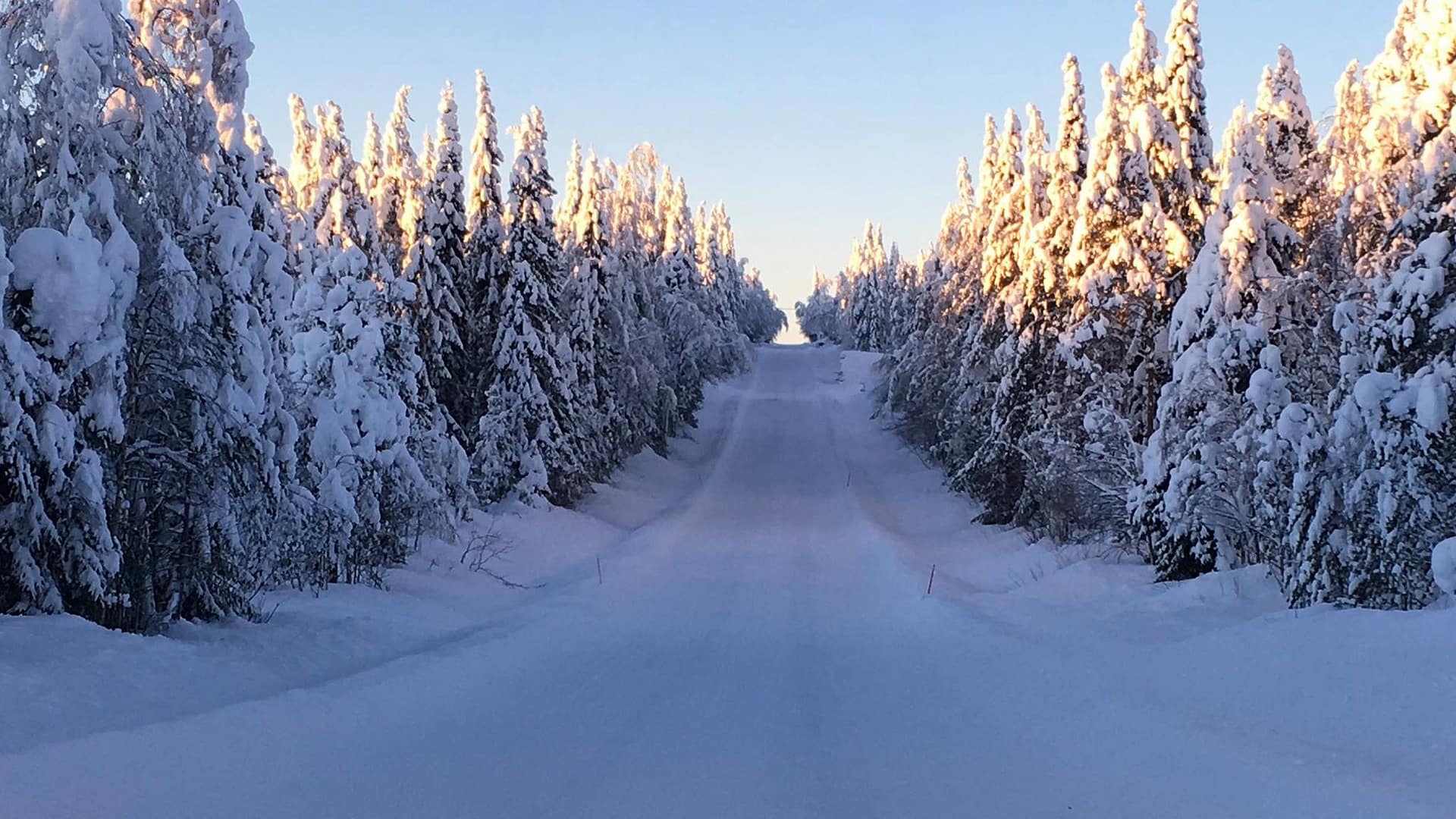
We visited Suomussalmi on 7/8 January 2018, 78 years to the day when the battle culminated in a massive Finnish victory, so I think it gave a good feel for the conditions. The temperatures we experienced were around -20 °C (- 5°F) during the day, dropping to -30 °C at night. The snow was at least a metre deep off the road. So conditions were similar to how they were during the battle in 1939/1940. Suomussalmi Village and Raate Village have remained largely unchanged since 1940.
Raate Road Museum
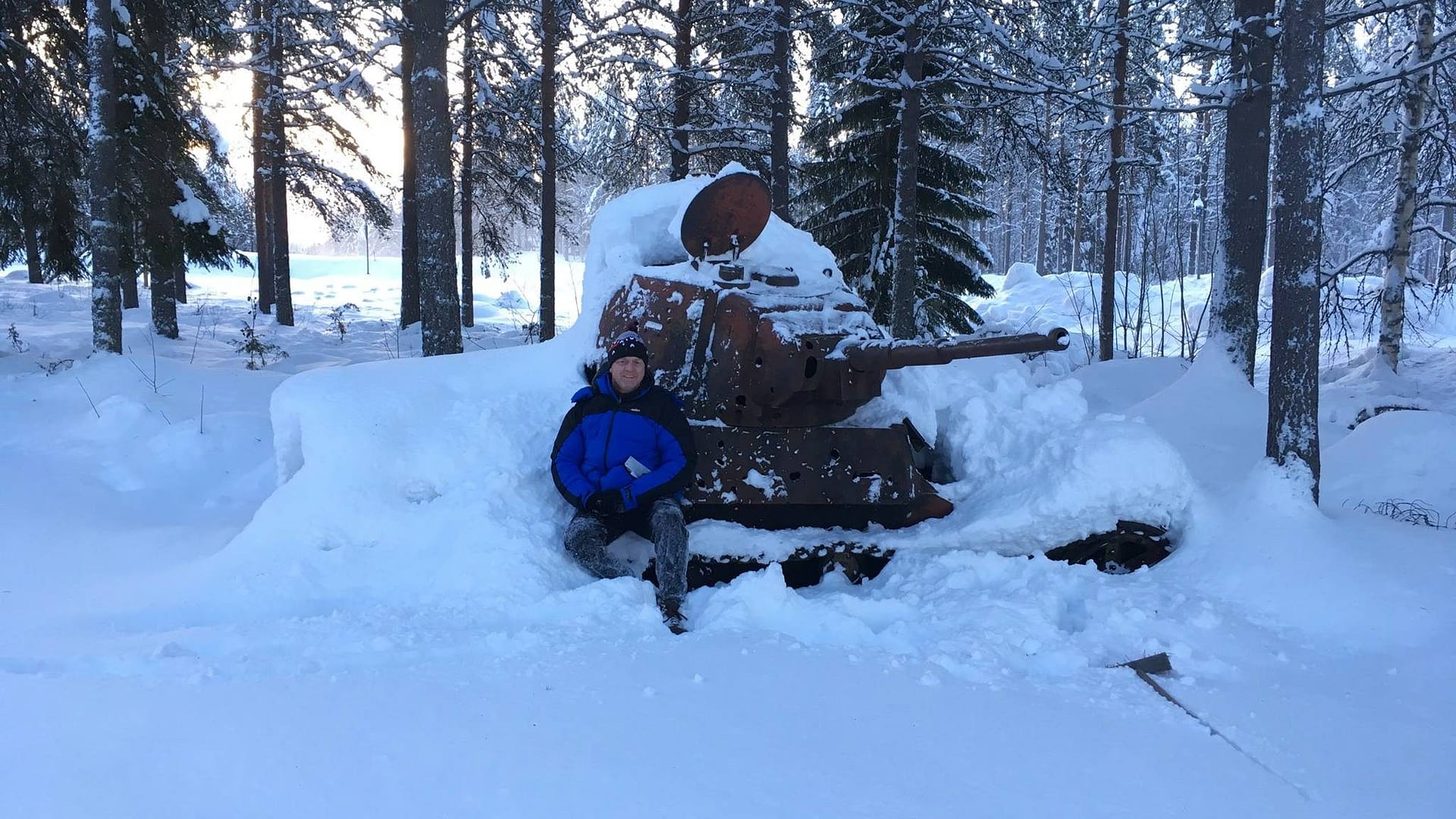
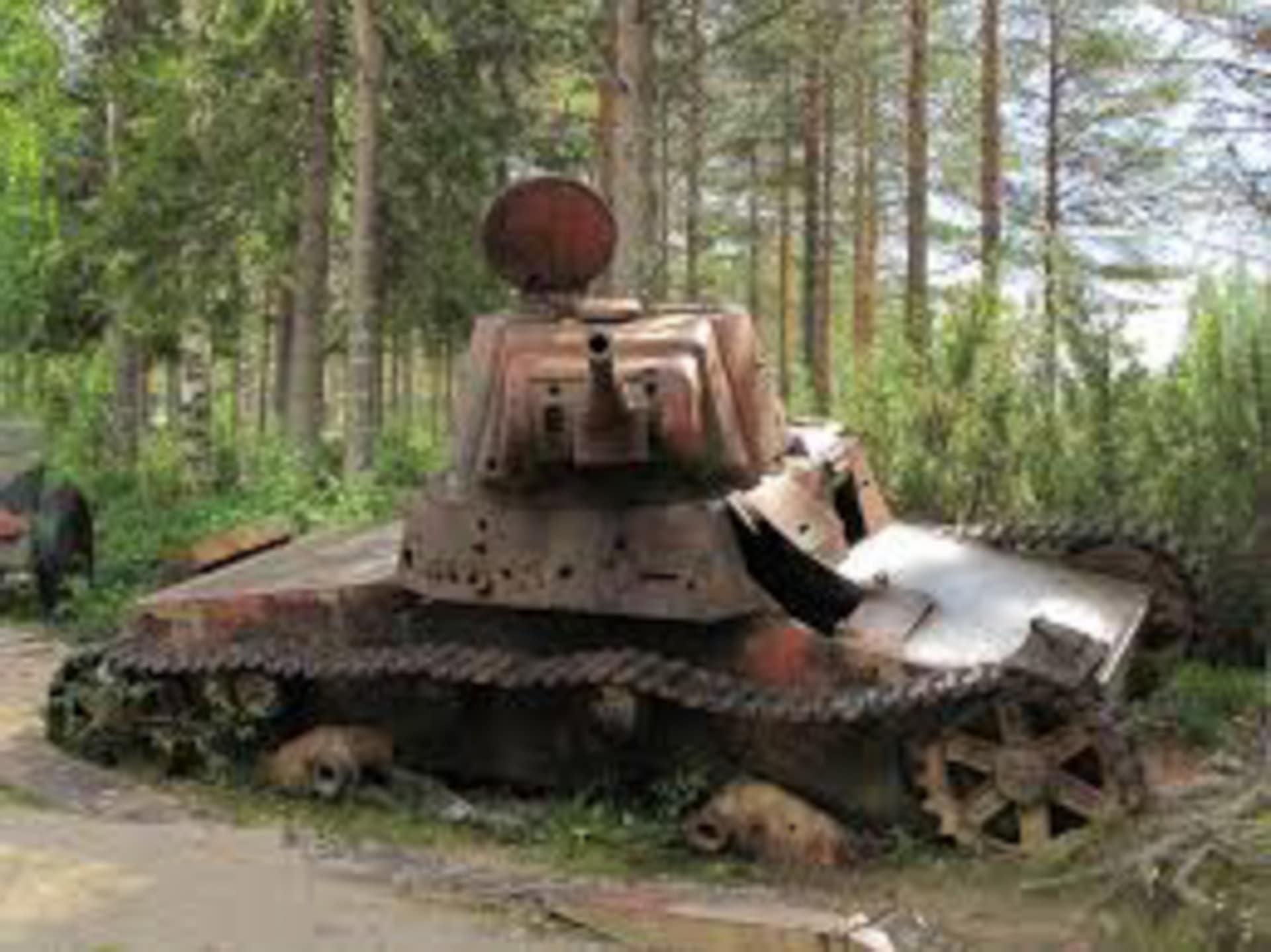
The Raate Road Museum (Raatteen Portti) is marked on the map. The museum has some amazing displays of original equipment related to the battle, the Winter War (1939-40), and the Continuation War (1941-44). There are still destroyed Red Army tanks and vehicles along the Raate Road. As far as we could tell, no other visitors were looking at battlefields while we were there!
There are numerous monuments in the area, including a monument to the 44th (Ukrainian) Division, a monument to the Russian dead, and a combined Russian /Finnish Winter War memorial comprised of 17,000 boulders representing the Soviet dead on Raate Road.
Suomussalmi is quite a remote part of Finland, especially in mid-winter. We caught the overnight train from Helsinki to Rovaniemi, had a few days in Rovaniemi, then picked up a rental car for the drive to Suomussalmi – about 300km of driving on snow-packed roads, but quite safe with the special knobbed tyres that were fitted. To get back to Helsinki we drove to Kajaani (about 130m) handed back the rental car and caught the train from Kajaani to Helsinki.
Images from my battlefield visit
Raate Road

360 photo – Along the Raate Road. This is 8 January 2018, so conditions would have been similar in January 1940. As soon as you get off the road you are in thigh-deep snow. Click on the VR button for the full 360 view.
Monument to the 44th (Ukrainian) Division
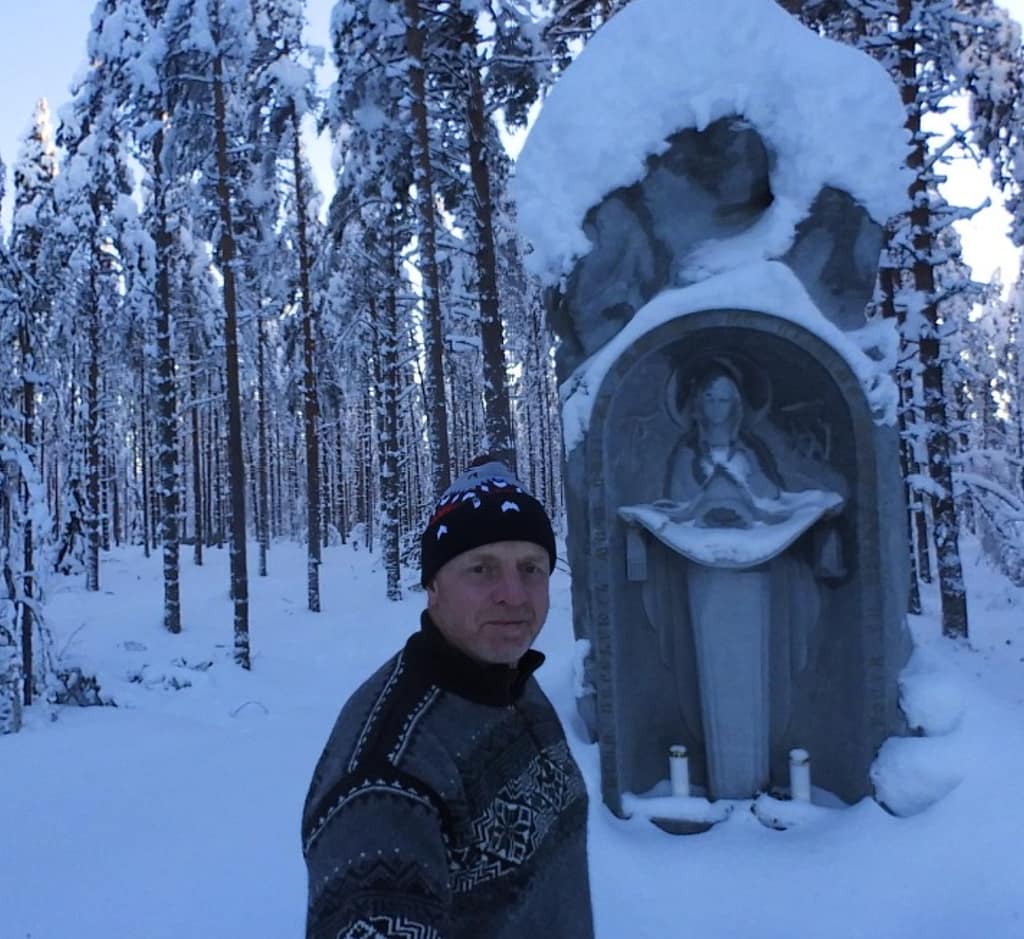
Raatteen Portti (Raate Road Museum)
360 photo of a destroyed Soviet T-26 Mod 1939 tank outside the Raate Road museum. The tank has not been moved since it was destroyed in January 1940. Click on the VR button for the full 360 view.

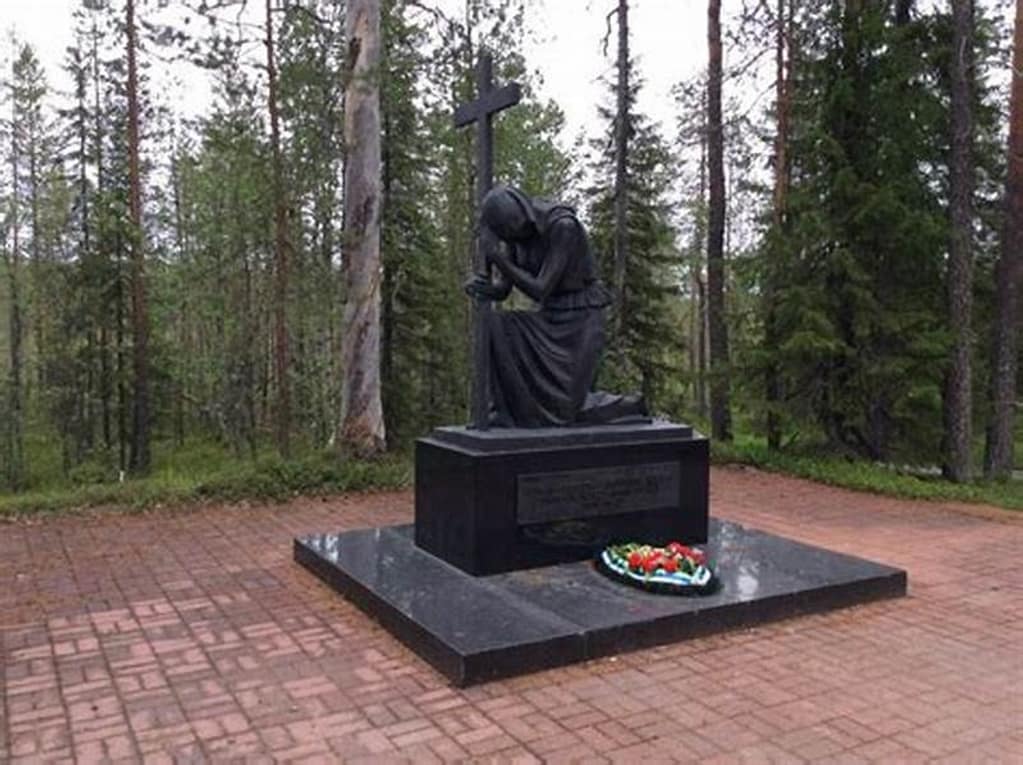
Russian Memorial
Russian memorial to the 23,000 Soviet soldiers who died in the Suomussalmi/Raate Road battle.
Talvisota (Winter War) Monument

The joint Finnish-Russian Memorial to the dead of the Suomussalmi-Raate Road battles. 17,000 rocks to represent the 17,000, mainly Russians, who died in the battles.
The battle in Finnish culture (Graphic Novel)


Found this useful? Buy me a coffee — it helps fund future battlefield research


Authored by Mick Prictor, a retired military officer with 40 years’ service, and a military historian specialising in terrain-focused analysis of tactics, doctrine, and command decision-making in land warfare. His work draws on extensive battlefield fieldwork—more than 280 sites worldwide—and one of the world’s largest private collections of historic military arms, uniforms, and equipment. About me
Sources and further reading
Primary Accounts and Finnish Sources
- Carl Gustaf Emil Mannerheim, The Memoirs of Marshal Mannerheim (London, 1953). Offers strategic-level reflections on the Winter War.
- Finnish Defence Forces Archives, Talvisodan Historia (The History of the Winter War). Official Finnish military studies, valuable for detailed orders of battle and terrain analysis.
- Siilasvuo’s wartime correspondence and division reports (in Finnish archives) provide insight into decision-making at Suomussalmi.
Secondary Histories
- William R. Trotter, A Frozen Hell: The Russo-Finnish Winter War of 1939–1940 (Chapel Hill, 1991). Still the most accessible and detailed English-language narrative of the campaign.
- Vesa Nenye, Peter Munter, Toni Wirtanen, and Chris Birks, Finland at War: The Winter War 1939–40 (Oxford: Osprey, 2015). Illustrated, modern account with excellent maps and photographs.
- Allan S. Millett and Williamson Murray, Military Effectiveness, Volume III: The Second World War (Cambridge, 2010). Contains analytical essays on the Winter War’s operational lessons.
Soviet Perspectives
- Aleksandr Shirokorad, Bitva za Severnuyu Evropu (The Battle for Northern Europe, Moscow, 2000). A Russian account placing Suomussalmi in the wider campaign.
- Soviet divisional records (163rd and 44th Divisions), declassified post-1991, provide casualty figures and perspectives on logistical collapse.
Battlefield and Memorial Studies
- Raate Road Winter War Memorial publications (local guides, available at the site).
- Finnish National Board of Antiquities, Winter War Battlefields Register. Includes GPS coordinates, maps, and preservation details.
- On-site interpretation boards and museum material at Suomussalmi and Raate Road provide context for modern visitors.
Further Reading Online
- Finnish Wartime Photograph Archive: SA-Kuva – thousands of digitised photographs from the Winter War.
- The Winter War Museum (Suomussalmi) website – practical visitor information and battlefield orientation. Link to the Raate Road Museum website
📚 Further Reading – The Winter War 1939-40
⚔️ Explore all battle studies from World War Two 1939-1945
⚔️ Explore all battle studies from The Winter War 1939-1940
Related Battle Studies, Museum Pieces & Reading Resources
 ⚔️ D-Day: Brecourt Manor assault, Easy Company, 506th PIR,
6 June 1944
 🏛️ World War Two (1939–1945) Weapons and Equipment
 ⚔️ D-Day: Sword Beach landings,
6 June 1944
 ⚔️ D-Day: Utah Beach landings,
6 June 1944
 ⚔️ D-Day: Omaha Beach landings,
6 June 1944
 ⚔️ D-Day: 101st Airborne Division and the Battle of Bloody Gulch,
13 June 1944
🧭 Battlefield Travel Guide: Raate Road (Suomussalmi)
Getting There
- Nearest Town: Suomussalmi (Ämmänsaari), Kainuu region, eastern Finland.
- Transport: Best reached by car. Nearest airports are Kajaani (~1.5 hrs) and Kuusamo (~2 hrs). Limited public transport; driving recommended.
- Parking: Signed pull-offs along Raate Road and larger parking at the main monument area (Raatteen Portti).
Site Orientation
- Main Battlefield: The length of Raate Road leading to the Finnish border, where Finnish forces destroyed the Soviet 44th Rifle Division (Winter War, Jan 1940).
- Key Features: Narrow forest road, memorial fields, remnants of positions, and locations of motti encirclements.
- Best Vantage Points: Raatteen Portti monument area and signed stops along the route with interpretive panels.
Museums & Visitor Centres
- Winter War Museum (Suomussalmi): Context on the battle, Finnish tactics, and artefacts from the campaign.
- Raatteen Portti Visitor Area: Monument field with restored Soviet T-26 tank, memorials, and seasonal café/info.
- Local Exhibits: Small displays in Ämmänsaari town providing additional background and maps.
On-Site Experience
- Interpretive Signage: Good at major stops; bring a detailed route map for lesser-known points.
- Atmosphere: Quiet, heavily forested terrain; the narrow road conveys the vulnerability of the Soviet columns.
- Walking Routes: Short walks from pull-offs to memorials and positions; allow half a day to drive and stop along the full route.
Nearby Points of Interest
- Ämmänsaari Centre: Tourist information, local history exhibits, services.
- Hossa National Park: Hiking/canoeing and prehistoric rock paintings — ideal rest-day option.
- Kianta Lake Area: Scenic stops and picnic spots near Suomussalmi.
Practical Tips
- When to Visit: Summer–early autumn for easy driving; winter visits offer authenticity but require cold-weather gear and caution.
- Facilities: Fuel, shops, and accommodation in Suomussalmi/Ämmänsaari; limited facilities along Raate Road.
- Special Considerations: Mobile coverage can be patchy; carry water, snacks, and a printed or offline map.
FAQ: Battle of Suomussalmi / Raate Road (Dec 1939-Jan 1940)
A decisive Finnish victory during the Winter War (January 1940), in which Finnish forces first destroyed the Soviet 163rd Division around Suomussalmi and then destroyed the Soviet 44th Rifle Division along Raate Road.
It controlled access to Suomussalmi and Oulu, and was the supply lifeline for Soviet forces advancing through northern Finland.
By concentrating their smaller forces against each Red Army division in turn, and using motti tactics (encirclement and piecemeal destruction), ski troops and artillery systematically to destroy Soviet columns.
Two Red Army divisions were annihilated, and Finland secured the northern front for the remainder of the Winter War.
The battlefields are marked with monuments, preserved equipment, and an open-air museum.
Subscribe to Battlefield Travels and receive a free E-Book Battlefield Guide
Unlock expert battlefield analysis, campaign reconstructions, and historical insights drawn from firsthand exploration and primary sources.
🗺️ You’ll receive:
🎖️ Exclusive historical insights you won’t find elsewhere
📘 A free eBook: 10 Tips for Exploring Historic Battlefields
📰 New battlefield studies straight to your inbox as they are published

⚔️ Go deeper — Members get exclusive access to the Deep Research Collection, Field Notes, and monthly Research Dispatches. Try membership free for 7 days, cancel anytime. From $9/month.

Very interesting posting with proper winter setting.
Here is supporting info of Finn Colonel, specialist of motti tactics:
https://fi.wikipedia.org/wiki/Matti_Aarnio
Thank you Jussi, very interesting. I need to find this book. We drove from Rovaniemi to Suomussalmi/Raate, then to Kajaani for train to Helsinki. We were in Suomussalmi 7-8 January 2018, 78 years to the day since the great battle. -15C to -18C.
Mick
Excellent article and what a fabulous trip!
Yes, it is a winter wonderland! Unless you are a Russian in December 1939/40!