300 against an empire: Defiance at the Hot Gates!
In 480 BC, a small Greek force led by King Leonidas and 300 Spartans made a legendary stand against the vast invading army of Persian King Xerxes I. The Greeks chose to defend a narrow pass between the waters of the Malian Gulf and the steep slopes of the Kallidromos mountains. The pass was known as ‘Thermopylae’ (The Hot Gates). More than an act of heroism, it was a calculated use of terrain, tactics, and sacrifice that bought Greece precious time, and forged one of history’s most enduring military legends.
Key facts
🗺️ Battle of Thermopylae, ~August 480BC, near Lamia, Greece
⚔️ Greco-Persian Wars 300 Spartans and 6-7,000 allied Greeks vs 50-200,000 Persians and allies
🎯 For the Persians, the objective was the subjugation of Greece. For the Greeks, it was to buy time to raise a larger fleet and army
Visit my virtual museum of weapons, uniforms and equipment of the Ancient and Medieval World
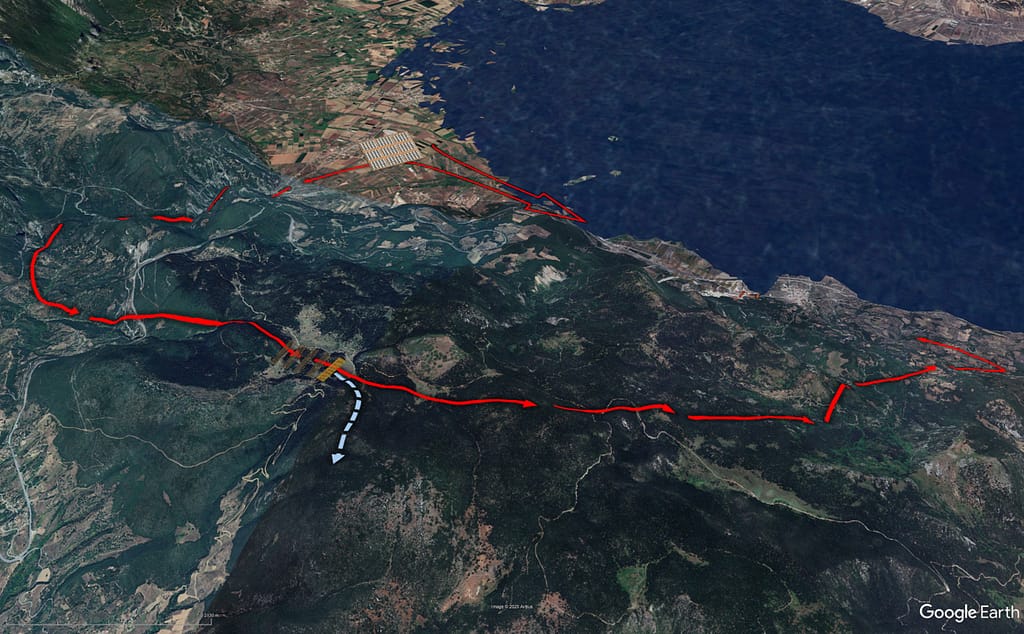
Google Earth map – Location of the Battle of Thermopylae
🎧 Prefer to listen? This article is also available as a 54-minute audio-podcast.
🧭🥾 Walking the Battlefield
I visited the battlefield of Thermopylae in October 2000, equipped with a copy of Herodotus and some diagrams and sketches. At that time, there was no visitor centre at Thermopylae and very little to mark the site of the battle.
For such an iconic location in world history, there is also very little to mark the Thermopylae battle site. The Kallidromos mountain is still massive and still falls to a relatively flat plain. The big change over the past 2500 years is that river silt has raised the level of the land in bay. So the coastline is no longer at the base of the cliff; it is now about five kilometres away. You just have to imagine the the modern highway is about where the coastline used to be. Then it makes sense.
I visited the remnants of the Phocian Wall, where the bulk of the fighting took place, the hot springs that give the pass its name, the enormous statue of Leonidas on the north side of the highway and the Monument to the Thespians right next to it. However, the most moving experience was to climb Kolonos Hill, site of the ‘last stand’ and read the plaque engraved with words attributed to the poet Simonides:
‘Go tell the Spartans, stranger passing by, that here, obedient to their laws, we lie’
📍 Planning to visit? See the Battlefield Travel Guide below — getting there, site orientation, best vantage points, and practical tips.
3D flythrough of the Thermopylae battlefield
Strategic Context – The Second Persian Invasion of Greece
The Battle of Thermopylae in 480 BC was part of the wider crisis facing the Greek world during the second Persian invasion of Greece, launched by the Achaemenid Empire of King Xerxes I. The Greeks were militarily outnumbered by the Persians, and were themselves internally divided. The Greeks would rely on a combination of Spartan military power on land and Athenian naval power, and strategic use of terrain features to halt the massive invasion.
Persian expansion and motivation
The Achaemenid Empire, founded by Cyrus the Great and expanded by Darius I, had already absorbed much of the eastern Mediterranean world by the early 5th century BC. The first Persian invasion of Greece, launched by Darius in 490 BC, ended in failure at the Battle of Marathon, where a smaller Athenian force defeated the Persian army. This setback remained a personal and dynastic affront for the Achaemenids.
Xerxes I, son of Darius, ascended the throne in 486 BC and immediately resumed preparations for a new campaign against the Greeks. His objective was to subjugate all of Greece, integrate it into the Persian satrapy system, and neutralise Athens and Sparta as threats to imperial stability.
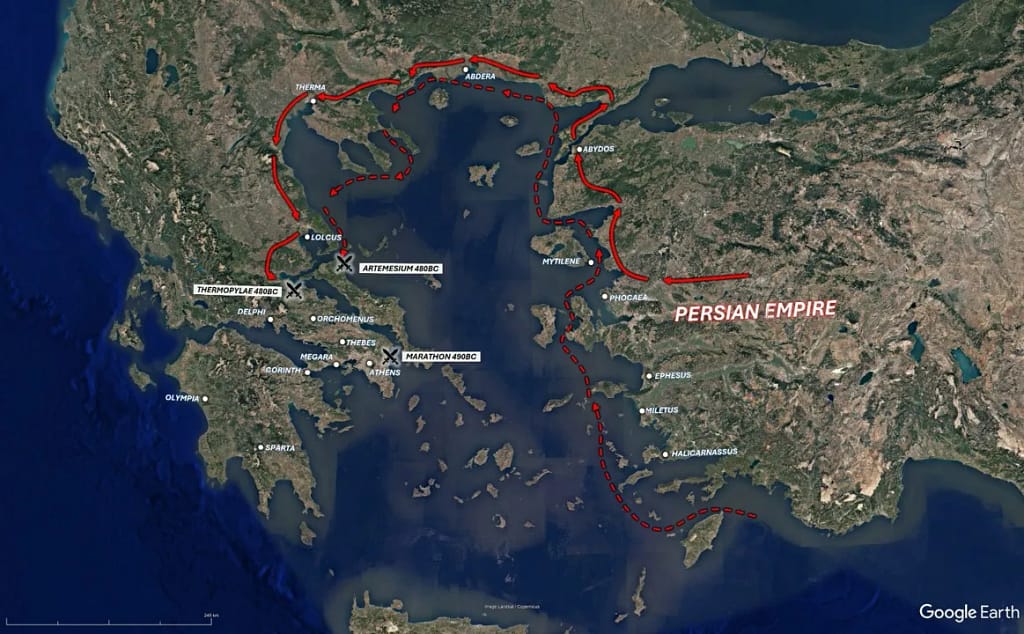
Herodotus records that Xerxes spent several years amassing an enormous land and sea force, constructing supply depots, and even engineering a canal through the Athos peninsula to avoid losses like those suffered during Mardonius’s campaign in 492 BC. The invasion force included troops from across the multi-ethnic Persian Empire — Medes, Persians, Egyptians, Scythians, Phoenicians, and even Ionian Greeks. It may well have been the most diverse force the ancient world had yet seen.
Greek disunity and emergency alliances
The Greek city-states were politically fragmented, with long-standing rivalries between Athens and Sparta, Corinth and Thebes, and numerous smaller polities. The scale of the Persian threat was to force an uneasy alignment.
In 481 BC, a congress was convened at the Isthmus of Corinth, and the Hellenic League was formed. Led militarily by Sparta and supported at sea by Athens, the alliance agreed to resist Xerxes’ invasion. However, this agreement was fragile. Not all cities joined. Thebes, for example, was accused of treachery and would later side with Persia. Others, like Argos, remained neutral.
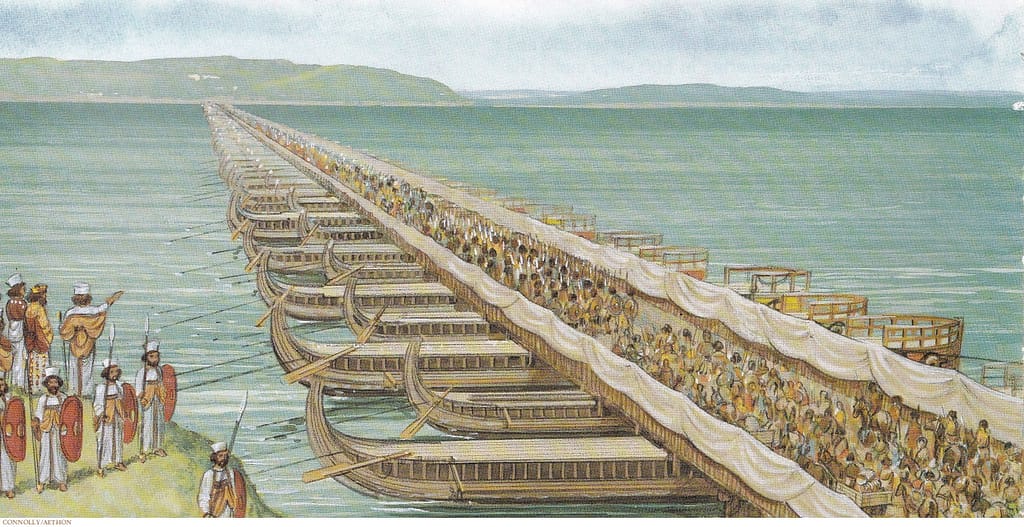
Time was short. Persian forces were already advancing through Thrace and Macedonia, having bridged the Hellespont via pontoons at Abydos. By the summer of 480 BC, Xerxes’ land army was moving along the Aegean coast into central Greece, shadowed by the Persian fleet.
Geography and the strategic choice of Thermopylae
To delay the Persians long enough for the Greek city-states to mobilise, the Hellenic League needed a defensible choke point where the Persian numbers could be nullified, even temporarily.
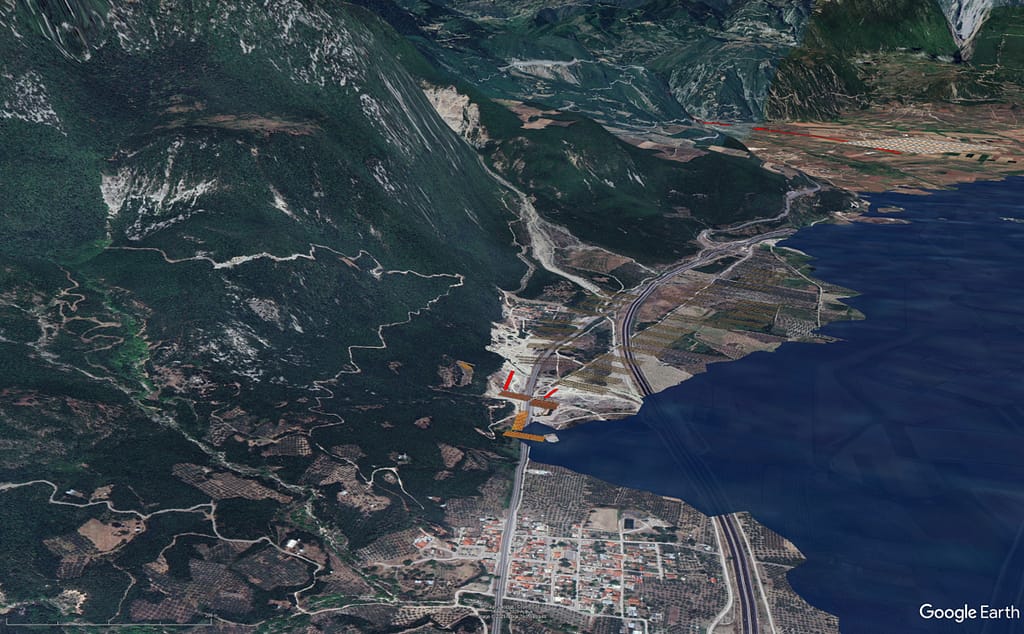
The choice fell upon Thermopylae, ‘The Hot Gates’, a narrow defile between the Kallidromos Mountains and the Malian Gulf. At its narrowest, the pass was no more than 6 to 7 metres wide, restricting the Persian army’s ability to deploy its full strength. On land, the pass would be need to be held long enough for the Greek fleet, positioned off the coast at Artemisium, to block the Persian navy and protect the Peloponnesus from seaborne invasion. By fighting in restrictive terrain, the Greeks could employ their heavily armoured hoplites to maximum advantage, nullify the Persian advantage in numbers, and avoiding encirclement as long as the flanking mountain paths were secured.
Thermopylae guarded the entrance to southern Greece and offered a strong natural defensive position. It was also the gateway to Phocis, Boeotia, and ultimately Attica. If the pass could be held for even a few days, it would delay the Persian advance, boost Greek morale, and potentially allow the navy to strike a coordinated blow at sea.
Religious constraints and Spartan delay
The timing of Xerxes’ move was problematic for Sparta. Two of the most important festivals in the Greek calendar were underway:
- The Olympic Games — a pan-Hellenic truce was traditionally observed, and athletes, dignitaries, and spectators gathered at Olympia.
- The Carneia Festival — dedicated to Apollo, during which Spartan military operations were traditionally suspended by law and custom.
Rather than delay entirely and risk the pass falling without resistance, King Leonidas I of Sparta took a bold middle course. He marched north with his personal bodyguard of 300 elite hoplites, the hippeis, each a father of living sons, to ensure the family line could continue.
On the march, Leonidas gathered reinforcements from allied states, bringing the total force at Thermopylae to roughly 7,000 hoplites. These included men from Phocis, Lokris, Thespiae, Thebes, Arcadia, and Corinth. Though dwarfed by the Persian host, this was a highly disciplined and heavily armoured contingent, well suited to exploit the choke-point terrain.
Opposing Forces – Greeks versus Persians
The Battle of Thermopylae was not a clash between equals. The Persian army dwarfed the Greek coalition, both in manpower and in geographic breadth. Yet within the narrow confines of the Hot Gates, numbers mattered less than cohesion, terrain, and tactical discipline. The armies that met in late August 480 BC differed in doctrine, organisation, and expectations of battle.
 Xerxes’ Persian Army
 Xerxes’ Persian Army
Xerxes’ army was the product of one of history’s largest imperial levies — a pan-Eurasian host drawn from subject peoples across the Achaemenid Empire. The exact numbers remain debated, with Herodotus claiming over two million (a figure rejected by modern scholars), while more conservative modern estimates range between 100,000 and 250,000.
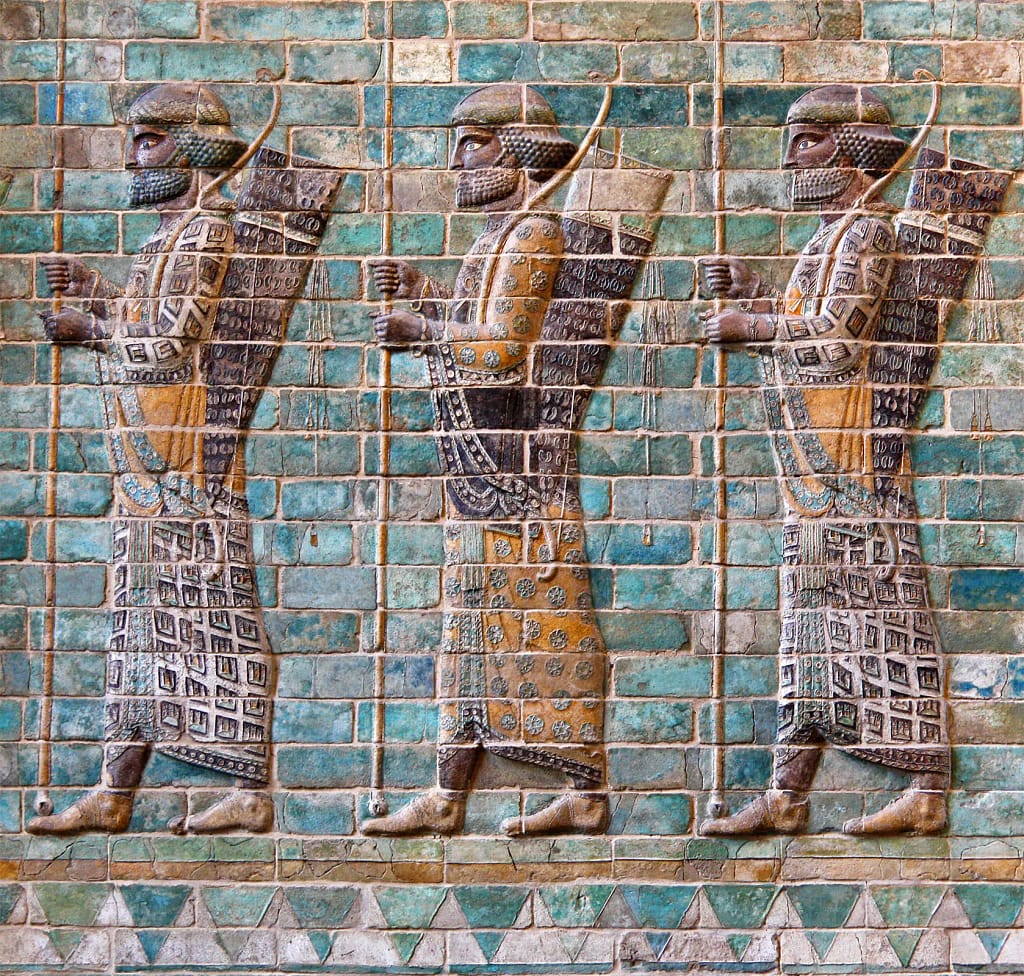
Composition. The Persian land army at Thermopylae included:
- Persian elite infantry, including the Immortals — a permanent 10,000-strong royal guard
- Allied and subject contingents, including Medes, Elamites, Babylonians, Bactrians, Saka (Scythians), Indians, Armenians, Egyptians, Phoenicians, and even Ionian Greeks
- Cavalry, although largely ineffective in the pass
- Archers, including renowned Median and Persian bowmen
- Engineers and logistical elements supporting the march
The army was accompanied by a massive supply train and followed the Aegean coast, supported at sea by a powerful Persian fleet sailing in parallel.
Equipment and Tactics. Persian infantry were lightly armoured, typically equipped with:
- A short spear or bow
- A sagaris (light axe) or short sword
- Wicker shields, effective against missiles but inadequate in melee
- Quilted tunics, leather caps, or bronze scale armour (for elite units)
Tactically, the Persians relied on massed archers, flanking manoeuvres and rapid cavalry actions — all advantages that were neutralised by the narrow pass at Thermopylae.
 The Greek Coalition Army
 The Greek Coalition Army
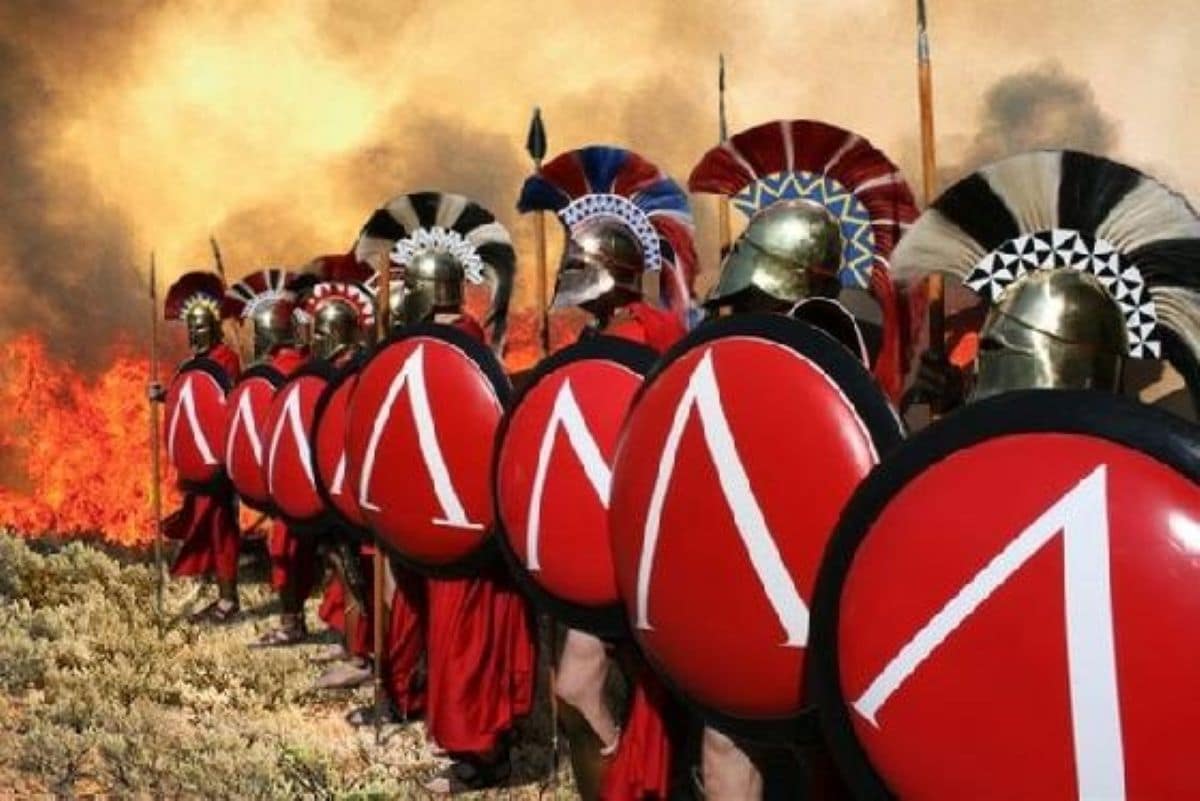
The Greek force under Leonidas was far smaller, around 7,000 men at the outset, but heavily armoured, disciplined, and tactically coherent. It was composed of contingents from various city-states, with the Spartans providing the core of professional soldiers. Leonidas’ authority at Thermopylae extended beyond his Spartan contingent. By common agreement of the Hellenic League, a wartime alliance of some 31 Greek states, he held overall command of the defending force. His reputation for discipline and steadiness was an asset in a coalition where local pride and rivalries often ran deep.
Each allied city-state supplied its own hoplites, under its own officers, but committed to following Leonidas’ strategic direction. Among the most determined were the 700 Thespians, who had pledged to remain to the last man, and the 400 Thebans, whose loyalty was questioned by some but whose presence added depth to the line.
Composition of Greek Forces
| Contingent | Force size | Notes |
|---|---|---|
| Spartans | 300 | Royal bodyguard (hippeis), all with living sons |
| Thespians | 700 | Remained voluntarily to fight to the end |
| Thebans | 400 | Compelled to join; surrendered during final phase |
| Phocians | 1,000 | Assigned to guard the Anopaea path |
| Lokrians | 1,000 | Local militia familiar with terrain |
| Arcadians | 2,120 | From central Peloponnese |
| Corinthians | 400 | Strategic allies of Sparta |
| Others | Several hundred | Minor contingents from various states |
Greek Hoplite Equipment
The defenders at Thermopylae were typically equipped with:
- Helmet – Corinthian or Chalcidian style, often bronze, offering full face and head protection.
- Shield (hoplon) – large, round bronze-faced aspis, about one metre in diameter, forming the backbone of the phalanx.
- Spear (dory) – approximately 2.5 m in length, with an iron head and a bronze butt-spike (sauroter) for thrusting or anchoring.
- Sword (xiphos) – a short, double-edged sidearm for close combat once spear range was closed.
- Armour – bronze cuirass or lighter linothorax of layered linen, greaves, and the traditional red cloak.
Each hoplite carried 30–35 kg of equipment, allowing them to form a dense wall of shields and spear points that was especially effective in the constricted pass.
Tactical Doctrine
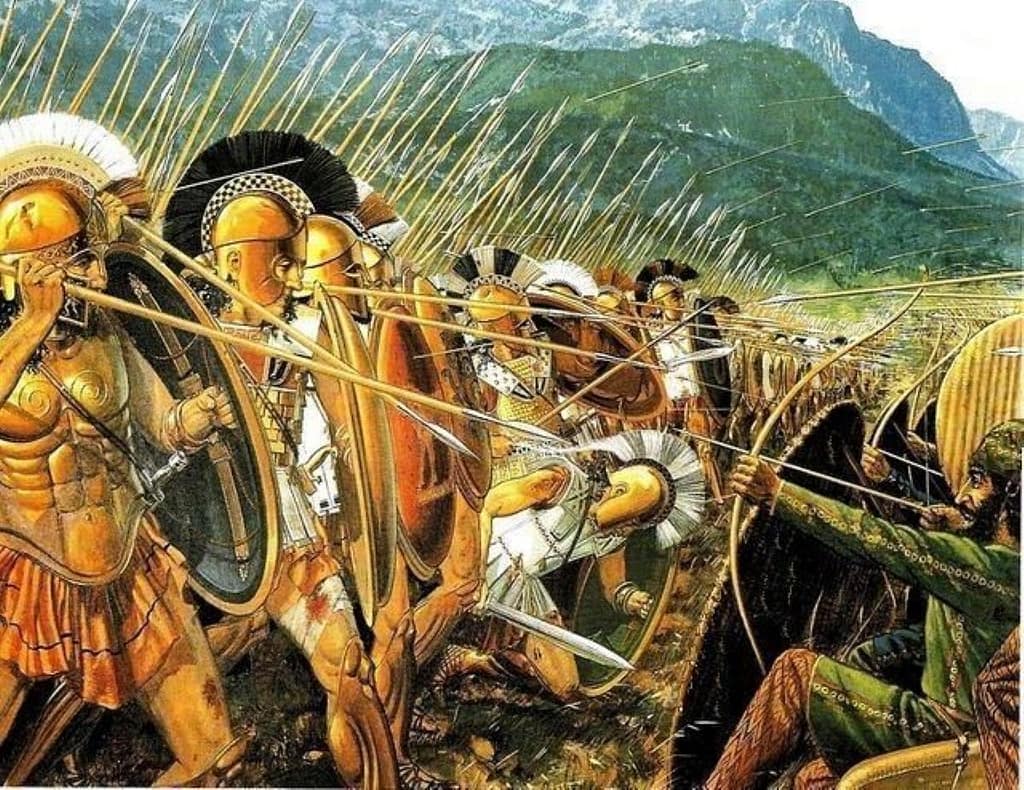
The primary Greek fighting method was the phalanx — a dense troop formation that relied upon mutual support within the formation.
- Shields overlapped to form a near-continuous barrier.
- Spears projected forward in multiple ranks, creating a killing zone for any attacker.
- Drill and cohesion allowed seamless rotation of the front rank with fresh fighters.
Spartans in particular were trained from boyhood in the agoge system, ensuring steadiness in battle and unit cohesion in battle. At Thermopylae, armour, discipline, and terrain combined to make the Greek line a wall that even the largest empire in the world could not easily break.
The Fight at the Hot Gates
The Battle of Thermopylae unfolded over three days of combat in late August or early September of 480 BC. The Greek defenders, led by King Leonidas of Sparta, held the narrow pass against repeated Persian assaults. The confined terrain rendered Persian numerical superiority irrelevant, until a treacherous local revealed a hidden path over the mountains, enabling the Persian army to outflank the position.
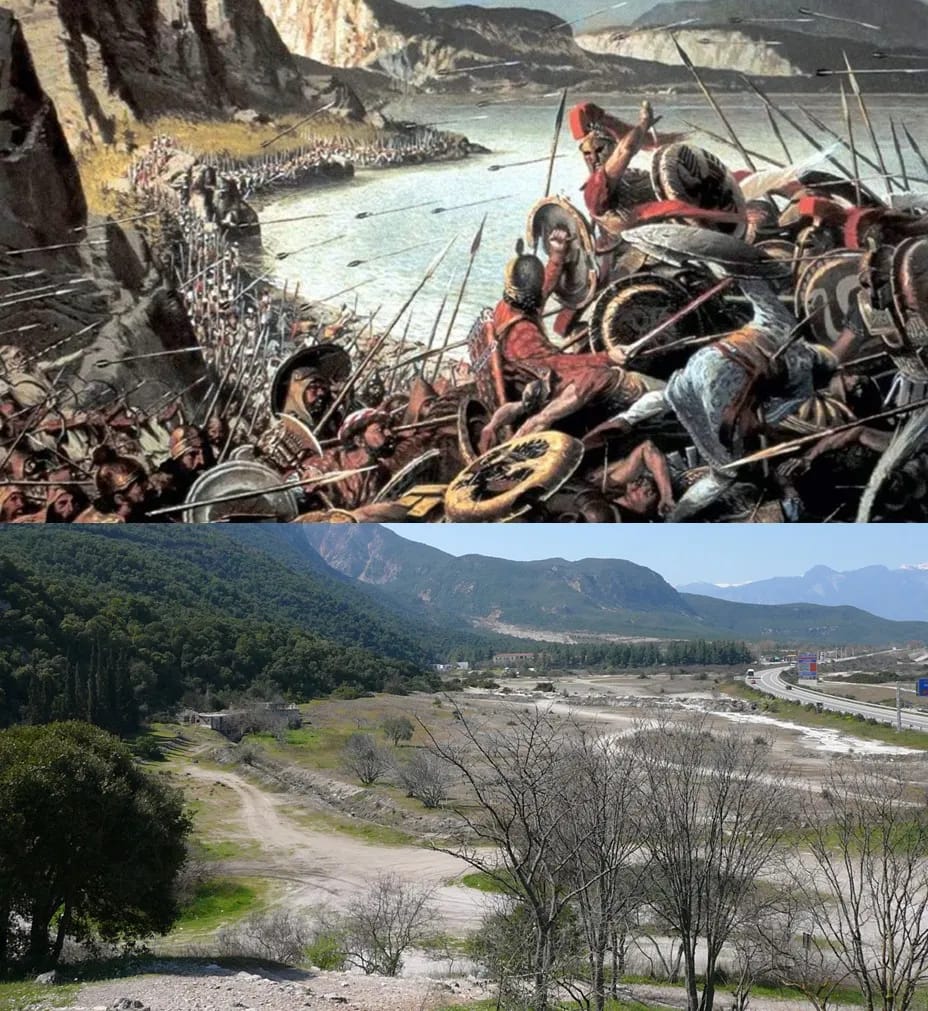
Initial Deployments
The Greek position was anchored on a narrow stretch of the Thermopylae pass, flanked by the Kallidromos Mountains to the south and the Malian Gulf to the north. At the time, the shoreline ran close to the base of the cliffs and was no more than 6–7 metres wide at the narrowest point, allowing only a handful of attackers to engage at once.
Leonidas stationed the main body of hoplites behind the remains of the Phocian Wall, an ancient stone fortification across the narrowest section of the pass. The Phocians were positioned on Kallidromos Mountain to guard the Anopaea path, a little-known goat track that could be used to bypass the Hot Gates.
The Persian army established a camp to the west of the Greek line, with the bulk of its force assembled behind the forward troops. Xerxes, observing the small Greek force, reportedly expected them to retreat. When they did not, he ordered his subordinates to attack.

Day One – Testing the Greeks
Xerxes opened the battle with frontal assaults by Median and Cissian troops, likely intended to wear down the defenders. The Persian infantry advanced in waves but found themselves constrained in the narrow confines of the pass. The Greek hoplites, with superior armour, weapons, and cohesion, inflicted a heavy toll.
The Spartans rotated their hoplites into the front rank, allowing fresh men to take up the fight while exhausted soldiers withdrew to rest. This technique maintained continuous pressure and prevented exhaustion. Herodotus records that the Greeks “appeared to have infinite numbers, because they changed places with fresh troops from behind.“
Despite several attempts, the Persians failed to break through. Casualties were heavy, especially as Greek spears outranged the shorter Persian weapons, and Persian shields offered little protection in close quarters.
Day Two – The Immortals enter the battle
On the second day, Xerxes committed his elite Immortals — the empire’s most prestigious unit. The Immortals comprised 10,000 elite Persian troops. As they sustained casualties, their number was always restored to 10,000; hence the term ‘Immortal’.
However, even the Immortals could not break the Greek line. The terrain continued to favour the Greeks, and the close-quarter fighting nullified Persian advantages in mobility and archery. Greek morale remained high, and the phalanx retained cohesion. Persian attacks were again repulsed with heavy losses.
Some sources suggest the Persians attempted flanking probes or attacks via the beachline, but the narrow geography and rocky coastline made this impossible. The only remaining option was the mountain path. On the second night, that opportunity came.
⚔️ Go deeper — Members get exclusive access to the Deep Research Collection, Field Notes, and monthly Research Dispatches. Try membership free for 7 days, cancel anytime. From $9/month.
The Betrayal: Ephialtes and the Anopaea Path
During the night, a local man named Ephialtes approached Xerxes with critical intelligence: he knew the location of the Anopaea path over the mountains, and he offered to guide the Persians in exchange for a reward. This narrow goat track led behind the Greek position and was guarded by the Phocians, a contingent of about 1,000 local hoplites tasked with denying the path to any flanking attempt.
Led by Persian General Hydarnes, a picked force of Immortals began the climb under cover of darkness. At dawn, they encountered the Phocian sentries. Whether caught off guard or overwhelmed, the Phocians withdrew to higher ground, mistakenly believing the Persians intended to attack them directly. This allowed Hydarnes’ force to descend unopposed towards the rear of the Greek position in the pass.
Day Three – The Greeks are encircled
As dawn broke on the third day, Leonidas became aware of the impending outflanking move. Realising the pass was now untenable, he dismissed the majority of the Greek allied contingents, preserving their numbers for future battles. The Spartans, Thespians, and a reluctant contingent of Thebans remained, around 1,500 men in total, prepared to fight to the death.
Xerxes launched another assault on the pass, while Hydarnes’ men closed in from the rear. The Greeks fought with ferocious determination, but their position was now hopeless. Herodotus records that Leonidas was killed in this phase of the battle. Fierce fighting raged over possession of his body, which was eventually taken and later mutilated by the Persians.
The final stand on Kolonos Hill
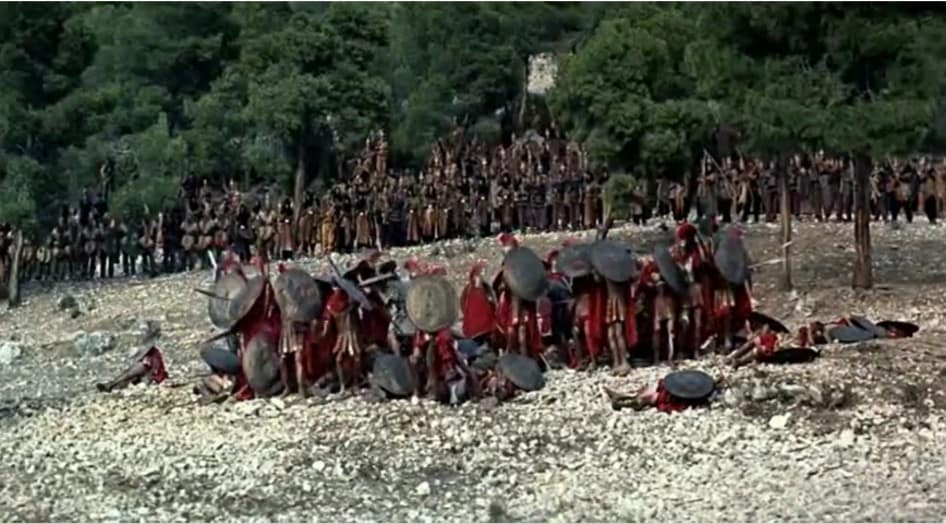
As the Persians pressed from both directions, the surviving Greeks withdrew to a small mound, Kolonos Hill, where they made their last stand. Their spears broken, they fought with swords, shields, and even their bare hands. Persian archers encircled the hill, unleashing volleys that eventually overwhelmed the defenders.
According to later accounts, the Thespians refused to retreat despite having the option to do so. The Thespian sacrifice ensured their place alongside the Spartans in legend. The Thebans, according to Herodotus, surrendered and were spared. All Spartans and Thespians were killed. Today, both the Spartans and the Thespians are commemorated with monuments at the pass.
Aftermath and legacy of Thermopylae
The Persian victory at Thermopylae opened the way into central Greece, but at a heavy cost. Estimates suggest thousands of Persian casualties, disproportionate to the small Greek force. The delaying action allowed other Greek cities to prepare their defences and contributed to the eventual Greek victories at Salamis and Plataea.
In the centuries since, Thermopylae has become an enduring symbol of courage, sacrifice, and resistance against overwhelming odds. The monument on Kolonos Hill bears the epitaph attributed to the poet Simonides:
“Go tell the Spartans, stranger passing by,
that here, obedient to their laws, we lie.”

‘Ὦ ξεῖν’, ἀγγέλλειν Λακεδαιμονίοις ὅτι τῆιδε
κείμεθα, τοῖς κείνων ῥήμασι πειθόμενοι.
(‘Go tell the Spartans, stranger passing by,
that here, obedient to laws, we lie’)
Strategic outcomes of the Battle of Thermopylae
The main achievement of the delay imposed at Thermopylae was to buy time for the Greeks. By holding Thermopylae for three days, the Greek force allowed the evacuation of Athens, the concentration of the Greek fleet at Salamis, and continued consolidation of the Hellenic League under Spartan command
Though Xerxes eventually advanced into Attica, burning the abandoned city of Athens, the delay disrupted his timeline and logistic plans. His window for conquest was narrowed, and his supply lines stretched.
Battle of Salamis (September 480 BC)
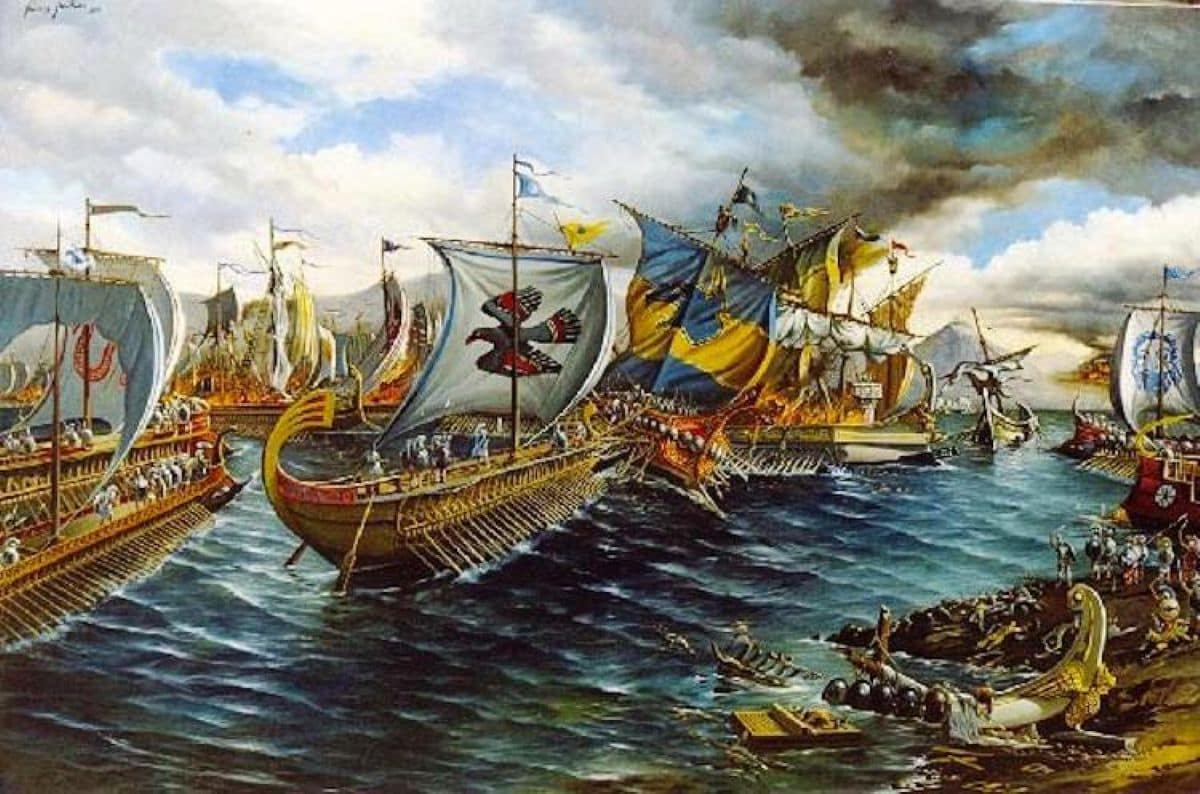
Thermopylae set the stage for two pivotal Greek victories. The first was a naval victory at Salamis. Themistocles, having evacuated the Athenian population to Salamis Island, lured the Persian fleet into the narrow straits where it became disorganised. The Greek triremes, better suited for close-quarters manoeuvring, inflicted a devastating defeat, forcing Xerxes to retreat with much of his navy and leaving Mardonius in command of the land army.
Battle of Plataea (479 BC)
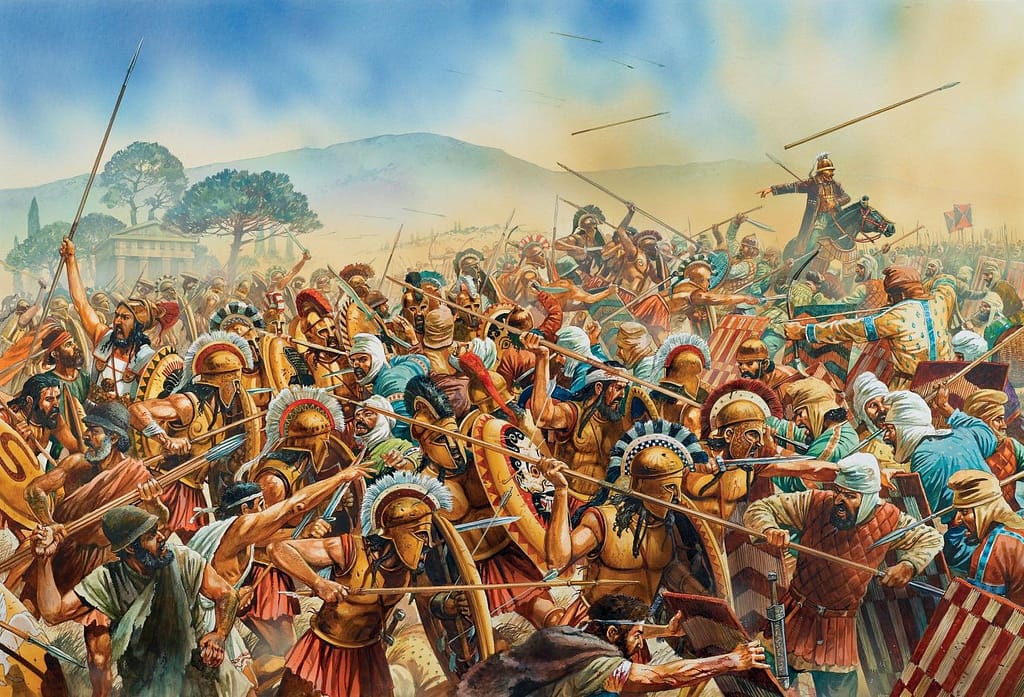
The following year, in 479 BC, a full Greek alliance under Spartan General Pausanias confronted and defeated the Persian land forces at Plataea. More than 5,000 Spartan Hoplites and 30,000 allied Greeks took part in this battle. This victory, along with the naval triumph at Mycale, ended the second Persian invasion and preserved Greek independence.
The Laconic legacy
The region that encompassed Sparta was known to the ancient Greeks as Laconia, and its inhabitants (Spartans, Perioeci, and Helots) were Lacedaemonians. The Spartans were renowned for their brevity and conciseness of speech, which has entered modern idiom as ‘Laconic speech’. The most famous Spartan responses from Thermopylae became cultural touchstones:
- When General Mardonius boasted that Persian arrows would blot out the sun in the next attack, Spartan veteran Dienekes reportedly responded: “Then we shall fight in the shade.”
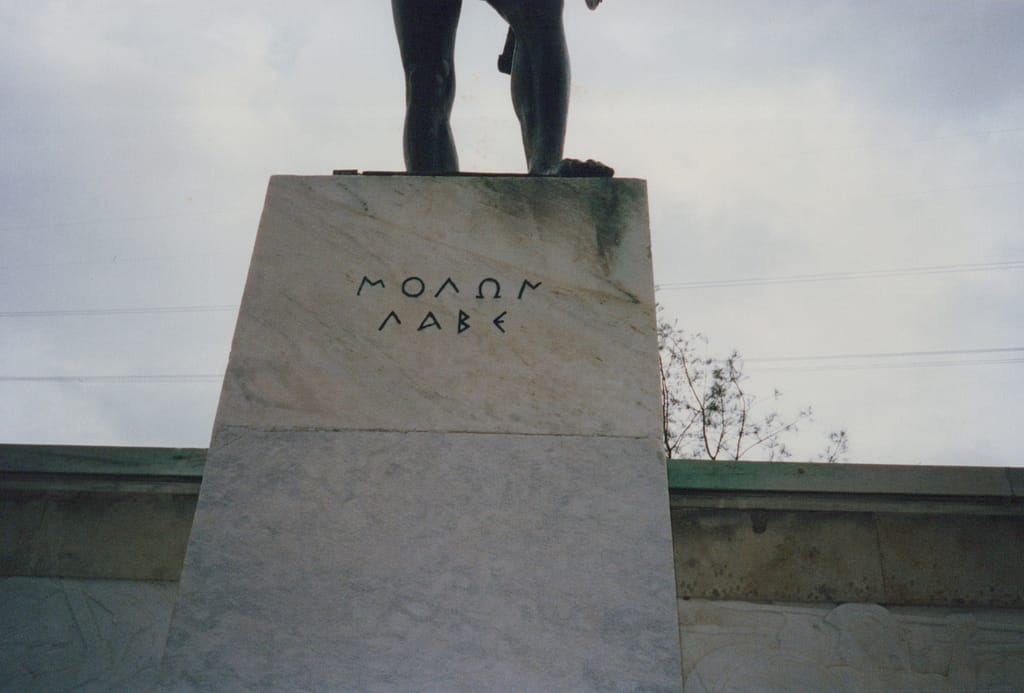
- When a Persian envoy demanded that the Greeks lay down their arms, Leondias reportedly responded: “Molon labe” (“Come and take them”)
These phrases became enduring symbols of defiance, later invoked in various military and political contexts, from WWII resistance slogans to modern special forces emblems.
The battlefield today: visiting Thermopylae
Standing on the modern battlefield of Thermopylae, it can be difficult to visualise the dramatic geography that shaped the events of 480 BC. Over 2,500 years of natural and human activity have transformed the landscape. However, key elements remain, and when combined with maps, overlays, and historical records, the battlefield can still be meaningfully explored. Key features remaining include:
- The Kallidromos range still dominates the coastal routes.
- The Anopaea path remains traceable for experienced hikers.
- The Kolonos Hill of the final stand, located just south of the main road, is preserved.
- The hot springs that gave the site its name (‘Thermopylae’” – the Hot Gates) continue to flow

Geographic Transformation
Over 2,500 years, sedimentation from the Spercheios River has extended the shoreline of the Malian Gulf more than five kilometres from its original line, fundamentally altering the terrain. In 480 BC, the sea lapped at the base of the cliffs, reducing the pass at Thermopylae to a constricted choke point.
Using Google Earth Pro, I created a 3D flythrough that raises the water level by 17 metres to approximate the ancient shoreline. While not a perfect reconstruction — since raising water levels is not identical to removing accumulated sediment — the model clearly shows that the site of the Phocian Wall and Kolonos Hill marked the narrowest part of the pass. This physical bottleneck was the key to Leonidas’ defensive plan and explains how a small Greek force could withstand vastly superior numbers for three days.
It is significant to note how Leonidas used the micro-terrain (small scale terrain features that often do not appear on maps and can only be seen when you are standing on the ground) at Thermopylae to somewhat rebalance the overwhelming odds he faced. The canalising Pass of Thermopylae restricted Persian frontages, and the Phocian Wall gave at least some protection. Leonidas was aware of the Anopea Pass and he emplaced forces to secure the path. But ultimately the tiny Greek force could only delay, not defeat, the Persians. The concept of exploiting small scale terrain features in battle is examined further in the Micro-Terrain and Battlefield Decision-Making research hub.
Key Monuments and Memorials
🗿 Statue of Leonidas
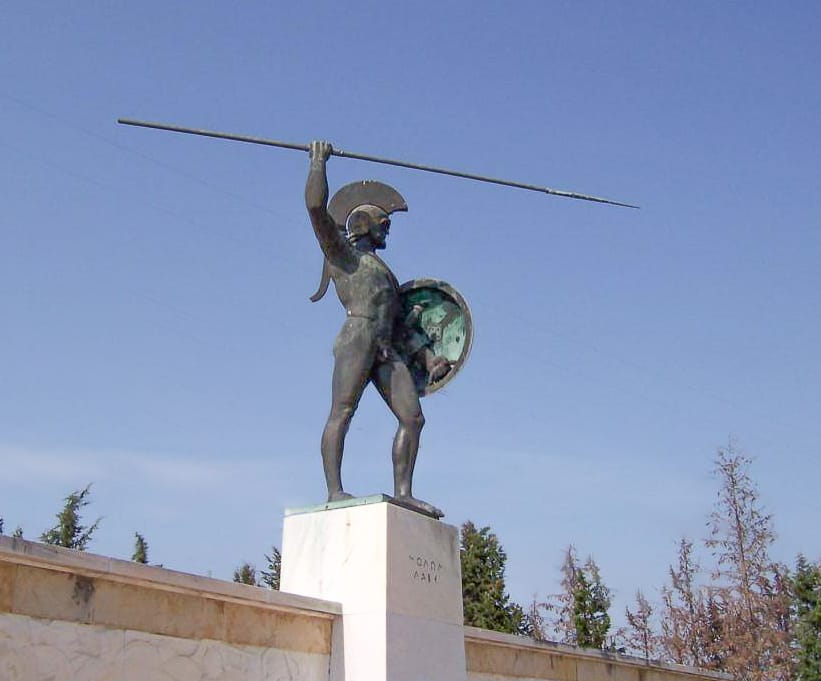
- The statue of Leonidas is ocated on the north side of the highway, opposite Kolonos Hill. The statue was erected in 1955 and funded by the American Greek community. The statue features a bronze statue of Leonidas with spear and shield, flanked by marble tablets with inscriptions honouring the Spartans and Thespians

🗿 Thespian Monument
- The Thespian monument was erected in 1997, right next to the Leonidas statue. It commemorates the 700 Thespians who chose to remain and die with the Spartans. A marble column and flame symbolises their voluntary sacrifice, which is often overshadowed by Spartan fame.

🧱 The Hill of the Last Stand
Kolonos Hill, site of the last stand, is located directly opposite the Leonidas monument, on the south side of the highway. this was the site of the final day’s fighting. A stone monument marks the hill, with the famous epigram of Simonides inscribed:
“Go tell the Spartans, stranger passing by,
That here, obedient to their laws, we lie.”
The path to the top is short but steep, and offers a commanding view of the surrounding area, very useful for reconstructing the battle’s closing moments.
Additional images of Thermopylae


Found this useful? Buy me a coffee — it helps fund future battlefield research


Authored by Mick Prictor, a retired military officer with 40 years’ service, and a military historian specialising in terrain-focused analysis of tactics, doctrine, and command decision-making in land warfare. His work draws on extensive battlefield fieldwork—more than 280 sites worldwide—and one of the world’s largest private collections of historic military arms, uniforms, and equipment. About me
📚 Sources and References
Primary Source
- Herodotus, The Histories, Book VII (especially chapters 201–239)
– Translations by Aubrey de Sélincourt (Penguin Classics) or George Rawlinson (public domain)
Secondary Sources – Books
- Paul Cartledge, Thermopylae: The Battle That Changed the World (The Overlook Press, 2006)
- Tom Holland, Persian Fire: The First World Empire and the Battle for the West (Little, Brown, 2005)
- J.F. Lazenby, The Defence of Greece 490–479 B.C. (Aris & Phillips, 1993)
- Matthew A. Sears, Understanding Greek Warfare (Routledge, 2019)
- Steven Pressfield, Gates of Fire (Bantam, 2005). This is a novel, but told in a way that it could be a first person account.
Academic Articles and Analysis
- Everett Wheeler, various papers on hoplite tactics and terrain warfare (see Journal of Hellenic Studies and Ancient Warfare journals)
- Victor Davis Hanson, The Western Way of War (University of California Press, 1989) – for Greek battle culture and phalanx combat
Terrain and Archaeological Resources
- Google Earth Pro – topography, terrain overlays, shoreline reconstruction
- Wikimedia Commons / CC maps based on Lazenby, Cartledge, and academic battlefield studies
- Archaeological Reports on the Phocian Wall and the Anopaea path (e.g. published by the Greek Ministry of Culture and independent battlefield surveys)
- Centre of Historical Information of Thermopylae, visitor centre materials (est. 2010)
Link to the Thermopylae visitor centre website
📚 Further Reading: Ancient Greek Warfare
This battle study nests within the broader analytical framework explored in the Research Hub, where operational methods, operating environments, armies, commanders, and weapons are examined across conflicts and eras. The links below connect related studies across the wider body of battlefield analysis on the BattlefieldTravels site.
⚔️ Explore all battle studies from the Ancient Greek World
🏛️Explore the museum of Ancient and Medieval historic artefacts
The book list for this conflict includes the finest campaign studies, memoirs, and operational analyses available on ancient warfare, selected specifically to complement this battlefield study.
📚Ancient Warfare – Recommended Reading
🗞️ For updates on new battlefield studies and research insights, you can subscribe to the Newsletter.
Related Battle Studies, Museum Pieces & Reading Resources


🧭 Battlefield Travel Guide: Thermopylae
Getting There
- Nearest Town: Lamia, Central Greece (approx. 200 km north of Athens).
- Transport: Reachable by car via the E65 motorway; buses run from Athens to Lamia with connections to the Thermopylae site.
- Parking: Free parking is available near the Leonidas monument.
Site Orientation
- Key Landmarks: The Leonidas monument, Kolonos Hill (final stand of the Spartans), and the hot springs giving Thermopylae its name.
- Walking Routes: Short walks lead from the monument to Kolonos Hill and interpretive panels showing battle phases.
- Best Vantage Points: Kolonos Hill provides a good view of the modern plain—though note the coastline has shifted more than 5 km since 480 BC due to silting.
Museums & Visitor Centres
- Thermopylae Interactive Museum: Modern centre with 3D displays of the battle, arms, and the broader Greco-Persian Wars.
- Interpretive Panels: On-site signage explains troop positions, terrain changes, and the famous Spartan last stand.
- Nearby: Lamia Archaeological Museum holds finds from the region and contextual material.
On-Site Experience
- Interpretive Signage: English and Greek information boards explain the battle’s phases.
- Atmosphere: Today a quiet rural setting with modern highway traffic nearby, but still evoking the sense of a narrow passage between mountains and sea.
- Guides & Tours: Private battlefield tours from Athens or Delphi often include Thermopylae in combined itineraries.
Nearby Points of Interest
- Delphi: One of Greece’s most important ancient sites, about 90 minutes’ drive away.
- Lamia Castle: Medieval fortress with views over the surrounding plains.
- Kamena Vourla: Coastal spa town near the original shoreline of Thermopylae.
Practical Tips
- When to Visit: Spring and autumn offer cooler weather; summer can be very hot with little shade.
- Facilities: Rest areas and cafés nearby; small shops sell refreshments and souvenirs.
- Special Considerations: Remember that the modern landscape differs greatly from antiquity—supplement with maps or GIS overlays to appreciate the battlefield’s original geography.
FAQ: Battle of Thermopylae
A famous battle in 480 BC where a small Greek force led by King Leonidas of Sparta held the pass at Thermopylae against the much larger Persian army of Xerxes during the Greco-Persian Wars.
It became a symbol of courage and sacrifice — the Spartans and their allies fought to the last man, buying time for the Greek city-states to prepare for further defence.
A coalition of Greeks, including 300 Spartans, Thespians, and Thebans, faced the invading Persian army, one of the largest of the ancient world.
The Greeks were eventually outflanked and annihilated, but their resistance delayed the Persians and inspired a united Greek response that led to later victories at Salamis and Plataea.
Yes. The pass is wider now due to silting, but there are monuments, a museum, and a preserved hill (Kolonos) where Leonidas and his men made their last stand.
Subscribe to Battlefield Travels and receive a free E-Book Battlefield Guide
Unlock expert battlefield analysis, campaign reconstructions, and historical insights drawn from firsthand exploration and primary sources.
🗺️ You’ll receive:
🎖️ Exclusive historical insights you won’t find elsewhere
📘 A free eBook: 10 Tips for Exploring Historic Battlefields
📰 New battlefield studies straight to your inbox as they are published

⚔️ Go deeper — Members get exclusive access to the Deep Research Collection, Field Notes, and monthly Research Dispatches. Try membership free for 7 days, cancel anytime. From $9/month.