Reconstructing the battlefields of the English Civil Wars through primary sources, historical maps and firsthand terrain analysis

EXPLORE: BATTLES | WEAPONS | READING | QUIZ
Walking the Battlefields of the English Civil Wars
The English Civil Wars of 1642–1651 transformed Britain, pitting King Charles I and his Royalist supporters against Parliament and ultimately leading to the execution of the king, the establishment of a republic and the military defeat of Charles II at Worcester.
The conflict encompassed three interconnected civil wars, fought across England, Scotland and Ireland. It combined traditional pike-and-musket warfare with increasingly sophisticated cavalry tactics, siege operations, artillery and the emergence of the New Model Army.
The battlefields varied enormously. At Edgehill and Naseby, armies manoeuvred across open agricultural landscapes. Elsewhere, rivers, enclosed fields, narrow bridges, fortified towns and commanding heights constrained movement and shaped command decisions. Worcester, the final major battle, demonstrated how control of river crossings could transform a difficult operational problem into a decisive advantage.
Battlefield Travels examines these engagements through historical accounts, contemporary maps and firsthand exploration of the battlefield terrain.
The Three English Civil Wars
First English Civil War, 1642–1646
The opening conflict saw Royalist and Parliamentarian armies contest control of England and Wales. Major engagements included Edgehill, Marston Moor and Naseby, alongside prolonged sieges and campaigns for strategically important towns. Parliament’s creation of the New Model Army in 1645 marked a major development in military organisation and effectiveness.
Second English Civil War, 1648
Renewed Royalist uprisings, combined with a Scottish invasion, challenged Parliament’s victory. The campaign culminated in Cromwell’s defeat of the Scottish Engager army at Preston. The political consequences contributed directly to the trial and execution of Charles I in January 1649.
Third English Civil War, 1649–1651
The conflict continued in Scotland, where Charles II gained support for an attempt to restore the monarchy. Following Parliamentarian victories at Dunbar in 1650 and Worcester in 1651, the Royalist military challenge collapsed. The Commonwealth and subsequently the Protectorate governed until the Restoration in 1660.
Methodology for Battlefield Analysis
Rather than treating the English Civil War as a sequence of victories and defeats, the BattlefieldTravels methodology is to examine how organisation, command culture, weapons, doctrine, logistics and terrain interacted across very different environments. Each battlefield study blends on-site photography, annotated maps, 3D terrain visualisations and a wide range of primary and secondary sources, providing not just a narrative of each action but a clear understanding of why events unfolded the way they did.
📚Recommended Reading: English Civil War

A curated reading list covering the English Civil Wars. Explore campaign histories, battlefield studies, biographies, primary accounts and contemporary military writings used in the research behind Battlefield Travels.
Battles: English Civil War
Below are all current BattlefieldTravels studies for the English Civil War, covering key battles, campaign phases and associated sites. New studies are added as further battlefields are walked and analysed.
-
📝 🔒Field Note: Battle of Worcester, English Civil War, 3 September 1651

Cromwell’s final victory was fought across a battlefield divided by two rivers, defended bridges and commanding heights. On 3 September 1651, a vastly outnumbered Royalist army under Charles II made its last stand at Worcester. As Parliamentarian forces fought their way across the Severn and Teme, Charles launched a bold counterattack against Cromwell’s weakened eastern…


Authored by Mick Prictor, a retired military officer with 40 years’ service, and a military historian specialising in terrain-focused analysis of tactics, doctrine, and command decision-making in land warfare. His work draws on extensive battlefield fieldwork—more than 280 sites worldwide—and one of the world’s largest private collections of historic military arms, uniforms, and equipment. About me
⚔️ Go deeper — Members get exclusive access to the Deep Research Collection, Field Notes, and monthly Research Dispatches. Try membership free for 7 days, cancel anytime. From $9/month.
Explore Related Themes
Armies: New Model Army · Royalist Army · Scottish Covenanter Army
Commanders: Oliver Cromwell · Charles I · Charles II · Prince Rupert · Sir Thomas Fairfax
Methods: Pike and Shot · Cavalry Tactics · Siege Warfare · River Crossings · Envelopment
Environments: Forest · Urban · River Obstacles
Further Study: English Civil Wars Reading List
Related Battle Studies, Museum Pieces & Reading Resources


The English Civil Wars were a series of interconnected conflicts between 1642 and 1651 involving the monarchy, Parliament and competing political and religious interests across England, Scotland and Ireland.
The First Civil War lasted from 1642 to 1646; the Second occurred in 1648; and the Third culminated in the defeat of Charles II at Worcester in 1651.
The New Model Army was a nationally organised Parliamentarian army established in 1645, whose professional organisation, discipline and leadership contributed significantly to Parliament’s military success.
The research programme includes fieldwork at Edgehill, Naseby, Worcester, Langport and other relevant sites. Published studies and Field Notes are added to this collection as they completed.
Rivers, bridges, hedgerows, enclosed fields, ridgelines and fortified towns influenced deployment, cavalry manoeuvre, artillery positions and commanders’ ability to move and reinforce their forces.
Subscribe to Battlefield Travels and receive a free E-Book Battlefield Guide
Unlock expert battlefield analysis, campaign reconstructions, and historical insights drawn from firsthand exploration and primary sources.
🗺️ You’ll receive:
🎖️ Exclusive historical insights you won’t find elsewhere
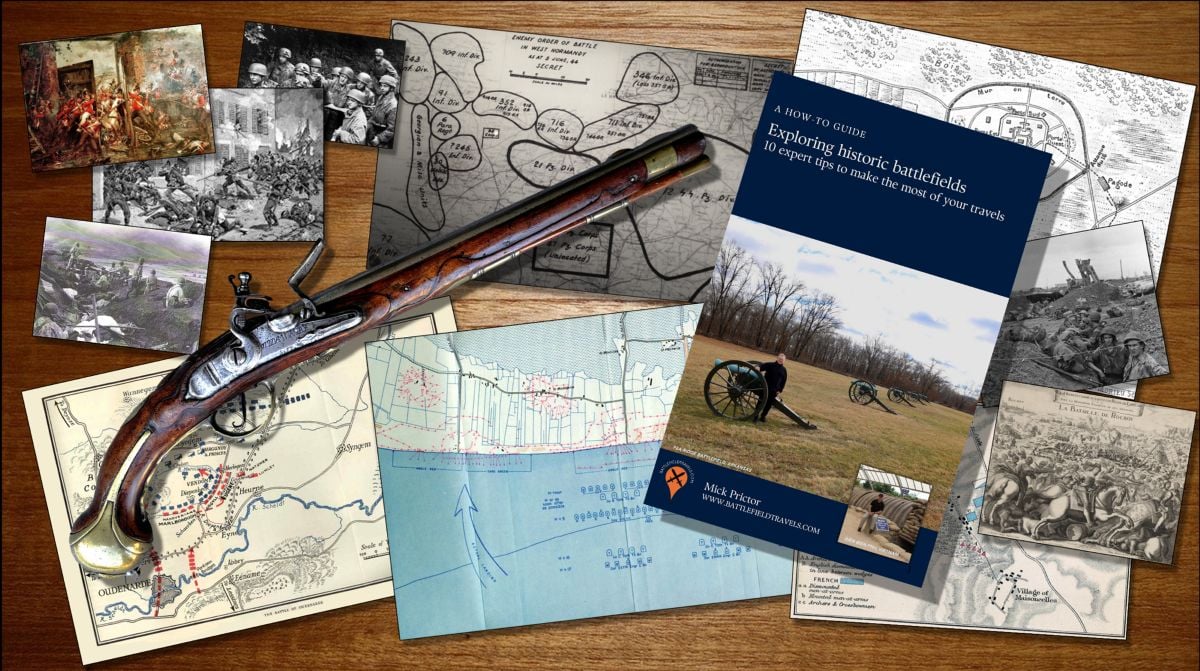
📘 A free eBook: 10 Tips for Exploring Historic Battlefields
📰 New battlefield studies straight to your inbox as they are published
⚔️ Go deeper — Members get exclusive access to the Deep Research Collection, Field Notes, and monthly Research Dispatches. Try membership free for 7 days, cancel anytime. From $9/month.