Reconstructing Franco-Prussian War battlefields through terrain analysis, primary sources and on-site research
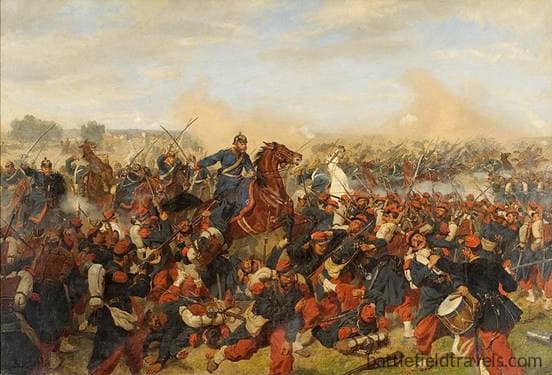
Walking the battlefields of the Franco-Prussian War 1870-71
Causes of the war
The Franco-Prussian War (1870–1871) was a brief but decisive conflict that reshaped the political and military landscape of Europe. Fought between the French Empire of Napoleon III and the rising power of Prussia and its German allies, the war unfolded rapidly across the plains, river valleys and fortified cities of eastern France. It marked the triumph of a new model of industrial warfare — combining rail mobility, mass conscription, modern artillery and coordinated general staff planning — and exposed deep weaknesses in France’s command structures, mobilisation system and battlefield doctrine.
Opening battles
The opening phase was shaped by Prussia’s exceptional use of railways and pre-planned concentration, which brought German forces to the frontier faster and in greater strength than the French anticipated. Early clashes at Wissembourg, Wörth–Frœschwiller and Spicheren showed how terrain, prepared defensive lines and rapid reinforcement favoured the Germans, who seized the initiative and drove the French back towards the interior.
The war was also the first major clash in which both sides were universally armed with breech-loading weapons: The French Chassepot and the Prussian Dreyse.
Metz and Sedan
The pivotal battles came in August 1870. At Mars-la-Tour, a desperate encounter battle on open rolling country, the outnumbered Prussian III Corps held off the French Army of the Rhine long enough to block its retreat to Verdun. Two days later at Gravelotte–St. Privat, one of the largest battles of the war, the Germans launched costly infantry assaults supported by superior Krupp artillery to break the French positions along the commanding ridges west of Metz. The resulting encirclement led to the surrender of an entire French army.
Further south, the war reached its climax at Sedan on 1 September 1870. Here, despite a desperate defence by the Marines at Bazeilles, encircled by converging German corps, the French Army of Châlons was defeated in a single day of intense fighting in broken, compartmentalised terrain along the Meuse. The capture of Napoleon III precipitated the fall of the Second Empire.
Final phases of the war
The conflict’s final months saw renewed French resistance under the new Third Republic, including the investment and siege of Paris. By early 1871, Germany had secured a decisive victory and proclaimed the German Empire at Versailles.
This collection of battlefield studies analyses the major actions of the war using period maps, eyewitness accounts and modern field reconnaissance to explain not only what unfolded during the campaign, but how key decisions and terrain shaped its outcome.
Battle Studies in the Franco-Prussian War
Below are all current BattlefieldTravels studies for the Franco-Prussian War, covering key battles, campaign phases and associated sites. New studies are added as further battlefields are walked and analysed.
-
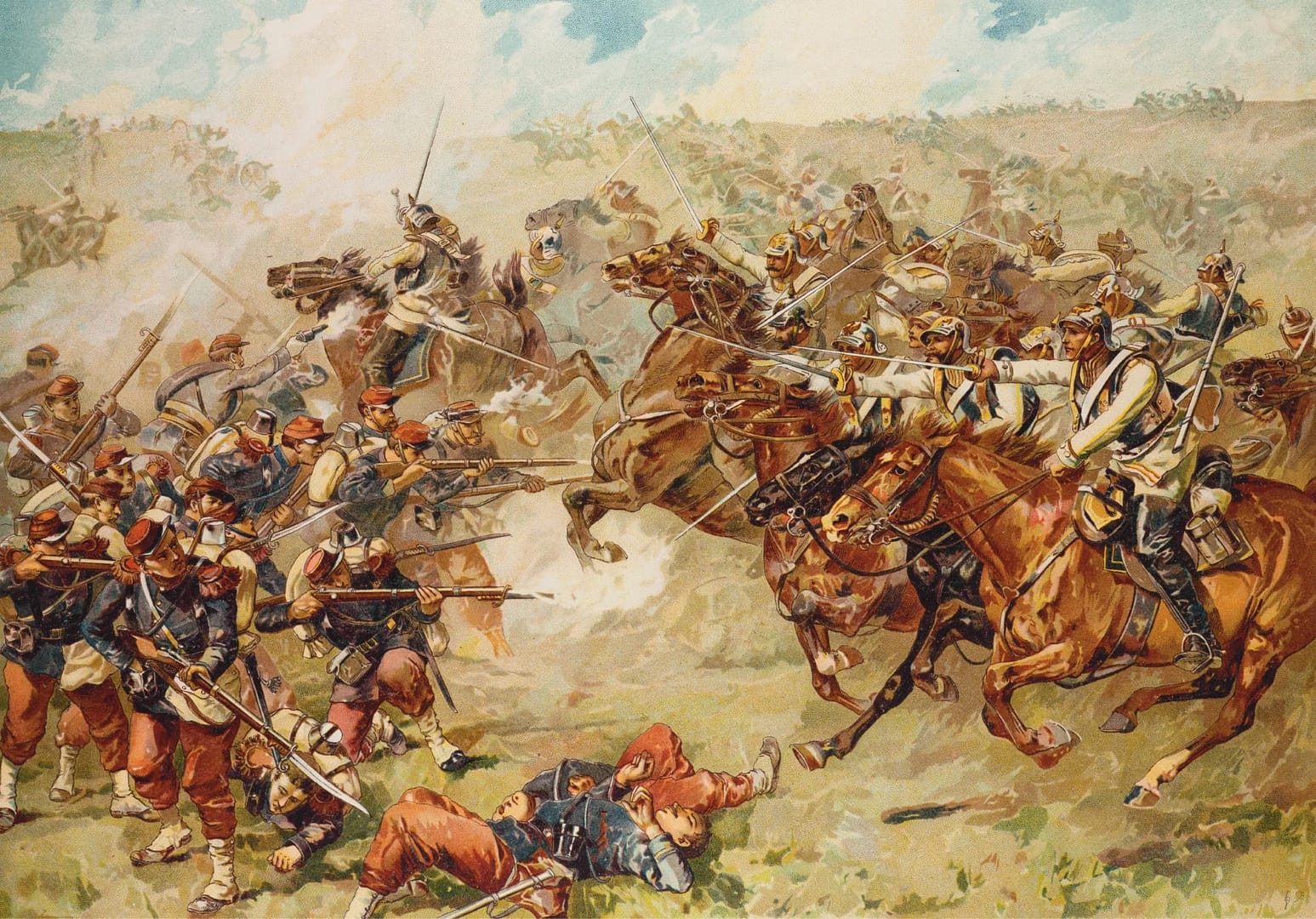
⚔️🔒Battle of Mars-la-Tour, France, 16 August 1870

Mars-la-Tour was fought for a single operational prize: the road to Verdun. After the frontier defeats of early August 1870, Marshal Bazaine sought to withdraw the French Army of the Rhine from Metz toward Verdun to reestablish contact with the French field armies. German reconnaissance and aggressive marching collided with this movement near Mars-la-Tour and…
-
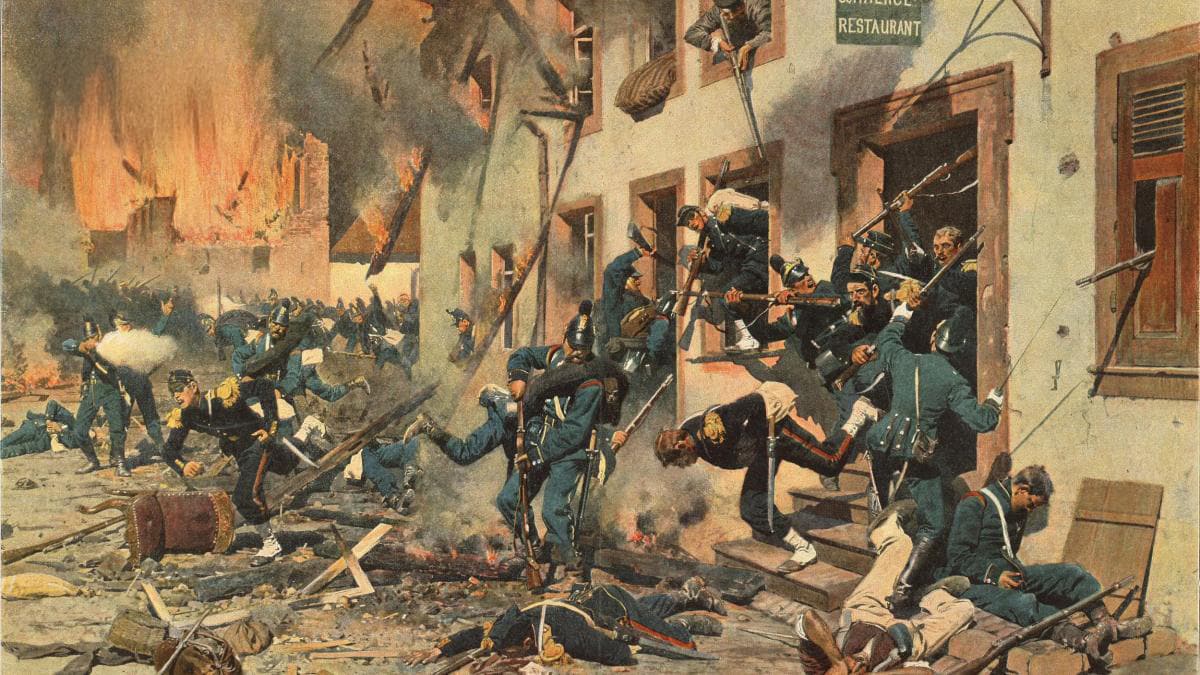
⚔️ Battle of Bazeilles, France,
31 August – 1 September 1870
For the French Marines, Bazeilles is their sacred ground. Like the Alamo to Americans or ANZAC Cove to Australians. The French Army of Chalons under Marshal MacMahon, accompanied by Emperor Napoleon III, was attempting to relieve another French army besieged at Metz. The Prussian Army moved rapidly and now also threatened to encircle the Army…
Tactical Innovations: Franco-Prussian War
Below are all current BattlefieldTravels tactical innovations for the Franco-Prussian War, covering technology, tactics and warfighting philosophies that fundamentally changed warfare. New studies are added as further battlefields are walked and analysed.
-
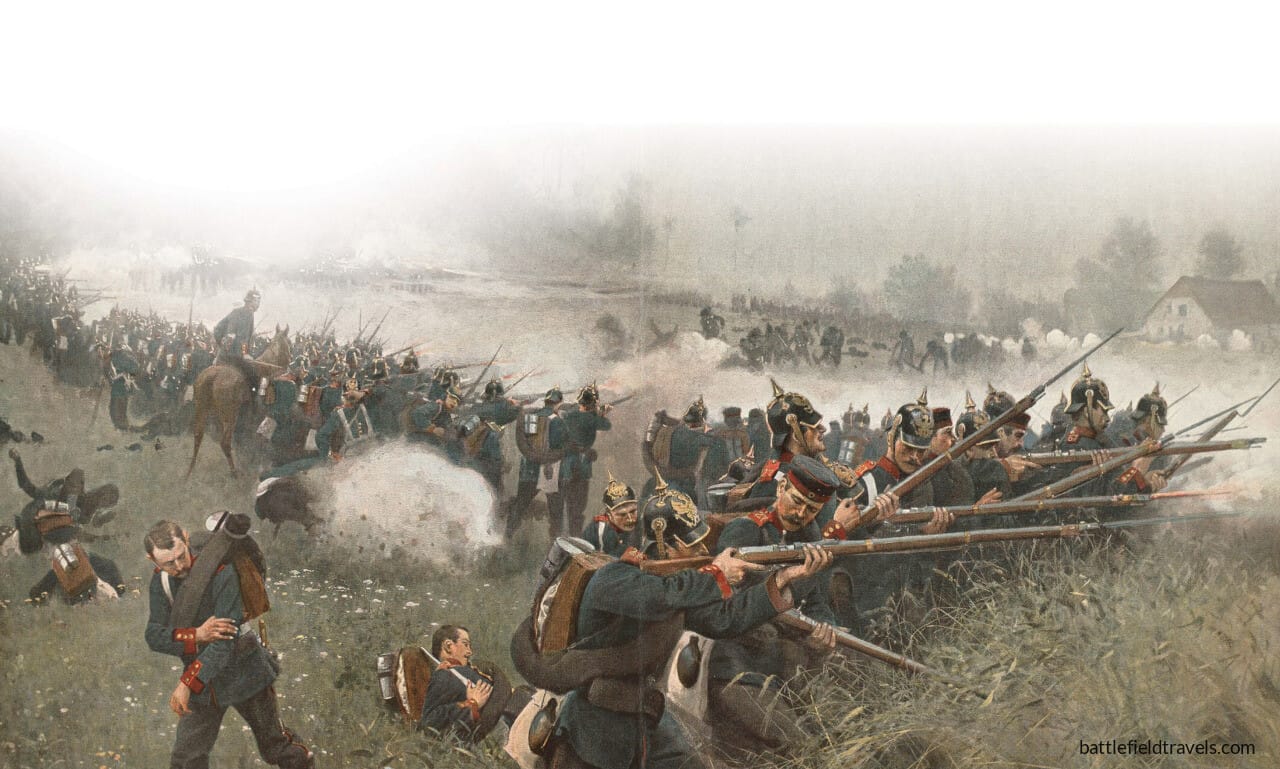
💡1866: Königgrätz, the Dreyse Needle-Gun and the Dawn of Mission Command

At the tactical level, Prussia’s victory over Austria at the Battle of Königgrätz can be attributed to: a weapons revolution, a command philosophy revolution, and innovative tactics. Together, they formed a tactical innovation with profound implications for the future of warfare. As recently as 1859, the Austrian shock tactic doctrine had been the dominant tactical…

Authored by Mick Prictor, a retired military officer with 40 years’ service, and a military historian specialising in terrain-focused analysis of tactics, doctrine, and command decision-making in land warfare. His work draws on extensive battlefield fieldwork—more than 280 sites worldwide—and one of the world’s largest private collections of historic military arms, uniforms, and equipment. About me
⚔️ Go deeper — Members get exclusive access to the Deep Research Collection, Field Notes, and monthly Research Dispatches. Try membership free for 7 days, cancel anytime. From $9/month.
Explore Related Themes
Armies: Prussian Army • French Army • Bavarian Army
Commanders: Helmuth von Moltke • Achille Bazaine
Methods: Mounted warfare • Siege warfare • Encounter battle
Environments: Forest Warfare • Mountain Warfare
Further Study: Franco-Prussian War Reading List
Related Battle Studies, Museum Pieces & Reading Resources


Rising tensions between France and Prussia over German unification, diplomatic rivalry and shifting alliances led to war in 1870. The conflict was driven by both strategic ambitions and political miscalculations, culminating in a rapid mobilisation on both sides. The Ems telegram was a deliberate provocation to get Napoleon III to declare war.
The conflict unfolded across rolling farmland, rivers, ridgelines and fortified towns. The Prussian ability to use rail networks and road systems for rapid concentration, combined with effective reconnaissance and superior artillery positioning, often turned terrain into a decisive advantage.
Prussian success came from modern staff work, rapid mobilisation via rail, disciplined infantry tactics, superior Krupp artillery, and a command philosophy that encouraged initiative and flexible manoeuvre. These factors allowed Prussian armies to outmanoeuvre and overwhelm French formations.
Sedan (1 September 1870) resulted in the encirclement and surrender of Napoleon III and the Army of Châlons, effectively ending the Second French Empire. It demonstrated the Prussian mastery of rapid manoeuvre, coordination and encirclement operations.
Yes. After the imperial collapse, the French Third Republic continued fighting in the Loire, north-east France and around Paris. Despite initial successes, French forces could not match the organisational and logistical advantages of the German armies.
Yes. As field research progresses, additional studies — particularly in the Metz, Sedan, Gravelotte–St Privat and Loire Valley theatres — will be added to this collection.
Subscribe to Battlefield Travels and receive a free E-Book Battlefield Guide
Unlock expert battlefield analysis, campaign reconstructions, and historical insights drawn from firsthand exploration and primary sources.
🗺️ You’ll receive:
🎖️ Exclusive historical insights you won’t find elsewhere
📘 A free eBook: 10 Tips for Exploring Historic Battlefields
📰 New battlefield studies straight to your inbox as they are published

⚔️ Go deeper — Members get exclusive access to the Deep Research Collection, Field Notes, and monthly Research Dispatches. Try membership free for 7 days, cancel anytime. From $9/month.