Reconstructing Ancient Greek era battlefields through terrain analysis, primary sources and on-site research
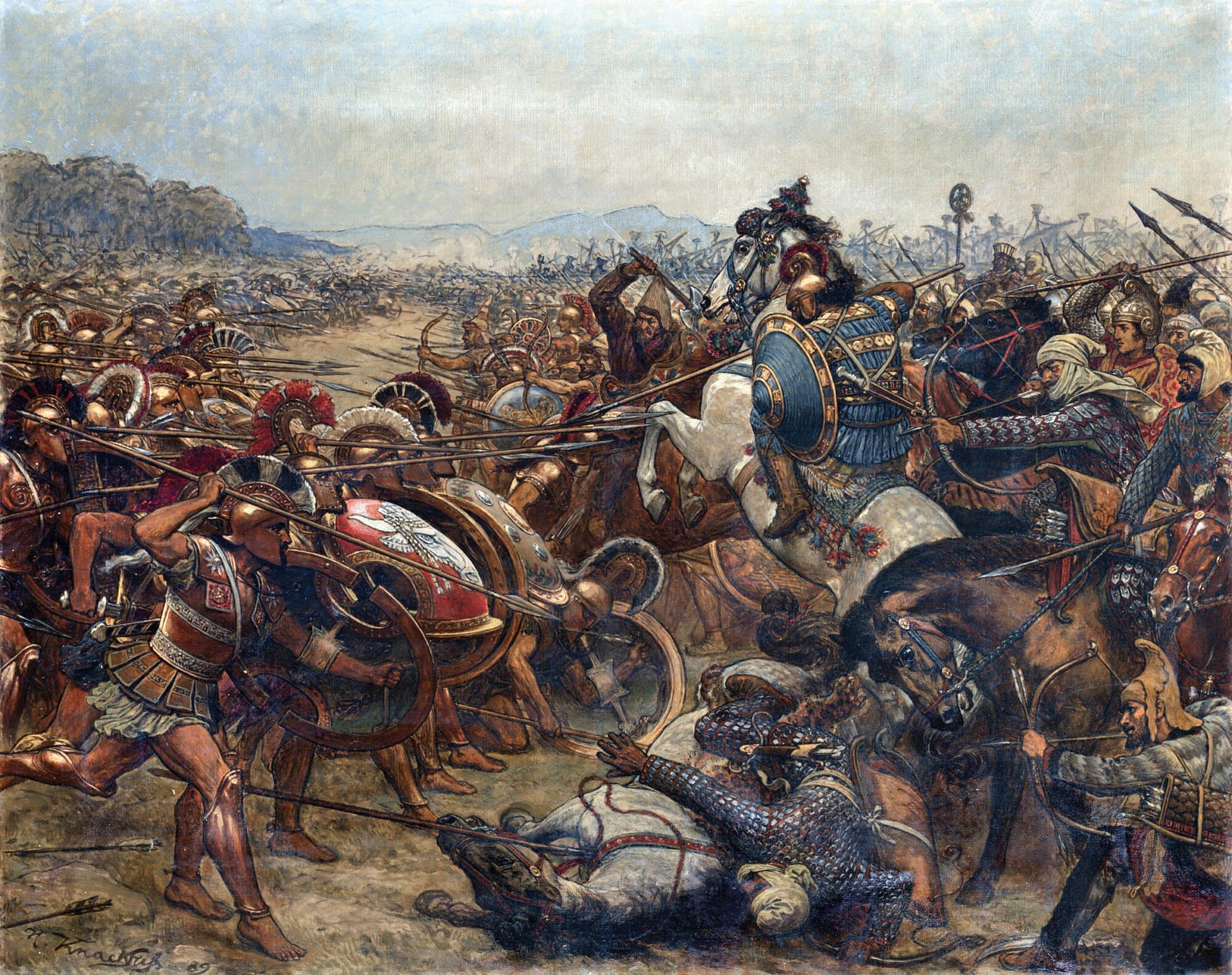
Walking the ground of the Ancient Greek-era battlefields
The Ancient Greek world produced some of history’s most influential battles, campaigns and military cultures. From the Bronze Age palatial centres of Mycenae and Tiryns to the hoplite clashes of the Classical period, the naval and land battles of the Persian Wars, and the sweeping manoeuvres of the Hellenistic age, Greek warfare evolved across more than a millennium of political upheaval and shifting alliances. Each conflict unfolded across a landscape of mountains, coastal plains, narrow defiles and fortified cities that shaped how armies moved, deployed and fought.
Bronze Age
Greek military history begins in the Late Bronze Age, with the fortified citadels of Mycenae and Tiryns, whose cyclopean walls and elevated positions reveal an early world of palace-based warfare, raiding networks and complex regional rivalries. This period culminates in the legendary conflict remembered as the Trojan War, where myth and archaeology intersect along the Aegean seaboard — a subject of ongoing research and field exploration.
Persian Wars
By the 5th century BC, the Greek city-states faced existential threats during the Persian Wars, where battles such as Marathon and Thermopylae demonstrated how small forces could exploit terrain and discipline to resist overwhelming numbers. Marathon’s open coastal plain enabled decisive shock combat, while the narrow pass at Thermopylae forced the Persians into a confined space where Greek hoplites could hold firm against superior numbers.
Rise of Macedonia
As Greek city-states turned against one another, the Peloponnesian War brought campaigns across Attica, Boeotia, the Peloponnese, and the Aegean — sieges, naval battles and protracted attrition that reshaped the Greek world. In the 4th century BC, the rise of Macedon under Philip II and Alexander the Great transformed Greek warfare again, fusing the phalanx with cavalry manoeuvre, engineering and large-scale campaigning across Asia.
Hellenistic era
The final chapters of Greek independence played out during the Hellenistic period, as successor kingdoms fought for dominance until the expanding Roman Republic intervened decisively at battles such as Cynoscephalae and Pydna. By 146 BC, Greece was incorporated into the Roman world.
This collection of battlefield studies explores these conflicts through archaeological evidence, ancient sources, period reconstructions and on-site fieldwork — explaining not only what occurred in these battles, but how the landscapes of Greece shaped them across more than a thousand years.
Battle Studies in the Ancient Greek era
Below are all current BattlefieldTravels studies for the wars of the Ancient Greek era, covering key battles, campaign phases and associated sites. New studies will be added as further battlefields are walked and analysed.
-
⚔️ Battle of Thermopylae,
August 480 BC
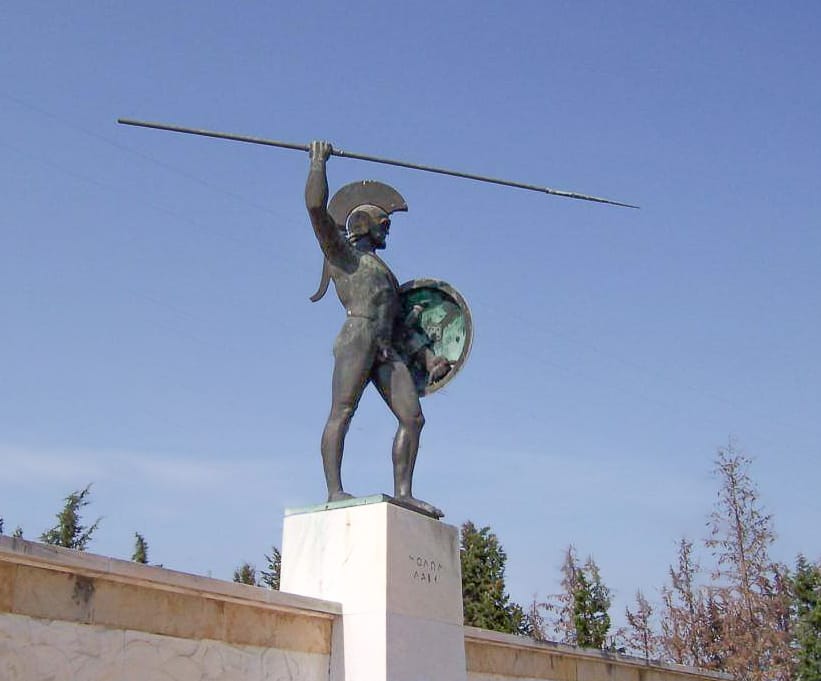
The Battle of Thermopylae in 480 BC is one of the defining battles of history. A small force of 300 Spartans, supported by allied Greek contingents, held back a much larger Persian force for several days and bought time for the Greek city states to coordinate their defence.

Authored by Mick Prictor, a retired military officer with 40 years’ service, and a military historian specialising in terrain-focused analysis of tactics, doctrine, and command decision-making in land warfare. His work draws on extensive battlefield fieldwork—more than 280 sites worldwide—and one of the world’s largest private collections of historic military arms, uniforms, and equipment. About me
⚔️ Go deeper — Members get exclusive access to the Deep Research Collection, Field Notes, and monthly Research Dispatches. Try membership free for 7 days, cancel anytime. From $9/month.
Explore Related Themes
Armies: Roman Army • Persian Army • Athenian Army • Spartan Army
Commanders: Leonidas • Alexander the Great • Xerxes
Methods: Mounted warfare • Siege warfare
Environments: Forest Warfare • Mountain Warfare
Further Study: Ancient Greek Warfare Reading List
Related Battle Studies, Museum Pieces & Reading Resources


The landing page spans the Late Bronze Age, Classical period, Persian Wars, Peloponnesian War, Macedonian expansion and the Hellenistic era up to the Roman conquest.
Published studies include Marathon and Thermopylae, with Mycenae, Tiryns and sites linked to the Trojan War in development. Future studies will expand across the Classical and Hellenistic worlds.
Greek conflicts shaped the development of the phalanx, citizen armies, naval power, siegecraft, combined arms and large-scale manoeuvre — influencing Western military thought for centuries.
Greece’s mountains, narrow passes, coastal plains and fortified hilltops often dictated how armies deployed and fought, making ground analysis essential to understanding outcomes.
Yes. Locations such as Marathon, Thermopylae, Mycenae and Tiryns retain significant archaeological remains and landscape features accessible to visitors.
Subscribe to Battlefield Travels and receive a free E-Book Battlefield Guide
Unlock expert battlefield analysis, campaign reconstructions, and historical insights drawn from firsthand exploration and primary sources.
🗺️ You’ll receive:
🎖️ Exclusive historical insights you won’t find elsewhere
📘 A free eBook: 10 Tips for Exploring Historic Battlefields
📰 New battlefield studies straight to your inbox as they are published

⚔️ Go deeper — Members get exclusive access to the Deep Research Collection, Field Notes, and monthly Research Dispatches. Try membership free for 7 days, cancel anytime. From $9/month.