Reconstructing the entire Guadalcanal Campaign through terrain analysis, primary sources and on-site fieldwork
EXPLORE: BATTLES | WEAPONS & EQUIPMENT | READING | QUIZ
Key facts
🗺️ Guadalcanal Campaign, 7 August 1942 – 9 February 1943
⚔️ Conflict: World War Two – Pacific War
🪖 Major Allied forces: US 1st Marine Division, Americal Division, 25th Infantry Division and XIV Corps
🪖 Major Japanese forces: 17th Army; 2nd Division and 38th Division
⭐ Principal Allied commanders: Alexander Vandegrift; Alexander Patch
⭐ Principal Japanese commanders: Harukichi Hyakutake; Kiyotake Kawaguchi
🎯 Strategic objective: Henderson Field and control of Guadalcanal
📌 Outcome: Allied victory; Japanese evacuation of Guadalcanal and consolidation of the Allied strategic initiative in the South Pacific.
🧭🥾 Walking the battlefields of the Guadalcanal Campaign
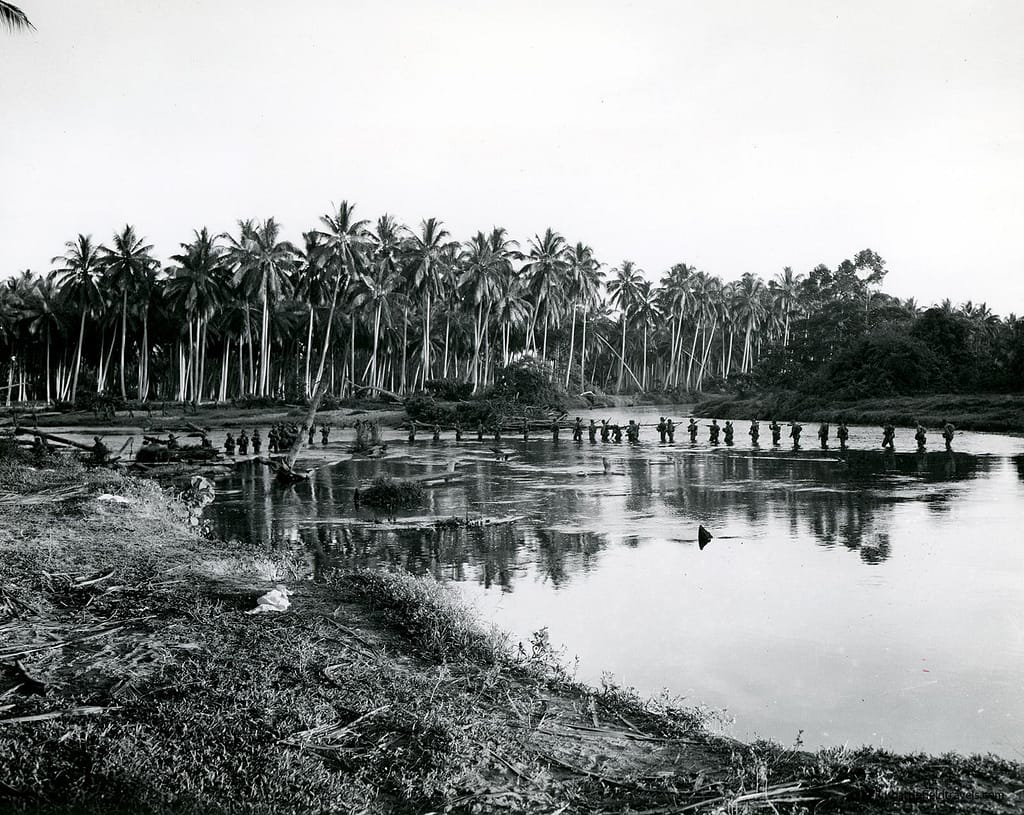
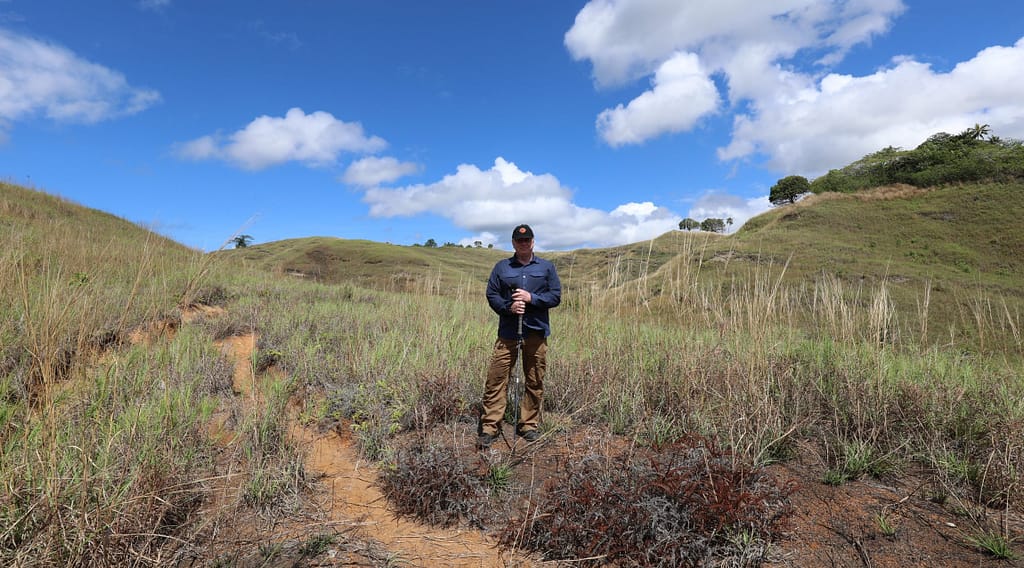
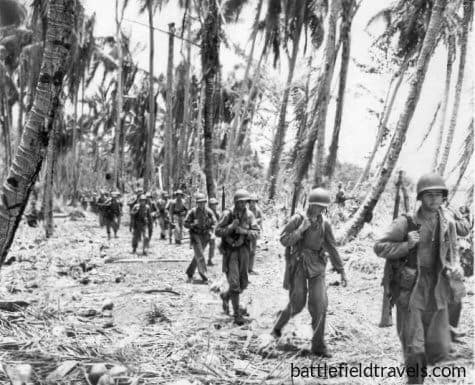
Guadalcanal makes sense when you get off the road and into the jungle. I have spent days walking these battlefields: following the upper reaches of the Matanikau, climbing the ridges south of Henderson Field, trekking through jungle and fighting positions, and standing on ground where visibility is down to a few metres. Places that appear close together on a map can be separated by steep ridges, deep ravines, tangled vegetation and streams that channel movement in unexpected directions.
That experience changed the way I understood the campaign. Guadalcanal is usually told as a sequence of famous battles such as Tenaru, Edson’s Ridge, the Matanikau, Henderson Field, and Mount Austen, plus an epic contest at sea and in the air. On the ground, however, those battles are connected by terrain. Henderson Field was the objective, but the ridges, rivers, jungle tracks, coastal corridors and patches of open ground around it shaped how both armies tried to attack and defend it.
This campaign study brings those pieces together. It follows the struggle from the first American landings in August 1942 through six months of fighting to the Japanese evacuation in February 1943, linking the wider campaign to the individual battlefields I have explored on the ground.
Guadalcanal, 1942–43: Campaign Overview
7 Aug 1942 – The Initial Landings
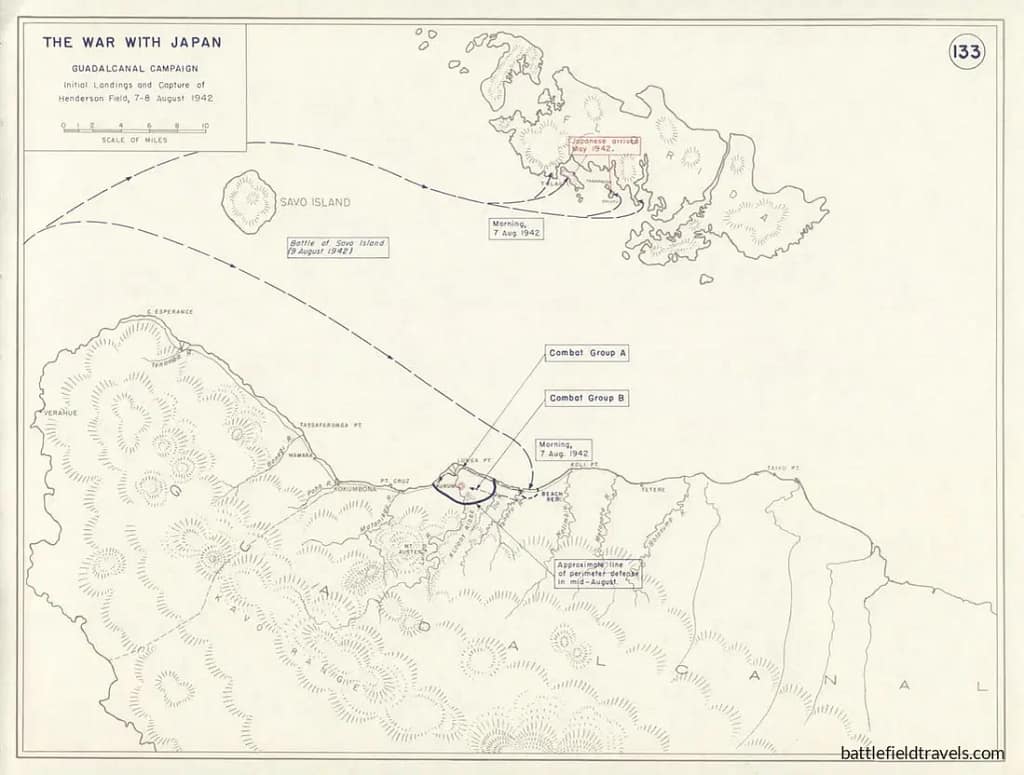
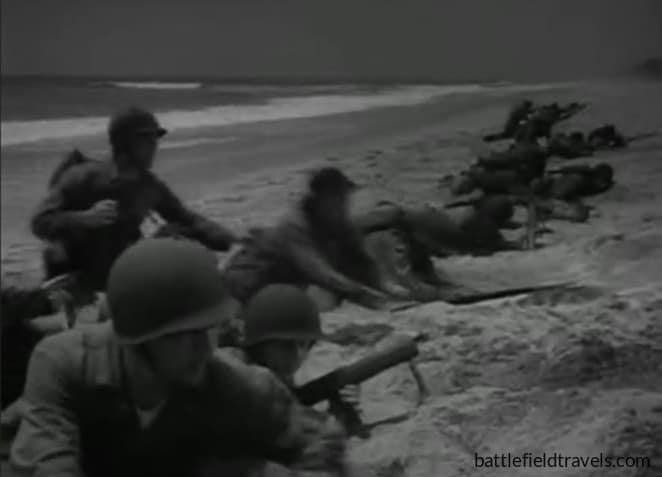
The Guadalcanal Campaign commenced on 7 August 1942, when US Marines landed across the southern Solomon Islands in the first major Allied offensive against Japan in the Pacific. The main landing on Guadalcanal came ashore at Beach Red, east of Lunga Point, while separate forces assaulted the heavily contested positions on Tulagi, Gavutu and Tanambogo. On Guadalcanal, the Marines advanced rapidly towards the unfinished Japanese airfield at Lunga Point. Its capture gave the Americans a foothold of enormous strategic importance, but also committed them to defending an exposed perimeter at the end of a tenuous supply line.
8–9 Aug 1942 – The Japanese Response
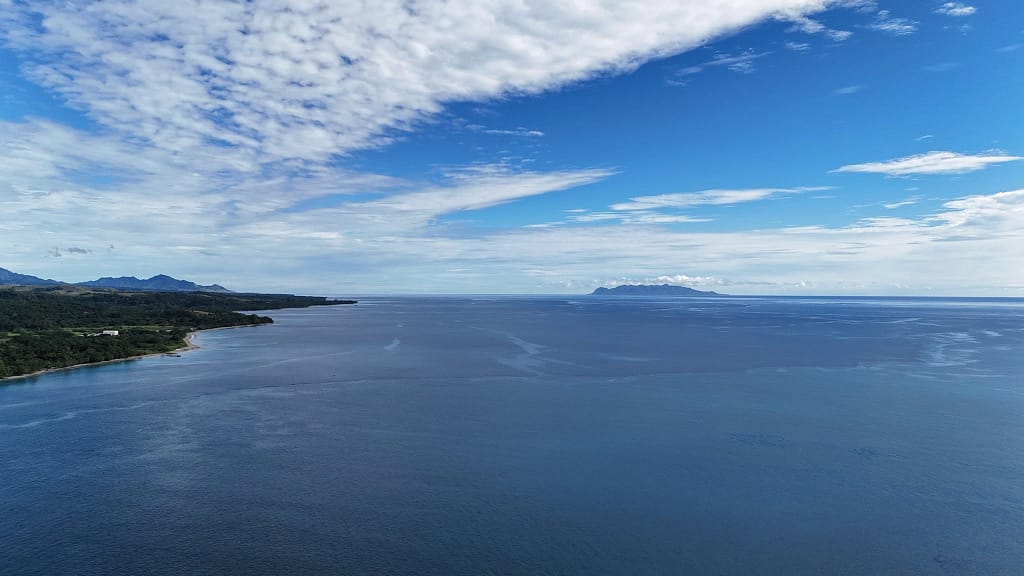
The Japanese response to the American lodgement was swift. On the night of 8/9 August 1942, Vice Admiral Mikawa sailed a powerful cruiser force down the Solomon Islands ‘Slot’, surprising the Allied naval screening forces and inflicting one of the worst defeats in US Navy history. To protect the carriers and remaining fleet combatants, the Navy temporarily withdrew from Guadalcanal, leaving the leaving the waters around Guadalcanal temporarily exposed to Japanese naval dominance.
Aug–Sep 1942 – The First Japanese Counteroffensives
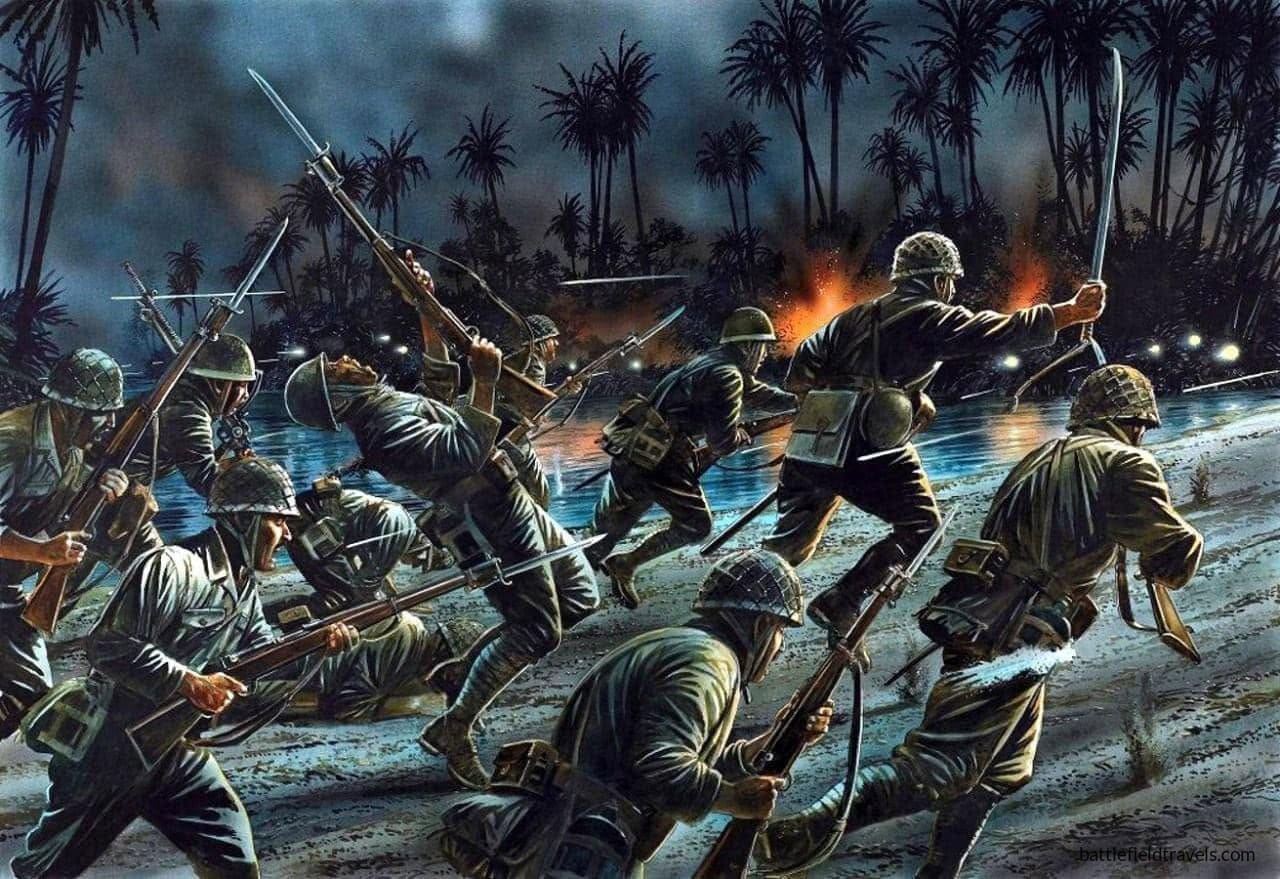
Renamed Henderson Field, the airfield became the centre of the struggle for Guadalcanal. The Japanese initially underestimated the strength of the American landing and attempted to eliminate the beachhead with forces committed piecemeal. Colonel Kiyonao Ichiki’s detachment attacked across the Ilu River–Alligator Creek position on 21 August in the Battle of the Tenaru and was virtually destroyed. At the same time, the Marines began probing westward towards the Matanikau River. The disastrous Goettge Patrol and the First Battle of the Matanikau demonstrated that the campaign would extend well beyond the immediate defence of Henderson Field.
During September the contest widened. Japanese reinforcements moved down the Solomon Islands chain via fast destroyer transports, the system the Allies came to call the ‘Tokyo Express’, while the Americans struggled to strengthen and supply the perimeter. Major General Kiyotake Kawaguchi assembled a much larger force for a coordinated attack on Henderson Field. A Marine raid on the Japanese base at Tasimboko on 8 September disrupted the Japanese preparations, while Colonel Merritt Edson recognised the vulnerability of the ridge running south towards the airfield and concentrated his Raiders and Paramarines there. On 12–14 September, Kawaguchi’s troops repeatedly attacked what became known as Edson’s Ridge or Bloody Ridge. The failure of that offensive preserved Henderson Field and inflicted another serious defeat on the Japanese, but it did not end their attempts to recapture the island.

Sep–Oct 1942 – The Matanikau and Henderson Field
The Americans, attempting to exploit the Japanese defeat on Bloody Ridge, attacked westward in what became known as the Second Battle of the Matanikau over 23-27 September 1942. The bold American plan unravelled in the face of a skillful Japanese defence. The battle concluded with a desperate evacuation from ‘Little Dunkirk’ to prevent an American battalion from being surrounded and destroyed.
The Third Battle of the Matanikau in early October destroyed several Japanese units, and convinced the Japanese that the coastal approach to Lunga was no longer viable. In late October, the Japanese mounted their largest effort of the campaign against Henderson Field. While Japanese naval and air forces contested the waters and skies around Guadalcanal, Lieutenant General Harukichi Hyakutake’s 17th Army attempted to converge on the American perimeter from three directions. The resulting battles included renewed fighting along the Matanikau, an attack against the Marine positions around the airfield, and a desperate American defence of the southern perimeter during the Battle for Henderson Field.
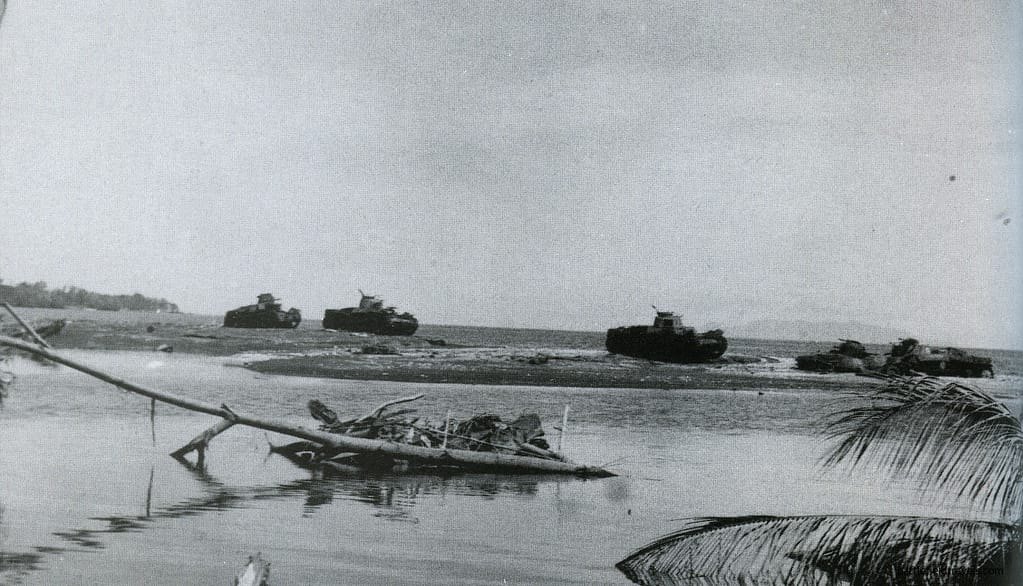
Nov 1942 – The Push Towards Kokumbona
By November, Guadalcanal had become a campaign of attrition fought simultaneously on land, at sea and in the air. Japanese attempts to reinforce and resupply the island increasingly depended upon high-speed destroyer runs down “The Slot”, while American aircraft operating from Henderson Field threatened slower transports.
A fourth American offensive on the Matanikau front severely disrupted the Japanese foothold around Point Cruz, and additional Japanese landings at Koli Point forced the Americans to temporarily pause the offensive to deal with the new threat in the east. The naval battles of Guadalcanal in November frustrated Japan’s attempt to deliver another major reinforcement to the island and marked a decisive shift in the campaign.
A fifth American offensive west of the Matanikau further eroded the Japanese positions, while the failure of the November reinforcement effort effectively forced Japan onto the strategic defensive on Guadalcanal. Japanese troops ashore were increasingly isolated, short of food and weakened by disease, while American forces continued to grow.
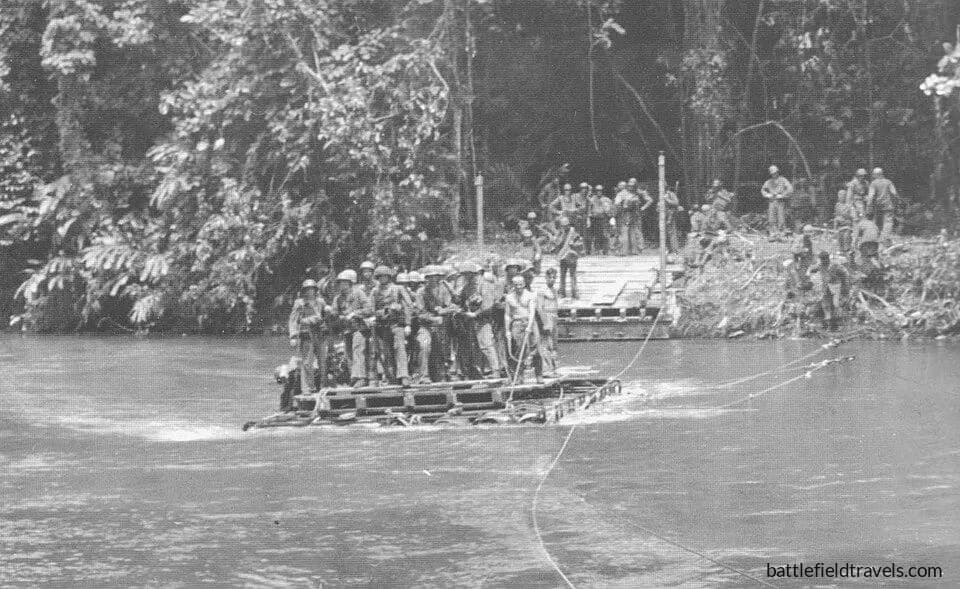
Dec 1942–Jan 1943 – Clearing the Inland Flank
As the Americans prepared for a final advance to clear Cape Esperance, the Japanese positions on Mount Austen remained a threat to the inland flank. A US Army advance against Mount Austen in mid-December led to a bitter six-week fight around the powerful ‘Gifu’ defensive position. While the Gifu fight was going on, other US Army units cleared Sea Horse Ridge and Galloping Horse Ridge in mid-January 1943. The latter was memorialsied in James Jones’ novel The Thin Red Line and two films based on the book.
Jan – Feb 1943 – the final American offensive
With the inland flank secure, the Americans shifted from defending Henderson Field to systematically reducing the remaining Japanese positions. Fighting extended westward through the hills and ridges beyond the Matanikau as Army and Marine units commenced a final offensive towards Kokumbona and Cape Esperance. Recognising that Guadalcanal could no longer be recovered at acceptable cost, the Japanese decided to evacuate their surviving forces. Operation KE removed more than 10,000 troops during January and February 1943, and on 9 February American commanders declared Guadalcanal secured.
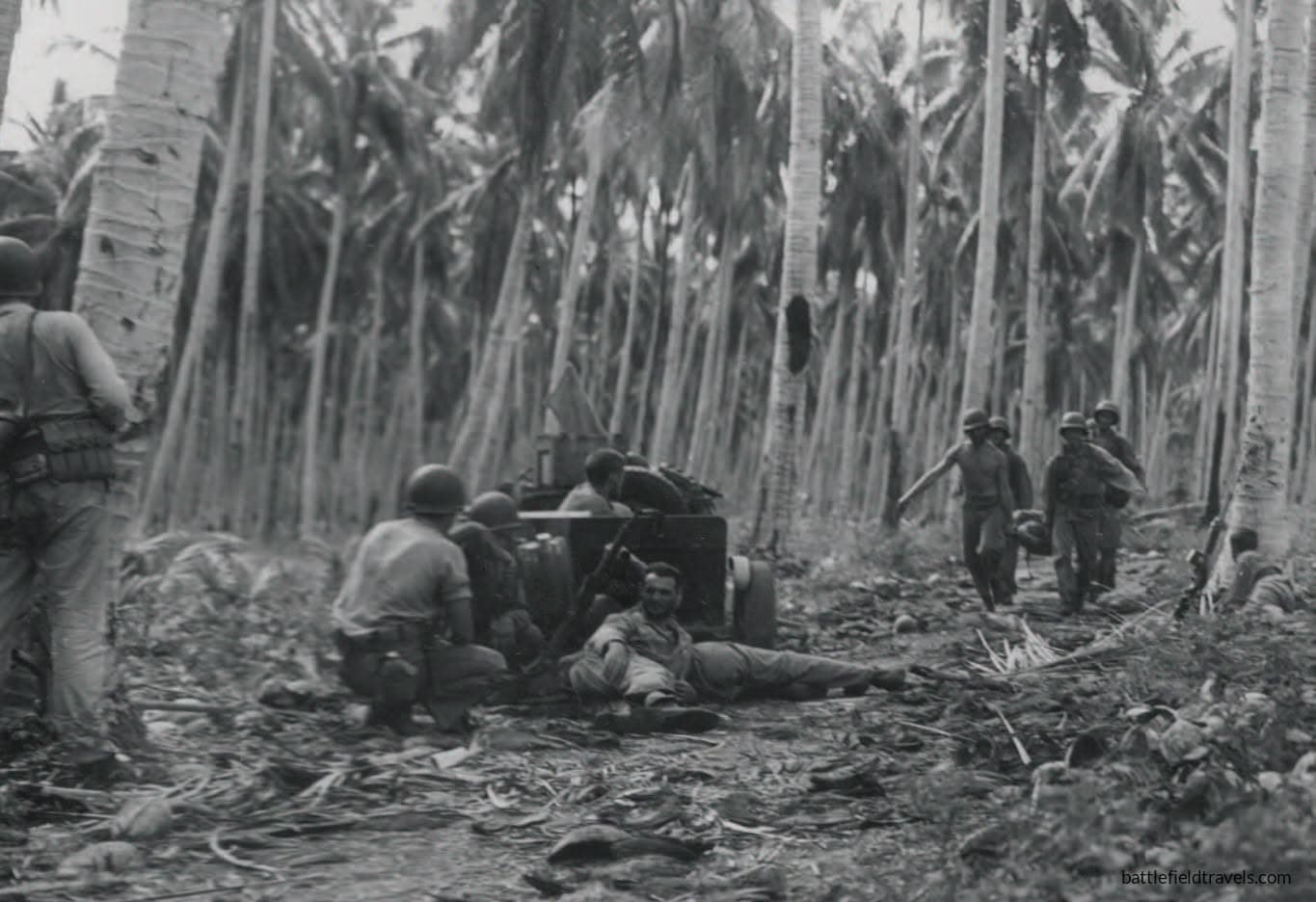
Conclusion
The six-month campaign had begun as an Allied offensive to seize positions in the southern Solomons, including the Japanese airfield under construction on Guadalcanal, and deny Japan bases threatening the communications route between the United States and Australia. It developed into a sustained contest for control of the southern Solomons in which terrain, logistics, air power and naval access were inseparable. Guadalcanal also provides an unusually rich series of battlefield studies: from small patrol actions and company positions to regimental attacks, divisional operations and the wider struggle to sustain forces across the Pacific.
Further Guadalcanal battle studies will be posted here as they are completed.
🏛️Weapons & Equipment: World War Two
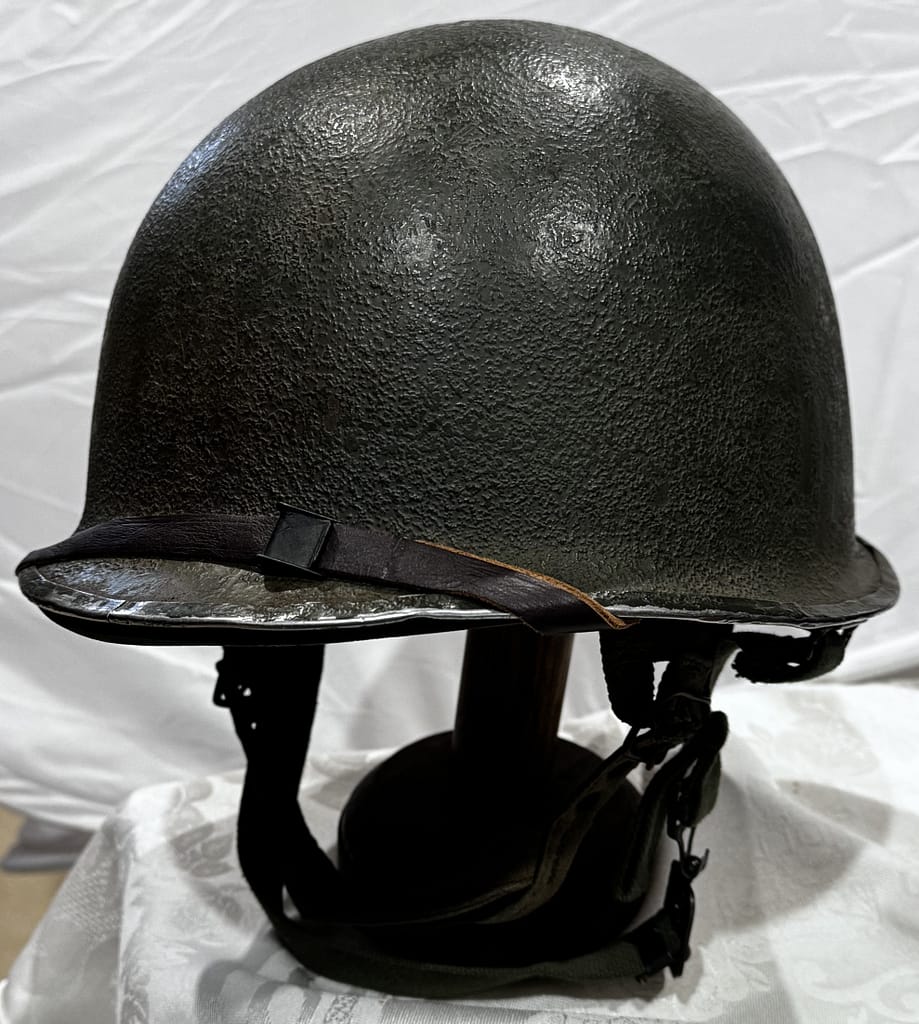
Explore original weapons and equipment from the Second World War, drawn from my personal collection.
Uniforms, helmets, headgear, weapons, equipment from Australia, Britain, United States, Soviet Union, Germany, Japan, Italy, Romania, — personally handled, photographed and examined by me.
📚Recommended Reading: Guadalcanal
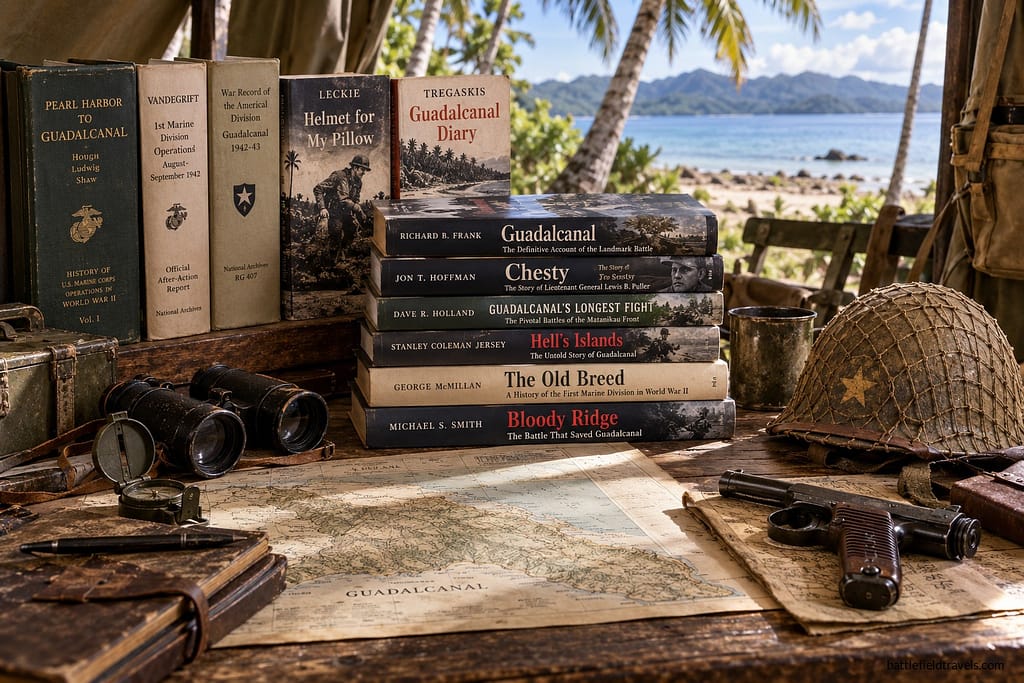
A curated reading list covering the Second World War across all theatres. Explore campaign histories, battlefield studies, biographies, primary accounts and contemporary military writings used in the research behind Battlefield Travels. The list will continue to grow as I publish new studies and draw upon new resources.
❓Guadalcanal Campaign Quiz

20 questions generated out of a bank of 100. Testing your knowledge of the Guadalcanal Campaign land and naval campaigns from beginning to end. Score 60% to pass — but expect a challenge!
Guadalcanal Campaign Battle Studies
In-depth battlefield analyses based on terrain, primary sources, and on-the-ground exploration.
-
⚔️ Guadalcanal – Second Battle of the Matanikau, 23-27 September 1942

August 2026, west of Point Cruz, Guadalcanal. I am walking the section of coast known to history as ‘Little Dunkirk’. Here, on 27 September 1942, the 1st Battalion 7th Marines was evacuated under fire by the US Navy and Coast Guard during the 2nd Battle of the Matanikau. This was the only significant American defeat…
-
⚔️ Guadalcanal – Battle of Edson’s Ridge (Bloody Ridge), 12-14 September 1942

August 2026, Edson’s Ridge, south of Henderson Field, Guadalcanal. I am exploring the sites of the 12-14 September 1942 Japanese attack against the Lunga perimeter. The long north-south ridgeline here became known as ‘Edson’s Ridge’ or ‘Bloody Ridge’ after the battle. The Japanese called it ‘The Centipede’. This is one of the best-preserved battle sites…
-
⚔️Guadalcanal – Battle of the Tenaru (Alligator Creek), 21 August 1942

August 2026, Ilu River (Alligator Creek). I am exploring the site of the 21 August 1942 Japanese attack against the Marines on the Lunga perimeter. The Japanese ‘Ichiki Detachment’ was a battalion-sized force from the 28th Infantry Regiment, led by the Regimental Commander, Colonel Kiyonao Ichiki. Facing them across the Ilu River was the 2nd…
-
📝 🔒Field Note: Guadalcanal – First Battle of the Matanikau, 18-19 August 1942

Matanikau Village site, August 2026. I am exploring the site of the First Battle of the Matanikau, 18-19 August 1942. The battle was the first major battle west of the Matanikau and bears many similarities with the other five or six battles (depending on how you count them) on the Matanikau that would follow, each…
-
📝 🔒Field Note: Guadalcanal – Goettge Patrol Incident, 12-13 August 1942

August 2026, at the mouth of the Matanikau River. I am exploring the sites associated with the ill-fated ‘Goettge Patrol’ of 12-13 August 1942. The action happened over a very small area on the beachline west of the Matanikau, near the old village of Matanikau, now overrun by urban sprawl. In 1942 the jungle extended…
-
📝 🔒Field Note: Guadalcanal – Battle for Gavutu & Tanambogo Islands, 7-9 August 1942

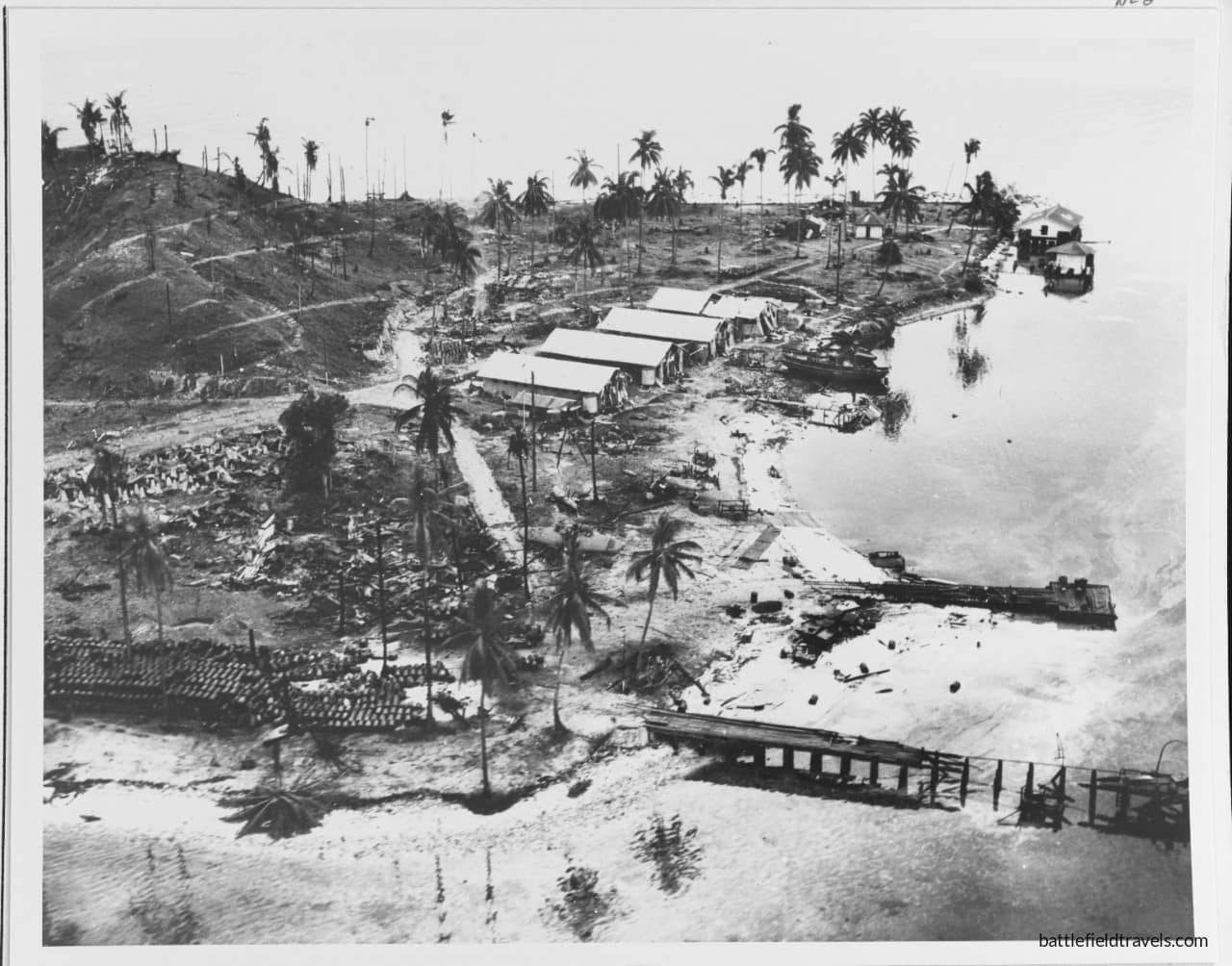
Gavutu & Tanambogo Islands, 8 August 2026. I am exploring the site of some of the most bitter fighting of the entire Guadalcanal Campaign, and it happened right here over 7-9 August 1942, While the landings at Beach Red on the big island of Guadalcanal had gone ahead unopposed, the landings at Tulagi and Gavutu…
-
📝 🔒Field Note: Guadalcanal – Battle for Tulagi Island, 7-8 August 1942

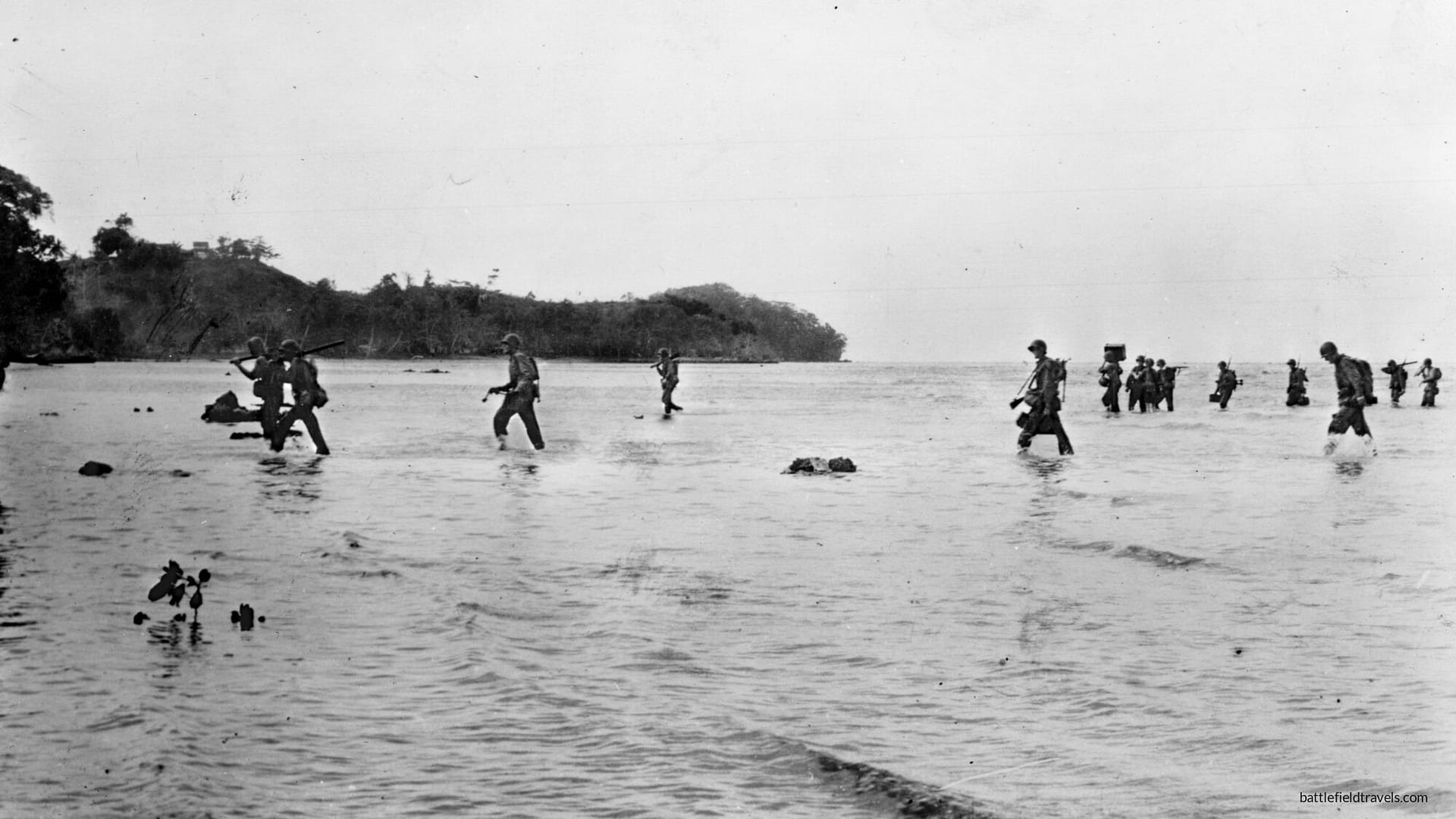
Tulagi Island, 8 August 2026. I crossed Iron Bottom Sound from Honiara to Tulagi by a dawn high-speed ferry. The trip was roughly two hours long. The date of my battlefield visit also coincided with the official 84th anniversary commemoration of the battle. The commemorative service was held on Blue Beach and was attended by…
-
📝 🔒Field Note: Guadalcanal – Beach Red landings, 7 August 1942

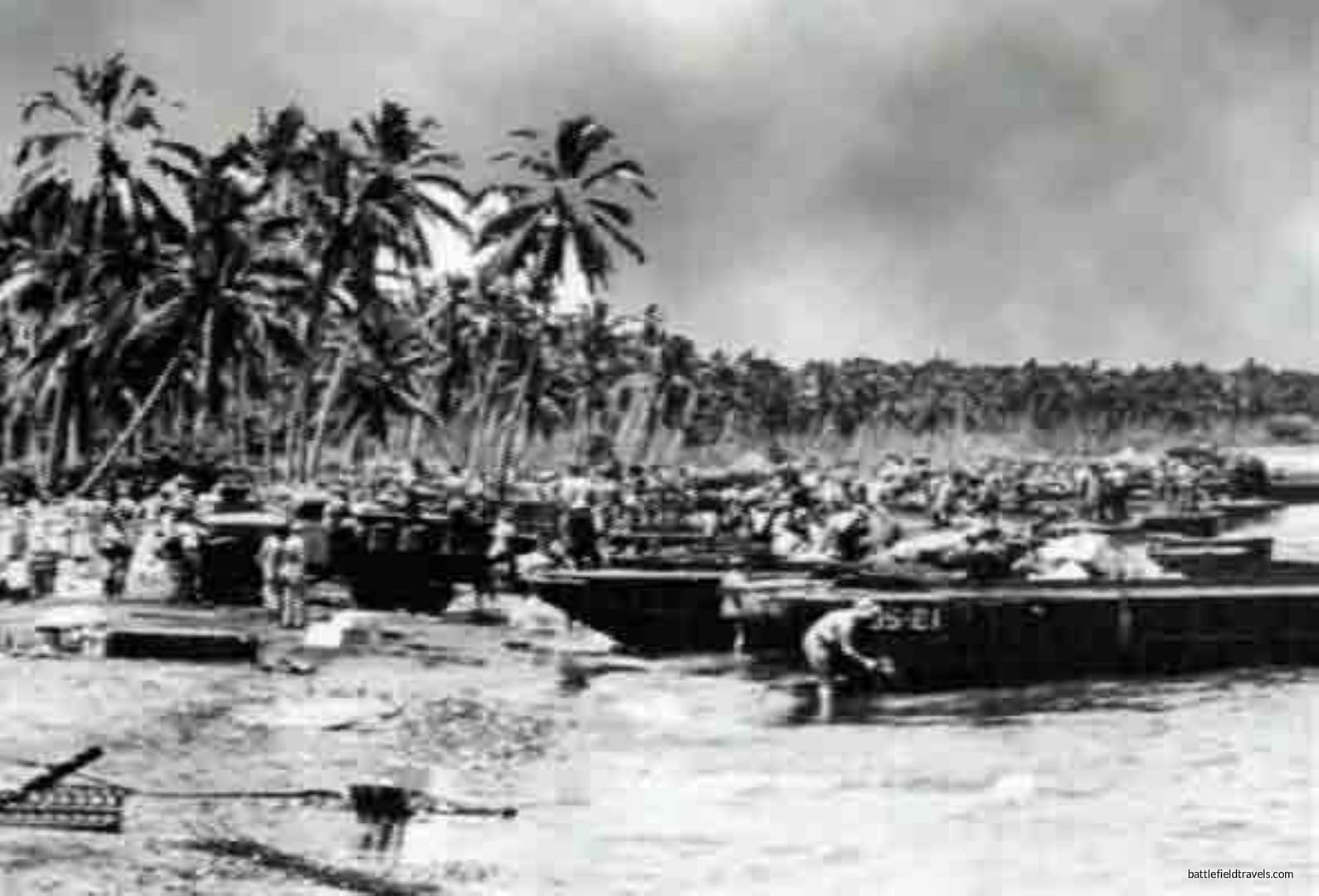
August 2026, Beach Red, Guadalcanal, I am walking the ground at Beach Red, site of the 1st Marine Division landings on 7 August 1942. Compared to many other WW2 sites on the island, Beach Red is little changed since 1942. The beach is about four kilometres east of Henderson Field and curves from the Tenaru…



Authored by Mick Prictor, a retired military officer with 40 years’ service, and a military historian specialising in terrain-focused analysis of tactics, doctrine, and command decision-making in land warfare. His work draws on extensive battlefield fieldwork—more than 280 sites worldwide—and one of the world’s largest private collections of historic military arms, uniforms, and equipment. About me
⚔️ Go deeper — Members get exclusive access to the Deep Research Collection, Field Notes, and monthly Research Dispatches. Try membership free for 7 days, cancel anytime. From $9/month.
Related Battle Studies, Museum Pieces & Reading Resources




FAQ: Guadalcanal Campaign
The Guadalcanal Campaign was the first major Allied offensive against Japan in the Pacific War. Beginning on 7 August 1942, the campaign prevented Japan from completing and using an airfield on Guadalcanal that threatened Allied communications between the United States and Australia. The six-month struggle also forced Japan into an expensive contest of attrition on land, at sea and in the air, before Japanese forces evacuated the island in February 1943.
The Allies won the Guadalcanal Campaign. US Marines landed on Guadalcanal and neighbouring islands on 7 August 1942 and captured the unfinished Japanese airfield, later named Henderson Field. Japan repeatedly attempted to retake the airfield and reinforce its troops, but suffered heavy losses in a series of land, naval and air battles. Japan eventually evacuated its surviving troops during Operation KE, and Guadalcanal was declared secured on 9 February 1943.
The Guadalcanal Campaign lasted just over six months, from the American landings on 7 August 1942 until 9 February 1943. Major fighting included the battles of the Tenaru, Edson’s Ridge, the Matanikau and Henderson Field, as well as fighting around Mount Austen, the Gifu, Sea Horse and Galloping Horse. The campaign also included several major naval battles in the waters surrounding Guadalcanal.
Henderson Field was crucial because control of the airfield allowed American aircraft to operate from Guadalcanal and threaten Japanese ships attempting to reinforce and resupply troops on the island. The Japanese therefore made the recapture of Henderson Field a central objective of their operations. Much of the ground campaign was shaped by the rivers, ridges and jungle approaches surrounding the American perimeter around the airfield.
Major ground actions included the initial fighting on Tulagi, Gavutu and Tanambogo, the Battle of the Tenaru, Edson’s Ridge, five major actions along the Matanikau front, the Battle for Henderson Field, Koli Point, Mount Austen and the battles for the Gifu, Sea Horse and Galloping Horse. The campaign also involved major naval engagements including Savo Island, Cape Esperance and the Naval Battle of Guadalcanal, alongside an almost continuous air campaign over the island.
Subscribe to Battlefield Travels and receive a free E-Book Battlefield Guide
Unlock expert battlefield analysis, campaign reconstructions, and historical insights drawn from firsthand exploration and primary sources.
🗺️ You’ll receive:
🎖️ Exclusive historical insights you won’t find elsewhere
📘 A free eBook: 10 Tips for Exploring Historic Battlefields
📰 New battlefield studies straight to your inbox as they are published

⚔️ Go deeper — Members get exclusive access to the Deep Research Collection, Field Notes, and monthly Research Dispatches. Try membership free for 7 days, cancel anytime. From $9/month.