Reconstructing War of the League of Cambrai battlefields through terrain analysis, primary sources and on-site research

Walking the battlefields of the War of the League of Cambrai (1508-1616)
The War of the League of Cambrai was a major early 16th-century conflict shaped by shifting alliances among Europe’s great powers. The main participants in the war were France, the Holy Roman Empire, the Papal States, and the Republic of Venice; they were joined at various times by nearly every significant power in Western Europe, including Spain, England, the Duchy of Milan, the Republic of Florence, the Duchy of Ferrara, and the Swiss. As alliances fractured and reformed, the war expanded into a broader struggle for influence across Italy, France, the Alps and the Scottish borderlands.
This turbulent period forms the backdrop for battles such as Flodden Field (1513) — the anchor study in this collection. Although fought on the Anglo–Scottish frontier, Flodden was deeply connected to the diplomatic and military currents of the League of Cambrai and the wider Italian Wars. Henry VIII’s campaigns in France and the shifting loyalties of Scotland drew northern Britain into the storm of continental politics.
The terrain at Flodden exemplifies many of the tactical challenges of the period: steep ridges, boggy ground, limited visibility and uneven approaches that hampered the inflexible Scottish pike formations and shaped the English counterattack. Across Europe, battles of the Italian Wars similarly centred on fortified towns, river crossings, and the dynamic interplay between evolving artillery, infantry pike blocks and early gunpowder weapons.
This landing page explores these conflicts through a terrain-focused lens, showing how geography and military innovation interacted during a pivotal era in European warfare.
Battle Studies in the War of the League of Cambrai
Below are all current BattlefieldTravels studies for the Thirty Years War, covering key battles, campaign phases and associated sites. New studies are added as further battlefields are walked and analysed.
-
⚔️ Battle of Flodden Field, Scotland,
9 September 1513
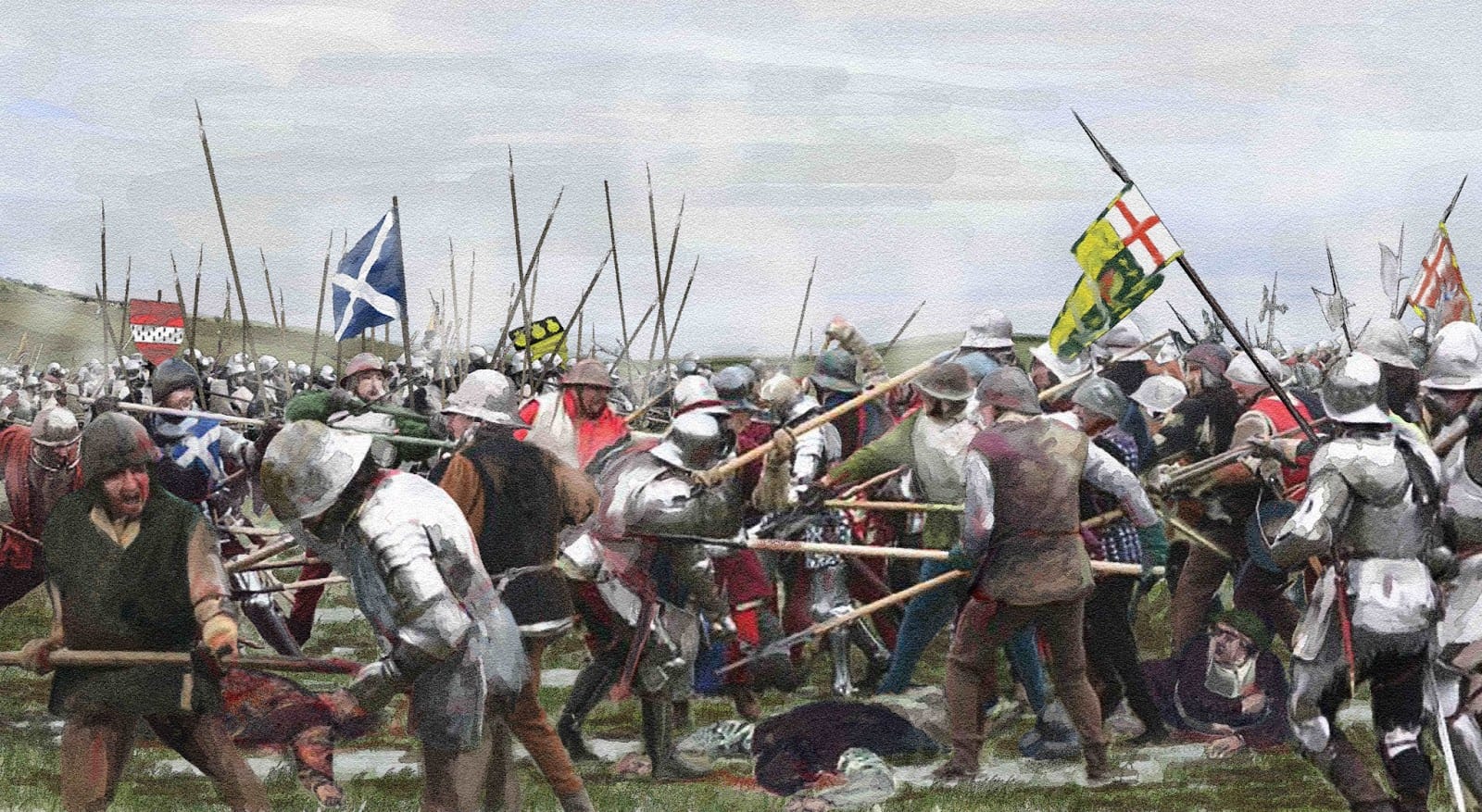
The Battle of Flodden Field, fought on 9 September 1513, was a major engagement between the Kingdom of England and the Kingdom of Scotland, and one of the bloodiest battles in British history. The engagement was part of the larger War of the League of Cambrai, which involved several European powers, including France, England, and…
Tactical Innovations
Over thousands of years of warfare, armies have sought ways to gain advantage on the battlefield. Sometimes the solution was a new weapon. Sometimes it was a radical new method. Often it was a combination of both. From the disciplined ranks of the Greek phalanx to pike-and-shot warfare to the interlocking machine-gun fire plans of the twentieth century, tactical innovations have repeatedly reshaped how battles are fought.
-
💡 Tactical Innovations: Pike and Shot Warfare

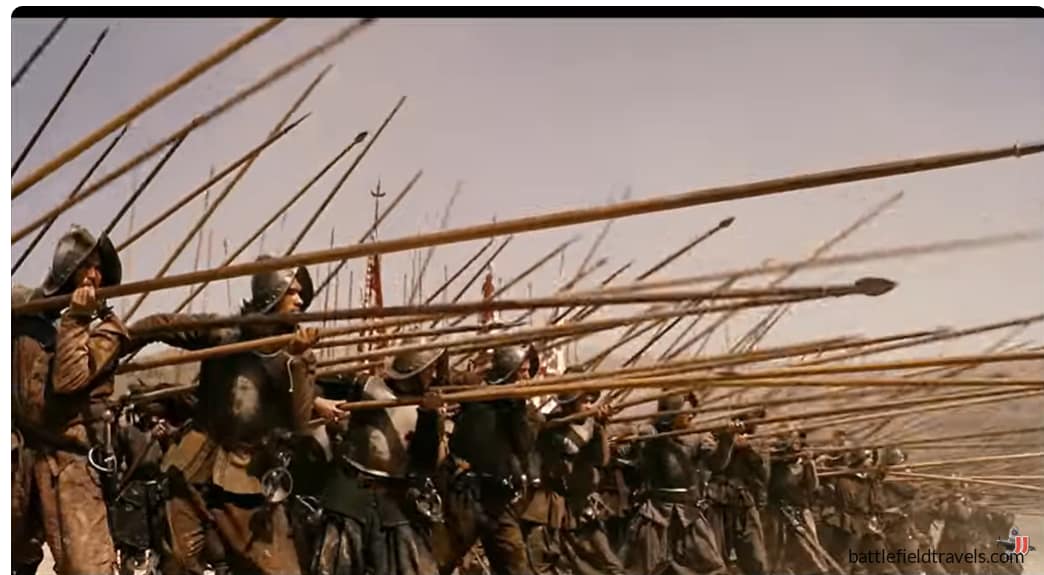
The widespread adoption of firearms by European armies created a new tactical dilemma. The previously invulnerable pike formations were now extremely vulnerable to gunpowder weapons, while the musketeers remained vulnerable to enemy cavalry. What was needed was a combined-arms system in which the relative advantages of the musket, pike, cavalry, and artillery could cover each…

Authored by Mick Prictor, a retired military officer with 40 years’ service, and a military historian specialising in terrain-focused analysis of tactics, doctrine, and command decision-making in land warfare. His work draws on extensive battlefield fieldwork—more than 280 sites worldwide—and one of the world’s largest private collections of historic military arms, uniforms, and equipment. About me
⚔️ Go deeper — Members get exclusive access to the Deep Research Collection, Field Notes, and monthly Research Dispatches. Try membership free for 7 days, cancel anytime. From $9/month.
Explore Related Themes
Armies: Scottish Army • English Army • French Army
Commanders: King James IV of Scotland • Henry VIII of England • Earl of Surrey
Methods: Fortress Warfare • Envelopment • Siege Warfare • Pike & Shot
Environments: Forest Warfare • Mountain Warfare
Further Study: War of the League of Cambrai Reading List
Related Battle Studies, Museum Pieces & Reading Resources

A shifting alliance originally formed to weaken Venice, involving France, the Papacy and the Holy Roman Empire, later sparking wider conflicts.
The battle occurred during Henry VIII’s involvement in the Italian Wars and reflects the broader political instability of the League era.
Yes, King James IV and much of the Scottish nobility were killed during the battle, leaving Scotland in turmoil for decades.
Possibly. Future articles may cover Italian War battles visited on future European research trips.
Subscribe to Battlefield Travels and receive a free E-Book Battlefield Guide
Unlock expert battlefield analysis, campaign reconstructions, and historical insights drawn from firsthand exploration and primary sources.
🗺️ You’ll receive:
🎖️ Exclusive historical insights you won’t find elsewhere
📘 A free eBook: 10 Tips for Exploring Historic Battlefields
📰 New battlefield studies straight to your inbox as they are published

⚔️ Go deeper — Members get exclusive access to the Deep Research Collection, Field Notes, and monthly Research Dispatches. Try membership free for 7 days, cancel anytime. From $9/month.