Firsthand battlefield analysis of the campaigns and battles of the Sri Lankan Civil War
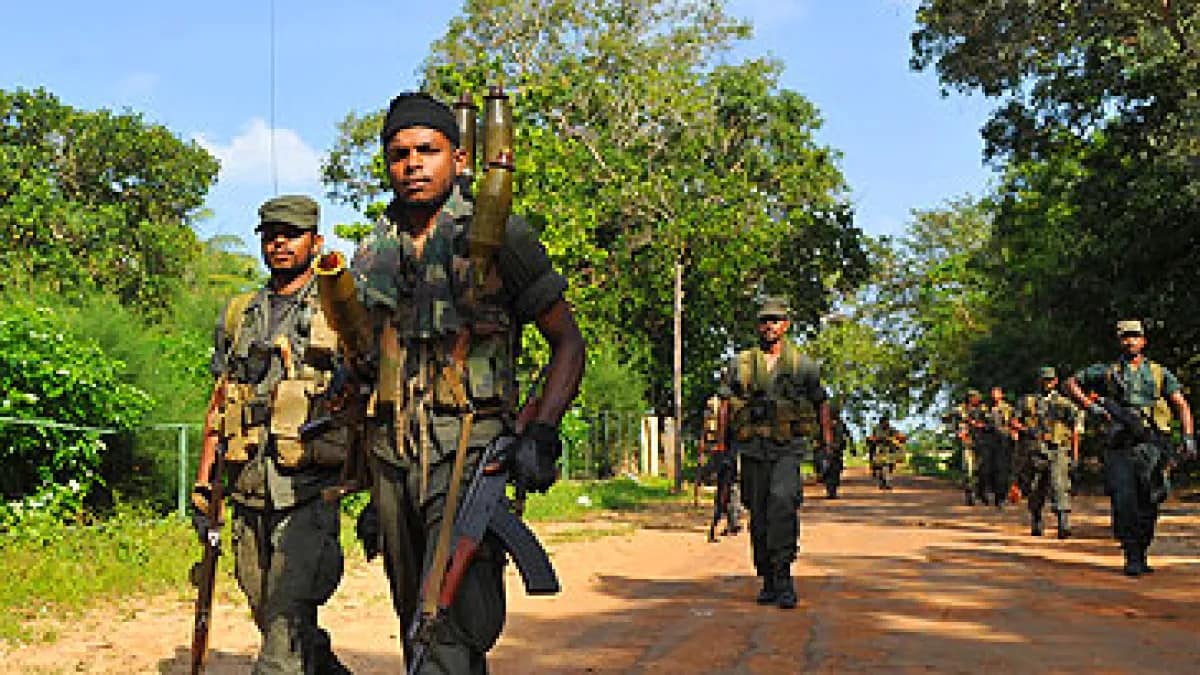
Walking the battlefields of the Sri Lankan Civil War (1983-2009)
The Sri Lankan Civil War was a protracted, bitter conflict fought between the Sri Lankan government and the Liberation Tigers of Tamil Eelam (LTTE). Across 26 years, the war evolved through phases of insurgency, conventional operations, urban sieges and high-intensity battles. From the lagoons and causeways of the Jaffna Peninsula to the jungles, marshlands and dense townships of the island’s north and east, terrain shaped every phase of the fighting — influencing tactics, logistics, survivability and strategic decision-making.
Origins of the war
The war’s origins lay in both real and perceived bias by the majority Sinhalese against the minority Tamil population. Bias against the Tamil language and against Tamil education and employment opportunities turned violent in 1983 when Tamil rebels ambushed a Sri Lankan Army patrol. In response, the anti-Tamil riots pogroms of ‘Black July’ 1983 killed thousands of Tamil civilians, and are seen as the true beginning of the Civil War.
The early years saw the LTTE, under its leader Velupillai Prabhakaran, build a disciplined and ruthless insurgent organisation as they eliminated rival Tamil groups. The LTTE used jungle cover, coastal sanctuaries and extensive local knowledge to establish control across parts of the northern and eastern provinces. As the conflict escalated, the peninsula around Jaffna became a key strategic arena. Its urban density, narrow approach corridors, cultivated fields and lagoon systems created a battlespace where both sides struggled to operate and where control of roads, causeways and high ground proved decisive.
Indian Peacekeeping Force (IPKF)
In 1987, Rajiv Gandhi’s Indian goverment agreed to deploy a peacekeeping force into Sri Lanka to disarm militant groups and enforce peace. Within months, the IPKF was engaged in combat with the LTTE. The IPKF eventually comprised more than 100,000 troops and sustained 1,165 killed in combat before withdrawing in 1990. In May 1991, an LTTE operative assassinated former Prime Minister Rajiv Gandhi.
Final years of the war
One of the conflict’s most studied engagements was the 1991 Battle of Elephant Pass, a fortified bottleneck linking Jaffna to the rest of Sri Lanka. The area’s salt flats, bunds, causeways and marshlands created natural choke points ideally suited to defence but vulnerable to infiltration, sniping, indirect fire and isolation. Later battles around Elephant Pass and the Jaffna Peninsula would show similar patterns as LTTE forces adapted guerrilla methods to increasingly conventional operations, employing trenches, anti-armour teams, waves of infantry assaults and deep defensive belts.
Further south and east, fighting unfolded across jungles, riverine environments and patchworks of villages and farmland that constrained mechanised movement and demanded combined-arms coordination. Major operations such as Riviresa, Jayasikurui and the 2006–2009 Eelam War IV offensive demonstrated the evolution of Sri Lankan Army doctrine as it adapted to LTTE innovations in mobility, fortification, camouflage and asymmetric tactics. The war ended in 2009 with the destruction of LTTE military forces and the death of Velupillai Prabhakaran.
Methodology
This collection of battlefield studies draws on my field visits, period maps, satellite imagery, first-hand accounts, interviews with veterans, and detailed terrain analysis to illuminate how the Sri Lankan Civil War was fought — and why battles such as Elephant Pass unfolded the way they did within the demanding geography of the island’s north.
Sri Lankan Civil War Battle Studies
Below are all current BattlefieldTravels studies in the Sri Lankan CIvil War, covering key battles, campaign phases and associated sites. New studies will be added as further battlefields are walked and analysed.
-
⚔️ First Battle of Elephant Pass, Sri Lanka,
10 July – 9 August 1991
Elephant Pass is in the Vanni District of the Northern Province. It is a critical piece of terrain because it controls access between the mainland/Kilinochchi district and Jaffna Peninsula. Elephant Pass was the scene of much fighting between government forces and the Liberation Tigers of Tamil Eelam (LTTE or Tamil Tigers). The First Battle of…

Authored by Mick Prictor, a retired military officer with 40 years’ service, and a military historian specialising in terrain-focused analysis of tactics, doctrine, and command decision-making in land warfare. His work draws on extensive battlefield fieldwork—more than 280 sites worldwide—and one of the world’s largest private collections of historic military arms, uniforms, and equipment. About me
⚔️ Go deeper — Members get exclusive access to the Deep Research Collection, Field Notes, and monthly Research Dispatches. Try membership free for 7 days, cancel anytime. From $9/month.
Explore Related Themes
Armies: Sri Lankan Army • Indian Army • Tamil Tigers
Commanders: Vellupillai Prabhakaran • President Rajapaksa
Methods: Ambush • Envelopment • Raid • Airborne • Trench Warfare
Environments: Forest Warfare • Mountain Warfare • Jungle Warfare
Further Study: Sri Lankan Civil War further reading
Related Battle Studies, Museum Pieces & Reading Resources


The landing page spans the conflict from 1983 to 2009, including insurgency phases, large-scale conventional battles and the final Eelam War IV offensive.
Published studies include the 1991 Battle of Elephant Pass. Future studies will explore operations around Jaffna, subsequent battles for Elephant Pass, and campaigns across the northern and eastern provinces.
The north and east of Sri Lanka contain lagoons, causeways, wetlands, jungles and dense urban areas that shaped logistics, defensive positions, infiltration routes and the tempo of operations.
The LTTE shifted from guerrilla warfare to semi-conventional and fully conventional operations, using fortified trench systems, anti-armour units, coordinated assaults and an extensive support network.
Yes. Many key locations, including Jaffna and the terrain around Elephant Pass, retain recognisable features and memorials, although access conditions may vary. Minefields and explosive remnants of war remain a threat.
Subscribe to Battlefield Travels and receive a free E-Book Battlefield Guide
Unlock expert battlefield analysis, campaign reconstructions, and historical insights drawn from firsthand exploration and primary sources.
🗺️ You’ll receive:
🎖️ Exclusive historical insights you won’t find elsewhere
📘 A free eBook: 10 Tips for Exploring Historic Battlefields
📰 New battlefield studies straight to your inbox as they are published

⚔️ Go deeper — Members get exclusive access to the Deep Research Collection, Field Notes, and monthly Research Dispatches. Try membership free for 7 days, cancel anytime. From $9/month.