Firsthand battlefield analysis of Vietnam War campaigns and battles

Walking the battlefields of the Vietnam War (1955-1975)
The Vietnam War (1955–1975) began as an effort to stabilise South Vietnam in the aftermath of the French Indochina War and the French withdrawal in 1955. The war escalated through the early advisory years, the deployment of major U.S. combat forces in 1965, the nationwide crises of 1968, and the gradual handover to South Vietnamese forces during the ‘Vietnamisation’ period from 1969 onwards. The war concluded with the final North Vietnamese offensives in 1975. Throughout, conventional battles, counter-insurgency operations, and strategic bombing campaigns intersected in a conflict defined by shifting strategies, multinational involvement, and competing political visions for Southeast Asia.
Escalation 1960-1968
In the early 1960s, the war centred on a Viet Cong insurgency in the south, and the struggle for control of rural provinces. By mid-1965, U.S. ground forces directly entered the fighting, leading to large-scale engagements such as LZ X-Ray in the Ia Drang Valley — the first major meeting of American and North Vietnamese regular forces. Over the next three years, the conflict expanded across the Central Highlands and the demilitarised zone, including the hard-fought battles of Dak To, Hill 875, and the bloody assaults on Khe Sanh.
The Tet Offensive of 1968 marked a turning point: a coordinated nationwide attack that included the brutal urban fighting at Hue, reshaping U.S. public opinion despite being a tactical failure for North Vietnam. In the south, Australian and New Zealand forces conducted counter-insurgency operations across Phuoc Tuy province, exemplified by the intense battle of Long Tan in 1966. Special operations units also played a critical role, culminating in missions such as the Son Tay Raid — an audacious 1970 attempt to rescue American POWs deep inside North Vietnam.
Vietnamisation 1969-1975
From 1969 onward, the war shifted again as U.S. forces gradually drew down and the Army of the Republic of Vietnam (ARVN) assumed greater responsibility. Despite local successes, ARVN struggled to counter major offensives such as the Easter Offensive (1972). In 1975, with American support no longer forthcoming, a rapid conventional campaign by the People’s Army of Vietnam overran South Vietnam, culminating in the fall of Saigon.
This collection of Vietnam War battlefield studies explores these campaigns through a clear, historically grounded lens — drawing on contemporary accounts, operational records, period mapping and on-site field exploration to explain not only what occurred during the conflict, but how key battles shaped its course.
Vietnam War Battlefield Studies
In-depth battlefield analyses based on terrain, primary sources, and on-the-ground exploration.
-
⚔️🔒The Son Tay Raid, North Vietnam,
21 November 1970
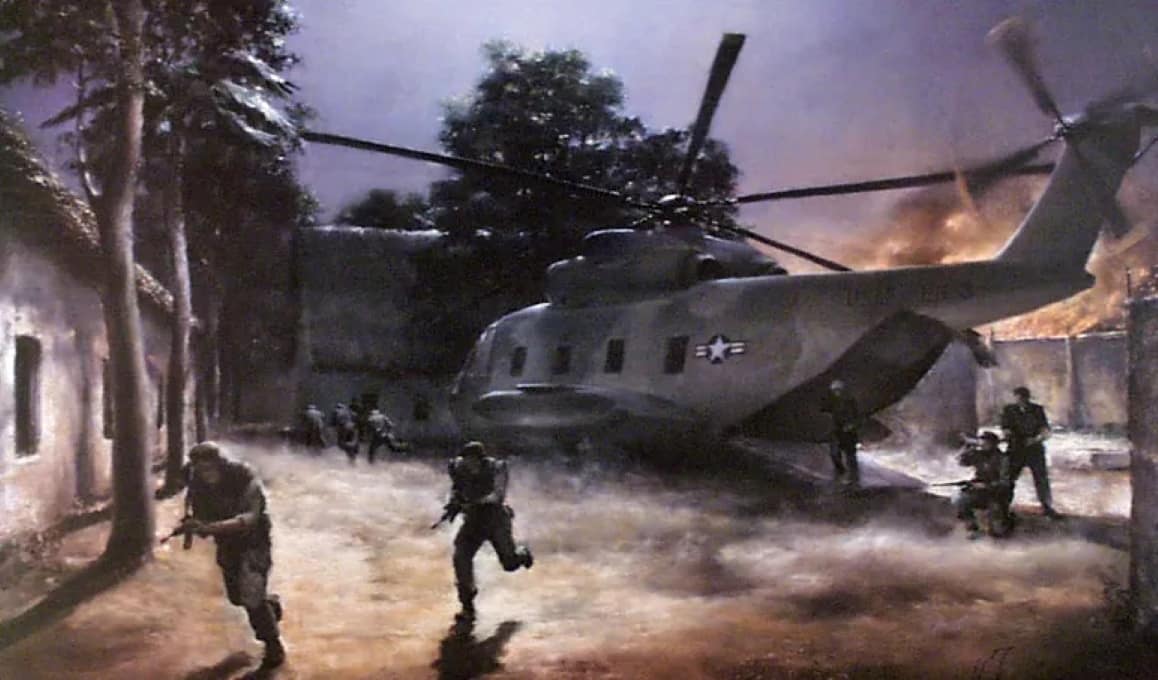
Operation KINGPIN, the Son Tay Raid, on the night of 20/21 November 1970, was a meticulously planned U.S. military operation to rescue American prisoners of war (POWs) from the Son Tay prison North Vietnam. It was one of the most audacious operations in military history. The operation involved a joint force of U.S. Army Special…
Vietnam War Field Notes
Short-form observations, terrain insights, and working interpretations from the field. Some posts require access.
-
📝🔒 Field Note: Battle of Long Tan, South Vietnam, 18 August 1966

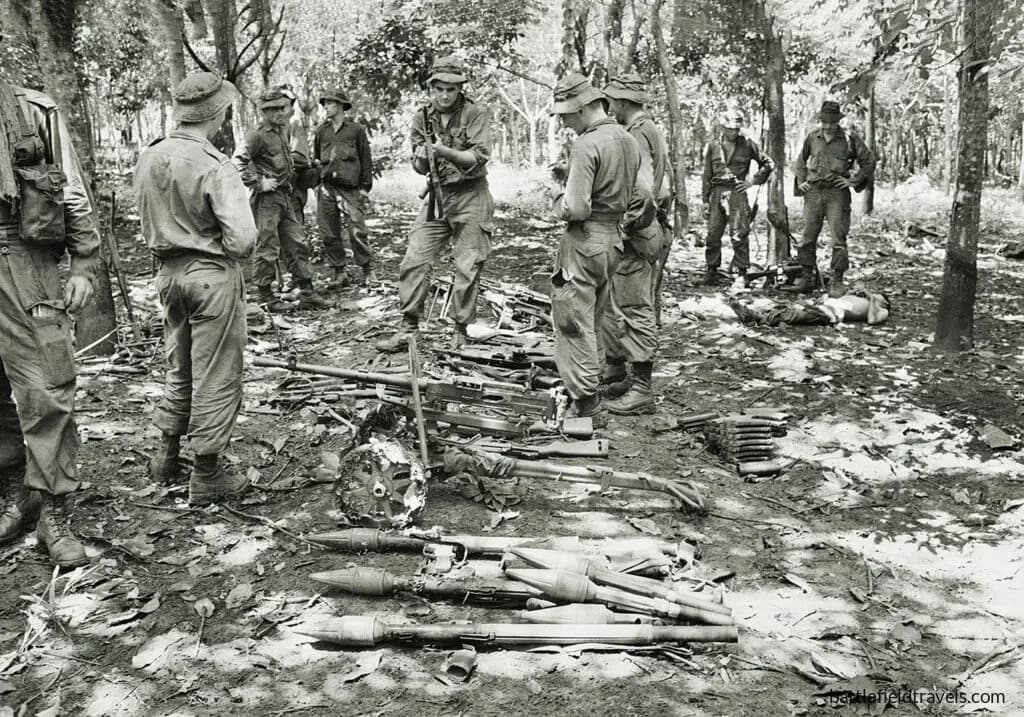
August 2015, Long Tan Rubber Plantation, Baria-Vung Tau Province, Vietnam. I am standing at the Long Tan Cross memorial to the 18 Australian soldiers killed here during the Battle of Long Tan, 18 August 1966. Across the Long Tan battlefield, there is very little apparent relief in the terrain. The ground is largely flat and…

Authored by Mick Prictor, a retired military officer with 40 years’ service, and a military historian specialising in terrain-focused analysis of tactics, doctrine, and command decision-making in land warfare. His work draws on extensive battlefield fieldwork—more than 280 sites worldwide—and one of the world’s largest private collections of historic military arms, uniforms, and equipment. About me
⚔️ Go deeper — Members get exclusive access to the Deep Research Collection, Field Notes, and monthly Research Dispatches. Try membership free for 7 days, cancel anytime. From $9/month.
Explore Related Themes
Armies: American Army • North Vietnamese Army • Viet Cong • Australian Army • ARVN • ROK Army
Commanders: William Westmoreland • Vo Nguyen Giap
Methods: Ambush • Envelopment • Raid • Airborne • Riverine
Environments: Forest Warfare • Mountain Warfare
Further Study: Vietnam War further reading
Related Battle Studies, Museum Pieces & Reading Resources


Each study uses a blend of operational history, eyewitness accounts and on-ground field reconnaissance to explain how key battles shaped the wider course of the Vietnam War.
Published studies include the Son Tay Raid, with Hue, Long Tan, and major Central Highlands battles such as LZ X-Ray, Dak To, Hill 875, Hamburger Hill, Khe Sanh and Mang Yang Pass in development.
Yes. The narrative spans the advisory period, escalation, Tet Offensive, Vietnamisation, and the final North Vietnamese offensives that concluded the war in 1975.
Alongside U.S. and South Vietnamese forces, the war included contributions from Australia, New Zealand, South Korea, Thailand and special operations units, each operating in distinct tactical and geographic contexts.
Many key sites — including Hue, Long Tan, Khe Sanh and locations across the Central Highlands — remain accessible and retain important historical features.
Subscribe to Battlefield Travels and receive a free E-Book Battlefield Guide
Unlock expert battlefield analysis, campaign reconstructions, and historical insights drawn from firsthand exploration and primary sources.
🗺️ You’ll receive:
🎖️ Exclusive historical insights you won’t find elsewhere
📘 A free eBook: 10 Tips for Exploring Historic Battlefields
📰 New battlefield studies straight to your inbox as they are published

⚔️ Go deeper — Members get exclusive access to the Deep Research Collection, Field Notes, and monthly Research Dispatches. Try membership free for 7 days, cancel anytime. From $9/month.