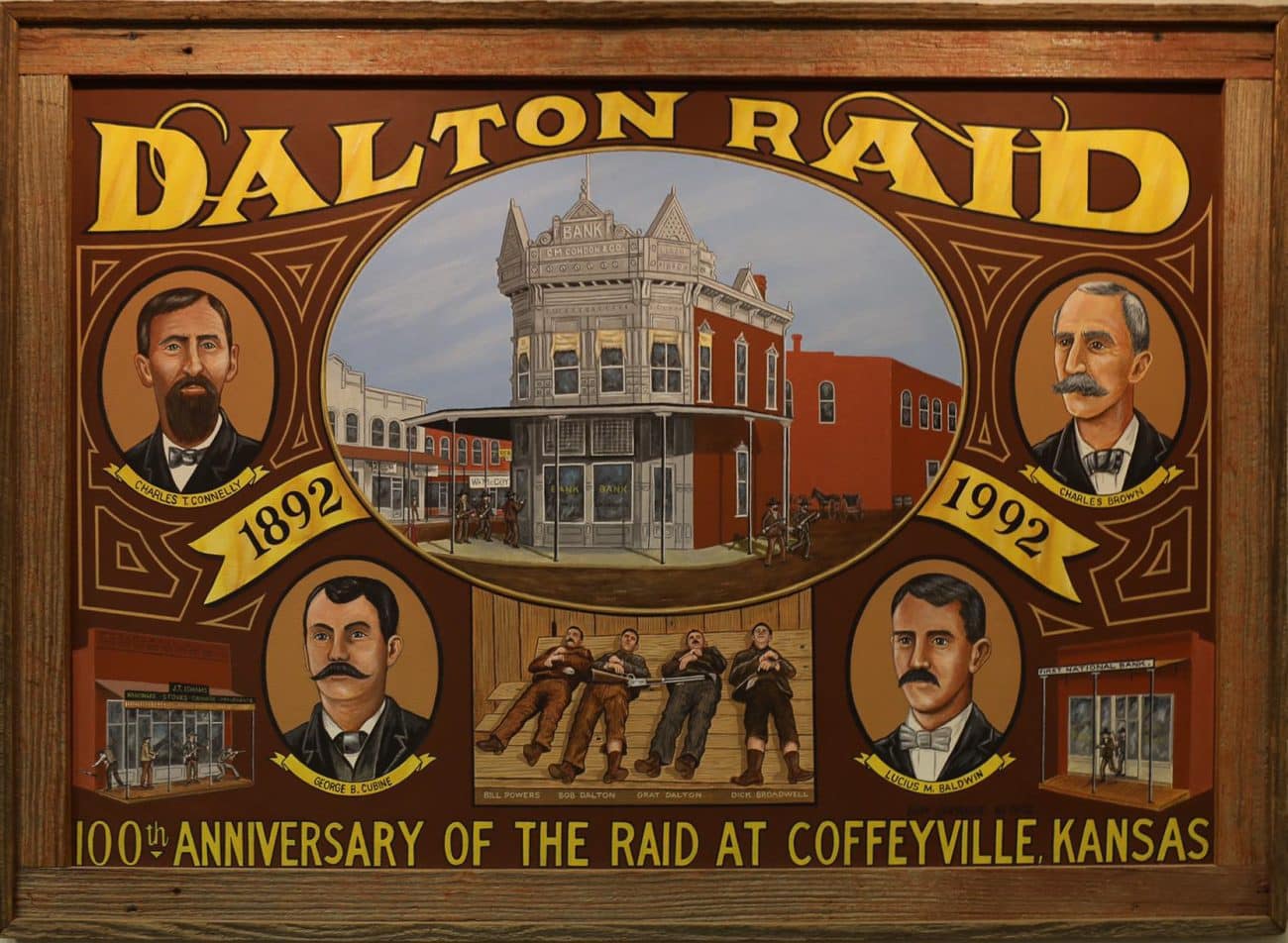
The day the Dalton Gang rode into Coffeyville and into the history books!
On a quiet morning in October 1892, the Dalton Gang rode into Coffeyville, Kansas, aiming to pull off two simultaneous bank robberies. Within minutes, their daring plan collapsed in a hail of bullets, leaving four gang members dead and the town forever etched into the folklore of the Wild West.
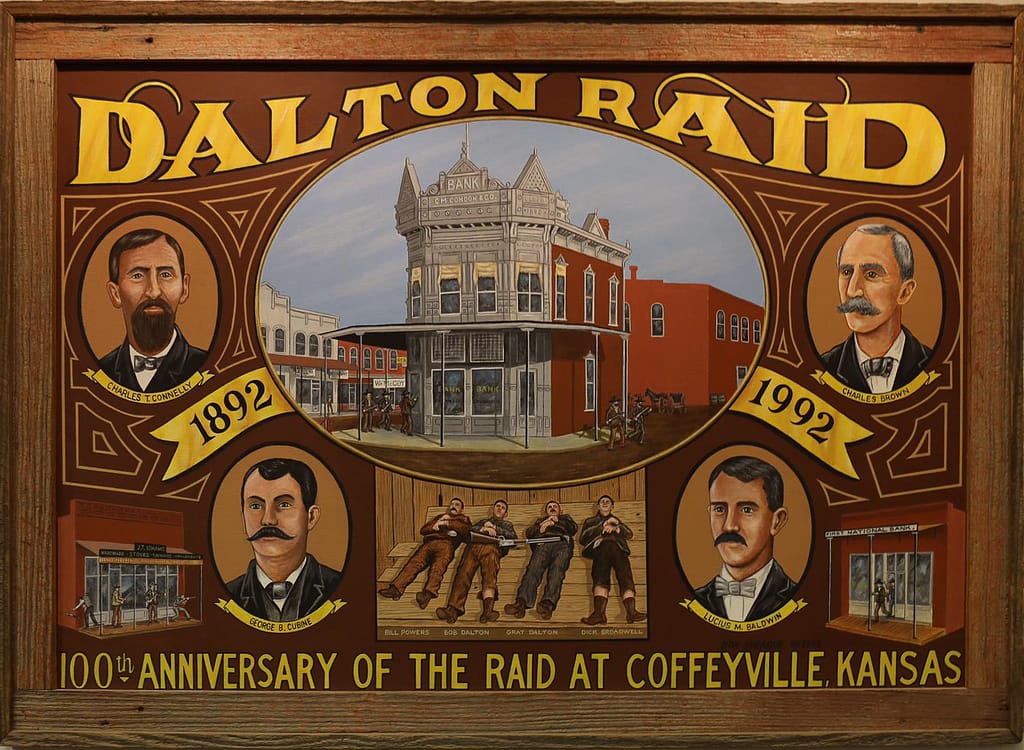
Key facts
Google Earth map – Location of the Dalton Raid
🎧 Prefer to listen? This article is available as a 17-minute podcast
Tip: If Podbean overlay appears after pausing, click the × in the top-right corner to return to the player controls.
The Dalton Gang
Not actually a battlefield; more of a Wild West shootout. In a place even many of my American friends have never heard of! This little town in southeast Kansas was the scene of one of the great good guy-bad guy confrontations of the Wild West.
One of the Dalton brothers, Franklin ‘Frank’ Dalton, was a legendary lawman. The other Dalton brothers – Grat, Bob and Emmett, along with Bill Power and Dick Broadwell – terrorised the frontier states (primarily Kansas, Oklahoma and California) in the early 1890s. They were horse thieves, bank robbers, train robbers and murderers. All-round bad guys.
The Dalton Gang plans a double bank robbery in Coffeyville!
In October 1892 the Dalton Gang decided to pull off a double bank robbery to outdo their competitors and cousins Cole and Jim Younger, and Frank and Jesse James. They had grown up in Coffeyville and knew the town well. Unfortunately for them, the townspeople also knew them very well, despite the fake moustaches and disguises they wore for the raid.
⚔️ Go deeper — Members get exclusive access to the Deep Research Collection, Field Notes, and monthly Research Dispatches. Try membership free for 7 days, cancel anytime. From $9/month.
At about 9 AM on October 5th, 1892, the five members of the Dalton Gang rode into Coffeyville to rob both the C.M. Condon Bank and the First National Bank. They were spotted and identified by one of the storekeepers as they rode into town. The storekeeper then alerted the Town Marshall and other townspeople. Expecting trouble, hardware merchant Henry Isham handed out repeating rifles and shotguns to local citizens.
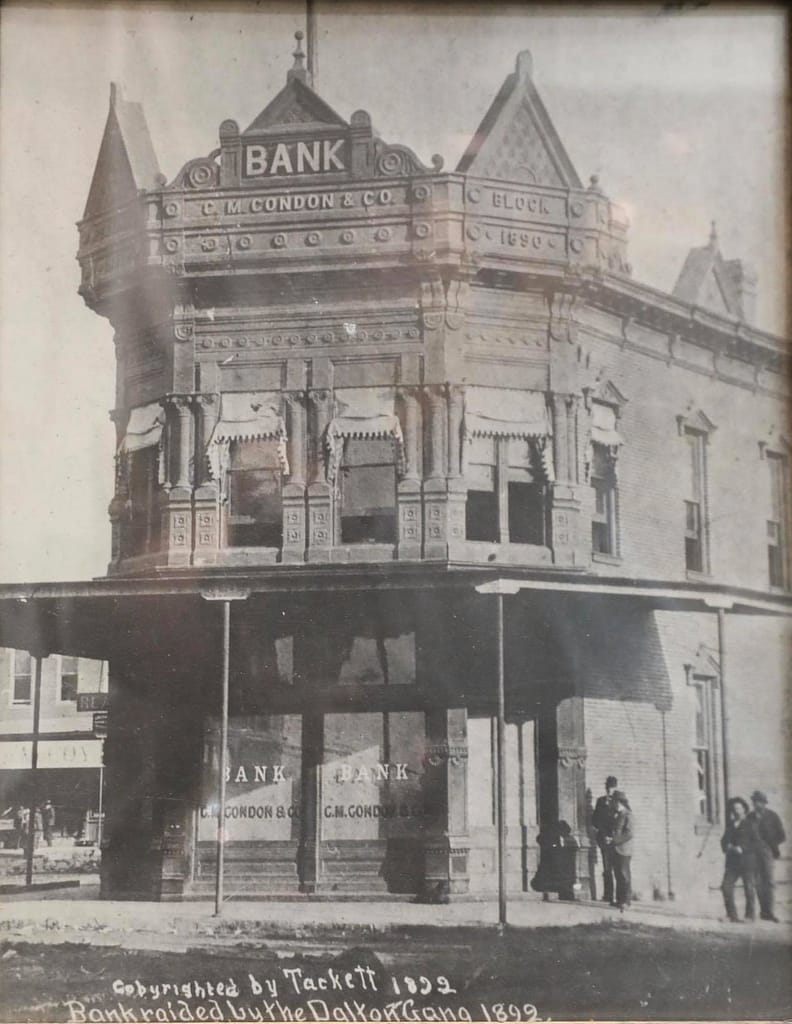
The Condon Bank and First National holdups
When Grat Dalton, Bill Powers and Dick Broadwell attempted to hold up the Condon Bank, they were told the vault had a time-delay lock and could not open for ten minutes. While they waited for the vault to open, they began to notice armed men moving in the streets. Then the shooting started around First National Bank as Bob and Emmet’s heist was foiled by armed citizens!
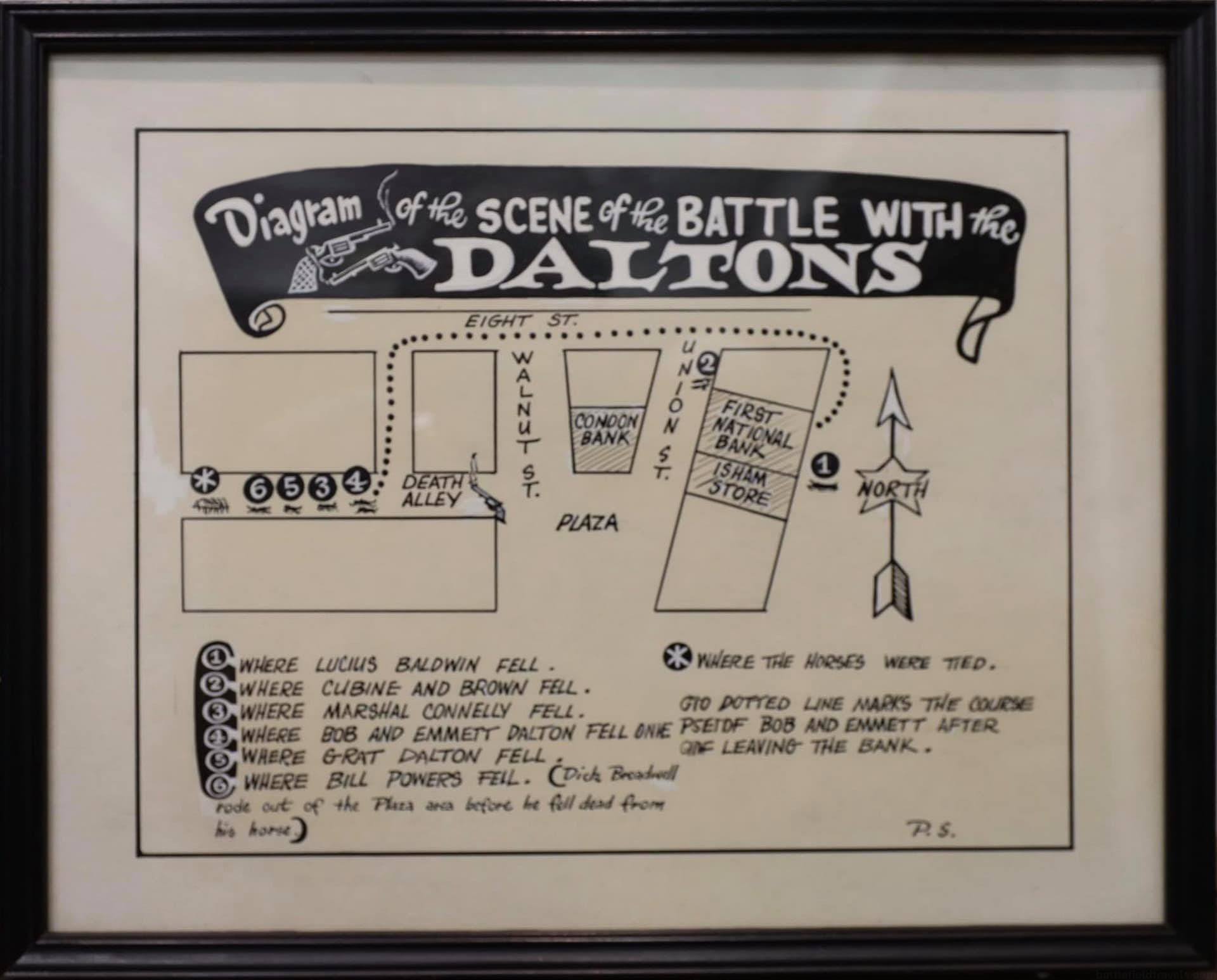
The shootout and aftermath
By the time the Dalton Gang exited the banks, the townspeople were waiting for them in the streets and on the roofs of surrounding buildings. After a 15-minute gun battle, the Daltons made a run for their horses, but as they ran, they were all gunned down, mostly in the laneway across the street from Condon Bank.
Three members of the gang – Grat Dalton, Bob Dalton, Bill Powers – were shot dead in what became known as ‘Death Alley’. Dick Broadwell was mortally wounded and died outside the town. Emmett Dalton was badly wounded but survived and spent 15 years in prison. Four townspeople – Lucian Baldwin, Charles Brown, George Cubine, and Town Marshall Charles Connelly – were also killed.

Coffeyville today
The old First National Bank building is gone, but the Condon bank is beautifully preserved. The Henry Isham Hardware building is still there, as is the old jail. The ‘Dalton Defenders Museum’ is right across the street from the Condon Bank and has a great educational display and a huge collection of original items, including many of the Dalton Gang’s guns, hats, equipment, horse saddles etc. It even has the feed bags that Dalton brought into town to carry away their loot!
‘Death Alley’ is still there, but now paved. On the pavement are Crime Scene-style chalk outlines of each of the Dalton gang members who were gunned down. Definitely helps to visualise the situation!

The old Condon & Co Bank building in Coffeyville. It is now the Perkins Building and houses the Chamber of Commerce and Visitor Center 
The old Condon & Co Bank building in Coffeyville. It is now the Perkins Building and houses the Chamber of Commerce and Visitor Center The old Condon & Co Bank building in Coffeyville. It is now the Perkins Building and houses the Chamber of Commerce and Visitor Center 
The old Condon & Co Bank building in Coffeyville. It is now the Perkins Building and houses the Chamber of Commerce and Visitor Center
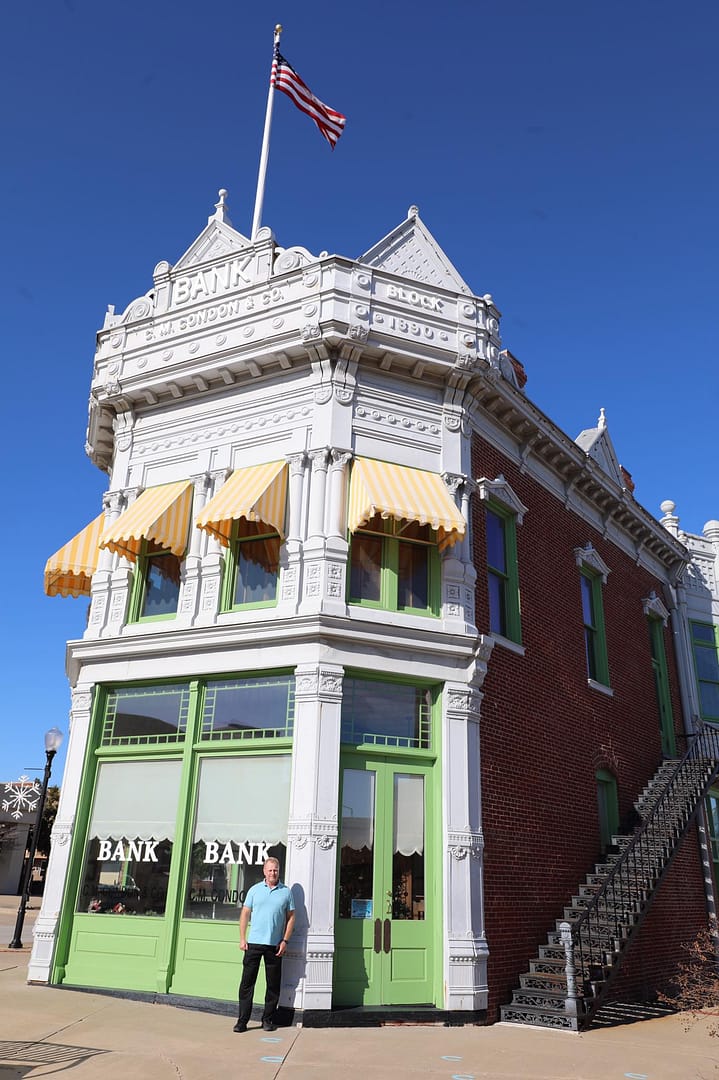
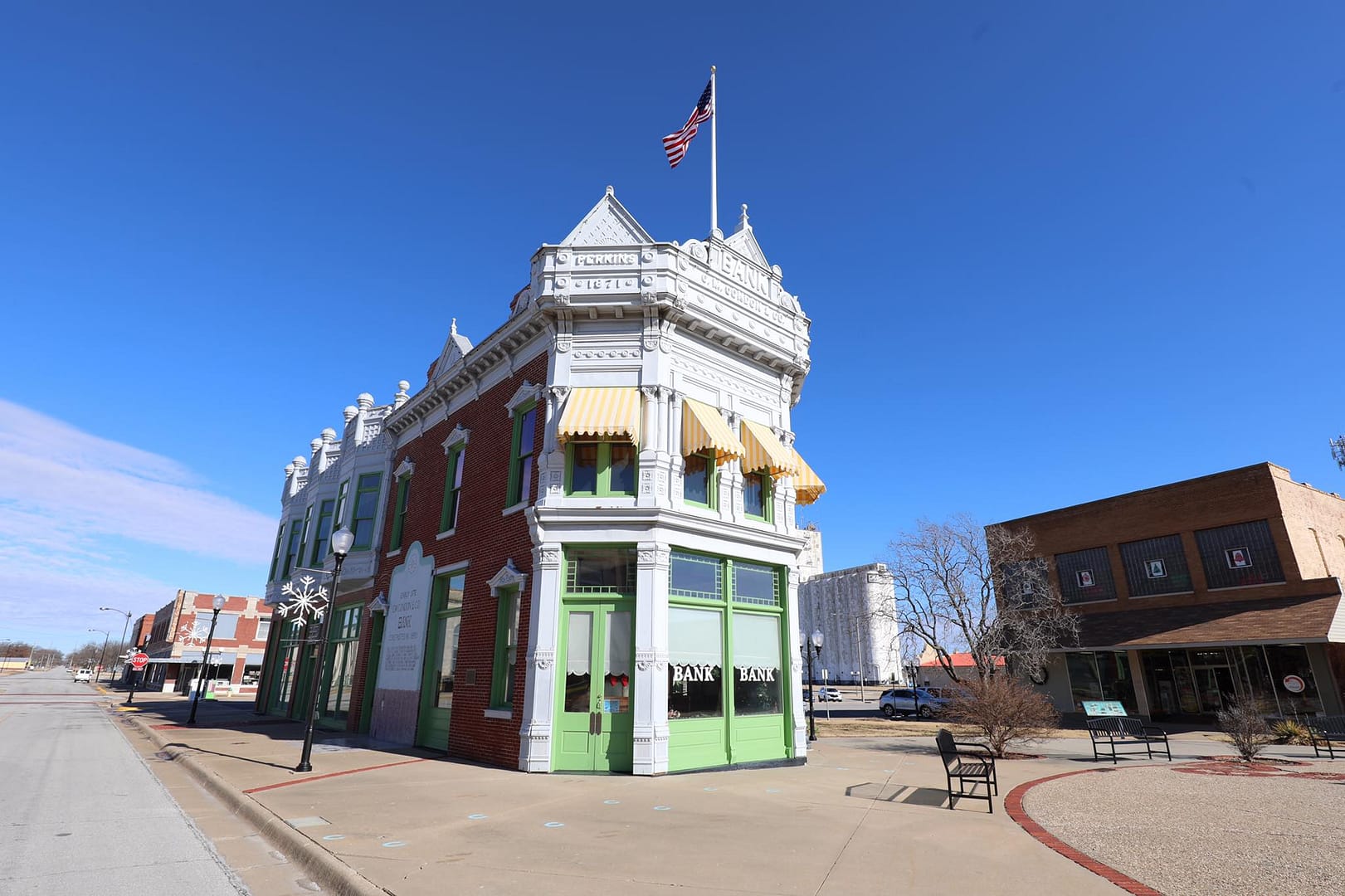
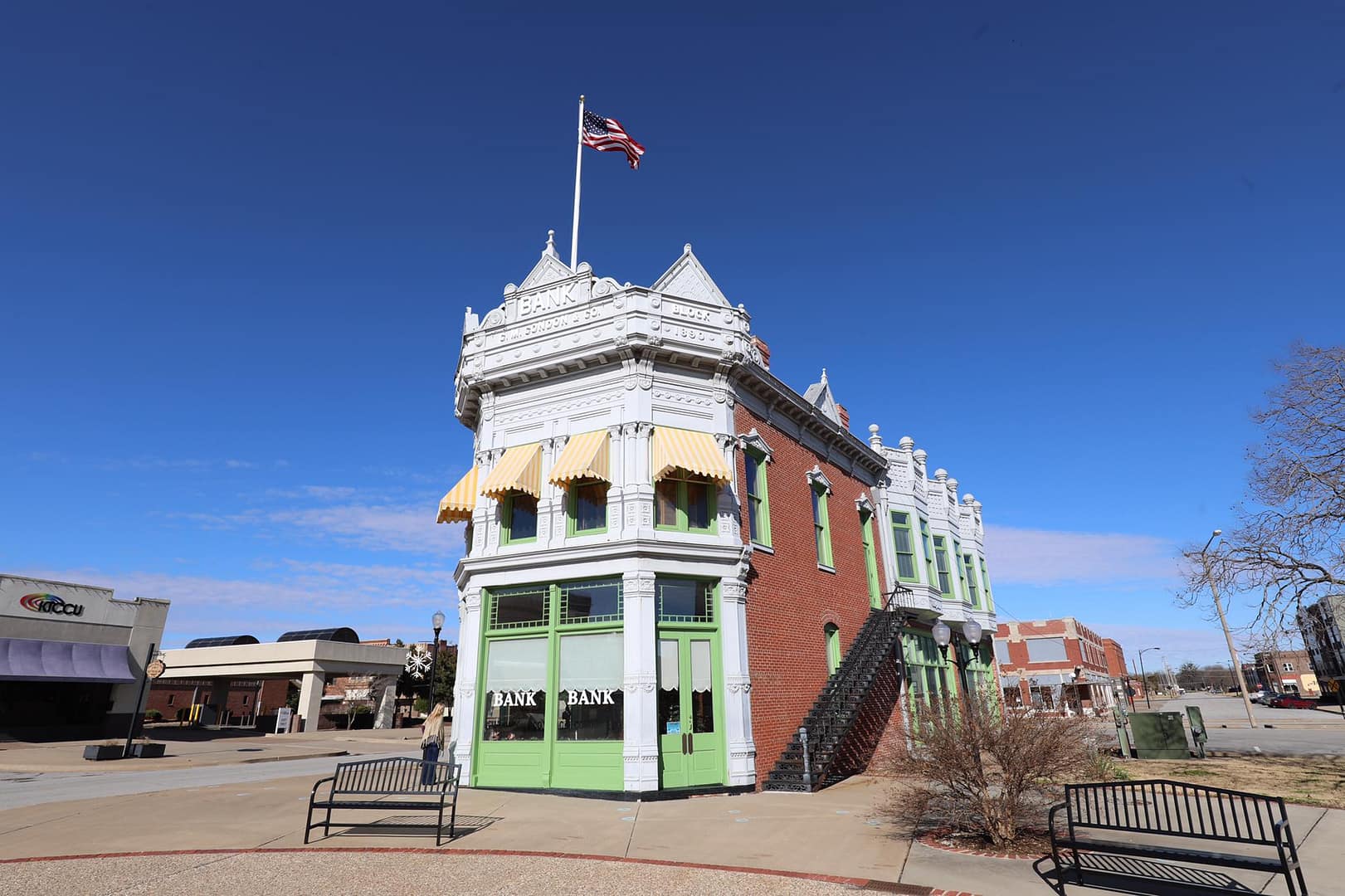
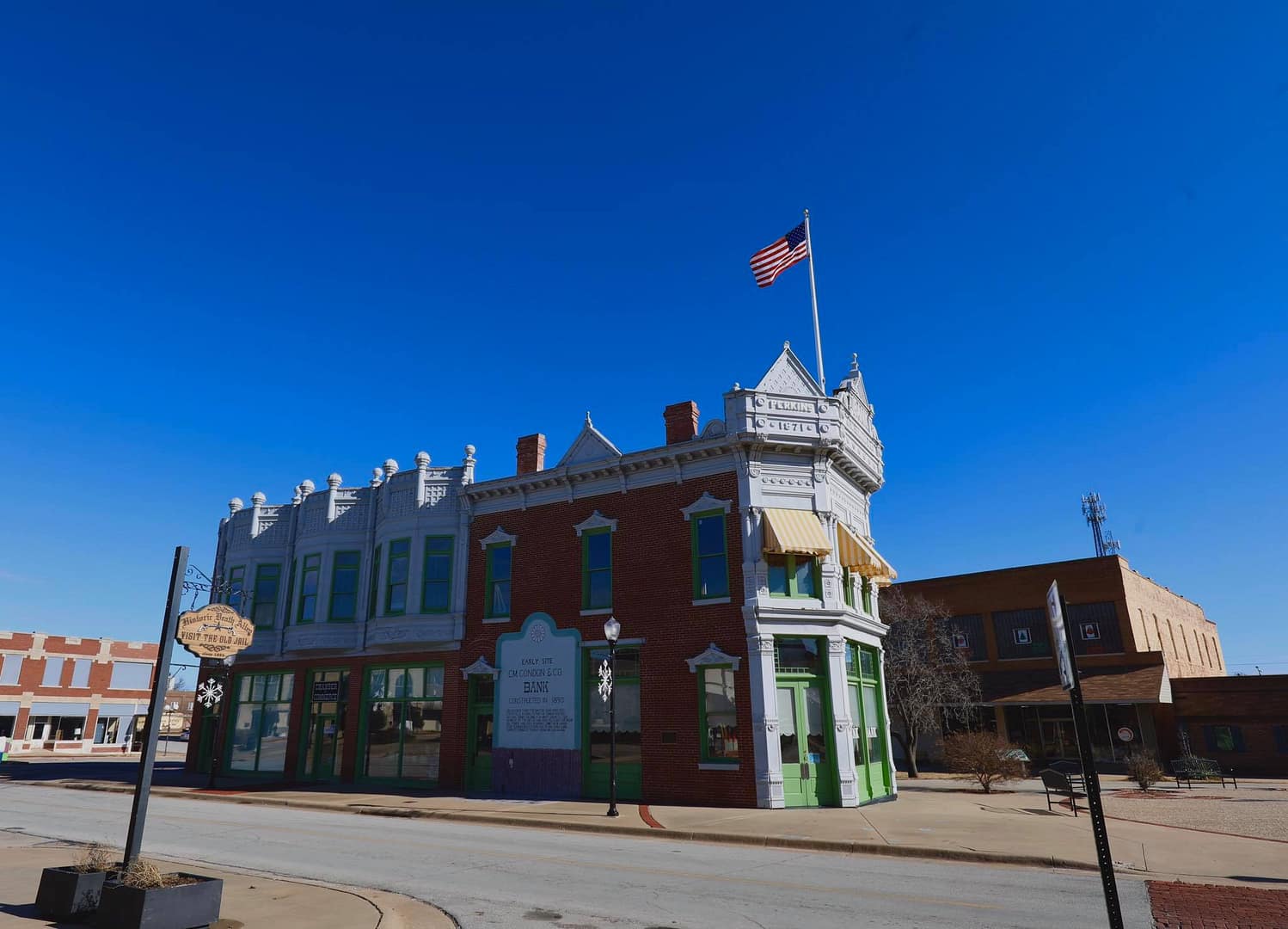
The old Condon & Co Bank building in Coffeyville. It is now the Perkins Building and houses the Chamber of Commerce and Visitor Center

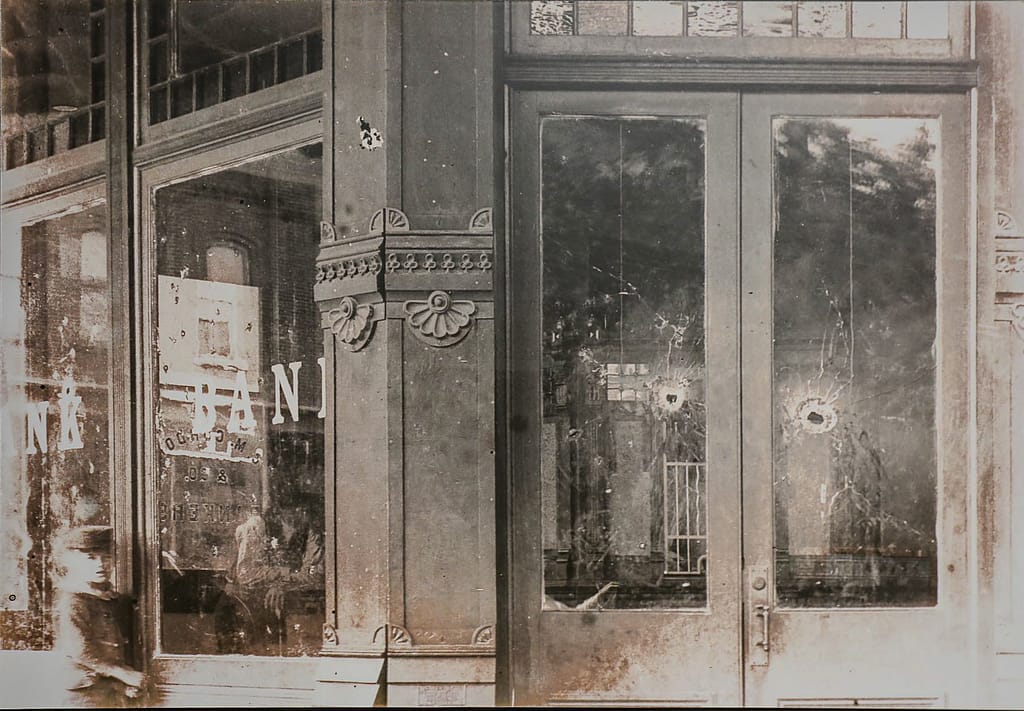
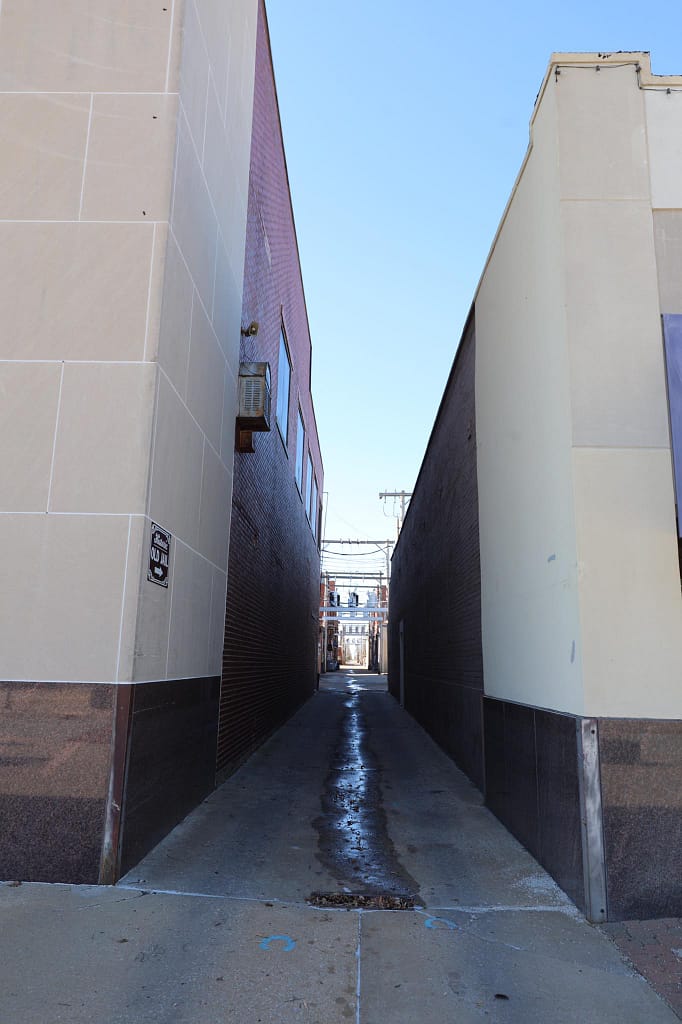


‘Death Alley’ – the Dalton’s horses were tethered at the end of this alley and the gang members ran down here to make their getaway. Grat Dalton, Bob Dalton and Bill Power were killed in this alley. Emmett Dalton was left seriously wounded by a shotgun blast. Dick Broadwell made it the horses but he was badly wounded and died just outside town. The alley was a dirt street back in 1892 and the old jailhouse is about halfway down on the right.
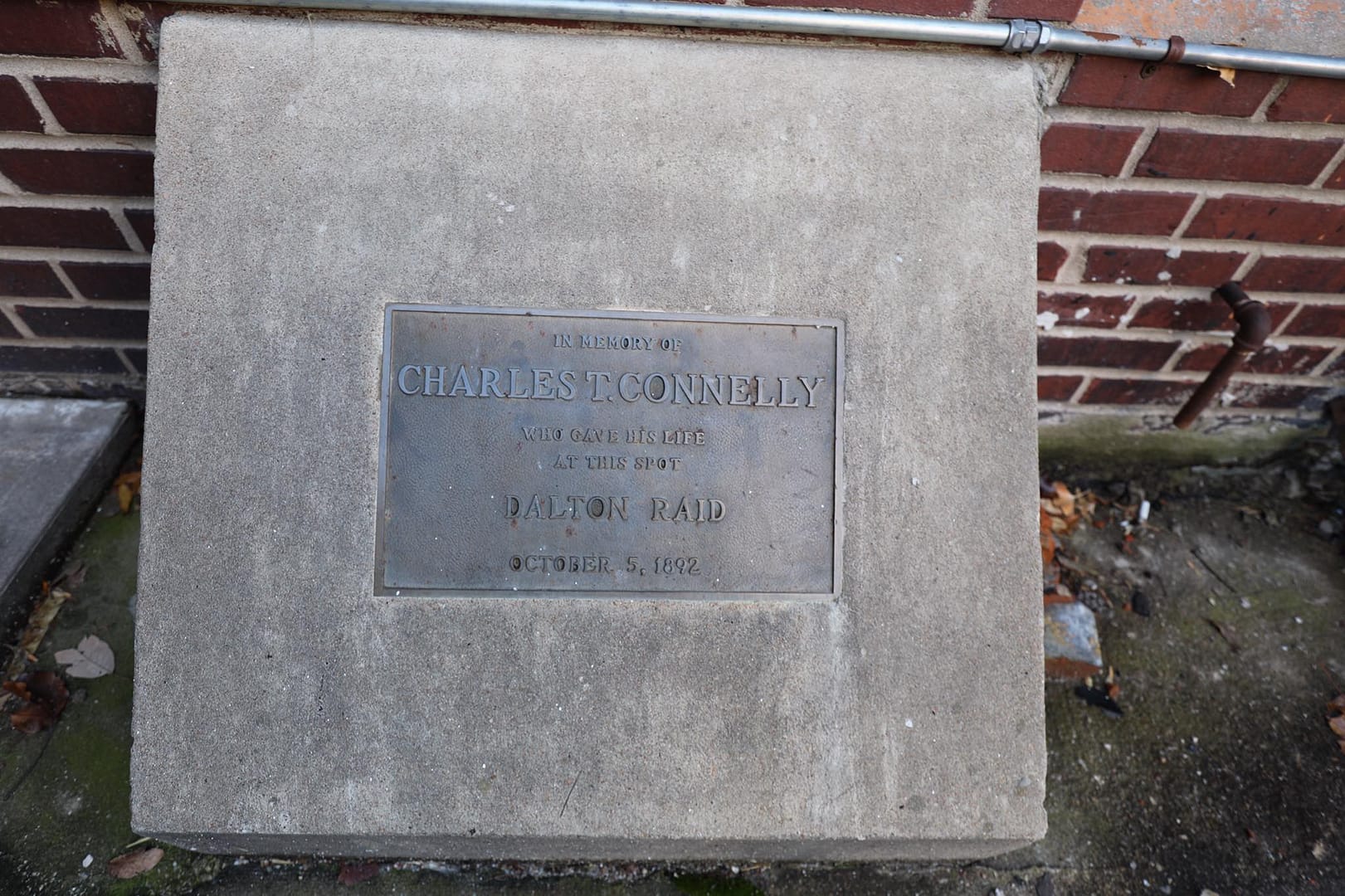
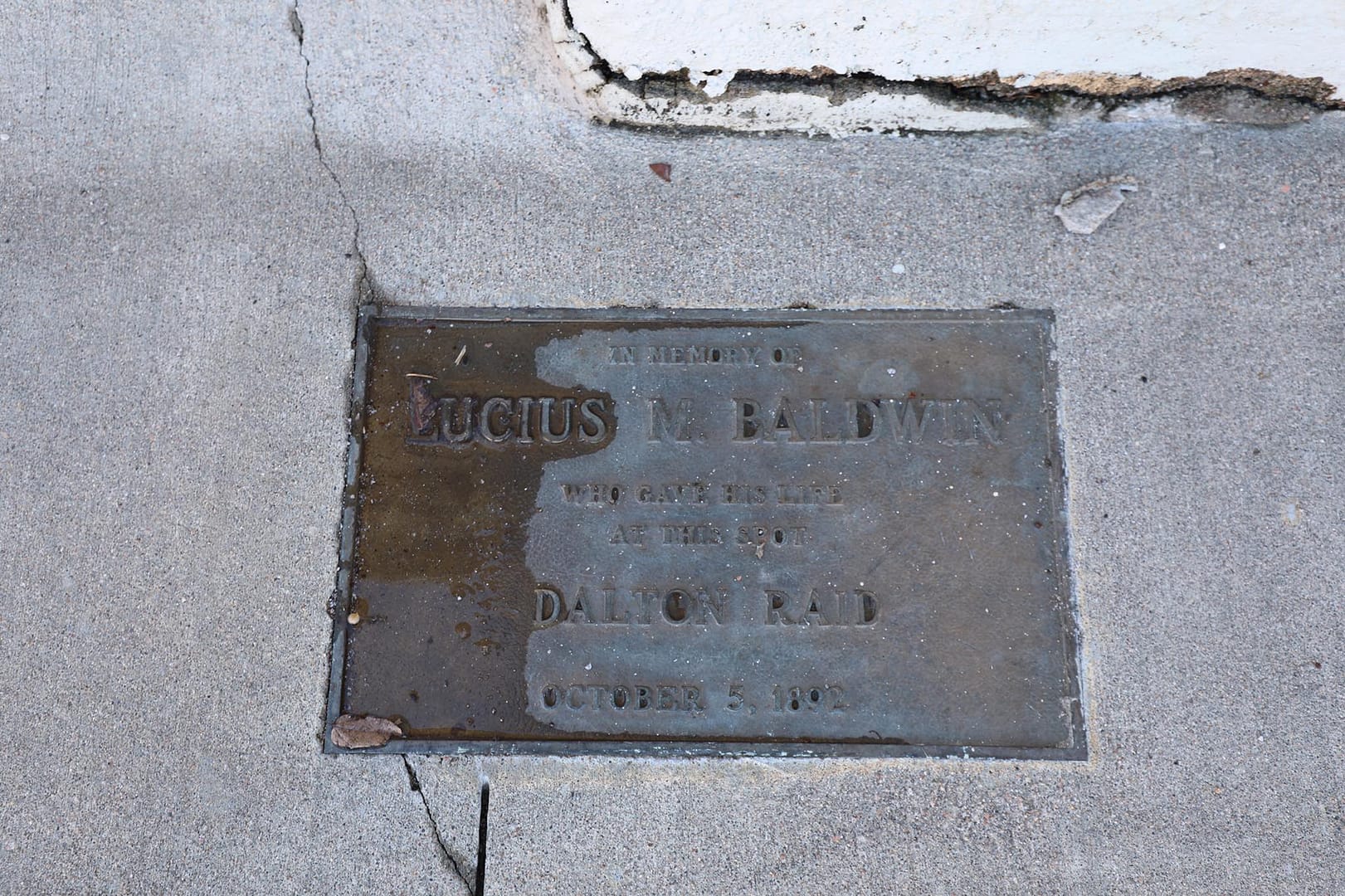

Plaques marking the spots where Marshall Charles Connelly was killed by the Daltons in Death Alley, and citizens George Cubine, Charles Brown and Lucius Baldwin were all killed in the street around the hardware store.


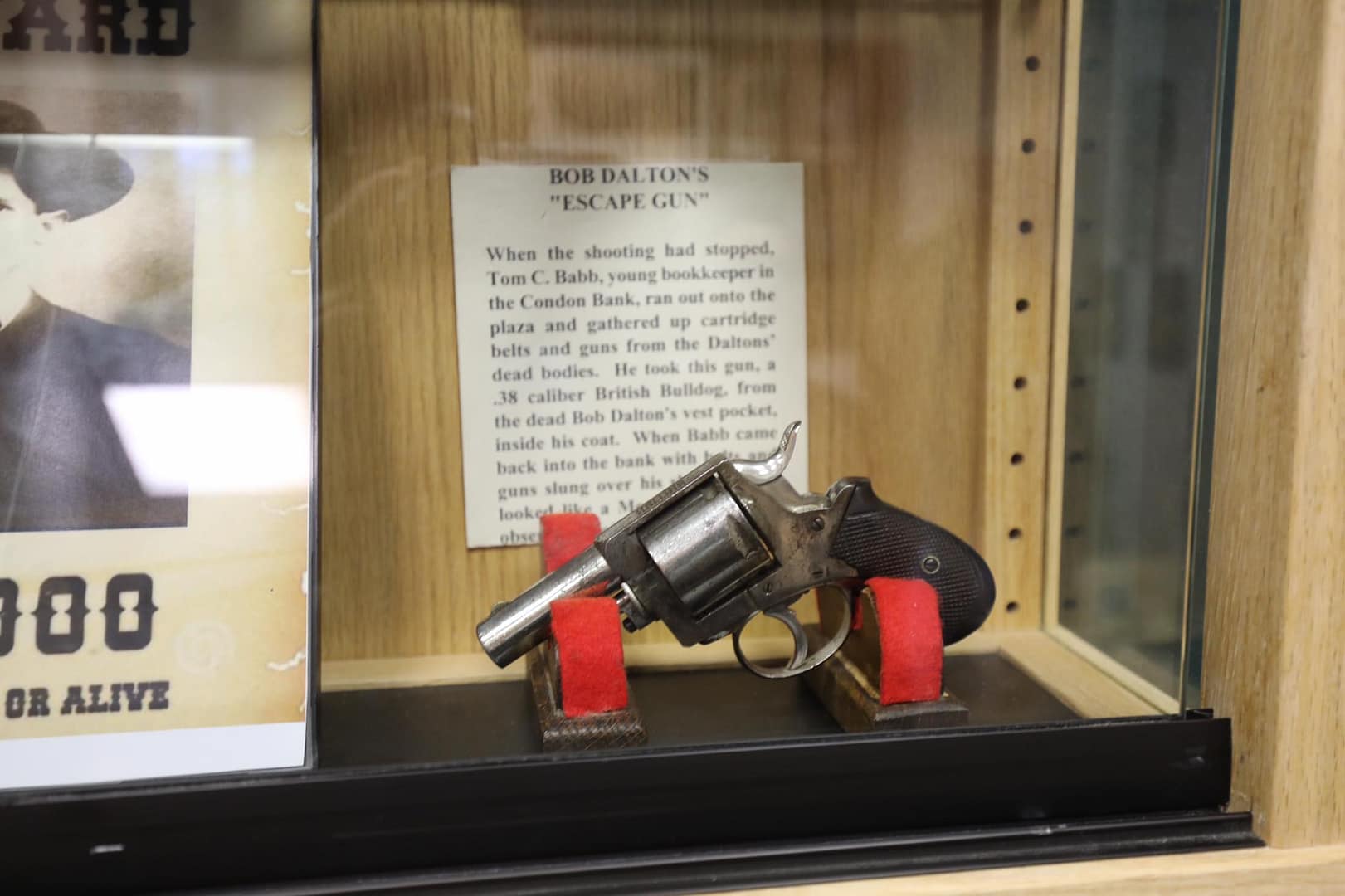
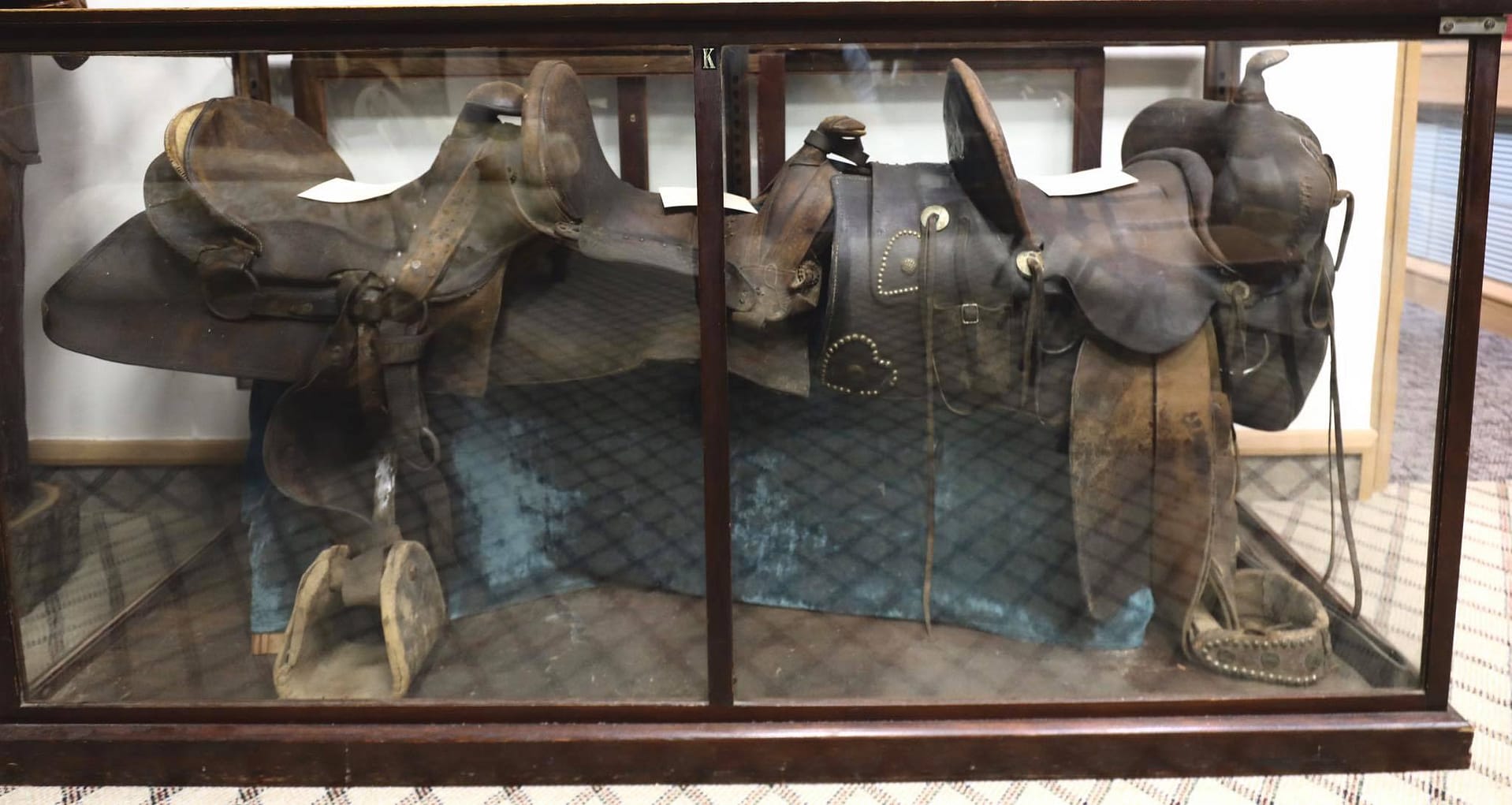
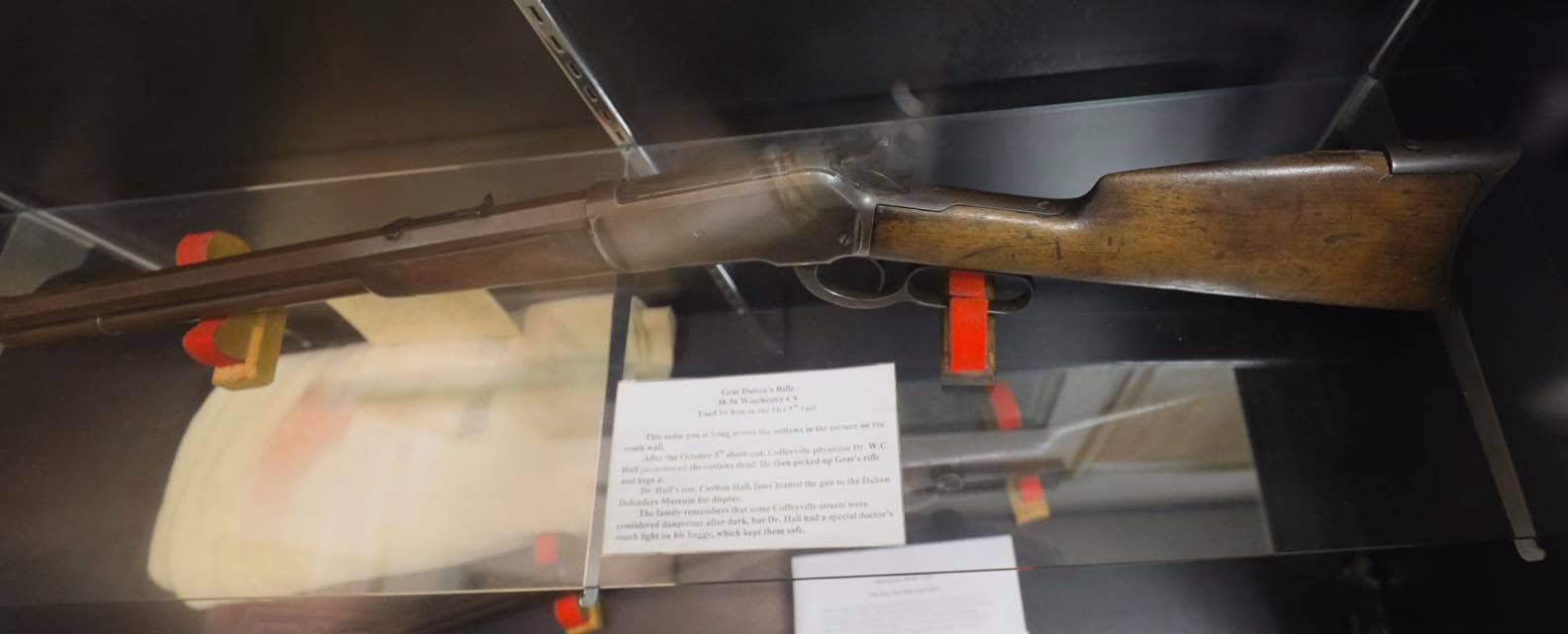
Some of the original items on display at the Dalton Defenders Museum, including guns, saddles, clothes etc that the Dalton’s used.
Link to the Dalton Defender’s Museum website
Found this useful? Buy me a coffee — it helps fund future battlefield research


Authored by Mick Prictor, a retired military officer with 40 years’ service, and a military historian specialising in terrain-focused analysis of tactics, doctrine, and command decision-making in land warfare. His work draws on extensive battlefield fieldwork—more than 280 sites worldwide—and one of the world’s largest private collections of historic military arms, uniforms, and equipment. About me
Sources
Robert B. Smith (1996). Daltons!: The Raid on Coffeyville, Kansas. University of Oklahoma Press.
📚 Further Reading
This battle study nests within the broader analytical framework explored in the Research Hub, where operational methods, operating environments, armies, commanders, and weapons are examined across conflicts and eras. The links below connect related studies across the wider body of battlefield analysis on the BattlefieldTravels site.
⚔️ Explore all battle studies from America’s Old West 1840-1912
🏛️ Explore the museum of America’s Old West historic weapons and equipment
The book list for this conflict includes the leading campaign studies, memoirs, and operational analyses available on America’s Old West, selected specifically to complement this battlefield study.
📚America’s Old West (1840-1912) – Recommended Reading
🗞️ For updates on new battlefield studies and research insights, you can subscribe to the Newsletter.
Related Battle Studies, Museum Pieces & Reading Resources
 ⚔️ Fort Bowie, Apache Pass, Cochise and Geronimo,
1862-1894
 🏛️ America’s Old West (1840s–1912) Weapons and Equipment
 ⚔️🔒Battle of the Little Bighorn, Montana Territory,
25-26 June 1876
 ⚔️ Battle of Black Jack, Kansas,
2 June 1856
 ⚔️ 1840–1912 America’s Old West, Battle Studies
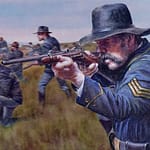 📚 America’s Old West (1840–1912),
Recommended Reading
🧭 Battlefield Travel Guide: Coffeyville Raid
Getting There
- Nearest City: Tulsa, Oklahoma (70 km); Wichita, Kansas (120 km)
- Access: Coffeyville is well signposted off US-166/US-169. The historic downtown, where the raid occurred, is compact and easily walkable.
- Tickets: Most outdoor sites are free; Dalton Defenders Museum requires an entry fee.
Site Orientation
- Key Landmarks: The two original bank buildings, “Death Alley” where the gang was cut down, the Isham Hardware store, and commemorative markers.
- Walking Routes: A self-guided walk around downtown takes less than an hour, linking the banks, alley, and museum.
- Best Vantage Points: Standing at the corner of 8th Street and Walnut gives the clearest sense of the banks’ proximity and the townspeople’s fields of fire.
Museums & Visitor Centres
- Dalton Defenders Museum: Contains exhibits on the raid, firearms, and artefacts, plus broader Coffeyville history.
- Nearby: Brown Mansion (early 20th-century residence) and other small-town heritage sites.
On-Site Experience
- Interpretive Signage: Well-marked plaques and street markers explain the sequence of events at each key location.
- Atmosphere: The historic core remains largely intact, giving a vivid sense of place. The alley retains a sombre, authentic character.
Nearby Points of Interest
- Related Sites: Other outlaw-era towns and museums across Kansas and Oklahoma.
- Broader Interest: Verdigris River walking trails, Dalton family cemetery graves nearby.
Practical Tips
- When to Visit: The town hosts an annual Dalton Defenders Day festival in October. Otherwise, all sites are accessible year-round.
- Facilities: Restaurants and cafés in downtown Coffeyville; restrooms at the museum.
FAQ: Dalton Gang raid on Coffeyville, Kansas (1892)
The Dalton Gang attempted to rob two banks simultaneously in Coffeyville, Kansas, on 5 October 1892.
Armed citizens and lawmen engaged the gang in a fierce gunfight on the streets.
Four of the five Dalton Gang members were killed; Emmett Dalton was captured alive and later pardoned.
It marked the end of the Dalton Gang and became legendary as a symbol of frontier justice.
Yes. Coffeyville preserves the banks, the shootout sites, and has the Dalton Defenders Museum.
Subscribe to Battlefield Travels and receive a free E-Book Battlefield Guide
Unlock expert battlefield analysis, campaign reconstructions, and historical insights drawn from firsthand exploration and primary sources.
🗺️ You’ll receive:
🎖️ Exclusive historical insights you won’t find elsewhere
📘 A free eBook: 10 Tips for Exploring Historic Battlefields
📰 New battlefield studies straight to your inbox as they are published

⚔️ Go deeper — Members get exclusive access to the Deep Research Collection, Field Notes, and monthly Research Dispatches. Try membership free for 7 days, cancel anytime. From $9/month.