Dispatches go out monthly. If you are reading this as a forwarded copy and would like to subscribe, you can do so at BattlefieldTravels.com.

From the Desk
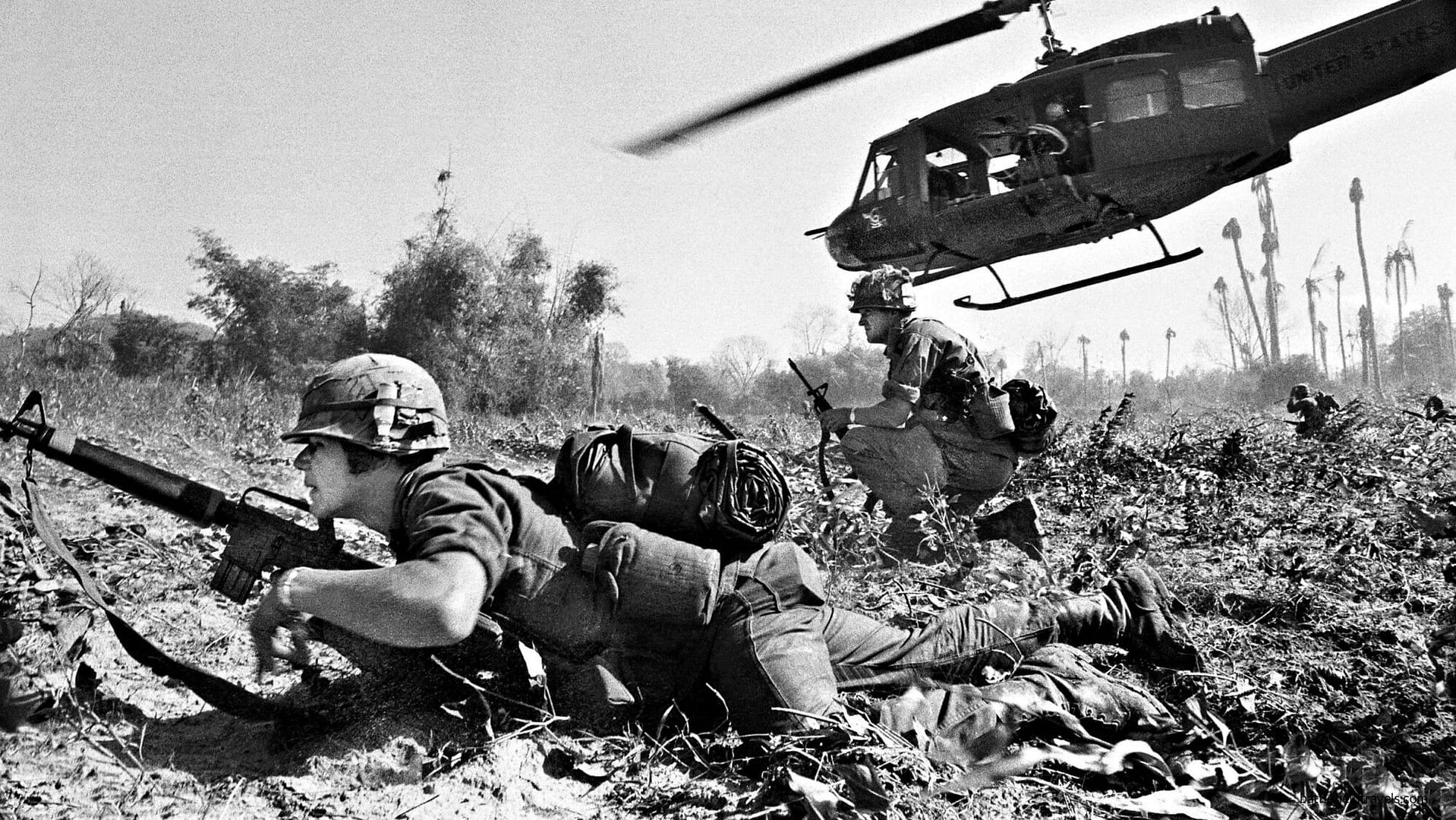
It has been a productive month, perhaps the most productive since the platform launched. I have published twenty-one new podcasts, three new Field Notes, a major Tactical Innovations in Warfare study on the Culloden bayonet drill, and work is well underway on two further articles spanning the origins of airmobility doctrine, the Rhodesian Fire Force. Alongside all of that, the PhD continues to advance toward Confirmation of Candidature in late 2026.
There is a lot in this dispatch. Grab a coffee.
Recent publications
The Podcast Library
The BattlefieldTravels Podcasts page is now live with twenty-one episodes covering battlefields, raids, sieges, and tactical studies from 52 BC to 1991. These are all based entirely on my deep research battle studies and every one of them draws on primary sources and firsthand exploration of the battlefield. The only reason I stopped at 21 podcasts was because I hit the limit for monthly uploads in June. More to be created from 1 July onwards. I have used AI to assist in generating the podcasts, otherwise they would have taken another year to get done!
The feedback on these has been 100% positive. The current episode library:
- 🎧Caesar and the Siege of Alesia, 52 BC: Rome’s Gallic Triumph
- 🎧The Crusades: Kerak Castle under Siege, 1183–1188
- 🎧Rocroi 1643: The Last Stand of the Spanish Tercio
- 🎧Fort William Henry, New York, 1757: The Siege, the Massacre, and the Struggle for Lake George
- 🎧Battle of Cowpens, South Carolina, 1781: Dan Morgan’s Tactical Masterpiece
- 🎧Lee’s Greatest Victory: The Battle of Chancellorsville, Virginia, 1863
- 🎧Battle of Franklin, Tennessee, 1864: Hood’s Suicidal Assault
- 🎧Königgrätz, 1866: The Dreyse Needle Gun and the Dawn of Mission Command
- 🎧Garryowen in Glory: A Tactical Study of Little Bighorn, Montana, 1876
- 🎧Ambush at Bắc Lệ, Tonkin, 1884: Catalyst of the Sino-French War
- 🎧The Dalton Gang Raid on Coffeyville, Kansas, 5 October 1892
- 🎧Spion Kop, Natal, January 1900: A Day of Disaster on the Tugela Heights
- 🎧The Desert Gamble: T.E. Lawrence and the Fall of Aqaba, Jordan, 1917
- 🎧Bite and Hold: The 1917 Battle of Polygon Wood, Belgium
- 🎧Raate Road 1940: When Tiny Finland Humbled the Mighty Red Army
- 🎧Fighting for the Causeway — 82nd Airborne Division at La Fière, 1944
- 🎧Pegasus Bridge 1944: Seizing the Caen Canal and Orne River Bridges
- 🎧Indochina, October 1950: Battle of Route Coloniale 4
- 🎧Operation Hirondelle, July 1953: The Audacious French Paratrooper Raid on Lạng Sơn
- 🎧Operation Kingpin, 1970: The Audacious Son Tay Prison Raid
- 🎧First Battle of Elephant Pass, Sri Lanka, 10 July – 9 August 1991
I used up my entire monthly quota loading all these on to Podbean! New episodes will begin releasing again from 1 July. Apologies for any frustration in the interim.
Published articles
💡Tactical Innovation — The Culloden Bayonet Drill
This was a major primary source research effort to bust some persistent myths. The completed study examines one of the most consequential tactical adaptations in British military history: the bayonet drill adopted by the Duke of Cumberland’s army before the Battle of Culloden in April 1746. Cumberland’s new drill trained each soldier to direct his bayonet thrust not at the Highlander directly in front of him but at the unshielded right side of the man to his right.
The study is supported by six independent contemporary sources — The Scots Magazine (April and November 1746), The Gentleman’s Magazine (1746), The London Gazette (1746), Marchants History of the Present Rebellion (1746), Henderson’s History of the Rebellion (1752) and Rolt’s Memoirs of Cumberland (1767) and examines both the tactical mechanics of the innovation and its effects on the Highland charge as a fighting system. I also explore an engraving of the battle created by Augustin Heckel in 1747. Members can access the full study on the site.

💡1866: Königgrätz, the Dreyse Needle-Gun and the Dawn of Mission Command
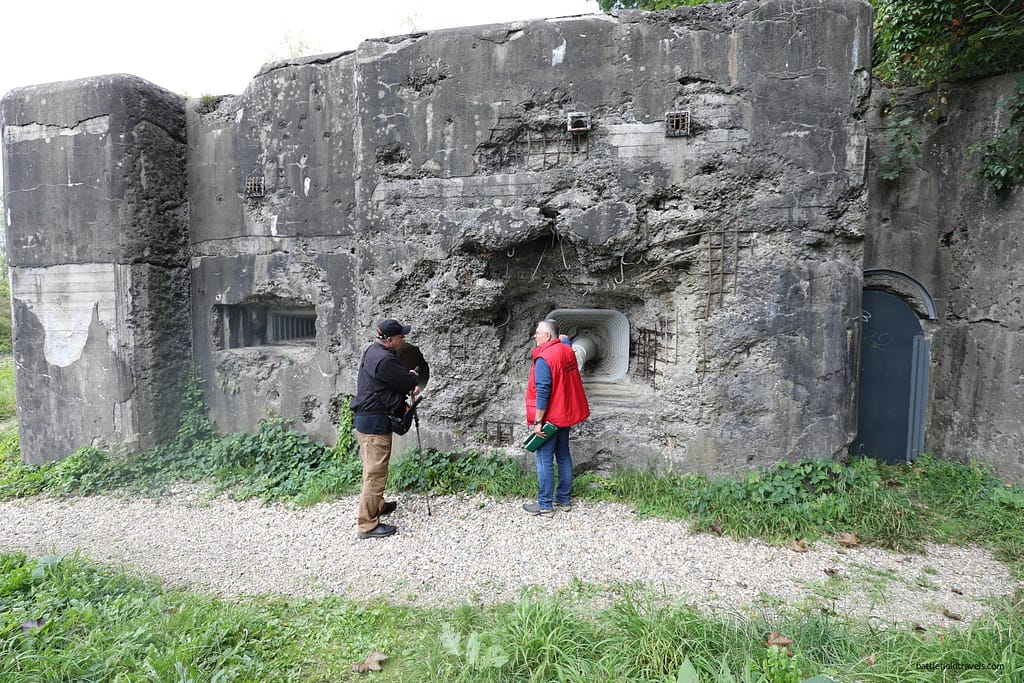
When Austrian and Prussian troops clashed at Jičín, Tratenau, Münchengrätz, and Königgrätz in 1866, it was a clash of mismatched tactical systems. The Austrians, like almost every other major power in the world, were armed with a muzzle-loading percussion rifle-musket. Their tactics were based on what had been working since Napoleon’s time: dense, aggressive assault columns that moved rapidly through the killing ground to close to bayonet range with the enemy. The Prussians, by contrast, were armed with the breech-loading Dreyse needle-gun. They also had a new command philosophy – Auftragstaktik, which demanded initiative at every level, and they had new tactics to bring it all together. This study examines primary sources, including the Prussian 1847 Infantry Regulations, and the Austrian 1861 Line Infantry and Jager Regulations.
📝Field Note — Nghĩa Lô, Vietnam, October 1952
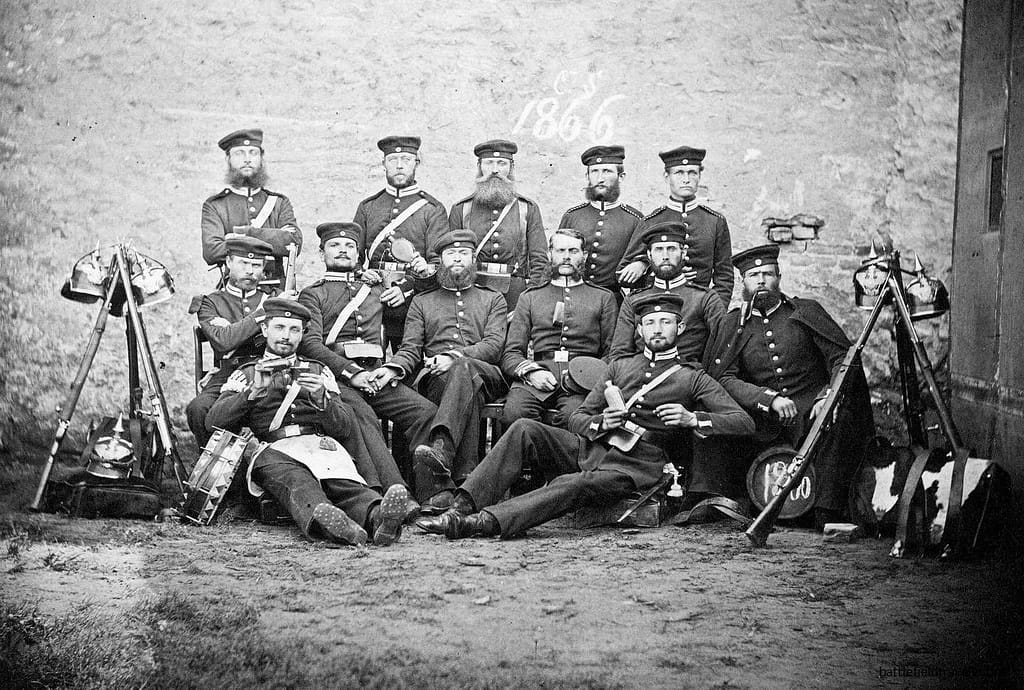
The Nghĩa Lô field note is now published. The Battle of Nghĩa Lô in October 1951 is one of the less-examined engagements of the First Indochina War — a Viet Minh assault on a French highland garrison that demonstrated General Giáp’s growing confidence in conventional offensive operations against fixed positions. The Viet Minh offensive and the French airborne response were a dramatic foretaste of what was to come in 1952. The field note covers the terrain, the tactical dispositions, and what the ground reveals that the documents alone cannot show.
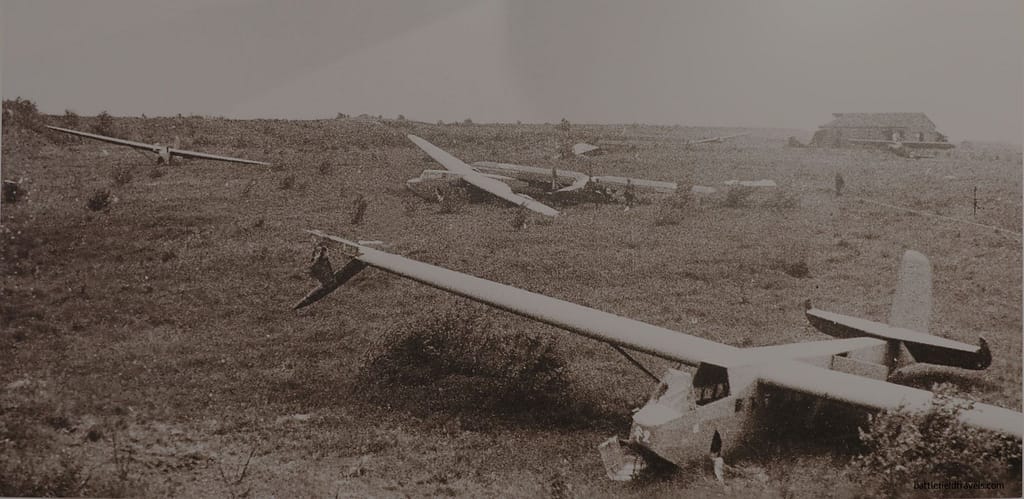
📝Field Note — Glider assault on Fort Eben Emael, 10 May 1940
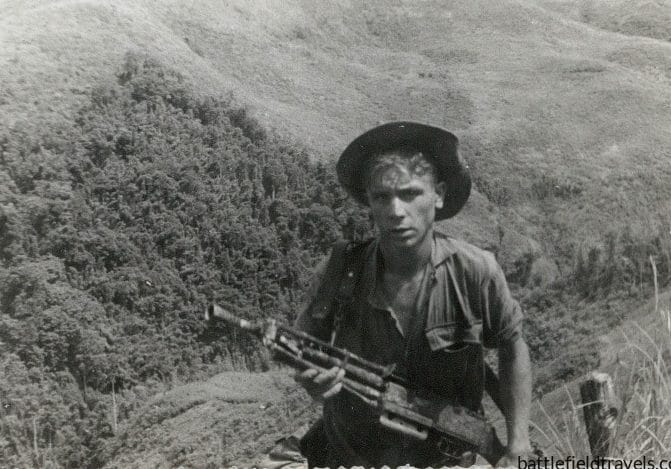
The Eben-Emael Field Note is now published. I explored Fort Eben-Emael in October 2025. The fort was designed to be impregnable to ground assault, and was meant to delay any potential German invasion until French and British reinforcements could arrive. The fortress was not designed to defend against a new form of warfare – vertical envelopment. On the night of 10 May 1940, eighty-five glider-borne German paratroopers overwhelmed the fort’s defenders in a stunning coup-de-main operation.
Works in Progress (Preview)
Several substantial pieces are in active development. Members can read the current working status and early analytical framing in the member’s section below. Here is what is coming:
💡Tactical Innovations in Warfare.
Over thousands of years of warfare, armies have sought ways to gain advantage on the battlefield. Sometimes the solution was a new weapon. Sometimes it was a radical new method. Often it was a combination of both. From the disciplined ranks of the Greek phalanx to pike-and-shot warfare, to the interlocking machine-gun fire plans of the twentieth century, tactical innovations have repeatedly reshaped how battles are fought. These are the new articles I am currently developing:
- 💡Tactical Innovation — Airmobility: How the Helicopter Gave the Army Its Third Dimension
- 💡Tactical Innovation — Fire Force: The Rhodesian Bush War

Field Notes
Field Notes are the raw, visceral records I write after walking the battlefield. They capture the “I am standing here right now…” moments, the feel of the ground, the micro-terrain details, and the first-hand insights that later shape the full studies. These are not polished academic pieces. They are based on the notes I took on the day. They are personal, immediate, and often written the same day I visit a battle site most people will never see in person. These are the new Field Notes I am currently developing:
📝Field Note — Balibo, East Timor: 2 RAR Airmobile Insertion, October 1999
📝Field Note — 161 Recce Flight operations, South Vietnam 1966-1971

📝Field Note — LTG Horrocks Orders to XXX Corps for Market Garden, 15 September 1944: Leopoldsburg, Belgium

PhD Research Update
My PhD work at Australian National University’s Coral Bell School continues to progress. The thesis examines how battlefield commanders perceive, interpret, and exploit small-scale terrain features in tactical decision-making, from the Age of Reason to the mid-twentieth century. The analytical framework, which I am calling the PIE model (Perceive, Interpret, Exploit), is being tested against a database of more than 230 battles, with five fully developed anchor cases and a growing body of supporting analysis.
Confirmation of Candidature is targeted for late 2026. The research is beginning to generate findings that will feed directly into future BattlefieldTravels content. The Culloden study published this month is one example, and the Spion Kop analysis below is another.
For those who are interested in the academic dimensions of the work, I am happy to discuss it directly. The thesis is built on the same methodological commitment that underpins the platform’s field notes: there are things the ground reveals that the documents cannot.
👉 Continue reading — full analysis of the Spion Kop terrain myth, and a deeper dive into the analysis behind upcoming articles. Try membership free for 7 days.

Authored by Mick Prictor, a retired military officer with 40 years’ service, and a military historian specialising in terrain-focused analysis of tactics, doctrine, and command decision-making in land warfare. His work draws on extensive battlefield fieldwork—more than 280 sites worldwide—and one of the world’s largest private collections of historic military arms, uniforms, and equipment. About me
Subscribe to Battlefield Travels and receive a free E-Book Battlefield Guide
Unlock expert battlefield analysis, campaign reconstructions, and historical insights drawn from firsthand exploration and primary sources.
🗺️ You’ll receive:
🎖️ Exclusive historical insights you won’t find elsewhere
📘 A free eBook: 10 Tips for Exploring Historic Battlefields
📰 New battlefield studies straight to your inbox as they are published
⚔️ Go deeper — Members get exclusive access to the Deep Research Collection, Field Notes, and monthly Research Dispatches. Try membership free for 7 days, cancel anytime. From $9/month.