
Recent Publications
Over the past few weeks, I have added significant new material to the site, including a new long-form study on the Pegasus Bridge coup de main on D-Day. I have also added new Research Dispatch and Field Note Hubs that provide a ‘behind-the-scenes’ perspective on BattlefieldTravels.
Battle Study
- Pegasus Bridge (1944) — now published
Tactical Innovations
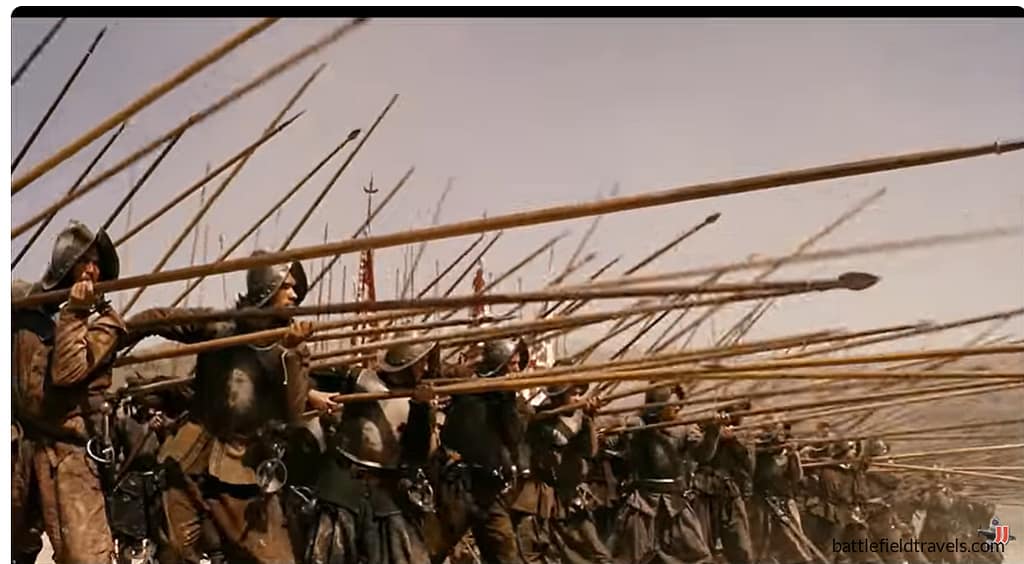
- Pike and Shot Warfare: the dominant tactical system of the 16th and 17th centuries — now published
New Research Hubs
Two new Research Hubs are now live on the site: Research Dispatches and Field Notes. Both are available exclusively to members.
- Behind the Scenes – Research Dispatches — Research Dispatches are updates on current and future research, including key insights drawn from battlefield analysis. These will be published monthly and are accessible to subscribed members. Published Research Dispatches:
- Research Dispatch March 2026: Pegasus Bridge, Orléans, and Nghĩa Lộ
- Research Dispatch April 2026: Pegasus Bridge, Ukraine – insights from the front, Tactical Innovation Hub
- Behind the Scenes – Field Notes — These notes are drawn directly from the notes I took as I walked historic battlefields all over the world, usually in the evening as I captured the day’s efforts and prepared for the next day of exploring. They focus on terrain, movement, observation, and working interpretation rather than narrative summary. Current published Field Notes:
- Battle of Waterloo, Belgium – Chateau Hougoumont (1815)
- Battle of Isurava, Kokoda Track, Papua New Guinea (1942)
- Battle of Ramillies, Belgium (1706)
- Battle for Verdun, France – Forts Douaumont and Vaux (1916)
- Battle of Königgrätz, Czech Republic – the fight for Chlum (1866)
- Battle of Long Tan, South Vietnam (1966)
- Chieveley Armoured Train Incident, Natal (1899)
- Battle of Belleau Wood, France (1918)
- Battle of Teutoburg Forest, Germany (AD 9)
- Battle of Nà Sản, Vietnam (1952)
- Battle of Ollantaytambo, Peru (1537)
- Battle for the Liège Forts, Belgium (1914)
- 6th Colonial Parachute Battalion at Tu Lê, Vietnam (1952)
- Op MARKET GARDEN – First contact at Achterste Brug (1944)
- Op MARKET GARDEN – The Kussin ambush site (1944)
- Op MARKET GARDEN – Crossing the Waal River (1944)
- Op MARKET GARDEN – Easy Company assault at the Crossroads (1944)
- Battle of Fredericksburg – Marye’s Heights (1862)
- Siege of Orléans (1429) – battle for the Tourelles
These Field Notes represent a different layer of the work. They are not condensed battle studies. They are the raw observations and initial analysis that underpin the longer, fully developed articles.
Works in Progress
Several larger Battlefield Studies, Tactical Innovations, and additional Field Notes are currently underway:
Battle Studies
- Austerlitz (1805) — Napoleon’s masterpiece on the Pratzen Heights
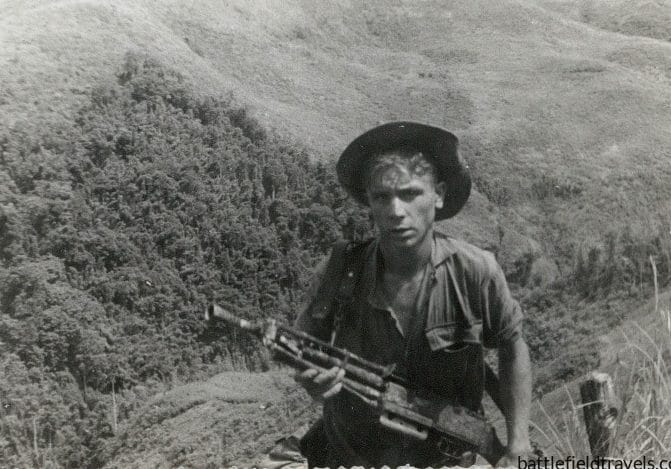
- Nghĩa Lộ (1951) — The Viet Minh offensive into the T’ai highlands and the dramatic French response
Tactical Innovations
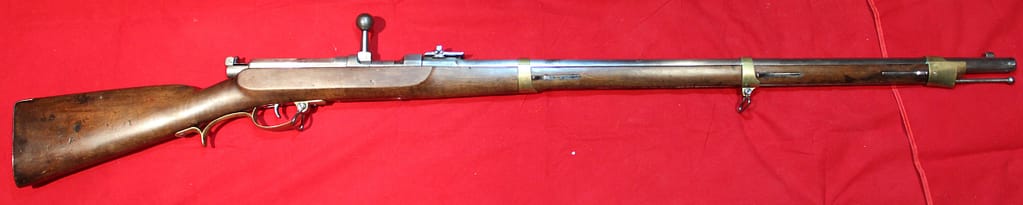
- 1866: The Dreyse Needle Gun, Auftragstaktik, and the Death of the Storm Column
Field Notes
- Battle of Saint Privat-Gravelotte(1870) — the Prussian Guard Corps assault on Saint Privat
- Nghĩa Lộ (1951) — the French company outpost at Ba Khe
The Field Notes format is proving particularly useful here. It allows me to publish early observations and analysis long before I can build a comprehensive full study.
Research Insights
As part of my PhD research, I am exploring battlefield cognition: how commanders perceive, interpret and exploit the small-scale terrain features they see around them on the battlefield. One of the key concepts from early theorists is coup d’œil—an eye for the ground.
Coup d’Œil — What commanders actually meant
The term coup d’œil (literally: a stroke of the eye, a glance, a glimpse) was already in general use in the early 18th century, referring simply to the overall impression or effect of a scene—a glance that captures the whole. Later, the term coup d’œil became associated with Clausewitz and the idea of intuitive battlefield insight.
In most modern writing, it is treated as a form of instinct or military genius—the ability to see the truth of a situation instantly and act decisively. But this is only part of the story.
👉 Continue reading — full analysis of Frederick the Great and Clausewitz, with source extracts and implications for battlefield decision-making. Try membership free for 7 days.

Authored by Mick Prictor, a retired military officer with 40 years’ service, and a military historian specialising in terrain-focused analysis of tactics, doctrine, and command decision-making in land warfare. His work draws on extensive battlefield fieldwork—more than 280 sites worldwide—and one of the world’s largest private collections of historic military arms, uniforms, and equipment. About me
Subscribe to Battlefield Travels and receive a free E-Book Battlefield Guide
Unlock expert battlefield analysis, campaign reconstructions, and historical insights drawn from firsthand exploration and primary sources.
🗺️ You’ll receive:
🎖️ Exclusive historical insights you won’t find elsewhere
📘 A free eBook: 10 Tips for Exploring Historic Battlefields
📰 New battlefield studies straight to your inbox as they are published

⚔️ Go deeper — Members get exclusive access to the Deep Research Collection, Field Notes, and monthly Research Dispatches. Try membership free for 7 days, cancel anytime. From $9/month.
