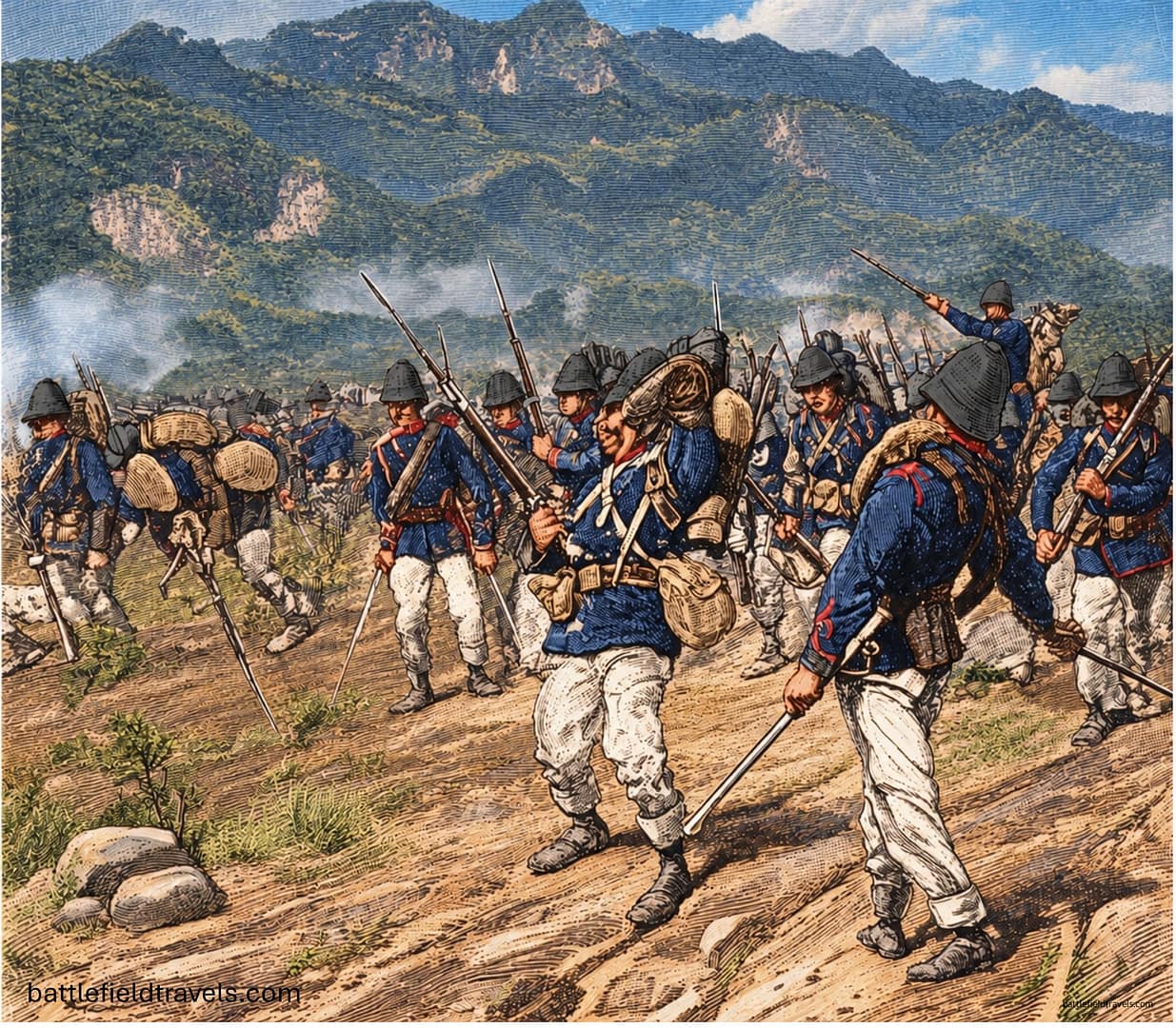
The fiercest battle of the Sino-French War!
After an extraordinary 300-kilometre forced march from Lạng Sơn, Colonel Laurent Giovanninelli’s 3,400-man relief column of Marines, Turcos, Tonkinese Riflemen, and Legionnaires was within a few kilometres of the besieged French garrison at Tuyên Quang. One obstacle remained: a powerful Black Flag force, armed with modern weapons and concealed within a formidable system of bunkers and entrenchments at Hòa Mộc. To reach the garrison, the French would first have to fight the fiercest and most costly battle of the Sino-French War.
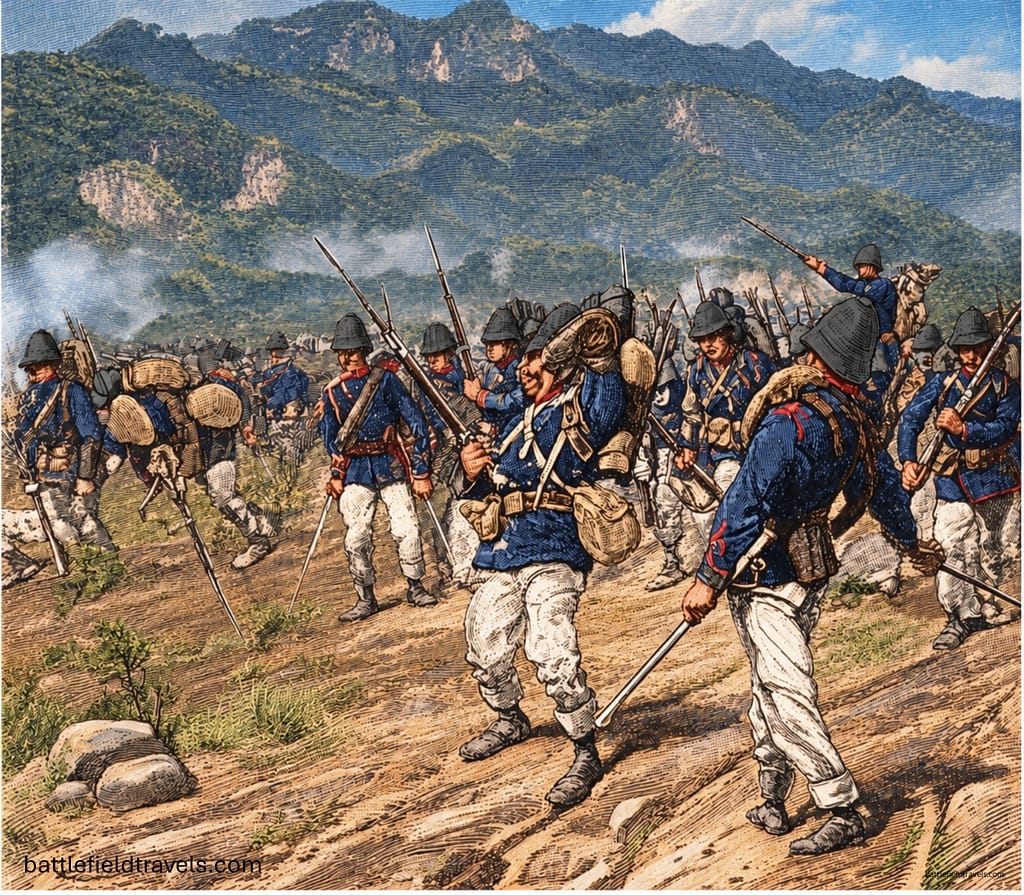
Key facts
You may also be interested in these firsthand battlefield studies covering the Tonkin Campaign and Sino-French War: Tonkin Campaign / Sino-French War (1883-86) ♦ Sơn Tây Campaign (1883) ♦ Bắc Lệ Ambush (1884) ♦ Siege of Tuyên Quang (1884-85) ♦ Battle of Hòa Mộc (1885)
Google Earth map – location of Hòa Mộc
🧭🥾 Walking the battlefields of Hòa Mộc and Tuyên Quang
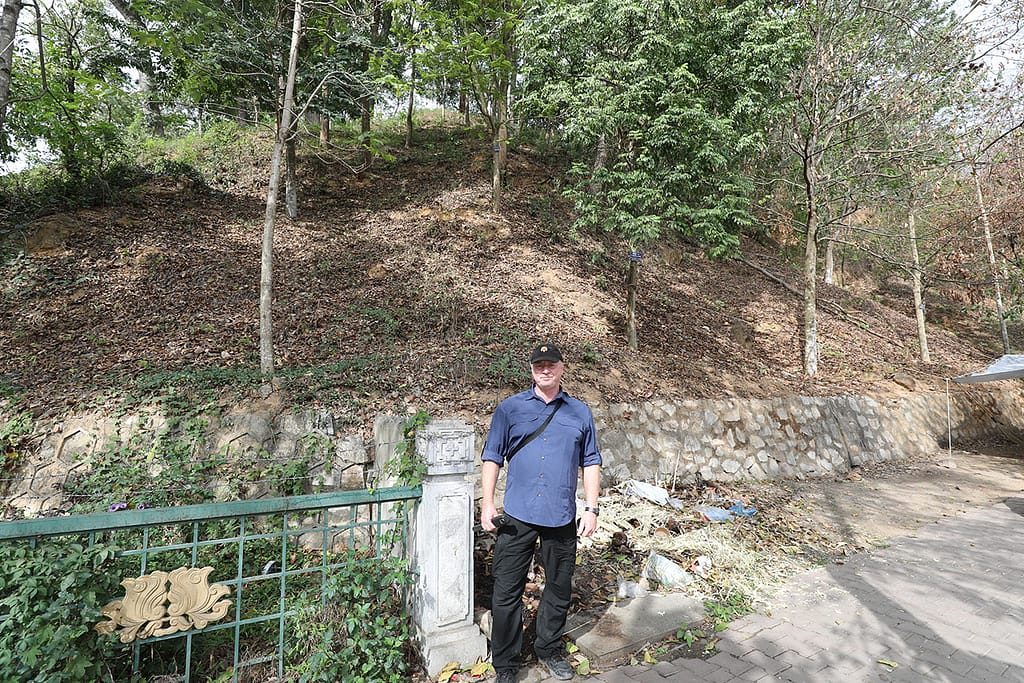
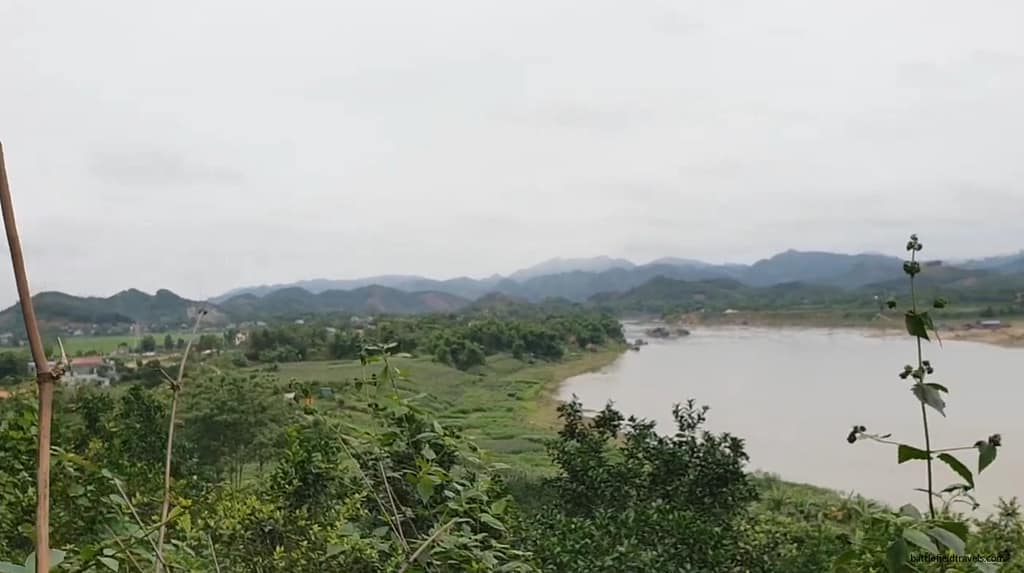
I walked the battlefields around Hòa Mộc and Tuyên Quang in April 2025. I was equipped with several firsthand accounts of the battles, unit histories, copies of original orders, maps and sketches, and my own digital GIS overlays to pull it all together. The Hòa Mộc battlefield shows very little evidence of the fighting, although my time there was limited and I do need to investigate it more extensively. The Black Flag Army defensive works are now rural villages and productive farmland. On one of the old Chinese hilltop positions there is a remnant of an old French monument to the battle, unfortunately destroyed in the post-colonial reconstruction of the 1960s.
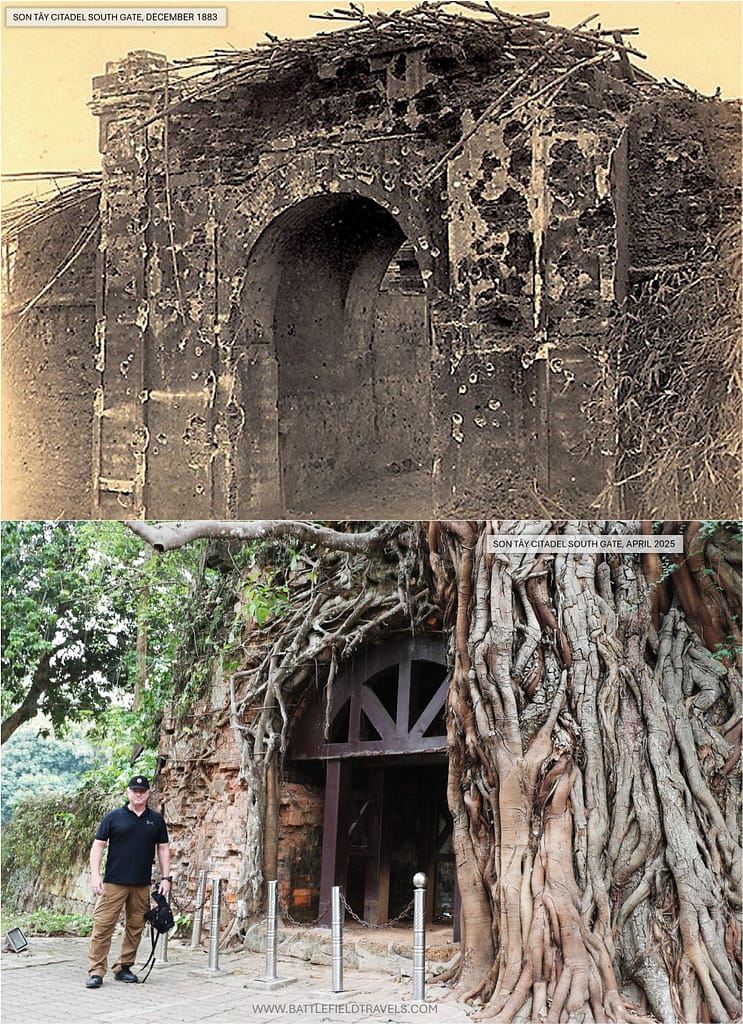
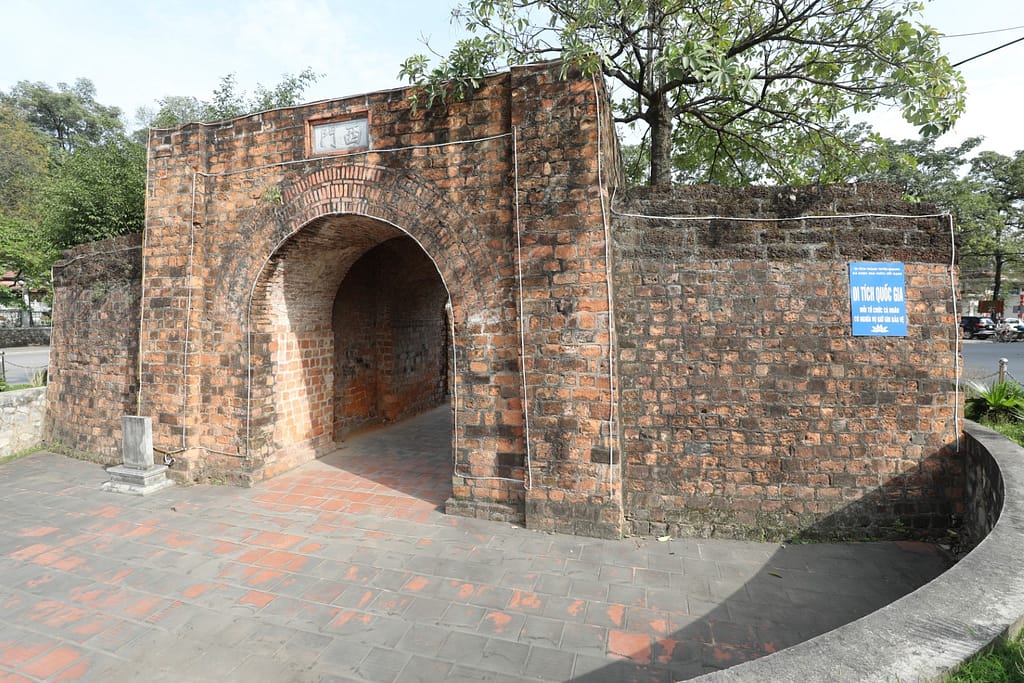
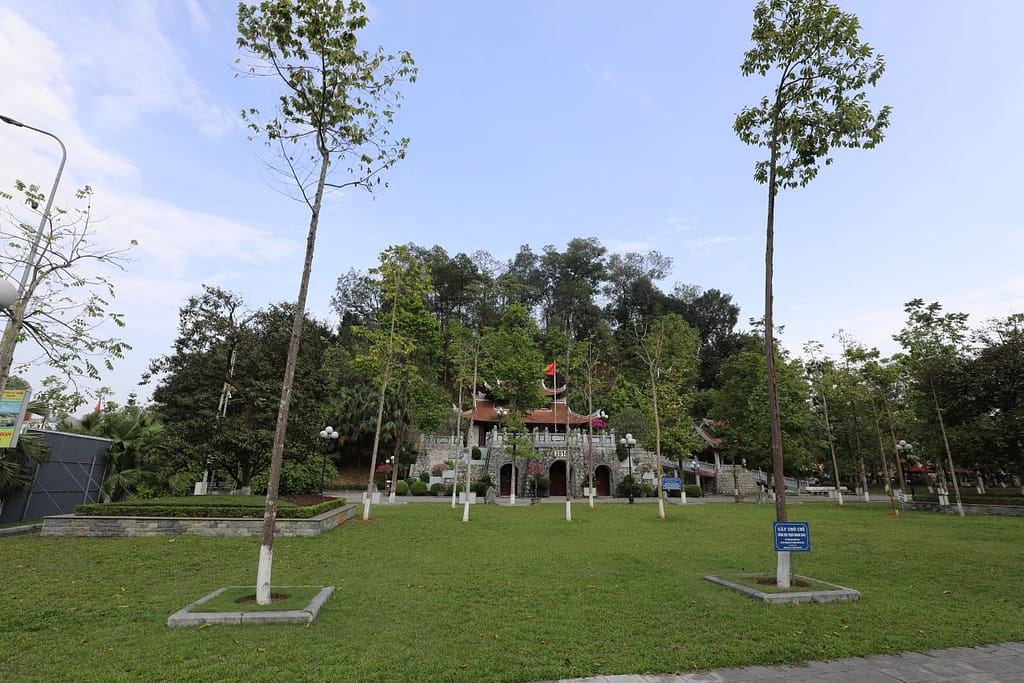
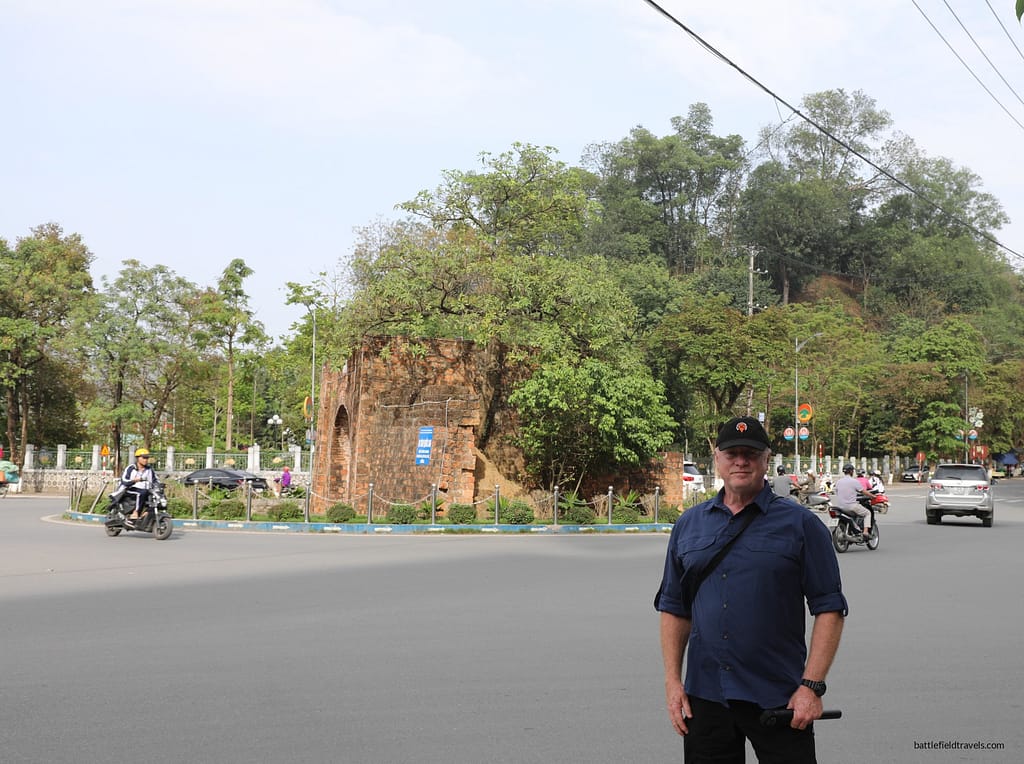
The town of Tuyên Quang has undergone significant changes since 1885, but the footprint of the old 300-metre-by-300-metre citadel is unmistakable in the modern road system. The steep-sided hill, ‘Le Grand Mamelon‘, that housed the old citadel pagoda remains. Portions of the wall on all sides are still visible and have been incorporated into modern structures. The roads that bisected the citadel are now the city’s main thoroughfares. The old western gate of the citadel is now in the middle of a roundabout (traffic circle). The southern gate is also partially intact and forms another quasi-roundabout that traffic must pass.
It was a great privilege to visit this remote battlefield, part of French Foreign Legion and Colonial Marine folklore!
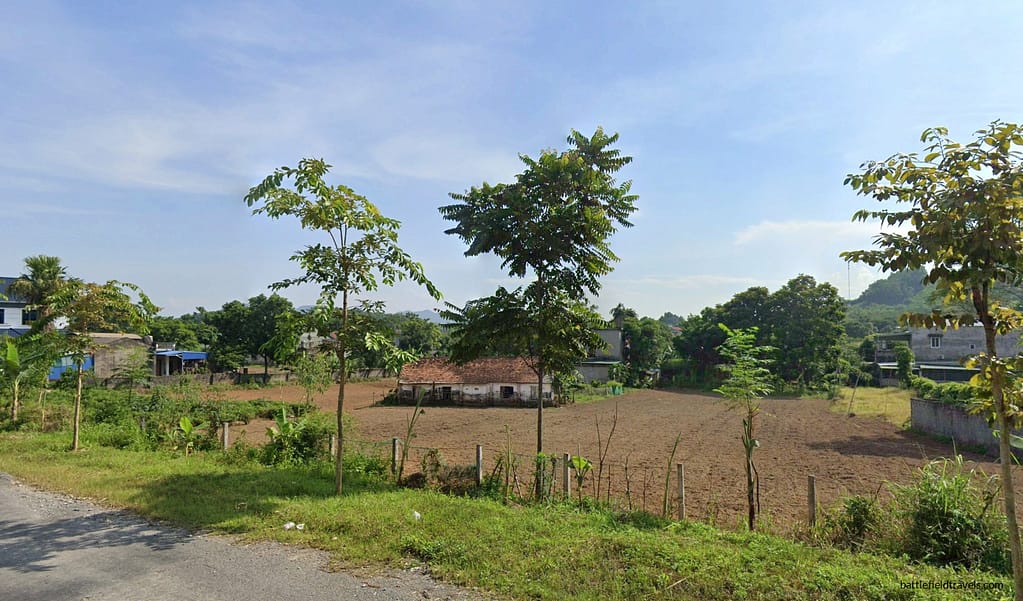
Table of Contents
- Table of Contents
- Strategic Context – The Sino-French War, 1884–1885
- Opposing forces at Tuyên Quang and Hòa Mộc
- Tuyên Quang invested by Chinese forces
- The Siege of Tuyên Quang Jan-Mar 1885
- Giovanninelli’s Relief March (16 February – 1 March 1885)
- The Battle of Hòa Mộc (2–3 March 1885)
- Relief of Tuyên Quang (3–4 March 1885)
- Outcomes of the Battle of Hòa Mộc
- The Hòa Mộc/Tuyên Quang battlefield today
- Le Boudin, march song of the Legion!
- Additional images of Tuyên Quang
- 📚 Notes and References
- Sources and Further Reading
- 📚 Further Reading
- 🧭 Battlefield Travel Guide: Hòa Mộc (2 Mar 1885) and Tuyên Quang (Nov 1884 – Mar 1885)
- FAQ: Battle of Hòa Mộc (2 Mar 1885)
Strategic Context – The Sino-French War, 1884–1885
Origins of the conflict
By the mid-19th century, France had entered the imperial contest for influence in Asia. French missionaries had been active in Cochinchina (southern Vietnam) since the 18th century, and their presence provided both a pretext and a foothold for later intervention. Following a brief campaign in 1862, France annexed several southern provinces to form the colony of Cochinchina. Further north, Annam and Tonkin remained nominally under the Vietnamese Nguyễn dynasty but were subject to Chinese suzerainty. This was a political arrangement that France sought to overturn.
Garnier’s 1873 expedition to Tonkin
In 1873, Lieutenant Francis Garnier led a small, unauthorised expedition up the Red River and briefly seized Hanoi. His success alarmed both the Vietnamese court and the Chinese authorities, who regarded Tonkin as part of their sphere of influence. Garnier was killed on 21 December 1873, in action against the Chinese-supported Black Flag Army near Thủ Lệ. The French withdrew under diplomatic pressure, and a temporary settlement restored the pre-existing order.
Riviere’s 1881-1883 campaigns
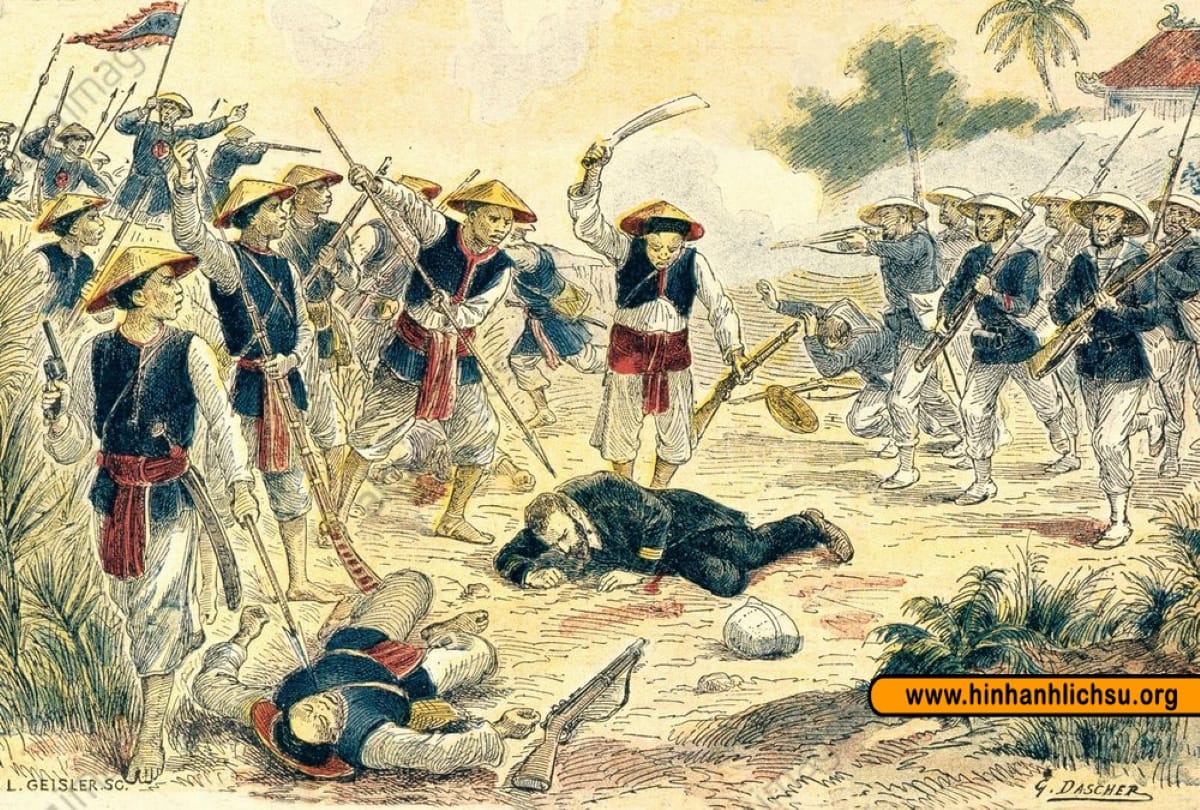
A decade later, Captain Henri Rivière arrived in Hanoi with instructions to protect French interests. He soon exceeded those instructions. Acting on his own initiative, he bombarded and captured the Imperial Citadel in Hanoi on 25 April 1882, forcing local officials to submit. The massive impact craters of Riviere’s heavy naval guns are still visible on the Hanoi CItadel today. The Vietnamese emperor appealed once more to Liu Yongfu’s Black Flag Army, while the Chinese government covertly reinforced Tonkin with regular troops from Yunnan and Guangxi.
Rivière pressed on regardless, capturing Nam Định and Gia Cúc in March 1883. On 19 May, his column was ambushed and destroyed by the Black Flags at Cầu Giấy (Paper Bridge). Rivière’s death turned local tensions into open war.
The Sơn Tây Campaign, December 1883
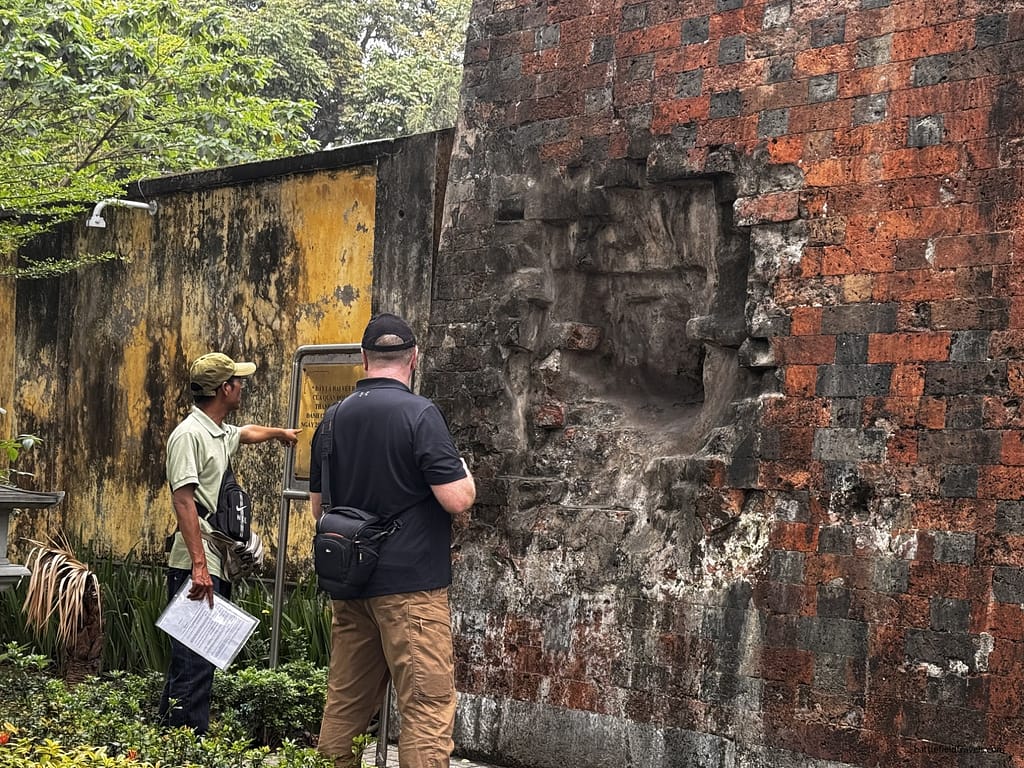
Rivière’s loss provoked a decisive response from Paris. Admiral Amédée Courbet took command of the reinforced Tonkin Expeditionary Corps and attacked the heavily fortified town of Sơn Tây, defended by a combined force of Chinese, Black Flag, and Annamite troops. After fierce fighting in December 1883, Courbet captured the citadel, dealing a severe blow to both Chinese prestige and the Black Flags’ combat power. The massive walls of the old Sơn Tây citadel are still there today, although the Phu Sa redoubt that agve Courbet’s troops so much trouble has long given way to urban development.
With operations shifting from the coast to the interior, command passed from Courbet to General Charles-Théodore Millot. Subsequent French victories at Bắc Ninh, Hưng Hóa, and Thái Nguyên secured control of the Red River Delta and pushed Chinese forces north toward the frontier. On 1 June 1884, a composite column, including a battalion of the Foreign Legion, occupied the riverside town Tuyên Quang, a small post on the Clear River about 140 km northwest of Hanoi.
The Tientsin Accord and the Bắc Lệ Ambush
China’s field armies had been defeated in Tonkin, and the Black Flag Army was in retreat. Seeking to avoid a wider war, both sides concluded the Tientsin Accord on 11 May 1884, under which China recognised the French protectorate over Annam and Tonkin in exchange for a new commercial treaty, and the withdrawal of all Chinese forces.
In June 1884, a French column under Lieutenant-Colonel Alphonse Dugenne advanced north from Hanoi toward Lạng Sơn to occupy the frontier posts as agreed under the Tientsin Accord. Near the village of Bắc Lệ, Dugenne’s force was ambushed by Chinese regulars of the Guangxi Army who had not yet withdrawn. The French undertook an orderly fighting retreat, but the Bắc Lệ Ambush shattered the diplomatic accord and triggered the Sino-French War.
I April 2025, using a firsthand account of the battle written by Dugenne’s reconnaissance officer, Captain Lecomte, I rediscovered the site of the Bắc Lệ Ambush and re-constructed the June 1884 battle. Previously, the battle site was thought to be much furtehr south near teh actual village of Bắc Lệ.
Towards the Siege of Tuyên Quang
As hostilities spread across Tonkin, the Chinese provinces of Guangxi and Yunnan, and the island of Formosa (Taiwan), the French sought to hold their remote forward posts along the Clear River (Sông Lô). These garrisons formed a thin shield protecting the Red River Delta from incursions by Yunnanese regulars and remnants of Liu Yongfu’s Black Flag forces.
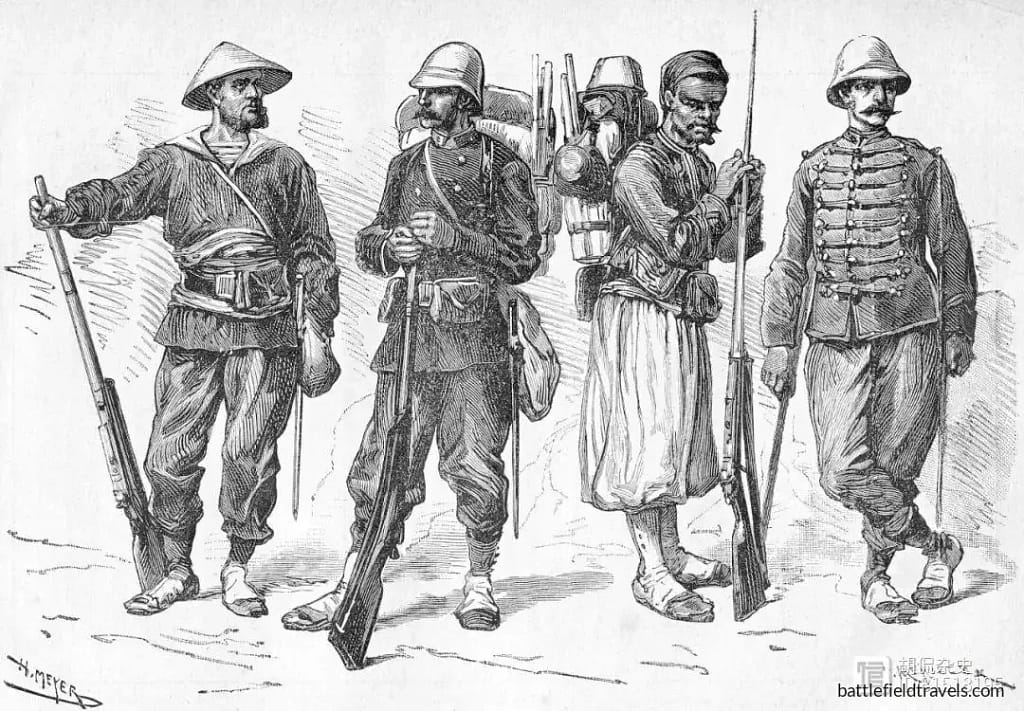
Among them, Tuyên Quang was the most exposed — an isolated citadel defended by a few hundred Legionnaires, Tonkinese Tirailleurs, and artillerymen. Its commander, Chef de Bataillon Marc-Edmond Dominé, resolved to hold the post at whatever the cost.1Dick de Lonlay (Émile Bayard), La Légion au Tonkin: Siège de Tuyên Quang, (Paris: E. Plon, Nourrit et Cie, 1886), pp. 9–12
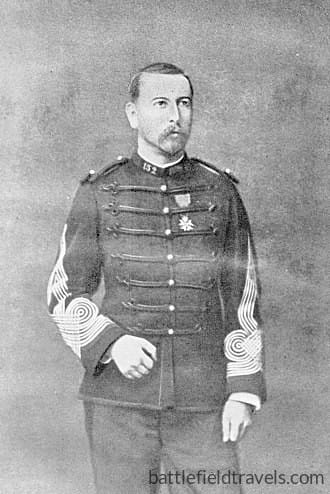
A graduate of Saint-Cyr (1868), Dominé had served with distinction in Algeria and the Franco-Prussian War. He was twice wounded — at Aïn-Chaïr in April 1870 and again at Orléans later that year. In late 1883, he deployed to Tonkin with the 2nd Battalion d’Afrique, bringing with him the professionalism and resolve that would soon define the defence of Tuyên Quang.
A full standalone study of the Siege of Tuyên Quang, including the order of battle, terrain analysis, and a dedicated travel guide, is available here: Siege of Tuyên Quang, Nov 1884 – Mar 1885.
Opposing forces at Tuyên Quang and Hòa Mộc
 Tuyên Quang garrison
 Tuyên Quang garrison
When the siege began in late 1884, the citadel of Tuyên Quang was held by a garrison of about 630 men:
- Commander: Chef de Bataillon (Major) Marc-Edmond Dominé.
- Two companies (Captains Cattelin and Moulinay) of the 1st Foreign Legion Battalion — about 390 Legionnaires
- 162 Tonkinese riflemen (Captain Dia), local troops raised under French officers,
- Detachment of marine artillery with two 4-pounder mountain guns, two 50mm guns and two Hotchkiss 37mm revolving cannons.
- Engineers and support personnel
- Farcy-type gunboats Revolver and the Mitrailleuse
Giovanninelli’s relief force
The French force at Hòa Mộc was Giovanninelli’s reinforced 1st Brigade:
- Commander: Colonel Laurent Giovanninelli
- 1er Régiment de Marche d’Infanterie de Marine: two Marine battalions from 4th Regiment (Mahias and Lambinet)
- 2e Regiment de Marche: two Battalions from 1er and 3e Régiment de Tirailleurs Algériens (Mibielle and Comoy)
- 1st Battalion, 2nd Tirailleurs Tonkinois (Tounot)
- Artillery: Three batteries of 4e Régiment d’Artillerie de Marine (Roperh, Pericaud, Roussel)
- Reinforced at Phu Doan by two ad-hoc infantry battalions under Lieutenant-Colonel de Maussion, and drawn from the garrisons of Sơn Tây and Hưng Hóa. A mixed force of Turcos, marine infantry and one and a half companies of the 1st Battalion, 1st Foreign Regiment (1er Bataillon du 1er Régiment Etranger)
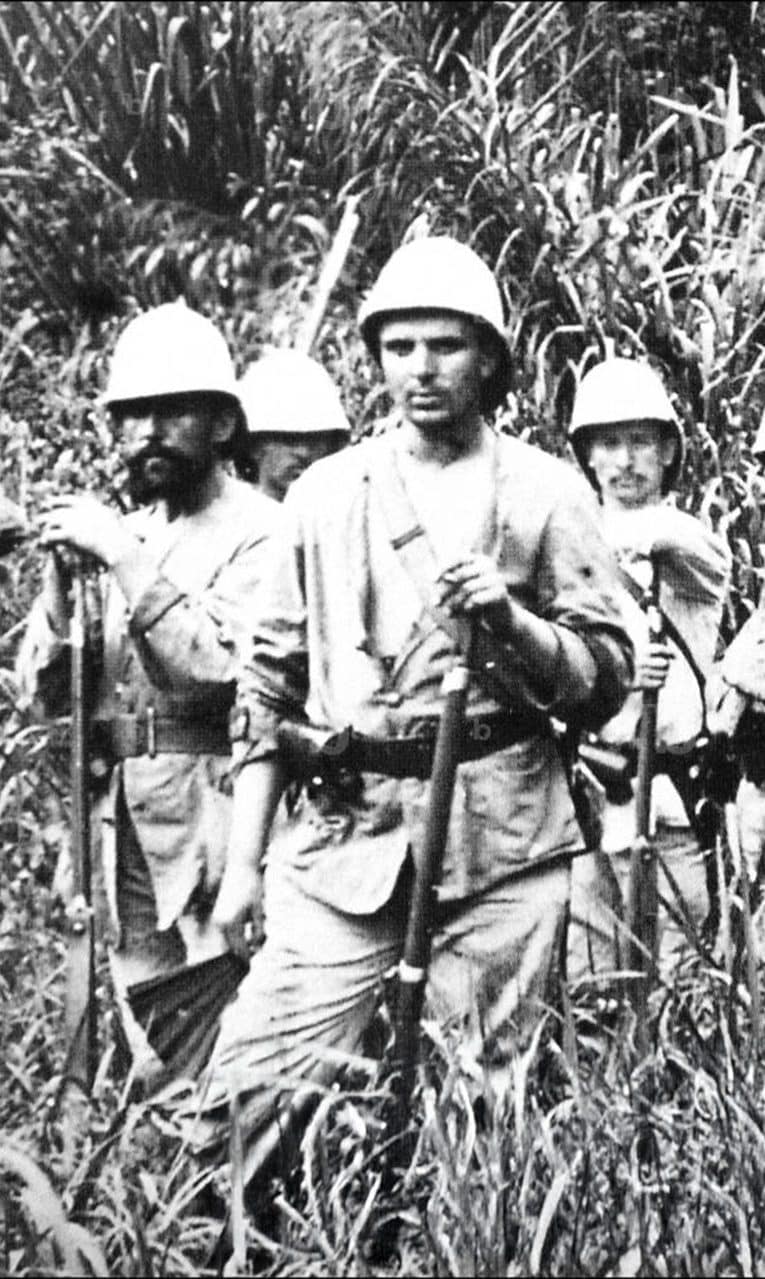
 The Besiegers – Black Flag Army and Chinese Yunnan Army

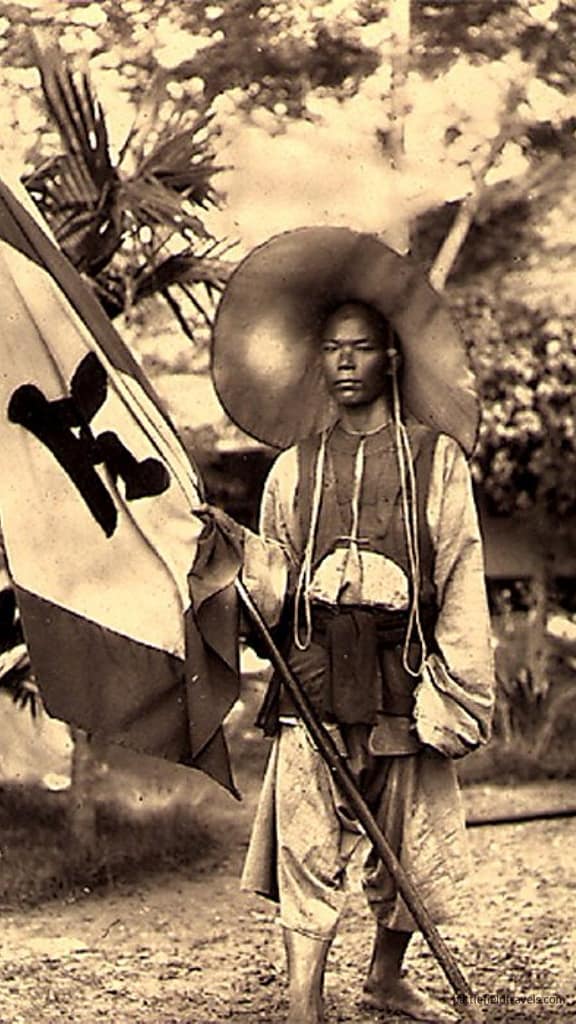
 The Besiegers – Black Flag Army and Chinese Yunnan Army
Opposing the French defenders was a 10-15,000 man combined force of Liu Yongfu’s Black Flag Army and regular Chinese troops from Yunnan.
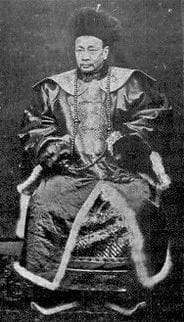
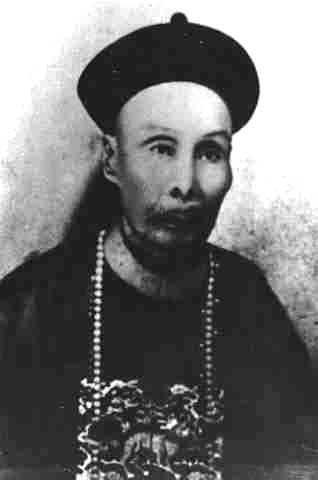
Liu Yongfu’s mercenary Black Flag Army was comprised of experienced irregulars, funded by taxing commerce along Tonkin’s river systems, and through direct payment from the Nguyễn dynasty. They were seasoned in the hills of Tonkin, and armed with a mixture of rifles, muskets, and jingals (heavy wall-guns). They excelled at ambush, trench warfare, and siege tactics.
The Yunnan Army regulars, drawn from the provincial army, provided artillery and engineering capabilities. Together, they constituted the largest enemy concentration yet assembled against an isolated French post.
Liu Yongfu was a figure of notoriety, a former Taiping rebel turned mercenary warlord. Under his leadership, the Black Flags had resisted foreign encroachment in Tonkin, sometimes cooperating with Vietnamese mandarins, sometimes with the Qing authorities. The Yunnanese, by contrast, brought structure and discipline: their officers directed the construction of parallels, batteries, and mining operations in the style of formal siegecraft.2Stephen R. Platt, Imperial Twilight: The Opium War and the End of China’s Last Golden Age (London: Atlantic Books, 2018), p. 430.
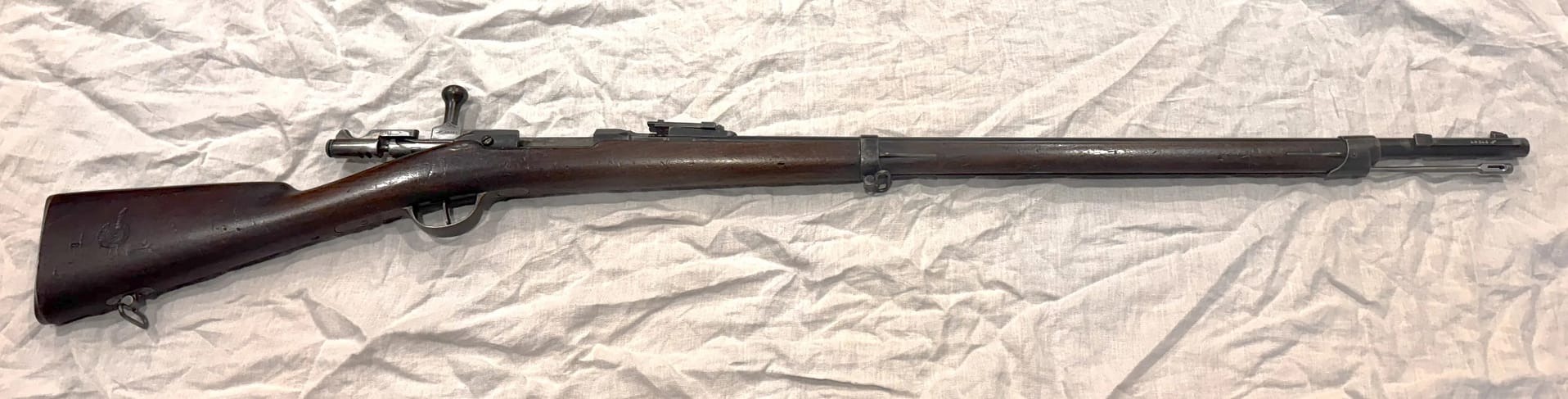
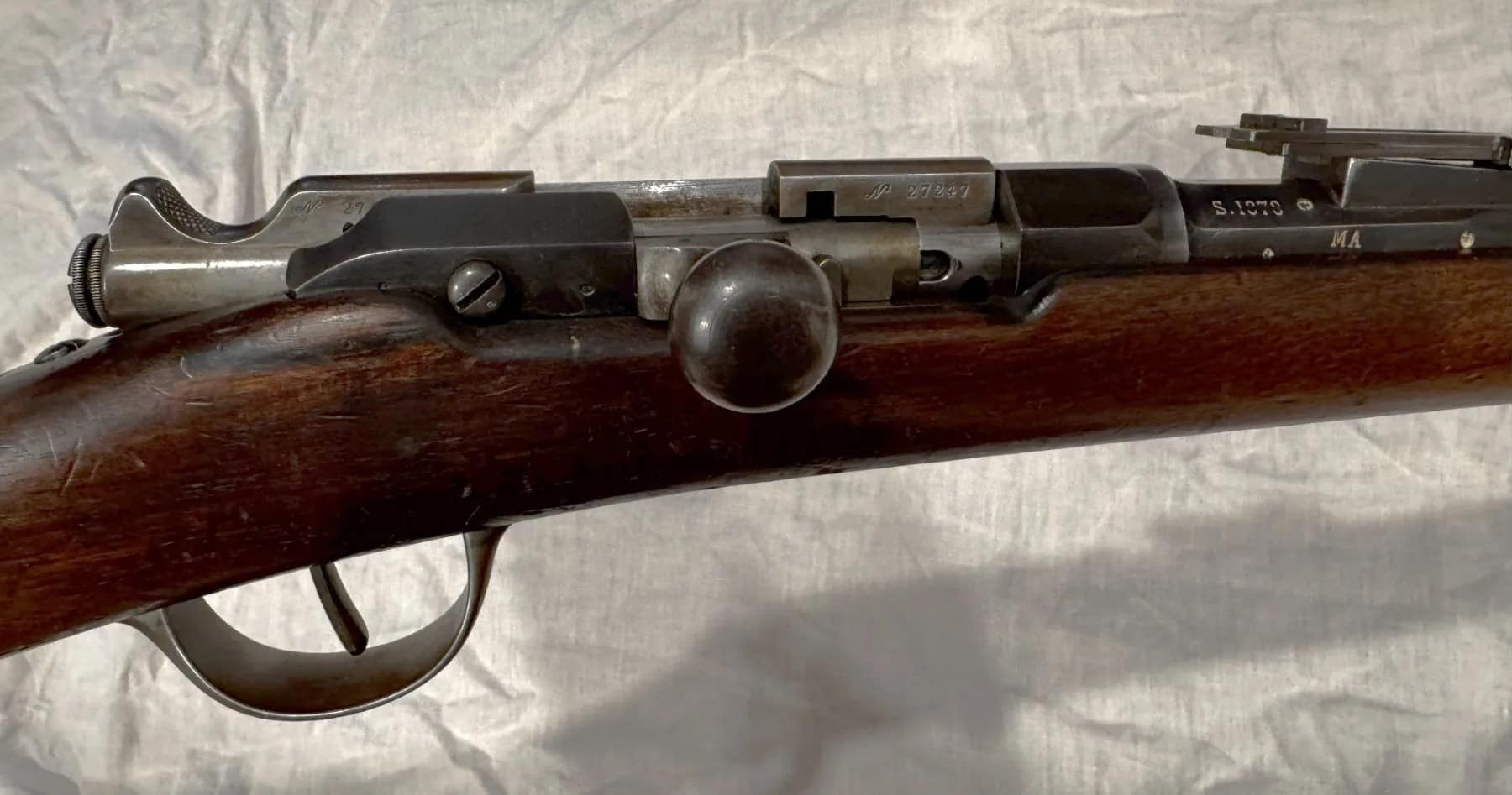
Coordination between Black Flag irregulars and Yunnan regulars was imperfect, with rivalries and suspicion limiting efficiency. Their tactical doctrine, honed in the Taiping War, relied on massed assault, often against well-prepared defences where French fire discipline inflicted disproportionate casualties. Siege logistics were also complex: the besiegers had to sustain thousands of men in rugged country with limited local resources, straining their ability to maintain the siege.3Porch, The French Foreign Legion, p. 217.
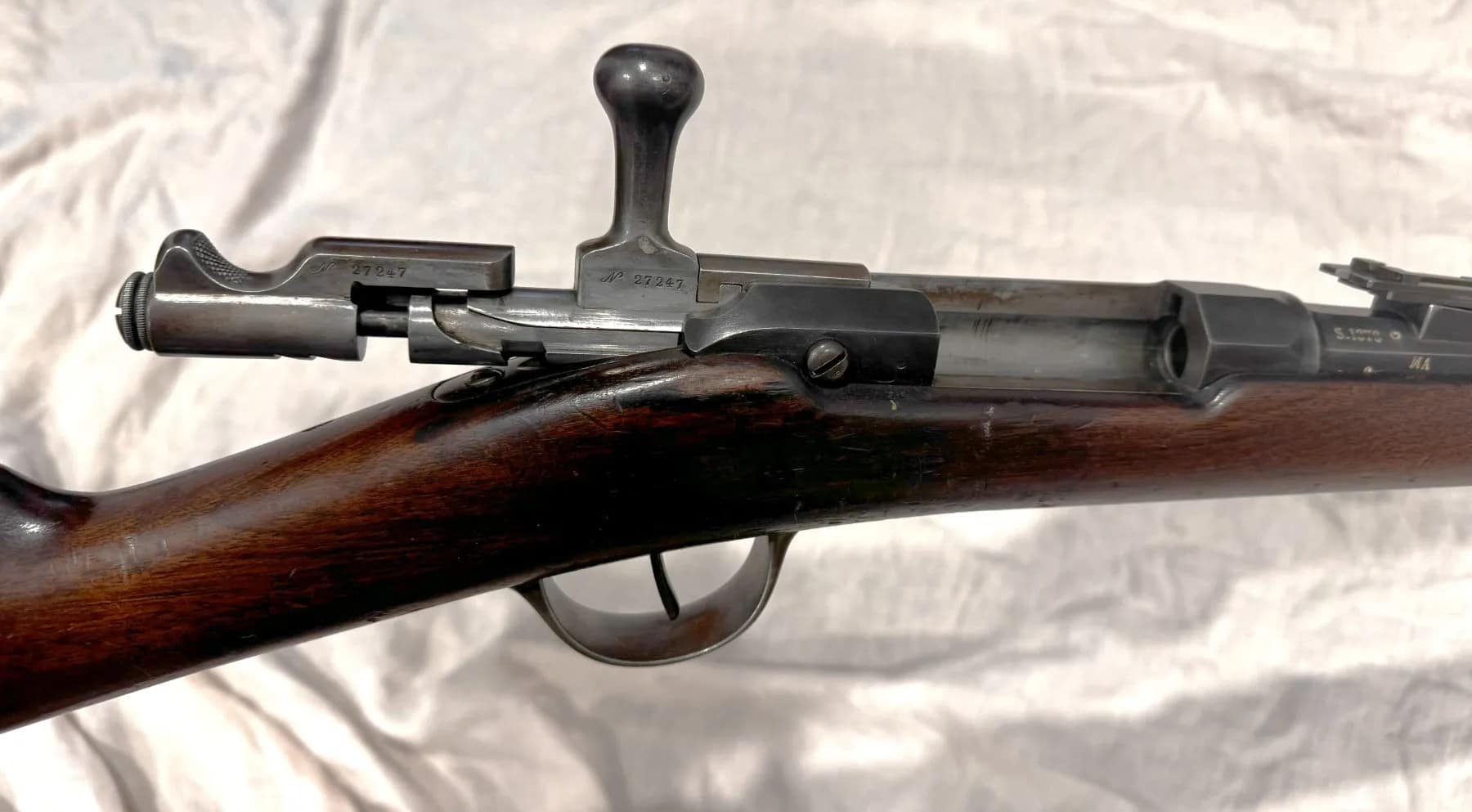
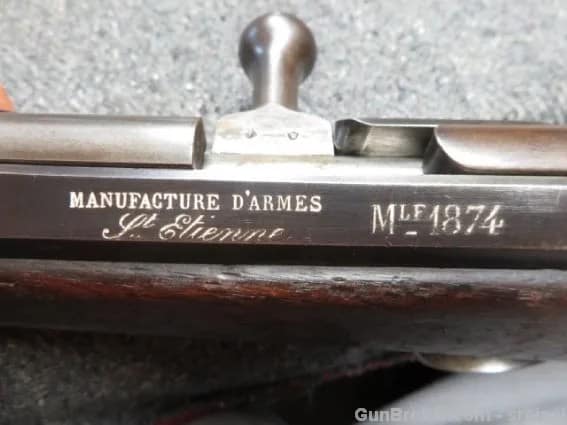
Chinese forces invest Tuyên Quang
The Citadel of Tuyên Quang
The citadel of Tuyên Quang, into which the French settled during mid-1884, was not a fortress in the European sense. It was an old Annamite enclosure of earth and decayed brick, an irregular square measuring some three hundred metres on each side. Its ramparts were low, the parapets crumbling, and its corner towers were collapsing. Around it stretched a shallow ditch, half-filled with silt, crossed in places by bamboo bridges. In the centre of each of the four walls, a fortified gatehouse projected outwards to control access to the citadel.
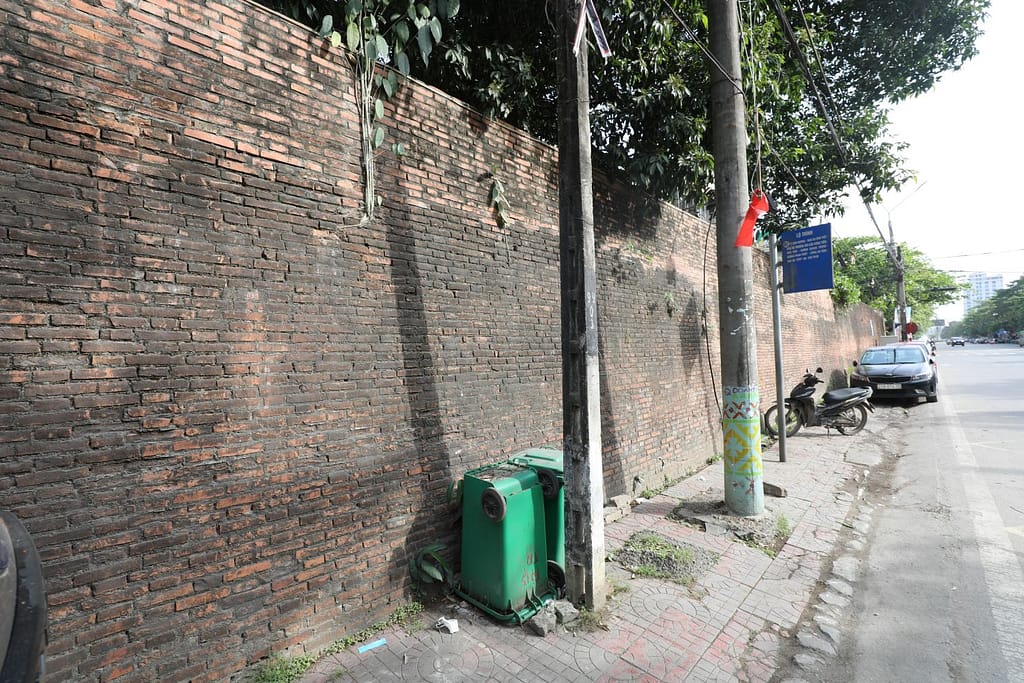
Very little remains of the old citadel. I walked the perimeter of the citadel in April 2025. Its imprint is still recognisable in the city’s road system, and sections of the old western and southern walls are still visible. The rest is lost to history.

Encirclement and opening moves (October-November 1884)
From early October 1884, Liu Yongfu’s Black Flag Army re-appeared before Tuyên Quang, reinforced by regulars of the Chinese Yunnan Army. By the first week, an estimated ~4,000 Chinese had surrounded the post, establishing camps on the surrounding heights and the right bank of the Clear River. Between 13 Oct – 16 Nov 1884, the besiegers executed twenty-four attacks and aggressive probes, all repulsed by a disciplined French defence from the citadel and outworks.
Situation in late Nov 1884
On 27 November, Commander Dominé received notice from the downstream French outpost at Phu-Doan that 10,000 Black Flags were at Thuan-Quan, 2,000 Black Flags were in Phu-an-Binh, and 1,000 were in the vicinity of Phu-Doan.4Ibid., p. 21.
👉 Continue reading — this article is part of the BattlefieldTravels Deep Research Collection. The full 7,800 word analysis draws on eyewitness accounts of the 1885 Siege of Tuyên Quang and the Battle of Hòa Mộc, GIS terrain analysis, and firsthand fieldwork on the battlefields. Primary source examination, tactical conclusions, and notes & references that exist nowhere else in English. The article will remain free for 14 days and then move to the Deep Research Collection.
Sustainment efforts on the river (Dec 1884–Jan 1885)
Once the post was formally invested, the Clear River (Rivière Claire) became the garrison’s only line of communication. The river, winding through dense jungle and gorges between Phù-Đoan and Tuyên Quang, was alternately wide and shallow, or narrow and hemmed by steep cliffs that created perfect ambush positions. As Delonlay observed, “every bend became a defile, every sandbank a potential trap.”
Two Farcy-type gunboats, Revolver and Mitrailleuse, armed with a 14-pounder bow gun and a 37 mm Hotchkiss revolving cannon, formed the escort for French shipping traffic on this artery. They served both as convoy escorts and floating batteries covering the eastern face of the post. When river depth allowed, they patrolled continuously between Hồng Hóa, Phù-Đoan, and Tuyên Quang, exchanging fire with enemy stockades hidden in the reeds.
On 16 December, an overland convoy attempting to bypass the obstructions was ambushed in a ravine; several pack animals were killed, and most of the rice was lost. Survivors fought their way clear with bayonets. These failures reinforced Dominé’s understanding that from this point, river convoys would be decisive.


⚔️ Go deeper — Members get exclusive access to the Deep Research Collection, Field Notes, and monthly Research Dispatches. Try membership free for 7 days, cancel anytime. From $9/month.
The Siege of Tuyên Quang Jan-Mar 1885
First Chinese probing attacks
The Siege of Tuyên Quang began in earnest on 1 January 1885 with a Chinese attack on the village defences opposite the citadel. The blockhouse was attacked on 10 January, and a Legion ambush on 16 January killed a large group of Chinese troops attempting the infiltrate the perimeter.
Fall of the blockhouse
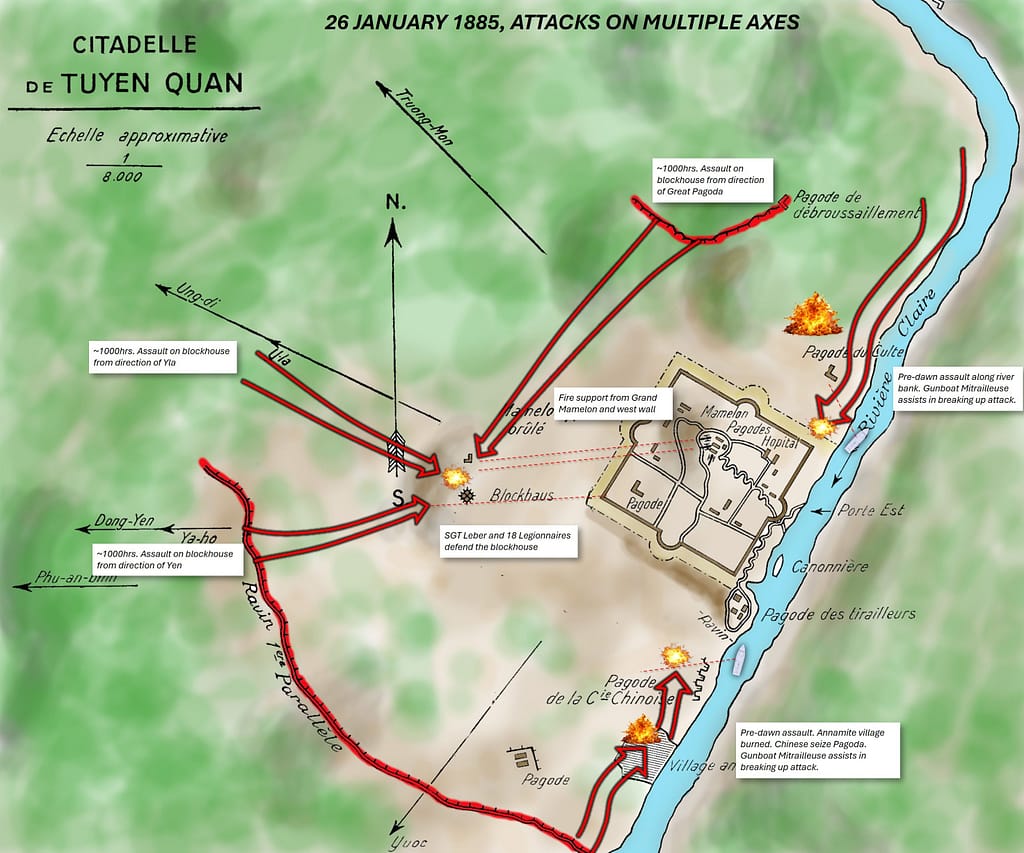
On 26 January, Chinese and Black Flag troops launched a major, multi-pronged attack on the blockhouse, with a supporting attack against the citadel’s north face. Sergeant Leber’s small platoon at the blockhouse held off the attacks, supported by fire from the garrison artillery and the gunboat Mitrailleuse. On 29 January the blockhouse defenders detected mining works and suspected a Chinese attempt to blow up the blockhouse. With covering provided by the artillery and Hotchkiss guns, the blockhouse defenders evacuated back to the main citadel. The Chinese now controlled all the dominating terrain outside the main citadel.
Through early February, the Chinese forces tightened the ring around the citadel, and began digging approach trenches. The garrison was under constant sniper fire, but the Hotchkiss guns and artillery on Le Grand Mamelon, and the river gunboats inflicted a heavy toll on the Chinese forces.
The war underground
By 8 February, the garrison’s listening posts were detecting definite indicators of underground tunnelling. The garrison prepared hundreds of gabions (earth-filled wicker baskets for creating improvised defences). New traverses (defensive barriers) were constructed inside the citadel in expectation of a Chinese mine explosion.
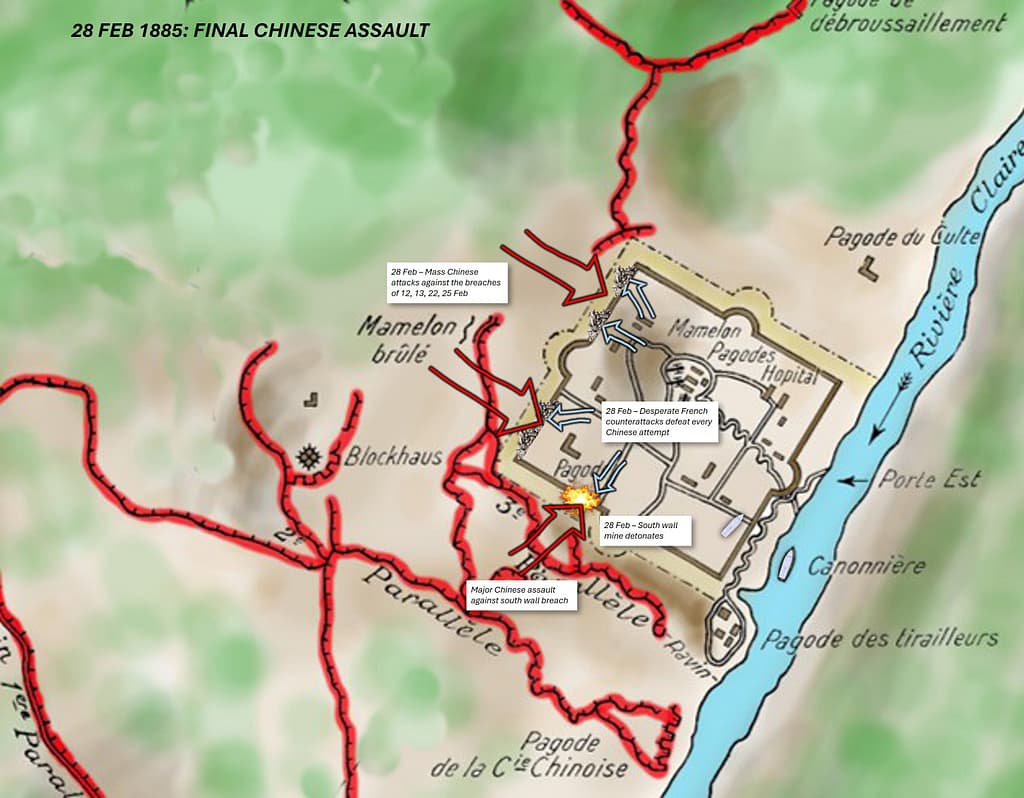
The first Chinese mines were detonated on 12 and 13 February. French counter-galleries vented some of the explosive force, so the breaches were only partial. But both explosions were immediately followed by aggressive Chinese attacks. The defences held and, in the following days, French raiding parties destroyed several Chinese sap-heads.
The final attacks
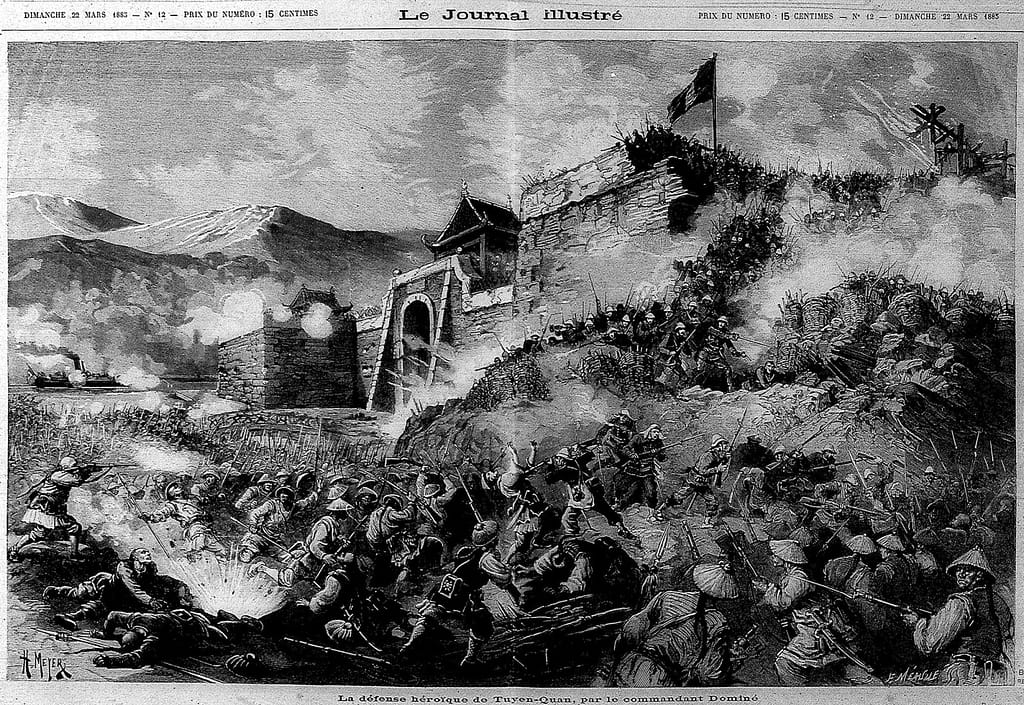
A massive mine detonated under the western wall on 22 February, killing twelve Legionnaires. As the French reserves gathered for the counterattack, two more mines were detonated, and were followed by a massive Chinese attack. Despite three successive blasts, the Legionnaires were able to halt every Chinese attack.
A large mine was detonated on 28 February, followed by waves of Yunnan Army volunteers who rushed the breach. The fighting raged for three hours and left seventy dead Chinese and three dead Legionnaires. By this time, General Tang Jingsong and Liu Yongfu were well aware of Giovanninelli’s approaching relief column and this attack on 28 February was their final attempt to overrun the Tuyên Quang citadel befor they were forced to deal with the new and much larger approaching threat.
Giovanninelli’s relief march (16 February – 1 March 1885)
The Lang Son Campaign
While Tuyên Quang and other small outposts protected Hanoi and the Red River Delta through late 1884 and early 1885, the bulk of French combat power in Tonkin was focused on defeating the powerful Chinese Guangxi Army forces and securing the northern border. The Commander in Chief of the Tonkin Expeditionary Corps, General Louis Brière de l’Isle, defeated a major Chinese attack on the Delta in October 1884. He then inflicted a series of defeats on the Guangxi Army at Nui Bop, even though outnumbered ten-to-one, in early January 1885.
On 3 February 1885, General Brière de l’Isle commenced the Lạng Sơn Campaign with his subordinate units: General de Négrier’s 2nd Brigade and Colonel Laurent Giovanninelli’s 1st Brigade. Over a period of 10 days, the force advanced nearly 100 kilometres, fighting major battles almost every day. The campaign culminated with the Battle of Bac Viay on 12 February and the capture of Lạng Sơn on 13 February 1885.
I followed Brière de l’Isle’s campaign from Hanoi to Lạng Sơn. The country is incredibly rugged, with near vertical terrain in many places, especially around the Chi Lang Pass. There is a monument at Chi Lang that records the many invasions that were halted in the pass by Vietnamese defenders in 981 AD, 1077, 1285, 1288 and 1427. What is astonishing is that Brière de l’Isle’s force made this same journey of nearly 140 kilometres, through this terrain, over vastly more primitive roads. And they did it on foot in ten days, fighting a major battle nearly every day.

Decision to relieve Tuyên Quang
At Lạng Sơn on 15 February 1885, General Brière de l’Isle judged that the defence of Tuyên Quang could not be sustained without immediate external relief. Reports from Hanoi confirmed that Dominé’s small garrison was being steadily pressed by the Yunnan Army. Without delay, Brière de l’Isle left General de Négrier’s 2nd Brigade to hold Lạng Sơn and ordered the 1st Brigade under Colonel Giovanninelli to retrace its steps towards Hanoi.
Giovanninelli’s force was a compact but experienced column: the Marine Infantry (Lambinet and Mahias battalions under Lieutenant-Colonel Chaumont); Algerian Tirailleurs (Mibielle and Comoy battalions under Lieutenant-Colonel Letellier); the Tonkinese Tirailleurs (Tounot battalion); and three artillery batteries—two of 80 mm guns and one of 4-pounder mountain pieces dragged by hand. Supporting arms included engineers, pontoon troops, an ambulance section, and a detachment operating the optical telegraph.5Capitaine Jean Lecomte, Marche de Lang-Son à Tuyên Quang (1er Brigade – Giovanninelli) (Paris: Berger-Levrault et Cie, 1888), p.8.
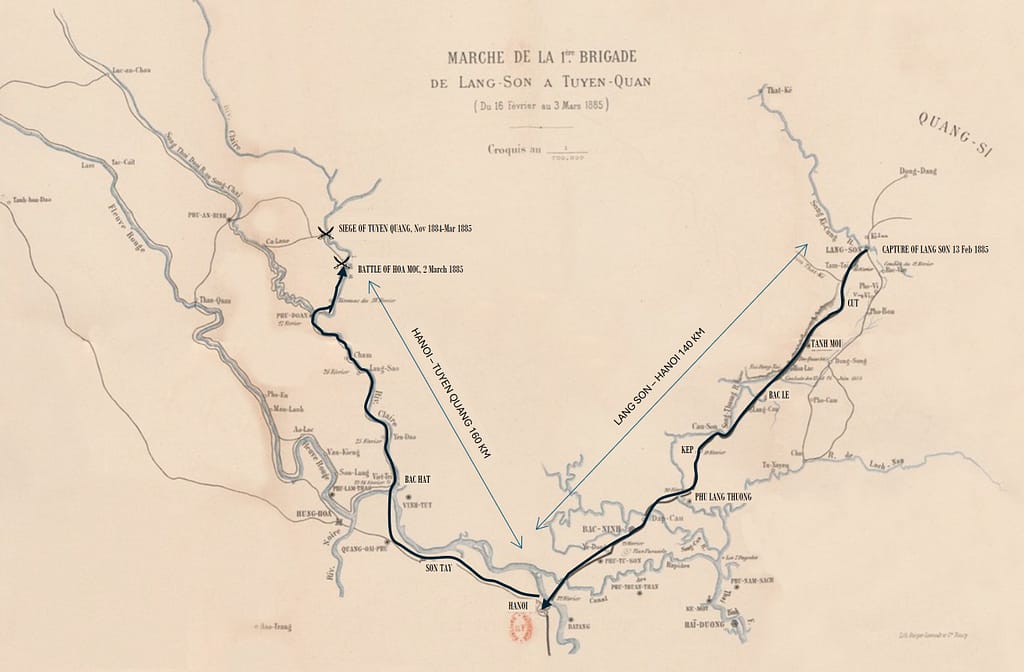
The march to Hanoi was approximately 140+ kilometres via the Mandarin Road. From Hanoi to Tuyên Quang was another 160+ kilometres. The relief march would total more than 300 kilometres along barely formed tracks, through mountain passes, jungle, river crossings, and through enemy-held territory.
The march south
The column departed Lạng Sơn at 0800 hours on 16 February 1885. Rain and mist reduced visibility to a few paces. For the first stage the troops had to ford the same flooded streams and ravines they had fought across during the advance north. The pontonniers marched at the head, cutting approaches for the wagons and hacking steps into the slippery gradients. Progress was slow, often no more than fifteen or sixteen kilometres a day.
Villages along the road showed recent traces of Chinese passage: still-warm ashes and discarded equipment. The men bivouacked knee-deep in mud; sentries stood their posts through the night drizzle. On the following day, the march resumed through the Marble Mountains, a chain of steep ridges covered in thick forest. At one point, the route crossed the battlefield of Bắc Lệ. Veterans of the fight paused silently before the graves of their comrades, now desecrated by enemy looters.6de Lonlay, Siège de Tuyên Quang, pp. 137–140.
Crossing the Delta
By 19 February, the head of the column reached Cao Sơn, where the engineers re-established the old mandarin road. From there to Lạng Kép the march eased; French works had transformed the village into a fortified post complete with barracks, parade ground, and a monument to those killed in the previous October actions. At Lạng Kép the troops received eggs and chickens from grateful local notables, rare comforts after weeks of hard rations.
The following stages carried the brigade by Phù Lạng Thương and Dáp Cầu. After crossing the Thương River the brigade entered Hanoi on the evening of 22 February, weary but intact. They had covered over 150 kilometres in seven days through continuous rain, a credit to the discipline of the veteran battalions and the steady direction of their Corsican commander.7Lecomte, Marche de Lang-Son A Tuyen Quan, pp. 15-17.
Concentration at Bắc Hạt
Even before Giovanninelli’s arrival, the French commander in the Red River Delta commander had organised a small advance column under Lieutenant-Colonel de Maussion, composed of two companies of Algerian Tirailleurs, one of the Foreign Legion, two and a half companies of Tonkinese riflemen, and four 4-pounder mountain guns. This detachment embarked on the river convoy to move north to Phu-Đoan as a vanguard.
At Hanoi, fresh news from Phu-Đoan reached headquarters: a major assault on Tuyên Quang during the night of 21–22 February had been repulsed, but the defenders were nearly exhausted. The 1st Brigade immediately re-embarked and concentrated at Bắc Hạt on 23–24 February, organising its convoy of junks and sampans for the long push up the Clear River.8de Lonlay, Siège de Tuyên Quang, pp. 142–143.
Journey up the Clear River
On 24 February, the staff—General Brière de l’Isle, Colonel Borgnis-Desbordes, and the senior officers—embarked aboard the gunboat Éclair, followed by the Henri-Rivière, Berthe-de-Villers, Moulun, and Trombe. The flotilla was to ascend the Clear River in close support of the marching troops on the right bank. Orders were explicit: “try the impossible” to maintain contact despite the falling water level.
The route ahead was among the most difficult in Tonkin. Steep wooded spurs projected to the river, blocking the path. Engineers had to blast cuttings or build ramps with jungle timber. In several sections, the troops were forced to lay new road, dragging guns and carts up gradients of one-in-three. By 27 February, the brigade reached Phu-Đoan, re-joined its flotilla, and replenished supplies before the final advance.9Ibid., pp. 143–144.

The approach to Yuoc and Hòa Mộc
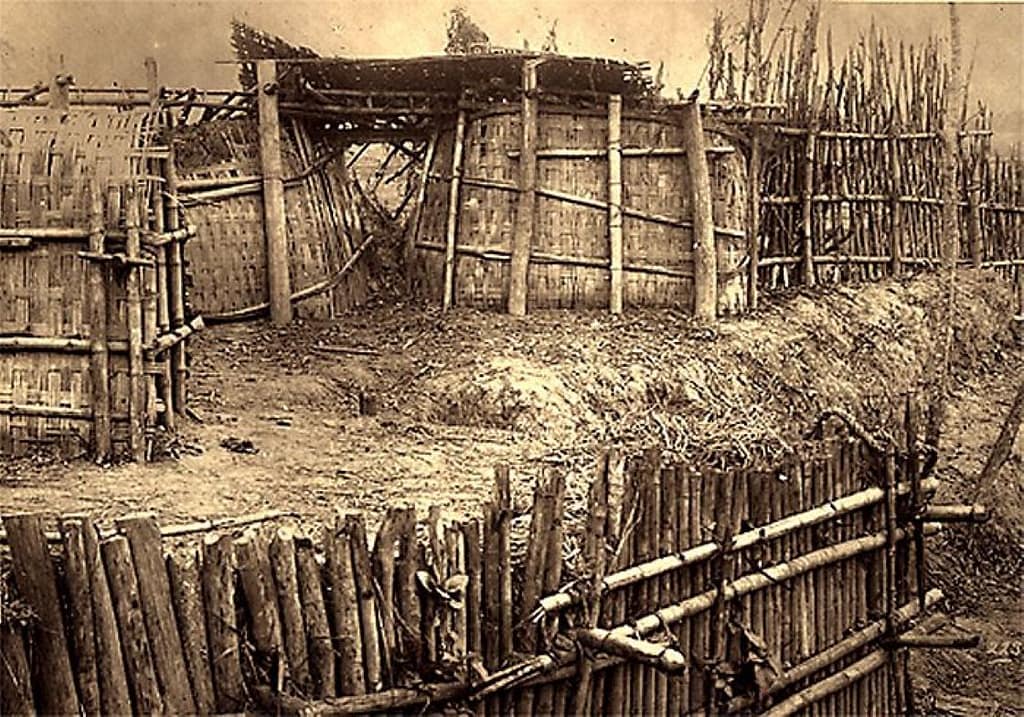
From Phu-Đoan, the way to Tuyên Quang ran through broken country dominated by high spurs and narrow ravines. The Chinese had transformed these defiles into a fortified zone extending from Yuoc to Hòa Mộc, roughly eight kilometres short of the citadel. Their works were formidable: trenches faced with timber, deep ditches, and bamboo stakes concealed beneath the grass across an area of nearly a square kilometre.
On 28 February, Giovanninelli’s brigade crossed the Sông Chảy and began its slow approach. The flotilla, delayed by continuous groundings, was now twelve hours behind, its crews literally hauling the gunboats over the shallows by hand. Within Tuyên Quang fortress, Dominé’s men observed two red rockets fired from the south-east—the first sign that help was approaching. During the same day, the besiegers continued to press their saps against the Tonkinese cantonment, wounding two men. That night Sergeant Thévenet of the Legion succumbed to his wounds, another of the many small losses that marked the siege.
The Battle of Hòa Mộc (2–3 March 1885)
Contact with the enemy
At dawn on 2 March, Giovanninelli’s vanguard emerged from the ravine of Yuoc into an uneasy stillness. No banners showed, no smoke rose from the enemy camp. In their encounters with the Guangxi Army on the advance to Lạng Sơn, the French troops had noted that the Chinese positions were always clearly visible on hilltops and marked by bright banners. Here at Hòa Mộc, the Chinese positions were camouflaged and invisible until the first volleys were fired. The influence and professionalism of the experienced Black Flag Army was evident.
The landscape of tall grass and scrub seemed deserted. A few metres ahead, Tonkinese scouts were sent forward to probe the silence. Suddenly, volleys crashed out at point-blank range. Hidden behind bamboo screens, the Black Flag Army opened fire from well-sited trenches. Several of the advance guard fell where they stood; others were dragged back wounded. Those left on the field were finished by the Black Flags.
One skirmisher of the Garnier Company, who escaped capture, later reported that he had been taken before Liu Yongfu (Luh-Vinh-Phuoc in Vietnamese), surrounded by hundreds of his officers. Questioned, he had been forced to describe the French strength and intention before managing a daring escape. His story confirmed what the staff already suspected: the enemy was present in force, perfectly concealed, and waiting for the French to come to them.10de Lonlay, Siège de Tuyên Quang, pp. 145–146.
First assaults, 2 March 1885
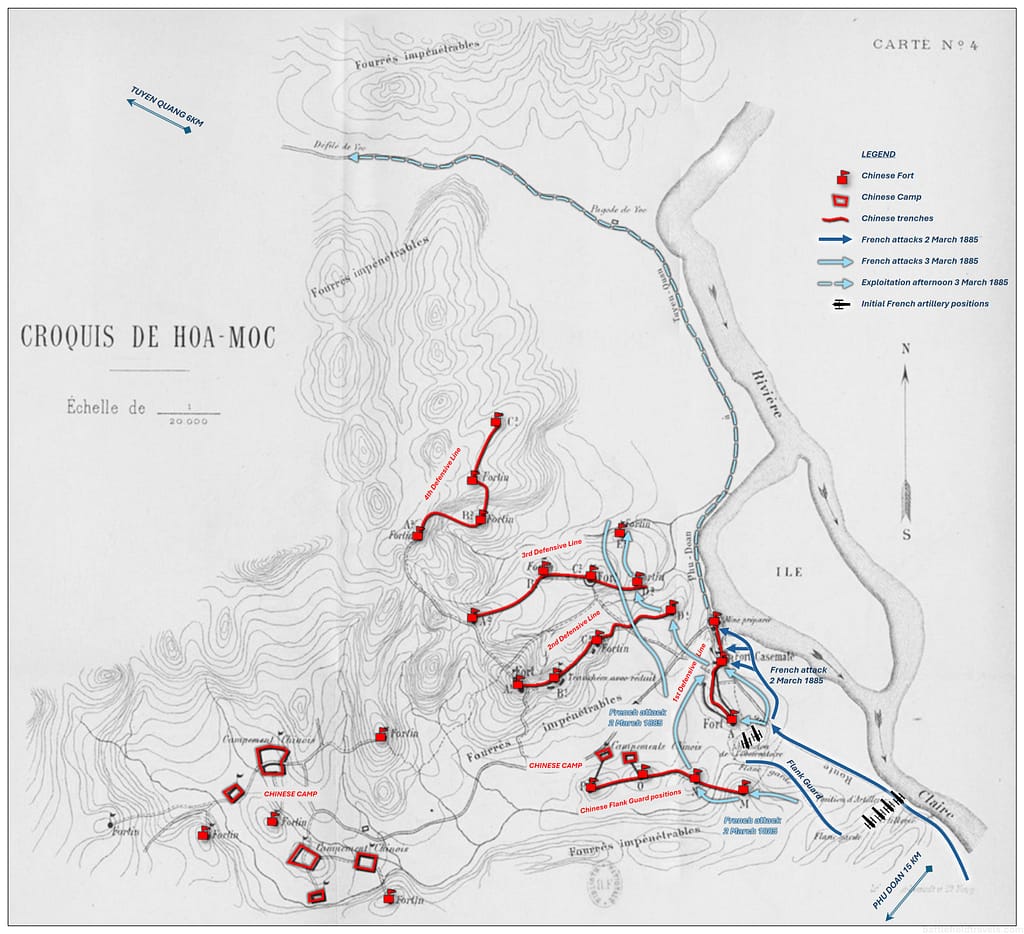
Giovanninelli had no choice but to attack head-on. The road to Tuyên Quang lay directly through the defile. The Mahias Battalion of the Marine Infantry led the first assault along the riverbank and into the Chinese bunker network shortly after midday. As the bugles sounded, the marines advanced into a sheet of fire. Men dropped in rows. And yet the line pressed forward until it reached the enemy’s abatis. There, the attack faltered. Cross-fire swept the approaches from flank redoubts, and bamboo stakes tore at the legs of those who fell. A second assault in the afternoon met the same fate.11Lecomte, Marche de Lang-Son à Tuyên Quang, pp. 50-54
By nightfall, the brigade had lost fifteen officers and some 250 men killed or wounded. The survivors halted less than two hundred metres from the Chinese trenches. Rain fell in torrents; visibility was nil. Dr Masse and his orderlies crawled among the wounded, dressing sixty-four men by the light of a single match held under a rain-cape. A marine sergeant who had lost his way in the dark was captured and decapitated. Across the lines, voices and orders in Chinese could be heard clearly through the mist.12de Lonlay, Siège de Tuyên Quang, pp. 146–147.
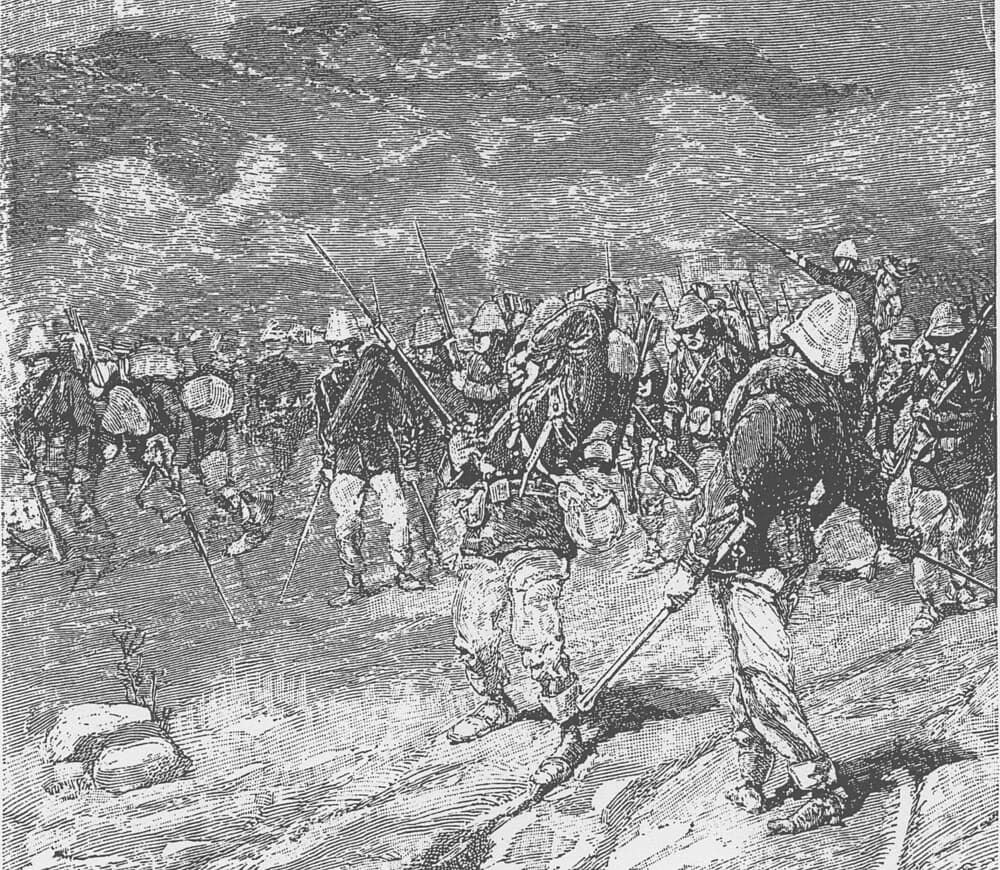
Night on the battlefield
Throughout the night of 2/3 March, the troops lay prone in the soaked grass. They could neither withdraw nor advance. No fires were permitted; cartridges were kept dry inside uniforms; officers moved silently along the line to check that men still lived. The artillery, mired in the ravines behind, could give no help.
“The order is simple,” wrote one officer: “to conquer at any cost and deliver Tuyên Quang.” The exhausted battalions—companies reduced to half strength—waited for dawn, their faces black with powder and mud.13Ibid., pp. 147–148.

Renewed assault, 3 March
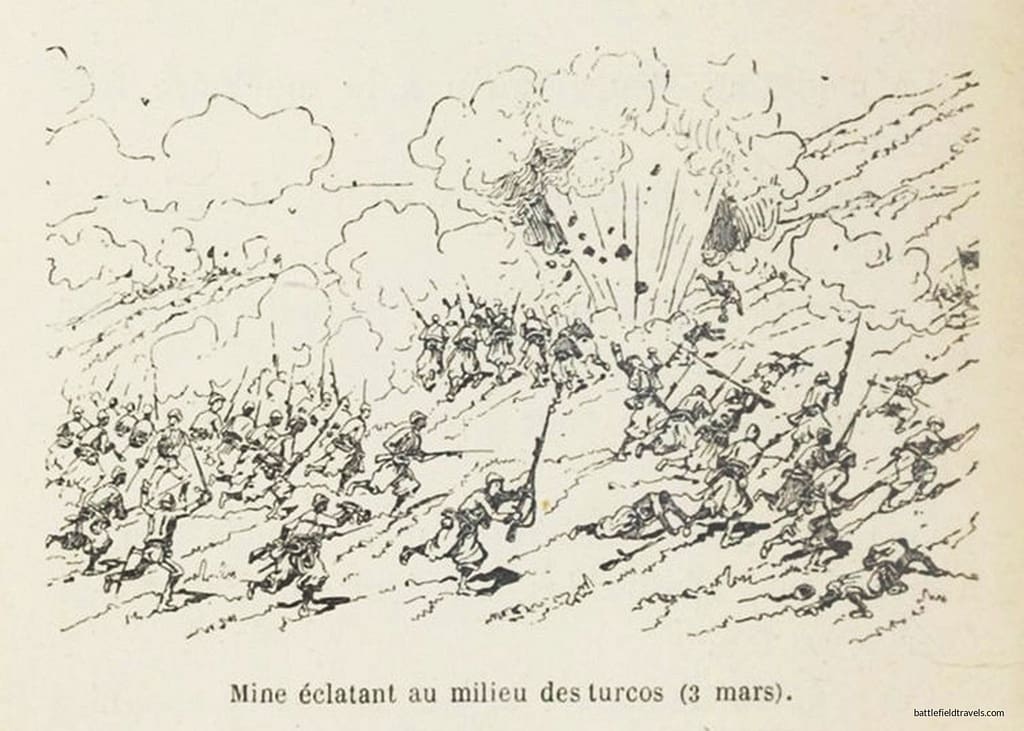
At first light, the bugles sounded again. The Marsouins of the Marine Infantry and the Turcos of the Algerian Tirailleurs surged forward with bayonets fixed. The Chinese answered with fougasses and mines that detonated beneath the advancing French ranks. One explosion struck down forty Algerian riflemen in a single company. Yet the survivors pushed on through smoke and splinters, reaching the parapets and fighting hand-to-hand in the enemy trenches.
The French troops clawed their way through bamboo and earthworks. The Black Flags defended from loopholes fashioned of bamboo tubes that channelled converging fire along the approaches. Behind them, Chinese regulars served light cannon and 22-centimetre howitzers. For an hour, the struggle raged within the works: rifle and bayonet versus club and pike. Irish Legionnaire John Patrick Le Poer noted: “We recognised that we were dealing with the most formidable force we had yet encountered. They gave us bullet for bullet, thrust for thrust”. 14Le Poer, John. A Modern Legionary. Methuen & Co, London, 1904. p.44
Breakthrough and aftermath at Hòa Mộc
By early afternoon, the line at Hòa Mộc was carried. The enemy withdrew in disorder toward the river, leaving their entrenchments filled with dead. The French had fought their way through eight kilometres of defences linking Yuoc and Hòa Mộc, a continuous system of redoubts and parallels extending to within sight of Tuyên Quang.
The price was terrible. Over the two days of fighting, the brigade lost six officers and seventy men killed, twenty-one officers and 387 wounded. The Mahias Battalion, which had gone into action with 600 men and nineteen officers, counted barely half that number standing.
The officers’ casualty list read like a roll of honour: Captain Tailland, Lieutenants de l’Estoile, Moissenet, and Brun killed; Captains Bourguignon, Chanu, Salle, and a dozen more wounded or dead of wounds within days. Among the Algerians, Captain Rollandes and Lieutenant Embarck were killed; two captains and several lieutenants wounded. Even the Tonkinese Tirailleurs suffered losses, Second Lieutenant Donnât among the wounded.15de Lonlay, Siège de Tuyên Quang, pp. 149–150.

The field of battle
When the firing ceased, the scale of the fight became clear. In the captured redoubts, soldiers walked over a layer of cartridge cases and bullets a metre deep. Enemy dead lay in heaps, evidence of the tenacity with which the positions had been defended. French officers estimated the opposing force at around fifteen thousand, Black Flags reinforced by Yunnan regulars, and judged their losses to be enormous.
Giovanninelli’s men had achieved the impossible: the road to Tuyên Quang was open. But they were exhausted after their 300-kilometre march and battle. Companies bivouacked among the corpses, too tired to eat or speak. Dr Masse and the ambulance men worked without pause, binding wounds by lantern light. The survivors of the African battalions, filthy, hollow-eyed, and blood-streaked, could only murmur, “It is done.” 16Ibid., pp. 149–150.
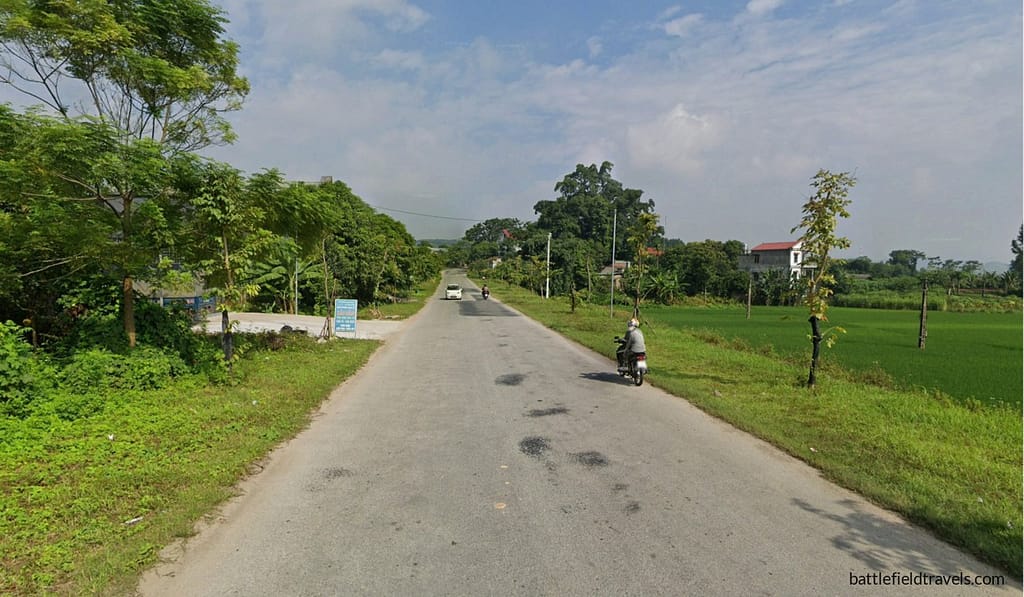
There is almost no trace of the Chinese defences at Hòa Mộc today. I say ‘almost’ no trace, because I saw no evidence and did not spend long enough on the site to explore it in detail and consult with the locals. The Black Flag bunkers were constructed of earth and bamboo on rich fertile farming land, so the positions have long since reverted to productive use. In my research after my travels I did find a youtube video by a French researcher who located the site of a 19th century monument to the Battle of Hòa Mộc. I have included a link to the video below.
Relief of Tuyên Quang (3–4 March 1885)
The final night at Tuyên Quang
Within the citadel, 2 March passed with unrelenting rifle fire and distant echoes of artillery. Late that afternoon, the garrison heard a heavy cannonade rolling from the south-west, the sound of the battle at Hòa Mộc. It grew in strength through the evening, convincing Dominé that the long-awaited relief column was now fighting its way toward them. During the night, the enemy maintained spasmodic musketry around the works, but no assaults. The men, worn to shadows, took what little rest they could in the rubble of their defences. Father Boisset’s orderly was wounded by fire near the chaplain himself, but the old priest refused to leave his post. “The guns are nearer,” he told the wounded. “Hold until the dawn.”17Ibid., pp. 128, 145–146.
Silence at dawn
Before first light on 3 March, the firing outside suddenly slackened, then stopped altogether. For a time, the defenders believed it a ruse, but when the sun rose, the enemy parapets were empty. Patrols crept out cautiously and found the Chinese trenches abandoned, cooking fires still smouldering, muskets and ammunition scattered. Sections of Tonkinese riflemen moved forward to occupy the first line of works; a platoon of Legionnaires followed as reserve. Beyond the burnt Annamite village, the French tricolour was raised once more.
Near the south-west salient, a small group of Chinese who had taken refuge in an underground chamber refused to surrender and were killed after a brief fight. Captain de Borelli, commanding the Legion company, had the entrances sealed with wet straw and the roof broken in. The spectacle outside the walls defied description: fifty or sixty metres of the rampart shattered; gabions overturned; splintered rifles, planks, and human remains strewn together in the dust. In one funnel left by a mine, twenty-six half-naked corpses lay piled at the bottom, left where they had fallen.18Porch, The French Foreign Legion, p. 218.
The approach of the relief column
At 10:00 that morning, scouts on the ramparts sighted movement to the south-east — two Chinese columns, perhaps fifteen hundred men in all, retreating toward Yên Lã. French artillery fired several 80 mm shells that burst among them, scattering the formations. Soon after 14:00, another sound reached the fort: a bugle call drifting through the undergrowth below the riverbank — La Marche des Turcos. Moments later, the light blue jackets of the Algerian Tirailleurs appeared through the smoke, followed by the dark coats of the Marine Infantry.
An immense cheer erupted from the walls. Men who had not smiled for weeks waved their kepis and rifles; officers shouted and wept openly. Across the ditches, the relief troops answered with the same cry — “Vive la Légion ! Vive la France !” A few minutes later, General Brière de l’Isle and Colonel Giovanninelli entered the shattered gate and embraced Major Dominé amid the wreckage.19de Lonlay, Siège de Tuyên Quang, pp. 130–131.
General Brière de l’Isle shocked by destruction of the citadel
Nothing in the general’s experience had prepared him for the scene inside the citadel. Seven great breaches gaped in the walls; the ditch was choked with debris and corpses. The interior was a wilderness of collapsed huts, graves freshly filled, and shell holes still smoking. Of the original 600 defenders, only 420 remained fit for duty. Thirty-three were dead, including Captains Moulinay of the Legion and Dia of the Tonkinese Tirailleurs, and seventy-six wounded, among them four officers of the Legion.
The gunboat Mitrailleuse, moored below the fort, had fought almost without respite throughout the siege. Its commander, Ensign Senès, had been wounded twice, once by a bullet and once by shell splinters, yet kept his weapon in action until the end. The little crew, fifteen in all, were each wounded to some degree, and the vessel itself was scorched and scarred by incendiary rockets and near misses.20Ibid., pp. 131–132.

Outcomes of the Battle of Hòa Mộc
Casualties
In Giovanninelli’s 1st Brigade, 76 were killed and 408 wounded at the Battle of Hòa Mộc. Many more suffered from dysentery, fever, and malnutrition, but his force remained combat effective.21Ibid., pp. 131, 149.. French losses during the Siege of Tuyên Quang, though heavy in proportion to the small garrison, were remarkably light given the scale of opposition. Out of roughly 630 defenders, around 33 were killed and 76 wounded.
By contrast, Chinese and Black Flag casualties were severe. Estimates vary, but contemporary French reports suggested losses of several thousand killed. The repeated assaults, particularly against the blockhouses and parapets in January and February, left the ditch literally filled with bodies. At Hòa Mộc alone, the besiegers left hundreds dead on the field. While exact figures are uncertain, the disparity between attacker and defender losses underlined the power of disciplined fire from prepared positions against massed assault.22ibid, p. 149.

The Black Flags withdraw
Liu Yongfu’s army withdrew upriver to Tuan Quan, harried by French gunboats which bombarded the fleeing columns near Già Du. The Black Flags and the Yunnan Army had lost thousands of killed and wounded, but they were better able to absorb the losses. The war would continue for another six weeks, with fighting in Tonkin, along the Chinese mainland and on the island of Formosa (now Taiwan). Liu Yongfu would later resist the Japanese invasion of Formosa during the Sino-Japanese War (1894-95) and become the president of the Republic of Formosa in 1895.
Culmination of the Tonkin Expeditionary Corps
The relief of Tuyên Quang marked both the moral and tactical culmination of the Tonkin campaign’s winter operations. Within the shattered walls, Dominé’s small composite garrison had endured thirty-six days of continuous bombardment, mining, and assault, holding an isolated post hundreds of kilometres from the main field army. Outside, Giovanninelli’s brigade had marched 300 kilometres and then forced its way through the formidable defences of Hòa Mộc, perhaps the best-constructed Chinese works encountered in the war, at the cost of nearly a quarter of its strength. Together, these two actions demonstrated the endurance and fighting spirit of the French expeditionary force, but also revealed the extreme fragility of its communications and the limits of its manpower. The victory at Tuyên Quang was both heroic and cautionary: a foretaste of the difficulties France would face in the consolidation of Tonkin.
The Hòa Mộc/Tuyên Quang battlefield today
Following the battle, a commemorative obelisk was constructed on the high ground near the Clear River, site of the most formidable Chinese defences. A passing traveller reported seeing the monument under construction in 1889. L’Armée coloniale (ed. 1 May 1891) magazine reports that the garrison of Tuyên Quang conducted a commemoratve service at the monument on 2 March 1891, the sixth anniversary of the battle.23L’Armée coloniale (1891). L’Armée coloniale: revue indépendante hebdomadaire, 1 May 1891 The print below is from Dix Ans de Haut-Tonkin (Ten Years in Upper Tonkin), by Leon Girod (1899), so the monument was established by then.24Girod, Leon-Xavier. (1899). Dix ans de Haut-Tonkin. Tours: Alfred Mame et Fils.
The monument remained standing into the twentieth century but was destroyed in the 1960s (according to locals in Hòa Mộc), as the Vietnamese authorities purged all colonial war monuments. Remarkably, its base and remnants still survive beneath the vegetation, while fragments of the destroyed monument can be found in the surrounding village, some reused as garden ornaments. The adjoining cemetery also survives, heavily overgrown, with headstones commemorating soldiers of the Tonkinese and Algerian Tirailleurs killed in the battle.

Youtube video – locating the Hòa Mộc monument
This incredible youtube video shows the monument base, remnants, and military graves being rediscovered around Hòa Mộc.
Tuyên Quang
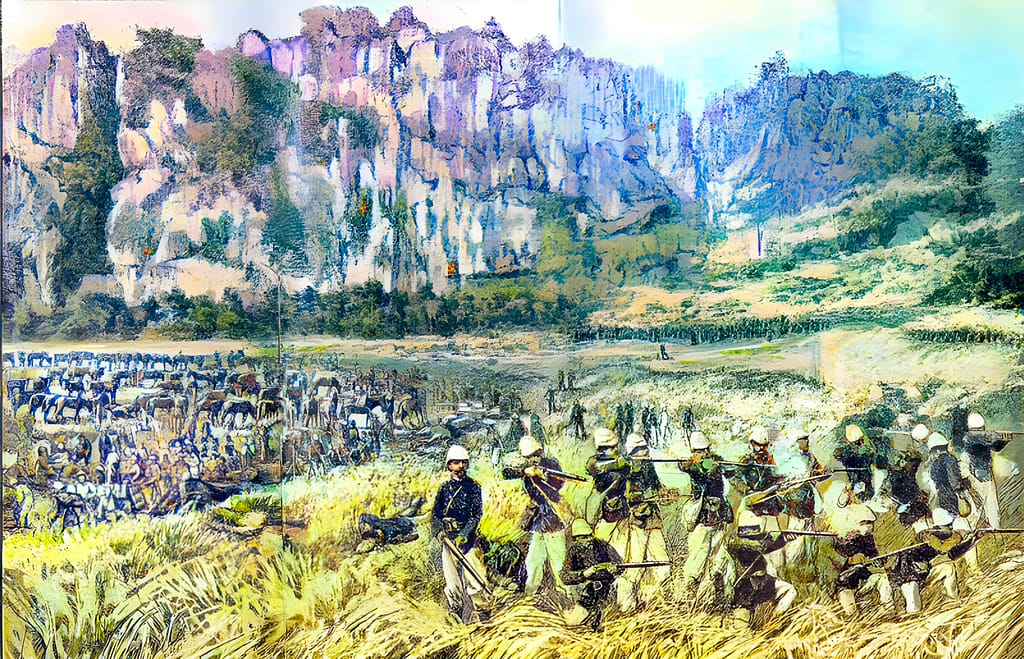
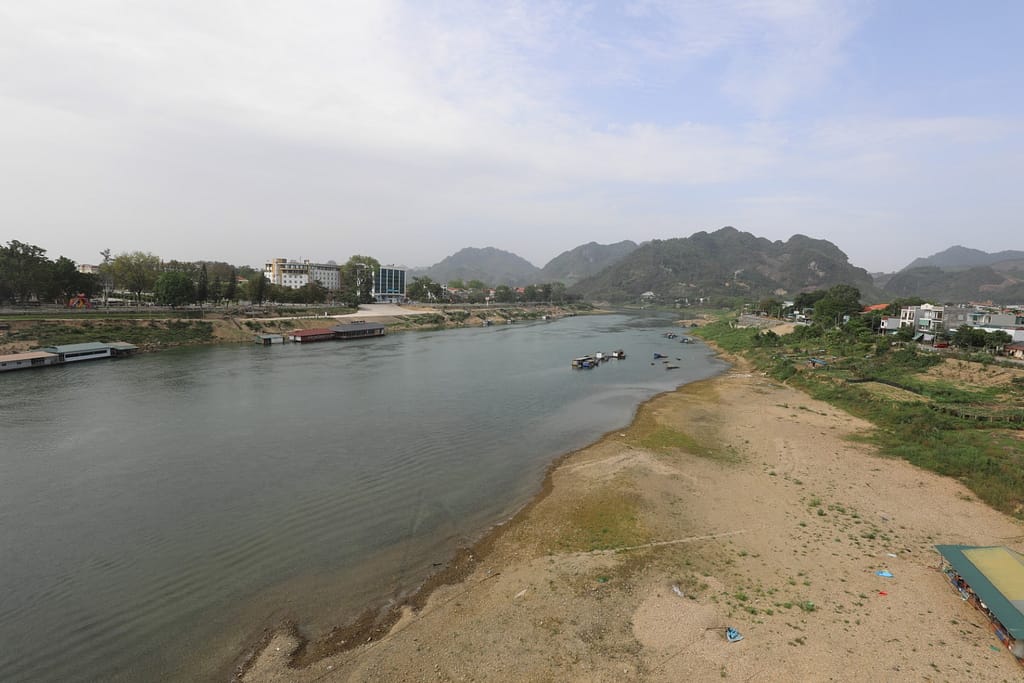
The town of Tuyên Quang has evolved into a provincial capital, with its streets and markets sprawling across what was once jungle and rice fields. The citadel itself has largely disappeared beneath modern development. Most of the earthen ramparts and towers described by Lonlay were levelled during the twentieth century, their bricks reused in local construction. Today, only traces of the old enclosure remain. Its perimeter is still imprinted in the Tuyên Quang road system, and long sections of the old citadel brick wall remain intact in the southwestern corner. The Le Grand Mamelon is now overgrown with trees, but remains a strikingly steep knoll in an otherwise flat region. The line of the Clear River remains much as it was, and the mountains captured in period paintings still define the area.
The Annamite village that once pressed against the walls has been completely absorbed into the city. The pagoda used as an infirmary and chapel by Father Boisset has vanished, though local oral tradition still recalls a site associated with the “French fort.” The landscape of the siege, the trenches, blockhouses, and burnt huts, have long since been erased, first by post-colonial rebuilding and later by the rapid urbanisation of northern Vietnam after 1975.
A few local memorials to anti-French resistance stand in the city, but they commemorate the struggle from the Vietnamese national perspective, not the defence celebrated in Legion memory. In Vietnamese historiography, the episode is framed as part of the broader resistance to colonial conquest, a story of local sacrifice rather than French endurance.25Vietnamese local history websites, accessed Aug 2025.
Le Boudin, march song of the Legion!
Additional images
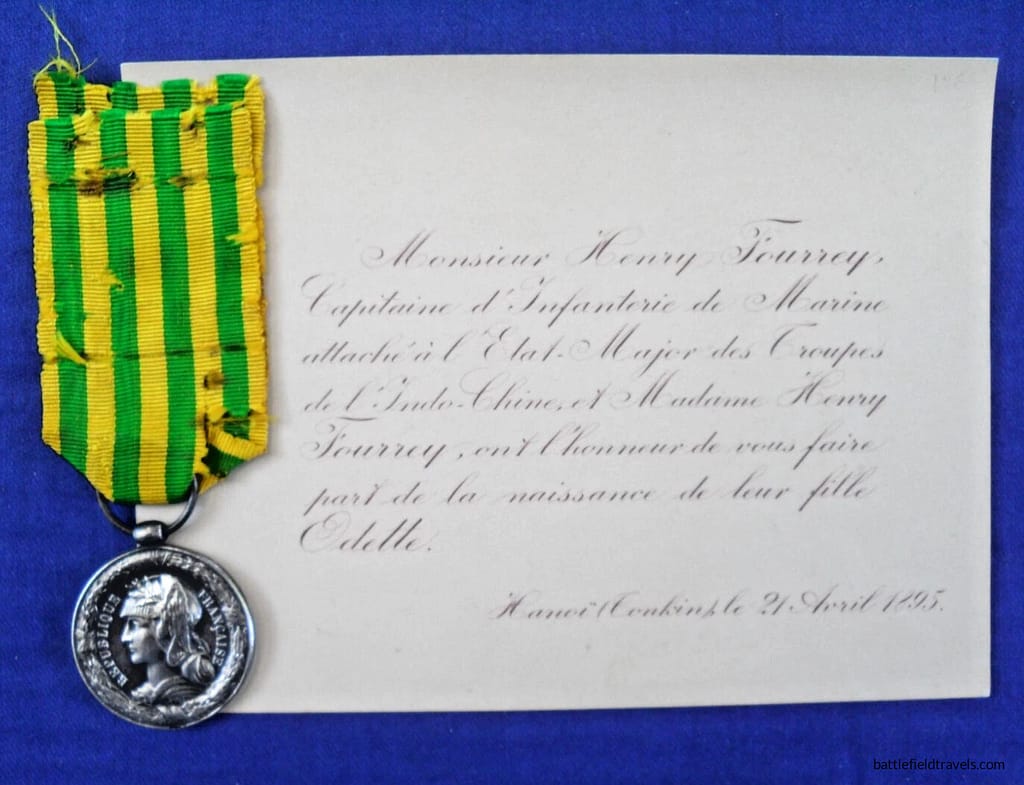
Tonkin Campaign (1883-1885) Medal to Sergeant Major Henri Emile Fourrey, 1er Régiment d’Infanterie de Marine. From my personal collection.
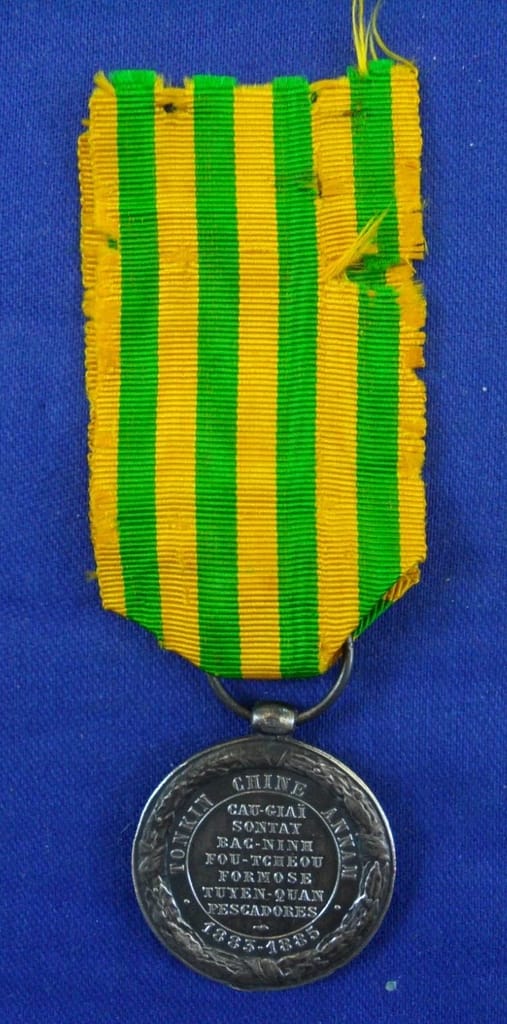
The Medal was created on 6 September 1885 for personnel who took part in the operations in Tonkin (now Vietnam), China and Annam during the years 1883 to 1885 that terminated with the Treaty of Tien-Tsing with China. The attribution was extended by the law of 27 July 1887 to personnel who subsequently participated in operations in Tonkin, Annam, Cambodia, Siam (Thailand) and the Upper Mekong (Laos). The Marine version of the medal, of which this example is one, may be distinguished from the Land version by the presence of Cau-Giaï at the head of the list of battles.
Battle Honours: ‘CAU-GIAÏ, SONTAY, BAC-NINH, FOU-TCHEOU, FORMOSE, TUYEN-QUAN, PESCADORES’ encircled by the inscription ‘TONKIN CHINE ANNAM 1883-1885’
Found this useful? Buy me a coffee — it helps fund future battlefield research


Authored by Mick Prictor, a retired military officer with 40 years’ service, and a military historian specialising in terrain-focused analysis of tactics, doctrine, and command decision-making in land warfare. His work draws on extensive battlefield fieldwork—more than 280 sites worldwide—and one of the world’s largest private collections of historic military arms, uniforms, and equipment. About me
📚 Notes and References
Notes
- 1Dick de Lonlay (Émile Bayard), La Légion au Tonkin: Siège de Tuyên Quang, (Paris: E. Plon, Nourrit et Cie, 1886), pp. 9–12 ↩︎
- 2Stephen R. Platt, Imperial Twilight: The Opium War and the End of China’s Last Golden Age (London: Atlantic Books, 2018), p. 430. ↩︎
- 3Porch, The French Foreign Legion, p. 217. ↩︎
- 4Ibid., p. 21. ↩︎
- 5Capitaine Jean Lecomte, Marche de Lang-Son à Tuyên Quang (1er Brigade – Giovanninelli) (Paris: Berger-Levrault et Cie, 1888), p.8. ↩︎
- 6de Lonlay, Siège de Tuyên Quang, pp. 137–140. ↩︎
- 7Lecomte, Marche de Lang-Son A Tuyen Quan, pp. 15-17. ↩︎
- 8de Lonlay, Siège de Tuyên Quang, pp. 142–143. ↩︎
- 9Ibid., pp. 143–144. ↩︎
- 10de Lonlay, Siège de Tuyên Quang, pp. 145–146. ↩︎
- 11Lecomte, Marche de Lang-Son à Tuyên Quang, pp. 50-54 ↩︎
- 12de Lonlay, Siège de Tuyên Quang, pp. 146–147. ↩︎
- 13Ibid., pp. 147–148. ↩︎
- 14Le Poer, John. A Modern Legionary. Methuen & Co, London, 1904. p.44 ↩︎
- 15de Lonlay, Siège de Tuyên Quang, pp. 149–150. ↩︎
- 16Ibid., pp. 149–150. ↩︎
- 17Ibid., pp. 128, 145–146. ↩︎
- 18Porch, The French Foreign Legion, p. 218. ↩︎
- 19de Lonlay, Siège de Tuyên Quang, pp. 130–131. ↩︎
- 20Ibid., pp. 131–132. ↩︎
- 21Ibid., pp. 131, 149. ↩︎
- 22ibid, p. 149. ↩︎
- 23L’Armée coloniale (1891). L’Armée coloniale: revue indépendante hebdomadaire, 1 May 1891 ↩︎
- 24Girod, Leon-Xavier. (1899). Dix ans de Haut-Tonkin. Tours: Alfred Mame et Fils. ↩︎
- 25Vietnamese local history websites, accessed Aug 2025. ↩︎
Sources and Further Reading
Primary Source
- Dick de Lonlay (Émile Bayard). La Légion au Tonkin: Siège de Tuyên Quang. Paris: E. Plon, Nourrit et Cie, 1886.
- Lecomte, Capitaine Jean. Marche de Lang-Son A Tuyen Quan (1er Brigade – Giovanninelli). Berger-Levrault et Cie, Libraires-Editeurs, Paris, 1888
- Le Poer, John. A Modern Legionary. Methuen & Co, London, 1904
- Hocquard, Édouard, Une Campagne Au Tonkin. Hachette, Paris, 1892
- Girod, Léon-Xavier. Dix ans de Haut-Tonkin. Alfred Mame et Fils, Tours, 1899
- L’Armée coloniale (1891). L’Armée coloniale: revue indépendante hebdomadaire, 1 May 1891
Secondary Sources
- Porch, Douglas. The French Foreign Legion: A Complete History of the Legendary Fighting Force. New York: Harper & Row, 1991.
- Platt, Stephen R. . Imperial Twilight: The Opium War and the End of China’s Last Golden Age. London: Atlantic Books, 2018.
- Windrow, Martin. Our Friends Beneath the Sands: The Foreign Legion in France’s Colonial Conquests. Weidenfield & Nicholson, 2011.
- René Chartrand (Author), Mark Stacey (Illustrator). French Naval & Colonial Troops 1872–1914 (Men-at-Arms, 517). Osprey 2018.
- Martin Windrow (Author), Mike Chappell (Illustrator). French Foreign Legion 1872–1914 (Men-at-Arms, 461). Osprey 2010.
- Guyader, Raymond. The French Foreign Legion in Indochina, 1946-1956: History • Uniforms • Headgear • Insignia • Weapons • Equipment. Schiffer Military History, 2014.
- Wikipedia contributors. “Siege of Tuyên Quang.” Wikipedia. Accessed August 2025.
📚 Further Reading
This battle study nests within the broader analytical framework explored in the Research Hub, where operational methods, operating environments, armies, commanders, and weapons are examined across conflicts and eras. The links below connect related studies across the wider body of battlefield analysis on the BattlefieldTravels site.
⚔️ Explore all battle studies from the Tonkin Campaign 1883-1886
⚔️ Explore all battle studies involving the French Foreign Legion
🏛️Explore the museum of French colonial war historic artefacts
🗞️ For updates on new battlefield studies and research insights, you can subscribe to the Newsletter.
You may also like
 ⚔️🔒Son Tay Campaign, Tonkin,
11-17 December 1883
 ⚔️🔒Ambush at Bắc Lệ, Tonkin,
23-24 June 1884
 ⚔️ 1883–1886 Tonkin Campaign/ Sino-French War, Battle Studies
 ⚔️🔒Siege of Tuyên Quang, Tonkin, 24 Nov 1884 – 3 March 1885
 🏛️ French Colonial Wars (1830–1940 ) Weapons and Equipment
 ⚔️ French Foreign Legion Campaigns, Battles, and Legacy
🧭 Battlefield Travel Guide: Hòa Mộc (2 Mar 1885) and Tuyên Quang (Nov 1884 – Mar 1885)
- Location: Tuyên Quang City, Tuyên Quang Province, northern Vietnam — on the Clear (Lo) River.
- Coordinates (central riverfront): 21.82° N, 105.21° E
Getting There
- ~165 km northwest of Hanoi via QL2; 3–4 hrs by road depending on traffic.
- Street parking near riverfront; hotel/café carparks common along the embankment.
Site Orientation
- Clear (Lo) River: primary supply line during the siege; walk the embankment to visualise gunboat approach routes and convoy ambush arcs.
- Former citadel enceinte: urban build-over; use period overlays to place ramparts, ditch and blockhouses (approx. 300 m per side, square). Remnants of the fort walls remain.
- Dominant ridgelines (NW/NE): likely besieger battery sites; control approaches and observation onto the post.
Museums & Visitor Centres
- Tuyên Quang Provincial Museum (Bảo tàng Tuyên Quang): regional history; limited siege-specific displays but useful for local context.
On-Site Experience
- No formal siege trail; rely on overlays from period plans (e.g., Lonlay, 1886) plus modern mapping.
- Riverfront promenade: best sightlines along convoy bends; gauge ranges to firing points on the opposite bank.
- Walk the city grid over the enceinte to understand defensive sectors held by Legion and Tonkinese riflemen.
- Short climbs to ridges to assess arcs and likely battery positions onto the post.
Nearby Points of Interest
- Up/downstream bridges and river crossings — choke points and probable ambush sites.
- Pagoda/infirmary locations linked in sources to Father Boisset (modern structures now present).
Practical Tips
- Urban development obscures the enceinte, but river geometry still governs lines of sight and fire.
- Carry a simple citadel overlay and trench-progress sketch to plot Chinese parallels and battery sites.
- Late-afternoon light improves contrast for reading ground and defensive sectors.
FAQ: Battle of Hòa Mộc (2 Mar 1885)
The siege took place from November 1884 to March 1885 during the Sino-French War, when a French and Tonkinese garrison of about 630 men held the citadel of Tuyên Quang against 15,000 Chinese and Black Flag troops.
Chef de Bataillon Marc-Edmond Dominé commanded the post, leading two companies of the 1st Foreign Legion Battalion, Tonkinese riflemen, and a detachment of marine artillery.
After General Briere de Lisle had seized Lang Son in mid-February, he immediately departed with Colonel Giovanninelli’s 1st Brigade on a nearly 300 kilometre relief march to Tuyên Quang. He knew that the garrison at Tuyên Quang was at risk, but his priority was Lang Son and defeating the Guangxi Army. Only once that axis was secure could he afford to reduce his force.
The 1st Brigade were a mix of French Colonial Marines, Algerian light infantry, and locally recruited Tonkinese light infantry, plus artillery and a small cavalry contingent. When he arrived at Phu Doan, Giovanninelli was reinforced by two ad-hoc battalions comprised of Foreign Legion, Marines and Algerians.
Yes. Liu Yongfu’s Black Flag Army was comprised of mercenaries who largely fought for money and power. Many were veterans of China’s Taiping War. At various times, the Black Flags Army included Americna and European adventurers who hired themselves out as advisers and even as officers in the Black Flag Army.
Yes. The Black Flags were expert at defensive tactics and entrenchments. The French had already experienced this at Son Tay in December 1883, where they had to fight through dense systems of well-camouflaged bunkers and trenches. While the Black Flag tactics were very good, they were ultimately defeated by the highly professional, combat experienced French colonial units.
The siege became a symbol of Legion endurance, celebrated in Le Boudin and compared to Camerone for its demonstration of discipline and honour under siege.
Subscribe to Battlefield Travels and receive a free E-Book Battlefield Guide
Unlock expert battlefield analysis, campaign reconstructions, and historical insights drawn from firsthand exploration and primary sources.
🗺️ You’ll receive:
🎖️ Exclusive historical insights you won’t find elsewhere
📘 A free eBook: 10 Tips for Exploring Historic Battlefields
📰 New battlefield studies straight to your inbox as they are published

⚔️ Go deeper — Members get exclusive access to the Deep Research Collection, Field Notes, and monthly Research Dispatches. Try membership free for 7 days, cancel anytime. From $9/month.