Australia’s arsenal in two world wars!
Hidden in the Blue Mountains of New South Wales, the Lithgow Small Arms Factory combined raw materials and precision techniques to produce the weapons that armed Australia’s soldiers in two world wars and beyond. When it was founded in 1912, it represented the leading edge of precision manufacturing. Today, its workshops and machinery remain as a rare time capsule — a story of Australian industry, innovation, community and wartime service.

Key facts
🗺️ Lithgow Small Arms Factory, NSW, Australia, Opened June 1912 Australian military small arms manufacturing 1912 – ongoing (as Thales)
 Weapons production in excess of one million
🎯 Military rifles, Submachine guns, Light machine guns, Medium machine guns, Sporting weapons
Visit the virtual museum of weapons, uniforms and equipment
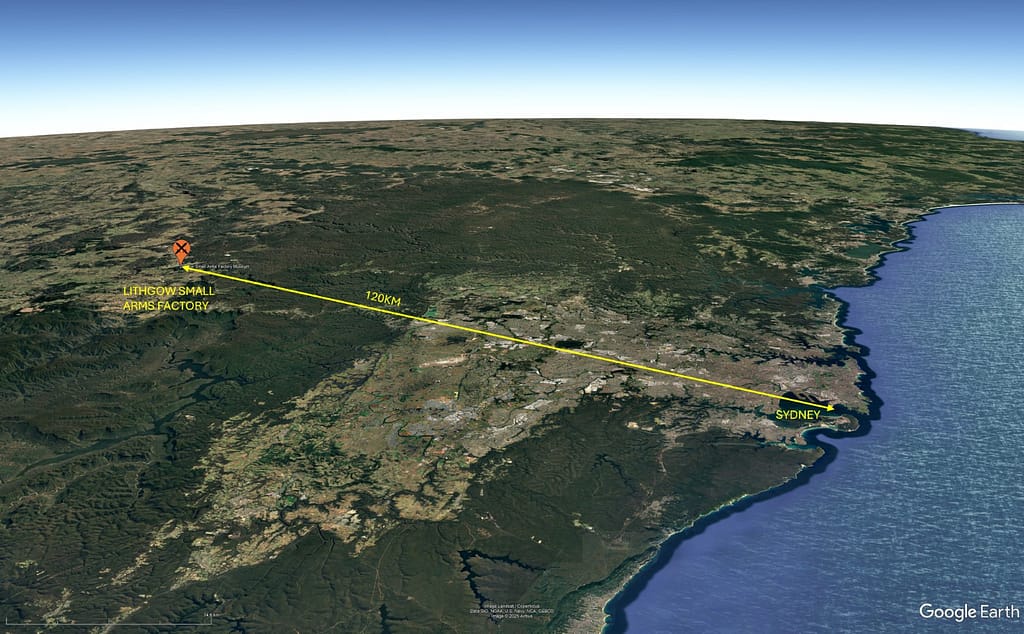
Google Earth map – location of Lithgow Small Arms Factory
🧭🥾 Walking the Battlefield
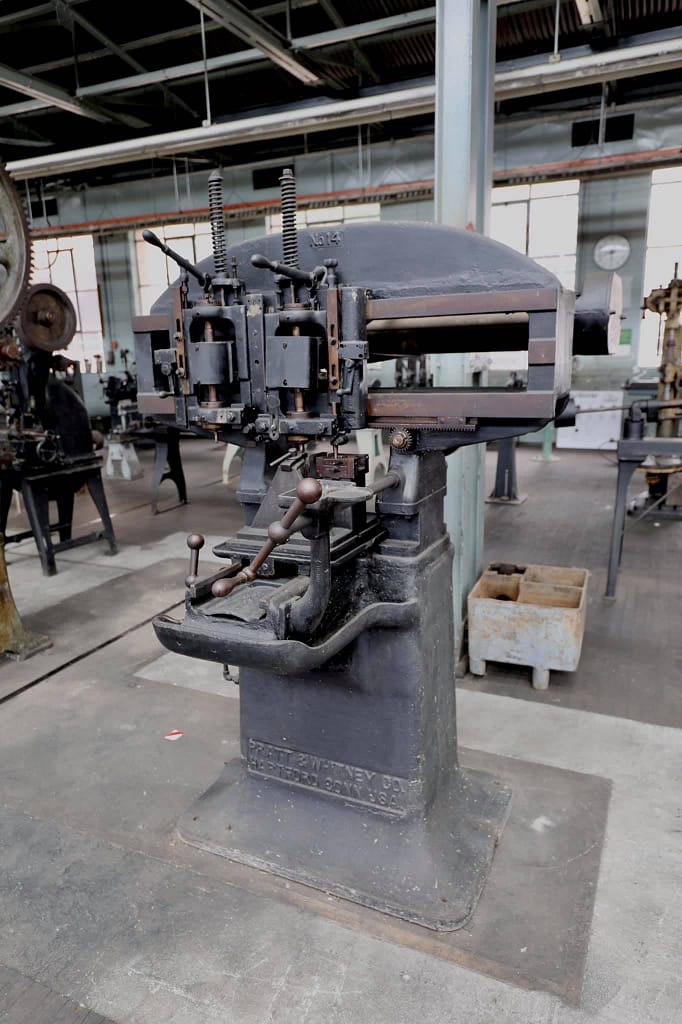
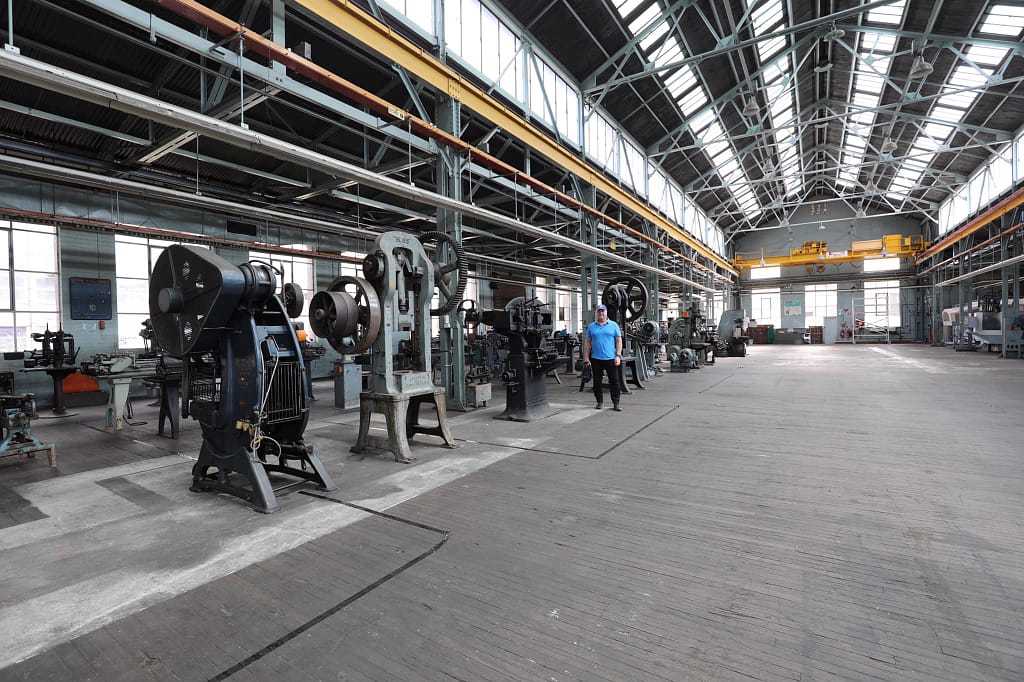
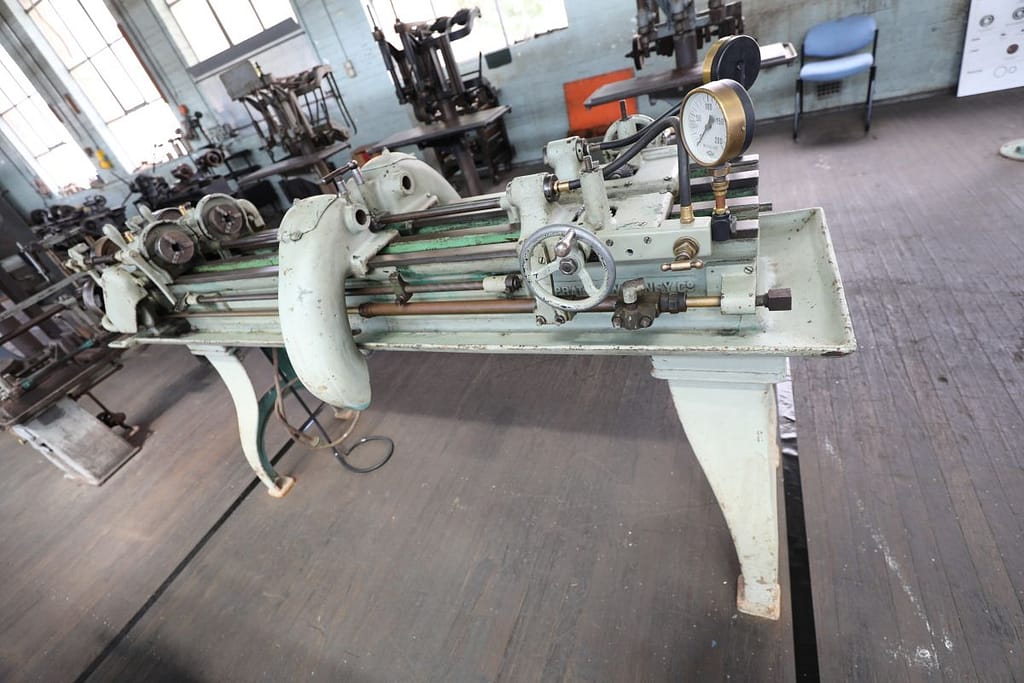
I first visited Lithgow in March 2021, having been aware of the factory’s significance for many years. The Main Machine Room retains much of its early 20th-century character. Original Pratt & Whitney precision machines, heavy cast-iron frames, neatly arranged drawers of gauges, and timber floors remain in place, reflecting the methods and craftsmanship of its 1912 origins.
Unlike many historic armament plants that have been repurposed, fallen into disrepair, or partially converted to museum spaces, Lithgow continues to operate as an armaments producer. The adjacent Thales Australia facilities employ modern CNC machining for current production, while the original belt-driven lathes in the museum provide a physical record of earlier manufacturing techniques. The site represents both a preserved industrial heritage and a functioning component of Australia’s contemporary defence industry.
Strategic context and founding
The need for domestic arms production
On 1 January 1901, six British colonies – New South Wales, Victoria, Queensland, South Australia, Western Australia and Tasmania – united to form the Commonwealth of Australia. The new country inherited a patchwork of colonial defence forces — each armed, equipped, and trained to varying standards — but no domestic capacity for manufacturing modern military rifles. In peacetime, this was inconvenient; in wartime, it was potentially disastrous. The Boer War (1899–1902) had been a recent reminder that the British Empire’s military supply chain was not infinite. Even then, delays in receiving British-made Lee–Metford and Lee–Enfield rifles were common when South Africa, India, and other theatres were competing for the same shipments.
By 1907, Imperial defence planners in London were blunt: if a major European war broke out, British factories at Enfield, Sparkbrook, and BSA in Birmingham would prioritise supply to British forces. Australia might have to wait months or longer for arms. Compounding this risk was the growing naval arms race in the Pacific. The Anglo–Japanese Alliance (1902), German colonial possessions in New Guinea, and increasingly assertive U.S. naval power meant the region could no longer be considered strategically quiet.
The answer was clear to both London and Melbourne: Australia must be able to manufacture its own service rifles. A government factory, equipped for high-volume precision production, would ensure that the nation’s soldiers would not go into battle under-equipped because of events on the other side of the globe.
Choosing the site
The government selected Lithgow, a small but industrially promising town in the Blue Mountains of New South Wales, about 120km west of Sydney. Lithgow offered several advantages:
- Security – Its location in the Blue Mountains was far enough inland to be beyond the range of naval bombardment or raiding forces.
- Resources – Proximity to coal mines for power, and the Eskbank steelworks at Lithgow for raw materials.
- Transport – A direct railway link to Sydney’s port for the import of machinery and export of finished arms.
- Skilled labour potential – Existing local engineering and metalworking trades could be adapted for arms production.
Looking abroad for a model
In 1909, the Department of Defence sent a technical delegation overseas to study arms manufacture. They began in Britain at the Royal Small Arms Factory, Enfield. Here they found a world-class arms maker — but one still bound to an older production culture. Much work was done by highly experienced fitters and finishers who adjusted each part by hand to match the rifle it was destined for. The result was superb craftsmanship but slower output and imperfect interchangeability.
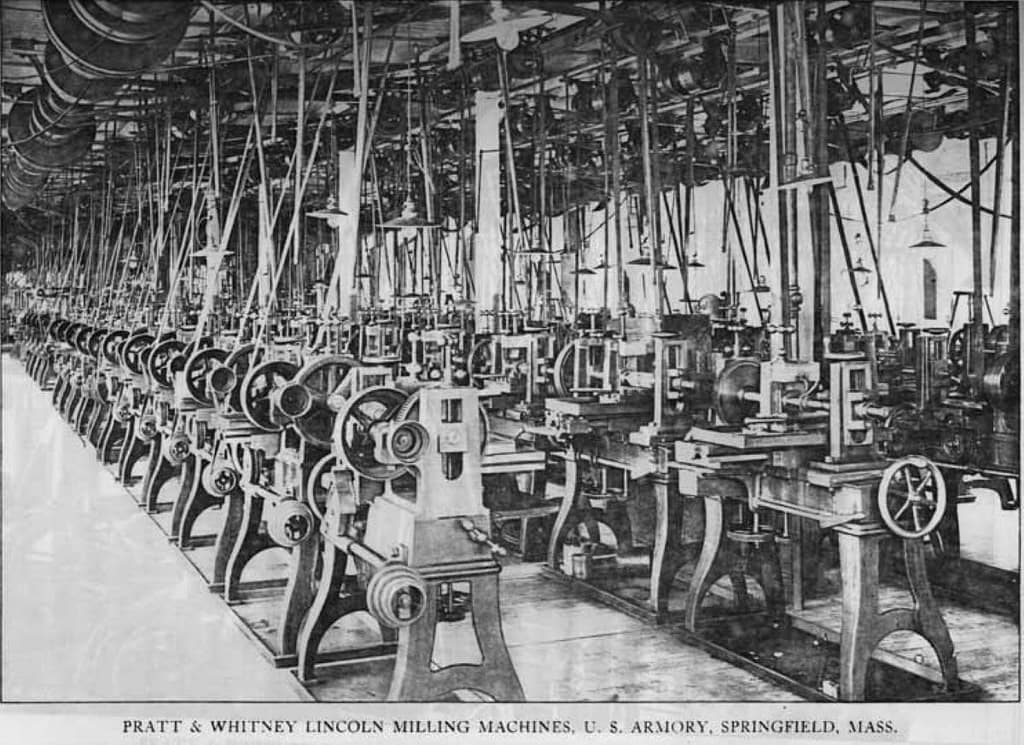
From there, the delegation visited the United States — Springfield Armory, Colt, Winchester, and Remington. Here they saw something entirely different: the American System of Manufacture. This approach relied on precision jigs, gauges, and machine tools to produce parts to exact tolerances, so that any bolt, trigger, or barrel could fit any rifle of the same model without additional fitting. The flow-line organisation of production allowed thousands of rifles a month to be completed with consistent quality.
For a young nation with limited skilled labour and the need to scale rapidly in wartime, the choice was obvious. Australia would build its arsenal on the American system.
Vignette – Choosing the American System
The 1909 decision to adopt the American system over the British artisanal model was more than a technical choice; it was a statement of strategic intent. British armouries like Enfield were superb at building rifles of exceptional fit and finish, but they depended on highly skilled individual craftsmen and could not easily scale. The American method — gauged, tooled, and repeatable — allowed a new factory in a young nation to go from zero to wartime production in a few years.
Lithgow’s survival and adaptability across more than a century are proof that this decision was the right one. The very same workflow that produced the SMLE for Gallipoli would, decades later, turn out the SLR for Vietnam and, in the present day, the EF88 for modern Australian Defence Force.
Securing the technology for Lithgow Small Arms Factory
The government contracted Pratt & Whitney Machine Tool Company of Hartford, Connecticut, to design, supply, and install an entire production line. This included not just the machines themselves but also:
- Master gauges for every dimension of every part.
- Fixtures and jigs to ensure absolute repeatability.
- Training in American mass-production methods for Australian supervisors.
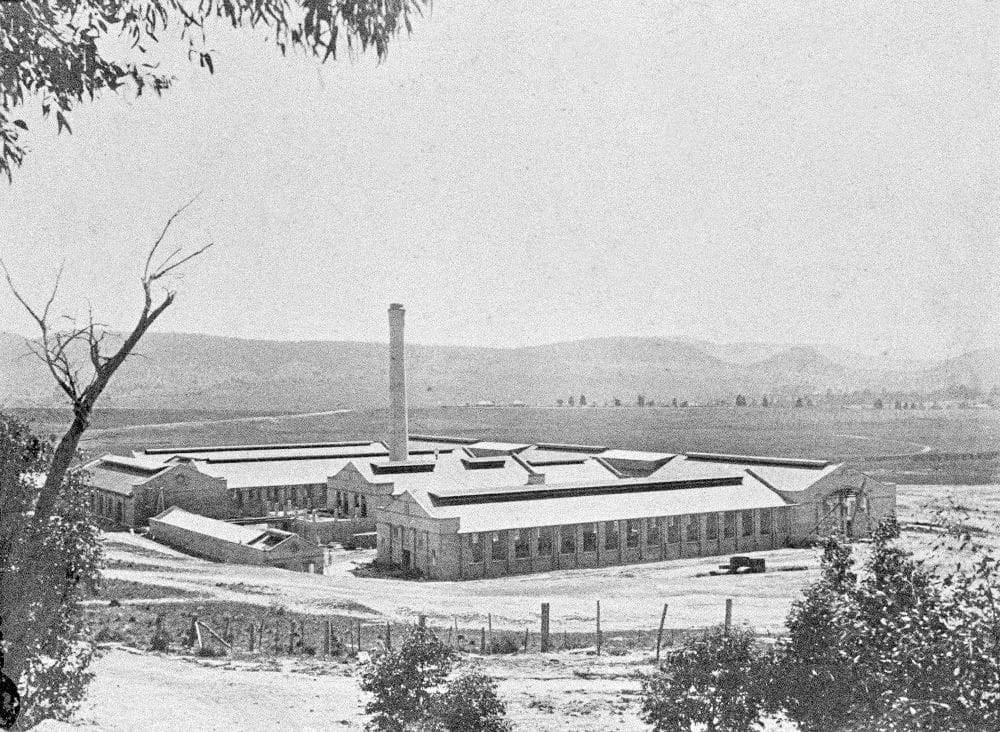
Construction of the Lithgow Small Arms Factory began in 1910. By 1912, the new red-brick complex on the western edge of town housed one of the most modern arms production lines in the world — and the only one in the Southern Hemisphere.
Building an industry – the American system in Australia
When the Lithgow Small Arms Factory officially opened in June 1912, it was more than just a group of workshops — it was a transplanted piece of American industrial DNA, adapted to Australian conditions.
From the moment you stepped through its brick archways, you entered a manufacturing philosophy imported wholesale from the global centre of precision manufacturing in the Connecticut River Valley. Pratt & Whitney engineers had laid out the production floor to follow flow-line logic: raw material entered one end of the building and moved progressively through specialised workstations until it emerged as a finished rifle at the other. This was the physical embodiment of the American system — no wasted movement, no backtracking, and a relentless focus on efficiency.
📦 Callout: The Enfield Inch Problem
When Pratt & Whitney began tooling up Lithgow for SMLE rifle production, they relied on the official blueprints and specifications supplied by the Royal Small Arms Factory at Enfield. On paper, everything should have fit together perfectly. In practice, the parts didn’t match. Much of Enfield’s production still depended on “father-to-son” shop-floor knowledge — informal practices and minute tolerances that were never written into the official drawings.
The most notorious discovery was the so-called Enfield Inch — a unit of measurement 0.0004″ shorter than the standard Imperial Inch. Over decades of British manufacture, this fractional difference had become embedded in jigs, gauges, and machining routines. Pratt & Whitney’s American-built tooling, set precisely to the official patterns, produced components that stubbornly refused to interchange with Enfield-made parts. It was only after time-consuming adjustments and reverse-engineering that Lithgow’s rifles began to run smoothly on the production line.
Operational hub: the Lithgow Small Arms Factory tool room
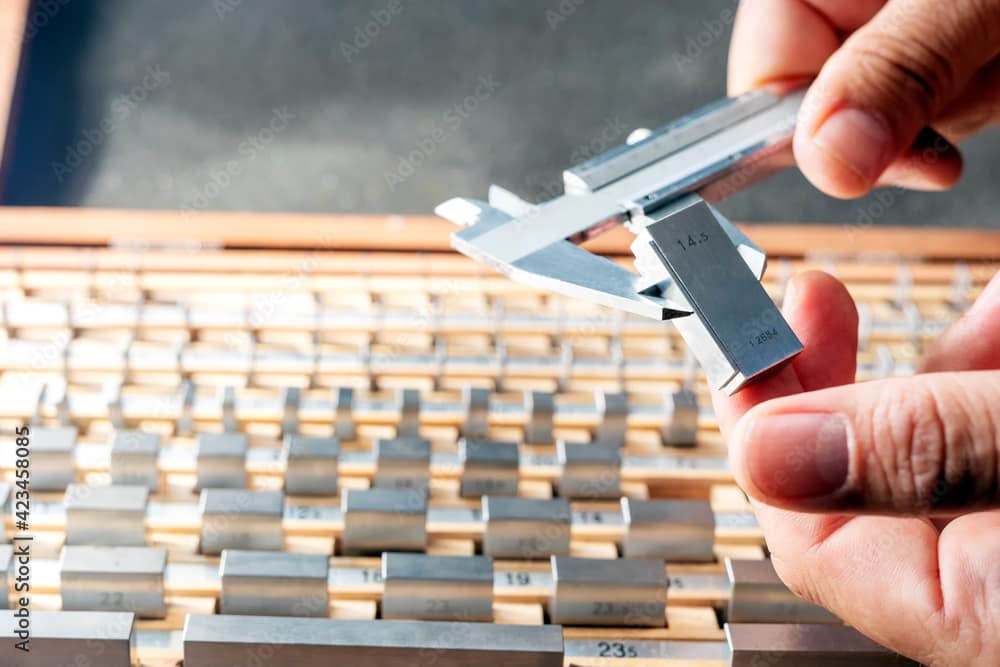
At the core of this system was the tool room. Here, every jig, fixture, and gauge was made, calibrated, and maintained. The gauges — steel master forms against which every manufactured part was checked — ensured that tolerances were exact across the entire factory. A trigger guard made on a Monday morning in Bay 4 had to be dimensionally identical to one made on a Friday afternoon in Bay 12.
When I visited Lithgow in 2021, I was astounded by the survival of so much original Pratt & Whitney tooling — still bolted to its early 20th-century mounts. Standing among the heavy cast-iron milling machines, turret lathes, and barrel-turning lathes, you were looking at the equipment that had created the SMLE rifles carried by the AIF at Gallipoli and on the Western Front.

Lithgow Small Arms Factory: machine tools as monuments
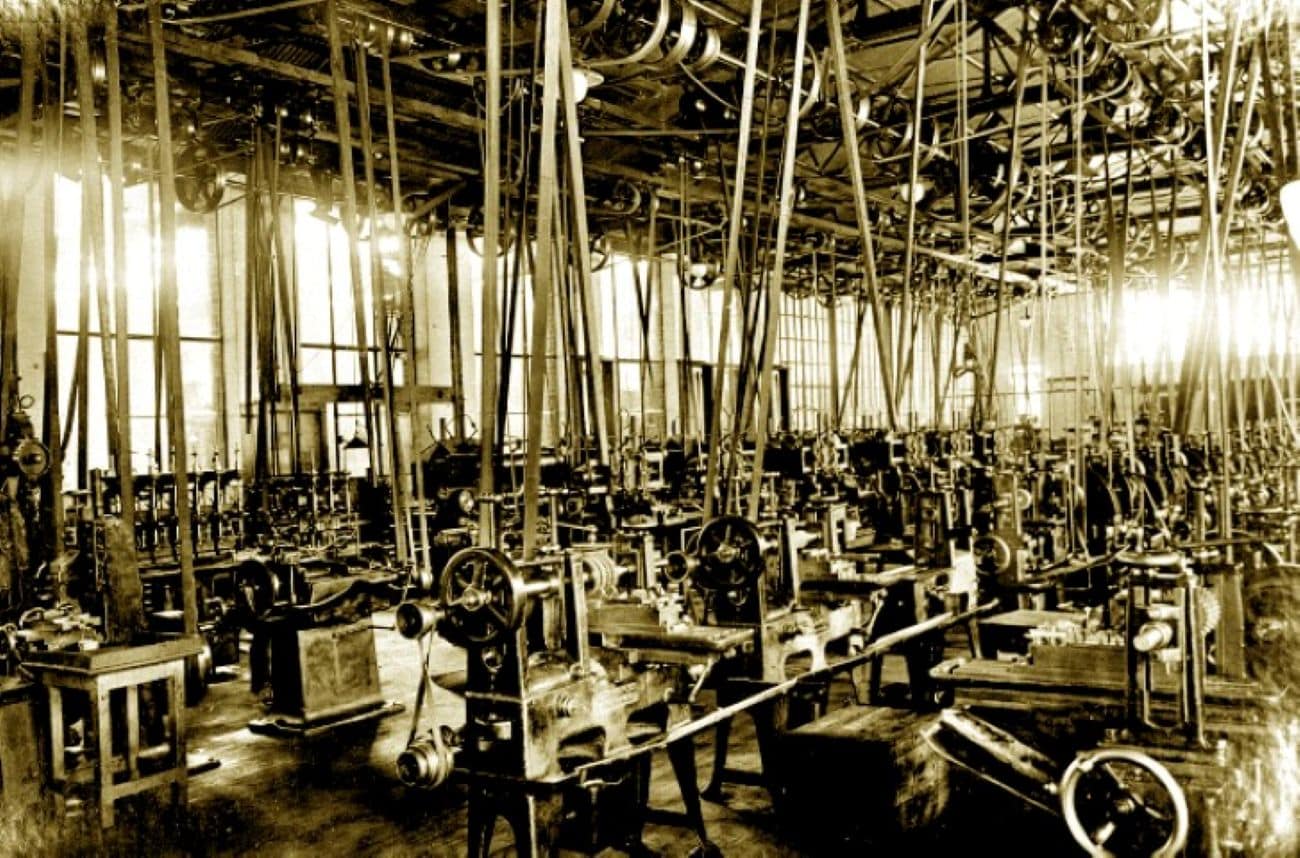
The American-built machines were over-engineered in the best possible way. Bedplates several inches thick were anchored on solid concrete foundations, eliminating vibration. Power came from an overhead line-shaft system, with pulleys and flywheels driving long leather belts that provided motive force to the machinery.
Each major operation had its own dedicated station:
- Barrel turning – Long-bed lathes shaped the steel blanks to precise external dimensions before they went to rifling.
- Rifling – Single-point rifling machines cut the spiral rifling grooves, their feeds timed so that twist rate and depth were identical in every barrel.
- Receiver milling – Heavy horizontal mills machined the SMLE’s complex receiver from forged steel blocks in a sequence of precise cuts.
- Bolt manufacture – Multi-operation machines turned, milled, and slotted the bolts before they were heat-treated and polished.
- Stock shaping – Blanchard-type lathes carved wooden stocks from walnut blanks, duplicating the master form with perfect fidelity.
Every operation was measured against its master gauge. Any deviation meant the part was scrapped — a discipline that seemed wasteful in the early days but paid dividends in battlefield reliability.
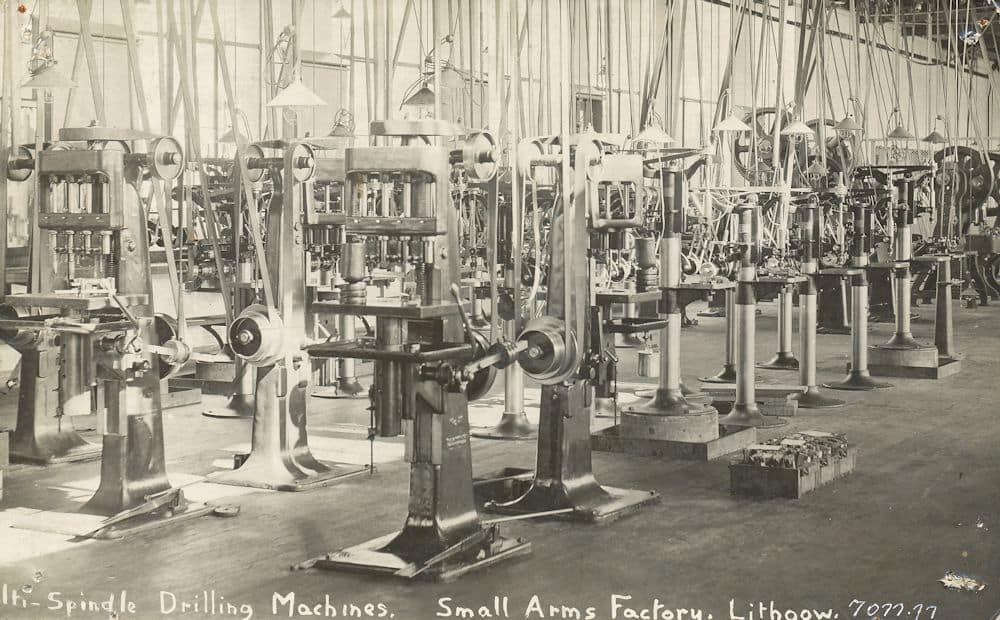
The first Lithgow Small Arms Factory rifles
Early production focused on the Short Magazine Lee–Enfield Mk III (SMLE), the standard service rifle of both the British and Australian armies. Output in the first year was modest — about 1,000 rifles in 1913 — but this was deliberate. The initial months were as much about training the workforce as producing rifles. Most Lithgow machinists had never seen a gun made before; they were miners’ sons, railway fitters, and general metalworkers now being retrained into the precision craft of arms production.
By the eve of the First World War, the factory was producing several thousand SMLEs a year with steadily improving speed and consistency. The system was in place — and about to be tested in the most demanding circumstances imaginable.
⚔️ Go deeper — Members get exclusive access to the Deep Research Collection, Field Notes, and monthly Research Dispatches. Try membership free for 7 days, cancel anytime. From $9/month.
Lithgow wartime expansion and production
First World War (1914–1918)
The outbreak of war in August 1914 turned Lithgow from a steady but modest producer into a national strategic asset. Within weeks, orders for rifles multiplied, and the factory moved to two shifts per day. By 1915, new bays were added to the main shop floor, and the line-shaft system was extended to power additional lathes, milling machines, and rifling benches. Production figures tell the story:
- 1913–14 – ~1,800 rifles produced.
- 1916 – ~40,000 rifles produced.
- 1917 – Over 80,000 rifles produced.
By war’s end, Lithgow had turned out more than 100,000 SMLE Mk III rifles, along with spare barrels, bolts, and bayonets. This achievement was remarkable given that in 1912, Australia had no rifle-making tradition at all. The American system — with its emphasis on standardised tooling and repeatable processes — allowed a relatively inexperienced workforce to scale production quickly without sacrificing quality.


Short Magazine Lee Enfield (SMLE) Rifle No 1 Mk III, manufactured at Lithgow Small Arms Factory, September 1916 (From my collection).
Training an industrial army
Lithgow’s workforce became as important as the rifles themselves. Toolmakers, machinists, and inspectors were trained to standards on par with Springfield or Enfield. By 1918, some of the most skilled gauge-makers in the Southern Hemisphere were working in Lithgow’s tool room, producing precision instruments accurate to a few thousandths of an inch.
The war also brought female workers into the factory for the first time. Although still a minority during WWI, they became an essential part of the workforce, particularly in less physically demanding but highly precise operations such as gauge inspection, small-parts assembly, and polishing.

Interwar Years (1919–1938)
With the Armistice came a predictable collapse in demand. The factory shifted focus to:
- Maintaining and overhauling military rifles in storage.
- Producing commercial sporting rifles based on the SMLE action, often using surplus wartime tooling.
- Experimenting with new designs, though none entered full production.
This period was not idle. Lithgow used the quieter years to refine manufacturing processes, modernise some of its machinery, and retain a nucleus of skilled staff so that production could ramp up quickly if needed again. The 1930s also saw Lithgow produce trial batches of light machine gun components and investigate semi-automatic rifle concepts — early steps in what would later become the Owen Gun programme.
Second World War (1939–1945)
When war returned, Lithgow was far better prepared. The factory now had a seasoned core of foremen and gauge-makers, an established supply chain, and a layout optimised for high-volume work. During WWII, Lithgow produced:
- Over 600,000 SMLE Mk III and Mk III* (simplified production) rifles
- Licensed production of the Bren light machine gun (in .303 calibre), requiring new heavy milling equipment and deep-hole drilling technology.
- Major components for the Owen submachine gun, a unique Australian design renowned for its ruggedness in Pacific jungle conditions.
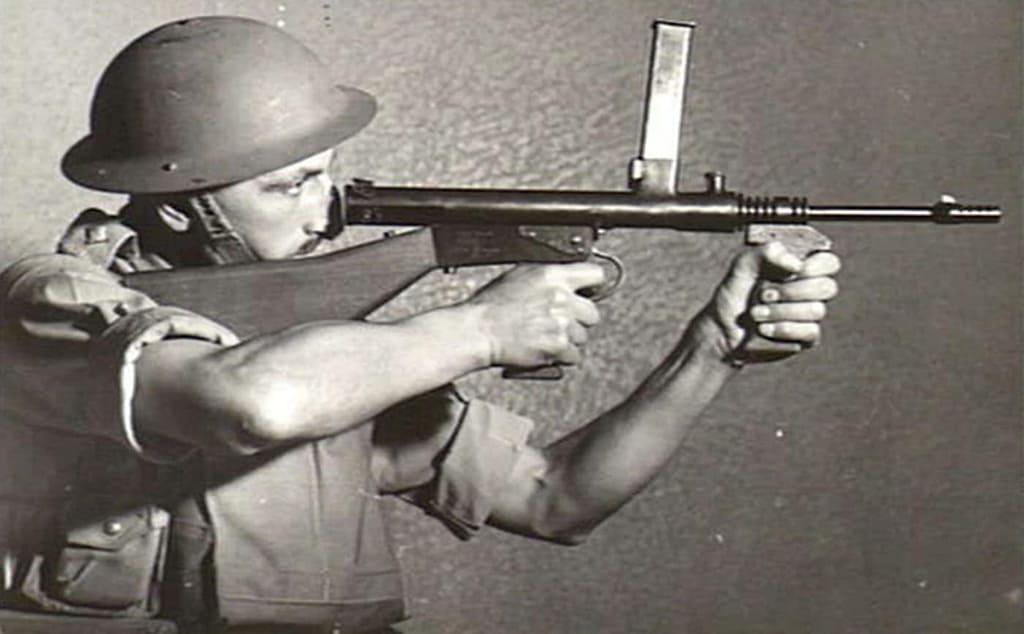
Wartime employment exceeded 6,000 workers, making the factory the economic heart of Lithgow. Entire families worked there — fathers on barrel turning, mothers in small-parts inspection, sons in the tool room — creating a tight-knit industrial community.
The scale and variety of WWII production proved the flexibility of the American manufacturing system. Once the gauges and fixtures for a new weapon were made, the same line logic applied whether the output was a Lee–Enfield barrel, a Bren receiver, or an Owen bolt. Lithgow could change over to different products far faster than a traditional craft-based factory.
Postwar to Vietnam (1946–1970s)
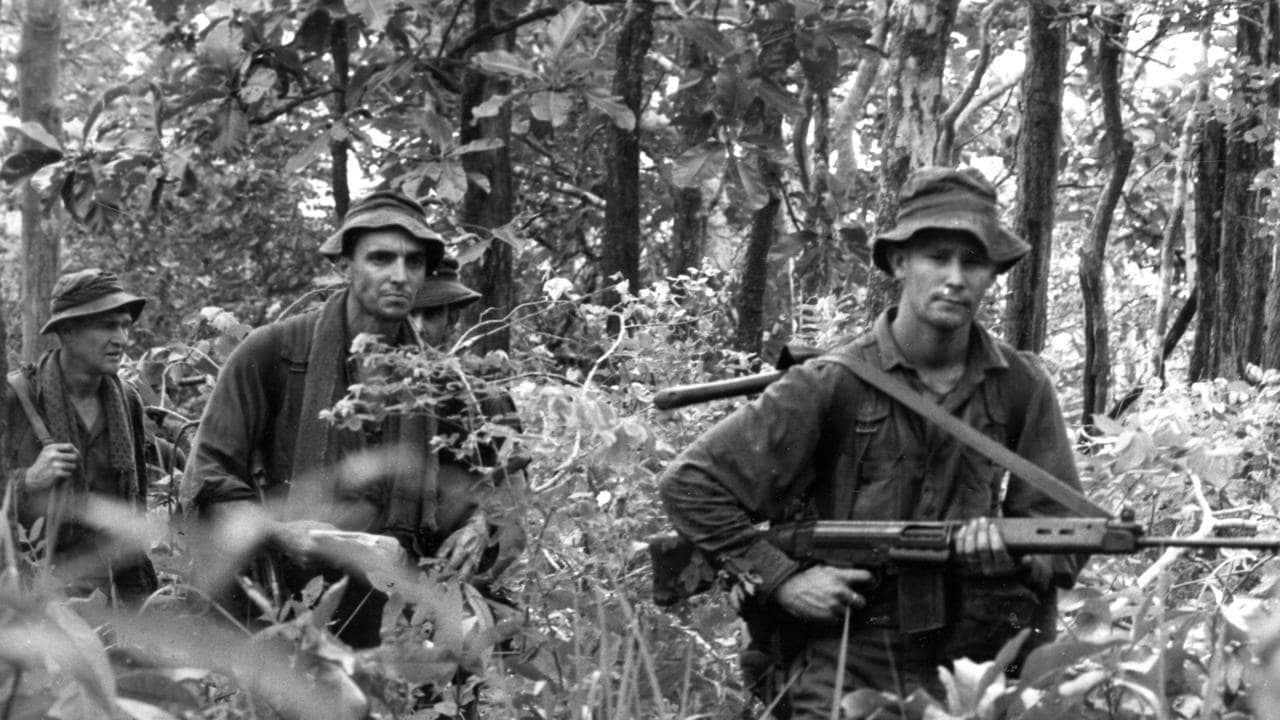
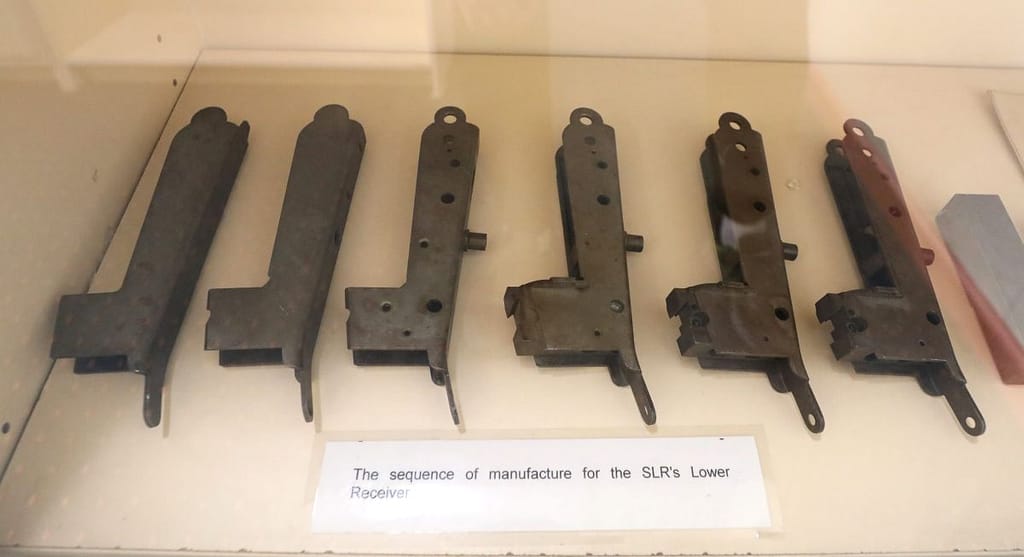
The end of WWII brought another contraction in output, but this time Lithgow pivoted to modernising the Australian Army’s small arms. In the 1950s, the factory retooled to produce the 7.62mm L1A1 Self-Loading Rifle (SLR) — the Commonwealth variant of the FN FAL (Fabrique Nationale – Fusil Automatique Léger). This involved installing heavier milling machines, new broaching machinery (equipment for machining to fine tolerances), and updated inspection systems.
The L1A1 era extended into the Vietnam War, with Lithgow supplying rifles not only for Australian forces but also for several allied nations. Even with new machinery, the core workflow and plant layout still bore the unmistakable 1912 Pratt & Whitney blueprint — proof of how deeply the American system had been embedded from the start.
Industrial legacy and preservation
Few industrial sites anywhere in the world can claim such an unbroken line of production and technological continuity as Lithgow. From the day the first Pratt & Whitney crates were unpacked in 1912, the factory’s identity was grounded in precision tooling, gauging, and flow-line assembly — principles that have outlived entire generations of rifles, wars, and corporate owners.

Surviving the cull
Many early 20th-century arms plants, from Springfield in the U.S. to Enfield in Britain, were heavily modernised or closed in the post-war years. Machinery was scrapped, tool rooms gutted, and layouts altered beyond recognition. Lithgow is different. Walk into its original tool room today, and you are stepping back more than a century. The rows of cast-iron cabinets still hold the gauges, master forms, and fixtures made for the SMLE. The heavy Pratt & Whitney milling machines and lathes — some with 1911 date plates — remain bolted to their original concrete mounts.
The Pratt & Whitney tooling and machinery at Lithgow were built to last. The tolerances were so precise that many could still produce in-spec parts if powered up today. In an era of planned obsolescence, they are monuments to the industrial ethos of over-engineering for longevity.
1980s and beyond
In the 1980s, the Australian military adopted the F88 Austeyr, a bullpup rifle based on the Austrian Steyr AUG design. Lithgow secured the contract to produce the weapon domestically, marking a significant modernisation effort for the Australian Army.
The factory underwent upgrades to accommodate the production of the new firearm, introducing advanced machining and polymer technology. The F88 Austeyr has since been the primary service rifle of the Australian Defence Force (ADF), with ongoing upgrades and modifications made at Lithgow.

Continuing production under Thales
In the 21st century, Lithgow operates as part of Thales Australia, producing the F88 Austeyr and its modernised variant, the EF88 (Enhanced F88) for the Australian Defence Force. This work uses CNC machinery, CAD/CAM design, and modern composite materials — yet it is still underpinned by the same core principle that guided the factory’s founding: parts must be interchangeable, production must be scalable, and precision must be uncompromising.
Lithgow by the numbers

Lithgow Small Arms Factory today
A living link with the past
When I visited the old factory in 2021, the impression was almost that of a time capsule rather than a museum. Oil-stained benches bore the marks of generations of toolmakers. Overhead pulley brackets still hung in place from the line-shaft days, even though the belts are long gone. The specificity of the machines is astounding. Each machine is precision-engineered to perform its precision task repeatedly, producing parts to the same exacting specifications over tens or hundreds of thousands of cycles.
The American-system workflow is still discernible in the factory’s layout. Even after multiple retooling cycles — from SMLE to Bren, from SLR to the modern EF88 — the building’s long bays still channel work from rough forging at one end to finished assembly at the other.
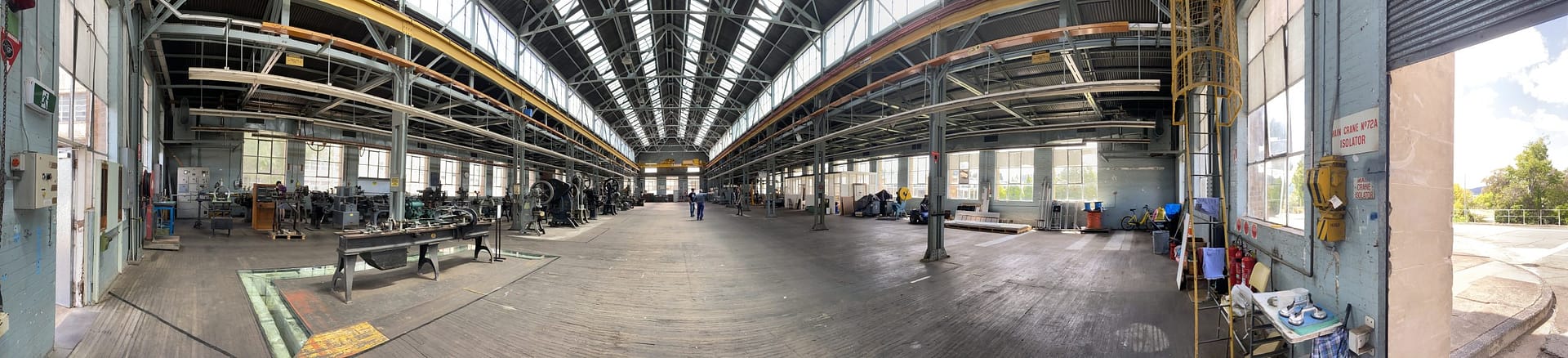
Panoramic photo of the Main Machine Room, part of the 1920s expansion of the factory
The Museum
Adjacent to the working Thales factory is the Lithgow Small Arms Factory Museum, established to preserve and interpret this unique heritage. Its exhibits are a rare blend of industrial archaeology and firearms history:
- Machine tools – Many of the original Pratt & Whitney lathes, mills, and gauges are on display, many in their original factory positions.
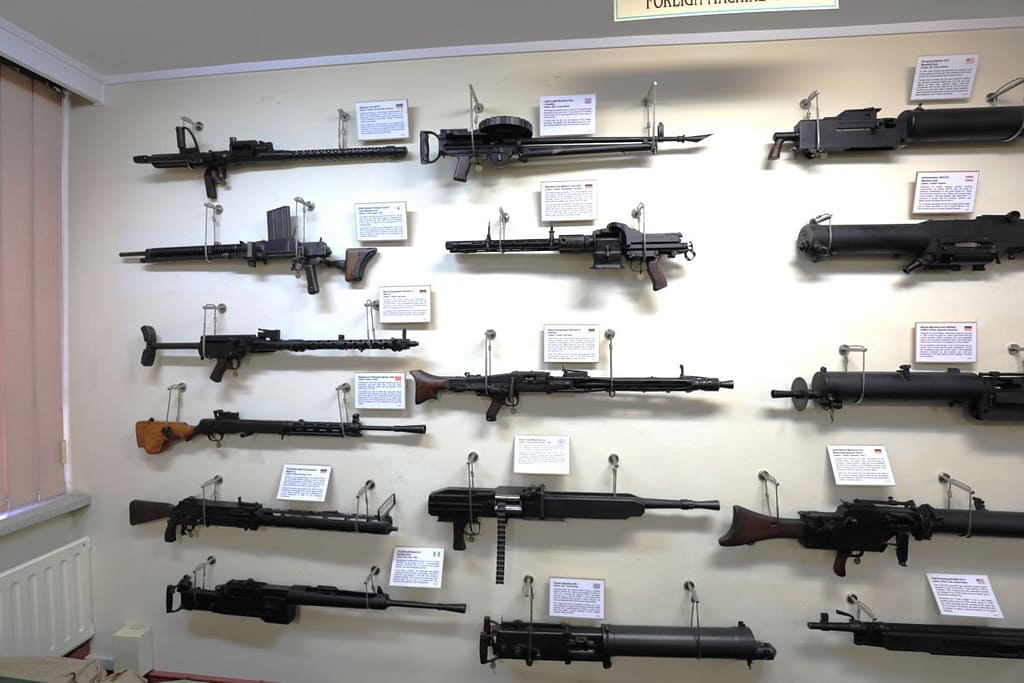
- Firearms collection – More than 1,000 weapons from around the world, including Australian-made SMLEs, Brens, Owens, and SLRs, alongside foreign examples for comparison.
- Archival material – Engineering drawings, gauge records, and production logs that document the factory’s output in meticulous detail.
For visitors, the museum offers a rare experience: to stand in the same space where rifles were once made and see both the finished products and the machines that created them.
Lithgow Small Arms Factory Museum under threat
Since I visited in 2021, the future of the museum has come under threat. It relies on goodwill and self-generated funding to remain viable. The museum was also subject to a break-in by thieves in 2024 who stole 27 historic handguns. The thieves were caught and 19 of the handguns recovered, but the new requirement for overnight security has imposed an unsustainable financial burden on the museum. The museum is seeking heritage listing with and State/Commonwealth and Thales support for its ongoing existence. Please support if you can.
Link to the Save Lithgow Small Arms Museum website

The human dimension
Many of the weapons that Armed Australian forces in the 20th Century were made right here. The SMLEs carried at Gallipoli, the Brens and Owens in the jungles of New Guinea, the SLRs in Phuoc Tuy Province — all began life here, on the same floor space. Every rifle was the product of hundreds of hands: machinists, gauge inspectors, polishers, assemblers, proof testers.
During wartime peaks, the factory’s workforce was a community unto itself, bound by the urgency of the job and the pride of precision work. Oral histories in the museum recall women learning to operate lathes during WWII, men passing down toolmaking skills to apprentices, and a culture of shared purpose.
Closing thought
Lithgow Small Arms Factory is not just a relic of Australia’s industrial past; it remains a tangible link between the nation’s early strategic priorities and its present-day defence capability. The weapons it produced are closely tied to Australia’s military history — from trench warfare to jungle patrols — and the original machinery, now silent, still stands in the place where it was first put to work.
To walk through Lithgow is to understand how a single strategic decision — to import not just machinery but an entire manufacturing philosophy from America — shaped more than a century of Australian small arms history. If you appreciate the story of precision manufacturing, I highly recommend visiting Lithgow!
Additional Images
Lithgow Small Arms Factory Museum

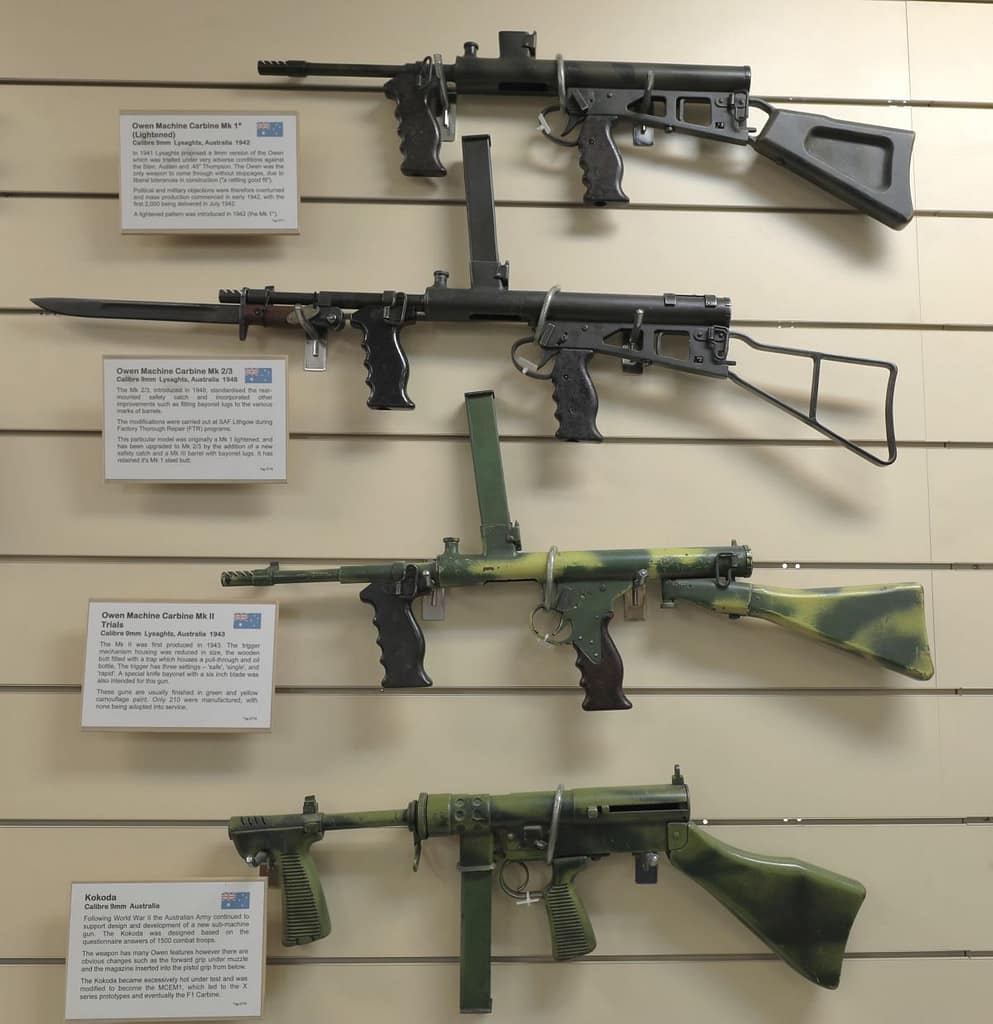
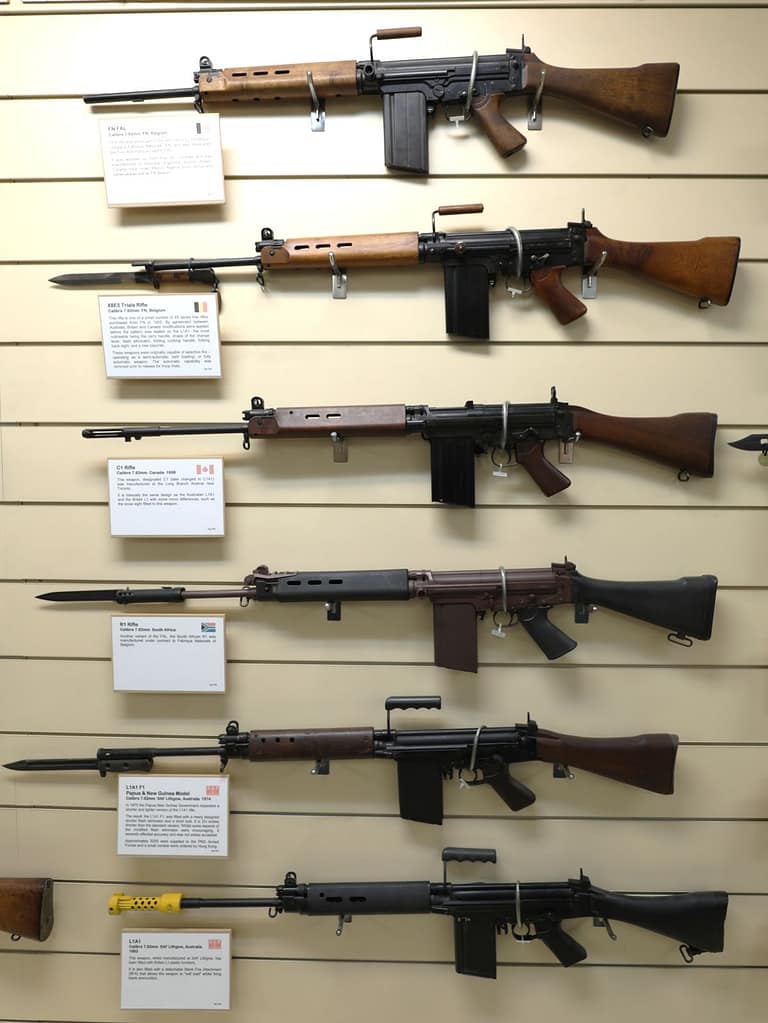
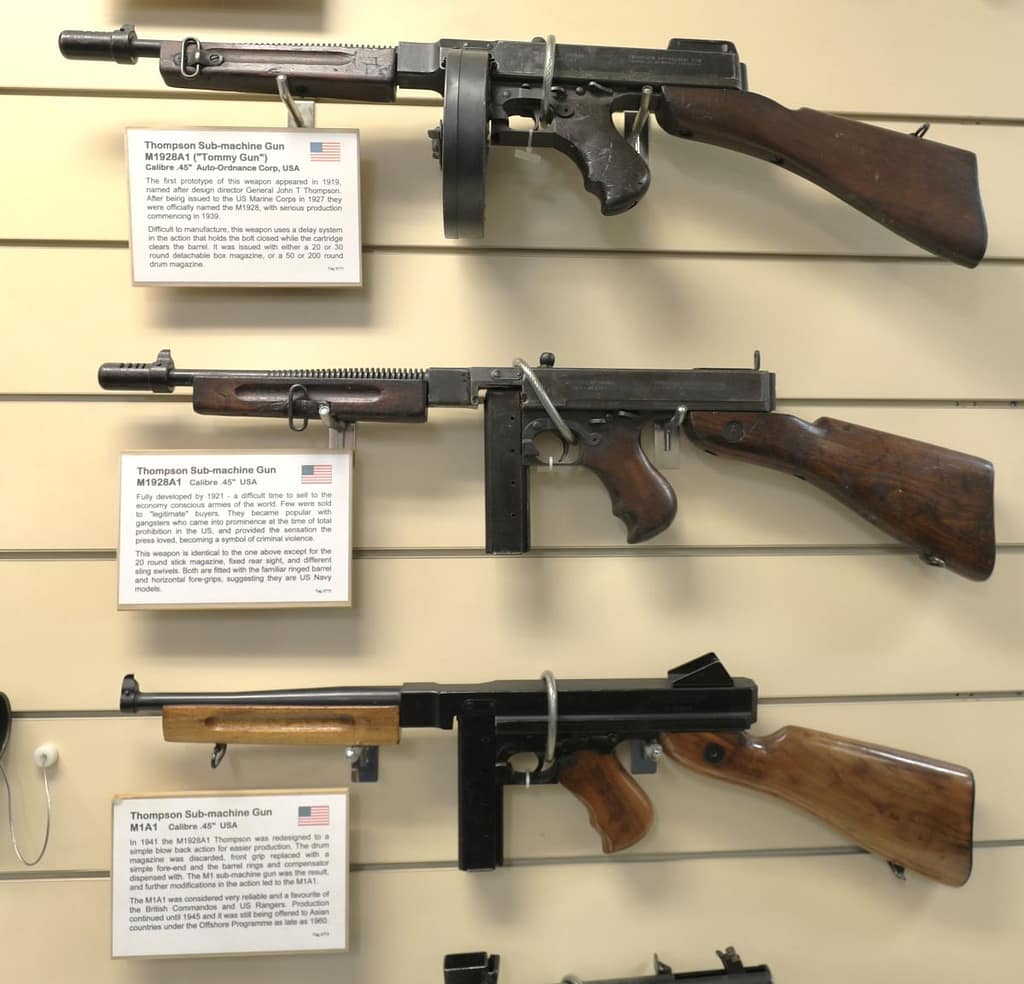
Main Machine Room



Found this useful? Buy me a coffee — it helps fund future battlefield research


Authored by Mick Prictor, a retired military officer with 40 years’ service, and a military historian specialising in terrain-focused analysis of tactics, doctrine, and command decision-making in land warfare. His work draws on extensive battlefield fieldwork—more than 280 sites worldwide—and one of the world’s largest private collections of historic military arms, uniforms, and equipment. About me
Sources for Lithgow Small Arms Factory
Books & Pamphlets
- Griffiths, Tony. Lithgow’s Small Arms Factory and Its People, Vol. 1: 1907–1950. Sydney: Toptech Engineering, 2006.
- Griffiths, Tony. Lithgow’s Small Arms Factory and Its People, Vol. 2: 1950–1990. Sydney: Toptech Engineering, 2008. (Availability notes & publication details corroborated via museum/shop listings.)
- Griffiths, Tony. The Enfield Inch & the Lithgow .303: A Tale of Metrology from Australian Firearm Folklore. Canberra: Australian War Memorial (catalogue record).
- Skennerton, Ian. The Lee-Enfield: A Century of Lee-Metford & Lee-Enfield Rifles & Carbines. Labrador, QLD: Skennerton Publishing, 2007/2008.
- Skennerton, Ian. The Lee-Enfield Story. London: Arms & Armour / (later) Skennerton Publishing; expanded eds.
- Skennerton, Ian. Small Arms Identification Series (S.A.I.S.) — especially:
- No. 1: .303″ Rifle, No.1, SMLE Marks III & III*
- No. 13: Special Service Lee-Enfields
Online sources
- Lithgow Small Arms Factory Museum – official site .
- Thales Group – “Lithgow Arms celebrates 110 years!”. Thales Group
- Australian Memory of the World Register – Lithgow Small Arms Factory Archive . amw.org.au
- NSW Heritage – public consultation (“Have Your Say”) on State Heritage Register listing (current heritage status process). NSW Government
- ABC News – coverage of the museum’s closure risk after the 2024 theft. ABC
- The Australian – reporting on the museum’s fight to stay open. The Australian
- ACIC Fact Sheet – Lithgow sporting rifles & production notes (post-2014 Lithgow Arms plus historical counts for .22s). acic.gov.au
📚 Further Reading: Military Arms Manufacturers
This battle study nests within the broader analytical framework explored in the Research Hub, where operational methods, operating environments, armies, commanders, and weapons are examined across conflicts and eras. The links below connect related studies across the wider body of battlefield analysis on the BattlefieldTravels site.
⚔️ Explore all Historic Arms factory studies
🏛️ Explore the Military Museum of historic weapons and equipment
The book list for this category includes the best available books on the Springfield Armory, Colt Firearms, Lithgow Small Arms, Winchester, the Confederate States Armory Richmond, and many more
📚Military Arms Manufacturers – Recommended Reading
🗞️ For updates on new battlefield studies and research insights, you can subscribe to the Newsletter.
Related Battle Studies, Museum Pieces & Reading Resources


🧭 Historic Site Travel Guide: Lithgow Small Arms Factory
Getting There
- Nearest Town: Lithgow, New South Wales, Australia (approx. 150 km west of Sydney).
- Transport: Accessible by car via the Great Western Highway or by train on the Blue Mountains line from Sydney.
- Parking: Free parking is available at the museum site.
Site Orientation
- Key Landmarks: The red-brick factory buildings, surrounding industrial precinct, and museum entrance.
- Walking Routes: The site is compact; most exploration centres on the museum and surviving factory structures.
- Best Vantage Points: Exterior views from the old railway approach highlight the scale of the original complex.
Museums & Visitor Centres
- Lithgow Small Arms Factory Museum: Extensive collection of Australian service rifles (SMLE, Bren, Owen, SLR, F88 Austeyr) and machinery used in production.
- Interpretive Displays: Cover the factory’s role in both World Wars and its significance in Australian industrial history.
- Nearby: Lithgow State Mine Heritage Park explores parallel stories of the town’s industrial workforce.
On-Site Experience
- Interpretive Signage: Well-presented exhibits, weapon displays, and industrial artefacts inside the museum, including many of the original Pratt & Whitney machines and tooling.
- Atmosphere: A mix of heritage factory austerity and enthusiast-curated displays, providing an immersive link to Australia’s military production history.
- Guides & Tours: Volunteers often provide expert explanations; group tours can be arranged in advance.
Nearby Points of Interest
- Hassan’s Walls Lookout: Panoramic views of the Lithgow valley and Blue Mountains approaches.
- Mount Victoria & Blue Mountains: Sites along the old military road with relevance to colonial defence.
- Bathurst: Australia’s first inland settlement, tied to early colonial expansion and frontier security.
Practical Tips
- When to Visit: Open selected days (check current schedule); mornings are quieter for photography.
- Facilities: Restrooms, small shop, and information centre on site; cafés available in Lithgow town centre.
- Special Considerations: The museum relies heavily on volunteers—donations and purchases directly support preservation.
Subscribe to Battlefield Travels and receive a free E-Book Battlefield Guide
Unlock expert battlefield analysis, campaign reconstructions, and historical insights drawn from firsthand exploration and primary sources.
🗺️ You’ll receive:
🎖️ Exclusive historical insights you won’t find elsewhere
📘 A free eBook: 10 Tips for Exploring Historic Battlefields
📰 New battlefield studies straight to your inbox as they are published

⚔️ Go deeper — Members get exclusive access to the Deep Research Collection, Field Notes, and monthly Research Dispatches. Try membership free for 7 days, cancel anytime. From $9/month.
