How the Dreyse needle-gun, combined with a radical new philosophy of command, made the Austrian Army’s doctrine obsolete in a single afternoon
🎧 Prefer to listen? This article is available as a 49-minute podcast episode
Tip: If Podbean overlay appears after pausing, click the × in the top-right corner to return to the player controls.
The Seven Weeks War
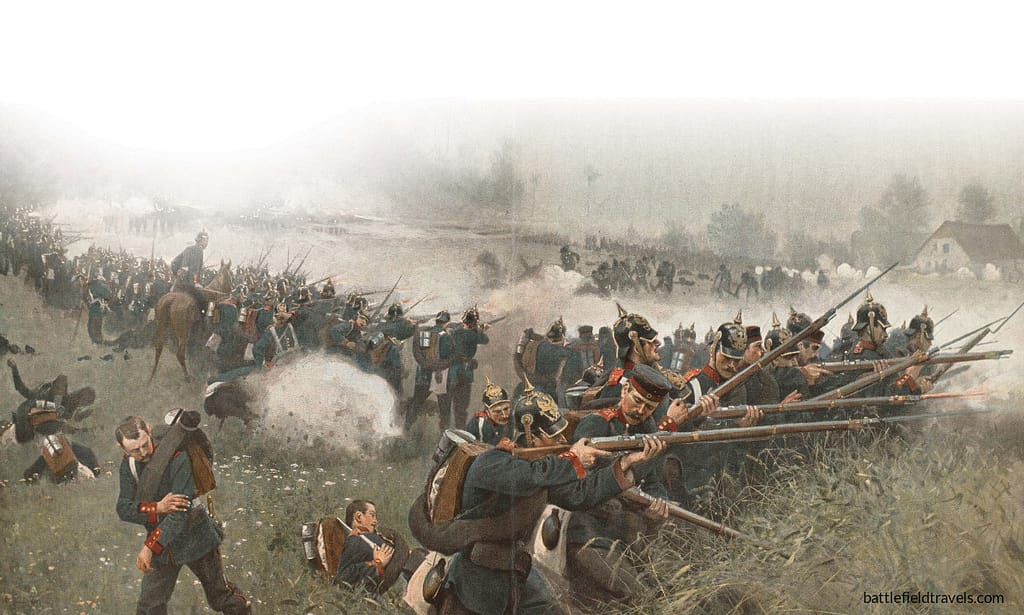
On 3 July 1866, two of Europe’s most professional armies met on the rolling farmland of Bohemia to the west of Königgrätz. The Prussian General Staff had set in motion a grand Kesselschlacht — a battle of encirclement. Three separate Prussian armies totalling around 285,000 troops converged on Königgrätz from the west (Elbe Army), northwest (First Army), and north (Second Army) under the overall command of Field Marshal Helmuth von Moltke. The Austrian Army of the North, approximately 240,000 men under General Ludwig von Benedek, occupied a strong defensive position along the Bistritz River to the west of the fortified city of Königgrätz. Benedek’s position was anchored on the Svib Forest and the high ground around Chlum.
By that evening, the Austrian Army had been driven from its position, almost surrounded, and forced back on Königgrätz, losing approximately 44,000 men killed, wounded, and captured. The Prussians had lost fewer than 10,000.
The Austro-Prussian War lasted seven weeks from beginning to end. The main clash of the armies at Königgrätz was over in a single day. Austria was humbled, Prussia became the dominant German-speaking power, and the balance of power in Central Europe shifted permanently.
Why did Austria lose the war?
Many reasons have been offered for the catastrophic Austrian defeat. At the strategic level, Prussia’s superior mobilisation plans allowed it to field an equivalent-sized army from a population half the size of the Austrian Empire’s. Prussia’s military railways and modern telegraph system allowed it to rapidly concentrate its field armies around Austria’s borders.
At the operational level, the Prussian Army had the world’s most professional general staff, composed of graduates of the Allgemeine Kriegsschule, where they studied under the greatest Prussian military thinkers, including Carl von Clausewitz. It was the Prussian General Staff that prepared the invasion plans and ensured close coordination between the advancing armies, while maintaining the massive logistical effort to support the invasion.
At the tactical level, the answer lies in two inseparable factors: a weapons revolution and a command philosophy revolution. Together, they formed a tactical innovation with profound implications for the future of warfare. As recently as 1859, the Austrian shock tactic doctrine had been the dominant tactical system in Europe. By 1866, however, the Prussian combination of a breech-loading weapon, a new command philosophy and new tactics completely outclassed the Austrian system.

The weapons: Lorenz versus Dreyse
This section examines each side’s main infantry weapon. For a comprehensive study of the weapons used by both sides in the Austro-Prussian War, please visit: 1866 Weapons and Equipment of the Austro-Prussian War
Model 1854 Lorenz Rifle-Musket
The Austrian Army of 1866 was equipped with the Lorenz Model 1854 rifle-musket, one of the finest muzzle-loading infantry weapons in Europe. Equivalent to the U.S. Springfield Model 1861/63 and the British Enfield Pattern 1853, the Lorenz was vastly superior to the smoothbore and flintlock weapons it had replaced. Manufactured to high tolerances at the imperial armouries, the Lorenz was accurate, well-balanced, and reliable. In the hands of a trained Austrian infantryman, it could deliver effective, aimed fire at ranges up to 400 metres.
I have one in my collection. It is a beautiful piece of craftsmanship — slightly shorter and lighter than its contemporaries, with first-class engineering and metallurgy. Everything a mid-nineteenth-century muzzle-loading rifle-musket should be.
Austrian Model 1854 ‘Lorenz’ Percussion Rifle-Musket, 0.54″ caliber. From my personal collection.
The Austrian Model 1854 Lorenz was a .54-calibre percussion rifle-musket widely issued during the 1859 and 1866 campaigns. It offered good accuracy but variable quality due to decentralised production. The Lorenz was Austria’s principal infantry weapon during the Austro-Prussian War, where the Prussian Dreyse needle rifle outclassed its slower-loading and rifled-musket design. Large numbers were later sold abroad, including to both Union and Confederate forces in the American Civil War, where it was the third most common type after teh Springfield and Enfield rifle-muskets.
Weapon data
Calibre: 0.54″ (13.9mm)
Cartridge: M1854 compression bullet or M1863 Minié-ball. 482-grain conical lead projectile with 55 grains of black powder, wrapped in a paper cartridge. Separately primed.
Action: Muzzle-loading, percussion lock.
Rifling: Rifling Type: 4-groove, right-hand twist with constant depth, 1 full turn in 78 inches (2000mm)
Muzzle velocity: 373 metres per second
Maximum effective range (volley fire): 675 metres
Length: 1337mm
Barrel length: 952mm
Weight: 4.28KG
Sights: Flip-up rear sight graduated from 300 to 900 paces


Dreyse Zündnadelgewehr (Needle-Gun)
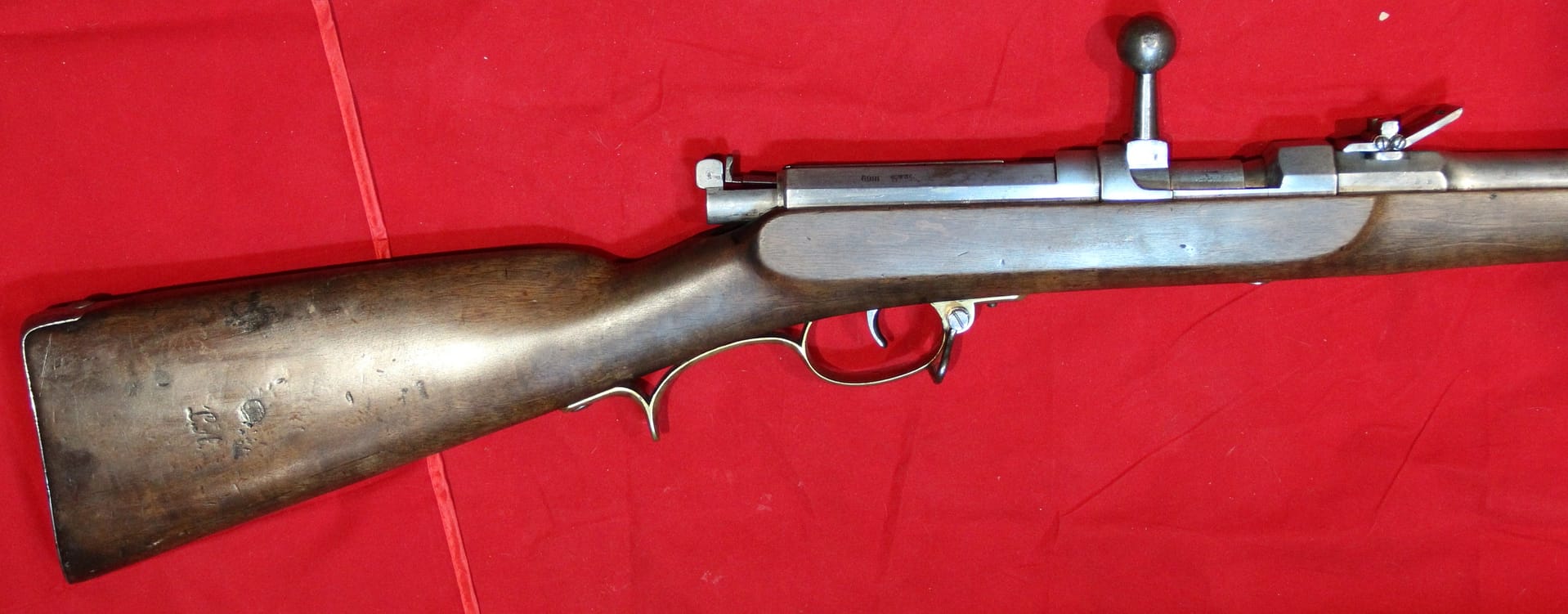
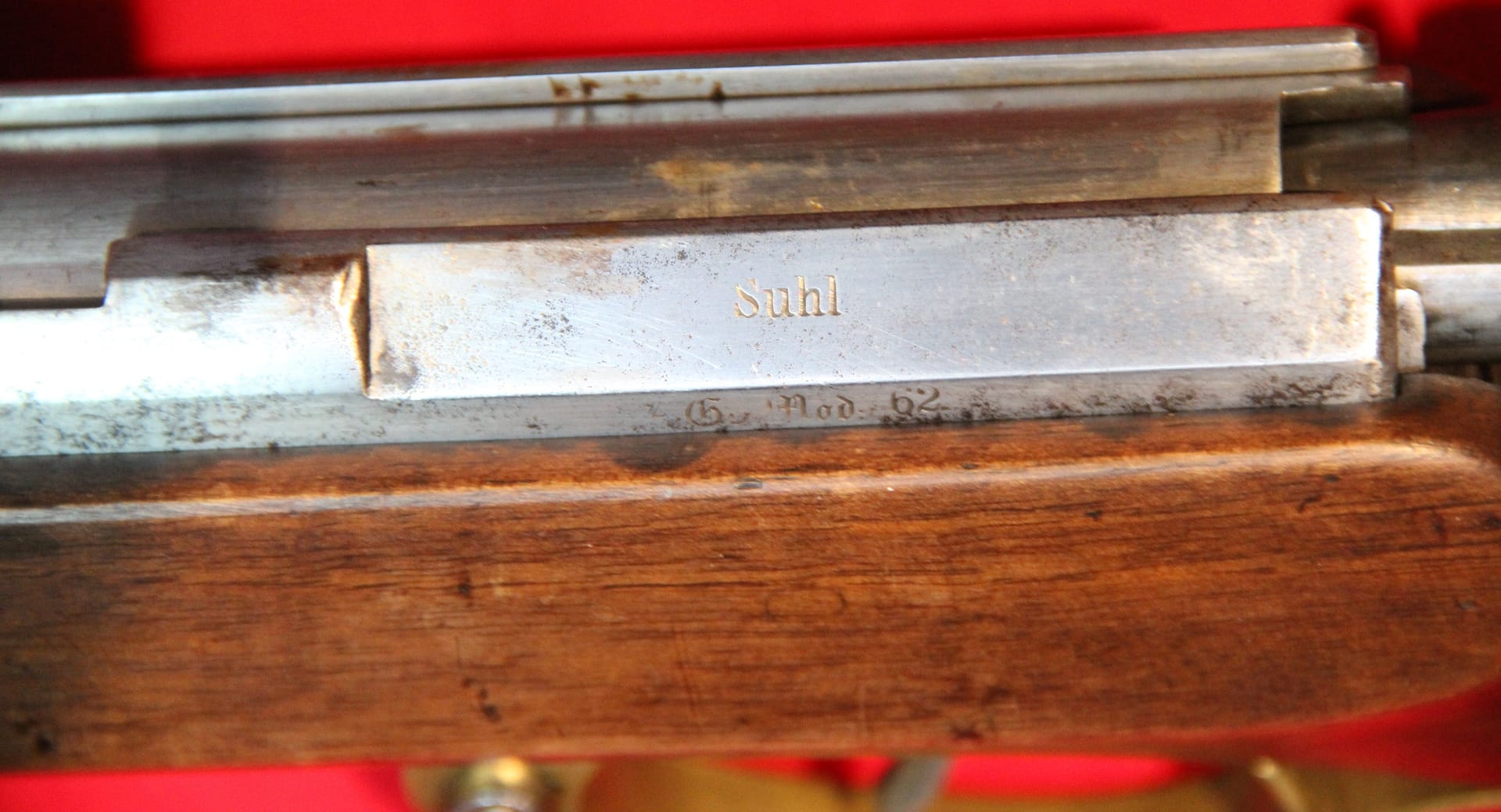
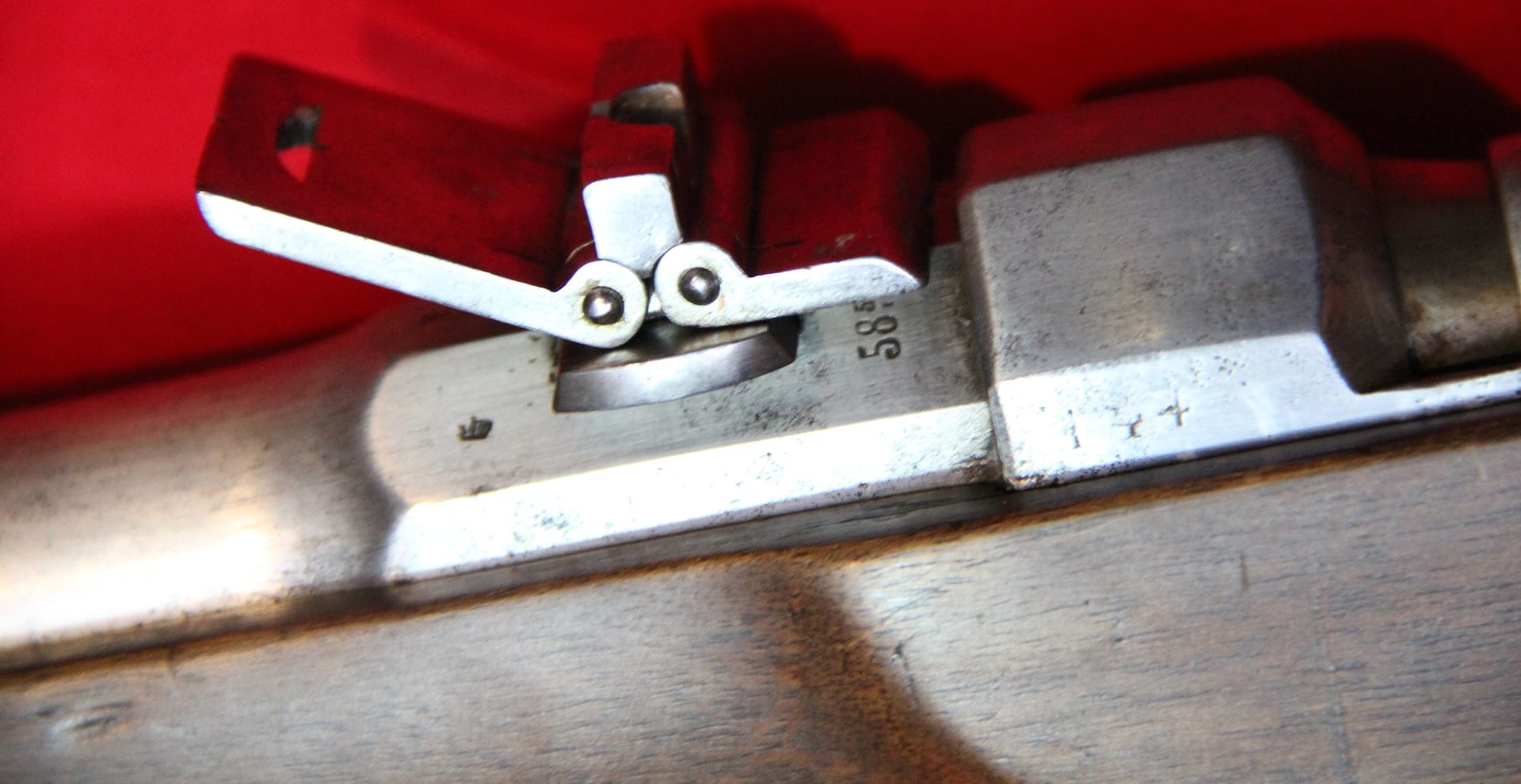
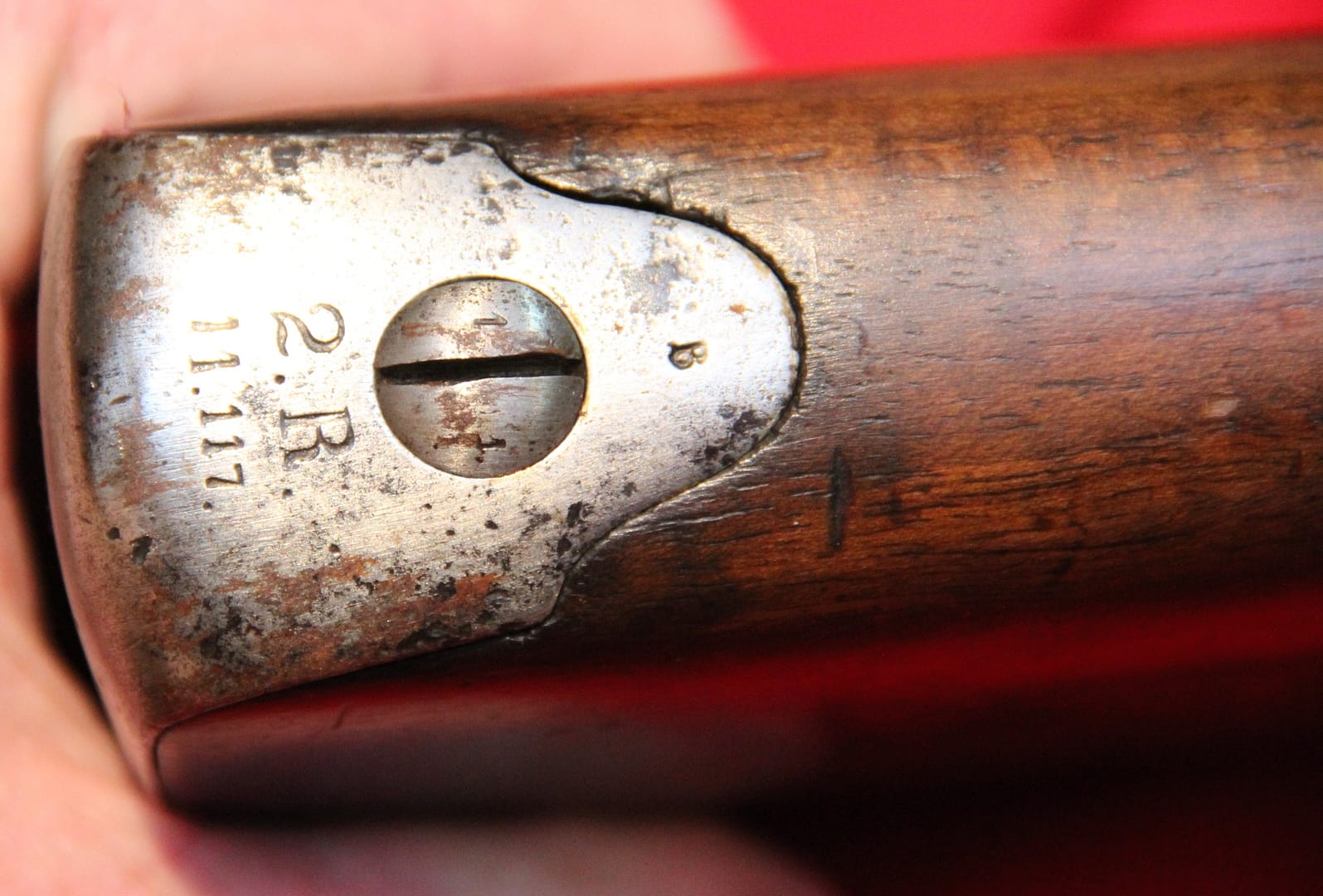
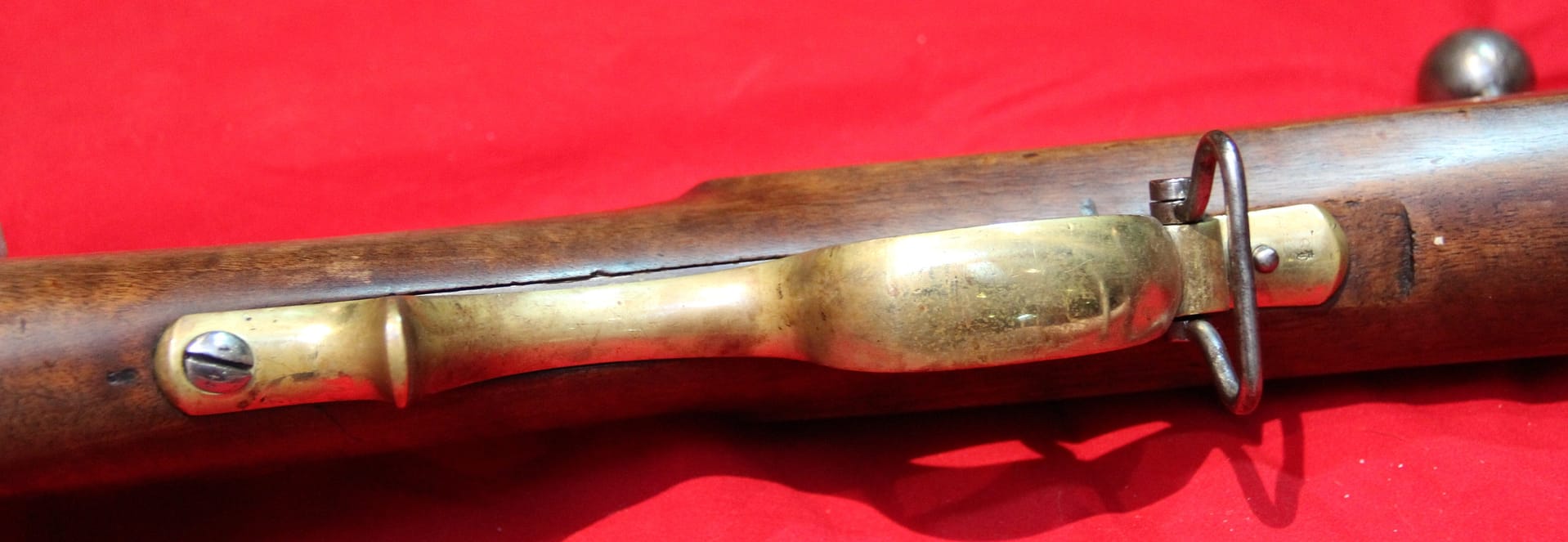
The Prussian Army was equipped with the Dreyse Zündnadelgewehr (needle-gun). The Dreyse Model 1841 and 1862 needle gun were the primary models in the line infantry regiments. The Dreyse was a bolt-action breech-loading rifle that had been in service for twenty-five years by the time of Königgrätz. Compared with the Lorenz, it was an awkward weapon. The breech mechanism leaked gas. The needle firing pin was prone to breaking under sustained use. At ranges beyond about 200 metres, it was significantly less accurate than the Lorenz.
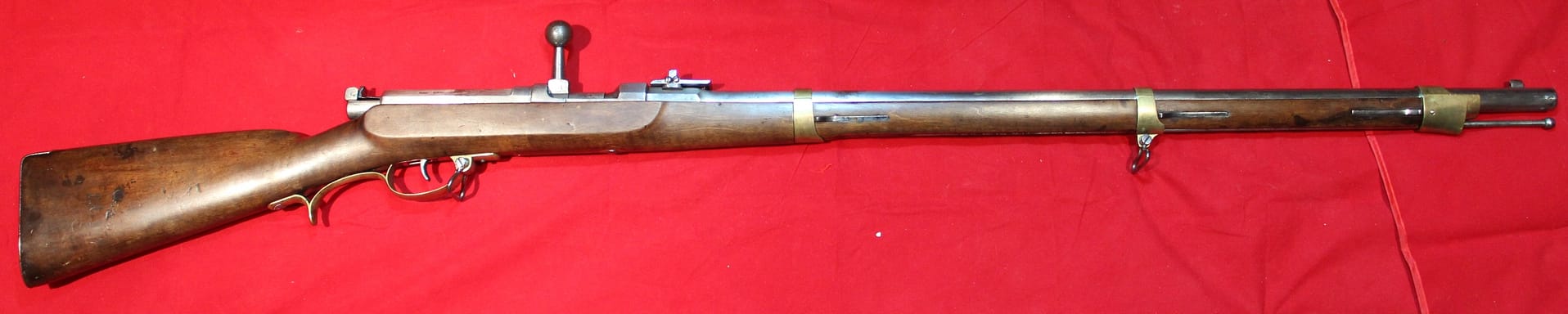
I have five Dreyse variants in my collection: Model 1841 and 1862 Infantry Rifles, Model 1857 Hussar Carbine, Model 1860 Fusilier Rifle, and a Model 1865 Jäger Rifle with Beck Transformation. Compared to the Lorenz, the Dreyse is a heavy and somewhat clumsy-looking weapon. But the Dreyse had one quality the Lorenz did not. It could be loaded while lying down.
Model 1862 Dreyse Zundnadelgewehr (Needle-Ignition Rifle). From my personal collection.
The Prussian Model 1862 Dreyse Zundnadelgewehr was an improved variant of the original 1841 Dreyse needle rifle, featuring a strengthened bolt, modified lockwork, and refinements to the projectile and cartridge. It offered marginally better gas sealing and durability but retained the needle-ignition principle. Issued widely during the Austro-Prussian and Franco-Prussian Wars, it remained in service until replaced by the M1871 Mauser. Despite its limitations in muzzle velocity and gas leakage, the M1862’s high rate of fire continued to influence Prussian infantry tactics.
Weapon data
Calibre: 15.4mm
Cartridge: M1855 – 478-grain ovoid lead projectile in a papier-mache sabot with embedded primer, 75 grains of black powder, wrapped in a paper cartridge.
Action: Simple bolt action, locked by camming action against breech. Camming seals the bolt face against the conical breech
Rifling: Concentric 4-groove, .78mm deep and 6mm wide, right-hand twist, 1 turn in 732mm
Muzzle velocity: 295 metres per second
Maximum effective range (volley fire): 600 metres
Length: 1360mm
Barrel length: 841mm
Weight: 4.75KG
Sights: Combined block and two-leaf sight with battle sight for 350 metres, small leaf for 450 metres, and large leaf for 800 metres

Lorenz loading procedure
A soldier armed with the Lorenz had to stand upright to reload. He brought the weapon to the vertical, tore open a pre-prepared paper cartridge containing either a Model 1854 compression bullet or a Model 1863 Minié-ball and black powder, poured the powder charge down the rifled barrel, seated the ball at the muzzle, withdrew the ramrod, rammed the ball home, replaced the ramrod, returned the weapon to the firing position, fitted a separate primer cap, drew the hammer to the full-cock position, aimed and fired. The entire sequence took 20-30 seconds for a trained infantryman, and required him to be standing, exposed, visible, presenting himself as a target. In the era of muzzle-loading weapons, this was accepted as an inescapable reality. Every army trained around it. Every doctrine assumed it.
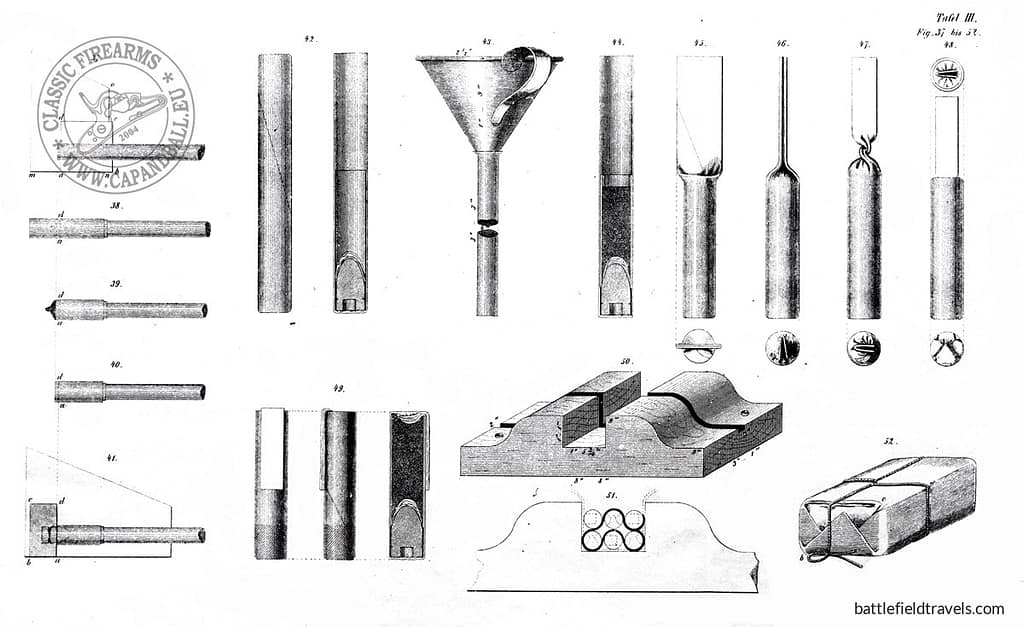
Dreyse loading procedure
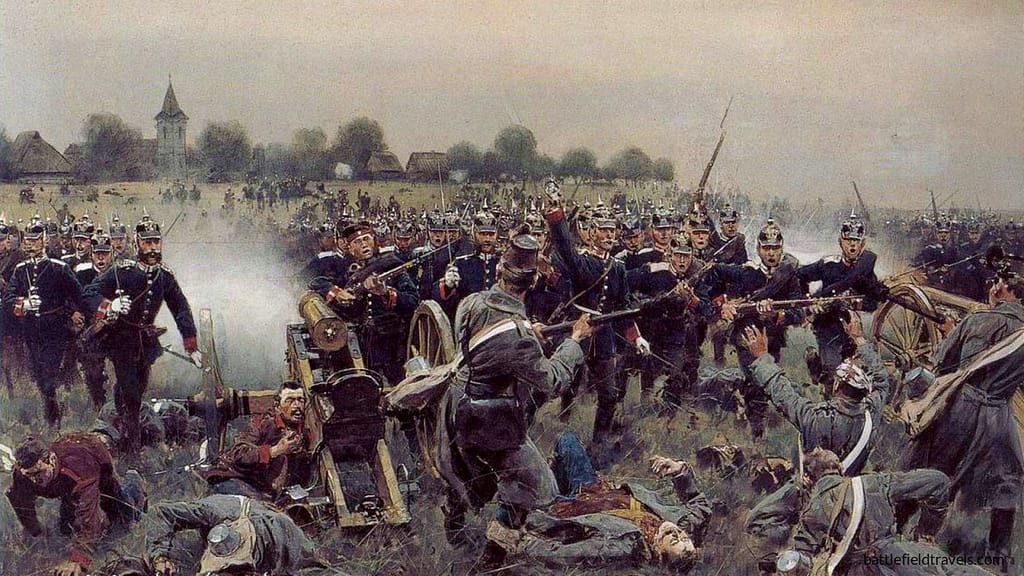
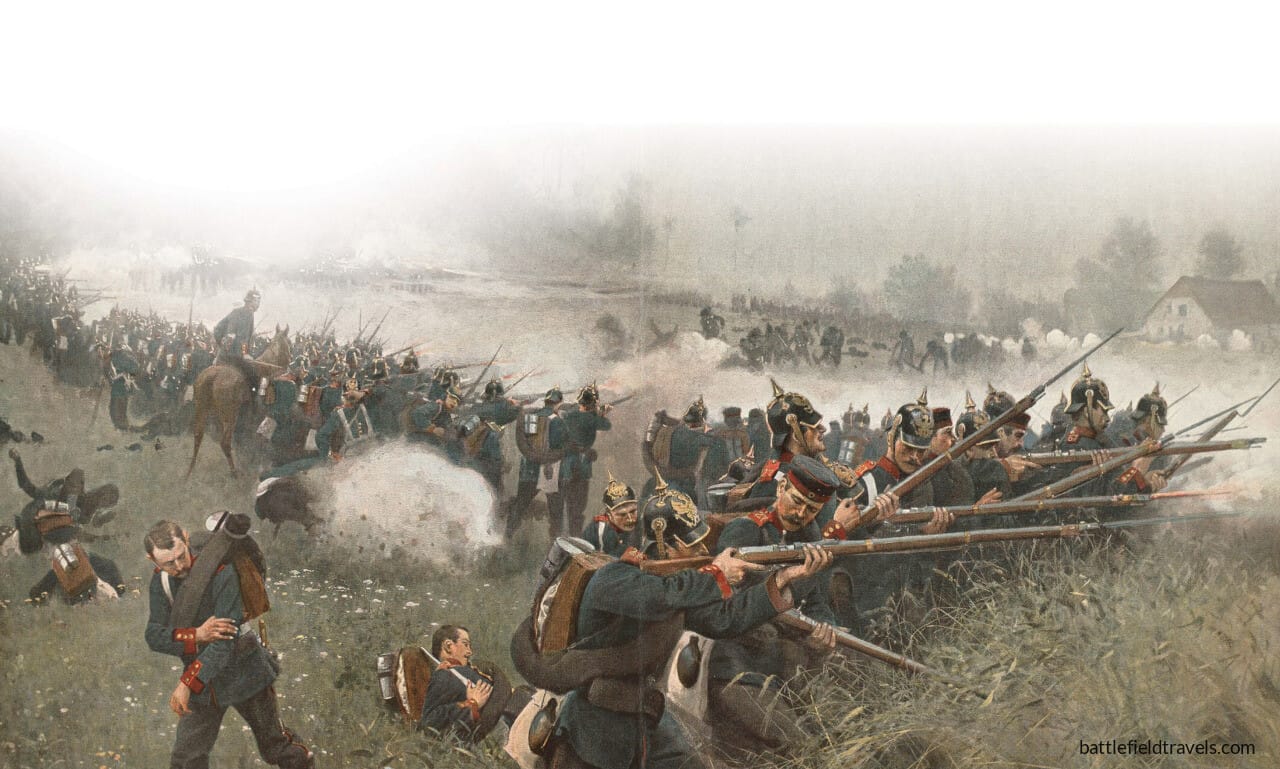
By contrast, a soldier armed with the Dreyse drew back the cocking piece, opened the bolt, inserted a paper cartridge containing powder, bullet, and primer, closed the bolt, pushed the cocking piece forward, took aim and fired. The entire sequence took approximately ten seconds. It could be performed lying flat on the ground, behind a log, in a ditch, in a fold in the earth — anywhere a soldier could find cover. A trained Prussian infantryman could fire five to six aimed rounds per minute from a prone position behind cover.
That single capability, the ability to reload in the prone position, invalidated two centuries of infantry tactics overnight.
Competing tactical systems: Austrian Stoßtaktik (Shock Tactics)
Storm Column: the proven tactical system
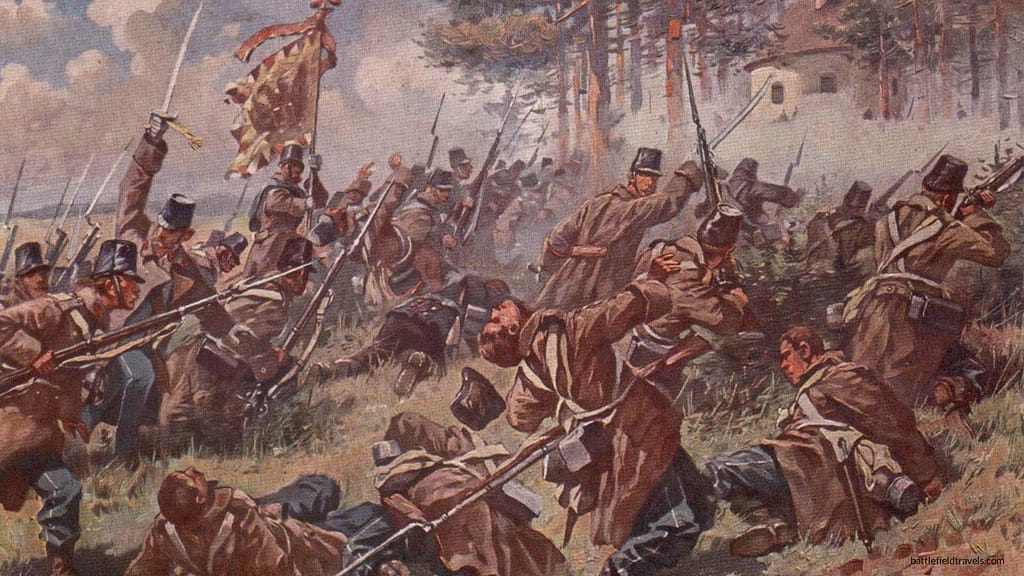
Austrian infantry doctrine in 1866 was built around the Stoßtaktik (shock tactics). Its intellectual roots ran through the Napoleonic Wars, when compact assault columns would advance rapidly toward the enemy, absorb fire, and decide the battle through the shock of the bayonet charge. The tactic was expensive in blood but effective in result. It had worked against every enemy Austria had faced.
More recently, and critically for Benedek’s judgement in 1866, Austria had faced the French during the Italian War of 1859. At Solferino, the French used compact assault columns to rapidly cover the deadly space between the maximum effective range of muzzle-loading weapons and closing to bayonet range. The tactics were extremely costly but effective. Benedek had commanded the Austrian right flank at Solferino with distinction. The lesson he took away was clear and apparently validated by evidence: aggressive offensive action at close quarters decided battles. French employment of storm columns shaped the views of a generation of Austrian officers.
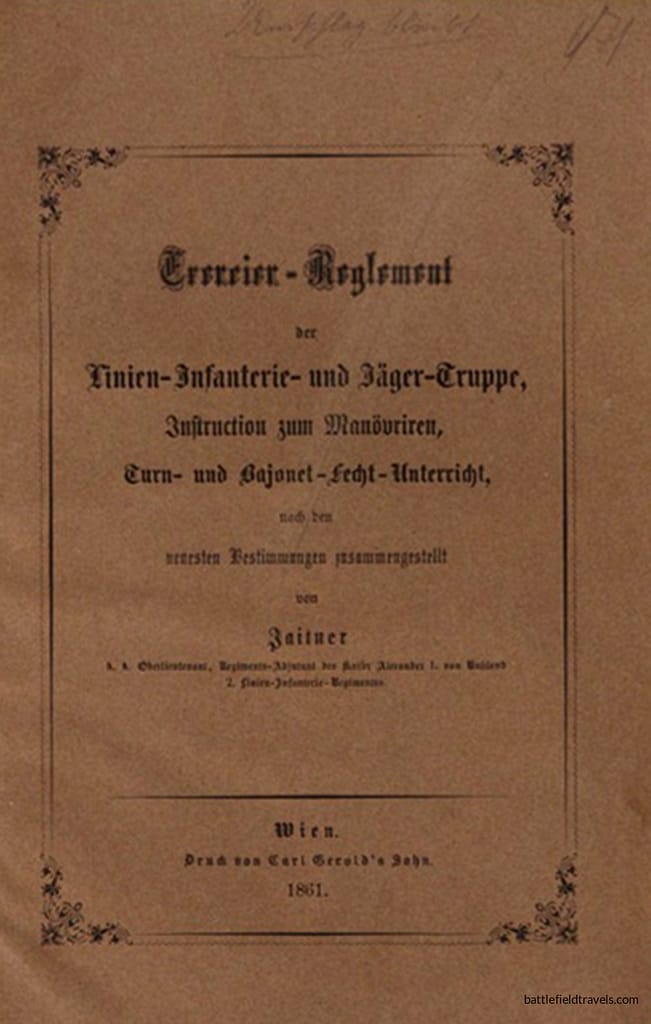
Austrian Regulations for Infantry and Jager Troops of 1861
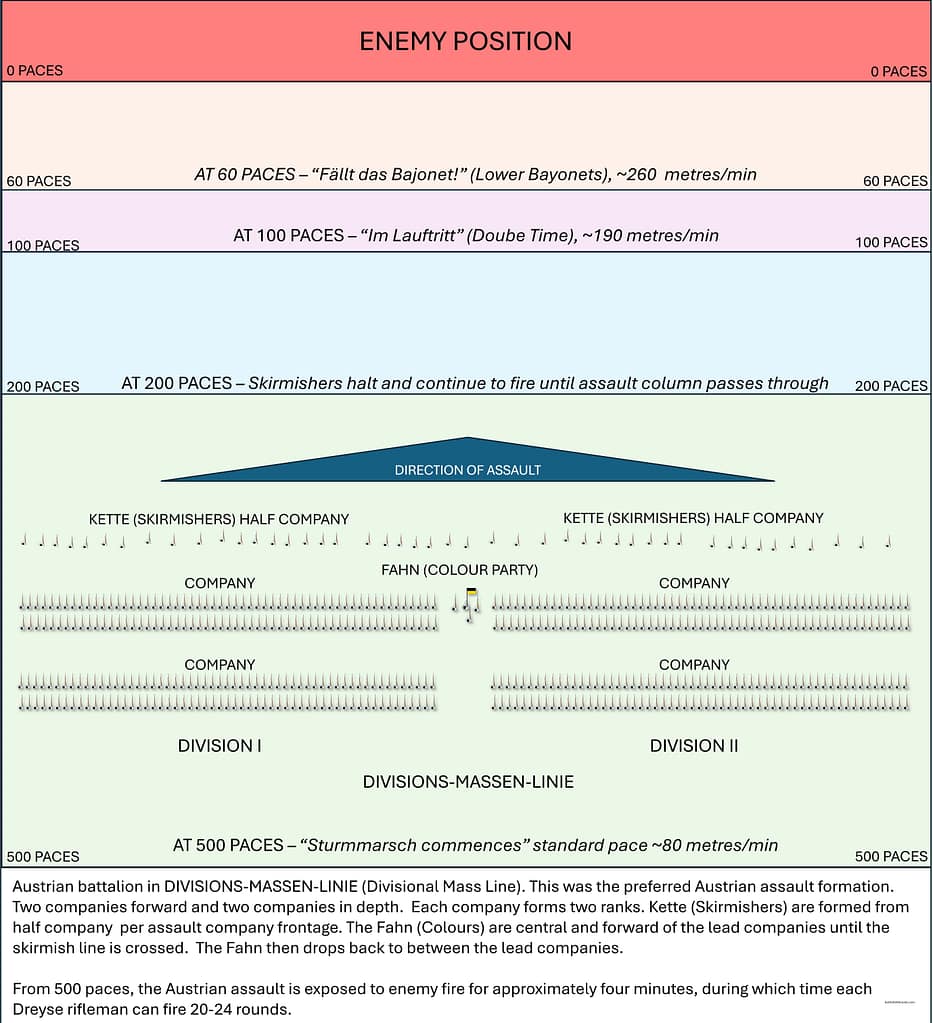
By 1866, Austria had formalised these lessons in its Exercier-Reglement — the drill and tactical regulations governing infantry tactics. The 1861 edition codified the storm-assault sequence in precise doctrinal language. The skirmish screen, known as the Kette, would advance and fix bayonets on the drum signal “Sturm“ (sounded three times for a division), wait under cover for the advancing closed formations, then open at 15–20 paces to receive them. The storm column would advance firing, and at 50–60 paces from the enemy, the decisive command would be given:
“Im Lauftritt! — die Gewehre werden in die Balance genommen, auf: ‘Marsch!’ beginnt der Lauftritt, dann 50–60 Schritte von dem Feinde: ‘Fällt das Bajonet!’ — wird mit Ungestüm im beschleunigten Laufe eingedrungen.“
(“At the double! — weapons are brought to the balance, on ‘March!’ the double begins, then at 50–60 paces from the enemy: ‘Lower bayonets!’ — the assault is pressed home with violence at the accelerated run.”)
— Exercier-Reglement der Linien-Infanterie und Jäger-Truppe (1861), I.117
The phrase mit Ungestüm (with violence, with impetuosity) captures the essential character of Austrian tactical doctrine. Speed and shock were meant to compensate for the casualties the column would absorb crossing the killing ground. Against muzzle-loading weapons in 1859, this calculus had been marginal but survivable. Against the Dreyse needle gun in 1866, it was catastrophic.
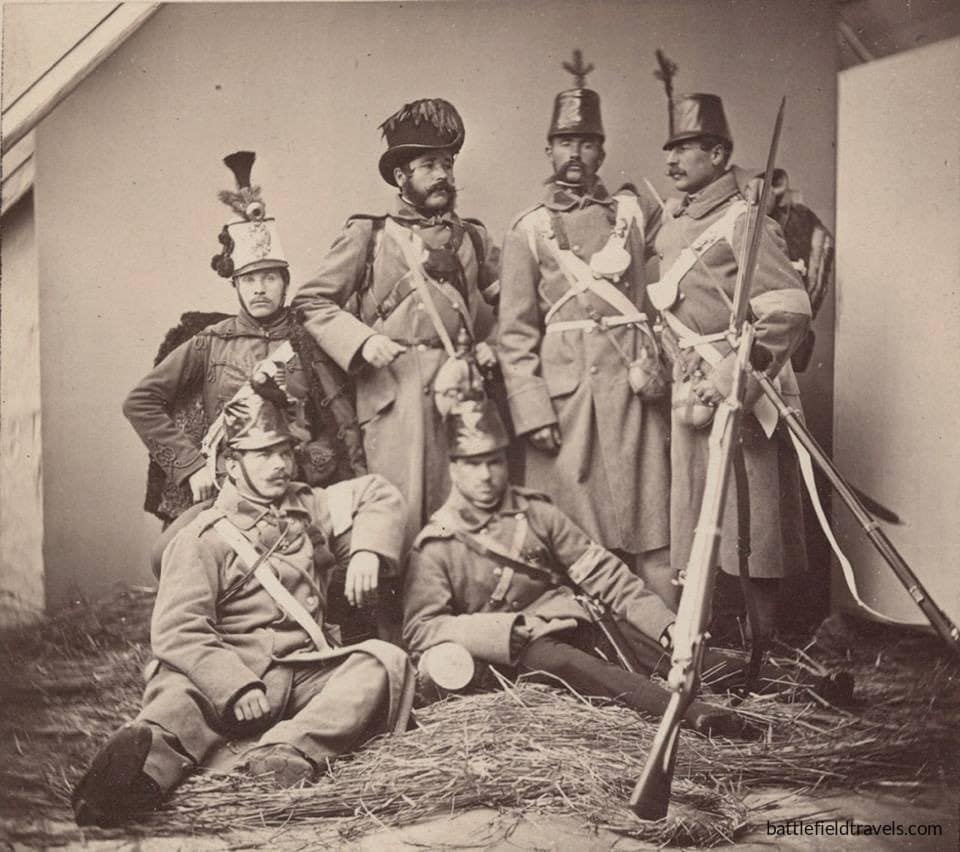
Austria’s centralised command philosophy
There was a further dimension to the doctrinal problem. The 1861 Exercier-Reglement acknowledged the need for independent judgement in certain circumstances. When a company was given an independent task, the regulations specified that:
“…so hat der Compagnie-Commandant die erforderlichen Anordnungen stets auf seine persönliche Anschauungsweise zu gründen.“
(“…the company commander must always base the necessary dispositions upon his own personal appreciation of the situation.”)
— Exercier-Reglement der Linien-Infanterie- und Jäger-Truppe (1861), I.103–104
The phrase persönliche Anschauungsweise (personal appreciation of the situation) acknowledges the commander’s judgement at company level. But this freedom of action only applied when the company was entrusted with an independent task and restricted to its own resources. This was conditional and exceptional, not standard procedure. Dispersed tactics also appear in the 1861 regulations, but are constrained by the warning to avoid “jeder Zersplitterung der Kräfte“ (any fragmentation of forces). The Austrian instinct tended toward concentration and control. There was no framework for coordinating dispersed troops exercising their own initiative, no doctrine for lateral cooperation between formations, and no institutional trust in junior commanders to act without orders in the course of battle.
By 1866, there was good reason to believe that storm column tactics worked. Solferino had convinced the Austrian officer corps. Benedek’s judgement was formed in hard experience. Only the enemy’s weapon type had changed — and that changed everything.
⚔️ Go deeper — Members get exclusive access to the Deep Research Collection, Field Notes, and monthly Research Dispatches. Try membership free for 7 days, cancel anytime. From $9/month.
Competing tactical systems: Prussian Auftragstaktik (mission tactics)
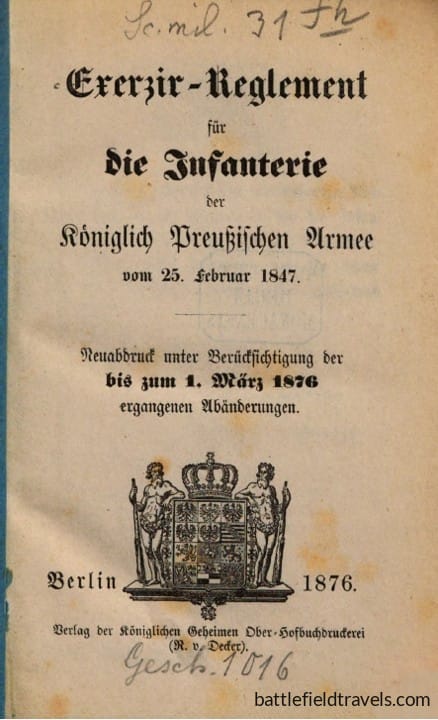
Prussian Infantry Regulations of 1847
A dispersed infantry line armed with breech-loading rifles presents a fundamentally different command problem from a dense storm column. A column can be controlled: officers can see their men, direct their movement, and maintain cohesion through voice and physical presence. None of this applies when troops are in a dispersed firing line fighting from cover. Individual soldiers and small groups are separated by terrain, obscured by smoke and vegetation, acting on local information that their commanders cannot perceive. The coordination that makes dispersed fire effective, such as mutual support between flanking groups and exploitation of fleeting opportunities, requires decision-making at the lowest possible level.
This is what Moltke’s Prussian Army had developed, over decades of professional military education and doctrinal refinement, into what we now call Auftragstaktik — mission tactics. The principle was relatively simple. A commander communicates his intent (what he wants to achieve and why) and trusts his subordinates to find their own way to achieve it. He does not prescribe a method. He does not require permission for initiative. He does not wait for orders when opportunity appears. The commander at every level, from Field Marshal to corporal, is expected to understand the objective, assess the situation in front of him, and act on his own judgement to advance toward that objective.
Individual initiative
The 1847 Prussian regulations institutionalised this philosophy at the level of the individual rifleman:
“Der einzelne Schütze ist in den meisten Fällen sich selbst überlassen… Häufig wird er in die Lage kommen, selbst einen Entschluß fassen zu müssen. Beurtheilungs-Vermögen, List, Kühnheit, körperliche Gewandtheit und Selbstvertrauen… müssen ihm eigen sein.“
(The individual skirmisher is in most cases left to himself… He will frequently find himself in a position where he must form his own decision. Judgement, cunning, boldness, physical agility and self-reliance… must be his own qualities.)
Es ist mithin die Pflicht und besondere Aufgabe aller Vorgesetzten, bei der Ausbildung des Schützen dahin zu wirken, daß… sein Beurtheilungs-Vermögen geweckt und ihm dadurch das Selbstvertrauen eingeflößt werde.“
(It is therefore the duty and special task of all superiors, in the training of the skirmisher, to work toward… his capacity for judgement being awakened and self-reliance thereby instilled in him.)
— Exerzir-Reglement (1847/1876), §.99
The word Entschluß (volitional decision) is demanded at the level of the individual rifleman. Beurtheilungs-Vermögen (capacity for judgement) is a training objective, a Pflicht (duty) of every superior. The Austrian 1861 regulation has no equivalent passage. The concept did not exist in Austrian doctrine at the level of the individual soldier.
Initiative at the company level
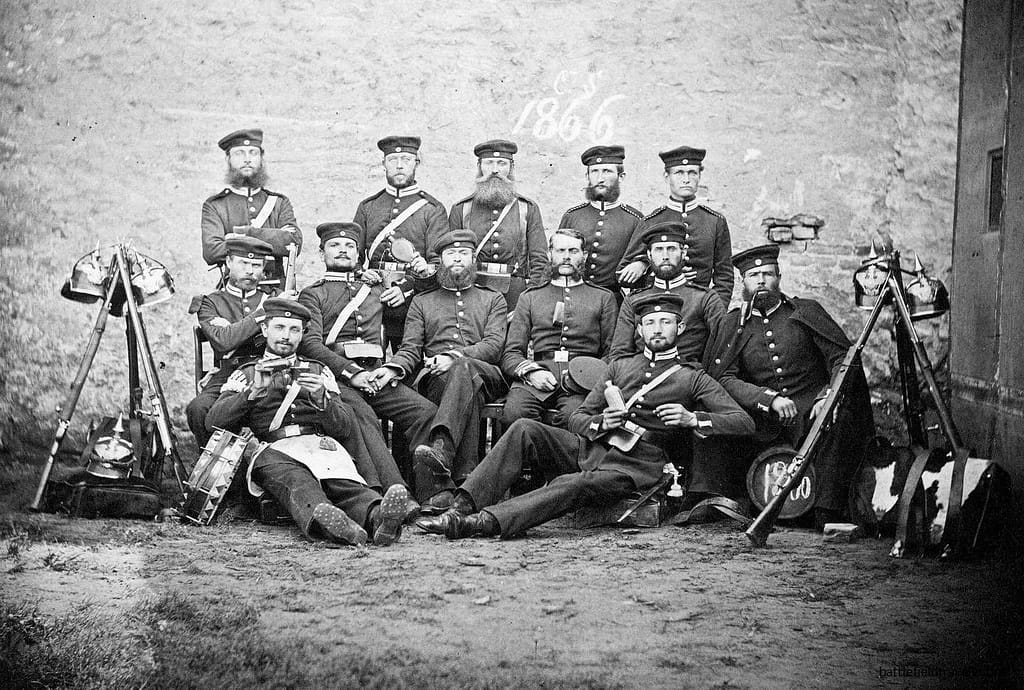
At the company level, the Prussian regulation was equally explicit. Company commanders were to exercise selbständige Führung (independent command), and the measure of a well-trained battalion was:
“…daß die Kompagnie-Chefs es verstehen, nach einem kurzen Befehl des Kommandeurs zu gemeinsamem Zweck zusammenzuwirken, ohne daß die einheitliche Leitung einen Augenblick verloren geht.“
(…that the company commanders understand how to cooperate toward a common purpose after a brief command from the commander, without unified command being lost for a moment.)
— Exerzir-Reglement (1847/1876), §.111
A brief command toward a common purpose, then independent execution. This is the Auftrag model in operation, written into regimental drill a generation before Königgrätz. The contrast with Austrian doctrine is stark. Where the Austrian 1861 Exercier-Reglement granted personal judgement only conditionally and exceptionally, the Prussian system made it the default condition at every level. While Austrian doctrine warned against the fragmentation of forces, Prussian doctrine trusted dispersed units to coordinate laterally, peer-to-peer, without reference to higher command. The needle-gun made dispersed fire tactically possible. Auftragstaktik made it operationally effective.
In 1866, this philosophy existed at every level of the Prussian Army. When a Prussian lieutenant found a gap in the Austrian line, he exploited it without asking permission. When Prussian units from different formations found themselves converging on the same tactical opportunity, they coordinated laterally without reference to higher command. The Austrian command system worked in the opposite direction. Initiative was centralised. Permission was required. When unexpected situations arose, as they inevitably do in battle, Austrian commanders waited for guidance from above while Prussian commanders acted on their own judgement.
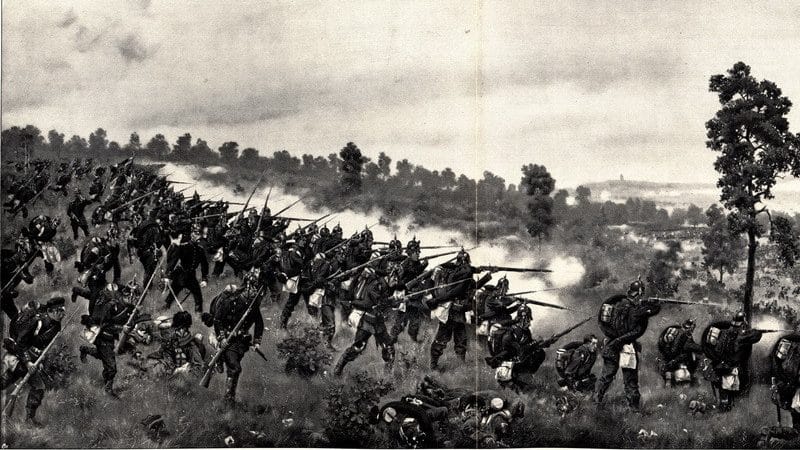
The doctrine: Storm Column versus Dispersed Fire
Austrian Storm Column
Against the Dreyse needle gun and fluid Prussian tactics, the Austrian adherence to storm column tactics was disastrous.
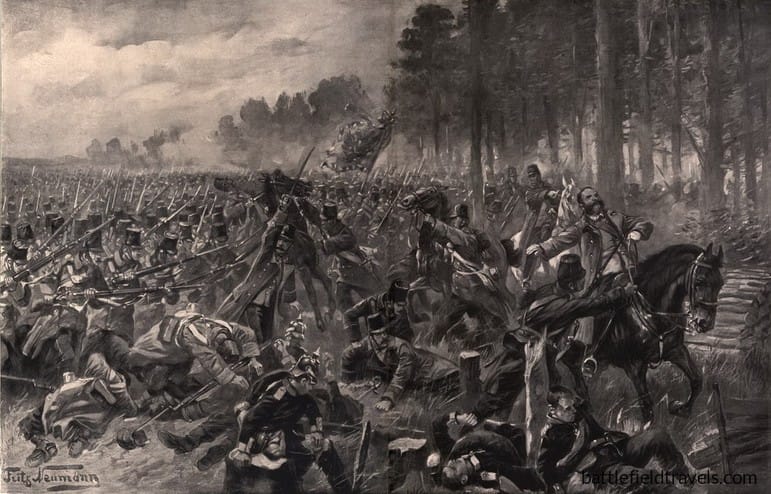
At Königgrätz and in the preceding battles at Skalitz, Tratenau, Münchengratz, and Jičín, the Austrian storm columns advanced as they were trained: dense formations of infantry moving forward at the double, closing the range, preparing for the decisive shock of contact. Prussian infantry fought dispersed, lying prone, exploiting every fold in the ground, and shot them down at ranges where the muzzle-loader-armed Austrians could not effectively respond.
The mathematics were brutal. An Austrian infantryman standing to reload could fire perhaps two to three rounds per minute under ideal conditions, and less when under fire, in poor weather, or on broken ground. A Prussian infantryman lying in cover could fire five to six times per minute. In the roughly four minutes it took for an Austrian storm column to close from 500 metres to bayonet range, a Prussian line could deliver 20-24 rounds per man. Against a dense column formation, the effect was devastating. The diagram below depicts the Storm Column attack as described in the Austrian 1861 Infantry Regulations.
Prussian assault doctrine
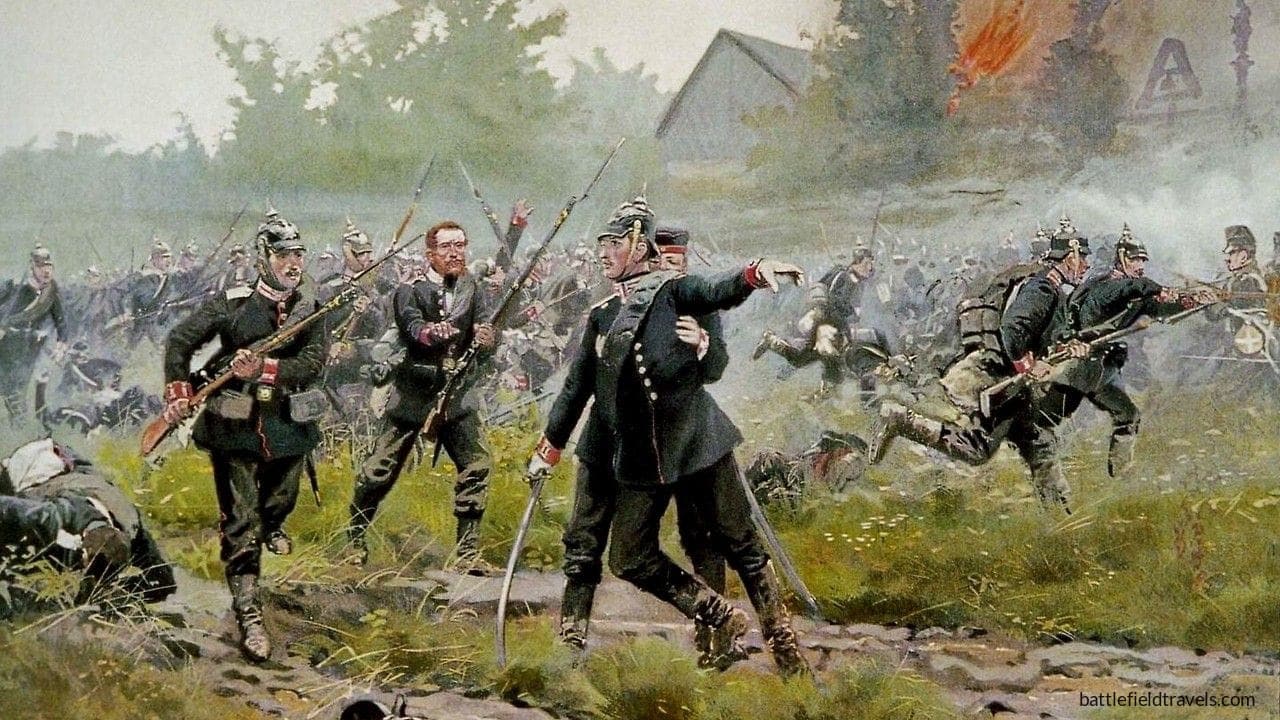
The Prussian assault sequence was built differently. Not a prescribed series of commands, but a framework for the battalion commander’s real-time assessment. The 1847 regulations prescribed three branches at the moment of decision:
“Der Bataillons-Kommandeur läßt: a) wenn die Attacke als gelungen angesehen wird… Schützen vorgehen; b) wenn er als abgeschlagen angesehen wird, sogleich Gewehr in Ruh setzen, kehrt machen und das Bataillon zurückgehen… c) unter der Annahme endlich, daß der Angriff keinen entschiedenen Erfolg hatte… das Bataillon auf das alleinige Kommando: ‘Deployirt! Marsch! Marsch!’ sich entwickeln, wobei jeder Zug, sobald er die Richtungslinie der Tete des Bataillons erreicht hat, sofort und ohne Kommando das Schnellfeuer aufnimmt.“
(The battalion commander:
a) if the attack is considered to have succeeded… advances skirmishers;
b) if it is considered repulsed, immediately orders arms, about face and withdraws…
c) if the attack produced no decisive result… develops the battalion on the sole command ‘Deploy! Marsch! Marsch!’, each platoon taking up rapid fire immediately and without command as soon as it reaches the directing line.)
— Exerzir-Reglement (1847/1876), §.84
The words sofort und ohne Kommando (immediately and without command) is Auftragstaktik at the point of contact. Each platoon acts on its own assessment of when it has reached the firing line, without waiting for an order that may not come. Decentralised fire initiation is encoded into the battle drill.
Could the Austrians have adapted in time?
Austrian commanders recognised the problem almost immediately. Their after-action reports from the early engagements of the campaign repeatedly describe the same phenomenon: infantry advancing with courage and discipline, only to be destroyed before reaching effective range. Junior officers attempting to accelerate the advance, hoping speed would compensate for firepower, found that it made casualties worse rather than better. Potential adaptations such as dispersing formations, employing skirmisher tactics, and using cover were doctrinally unavailable to the Austrians. Austrian officers and NCOs had not trained for these methods and did not have time to adapt while fighting for their lives. The Austrian Army was stuck with a doctrinal system built for a weapons environment that no longer existed.
The terrain at Königgrätz
The macro-terrain
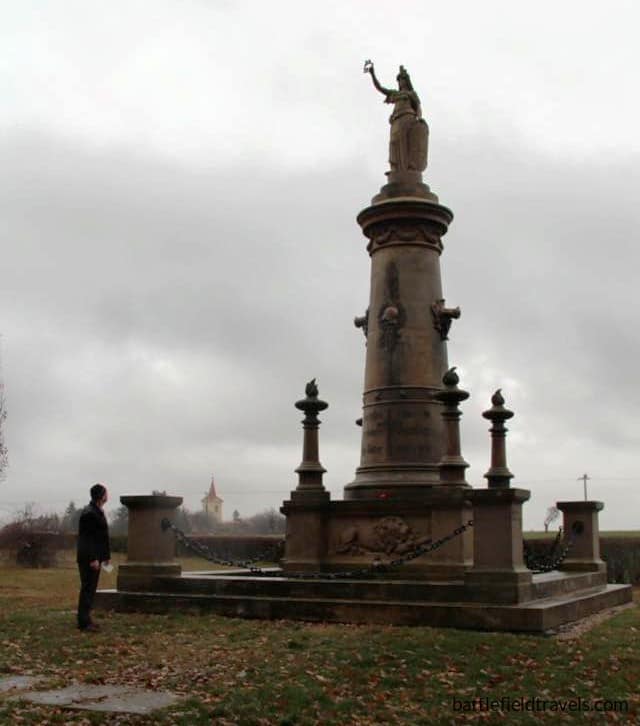
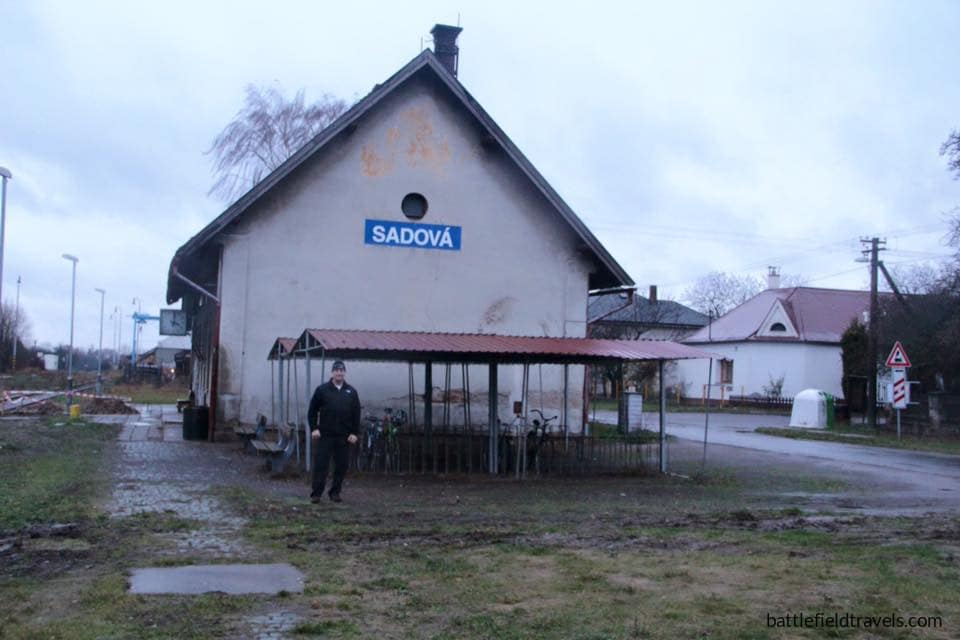
Walking the Königgrätz battlefield, now Hradec Králové in the Czech Republic, the terrain impact becomes immediately visible. I have walked it twice, in 2015 and 2017.
The battlefield terrain is not dramatic. The Bistritz River valley, the Svib Forest, and the high ground around Chlum are all relatively gentle terrain features. There are no cliffs, no rivers too wide to cross, no passes too narrow to force. It is the kind of open, rolling, Central European farmland that Austrian doctrine had been designed to fight upon. Storm columns advancing over this ground should, in theory, have been able to close with the Prussian line.
Micro-terrain on the battlefield
What the terrain does provide, and what changes the entire tactical picture, is dead ground. Shallow folds in the earth, hedge lines, the edges of woodlots, the reverse slopes of low ridges. Cover that a standing infantryman cannot use, but a prone man can. Cover that the Dreyse needle gun was specifically designed to exploit. Cover that Auftragstaktik trusted junior commanders to find and use without being told.
Standing on the Chlum ridge, where the Prussian Guard broke the Austrian centre in the afternoon of 3 July, the view to the north is what the Austrian commanders saw they attempted to dislodge the Prussian Second Army’s foothold. Open ground. Gentle slopes. Nothing that obviously screamed danger.
What they could not see was the micro-terrain. The Prussian infantry lying prone in the folds, invisible until the range closed to a few hundred metres, delivering aimed fire at a rate that made the advance impossible. The Austrian commanders who ordered those advances were not misreading the terrain in any conventional sense. The ground was crossable. Their experience told them it was crossable. What their pattern library, formed at Solferino, shaped by the Exercier-Reglement, reinforced by the doctrinal logic of Stoßtaktik, could not supply was a template for an invisible enemy delivering aimed fire at five rounds per minute. They were reading the terrain correctly for the wrong weapons environment.
The lessons France did not learn
France’s superior breech-loader: the Model 1866 Chassepot
Four years after Königgrätz, France went to war with Prussia, having watched the 1866 campaign carefully and drawn exactly the wrong conclusions.
French military observers had identified the needle gun as the decisive factor. The solution was to develop a better breech-loading rifle. The result was the Chassepot Model 1866 — in almost every technical measure a superior weapon to the Dreyse. Longer effective range. Better accuracy. Superior breech mechanism. Faster reloading. French infantry armed with the Chassepot would not be shot apart at long range, the way the Austrians had been. The French military high command were confident that the lessons of Königgrätz had been learned.

France’s outdated command philosophy
But they had not. France had copied the weapon; it had not copied the philosophy.
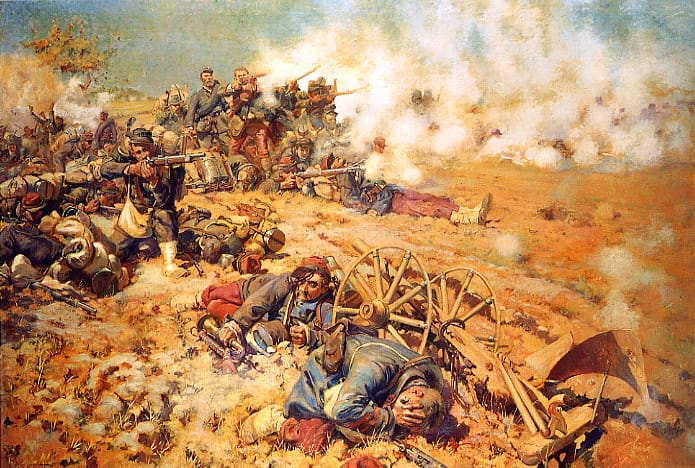
The French Army of 1870 remained doctrinally centralised. Initiative was reserved for senior commanders, while junior officers were expected to execute orders rather than exercise judgement. Lateral coordination between formations was slow and bureaucratic. The French infantry fought bravely. The Chassepot performed exactly as designed. At Saint-Privat on 18 August 1870, the Prussian Guard Corps advanced across open ground against Chassepot fire and lost nearly 8,000 men in twenty minutes — proof that the French weapon was everything its designers intended. The Guard had no dead ground to exploit, no covered approach, no terrain to read. The Chassepot did not need Auftragstaktik to destroy a storm column on open ground. It needed only a target.
And France still lost. Campaign after campaign. Battle after battle. Culminating in the encirclement of Emperor Napoleon III and 100,000 men at Sedan on 1 September 1870. This was the decisive demonstration of Moltke’s operational method, built on Auftragstaktik and rapid convergence of independent armies in a Kesselschlacht (pocket battle).
The Chassepot without Auftragstaktik was just a better tool. The lesson of 1866 was not about the tool.
Conclusion: the Revolution in Military Affairs
Military historians use the term “Revolution in Military Affairs” to describe moments when new technology, new doctrine, or new organisational methods combine to produce an irreversible change in how warfare is conducted. The introduction of the needle gun and Auftragstaktik into the Prussian Army of the 1860s represents one of the clearest examples of such a revolution in the entire history of warfare.
The revolution was not the needle gun. Breech-loading rifles had existed for decades before 1866 and would be superseded within a generation by magazine-fed repeating rifles and eventually machine guns.
The revolution was not Auftragstaktik. Mission command as a philosophical principle predates Moltke and has been rediscovered and reinvented by military organisations repeatedly across different eras and cultures.
The revolution was the combination: a weapons system that could be fired from prone and cover positions, a command philosophy that required initiative at every level, and new tactics to bring it all together. The 1861 Austrian Exercier-Reglement remains as primary source evidence of what the old system looked like: a system that acknowledged the need for individual judgement in exceptional circumstances but warned against dispersing forces, and retained the storm column as the decisive instrument. It was a rational system for a battlefield that no longer existed.
Found this useful? Buy me a coffee — it helps fund future battlefield research


Authored by Mick Prictor, a retired military officer with 40 years’ service, and a military historian specialising in terrain-focused analysis of tactics, doctrine, and command decision-making in land warfare. His work draws on extensive battlefield fieldwork—more than 280 sites worldwide—and one of the world’s largest private collections of historic military arms, uniforms, and equipment. About me
Reference Sources
Primary Sources:
- Exercier-Reglement der Linien-Infanterie und Jäger-Truppe (1861), Österreichische Nationalbibliothek, Wien.
- Exerzir-Reglement für die Infanterie der Königlich Preußischen Armee (1847, Neuabdruck 1876), Münchener DigitalisierungsZentrum (MDZ)
Secondary sources
- Barry, Quintin. Road to Koniggratz: Helmuth von Moltke and the Austro-Prussian War 1866. Warwick: Helion & Company, 2014.
- Walter, John. The German rifle: a comprehensive illustrated history of the standard bolt-action designs, 1871-1945. London: Arms and Armour Press, 1979.
- Wawro, Geoffrey. The Austro-Prussian War: Austria’s War with Prussia and Italy in 1866. Cambridge: Cambridge University Press, 1996.
📚 Further Reading: Austro-Prussian War
This battle study nests within the broader analytical framework explored in the Research Hub, where operational methods, operating environments, armies, commanders, and weapons are examined across conflicts and eras. The links below connect related studies across the wider body of battlefield analysis on the BattlefieldTravels site.
⚔️ Explore all battle studies from the Austro-Prussian War of 1866
🏛️Explore the museum of the Austro-Prussian War historic artefacts
📚 Explore recommended reading on the Austro-Prussian War 1866
🗞️ For updates on new battlefield studies and research insights, you can subscribe to the Newsletter.
You may also like
 ⚔️🔒Battle of Mars-la-Tour, France, 16 August 1870
 ⚔️ Battle of Bazeilles, France,
31 August – 1 September 1870
 🏛️ Austro-Prussian War (1866) Weapons and Equipment
 🏛️ Franco-Prussian War (1870–1871) Weapons and Equipment
 📚 Franco-Prussian War (1870–71),
Recommended Reading
 📝🔒Field Note: Battle of Königgrätz, Czech Republic, 3 July 1866 — the fight for Chlum
FAQ: Dreyse, Auftragstaktik, Storm Column
The short answer is that they had no alternative doctrine to fall back on. The Austrian 1861 Exercier-Reglement prescribed the Sturmkolonne as the default assault formation, with each phase of the attack sequenced by command from above. Austrian officers at Königgrätz were not stupid or reckless; they were following a doctrine that had been designed for a world of muzzle-loaders, where mass and momentum could still carry a position before the defender reloaded. What they could not have fully anticipated was facing an enemy who reloaded lying down, in cover, five times faster than they did. The Prussian needle gun did not just outshoot the Austrian Lorenz rifle — it invalidated the tactical logic upon which the entire Austrian assault system was built.
The Dreyse Zündnadelgewehr was a bolt-action breech-loading rifle designed by Johann Nikolaus von Dreyse and adopted by the Prussian army in 1841, twenty-five years before Königgrätz. Its name came from the long, needle-like firing pin that struck a percussion cap embedded in the base of the paper cartridge. The revolutionary aspect was not accuracy — the Dreyse was actually somewhat inferior to the Austrian Lorenz at long range, partly because its breech seal was imperfect and partly because the needle deteriorated with use. What made it decisive was rate of fire and firing position. A trained Prussian soldier could fire six to eight rounds per minute against the Lorenz’s one to two. More importantly, he could reload lying down. The Austrian infantryman had to stand upright to load his muzzle-loader, presenting a full target at exactly the moment he was most vulnerable. The Prussian soldier reloaded in cover, stood or knelt briefly to fire, and went back down. The tactical consequence — built directly into the 1847 Exerzir-Reglement — was a twelve-pace final charge distance rather than the Austrian 150–200 pace Sturmlauf, because Prussian skirmisher fire was expected to suppress the enemy throughout the approach, leaving only the final step to be taken upright.
Auftragstaktik (mission-tactics) is the principle that commanders at every level are given a mission (Auftrag) and the authority to achieve it by whatever means they judge best, rather than being given a sequence of prescribed actions to execute. The subordinate understands the commander’s intent and acts independently within it; the senior commander trusts the subordinate’s judgement and does not micromanage execution. The term itself was not formalised until after 1866, but the doctrine is present, fully formed, in the 1847 Exerzir-Reglement. §.108 explicitly refuses to prescribe universal procedures on the grounds that doing so would den Geist der Führer lähmen — paralyse the spirit of commanders. §.111 mandates selbstständige Führung — independent command — for company commanders as a standard expectation, not an emergency exception. §.99 requires that the individual rifleman be capable of forming his own Entschluß — decision — in the absence of orders.
Weapons mattered enormously, but doctrine determined whether the weapons’ advantages could be exploited. The Dreyse needle gun had been in Prussian service since 1841 and was not a secret; Austrian military observers had seen it used in Schleswig-Holstein in 1864. What the Austrians could not easily replicate was the twenty years of doctrinal development that told Prussian soldiers how to use it. A high rate of fire is tactically useless if your doctrine still requires you to stand in close-order ranks and fire volleys on command. The Prussian regulation had already built the needle gun’s capabilities into its assault geometry (the twelve-pace final charge, the ohne Kommando fire initiation, the sprungweises Vorgehen (bounds advance)), because the doctrine and the weapon had evolved together since 1841. The Austrians, by contrast, had adopted breech-loaders for their cavalry carbines but retained muzzle-loader tactics for their infantry, hoping that the Sturmkolonne’s moral force would overcome the firepower deficit. At Königgrätz that hope was tested at battalion scale, repeatedly, across an entire day of fighting, and it failed every time.
Subscribe to Battlefield Travels and receive a free E-Book Battlefield Guide
Unlock expert battlefield analysis, campaign reconstructions, and historical insights drawn from firsthand exploration and primary sources.
🗺️ You’ll receive:
🎖️ Exclusive historical insights you won’t find elsewhere
📘 A free eBook: 10 Tips for Exploring Historic Battlefields
📰 New battlefield studies straight to your inbox as they are published

⚔️ Go deeper — Members get exclusive access to the Deep Research Collection, Field Notes, and monthly Research Dispatches. Try membership free for 7 days, cancel anytime. From $9/month.
Fantastic read and insights! Thanks!
Thanks Tom, This has been a bit of a passion project and I finally got around to writing it. Whenever people visit and I take them into my ‘War Room’, I always talk through the Battle of Koniggratz, using my Dreyse Needle Guns and Lorenz musket to demonstrate the massive advantage the Prussians gained with a breechloader versus a rifle-musket. I have visited Koniggratz battlefield several times, but I needed to research the original Prussian and Austrian doctrine to validate my thinking. Mick