Battle of Isurava, Papua New Guinea, 26-31 August 1942
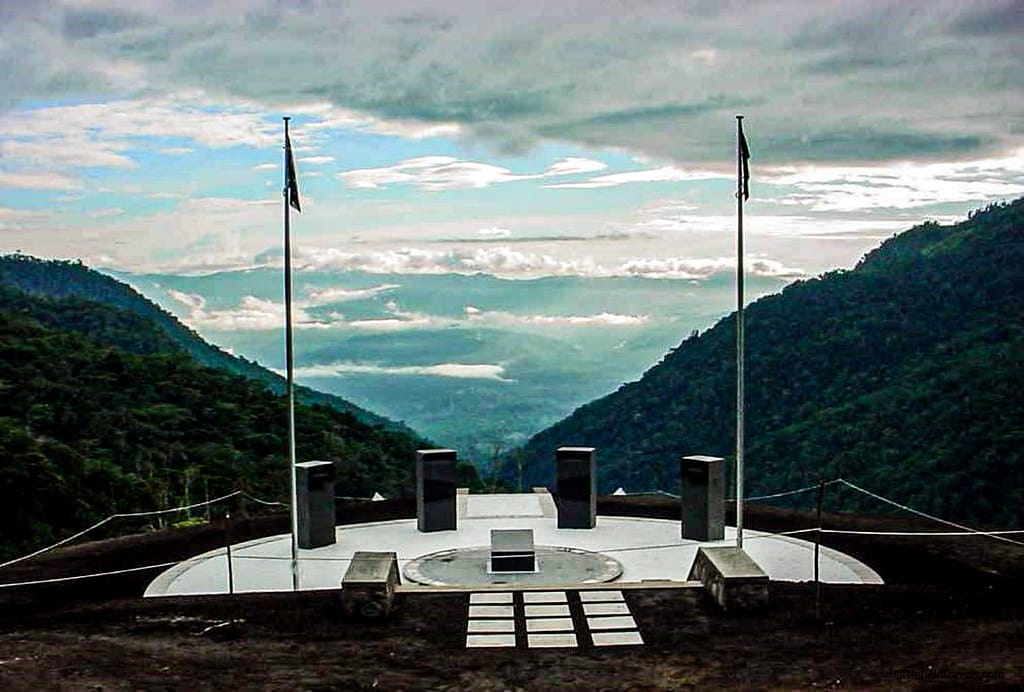
August 2002, Isurava, Papua New Guinea. I explored the Isurava battlefield in August 2002, around the 60th anniversary of the battle, during preparations to open the spectacular new memorial on the Kokoda Track. At the time, I was still serving in the Army back then, and I flew Prime Minister John Howard and veterans of the battle to the memorial site for the official opening.
Overview of the battle
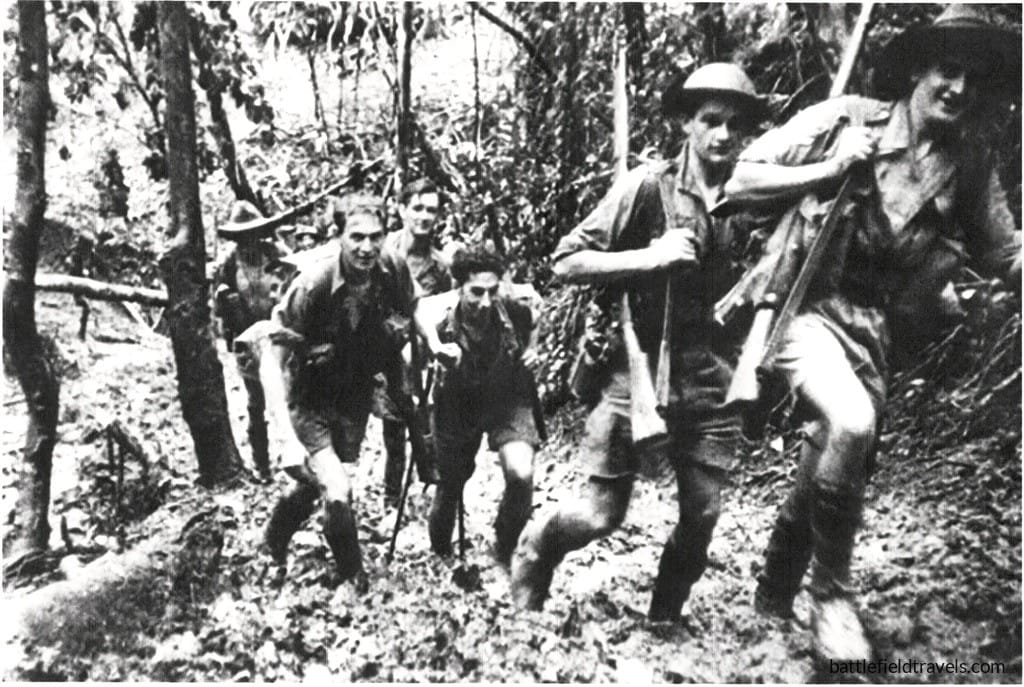
The Battle of Isurava was a critical moment for Australia. Understrength Militia battalions – the 39th and 53rd – and the Pacific Islands Battalion, comprised of Australian officers and Papua New Guinean soldiers, were deployed forward to delay the Japanese 17th Army’s advance from Buna to Port Moresby.
A series of fierce actions were fought around Kokoda Village, which bought enough time for elements of the Australian reinforcements to cross the Owen Stanley Ranges on foot. Outnumbered and outgunned by the advancing Japanese forces, the Australian militia battalions fought a stubborn, desperate delaying action to stop the enemy from reaching Port Moresby.
The militia battalions fell back towards Isurava, where they linked up with the lead elements of the 21st Brigade, veterans of the North African campaigns. They were immediately subjected to a major Japanese attack over 26-31 August 1942.
Despite the Japanese having superior numbers and mountain artillery, the intense, close-quarters jungle fighting at Isurava saw heavy casualties on both sides, with Private Bruce Kingsbury awarded the first Victoria Cross on Australian soil for his courageous action on 29 August 1942.
Outcome of the battle
Ultimately, the battle resulted in an Australian tactical withdrawal from the position, as the perimeter was threatened with encirclement by a superior Japanese force. However, the fierce resistance bought crucial time for Australian reinforcements and supplies to be moved forward, slowing the Japanese advance across the Owen Stanley Range. The heavy casualties and delays sustained by the Japanese at Isurava effectively halted their momentum, turning a potential swift victory into a long, grinding campaign that ultimately failed to capture Port Moresby.
👉 Continue reading — full Field Notes include terrain analysis, additional imagery, and working interpretations beyond the published study. Try membership free for 7 days.

Authored by Mick Prictor, a retired military officer with 40 years’ service, and a military historian specialising in terrain-focused analysis of tactics, doctrine, and command decision-making in land warfare. His work draws on extensive battlefield fieldwork—more than 280 sites worldwide—and one of the world’s largest private collections of historic military arms, uniforms, and equipment. About me
📚 Further Reading – World War Two
This battle study nests within the broader analytical framework explored in the Research Hub, where operational methods, operating environments, armies, commanders, and weapons are examined across conflicts and eras. The links below connect related studies across the wider body of battlefield analysis on the BattlefieldTravels site.
⚔️ Explore all battle studies from World War Two 1939-1945
🏛️Explore the museum of World War Two historic artefacts
The book list for this conflict includes the finest campaign studies, memoirs, and operational analyses available on the D-Day landings, selected specifically to complement this battlefield study.
📚World War Two – Recommended Reading
🗞️ For updates on new battlefield studies and research insights, you can subscribe to the Newsletter.
Subscribe to Battlefield Travels and receive a free E-Book Battlefield Guide
Unlock expert battlefield analysis, campaign reconstructions, and historical insights drawn from firsthand exploration and primary sources.
🗺️ You’ll receive:
🎖️ Exclusive historical insights you won’t find elsewhere
📘 A free eBook: 10 Tips for Exploring Historic Battlefields
📰 New battlefield studies straight to your inbox as they are published

⚔️ Go deeper — Members get exclusive access to the Deep Research Collection, Field Notes, and monthly Research Dispatches. Try membership free for 7 days, cancel anytime. From $9/month.