Battle for the Liege forts, Belgium, August 1914
The twelve forts
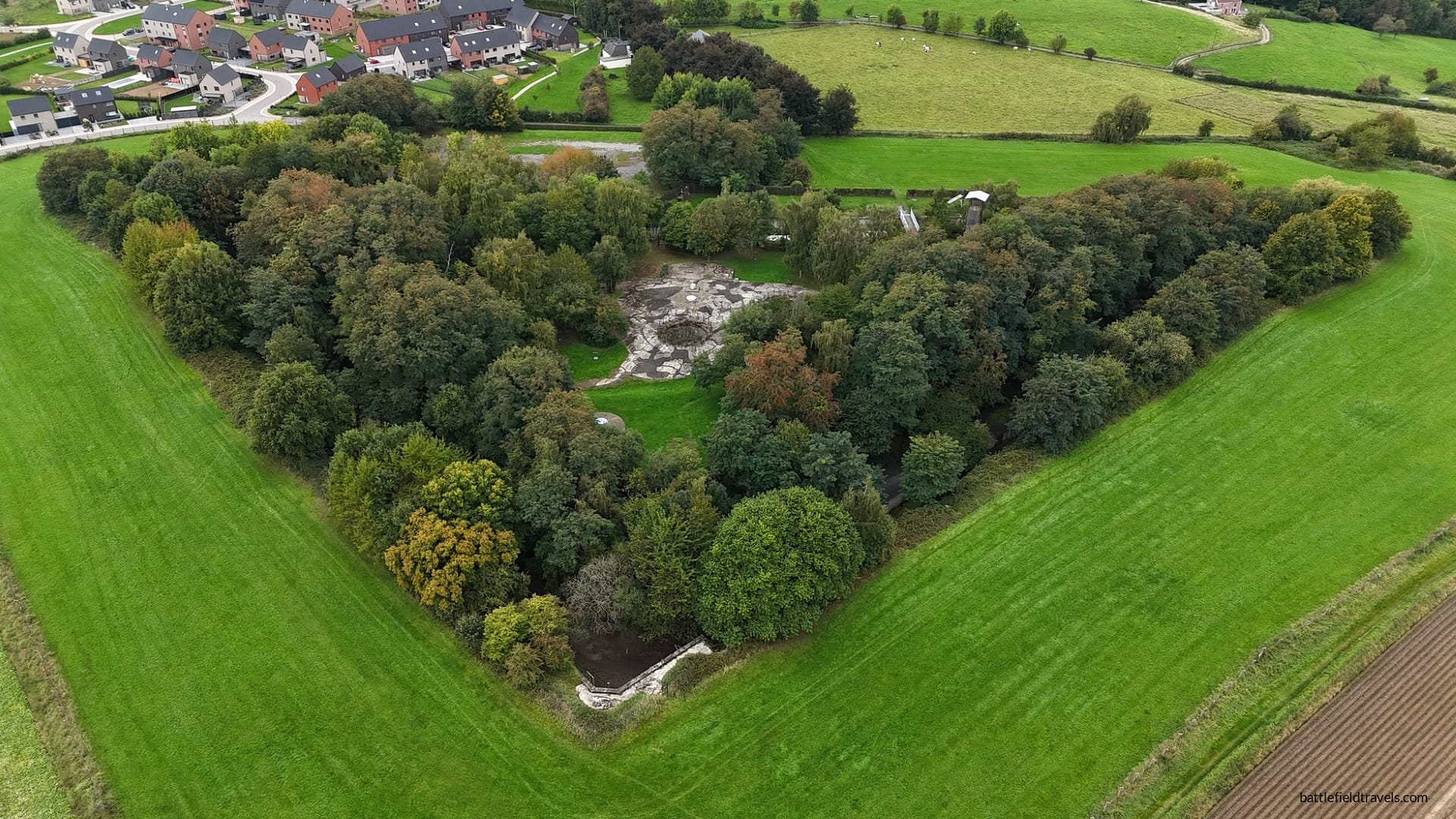
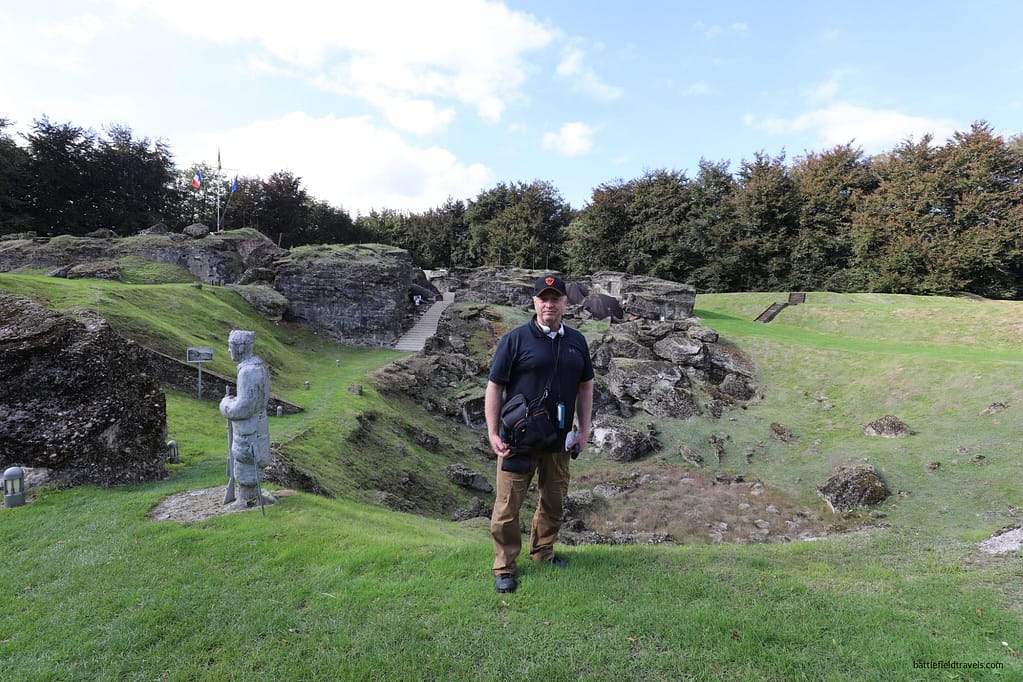
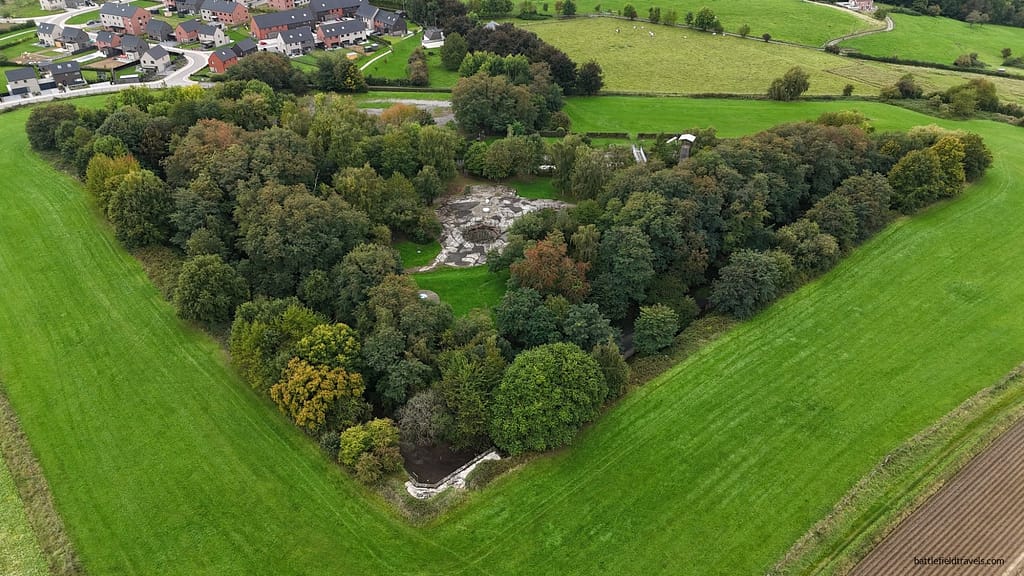
October 2025, Liege, Belgium. I am visiting the ring of great forts that once protected the Belgian city of Liège. In the 1880s, the Belgians constructed a series of forts to protect Liège against a potential German attack from the east. They built the Namur forts to defend against a potential French invasion from the west.
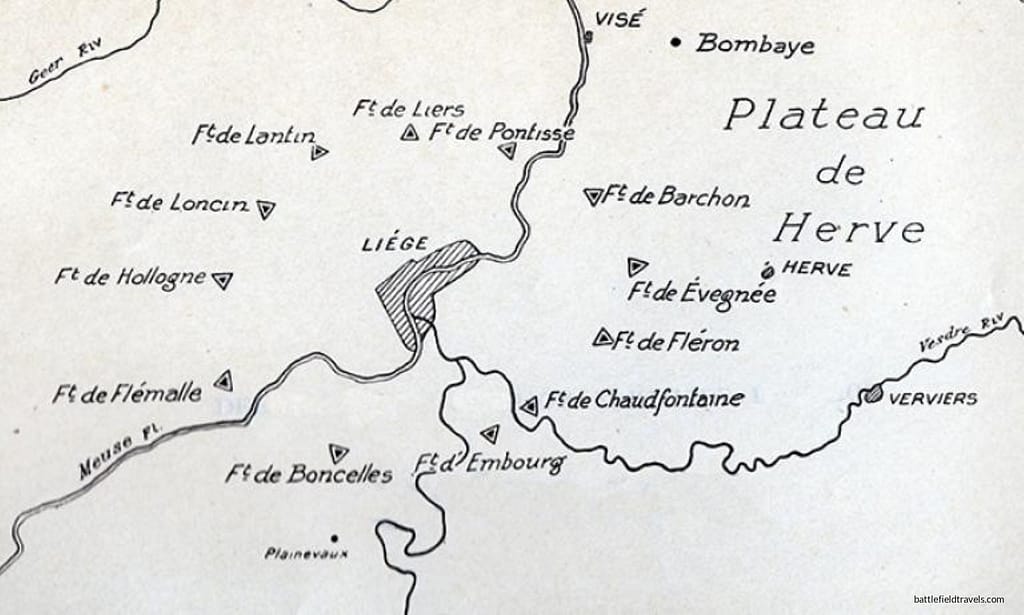
The twelve forts of Liège form a ring around the city, and each housed batteries of artillery that could cover the approaches and support the neighbouring forts. Clockwise from the north, the forts are: Fort Liers, Pontisse, Barchon, Evegnee, Fléron, Chaudfontaine, d’Embourg, Boncelles, Flemalle, Hollogne, Loncin, and Lantin.
Defensive system
The distances between forts are not great; each can support its neighbour with artillery fire. But the spacing is significant enough that gaps exist—ground that must be covered by observation and fire rather than physical occupation. Moving between the forts today, it is clear that this is a system that depends on coordination and coverage rather than continuous defence. Each fort is a self-contained strongpoint, but its effectiveness relies on the integrity of the ring.
I visited all twelve of them. Not all are accessible to the public, but Barchon, Lantin, and Loncin each have superb museums that visitors can explore. Some of the others open only on certain days of the week, or only a few times per year.
The Liege forts were each equipped with artillery mounted in steel turrets for 360-degree fire, and each had a complement of about ~280-330 artillerymen and 80-120 infantry, depending on the size of the fort.
👉 Continue reading — full Field Notes include terrain analysis, additional imagery, and working interpretations beyond the published study. Try membership free for 7 days.

Authored by Mick Prictor, a retired military officer with 40 years’ service, and a military historian specialising in terrain-focused analysis of tactics, doctrine, and command decision-making in land warfare. His work draws on extensive battlefield fieldwork—more than 280 sites worldwide—and one of the world’s largest private collections of historic military arms, uniforms, and equipment. About me
📚 Further Reading: First World War
This battle study nests within the broader analytical framework explored in the Research Hub, where operational methods, operating environments, armies, commanders, and weapons are examined across conflicts and eras. The links below connect related studies across the wider body of battlefield analysis on the BattlefieldTravels site.
⚔️ Explore all World War One battle studies
🏛️ Explore the museum of World War One weapons and equipment, Part 1. Allied Powers
🏛️ Explore the museum of World War One weapons and equipment, Part 2. Central Powers
The book list for this conflict includes the leading campaign studies, memoirs, and operational analyses available on the Polygon Wood and the Ypres Offensive, selected specifically to complement this battlefield study.
📚 World War One – Recommended Reading
🗞️ For updates on new battlefield studies and research insights, you can subscribe to the Newsletter.
Subscribe to Battlefield Travels and receive a free E-Book Battlefield Guide
Unlock expert battlefield analysis, campaign reconstructions, and historical insights drawn from firsthand exploration and primary sources.
🗺️ You’ll receive:
🎖️ Exclusive historical insights you won’t find elsewhere
📘 A free eBook: 10 Tips for Exploring Historic Battlefields
📰 New battlefield studies straight to your inbox as they are published

⚔️ Go deeper — Members get exclusive access to the Deep Research Collection, Field Notes, and monthly Research Dispatches. Try membership free for 7 days, cancel anytime. From $9/month.