Three Roman Legions destroyed in the forests of Germany
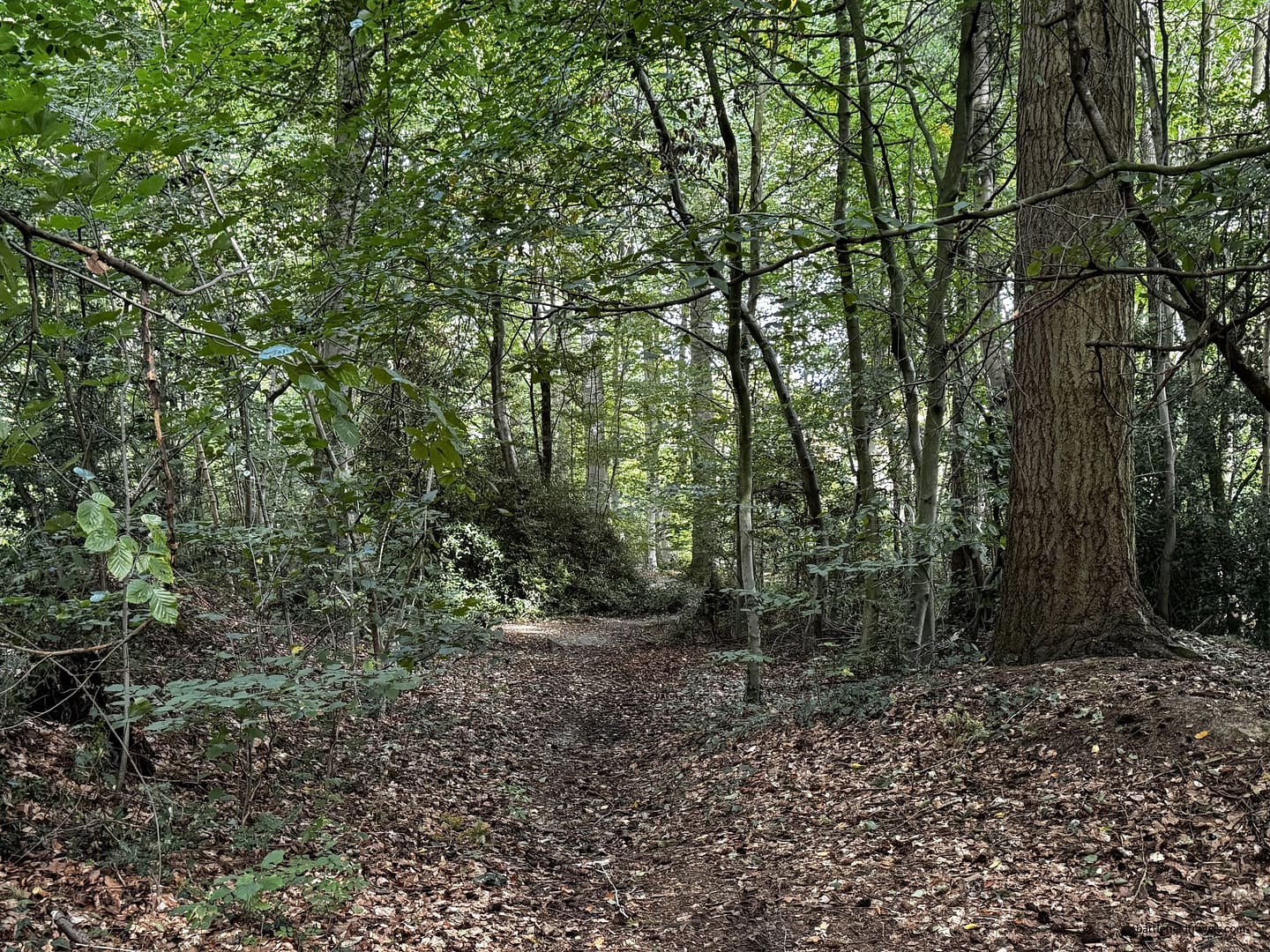
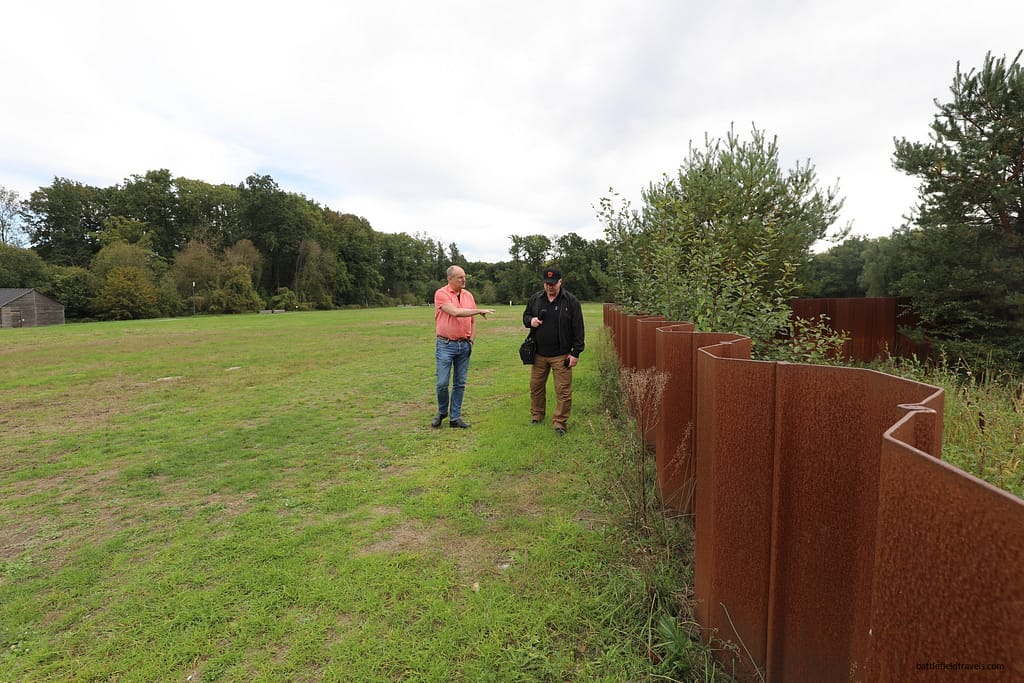
October 2025, Kalkriese, Germany. I am exploring the ancient battlefield of Teutoburg Forest, accompanied by Stefan, the Chief Archaeologist at the site. For centuries, the site of the battle was believed to be much further south, near Detmold. Some insightful detective work by a German historian and a British historian led to the discovery of the actual battle site here near Kalkriese.
Roman versus German
Since Julius Caesar’s time, the Romans had faced off against the warlike Germanic tribes across the Rhine. Each fighting season, Roman forces would venture into the forests of northern Germany on punitive expeditions or to collect taxes from the tribes.
One of the Roman generals was Arminius (Hermann in German), a native of the Cherusci (German tribe) who was sent in his youth to join the Roman Army and rose to high rank. He served under the Roman Governor of Germany, Publius Quinctilius Varus. Perhaps in response to Roman atrocities against his people, Arminius eventually changed sides to lead rebellious German tribes.
A natural killing ground
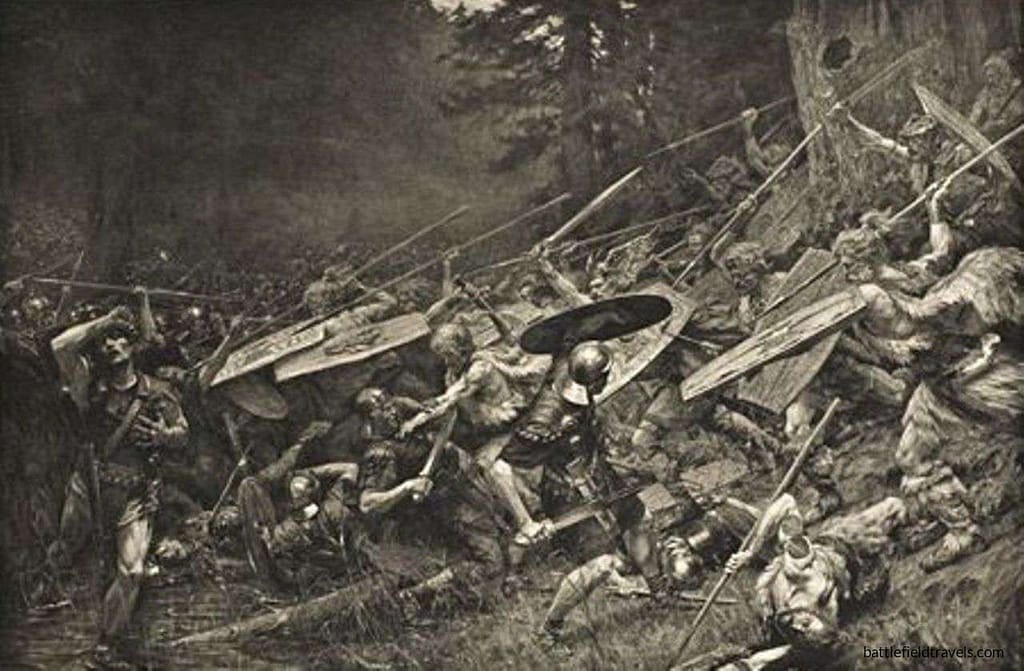
In AD 9, Roman General Varus led a punitive expedition of three veteran Legions (XVII, XVIII, and XIX) into the area of Teutoburg Forest in northern Germany. Arminius, masterfully employing deception and false intelligence, eventually led the Roman Legions to a location near present-day Kalkriese. Here, the Kalkriese Heights and the Lower Saxony Bog funnels any movement along a very narrow pass (a couple of hundred metres wide) through which the Legions would have to march on their way westwards.
The terrain at Kalkriese was ideal for an ambush, and with Arminius’ local knowledge, he knew it. To the west, the low ridge of the Kalkriese Heights runs parallel to the Roman line of march, while to the east, the Lower Saxony Bog makes the terrain impassable. The narrow corridor in between is where Varus’ army was forced to march, and where Armnius set his ambush.
A Roman column advancing through this corridor would have extended for several kilometres, with baggage, camp followers, and auxiliaries interspersed throughout. The limited frontage would prevent any rapid deployment into a battle line, while the uneven ground and restricted visibility would delay the transmission of orders and the concentration of force. Units would become separated by the terrain constraints.
👉 Continue reading — full Field Notes include terrain analysis, additional imagery, and working interpretations beyond the published study. Try membership free for 7 days. Try membership free for 7 days.

Authored by Mick Prictor, a retired military officer with 40 years’ service, and a military historian specialising in terrain-focused analysis of tactics, doctrine, and command decision-making in land warfare. His work draws on extensive battlefield fieldwork—more than 280 sites worldwide—and one of the world’s largest private collections of historic military arms, uniforms, and equipment. About me
📚 Further Reading – Roman Warfare
This battle study nests within the broader analytical framework explored in the Research Hub, where operational methods, operating environments, armies, commanders, and weapons are examined across conflicts and eras. The links below connect related studies across the wider body of battlefield analysis on the BattlefieldTravels site.
⚔️ Explore all battle studies from the Ancient Roman era
🏛️Explore the museum of Ancient and Medieval historic artefacts
The book list for this conflict includes the finest campaign studies, memoirs, and operational analyses available on ancient warfare, selected specifically to complement this battlefield study.
📚 Ancient Warfare– Recommended Reading
🗞️ For updates on new battlefield studies and research insights, you can subscribe to the Newsletter.
Subscribe to Battlefield Travels and receive a free E-Book Battlefield Guide
Unlock expert battlefield analysis, campaign reconstructions, and historical insights drawn from firsthand exploration and primary sources.
🗺️ You’ll receive:
🎖️ Exclusive historical insights you won’t find elsewhere
📘 A free eBook: 10 Tips for Exploring Historic Battlefields
📰 New battlefield studies straight to your inbox as they are published

⚔️ Go deeper — Members get exclusive access to the Deep Research Collection, Field Notes, and monthly Research Dispatches. Try membership free for 7 days, cancel anytime. From $9/month.