
Bigeard’s 6th Colonial Parachute Battalion and the epic fighting withdrawal from Tu Lê
The valley of Tu Lê
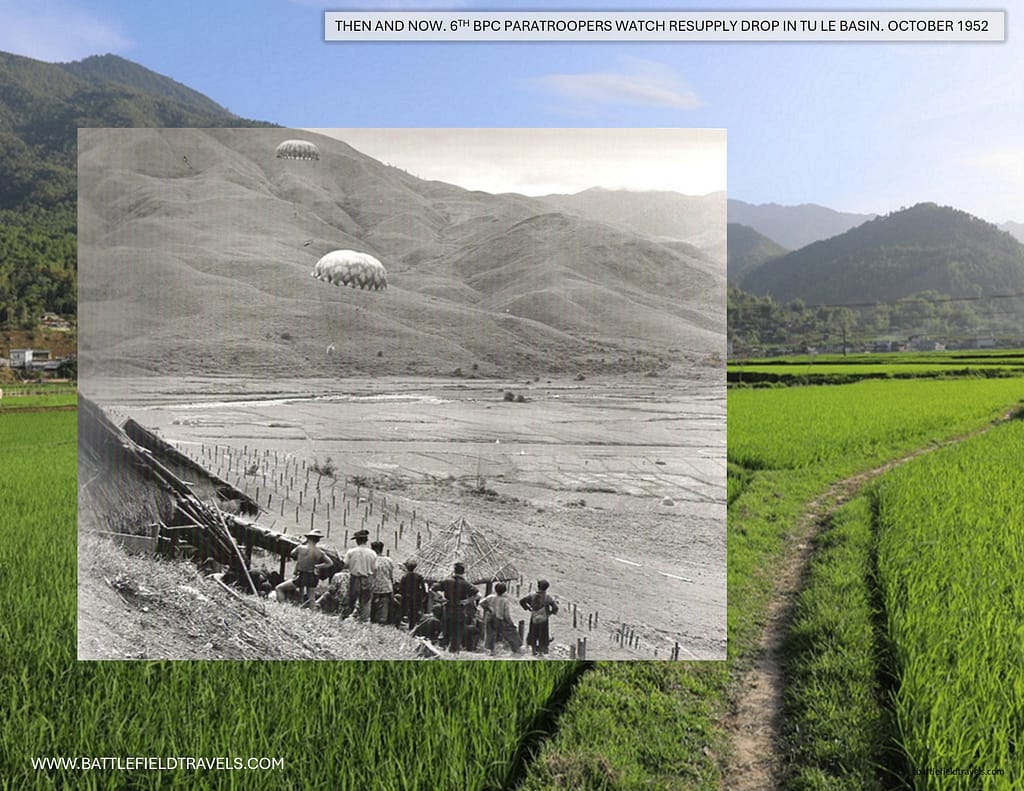
April 2025. Tu Lê Valley, Yên Bái Province, Vietnam. I am exploring the site of Major Marcel Bigeard’s 6e Bataillon Colonial de Parachutistes (6e BPC) epic stand and fighting withdrawal from Tu Lê in October 1952. In my personal collection, I have a 6e BPC paratroopers beret, so I brought it back here to this famous valley.
On 11 October 1952, the Viet Minh launched their Northwest Campaign into the T’ai Federation Zone: three veteran Viet Minh divisions, more than 30,000 troops, advancing against scattered French and allied T’ai platoon and company-sized outposts.
6e BPC mission
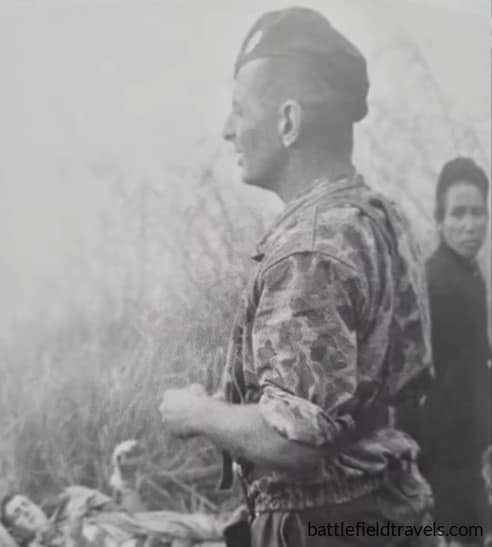
To slow the offensive and buy time to evacuate isolated positions, the French Command in Tonkin dropped a single parachute battalion into the Tu Lê valley. Commanded by Major Marcel Bigeard, the 6e Bataillon Colonial de Parachutistes (6e BPC) was tasked with establishing a rally point for survivors and covering the withdrawal.
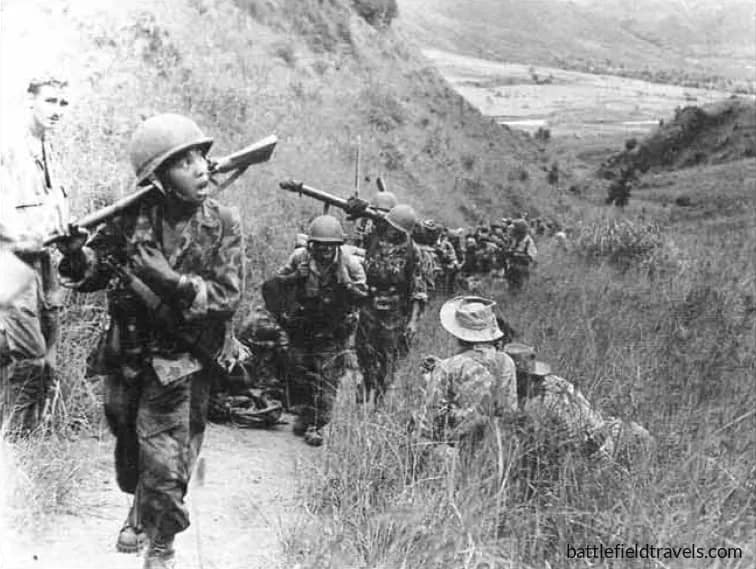
Tu Lê sits within a narrow valley system in northern Vietnam, surrounded by steep, jungle-covered terrain. Movement is canalised along a small number of routes, with very little lateral freedom. For Major Marcel Bigeard’s 6e BPC, cohesion and discipline were critical. The terrain does not allow dispersion without loss of control. Units must move and fight along constrained axes.
👉 Continue reading — full Field Notes include terrain analysis of the Tu le fighting withdrawal, additional imagery, and working interpretations beyond the published study. Try membership free for 7 days.

Authored by Mick Prictor, a retired military officer with 40 years’ service, and a military historian specialising in terrain-focused analysis of tactics, doctrine, and command decision-making in land warfare. His work draws on extensive battlefield fieldwork—more than 280 sites worldwide—and one of the world’s largest private collections of historic military arms, uniforms, and equipment. About me
📚 Further Reading
This battle study nests within the broader analytical framework explored in the Research Hub, where operational methods, operating environments, armies, commanders, and weapons are examined across conflicts and eras. The links below connect related studies across the wider body of battlefield analysis on the BattlefieldTravels site.
⚔️ Explore all battle studies from the French Indochina War 1946-1954
⚔️ Explore all battle studies involving the French Foreign Legion
🏛️Explore the museum of French Indochina War historic artefacts
📚French Indochina War 1946-54 – Recommended Reading
🗞️ For updates on new battlefield studies and research insights, you can subscribe to the Newsletter.
Subscribe to Battlefield Travels and receive a free E-Book Battlefield Guide
Unlock expert battlefield analysis, campaign reconstructions, and historical insights drawn from firsthand exploration and primary sources.
🗺️ You’ll receive:
🎖️ Exclusive historical insights you won’t find elsewhere
📘 A free eBook: 10 Tips for Exploring Historic Battlefields
📰 New battlefield studies straight to your inbox as they are published

⚔️ Go deeper — Members get exclusive access to the Deep Research Collection, Field Notes, and monthly Research Dispatches. Try membership free for 7 days, cancel anytime. From $9/month.
Also looking forward to this study!
Tom, A legendary event. 80km fighting withdrawal at 1:20 odds. I have walked the ground all over Tu Le and the withdrawal; route. Mick