Battle for Verdun, France, Feb – Dec 1916
Ground Observation
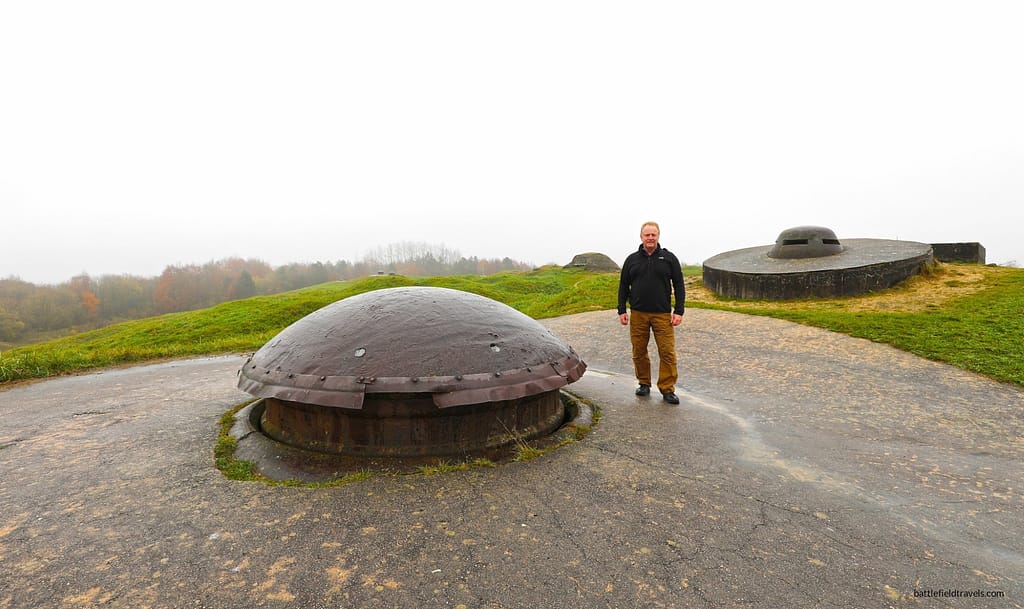
November 2024. Verdun, northeastern France. This is my second time exploring the battlefields of Verdun. The first impression is the massive scale of the fortification complex. Large and small forts with interlocking and mutually supporting fields of fire cover several hundred square kilometres. The ground is still broken by overlapping shell craters, stretching in all directions. Even after more than a century, the terrain remains uneven, cratered, and difficult to walk on. It is not a single battlefield, but a vast zone of destruction.
Moving through the area around Fort Douaumont, Fort Vaux, and the surrounding ridgelines, the relationship between the forts and the ground becomes clearer. These are not isolated strongpoints. They occupy dominating high ground, tied into a wider defensive system of ridges, woods, and artillery positions. The forts themselves are massive — reinforced concrete, armoured turrets, deep internal galleries — designed to absorb punishment and continue fighting. These forts and the defensive system they created were state-of-the-art when they were built in the 1880s-1890s. By 1916, they were no longer state-of-the-art.

The German plan
By 1915, the French had realised that fixed fortifications were no match for the new German heavy siege artillery with calibres up to 420mm, and the garrisons and artillery of the forts had been stripped down to minimum levels.
In early 1916, the German High Command under Erich von Falkenhayn concluded that a decisive breakthrough in the west was unlikely. Instead, Falkenhayn would adopt an attritional strategy to ‘bleed France white’ by forcing the French into a defensive battle that would sap their resources and morale. The objective chosen for this new type of offensive was Verdun and its fortifications. The Germans surrounded Verdun on three sides, allowing them to bring massive artillery resources to bear. German offensive actions were not intended to capture ground, but to force the French to keep troops and equipment in the front line where they could be destroyed.
They shall not pass
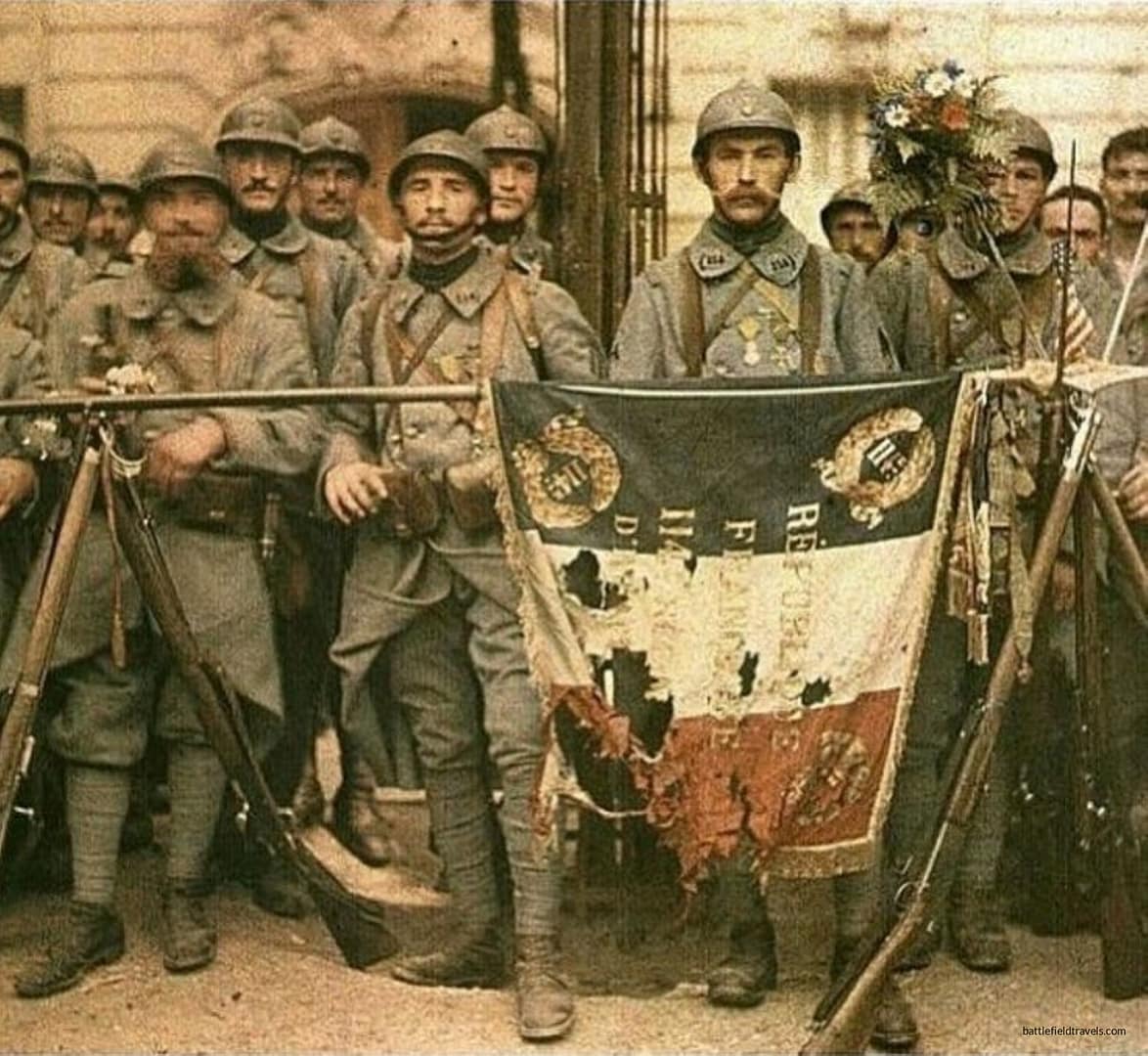
The offensive began on 21 February 1916 with a massive artillery bombardment, followed by infantry assaults. Initial German gains were significant, including the rapid capture of Fort Douaumont, the largest of the forts. Despite the scale of the bombardment, enough defenders survived in forward positions and strongpoints to disrupt the advance and inflict a toll on the attackers
👉 Continue reading — full Field Notes include terrain analysis, additional imagery, and working interpretations beyond the published study. Try membership free for 7 days.

Authored by Mick Prictor, a retired military officer with 40 years’ service, and a military historian specialising in terrain-focused analysis of tactics, doctrine, and command decision-making in land warfare. His work draws on extensive battlefield fieldwork—more than 280 sites worldwide—and one of the world’s largest private collections of historic military arms, uniforms, and equipment. About me
📚 Further Reading: First World War
This battle study nests within the broader analytical framework explored in the Research Hub, where operational methods, operating environments, armies, commanders, and weapons are examined across conflicts and eras. The links below connect related studies across the wider body of battlefield analysis on the BattlefieldTravels site.
⚔️ Explore all World War One battle studies
🏛️ Explore the museum of World War One weapons and equipment, Part 1. Allied Powers
🏛️ Explore the museum of World War One weapons and equipment, Part 2. Central Powers
The book list for this conflict includes the leading campaign studies, memoirs, and operational analyses available on the Polygon Wood and the Ypres Offensive, selected specifically to complement this battlefield study.
📚 World War One – Recommended Reading
🗞️ For updates on new battlefield studies and research insights, you can subscribe to the Newsletter.
Subscribe to Battlefield Travels and receive a free E-Book Battlefield Guide
Unlock expert battlefield analysis, campaign reconstructions, and historical insights drawn from firsthand exploration and primary sources.
🗺️ You’ll receive:
🎖️ Exclusive historical insights you won’t find elsewhere
📘 A free eBook: 10 Tips for Exploring Historic Battlefields
📰 New battlefield studies straight to your inbox as they are published

⚔️ Go deeper — Members get exclusive access to the Deep Research Collection, Field Notes, and monthly Research Dispatches. Try membership free for 7 days, cancel anytime. From $9/month.