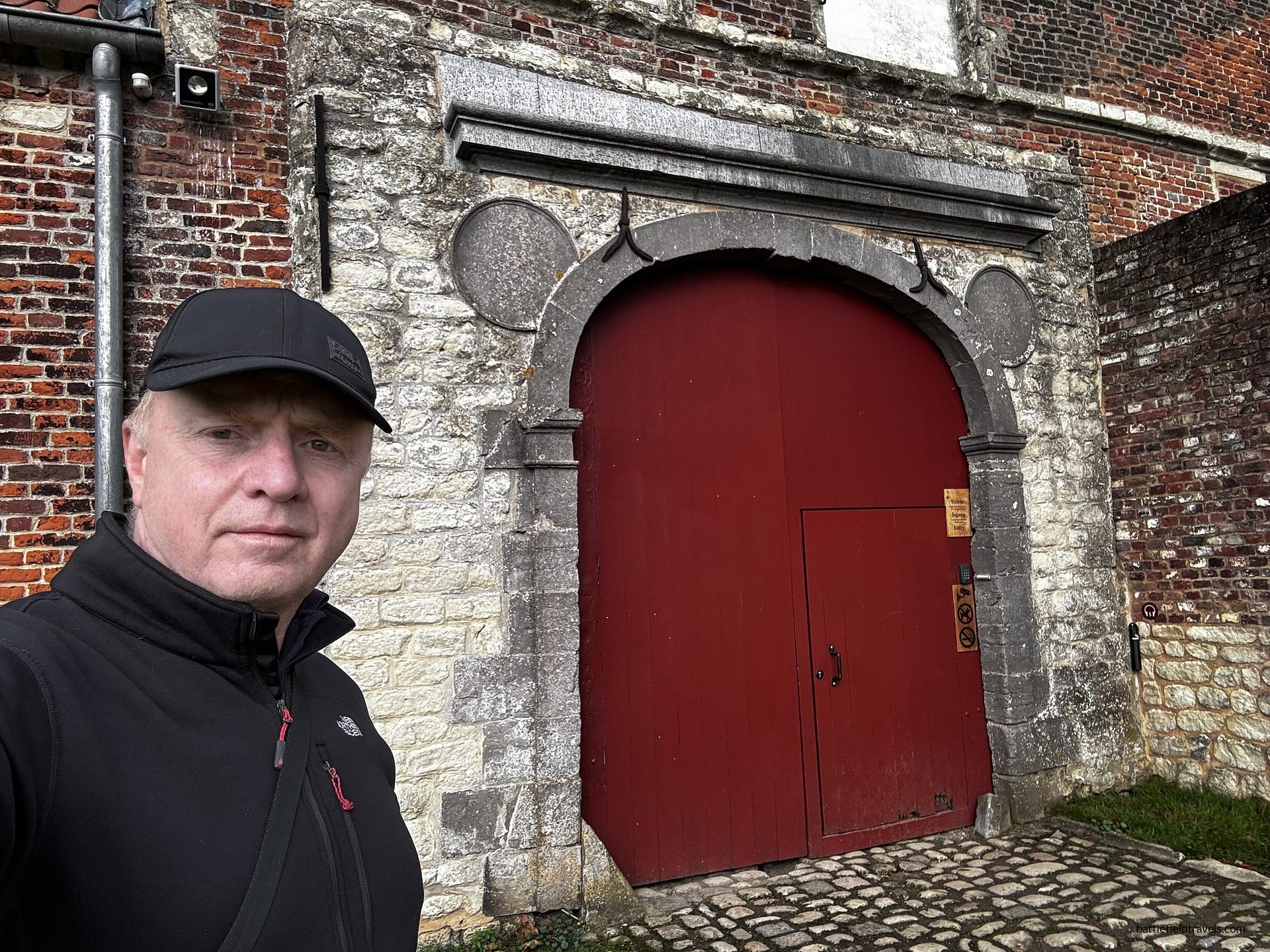
Battle of Waterloo, Belgium, 18 June 1815
Ground Observations
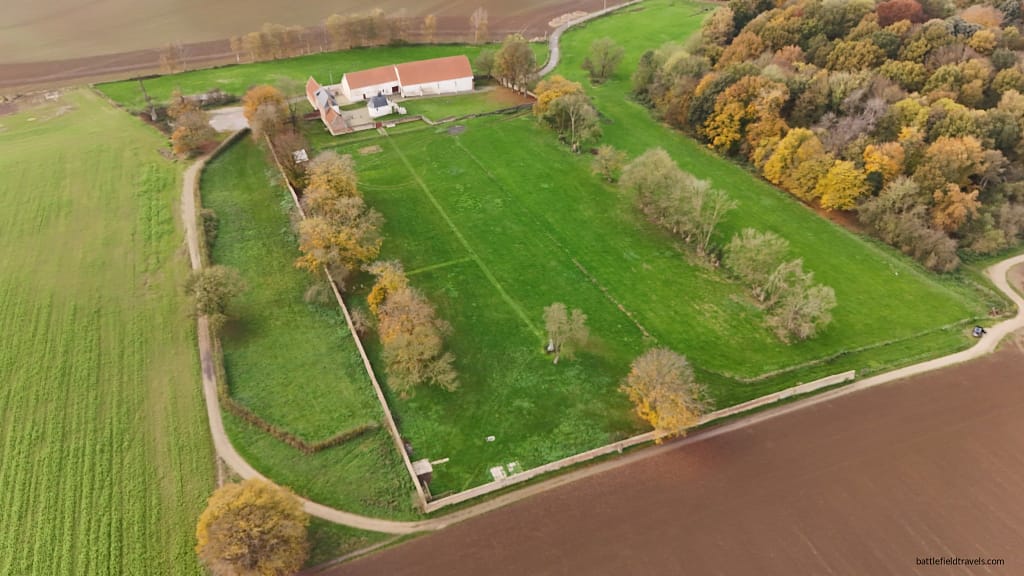
October 2024. Waterloo, Belgium. I have been here before, but this visit was far more comprehensive — walking the ridge, the forward positions, and the ground between them. What stands out immediately is the ‘ordinariness’ of the terrain: low ridges, a few farmhouses, and agricultural land. There are no real dominant terrain features or covered manoeuvre options here.
Standing on the Mont-Saint-Jean ridge, the key feature is the reverse slope. From the French side, you don’t see much of Wellington’s position. The crest blocks your view, and everything behind it disappears. Move just a few metres forward and the ground falls away — that’s where the bulk of the British infantry was positioned, out of sight and largely protected from artillery.
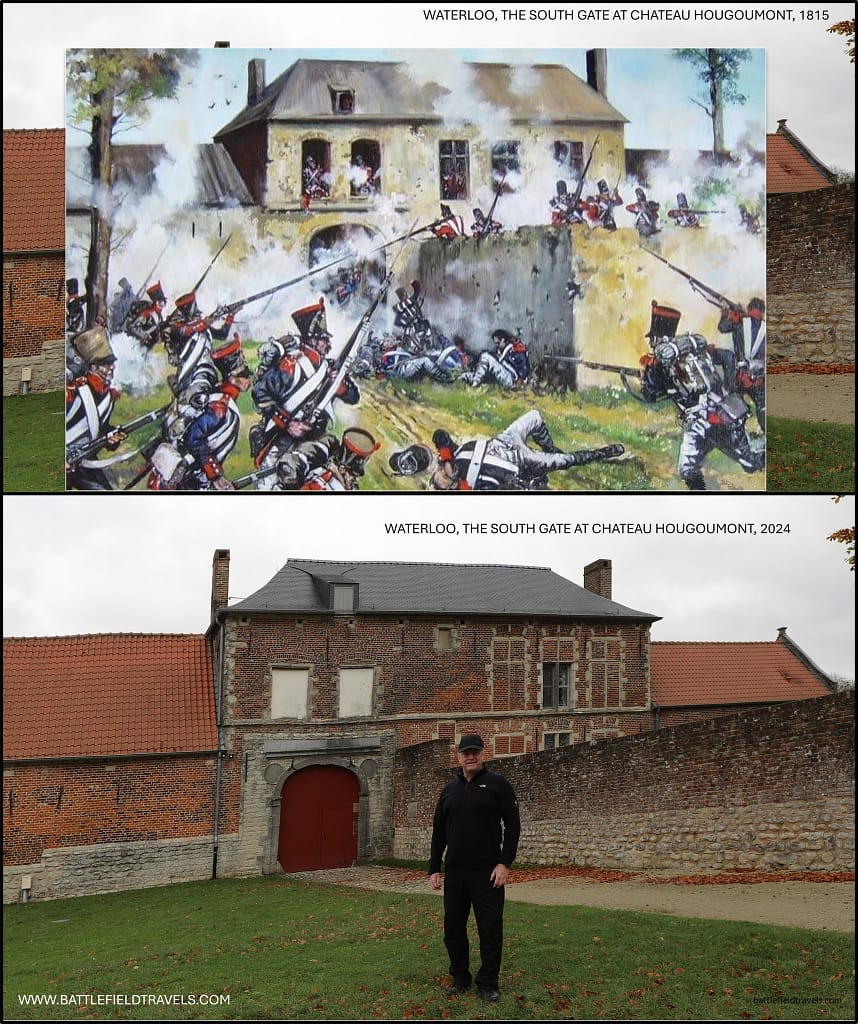
Then you walk forward to Hougoumont or La Haye Sainte, and the battlefield suddenly makes sense. These are not inconsequential buildings. They are forward anchors, projecting forward from the main line of resistance, forcing Napoleon to commit to attacks that don’t directly impact the main position on the ridge.
Battle Overview
Ligny and Quatre Bras
On 16 June 1815, Napoleon attacked and defeated Marshal Blucher’s Prussian army at Ligny, while Marshal Ney fought the Duke of Wellington’s British and allied army at the crossroads of Quatre Bras. Wellington then withdrew to the ridgeline of Mont St Jean near the village of Waterloo, just south of Brussels. Napoleon followed Wellington and tasked Marshall Grouchy with 1/3 of the French army to pursue the Prussians.
Napoleon’s army arrived on the evening of 17 June and deployed across the opposing ridge around La Belle Alliance and Plancenoit.
Château Hougoumont
The battle began around 11:30 hours the next day as Napoleon attacked the British-held farmstead at Hougoumont to try to force Wellington to weaken his centre. The battle for Hougoumont continued for the next nine hours.
D’Erlon’s infantry assault
Napoleon’s massed artillery, ‘The Grand Batterie’, concentrated on Wellington’s centre and was followed by a major attack by D’Erlon’s infantry Corps at about 13:00 hours. This attack was dangerous but was ultimately defeated. A counterattack by the British heavy cavalry, including the famous ‘Scots Greys’, also failed with heavy losses.
Ney’s cavalry charge
Next, at about 16:00 hours, Napoleon ordered Marshal Ney to capture the farmstead of La Haye Sainte. Ney launched a massive cavalry attack against the British positions on Mont Saint Jean, but the attack faltered against the British infantry squares on the reverse slope of the ridge.
👉 Continue reading — full Field Notes include terrain analysis, additional imagery, and working interpretations beyond the published study. Try membership free for 7 days.

Authored by Mick Prictor, a retired military officer with 40 years’ service, and a military historian specialising in terrain-focused analysis of tactics, doctrine, and command decision-making in land warfare. His work draws on extensive battlefield fieldwork—more than 280 sites worldwide—and one of the world’s largest private collections of historic military arms, uniforms, and equipment. About me
📚 Further Reading: Revolutionary & Napoleonic Wars
This battle study nests within the broader analytical framework explored in the Research Hub, where operational methods, operating environments, armies, commanders, and weapons are examined across conflicts and eras. The links below connect related studies across the wider body of battlefield analysis on the BattlefieldTravels site.
⚔️ Explore all battle studies from the Revolutionary and Napoleonic Wars (1792-1815)
🏛️Explore the museum of Napoleonic Wars weapons and equipment
📚French Revolutionary Wars and Napoleonic Wars – Recommended Reading
🗞️ For updates on new battlefield studies and research insights, you can subscribe to the Newsletter.
Subscribe to Battlefield Travels and receive a free E-Book Battlefield Guide
Unlock expert battlefield analysis, campaign reconstructions, and historical insights drawn from firsthand exploration and primary sources.
🗺️ You’ll receive:
🎖️ Exclusive historical insights you won’t find elsewhere
📘 A free eBook: 10 Tips for Exploring Historic Battlefields
📰 New battlefield studies straight to your inbox as they are published

⚔️ Go deeper — Members get exclusive access to the Deep Research Collection, Field Notes, and monthly Research Dispatches. Try membership free for 7 days, cancel anytime. From $9/month.
