The assassination of Reinhard Heydrich in occupied Prague
Operation ANTHROPOID was the Czechoslovak-planned, British-supported, operation to assassinate Reinhard Heydrich, Acting Reich Protector of Bohemia and Moravia. Carried out in Prague on 27 May 1942, the attack struck at the core of Nazi occupation authority and triggered severe German reprisals. It remains one of the most consequential targeted killings of the Second World War.

Key facts
🗺️ Operation ANTHROPOID, Prague, Czechoslovakia, May – June 1942
⚔️ World War Two – Czech Resistance operations
🪖 Czechoslovakian paratroopers Jan Kubis and Josef Gabcik, and members of the Czech Resistance versus German Prague garrison forces and SS reinforcements
🎯 Czech Resistance assassination of Reinhard Heydrich
Visit the virtual museum of weapons, uniforms and equipment of the Second World War
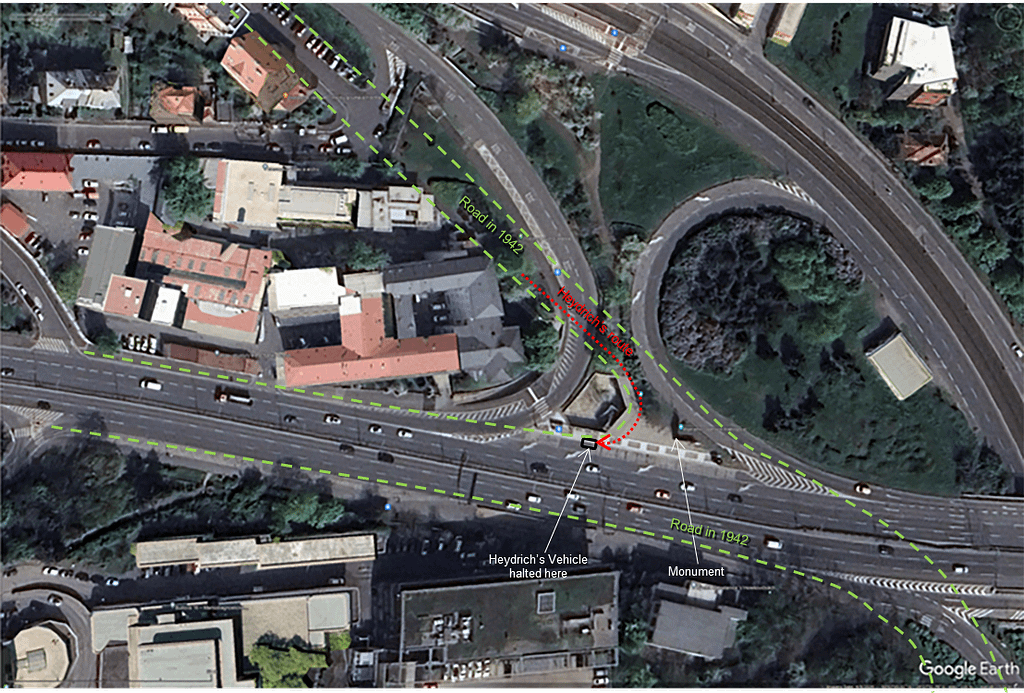
Google Earth map – Important Operation ANTHROPOID sites
🧭🥾 Walking the Battlefield
I visited the Operation ANTHROPOID sites in Prague in May 2017. I was equipped with several studies of the operation, numerous period photos of the assassination site, and images of the Saints Cyril and Methodius Cathedral, where the final siege took place. I also had an excellent Czech book ‘Anthropoid’ that a Czech friend had given to me, and I had just watched the 2016 movie ‘Anthropoid’ starring Cillian Murphy, which is an excellent reconstruction of the events.
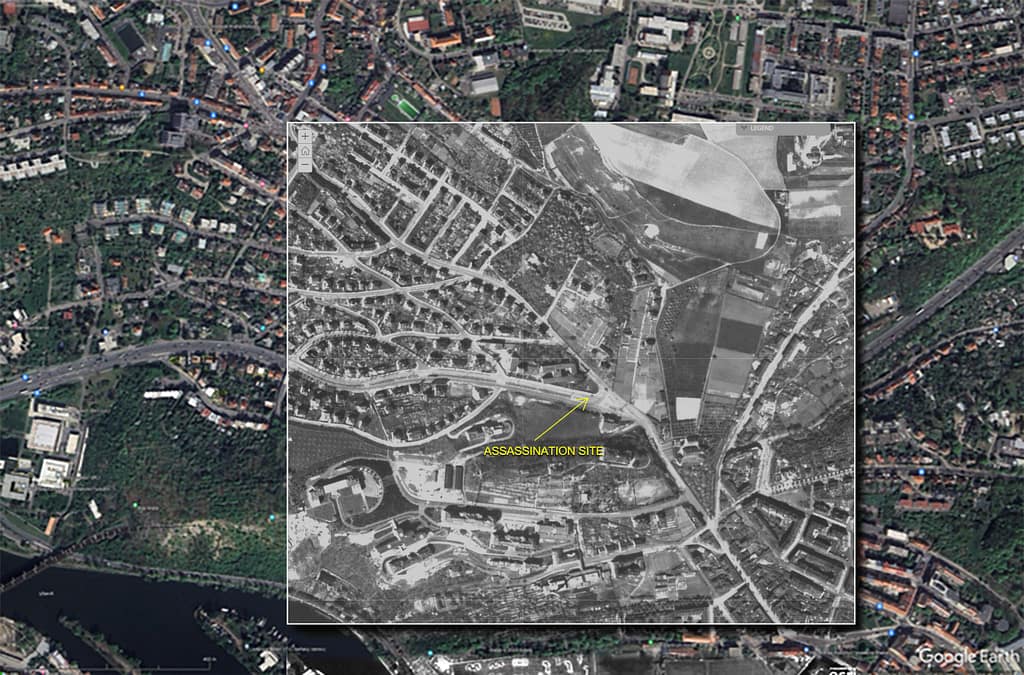
Both the assassination site and the cathedral are memorialised with monuments to the events of 1942. However, the current road system is slightly different to how it was in 1942, so I used WW2 RAF Bomber Command images overlaid on a current satellite image to precisely locate the assassination site – I do not know if anyone else has done this. This battlefield study is grounded in personal, on-site exploration, combining detailed terrain analysis with contemporary documents to better understand how the events unfolded.
Strategic context: Occupied Czechoslovakia
Nazi Occupation of Czechoslovakia
In March 1939, the German Reich occupied the remaining Czech lands, establishing the Protectorate of Bohemia and Moravia. Slovakia became a nominally independent client state under German supervision. The Protectorate was governed by a Reich Protector, supported by German military and police forces, and enforced through widespread repression of political activity.
By September 1941, following rising sabotage and labour unrest, Adolf Hitler appointed SS-Obergruppenführer Reinhard Heydrich as Acting Reich Protector. Heydrich was already head of the Reich Security Main Office (RSHA) and one of the principal architects of the Holocaust. He immediately imposed martial law, ordered mass executions, and sought to break the Czech resistance. His efficiency in restoring production and enforcing Germanisation earned him the sobriquet “Butcher of Prague.”

Czechoslovak Government-in-Exile
From London, President Edvard Beneš and the Czechoslovak government-in-exile lobbied the Allies to support direct action inside the Protectorate. Their objectives were both symbolic and practical: to demonstrate Czech resistance, raise morale, and reinforce their legitimacy as a government-in-exile. With Britain reluctant to undertake large-scale operations in Central Europe, the Special Operations Executive (SOE) provided training and logistical support to selected Czechoslovak volunteers for targeted missions.
Allied Support and Objectives
By late 1941, Beneš and his advisers proposed a high-profile assassination to prove the Czech commitment to resistance. Heydrich was identified as the target both for his personal brutality and his strategic importance. The operation was codenamed Anthropoid, one of several SOE-sponsored insertions into occupied Europe.
The mission was authorised at the highest level: Winston Churchill and the British Chiefs of Staff approved the attempt, while Beneš saw it as essential to invalidate the Munich Agreement and secure Allied recognition of his government.
Conditions in Occupied Prague
Prague in 1941–42 was heavily policed by the Gestapo and SS. Curfews, checkpoints, and informants restricted movement. Resistance networks had been weakened by infiltration, and the risks of betrayal were high. Nevertheless, the assassination was intended not only as an act of retribution but as a signal to both Allies and occupied peoples that even the most senior Nazi leaders were vulnerable.
Opposing forces
 Czechoslovak Operatives
 Czechoslovak Operatives
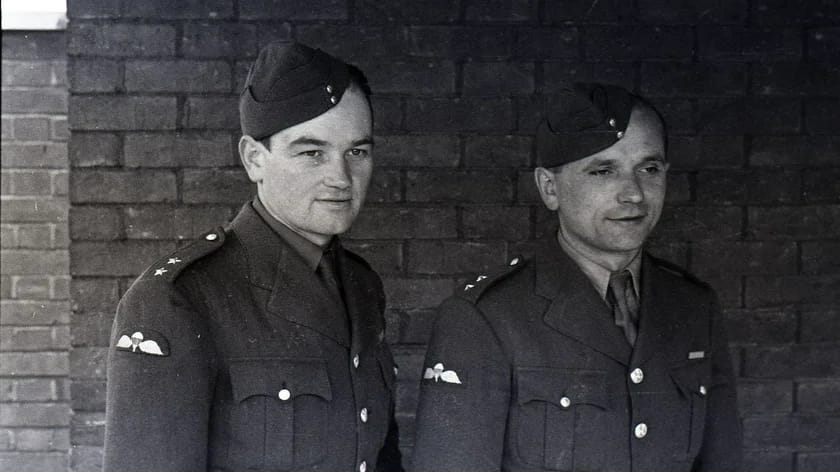
Operation Anthropoid was led by two operatives of the Czechoslovak Army-in-Exile:
- Staff Sergeant Jozef Gabčík (Slovak, aged 29) — trained in Britain by the Special Operations Executive (SOE) in parachuting, demolitions, and small arms.
- Staff Sergeant Jan Kubiš (Czech, aged 28) — substituted at short notice when another operative was injured; equally trained in sabotage and close-quarter combat.
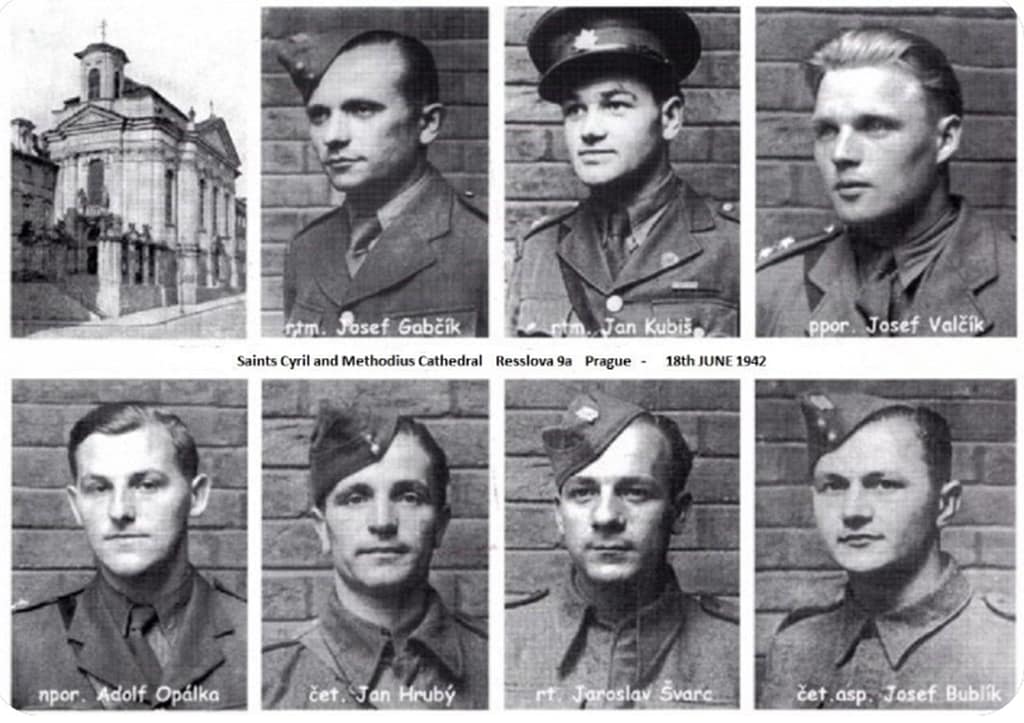
They were supported in-country by other parachute teams inserted in late 1941: Adolf Opálka (Silver A), Josef Valčík, Jaroslav Švarc, Josef Bublík, Jan Hrubý, and others. Each group had a separate mission, but all provided mutual aid, safe houses, and local contacts.
The operatives carried a mix of weapons supplied by SOE: Sten submachine guns, pistols, grenades (including modified anti-tank grenades), explosives, and radios. Their greatest assets were concealment and the support of the Czech underground.
Czech Resistance Networks
Civilian resistance groups in Prague provided safe houses, forged documents, and food. Families such as the Moravecs and Fafeks sheltered the paratroopers despite the risk of execution. Resistance communications enabled surveillance of Heydrich’s travel patterns, though security tightening and betrayals constantly threatened exposure.
 German Security Apparatus
 German Security Apparatus
The German forces in Prague were numerous and well organised:
- SS and Gestapo: headquarters at Petschek Palace, running surveillance, interrogations, and counter-resistance operations.
- Order Police and garrison troops: enforcing curfews, checkpoints, and patrols across the city.
- Heydrich’s personal security: unusually light, as he considered Czech morale broken and often travelled without escort.
Heydrich himself was ruthless and confident enough to ride in an open-top Mercedes along predictable routes. His daily journey from his residence in Panenské Břežany to Prague Castle provided the operatives with a narrow window to attempt an ambush.
Planning and insertion (December 1941 – May 1942)
Insertion of the operatives
The concept for Operation Anthropoid was finalised in autumn 1941. The Czechoslovak government-in-exile, with SOE assistance, trained Gabčík and Kubiš at several locations in Britain, including demolitions practice in Scotland and parachute training in England. They were equipped with standard SOE sabotage weapons, including Sten submachine guns, grenades, and pistols.
On the night of 28 December 1941, an RAF Halifax bomber dropped Gabčík, Kubiš, and other Czech groups into the Protectorate. The drops were scattered due to navigation errors; Anthropoid landed near Nehvizdy, east of Prague, rather than their intended zone near Pilsen. Despite this, they established connections with local contacts and gradually gained a foothold in Prague by January 1942.
Intelligence collection
Throughout early 1942, the operatives maintained low profiles, moving between safe houses. They relied heavily on Czech families sympathetic to the resistance. The Moravec family in particular became central to their survival. Resistance cells assisted in reconnaissance of Heydrich’s movements, confirming his daily commute from Panenské Břežany to Prague Castle.
By spring 1942, Gabčík and Kubiš identified a suitable ambush site: a sharp hairpin bend in Holesovice, Prague 8, where Heydrich’s open-top Mercedes was forced to slow. This location offered concealment and a short escape route into the city streets.
The final plan
Repeated rehearsals were conducted. Gabčík was to step forward and fire a burst from his Sten gun into Heydrich at point-blank range. Kubiš would provide cover with a modified anti-tank grenade. Timing and positioning were critical; the attack would be made in broad daylight, with little chance of blending into a crowd.
The date was set for 27 May 1942, chosen because Heydrich would be travelling without his wife, and it coincided with a period of reduced German troop presence in Prague due to deployments for a rally in Berlin.
Assassination attempt (27 May 1942)
Initiation of the ambush
At approximately 10:30 hours on 27 May 1942, Reinhard Heydrich departed his residence at Panenské Břežany in his official Mercedes 320 convertible. He was accompanied only by his driver, SS-Oberscharführer Johannes Klein. Contrary to security advice, Heydrich habitually travelled without escort vehicles, convinced that the Czech resistance posed little threat
At the preselected ambush point — a sharp bend at the intersection of Kirchmayerova Street and Zenklova Avenue in the Holesovice district — Gabčík and Kubiš lay in wait. Josef Valčík, acting as a lookout, signalled Heydrich’s approach using a small mirror to catch the sun.
As the Mercedes slowed for the corner, Gabčík stepped into the street and attempted to fire his Sten submachine gun at point-blank range. The weapon jammed, failing to discharge. For a moment, the mission appeared to have collapsed.
Heydrich’s response
Heydrich, rather than ordering his driver to accelerate away, chose to confront the attackers. He ordered Klein to stop, and began to draw his pistol while standing in the open vehicle. This decision exposed him fatally.
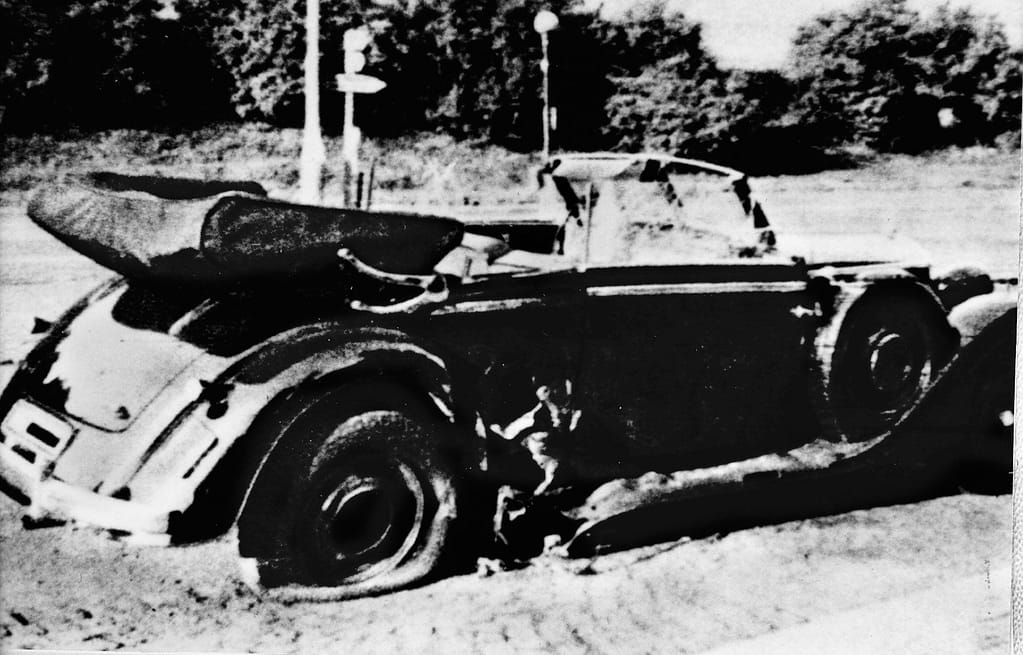
Kubiš, acting on contingency, threw a modified anti-tank grenade (a converted British No. 73 grenade) at the vehicle. The device struck the right rear fender, exploded with force, and showered Heydrich with shrapnel and debris from the car’s upholstery. Both Heydrich and Klein were wounded; fragments penetrated Heydrich’s diaphragm, spleen, and lung.
Despite his injuries, Heydrich attempted to pursue the assailants on foot before collapsing. Klein chased Kubiš briefly, exchanging pistol fire, but was himself wounded. The attackers escaped separately — Gabčík on foot, Kubiš by bicycle — aided by confusion among bystanders.
Heydrich’s death
Heydrich was evacuated by a passing truck to Bulovka Hospital, where surgeons removed his damaged spleen and attempted to stabilise his condition. For several days, he appeared to recover, but septicemia set in. On 4 June 1942, Heydrich died of his wounds, becoming the highest-ranking Nazi official to be assassinated during the Second World War.
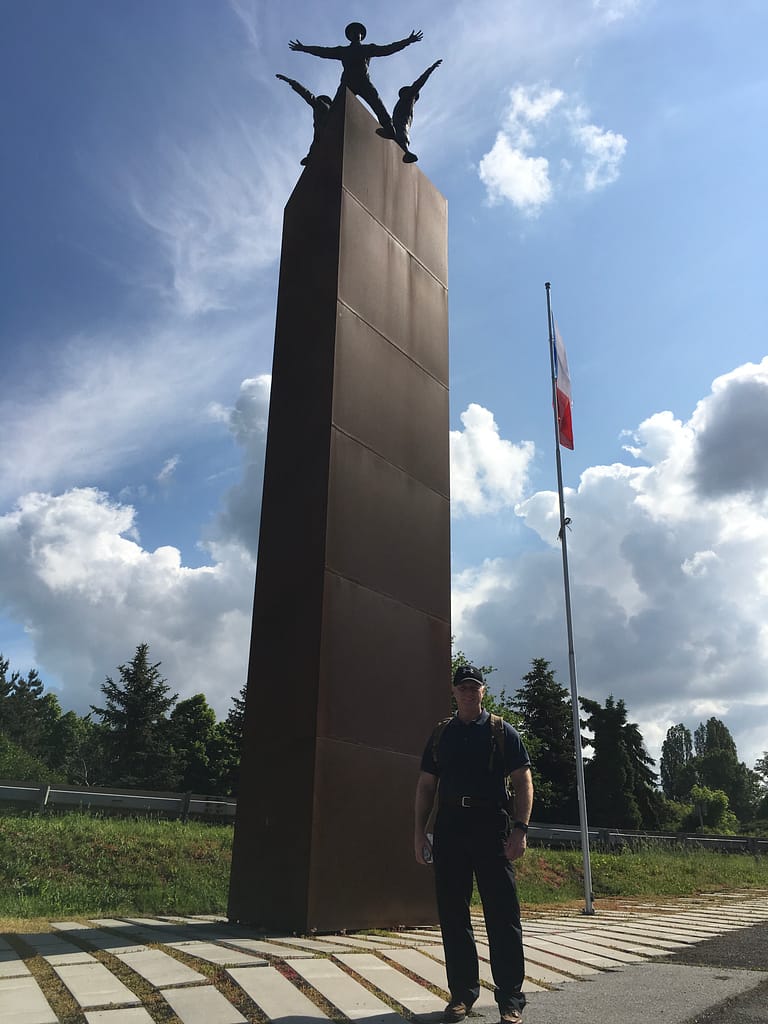
This is the spot where, on 27 May 1942, Operatives from the Czech Resistance assassinated SS Obergruppenfuhrer Reynard Heydrich. The road has changed since 1942, and the old hairpin turn is where you can now see the steel fence.
German reprisals against Czech civilians
Heydrich’s death enraged Hitler and the Nazi leadership. Immediate reprisals were ordered across the Protectorate. The SS and Gestapo launched mass arrests, interrogations, and executions to crush the Czech underground.
Lidice and Ležáky massacres
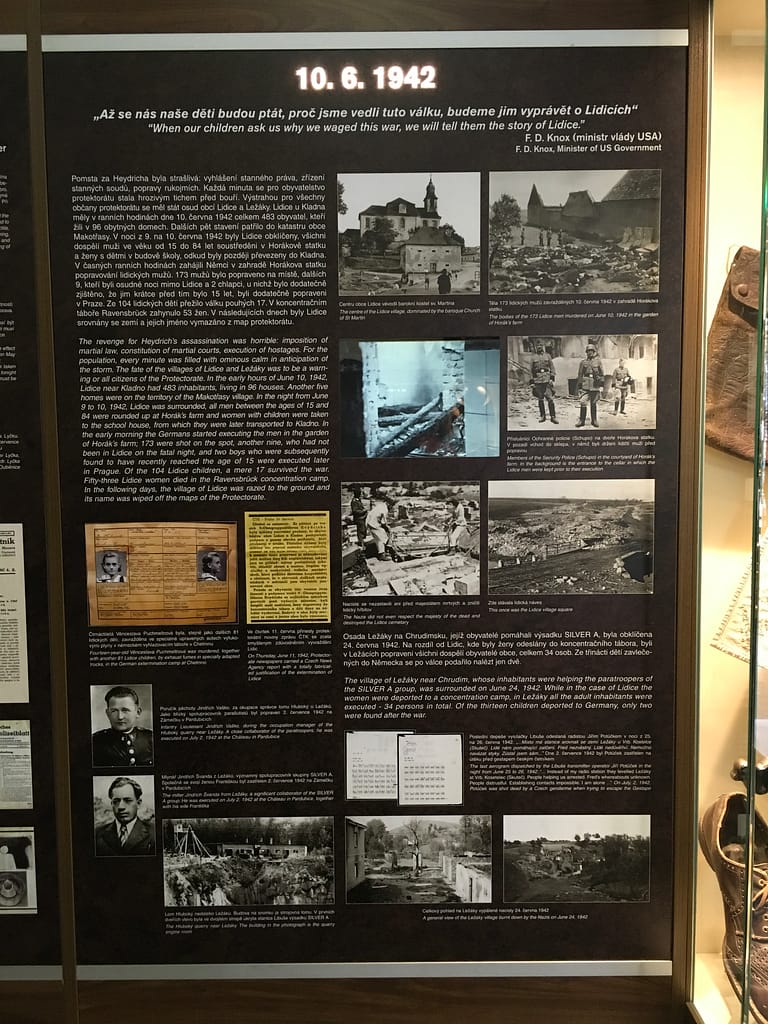
On 10 June 1942, the village of Lidice was surrounded. All men over the age of 16 were shot, women were deported to Ravensbrück concentration camp, and most children were murdered in gas vans. The village was burned and levelled. A similar fate befell Ležáky later that month. In total, more than 5,000 Czechs were arrested and several hundred executed in Prague alone.
Despite these efforts, the assassins initially evaded capture. They were moved between safe houses by Czech families who risked their lives. But betrayal came from within: Karel Čurda, another paratrooper from the SOE missions, revealed their identities and locations to the Gestapo in exchange for a reward and immunity.
⚔️ Go deeper — Members get exclusive access to the Deep Research Collection, Field Notes, and monthly Research Dispatches. Try membership free for 7 days, cancel anytime. From $9/month.
Siege of St Cyril and Methodius Cathedral
The operatives are surrounded
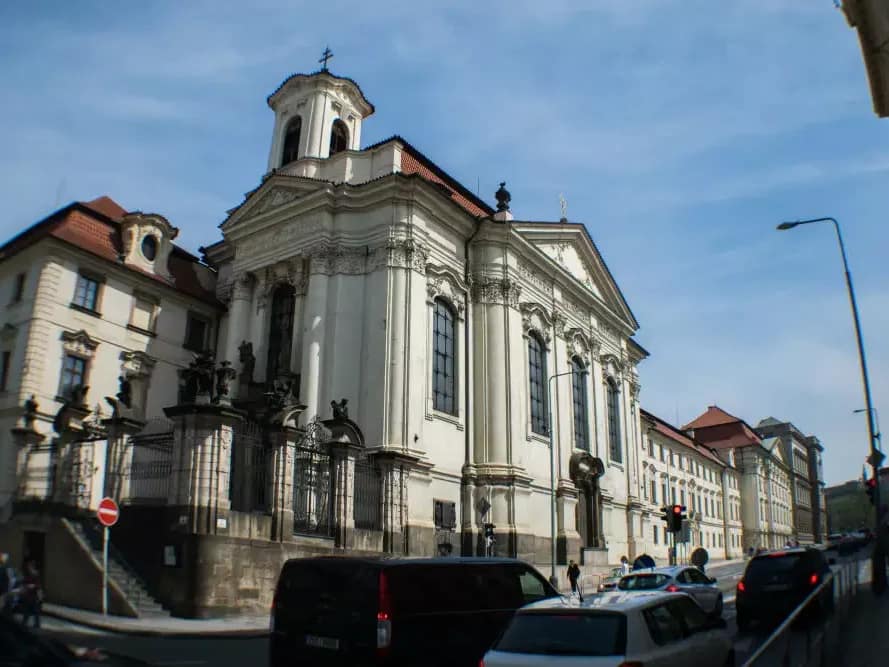
On 18 June 1942, German forces surrounded the Saints Cyril and Methodius Cathedral in Resslova Street, Prague. Inside were seven parachutists: Gabčík, Kubiš, Opálka, Valčík, Bublík, Hrubý, and Švarc.
At dawn, SS and police units numbering around 700 men launched an assault on the church. The defenders, armed with pistols, grenades, and limited ammunition, fought from windows and choir lofts. The firefight raged for hours.
Three paratroopers (Opálka, Bublík, Hrubý) held the upper galleries. After fierce exchanges, they fell, either killed outright or by taking their own lives to avoid capture.
Final battle in the crypt
Gabčík, Kubiš, Valčík, and Švarc withdrew into the crypt beneath the church. German troops attempted to storm it but were repulsed by gunfire and grenades. They then tried explosives at the entrance and even pumped water into the crypt using fire hoses to flood the chamber.
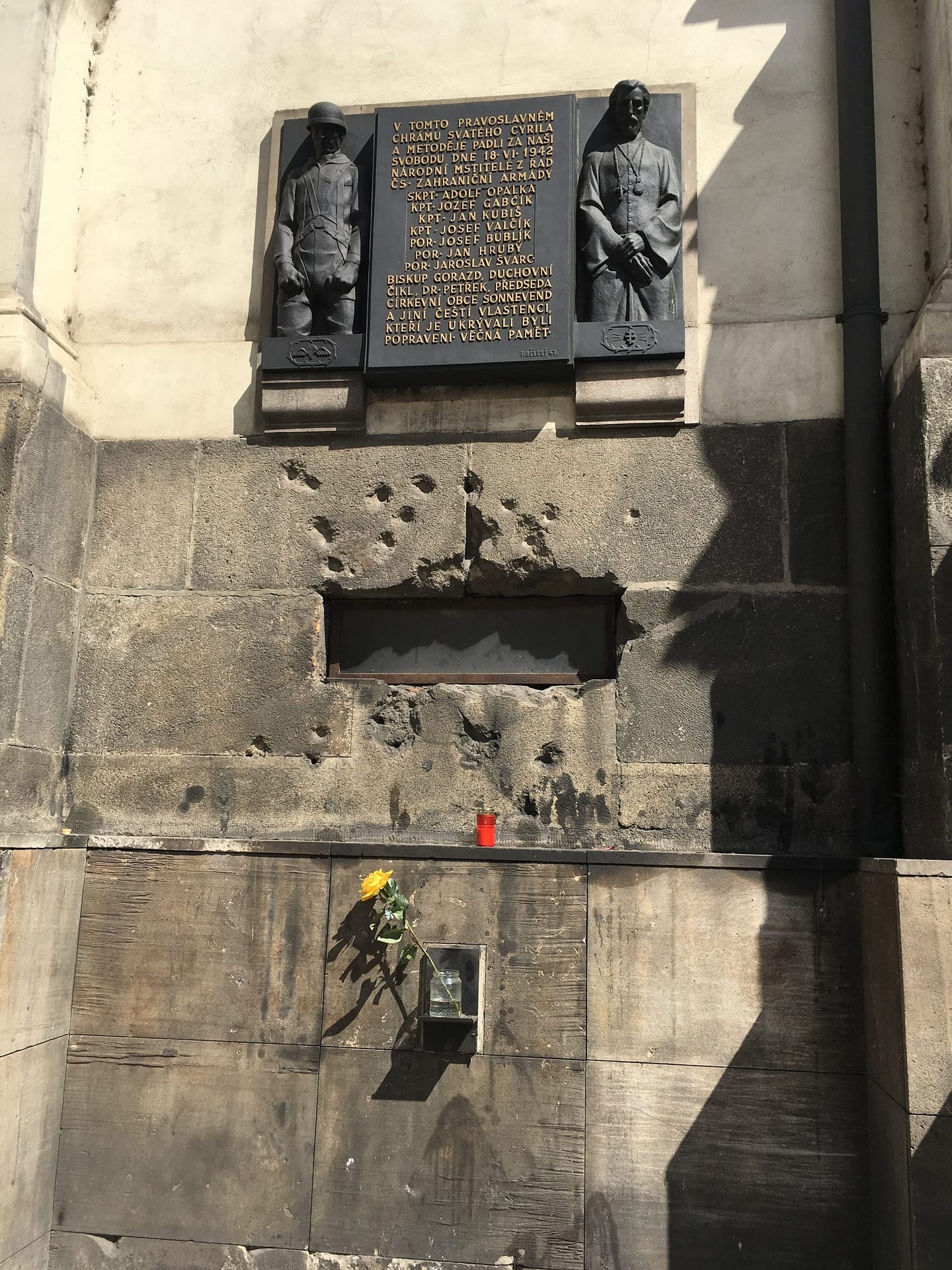
For several hours, the paratroopers held out in the dark, firing through narrow vents that still bear bullet scars today. As ammunition dwindled and the crypt filled with water, the last survivors chose suicide rather than capture. None were taken alive.
The German assault cost many casualties and required an overwhelming force to overcome seven determined defenders. Their resistance entered Czech national memory as one of the most dramatic stands of the Second World War.
Outcomes: the most dramatic act of resistance of WW2
Tactical and Immediate Results
Operation Anthropoid succeeded in its primary objective: the elimination of Reinhard Heydrich. He was the highest-ranking Nazi official assassinated during the war, and his death was a significant symbolic blow to the Reich. At the tactical level, the Czech paratroopers demonstrated that even the most senior German leaders were vulnerable inside occupied Europe.
German Reprisals
The Nazi response was brutal. Entire villages — notably Lidice and Ležáky — were annihilated, with men executed, women deported, and children murdered. Thousands of arrests followed, resistance networks were severely weakened, and the Gestapo extended its control across the Protectorate. The scale of reprisal shocked the world and demonstrated the savagery of Nazi occupation policies.
Political Consequences
Despite the blood cost, the operation had major political consequences. Britain and France revoked recognition of the Munich Agreement, formally affirming the Czechoslovak government-in-exile under President Edvard Beneš. This strengthened Czechoslovakia’s post-war position and restored Allied confidence in Czech resolve to resist.
Strategic Impact
Heydrich’s death deprived the Nazi regime of one of its most capable and ruthless administrators. While Himmler quickly replaced him, historians note that Heydrich’s combination of organisational skill and brutality was unique. His absence was felt in SS counter-resistance operations and in the implementation of occupation policies.
Legacy
Operation Anthropoid became a symbol of Czech sacrifice and resistance. Though the immediate reprisals devastated local networks, the memory of the attack inspired later generations. The men of Anthropoid are commemorated today as national heroes. The action remains a case study in clandestine operations, demonstrating both the effectiveness and the terrible risks of targeted assassination in wartime.
The battlefield today: exploring the Heydrich assassination
Assassination Site – Holesovice, Prague 8
The assassination site has changed somewhat since 1942, and the road system has changed, although it is broadly similar to how it was on the day. The location is easy to get to via bus from anywhere in Prague – you just plug in your destination in the public transport app, and it will tell you the buses, etc, you need to catch. There is a large monument to the resistance fighters, just off the road from where Heydrich was attacked. The photos below show the location.
I used RAF Bomber Command 1942 photos to compare with the current road layout and pinpoint the exact location of the assassination. One of the Bomber Command photos shows a vehicle on the site of the assassination, so it may well have been taken soon after 27 May 1942.
Saints Cyril and Methodius Cathedral – Resslova Street, Prague 2
The church and crypt remain the most important site associated with Anthropoid. The bullet-scarred walls are still visible on Resslova Street. The crypt itself has been preserved as the National Memorial to the Heroes of the Heydrich Terror. You can climb down into the crypt, where bronze busts of the seven operatives are placed as monuments.
Next door to St Cyril and Methodius Church is an excellent museum covering Operation ANTHROPOID and the Czech Resistance. You can visit the cathedral and see where operatives held off more than 700 SS troops for a week. Out on the street, the walls of the Cathedral still show hundreds of bullet marks from the fierce fighting that happened there, especially around the crypt vent. Resslova Street is also known as the ‘Street of the Parachutists’.
After the 27 May 1942 assassination attempt against SS Obergruppenfuhrer Reynard Heydrich, from which Heydrich died a week later, the Czech Resistance operatives holed up here in the Church of Saints Cyril and Methodius (this is the crypt under the Church). Following brutal reprisals and torture of Czech civilians and resistance members, the Germans discovered this hiding place and surrounded the Church. Seven members of the Czech Resistance, including Jan Kubis and Josef Gabcik fought to the end against overwhelming odds. The last four members died here in the Crypt. The Church crypt is now a monument to the resistance fighters. Busts of each of the fighters line the crypt walls.
Inside St Cyril and Methodius Cathedral. This is where the Czech Resistance members were holed up. More than 750 SS troops surrounded this cathedral and eventually fought their way through the Nave to the crypt entrance under the Apse. All of the resistance members were killed, with the last two paratroopers taking their own lives rather than being captured.
Link to the website of the ‘Heroes of the Heydrich Terror’ national memorial
Lidice Memorial – 22 km northwest of Prague
The village of Lidice, destroyed in reprisal, is now a landscaped memorial. Foundations of the original houses are preserved in the fields, with pathways and markers showing the village layout. The Lidice Museum provides context on the massacre and the fate of its inhabitants. Annual commemorations are held here every June.
Ležáky Memorial – Pardubice Region
Ležáky, also destroyed in 1942, is a quieter memorial site with foundations and symbolic sculptures marking the sites of former homes. Though less visited, it provides a solemn companion to Lidice.
In popular culture
If you are interested, there is a great 2016 movie, ‘Anthropoid’, that covers the entirety of Operation ANTHROPOID, including the planning, assassination, German reprisals, and the church siege. Highly recommended!
Found this useful? Buy me a coffee — it helps fund future battlefield research


Authored by Mick Prictor, a retired military officer with 40 years’ service, and a military historian specialising in terrain-focused analysis of tactics, doctrine, and command decision-making in land warfare. His work draws on extensive battlefield fieldwork—more than 280 sites worldwide—and one of the world’s largest private collections of historic military arms, uniforms, and equipment. About me
Sources – Operation ANTHROPOID
Primary Sources
- British Special Operations Executive (SOE) training files on Czechoslovak operatives (National Archives, Kew).
- Lt. Jozef Gabčík and Jan Kubiš mission papers, Czechoslovak Government-in-Exile archives, London.
- German occupation records, Gestapo and RSHA reports on the Heydrich assassination.
- Post-war testimonies from Czech resistance members and local witnesses.
Secondary Sources
- Callum MacDonald, The Killing of SS Obergruppenführer Reinhard Heydrich (1989).
- Jan Kaplan & Callum MacDonald, Prague in the Shadow of the Swastika : A History of the German Occupation 1939 – 1945 (1995).
- Max Williams, Heydrich: Dark Shadow of the SS (2001) — biographical context.
- Military History Institute Prague publications on Anthropoid and Czech resistance.
📚 Further Reading – Second World War
This battle study nests within the broader analytical framework explored in the Research Hub, where operational methods, operating environments, armies, commanders, and weapons are examined across conflicts and eras. The links below connect related studies across the wider body of battlefield analysis on the BattlefieldTravels site.
⚔️ Explore all battle studies from World War Two 1939-1945
🏛️Explore the museum of World War Two historic artefacts
The book list for this conflict includes the leading campaign studies, memoirs, and operational analyses available on the Second World War, selected specifically to complement this battlefield study.
📚World War Two – Recommended Reading
🗞️ For updates on new battlefield studies and research insights, you can subscribe to the Newsletter.
Related Battle Studies, Museum Pieces & Reading Resources
 ⚔️ D-Day: Brecourt Manor assault, Easy Company, 506th PIR,
6 June 1944
 ⚔️ D-Day: Sword Beach landings,
6 June 1944
 ⚔️ D-Day: Utah Beach landings,
6 June 1944
 ⚔️ D-Day: Omaha Beach landings,
6 June 1944
 📝 🔒Field Note: XXX Corps Orders, Leopoldsburg, Belgium, 15 Sep 1944
 ⚔️ D-Day: 101st Airborne Division and the Battle of Bloody Gulch,
13 June 1944
🧭 Battlefield Travel Guide: Operation Anthropoid (27 May – 18 June 1942)
Getting There
- Nearest City: Prague, Czech Republic.
- Access: Ambush site and church crypt are both within Prague; Lidice memorial is ~22 km northwest of the city centre (≈30 minutes by car or coach).
- Parking: Street parking near Holesovice tram stop and St Cyril & Methodius church; large dedicated lot at Lidice memorial.
Site Orientation
- Key Landmarks: Ambush curve at Holesovice; St Cyril and Methodius church crypt; Lidice memorial and museum; Ležáky memorial site (further afield).
- Best Vantage Points: Tram stop bend at Holesovice shows line of fire and ambush geometry; crypt exhibits include bullet scars and preserved positions.
- Walking Routes: Prague city walks link ambush site, crypt, and Gestapo HQ sites; Lidice has a landscaped memorial trail.
Museums & Visitor Centres
- On-site: National Memorial to the Heroes of the Heydrich Terror (St Cyril & Methodius crypt); Lidice Memorial Museum.
- Nearby: Prague Military History Institute (Žižkov); Jewish Museum for broader occupation context.
On-Site Experience
- Interpretive Signage: Panels at Holesovice ambush bend; multilingual displays inside the crypt and Lidice museum.
- Atmosphere: The crypt retains bullet impacts and escape tunnel entrance; Lidice’s open green field is marked with foundations and memorial sculptures.
Nearby Points of Interest
- Related Sites: Gestapo HQ in Prague (Petschek Palace, now Czech Trade Ministry); Ležáky memorial (~100 km SE of Prague).
- Local: Old Town Prague, Charles Bridge, and Wenceslas Square — occupied city landmarks seen by operatives during the mission.
Practical Tips
- When to Visit: Year-round access; crypt closed Mondays; Lidice memorial holds annual commemorations in June.
- Facilities: Museums and memorials have restrooms and cafés; Lidice memorial has visitor centre and bookshop.
- Notes: Both Prague sites are within walking distance of public transport; Lidice accessible by coach tours or car hire.
FAQ: Operation ANTHROPOID (1942)
Operation Anthropoid was the code name for the British-backed mission to assassinate SS-Obergruppenführer Reinhard Heydrich, Deputy Reichsprotektor of Bohemia and Moravia, in Prague during the Second World War.
The attack was conducted by Czechoslovak paratroopers Jozef Gabčík and Jan Kubiš, trained by the British Special Operations Executive and parachuted into occupied Czechoslovakia in December 1941.
The ambush occurred on 27 May 1942 at a tight bend on the road between Prague and Kobylisy.
Heydrich was mortally wounded when Kubiš’s modified anti-tank grenade exploded beside his open car. He died of his injuries on 4 June 1942.
The German response was brutal: the villages of Lidice and Ležáky were destroyed, and thousands of civilians executed in mass reprisals.
The ambush site and nearby church of Saints Cyril and Methodius, where the agents made their final stand, are preserved with memorials and an underground museum.
Subscribe to Battlefield Travels and receive a free E-Book Battlefield Guide
Unlock expert battlefield analysis, campaign reconstructions, and historical insights drawn from firsthand exploration and primary sources.
🗺️ You’ll receive:
🎖️ Exclusive historical insights you won’t find elsewhere
📘 A free eBook: 10 Tips for Exploring Historic Battlefields
📰 New battlefield studies straight to your inbox as they are published

⚔️ Go deeper — Members get exclusive access to the Deep Research Collection, Field Notes, and monthly Research Dispatches. Try membership free for 7 days, cancel anytime. From $9/month.
