Scaling the cliffs: The Rangers at Pointe du Hoc!
On D-Day, 6 June 1944, US Rangers scaled the 100-foot cliffs of Pointe du Hoc under fire, storming one of the most heavily fortified positions of the Atlantic Wall. Their assault eliminated the threat of German 155mm guns that could have devastated Omaha and Utah beaches — but at enormous cost.
Key facts
🗺️ D-Day: US Ranger assault on Pointe du Hoc, 6 June 1944
⚔️ World War Two, Normandy Campaign
🪖 Three companies of US 2nd Ranger Battalion VERSUS German 352nd Static Infantry Division and 2nd Battery, Army Coastal Artillery Battalion 126
🎯 Ranger assault to neutralise German battery and prevent interference with Omaha and Utah beaches
Visit the virtual museum of weapons, uniforms and equipment of the Second World War
Google Earth map – Location of the Pointe du Hoc battlefield
🧭🥾 Walking the Battlefield
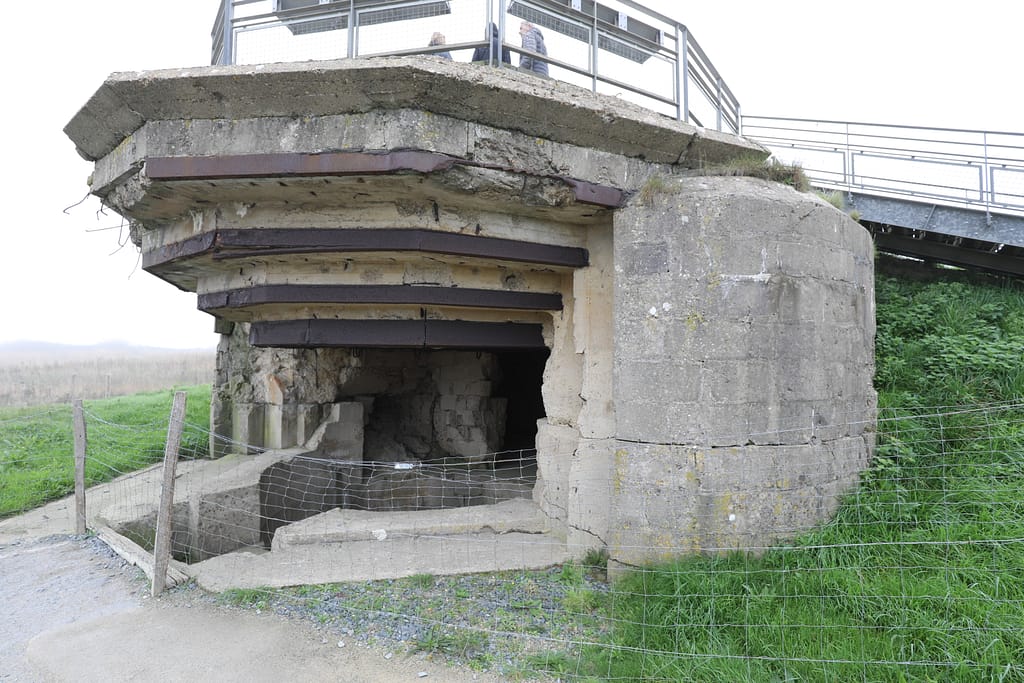
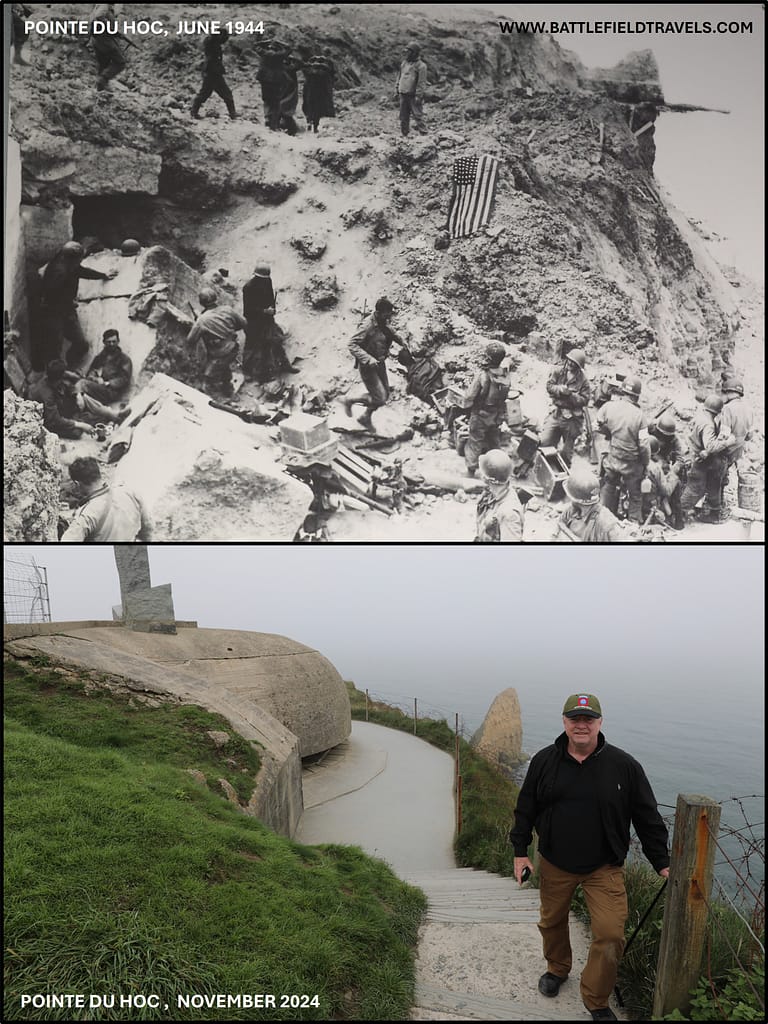
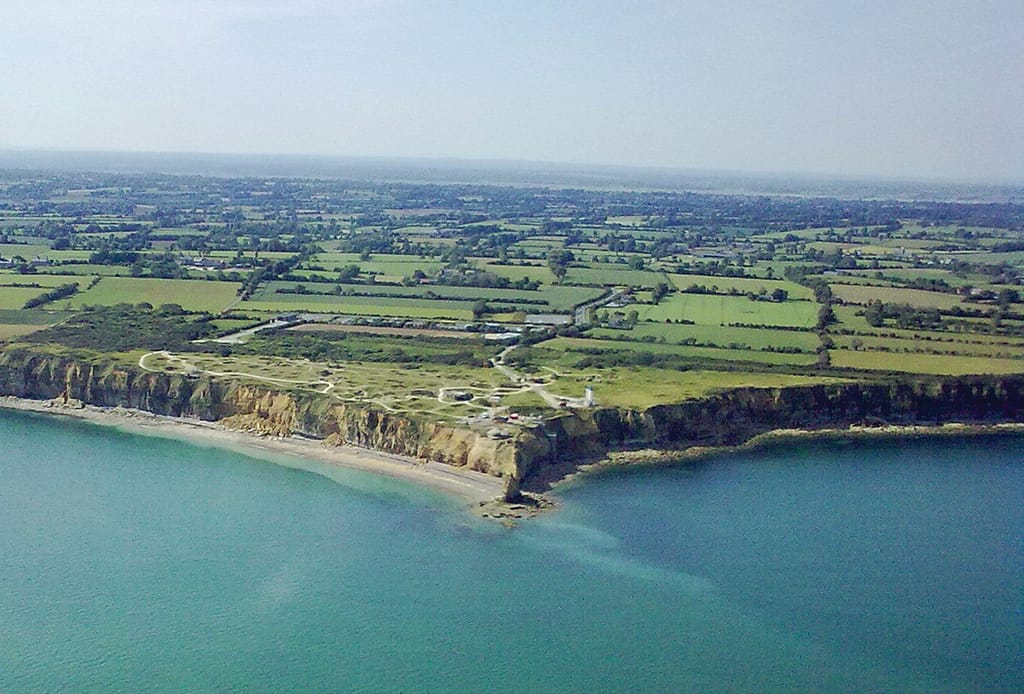
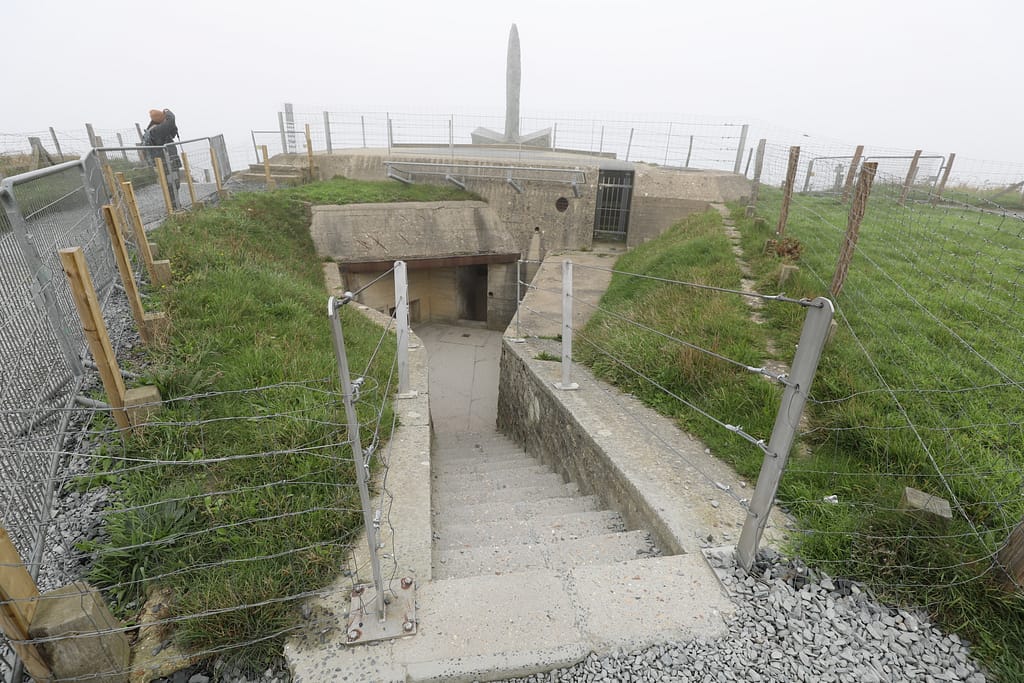
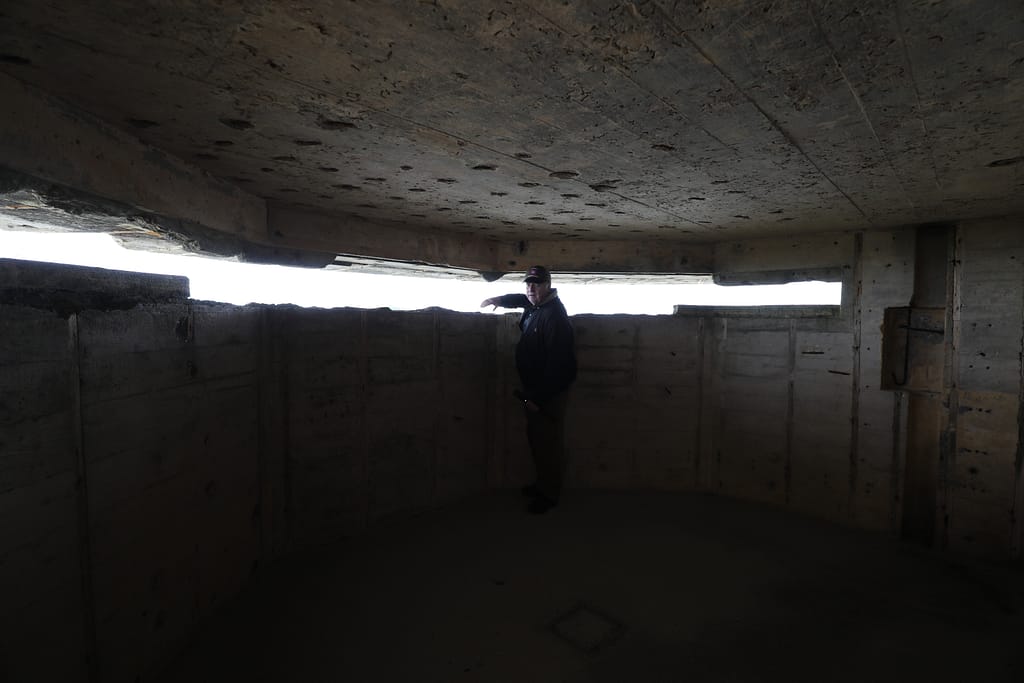
I visited the Normandy Beaches, including Pointe du Hoc, in October/November 2024. I was equipped with unit histories, copies of original operations orders, maps and sketches, dozens of photographs taken at Pointe du Hoc on D-Day or soon afterwards, and my own digital GIS overlays to pull it all together. Pointe du Hoc, like most of the other D-Day sites, is remarkably unchanged since 1944. The terrain is mostly unchanged, and the German strongpoints and bunkers still show the signs of the intense naval and air bombardment they were subjected to on D-Day.
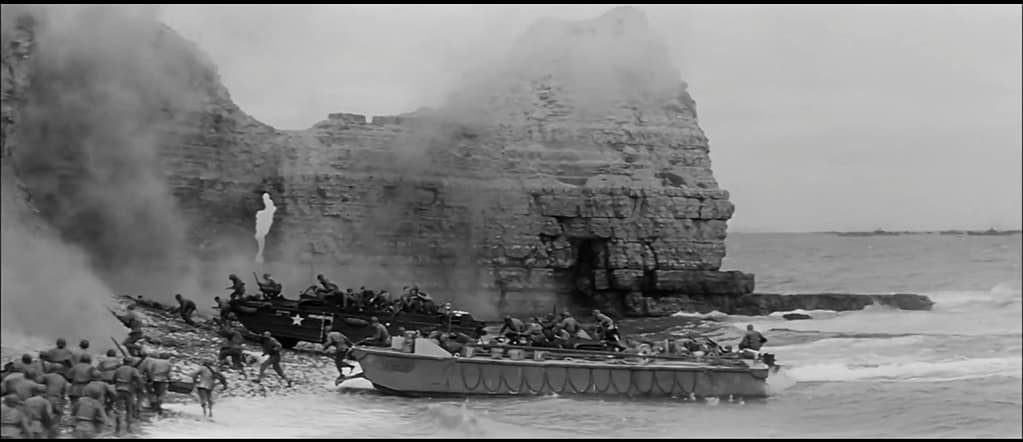
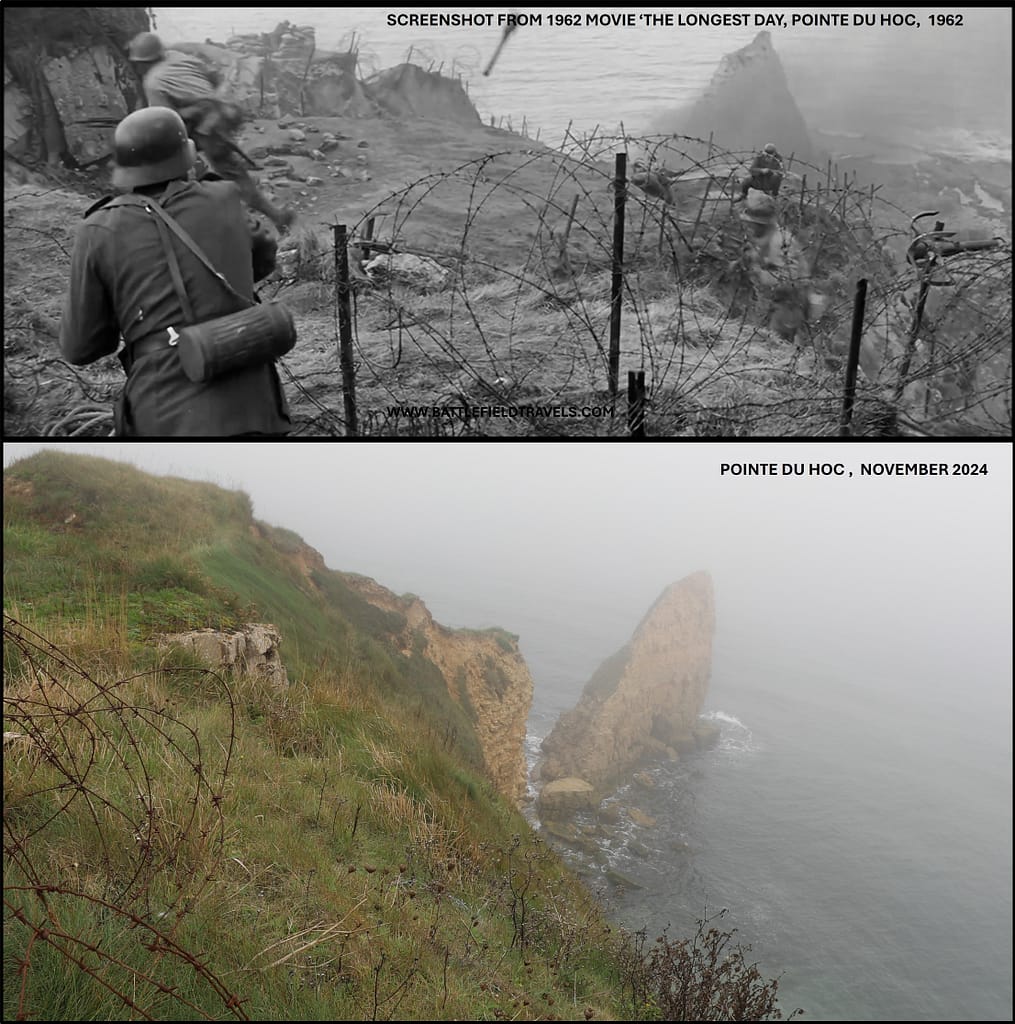
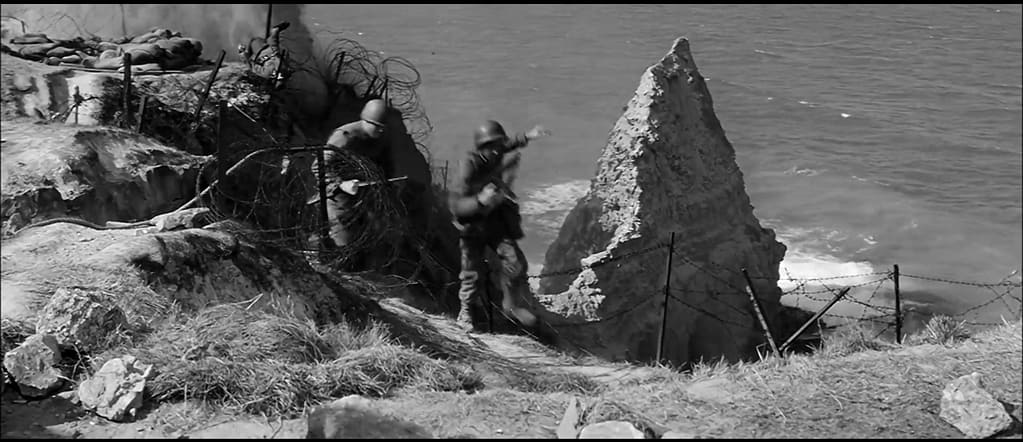
What the Rangers achieved here on D-Day and afterwards was nothing short of extraordinary. They first had to get ashore under fire, then scale the 100-foot-high cliffs under fire, and then eliminate the German positions on top of the cliffs. If you haven’t seen Darryl F. Zanuck’s 1962 movie ‘The Longest Day’, do yourself a favour and watch it. The depiction of the Pointe du Hoc operation was shot right here at Pointe du Hoc, using original equipment, and ‘fighting’ over the same ground where the Rangers fought in June 1944.
Normandy series of battlefield studies
This article is part of a series exploring the D-Day airborne and amphibious battlefields on 6 June 1944 and the immediate aftermath. Click on the hotlinks to open the battlefield study.
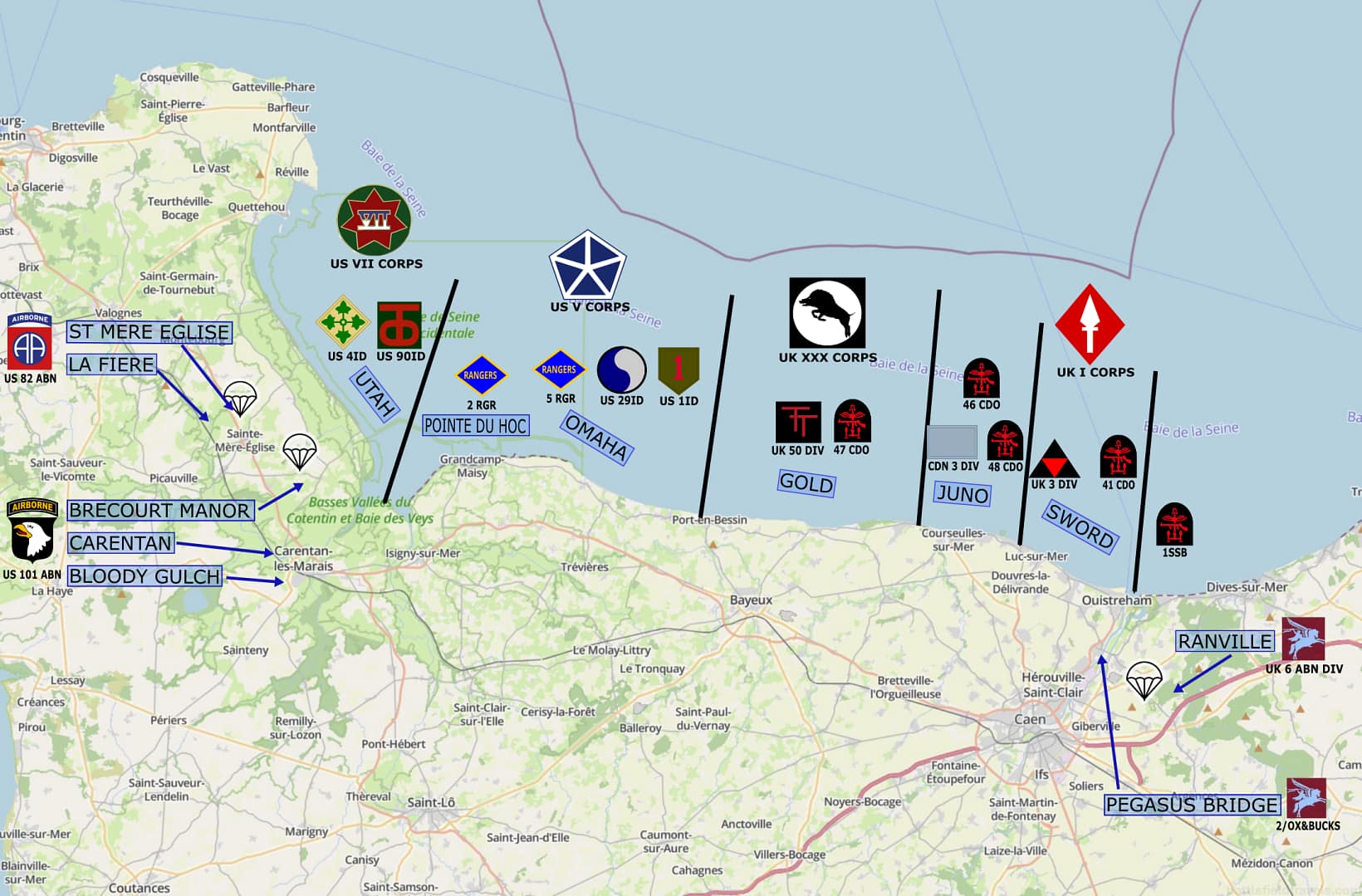
Strategic Context: Why Pointe du Hoc mattered on D-Day
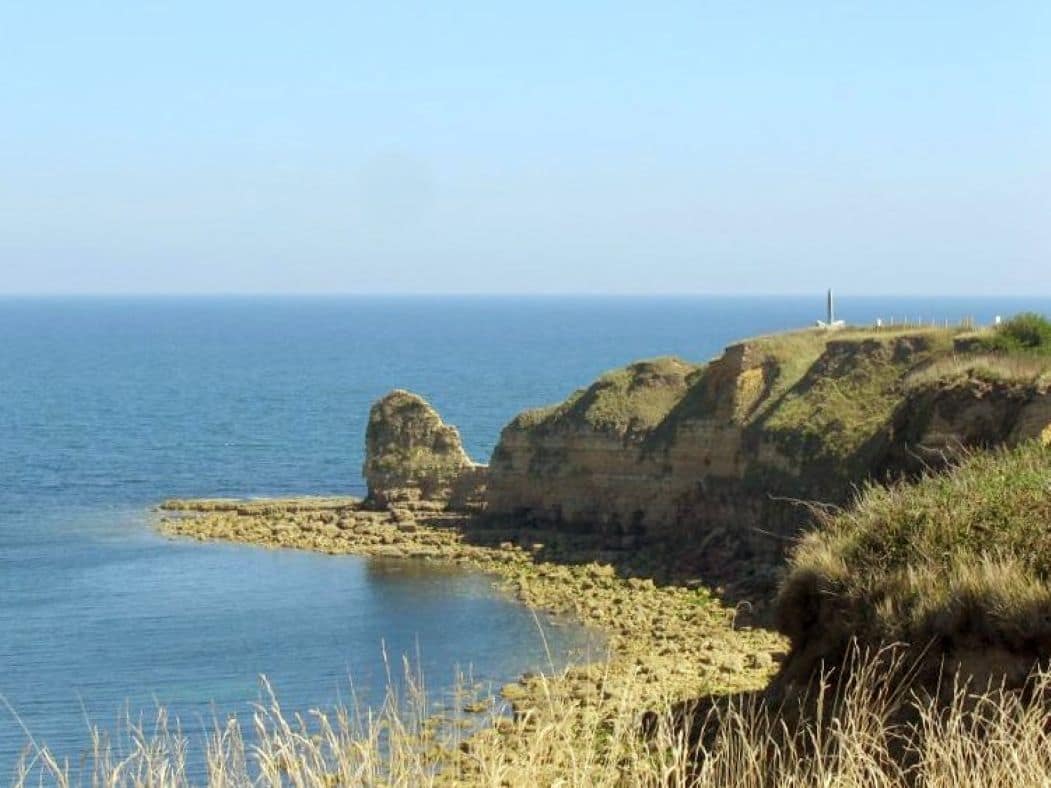
Pointe du Hoc, a prominent headland between Utah Beach and Omaha Beach, was a critical strategic objective on D-Day. The cliff rises 100 feet above the English Channel and was home to a German battery of 155mm howitzers capable of targeting both Omaha and Utah beaches. If these guns had remained operational during the D-Day landings, they would have severely disrupted the operation.
General Dwight D. Eisenhower, the Supreme Commander of the Allied Expeditionary Force, recognised the requirement to neutralise these guns before the main landings commenced. The mission to assault Pointe du Hoc was assigned to the American 2nd and 5th Ranger Battalions under the command of Lieutenant Colonel James Earl Rudder. The Rangers were tasked with conducting an amphibious assault at Pointe du Hoc, scaling the cliffs under enemy fire, destroying the German guns, and holding the position until relieved by forces from Omaha Beach.
Opposing Forces: US Rangers vs German Defenders

 Allied forces

 Allied forces
The primary units involved in the assault were the 2nd and 5th Ranger Battalions. The initial assault was to be conducted by ‘Force A’ comprising D, E, and F companies of the 2nd Ranger Battalion, with about 225 men (WW2 Ranger companies comprised three officers and 65 enlisted men, so significantly smaller than a rifle company). ‘Force B’, C Company, 2nd Rangers, was assigned a separate mission in support of 29th Infantry Division at Omaha Beach. ‘Force C’, comprising an additional eight Ranger companies (A and B Companies, 2nd Rangers, and the entire 5th Ranger Battalion), was designated to reinforce the Pointe du Hoc assault and exploit the success if they received confirmation by 0700 hours that the position was secured.
The Rangers trained for the cliff assault in England and Scotland under expert instructors from the British Commandos. The training covered amphibious assault, cliff-climbing techniques, demolition, and small-unit tactics. The Ranger force received and trained with equipment specifically designed to scale the cliffs at Pointe du Hoc and overcome the German defences, including extension ladders and rocket-powered grappling hooks. The Rangers would also be supported by allied air naval forces to destroy or neutralise the Pointe du Hoc defences.
 German forces
 German forces
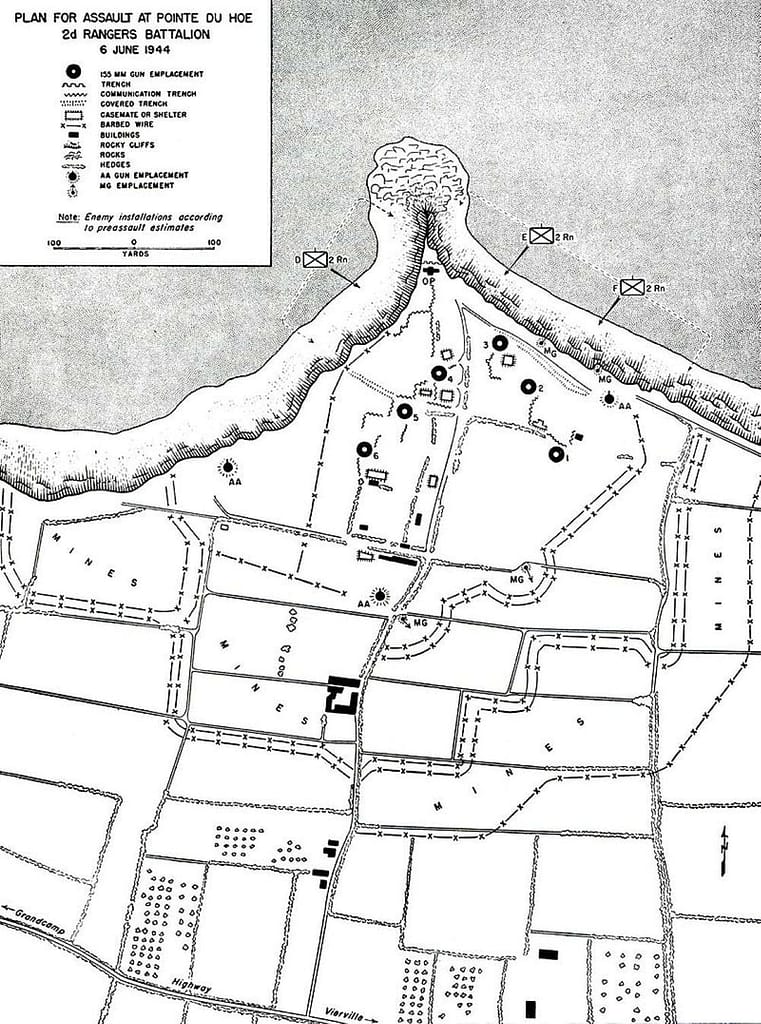
The German defences at Pointe du Hoc were part of the Atlantic Wall fortifications. The position was manned by 2nd Battery, Army Coastal Artillery Battalion 1260 and protected by troops of the 352nd Infantry Division, with about 200 soldiers stationed at the site. The main threat posed by the German position at Pointe du Hoc were six 155mm captured French howitzers (Canon de 155 Grande Puissance Filloux (GPF) modèle 1917). The guns were WW1-vintage pieces, so posed less of a threat to the landing beaches than originally assessed. Four massive concrete casemates were being prepared to house larger guns.
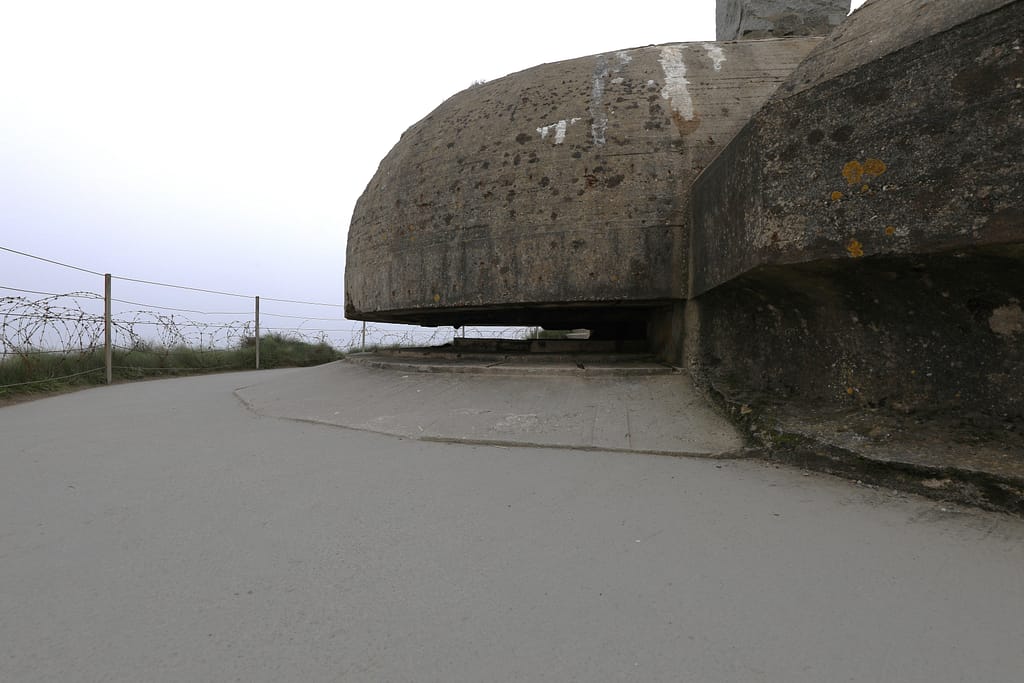
The Pointe du Hoc defences also included anti-aircraft artillery, machine gun bunkers, wire entanglements and minefields. The German troops were well-prepared, expecting an assault, and confident in their defensive capabilities due to the difficult terrain and strong fortifications.
Naval bombardment and initial landing
Preparatory fires
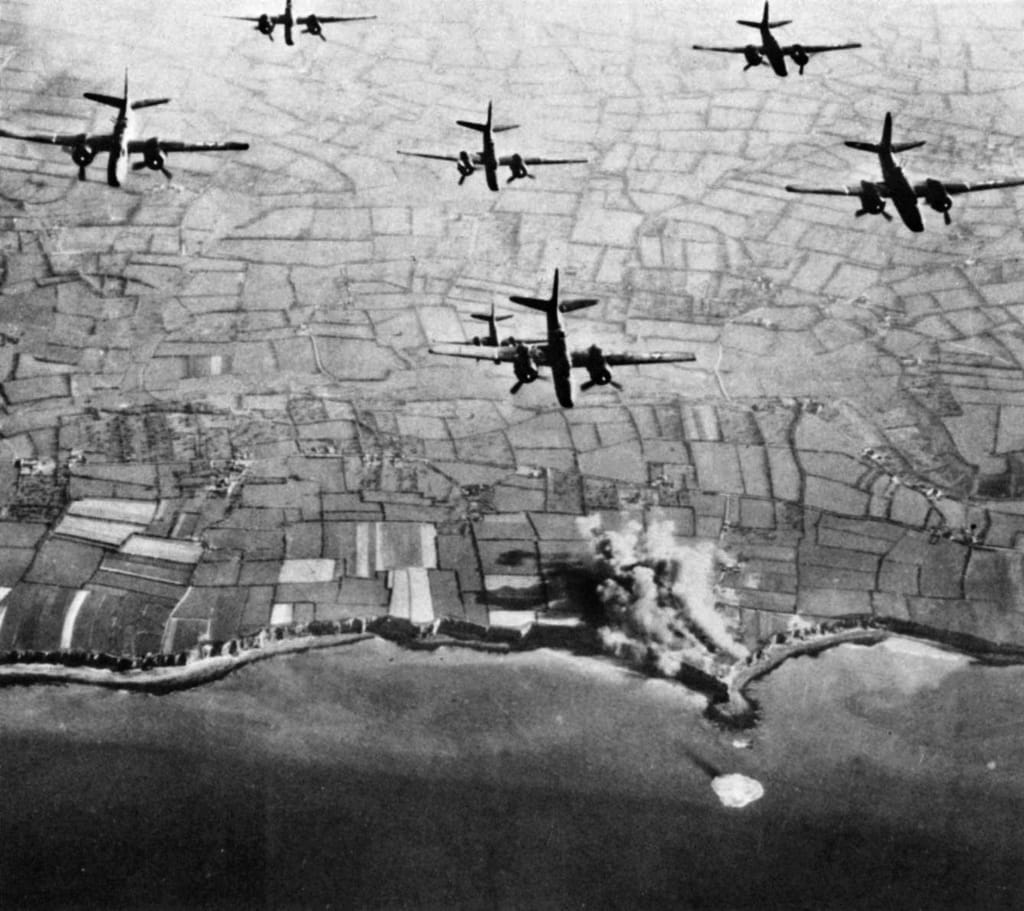
In the weeks prior to the D-Day landings, Pointe du Hoc was subjected to repeated allied bombing attacks to neutralise the German artillery. Even today, the ground at Pointe du Hoc looks like a moonscape of craters, and the remains of destroyed concrete casemates litter the position. In the early hours of 6 June 1944, Allied naval forces bombarded Pointe du Hoc. Warships, including the battleship USS Texas and destroyer USS Satterlee, targeted the German fortifications, attempting to neutralise the defences before the Rangers landed. Despite the intense shelling, many German positions remained intact.
Beach assault
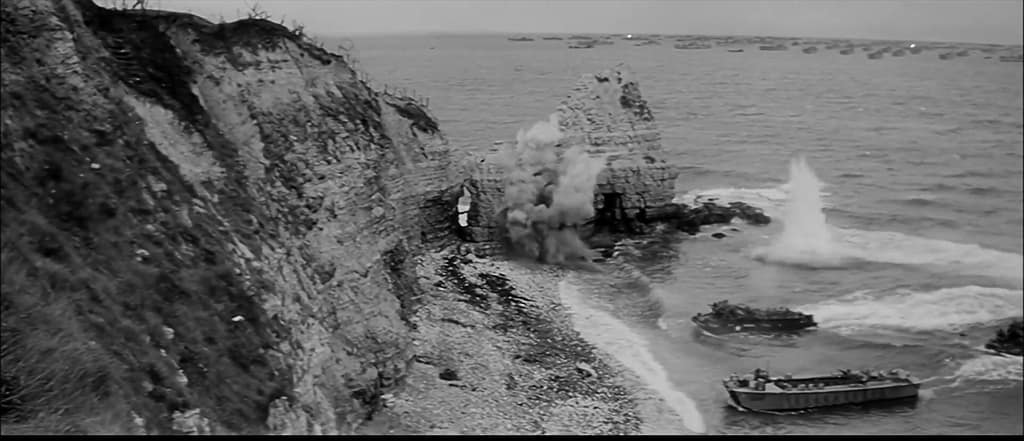
At 7:10 AM, the Rangers approached the cliffs in Royal Navy ‘LCAs’ (Landing Craft – Assault). The British LCAs were armoured, whereas the American Higgins Boats were not, so the Rangers had opted for the British LCA. The rough seas caused delays and disorientation, with some units landing further east than intended. One LC-A was swamped by rough seas and sunk, drowning all bar one of the occupants. As the Rangers disembarked, they faced intense machine-gun and mortar fire from the German defenders above.
Scaling the cliffs: the Ranger climb
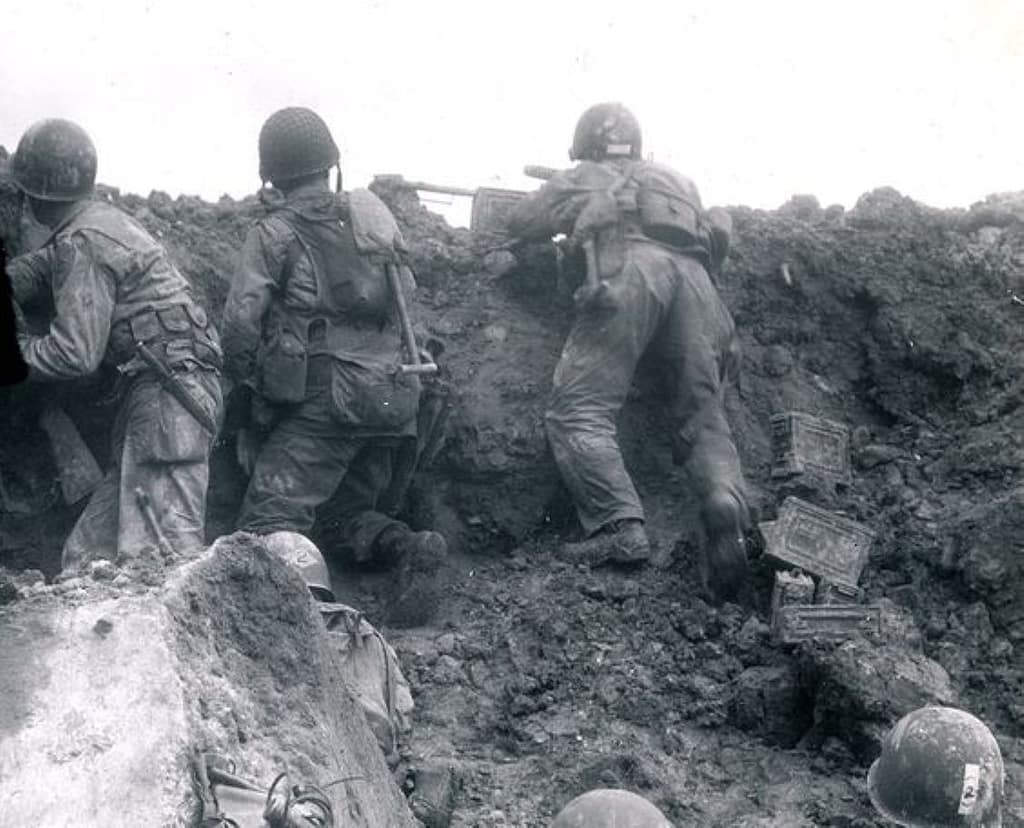
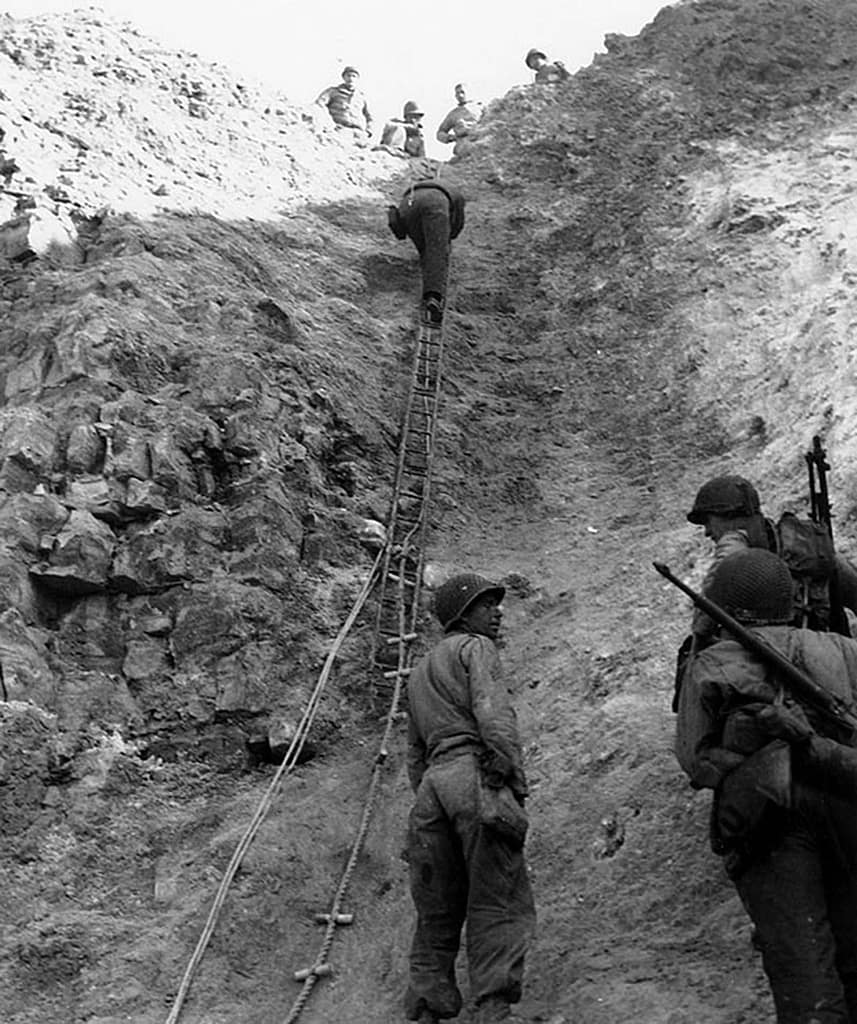
Using ropes, ladders, and grappling hooks launched from rocket-propelled devices, the Rangers began scaling the 100-foot cliffs. The Germans fired down upon them from the clifftops, dropped grenades and cut their climbing ropes. One German machine position on the eastern side of Pointe du Hoc caused numerous casualties.
Bunker suppression
Some of the Rangers were directed to provide suppressive fire against the Germans along the top of the cliff. Navy ships also provided accurate fire support, destroying some German positions, and keeping the defenders away from the clifftop. One Ranger commented that watching the Naval gunfire destroy bunkers right above their heads was like being in the front row of a movie theatre!1 Within 30 minutes, small groups of Rangers had reached the top and engaged the German defenders in close-quarters combat.
⚔️ Go deeper — Members get exclusive access to the Deep Research Collection, Field Notes, and monthly Research Dispatches. Try membership free for 7 days, cancel anytime. From $9/month.
Securing the gun emplacements
Upon reaching the top of the cliff, the Rangers rapidly cleared the immediate area of German defenders. The German machine gun that had caused problems during the cliff assault continued to be a serious problem, until one of the Rangers directed naval gunfire using morse code via signal lamps. The German gun was destroyed.
Finding the German guns
The Rangers quickly discovered that the 155mm artillery pieces had been removed from their firing bays prior to the invasion, likely to avoid the anticipated naval bombardment. However, the Rangers located the guns in an orchard about a mile from the original emplacement. The German artillery crews were assembled in a nearby field waiting for their own infantry to push back the Rangers so they could get the guns into action. The Rangers were able to disable all of the 155mm guns using thermite grenades.
Ranger ‘Force C’ and the Omaha Beach decision
‘Force C’ the additional eight Ranger Companies under Lieutenant Colonel Max Schneider, awaited the codeword ‘Praise the Lord’ as a signal to reinforce the Pointe du Hoc landing. When that call was not received by 0700, Schneider made the decision, as planned, to land his force at Omaha Beach.
This decision left ‘Force A’ at Pointe du Hoc unsupported, but made a decisive impact at Omaha Beach. The additional Ranger companies that landed at Dog White sector may have been the crucial factor in overcoming the German defences at Omaha Beach.
Holding Pointe du Hoc, 6–8 June 1944
Despite achieving their primary objective, the Rangers faced continuous German counterattacks throughout the day and into the following days. Isolated and with dwindling supplies, the Rangers held their ground for the next two days, awaiting reinforcements from Omaha Beach, which were delayed due to heavy fighting. A few mis-dropped 101st Airborne Division paratroopers joined the beleaguered Rangers. The Rangers were finally relieved on 8 June by 29th Infantry Division and fellow Rangers moving up from Omaha Beach.
Outcomes: cost and significance of the Ranger assault
The assault on Pointe du Hoc was a tactical success for the Allies. The destruction of the German artillery eliminated a significant threat to the landings at Omaha and Utah beaches. However, the victory came at a high cost. Of the 225 Rangers of ‘Force A’ who began the assault, only about 90 were fit for combat by the time reinforcements arrived on 8 June.
The success of the Pointe du Hoc mission also demonstrated the effectiveness of specially trained and equipped assault units like the Rangers. The lessons learned from the battle would influence future development of special operations forces.
The battlefield today: visiting Pointe du Hoc
Pointe du Hoc is preserved as a historical site and memorial to the American Rangers who fought there. Managed by the American Battle Monuments Commission, the site remains largely unchanged. The position at Pointe du Hoc is still a moonscape of deep bomb craters, destroyed bunkers, and remnants of German fortifications.
Link to the American Battle Monuments Commission Pointe du Hoc Memorial website
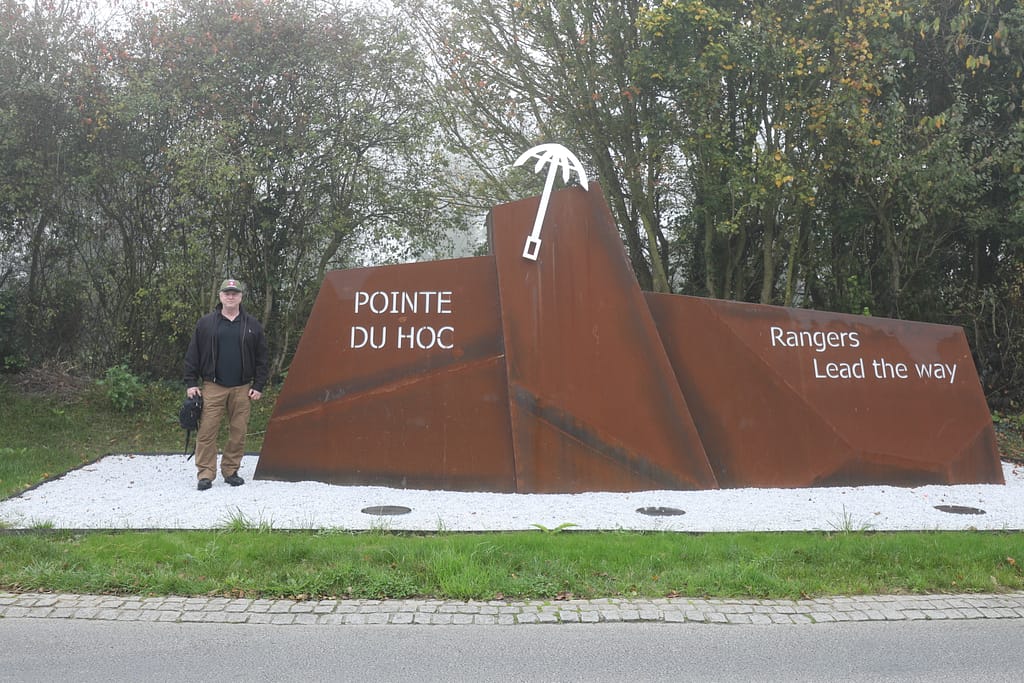
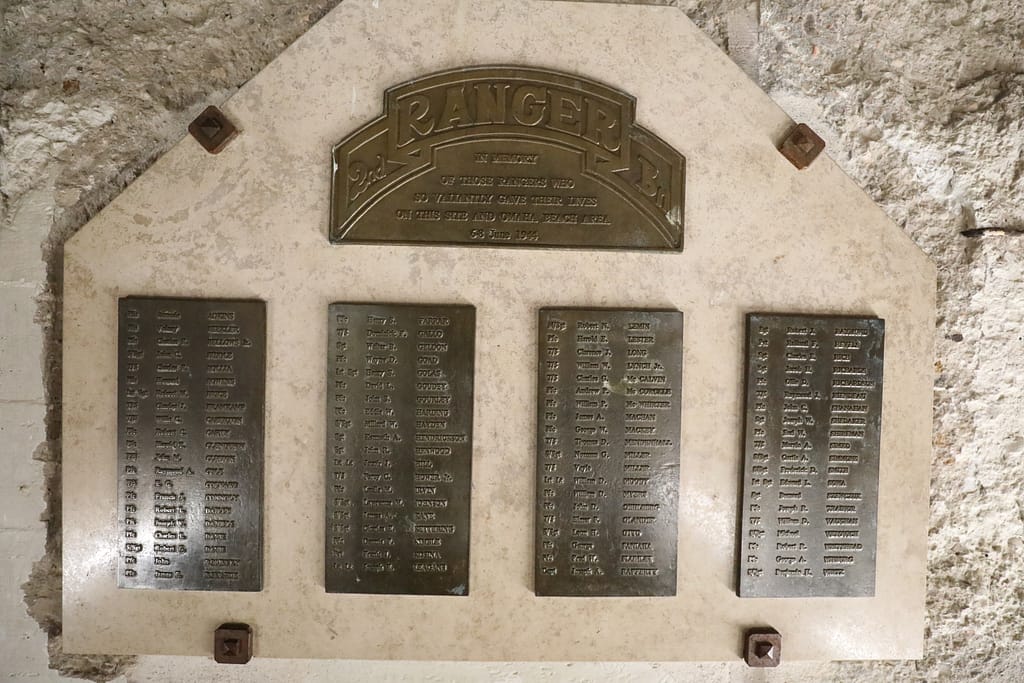
Visitors can explore the battlefield, walk the cliffs, explore the artillery casemates, and enter the observation posts that once formed the German defences. The Pointe du Hoc Ranger Monument, a granite obelisk erected atop the German observation post, honours the courage and sacrifice of the Rangers.
I highly recommend watching Darryl F. Zanuck’s 1962 movie ‘The Longest Day’. Many of the scenes in the movie were shot on the actual sites in Normandy where the events happened. The entire Pointe du Hoc scene was shot right here at Pointe du Hoc. See my post on US Airborne operations around around Sainte-Mere-Eglise for more ‘Longest Day’ shooting locations.
Additional images of Pointe du Hoc
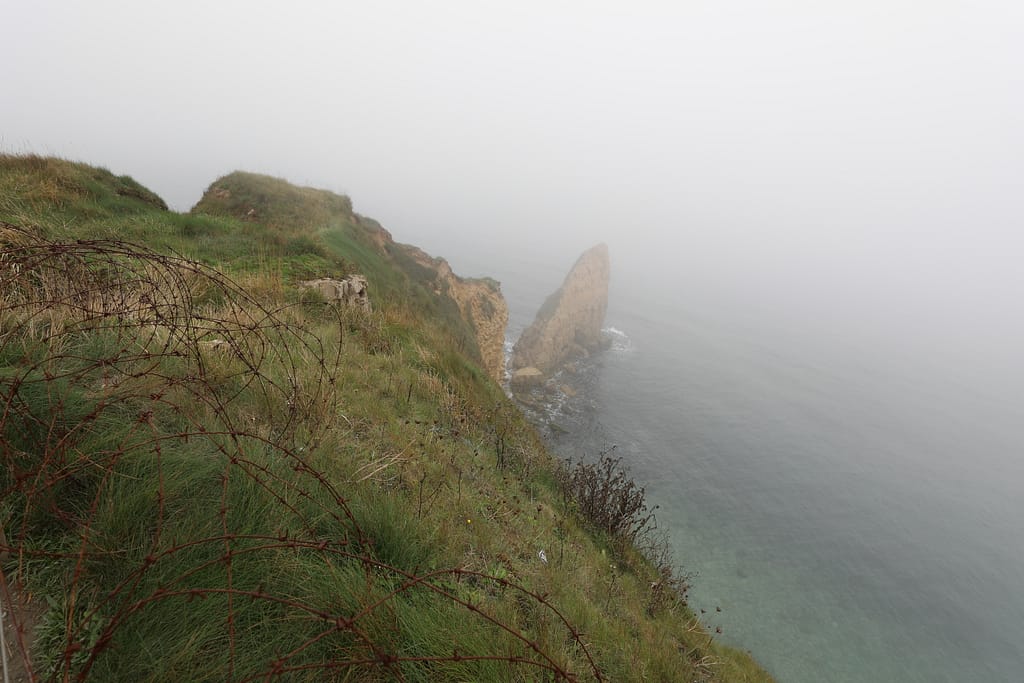
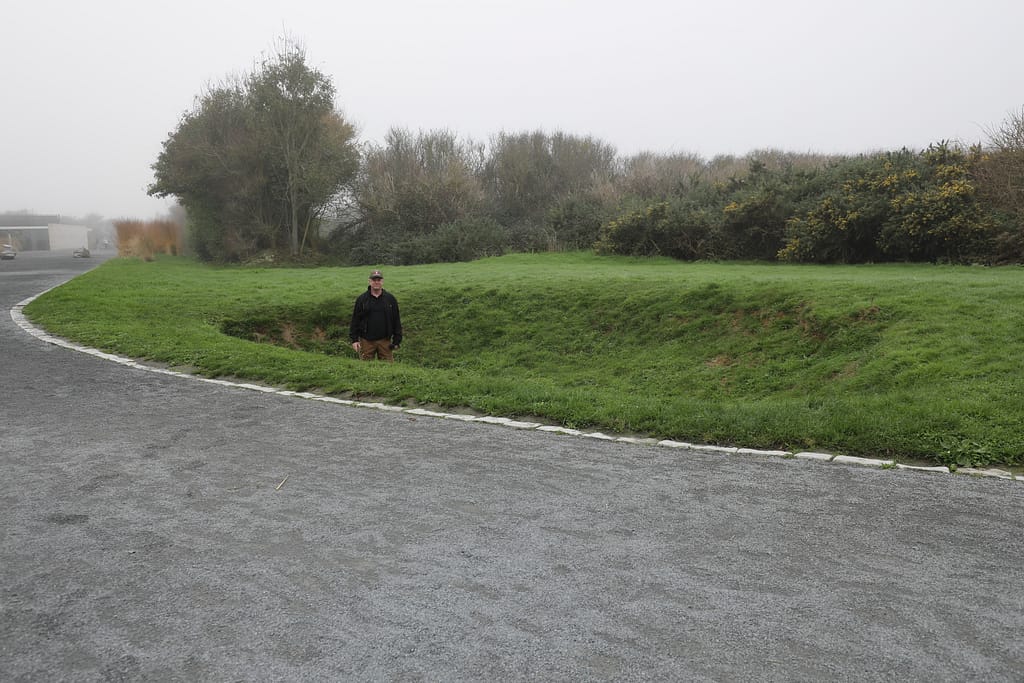
Screenshots from Darryl F. Zanuck’s ‘The Longest Day’, 1962
Found this useful? Buy me a coffee — it helps fund future battlefield research


Authored by Mick Prictor, a retired military officer with 40 years’ service, and a military historian specialising in terrain-focused analysis of tactics, doctrine, and command decision-making in land warfare. His work draws on extensive battlefield fieldwork—more than 280 sites worldwide—and one of the world’s largest private collections of historic military arms, uniforms, and equipment. About me
❓ Test Your D-Day Knowledge
Twenty questions covering the airborne operations, invasion beaches, commanders, forces and fighting of 6 June 1944.
20 questions · 60% to pass · expect a challenge
Sources – Pointe du Hoc
- Ambrose, S. E. (1999). D-day, June 6, 1944: the climactic battle of World War II. Thorndike.
- Ambrose, S. E. (1992). Band of Brothers: E Company, 506th Regiment, 101st Airborne from Normandy to Hitler’s Eagle’s Nest. Touchstone, Simon & Schuster.
- Beevor, Antony. (2009). D-Day: The Battle for Normandy. Penguin Books
- Ryan, Cornelius (1959). The Longest Day: June 6, 1944. Simon and Schuster, New York.
- Hastings, Max (1984). Overlord : D-Day and the battle for Normandy. Simon and Schuster, New York.
- Robert M. Murphy (2011). No Better Place to Die: Ste-Mere Eglise, June 1944―The Battle for la Fiere Bridge. Casemate.
- Steven J. Zaloga (2022). Smashing Hitler’s Guns: The Rangers at Pointe-du-Hoc, D-Day 1944. Osprey Publishing.
- Niklas Zetterling (2000). Normandy 1944: German Military Organisation, Combat Power and Organisational Effectiveness, Winnipeg: J.J. Fedorowicz.
📚 Further Reading
This battle study nests within the broader analytical framework explored in the Research Hub, where operational methods, operating environments, armies, commanders, and weapons are examined across conflicts and eras. The links below connect related studies across the wider body of battlefield analysis on the BattlefieldTravels site.
⚔️ Explore all battle studies from World War Two 1939-1945
🏛️Explore the museum of World War Two historic artefacts
The book list for this conflict includes the finest campaign studies, memoirs, and operational analyses available on the D-Day landings, selected specifically to complement this battlefield study.
📚World War Two – Recommended Reading
🗞️ For updates on new battlefield studies and research insights, you can subscribe to the Newsletter.
Related Battle Studies, Museum Pieces & Reading Resources
 ⚔️ D-Day: Brecourt Manor assault, Easy Company, 506th PIR,
6 June 1944
 ⚔️ D-Day: Sword Beach landings,
6 June 1944
 ⚔️ D-Day: Utah Beach landings,
6 June 1944
 ⚔️ D-Day: Omaha Beach landings,
6 June 1944
 📝 🔒Field Note: XXX Corps Orders, Leopoldsburg, Belgium, 15 Sep 1944
 ⚔️ D-Day: 101st Airborne Division and the Battle of Bloody Gulch,
13 June 1944
🧭 Battlefield Travel Guide: Pointe du Hoc (6–8 June 1944)
Getting There
- Location: Between Omaha Beach (Vierville) and Utah Beach (Sainte-Marie-du-Mont), Normandy, France.
- Access: About 30 km west of Bayeux; road access via the D514 coastal route.
- Parking: Free visitor parking adjacent to the Ranger Monument.
Site Orientation
- Key Landmarks: Ranger Monument obelisk, German artillery casemates, observation bunker, Ranger memorial plaques.
- Best Vantage Points: Clifftop paths overlooking Omaha and Utah sectors; inside bomb craters for scale of naval bombardment.
- Walking Routes: Open circular trails through casemates and craters, maintained by the American Battle Monuments Commission.
Museums & Visitor Centres
- On-site: Ranger Museum with displays on the 2nd and 5th Ranger Battalions.
- Nearby: Normandy American Cemetery at Colleville-sur-Mer; Utah Beach Museum; Omaha Beach Memorial Museum.
On-Site Experience
- Interpretive Signage: Multilingual panels explain Ranger routes, German defences, and naval fire support.
- Atmosphere: Preserved craters and bunkers retain the stark appearance of June 1944; ocean cliffs convey the difficulty of the assault.
- Monuments: Ranger Monument, unit memorial plaques, German fortifications left in situ.
Nearby Points of Interest
- Related Sites: Omaha Beach landing zones, Pointe et Raz de la Percée observation points, Utah Beach landing site.
- Local: Bayeux War Cemetery and Tapestry Museum; Sainte-Mère-Église (Airborne landings and museum).
Practical Tips
- When to Visit: Early morning or late afternoon for fewer crowds; 6 June commemorations attract large events.
- Facilities: Visitor centre, restrooms, and picnic areas on site.
- Notes: Allow at least half a day; sturdy shoes recommended for uneven cratered ground and clifftop paths.
Subscribe to Battlefield Travels and receive a free E-Book Battlefield Guide
Unlock expert battlefield analysis, campaign reconstructions, and historical insights drawn from firsthand exploration and primary sources.
🗺️ You’ll receive:
🎖️ Exclusive historical insights you won’t find elsewhere
📘 A free eBook: 10 Tips for Exploring Historic Battlefields
📰 New battlefield studies straight to your inbox as they are published

⚔️ Go deeper — Members get exclusive access to the Deep Research Collection, Field Notes, and monthly Research Dispatches. Try membership free for 7 days, cancel anytime. From $9/month.