Skip to content
Home » 📚The Reading Room » 📚 American Civil War (1861–1865), Recommended Reading

📚 American Civil War (1861–1865),
Recommended Reading

Selected works on the American Civil War
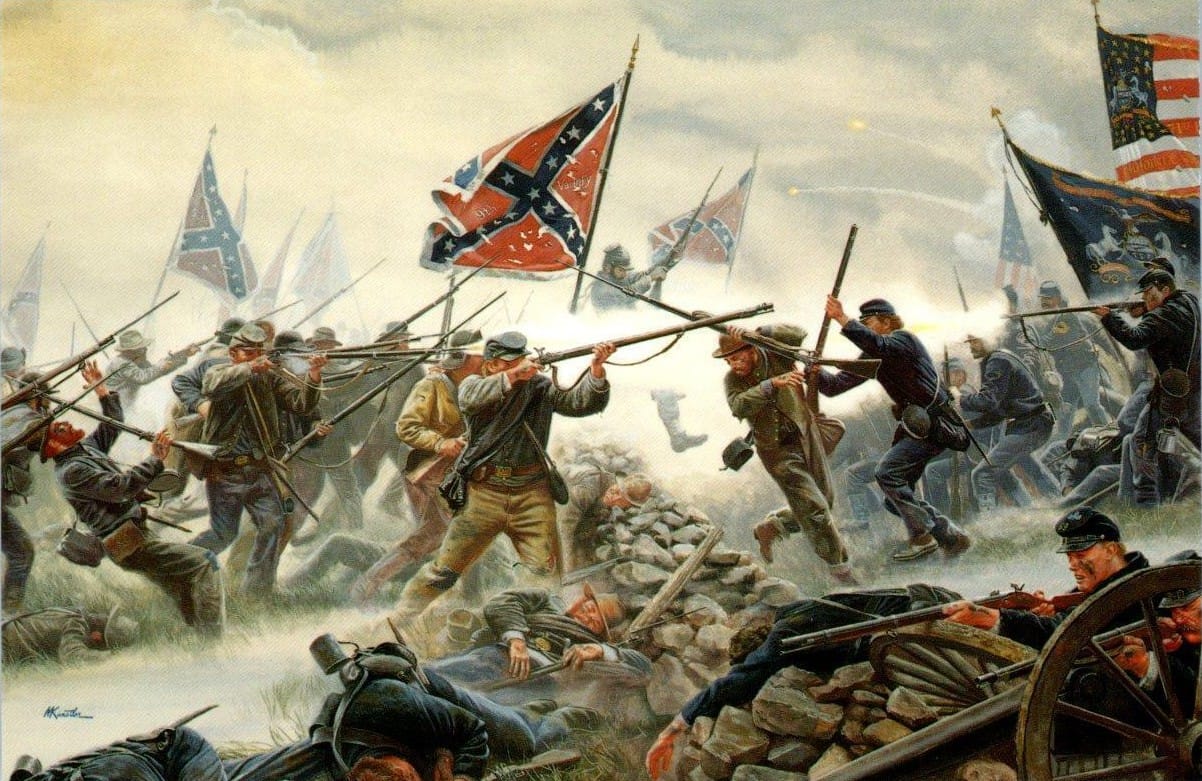
American Civil War - The High Tide at Gettysburg, 3 July 1863, by Mort Kunstler
American Civil War – The High Tide at Gettysburg, 3 July 1863, by Mort Kunstler

Best Books on the American Civil War

The American Civil War has generated one of the largest bodies of military and historical literature devoted to any conflict. More than 160 years after Appomattox, new studies continue to revisit its armies, commanders and campaigns, while an enormous collection of letters, diaries, memoirs, official reports and contemporary newspapers preserves the experiences of those who fought and lived through the war.

For someone approaching the subject, the difficulty is therefore not finding books, but deciding where to begin. Broad histories provide the strategic and political framework, while campaign and battle studies examine Gettysburg, Antietam, Shiloh, Vicksburg, Chancellorsville and the Overland Campaign in extraordinary detail. Biographies explore figures such as Grant, Lee, Sherman and Jackson, while specialist works examine weapons, logistics, intelligence, medicine, naval warfare, slavery and emancipation, and the experiences of ordinary soldiers and civilians.

The literature has also changed considerably over time. Early memoirs and regimental histories were often written by participants seeking to record—and sometimes defend—their own experiences. Later generations of historians have drawn on an increasingly rich documentary record to reassess commanders, reconstruct campaigns and battlefields, and examine the political, social and economic dimensions of the war alongside its military history. As a result, books written generations apart can offer strikingly different interpretations of the same events.

This reading guide brings together recommended books on the American Civil War, from accessible introductions and major narrative histories to campaign studies, biographies, primary accounts and specialist works. It is intended both for readers beginning their study of the war and for those looking to explore particular battles, commanders and themes in greater depth.

Explore the American Civil War:
[Battle Studies] · [Weapons & Equipment] · [Recommended Reading] · [Quiz]


Reading

The reference collection below includes the key books and references I have used in preparing for and undertaking studies of the American Civil War battlefields.


American Civil War – Primary Sources

Ulysses S. Grant, Personal Memoirs of U. S. Grant — indispensable and one of the great military memoirs.

William T. Sherman, Memoirs of General William T. Sherman — Library of Congress holds Sherman’s manuscript and drafts alongside his extensive papers.

Philip H. Sheridan, Personal Memoirs of P. H. Sheridan.

James Longstreet, From Manassas to Appomattox — Invaluable but must be read as Longstreet’s retrospective account and defence of his record.

John B. Gordon, Reminiscences of the Civil War — similarly useful and similarly something to read critically.

U.S. War Department, The War of the Rebellion: A Compilation of the Official Records of the Union and Confederate Armies — the Official Records (OR). The complete print edition comprises 70 volumes of Union and Confederate reports and correspondence, published between 1880 and 1901.

UNC Press — Military Campaigns of the Civil War series


Overview of the American Civil War

Sale
Battle Cry of Freedom: The Civil War Era
By May of 1863, the Stone Wall at the base of Marye’s Heights above Fredericksburg loomed large over the Army of the Potomac, haunting its men with memories of slaughter from their crushing defeat there the previous December. They would assault it again with a very different result the following spring when General Joe Hooker, bogged down in bloody battle with the Army of Northern Virginia around the crossroads of Chancellorsville, ordered John Sedgwick’s Sixth Corps to assault the heights and move to his assistance.
Sale
The Civil War: A Narrative – 3 Volume Box Set
One of the most dramatic battles of the Civil War, Chancellorsville was Robert E. Lee’s masterpiece. Outnumbered two to one, Lee violated a cardinal rule of military strategy by dividing his small army, sending Stonewall Jackson on his famous twelve-mile march around the Union flank. Charging out of the Wilderness with Rebel yells, Jackson’s troops destroyed one entire corps of the Union army, and Lee drove the rest across the Rappahannock River. Lee’s great victory came at great cost, however: Jackson, making a night reconnaissance, was accidentally shot by his own troops and died eight days later. And ironically, the momentum of Lee’s greatest triumph pushed him to launch an aggressive campaign that led to his greatest defeat, at Gettysburg.
Lincoln and His Generals
One of the most dramatic battles of the Civil War, Chancellorsville was Robert E. Lee’s masterpiece. Outnumbered two to one, Lee violated a cardinal rule of military strategy by dividing his small army, sending Stonewall Jackson on his famous twelve-mile march around the Union flank. Charging out of the Wilderness with Rebel yells, Jackson’s troops destroyed one entire corps of the Union army, and Lee drove the rest across the Rappahannock River. Lee’s great victory came at great cost, however: Jackson, making a night reconnaissance, was accidentally shot by his own troops and died eight days later. And ironically, the momentum of Lee’s greatest triumph pushed him to launch an aggressive campaign that led to his greatest defeat, at Gettysburg.
Sale
For Cause and Comrades: Why Men Fought in the Civil War
One of the most dramatic battles of the Civil War, Chancellorsville was Robert E. Lee’s masterpiece. Outnumbered two to one, Lee violated a cardinal rule of military strategy by dividing his small army, sending Stonewall Jackson on his famous twelve-mile march around the Union flank. Charging out of the Wilderness with Rebel yells, Jackson’s troops destroyed one entire corps of the Union army, and Lee drove the rest across the Rappahannock River. Lee’s great victory came at great cost, however: Jackson, making a night reconnaissance, was accidentally shot by his own troops and died eight days later. And ironically, the momentum of Lee’s greatest triumph pushed him to launch an aggressive campaign that led to his greatest defeat, at Gettysburg.
The Confederate War
One of the most dramatic battles of the Civil War, Chancellorsville was Robert E. Lee’s masterpiece. Outnumbered two to one, Lee violated a cardinal rule of military strategy by dividing his small army, sending Stonewall Jackson on his famous twelve-mile march around the Union flank. Charging out of the Wilderness with Rebel yells, Jackson’s troops destroyed one entire corps of the Union army, and Lee drove the rest across the Rappahannock River. Lee’s great victory came at great cost, however: Jackson, making a night reconnaissance, was accidentally shot by his own troops and died eight days later. And ironically, the momentum of Lee’s greatest triumph pushed him to launch an aggressive campaign that led to his greatest defeat, at Gettysburg.
Sale
General Lee’s Army: From Victory to Collapse
One of the most dramatic battles of the Civil War, Chancellorsville was Robert E. Lee’s masterpiece. Outnumbered two to one, Lee violated a cardinal rule of military strategy by dividing his small army, sending Stonewall Jackson on his famous twelve-mile march around the Union flank. Charging out of the Wilderness with Rebel yells, Jackson’s troops destroyed one entire corps of the Union army, and Lee drove the rest across the Rappahannock River. Lee’s great victory came at great cost, however: Jackson, making a night reconnaissance, was accidentally shot by his own troops and died eight days later. And ironically, the momentum of Lee’s greatest triumph pushed him to launch an aggressive campaign that led to his greatest defeat, at Gettysburg.

Eastern Theatre

Landscape Turned Red
By May of 1863, the Stone Wall at the base of Marye’s Heights above Fredericksburg loomed large over the Army of the Potomac, haunting its men with memories of slaughter from their crushing defeat there the previous December. They would assault it again with a very different result the following spring when General Joe Hooker, bogged down in bloody battle with the Army of Northern Virginia around the crossroads of Chancellorsville, ordered John Sedgwick’s Sixth Corps to assault the heights and move to his assistance.
Sale
Fredericksburg! Fredericksburg! (Civil War America)
By May of 1863, the Stone Wall at the base of Marye’s Heights above Fredericksburg loomed large over the Army of the Potomac, haunting its men with memories of slaughter from their crushing defeat there the previous December. They would assault it again with a very different result the following spring when General Joe Hooker, bogged down in bloody battle with the Army of Northern Virginia around the crossroads of Chancellorsville, ordered John Sedgwick’s Sixth Corps to assault the heights and move to his assistance.
Sale
The Gettysburg Campaign: A Study in Command
By May of 1863, the Stone Wall at the base of Marye’s Heights above Fredericksburg loomed large over the Army of the Potomac, haunting its men with memories of slaughter from their crushing defeat there the previous December. They would assault it again with a very different result the following spring when General Joe Hooker, bogged down in bloody battle with the Army of Northern Virginia around the crossroads of Chancellorsville, ordered John Sedgwick’s Sixth Corps to assault the heights and move to his assistance.
Chancellorsville’s Forgotten Front: The Battles of Second Fredericksburg and Salem Church, May 3, 1863
By May of 1863, the Stone Wall at the base of Marye’s Heights above Fredericksburg loomed large over the Army of the Potomac, haunting its men with memories of slaughter from their crushing defeat there the previous December. They would assault it again with a very different result the following spring when General Joe Hooker, bogged down in bloody battle with the Army of Northern Virginia around the crossroads of Chancellorsville, ordered John Sedgwick’s Sixth Corps to assault the heights and move to his assistance.
Sale
Chancellorsville
One of the most dramatic battles of the Civil War, Chancellorsville was Robert E. Lee’s masterpiece. Outnumbered two to one, Lee violated a cardinal rule of military strategy by dividing his small army, sending Stonewall Jackson on his famous twelve-mile march around the Union flank. Charging out of the Wilderness with Rebel yells, Jackson’s troops destroyed one entire corps of the Union army, and Lee drove the rest across the Rappahannock River. Lee’s great victory came at great cost, however: Jackson, making a night reconnaissance, was accidentally shot by his own troops and died eight days later. And ironically, the momentum of Lee’s greatest triumph pushed him to launch an aggressive campaign that led to his greatest defeat, at Gettysburg.
Chancellorsville by John Bigelow Jr

Chancellorsville (The Civil War Library)
by John Bigelow

The Chancellorsville campaign is a description of the battlefield and a thorough, exhaustive study of military dispatches, orders, after-battle reports and personal narratives of eyewitnesses.


Western Theatre
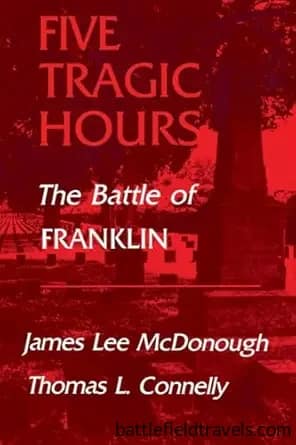
Five tragic hours

Five Tragic Hours: The Battle of Franklin, by
by James Lee McDonough and Thomas L. Connelly

On a November afternoon in 1864, the weary Gen. John Bell Hood surveyed the army waiting to attack the Federals at Franklin, Tennessee. He gave the signal almost at dusk, and the Confederates rushed forward to utter devastation. This book describes the events and causes of the five-hour battle in gripping detail, particularly focusing on the reasons for such slaughter at a time when the outcome of the war had already been decided.
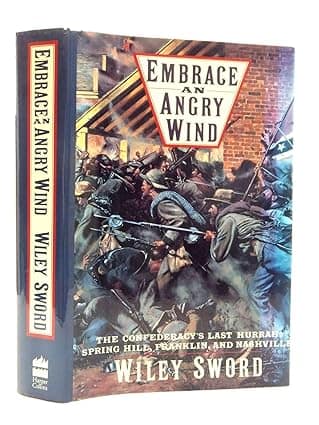
The Confederacy’s Last Hurrah: Spring Hill, Franklin, and Nashville, by Wiley Sword

Recounts the Confederacy’s last desperate invasion of Union-held Tennessee and the near destruction of Hood’s Army at Franklin and Nashville.
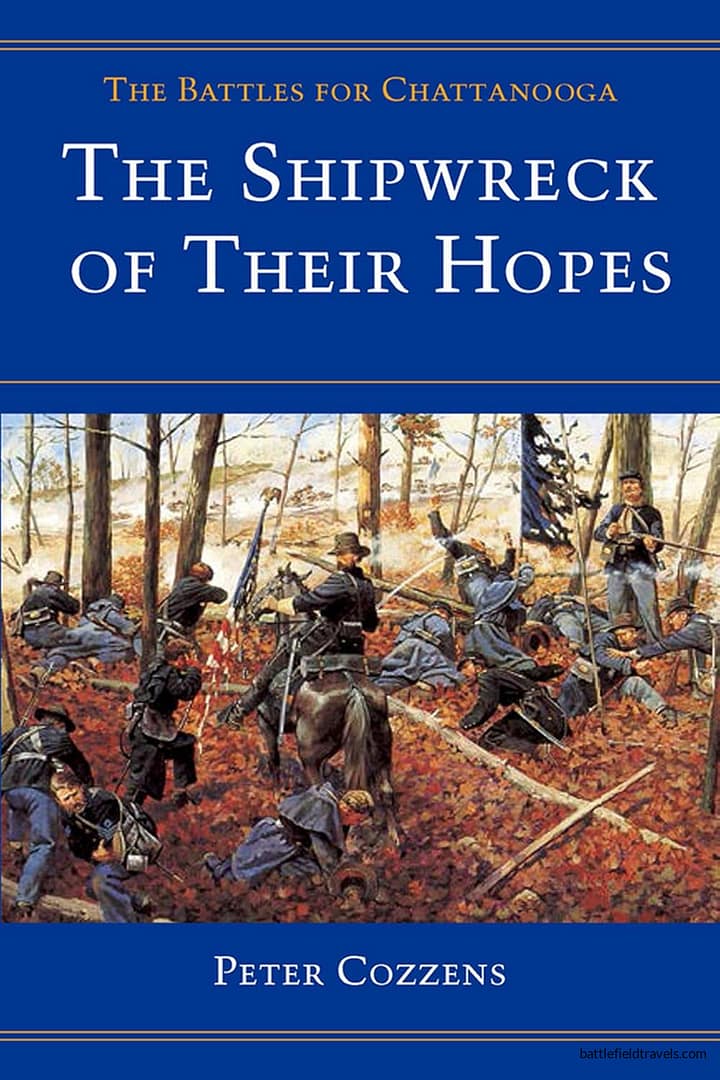
Shipwreck of their hopes

The Shipwreck of Their Hopes: The Battles for Chattanooga, by Peter Cozzens

The battle around Chattanooga in the late fall of 1863 were among the most decisive of the Civil War, opening the Deep South to the Union and setting the stage for the Atlanta campaign and the March to the Sea. After Chattanooga, the principal Confederate army in the West fought without spirit or hope of victory. Cozzens’s comprehensive account details movements of individual regiments, even as it reveals the larger impact of the campaign on the outcome of the war.

Sale
Decision in the West: The Atlanta Campaign of 1864
The 1862 battle of Pea Ridge in northwestern Arkansas was one of the largest Civil War engagements fought on the western frontier, and it dramatically altered the balance of power in the Trans-Mississippi. This study of the battle is based on research in archives from Connecticut to California and includes a pioneering study of the terrain of the sprawling battlefield, as well as an examination of soldiers’ personal experiences, the use of Native American troops, and the role of Pea Ridge in regional folklore.
Sale
Pea Ridge: Civil War Campaign in the West (Civil War America)
The 1862 battle of Pea Ridge in northwestern Arkansas was one of the largest Civil War engagements fought on the western frontier, and it dramatically altered the balance of power in the Trans-Mississippi. This study of the battle is based on research in archives from Connecticut to California and includes a pioneering study of the terrain of the sprawling battlefield, as well as an examination of soldiers’ personal experiences, the use of Native American troops, and the role of Pea Ridge in regional folklore.
Sale
Shiloh–In Hell before Night
In the summer of 1861, Americans were preoccupied by the question of which states would join the secession movement and which would remain loyal to the Union. This question was most fractious in the border states of Maryland, Kentucky, and Missouri. In Missouri, it was largely settled at Wilson’s Creek on August 10, 1861, in a contest that is rightly considered the second major battle of the Civil War.
Sale
Wilson’s Creek: The Second Battle of the Civil War and the Men Who Fought It (Civil War America)
In the summer of 1861, Americans were preoccupied by the question of which states would join the secession movement and which would remain loyal to the Union. This question was most fractious in the border states of Maryland, Kentucky, and Missouri. In Missouri, it was largely settled at Wilson’s Creek on August 10, 1861, in a contest that is rightly considered the second major battle of the Civil War.
Sale
Missouri’s Confederate: Claiborne Fox Jackson and the Creation of Southern Identity in the Border West (Volume 1) (Missouri Biography Series)
Claiborne Fox Jackson (1806-1862) remains one of Missouri’s most controversial historical figures. Elected Missouri’s governor in 1860 after serving as a state legislator and Democratic party chief, Jackson was the force behind a movement for the neutral state’s secession before a federal sortie exiled him from office. Although Jackson’s administration was replaced by a temporary government that maintained allegiance to the Union, he led a rump assembly that drafted an ordinance of secession in October 1861 and spearheaded its acceptance by the Confederate Congress.
By Craig L. Symonds – Joseph E. Johnston: A Civil War Biography (1992-01-16) [Hardcover]
This is about a lesser known battle in northern Arkansas. However, this was not an unimportant battle but one that is important in realizing the context of the civil war in the west in later years. Mr. Shea does a wonderful job of explaining the battle itself but he also does a great job of putting the battle into the larger context of the war – espeically in the early years. The text flows very nicely and the battle is easy to understand. If you have read my other reviews of civil war books, you know that one of my biggest complaitns is that the books lack the necessary number of maps. I like a book that has a new map for every major change in the position of the various units.


FAQ – American Civil War Reading Room

How were the books in this American Civil War reading list selected?

This reading list is curated to prioritise works that examine the American Civil War through operational analysis, command decision-making, terrain, and logistics. Preference is given to studies grounded in primary sources and campaign-level or tactical analysis rather than purely political or diplomatic histories.

Does this reading list focus only on major campaigns and commanders?

While major battles and senior commanders are represented, the list also includes works that address army organisation, logistics, engineering, and the experience of fighting at tactical and operational levels, where terrain often exerted decisive influence.

How important was terrain in the American Civil War?

Terrain was fundamental. Rivers, ridgelines, forests, road networks, and micro-features such as sunken roads, stone walls, and fieldworks shaped observation, movement, and protection. Misreading terrain frequently resulted in disproportionate casualties or lost opportunities.

Are these books suitable for readers new to the American Civil War?

The list includes a mix of accessible overviews and more specialised analytical studies. Readers new to the war may wish to begin with the general histories before progressing to campaign- or battle-focused works.

Is this intended to be a complete bibliography of the American Civil War?

No. This is a selective reading list intended to guide serious study rather than provide exhaustive coverage. Additional works may be added as research interests and scholarship continue to develop.


Subscribe to Battlefield Travels and receive a free E-Book Battlefield Guide

Unlock expert battlefield analysis, campaign reconstructions, and historical insights drawn from firsthand exploration and primary sources.

🗺️ You’ll receive:

🎖️ Exclusive historical insights you won’t find elsewhere

📘 A free eBook: 10 Tips for Exploring Historic Battlefields

📰 New battlefield studies straight to your inbox as they are published


Comments — I welcome your feedback and contributions