Selected works on Roman Warfare
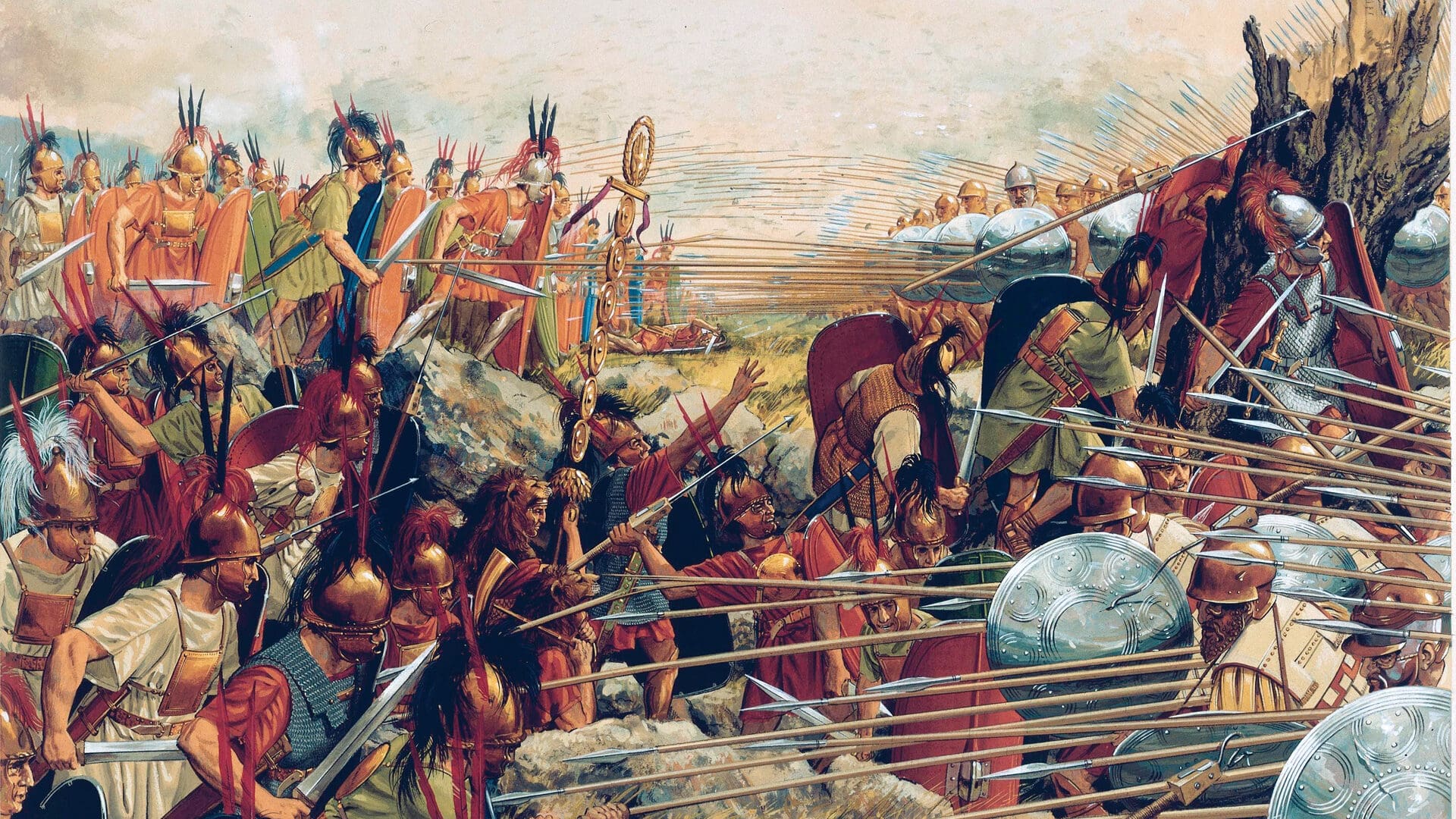
Overview of the era of Roman Warfare
From the rise of the early Republic in 509 BC to the fall of the Western Empire in AD 476, Roman warfare shaped the political and military landscape of Europe, North Africa, and the Near East for nearly a millennium. Rome’s armies evolved from citizen militias into highly professional legions supported by auxilia drawn from across the empire. Their success rested on discipline, engineering, logistics, and an ability to adapt foreign weapons, tactics, and ideas, whether from Samnites, Greeks, Carthaginians, Gauls, Persians or Huns.
Over this long span of history, Roman commanders refined siegecraft, field fortification, naval warfare, and combined-arms manoeuvre on a scale unmatched by their contemporaries. From the Battle of Cannae to the Siege of Alesia and the Battle of the Catalaunian Plains, from the Teutoburg Forest to the eastern frontier, the Roman way of war influenced every army it encountered.
This section gathers the essential reading that illuminates Rome’s military system, campaigns, commanders, and enduring legacy.
Related Battle Studies, Museum Pieces & Reading Resources
 ⚔️ Siege of Alesia,
Caesar’s Gallic Wars,
~September 52 BC
 🏛️ Ancient and Medieval World (500 BC to 1453 AD) Weapons and Equipment
 ⚔️🔒Battle of the Catalaunian Fields, France, ~20 June 451 AD
 ⚔️ 509 BC–AD 476 Roman Wars, Battle Studies
 📝🔒 Field Note: Battle of Teutoburg Forest (Kalkriese), Germany, AD 9
The Amazon links on the Reading Room pages are powered by AAWP

Reading
The reference collection below includes the key books and references I have used in preparing for and undertaking studies of ancient battlefields.
[ex-toc]
Roman Wars


Barbarian invasions of Europe

The Day of the Barbarians: The Battle That Led to the Fall of the Roman Empire
On August 9, 378 AD, at Adrianople in the Roman province of Thrace (now western Turkey), the Roman Empire began to fall. Two years earlier, an unforeseen flood of refugees from the East Germanic tribe known as the Goths had arrived at the Empire’s eastern border, seeking admittance. Though usually successful in dealing with barbarian groups, in this instance the Roman authorities failed. Gradually coalesced into an army led by Fritigern, the barbarian horde inflicted on Emperor Valens the most disastrous defeat suffered by the Roman army since Hannibal’s victory at Cannae almost 600 years earlier.


Authored by Mick Prictor, a retired military officer with 40 years’ service, and a military historian specialising in terrain-focused analysis of tactics, doctrine, and command decision-making in land warfare. His work draws on extensive battlefield fieldwork—more than 280 sites worldwide—and one of the world’s largest private collections of historic military arms, uniforms, and equipment. About me
FAQ – Roman Warfare Reading Room
This reading list is curated to prioritise works that examine Roman warfare through evidence-based analysis of organisation, command structures, logistics, weapons, and terrain. Preference is given to studies grounded in primary sources, archaeology, and critical historiography rather than purely narrative or romanticised accounts.
While the legion is central to Roman military power, the list also includes works that address auxiliary forces, allies, enemies, logistics, and the broader operational systems that allowed Roman armies to function across diverse terrains and regions.
Terrain played a decisive role in Roman operations. Roads, river crossings, fortifications, camps, and battle sites were selected and engineered to control movement and supply. Roman commanders consistently sought to shape terrain through fortification and preparation in order to reduce uncertainty at the point of decision.
The list includes a mix of accessible overviews and more specialised academic studies. Readers new to Roman warfare may wish to begin with the general works before progressing to detailed campaign, organisational, or archaeological analyses.
No. This is a selective reading list designed to guide serious study rather than provide exhaustive coverage. Additional works may be added as scholarship evolves and new evidence emerges.
Subscribe to Battlefield Travels and receive a free E-Book Battlefield Guide
Unlock expert battlefield analysis, campaign reconstructions, and historical insights drawn from firsthand exploration and primary sources.
🗺️ You’ll receive:
🎖️ Exclusive historical insights you won’t find elsewhere
📘 A free eBook: 10 Tips for Exploring Historic Battlefields
📰 New battlefield studies straight to your inbox as they are published

⚔️ Go deeper — Members get exclusive access to the Deep Research Collection, Field Notes, and monthly Research Dispatches. Try membership free for 7 days, cancel anytime. From $9/month.
{ “@context”: “https://schema.org”, “@type”: “CollectionPage”, “name”: “Ancient Roman Warfare (c. 509 BC–AD 476) – Recommended Reading”, “description”: “Curated reading on Roman warfare from 509 BC to AD 476, covering the legions, campaigns, commanders and the evolution of Rome’s military system across nearly a millennium.”, “url”: “https://battlefieldtravels.com/recommended-reading/ancient-rome-books/”, “breadcrumb”: { “@type”: “BreadcrumbList”, “itemListElement”: [ { “@type”: “ListItem”, “position”: 1, “name”: “Home”, “item”: “https://battlefieldtravels.com/” }, { “@type”: “ListItem”, “position”: 2, “name”: “Reading Room & Support Hub”, “item”: “https://battlefieldtravels.com/recommended-reading/” }, { “@type”: “ListItem”, “position”: 3, “name”: “Ancient Roman Warfare (c. 509 BC–AD 476)”, “item”: “https://battlefieldtravels.com/recommended-reading/ancient-rome-books/” } ] } }