Selected works on the Anglo-Zulu War
Second Boer War – Recommended Reading
Understanding the conflict through contemporary and modern historians
The literature of the Second Boer War is unusually rich, drawing together eyewitness accounts, early narrative histories, and modern scholarly reassessments of strategy, politics and terrain. For anyone seeking to understand the war in depth — whether as a historian, battlefield traveller, or student of small-unit evolution — the works of the major commentators form an indispensable foundation.
Among the contemporary voices, Bennett Burleigh’s The Natal Campaign offers one of the clearest frontline perspectives from a seasoned war correspondent, capturing both the friction of operations and the landscape in which they were fought. Winston Churchill’s London to Ladysmith provides a vivid account of movement, captivity and escape, as well as early reflections on British operational shortcomings. Arthur Conan Doyle’s The Great Boer War, though occasionally coloured by patriotic sentiment, remains a remarkably detailed and readable overview of the conflict’s opening phases.
Twentieth-century historians broadened the scale and sharpened the analysis. Byron Farwell brought narrative clarity; Thomas Pakenham produced a sweeping, meticulously researched synthesis that remains the standard single-volume account; and John Laband’s The Transvaal Rebellion provides one of the most terrain-aware examinations of the Natal theatre. More recently, Bill Nasson’s The War for South Africa stands out for its balanced treatment of Boer, British, and African experiences, situating the war within a larger regional and social context.
Taken together, these authors illuminate different dimensions of the conflict: the lived experience of battle, the political stakes, the evolution of tactics, and the enduring importance of ground — from the Tugela River crossings to the Ladysmith approaches and the exposed summit of Spion Kop. Their works complement the battlefield studies presented on this site, offering readers essential background, critical perspectives, and a deeper understanding of how this war shaped the transition from Victorian to modern combat.
Related Battle Studies, Museum Pieces & Reading Resources
 🏛️ Anglo-Zulu War (1879) Weapons and Equipment
 🏛️ Second Anglo-Afghan War (1879) Weapons and Equipment
 ⚔️🔒Battle of Spion Kop, Natal,
23-24 January 1900
 ⚔️ Battle of Isandlwana, South Africa,
22 January 1879
 🏛️ French Colonial Wars (1830–1940 ) Weapons and Equipment
 ⚔️ Winston Churchill and the Armoured Train Incident: Chieveley, Natal, 15 November 1899
The Amazon links on the Reading Room pages are powered by AAWP

Reading
The reference collection below includes the key books and references I have used in preparing for and undertaking studies of the Anglo-Zulu War battlefields.
Anglo-Boer War
Note that many of the early works are also available for download via Gutenburg, Internet Archive or other sources listed on the Primary Sources page.

The Natal Campaign by Bennet Burleigh
Bennet Burleigh’s The Natal Campaign is a riveting account of the 1879 Anglo-Zulu war in South Africa. From the Battle of Isandlwana to the siege of Eshowe, Burleigh’s reporting brings to life the heroism and tragedy of this brutal conflict. Drawing upon interviews with soldiers and eyewitnesses, Burleigh delivers a vivid and unforgettable portrait of war in colonial Africa.

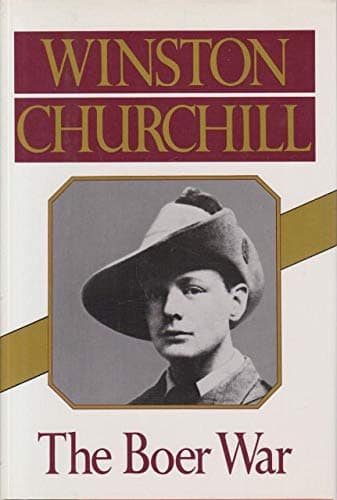
The Boer War (London to Ladysmith via Pretoria) by Winston S. Churchill
Like almost everything Churchill wrote, the style makes for compelling reading. Churchill was in the thick of it. He survived the armoured train ambush at Chieveley, was imprisoned by the Boers, and made a daring escape across the border into what is now Mozambique. A month later he was back at the fron t with Redvers Buller at the Battle of Spion Kop, personally reconnoitring the situation on the summit and reporting it to General Warren. A brilliant account!!

The Great Boer War by Arthur Conan Doyle
The Great Boer War by Arthur Conan Doyle is a detailed and compelling account of the South African conflict between the British Empire and the Boer Republics (1899–1902). Drawing from firsthand observations and thorough research, Doyle provides a vivid narrative of military strategies, key battles, and the broader political implications of the war. This historical work stands as an essential read for those interested in military history and British imperialism.
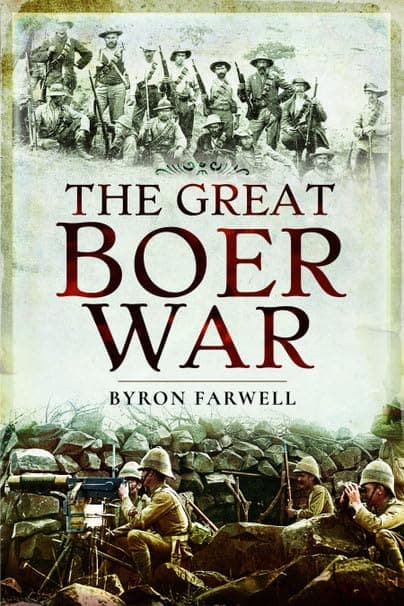
The Great Boer War by Byron Farwell
Byron Farwell traces the war’s origins, the slow mounting of the British efforts to overthrow the Afrikaners, the bungling and bickering of the British command, the remarkable series of bloody battles that almost consistently ended in victory for the Boers over the much more numerous British forces, political developments in London and Pretoria, the sieges of Ladysmith, Mafeking and Kimberley, the concentration camps into which Boer families were herded and the exhausting guerrilla warfare of the last few years when the Boer armies were finally driven from the field.

The Boer War by Thomas Pakenham
Thomas Pakenham, whose narrative is based on firsthand but largely unpublished sources, has written the first full-scale documentary history of the war to be attempted since 1910. He has combed the original British documents in the Public Record Office and the material in South African archives, and has traced the private papers of most of the principals (for example, he found the letters of Sir Redvers Buller—the British commander-in-chief in 1899—hidden under the billiard table at Buller’s house in Devon). He also unearthed new material from the trunkloads of Lord Roberts’s papers, discovered a massive secret journal of the war compiled by the War Office Intelligence Department, and found the private letters from the War Minister, Lord Lansdowne, and other members of the Cabinet.

Authored by Mick Prictor, a retired military officer with 40 years’ service, and a military historian specialising in terrain-focused analysis of tactics, doctrine, and command decision-making in land warfare. His work draws on extensive battlefield fieldwork—more than 280 sites worldwide—and one of the world’s largest private collections of historic military arms, uniforms, and equipment. About me
Frequently asked questions – Boer War
Excellent starting points include Byron Farwell’s The Great Anglo-Boer War and Thomas Pakenham’s The Boer War. Both offer clear narrative overviews and accessible analysis of strategy, politics and the evolution of the conflict.
Bill Nasson’s The War for South Africa is widely regarded as one of the most balanced and authoritative modern studies, offering perspectives from British, Boer and African sources. John Laband also provides detailed, terrain-aware work on the campaigns in Natal.
Yes. Eyewitness works by Bennett Burleigh, Winston Churchill and Arthur Conan Doyle remain valuable for their immediacy and detail. While coloured by the biases of their time, these books provide first-hand impressions of mobility, morale and battlefield conditions.
Interpretations differ because the war sits at the intersection of imperial ambition, regional politics, race, economics and emerging modern military practice. Historians place different weight on these factors, leading to varied conclusions about British strategy and Boer resistance.
Recent work incorporates a broader range of sources, including African perspectives, guerrilla warfare studies, social history and environmental factors. This has deepened understanding of logistics, rural devastation, and the transition from conventional to guerrilla fighting.
Subscribe to Battlefield Travels and receive a free E-Book Battlefield Guide
Unlock expert battlefield analysis, campaign reconstructions, and historical insights drawn from firsthand exploration and primary sources.
🗺️ You’ll receive:
🎖️ Exclusive historical insights you won’t find elsewhere
📘 A free eBook: 10 Tips for Exploring Historic Battlefields
📰 New battlefield studies straight to your inbox as they are published

⚔️ Go deeper — Members get exclusive access to the Deep Research Collection, Field Notes, and monthly Research Dispatches. Try membership free for 7 days, cancel anytime. From $9/month.