Skip to content
Home » 📚The Reading Room » 📚 Anglo-Zulu War (1879), Recommended Reading

📚 Anglo-Zulu War (1879),
Recommended Reading

Selected works on the Anglo-Zulu War

Anglo-Zulu War - the British defeat at Isandlwana, 22 January 1879
Anglo-Zulu War – the British defeat at Isandlwana, 22 January 1879

Overview of the Anglo-Zulu War

The Anglo–Zulu War of 1879 was fought between the British Empire and the Zulu Kingdom in southern Africa. Sparked by imperial ambitions to consolidate control over south Africa, the conflict followed an ultimatum to King Cetshwayo demanding the disbandment of his army and acceptance of British suzerainty. When the Zulus refused, Lord Chelmsford invaded Zululand in January 1879 with three columns totalling about 17,000 men.

Early operations exposed British overconfidence. At Isandlwana on 22 January, a Zulu impi of some 20,000 warriors encircled and annihilated a British column, inflicting one of the British Empire’s worst defeats. The same day, a small garrison at Rorke’s Drift repelled repeated assaults, earning 11 Victoria Crosses and symbolic redemption.

Subsequent campaigns demonstrated the British Empire’s capacity for recovery. Reinforced and re-organised, Chelmsford advanced again in June, defeating the Zulu army at Ulundi on 4 July. The destruction of the Zulu military system and Cetshwayo’s capture ended the war, though sporadic resistance persisted.

The campaign combined close-quarter colonial fighting with the industrial firepower of breech-loaders, artillery, and Gatling guns. It exposed the tension between imperial policy and local command judgement, and remains one of the best-studied examples of asymmetric warfare in the Victorian era.


Reading

The reference collection below includes the key books and references I have used in preparing for and undertaking studies of the Anglo-Zulu War battlefields.

Anglo-Zulu War

Rorke’s Drift and Isandlwana: Great Battles
The battle of Isandlwana on 22 January 1879, the first major encounter in the Anglo-Zulu War, witnessed the worst single day’s loss of British troops between the battle of Waterloo in 1815 and the opening campaigns of the First World War in August 1914. Moreover, decisive defeat at the hands of the Zulu came as an immense shock to a Victorian public that had become used to easy victories over less technologically advanced indigenous foes in an expanding empire. The successful defence of Rorke’s Drift, which immediately followed the encounter at Isandlwana (and for which 11 Victoria Crosses were awarded), averted military disaster and went some way to restore wounded British pride, but the sobering memory of defeat at Isandlwana lingered for many years, while the legendary tale of the defence of Rorke’s Drift was re-awakened for a new generation in the epic 1964 film Zulu, starring Michael Caine. In this new volume in the Great Battles series, Ian F. W. Beckett tells the story of both battles, investigating not only their immediate military significance but also providing the first overarching account of their continuing cultural impact and legacy in the years since 1879, not just in Britain but also from the once largely inaccessible and overlooked Zulu perspective.
The Rise & Fall of the Zulu Nation
One of the great untold stories of pre-colonial Africa at last receives a chronicle worthy of its significance. Revisit exotic Zululand, once the most powerful black state in Africa. It experienced only sixty years of independence, and during that time weathered more than other countries endure in centuries. See its rebellions by discontented subjects and ambitious princes, and the intrusions by traders, missionaries, and land-hungry settlers. View the seeds of its downfall in the invasion by the Dutch Voortrekkers, and its final destruction at the hands of the British — who, at the height of their imperial power, required a full, six-month-long military campaign to bring the kingdom down. Finally, look towards the future, and the ways in which the kingdom lives on in the dreams of the new South Africa. Dozens of black-and-white photographs, as well as sketches, capture Zululand’s undulating hillsides, its proud and self-assured people and artifacts, including ceremonial staffs, shields, woven baskets, and spears.
WASHING OF THE SPEARS – The Rise and Fall of the Zulu Nation Under Shaka and Its Fall in the Zulu War of 1879
Filled with colorful characters, dramatic battles like Isandhlwana and Rorke’s Drift, and an inexorable narrative momentum, this unsurpassed history details the sixty-year existence of the world’s mightiest African empire—from its brutal formation and zenith under the military genius Shaka (1787–1828), through its inevitable collision with white expansionism, to its dissolution under Cetshwayo in the Zulu War of 1879.
Sale
Zulu Victory: The Epic of Isandlwana and the Cover-up
The battle of Isandlwana – a great Zulu victory – was one of the worst defeats ever to befall a British Army. At noon on 22 January 1879, a British camp, garrisoned by over 1700 troops, was attacked and overwhelmed by 20,000 Zulu warriors. The defeat of the British, armed with the most modern weaponry of the day, caused disbelief and outrage throughout Queen Victoria’s England. The obvious culprit for the blunder was Lieutenant General Lord Chelmsford, the defeated commander. Appearing to respond to the outcry, he ordered a court of inquiry. But there followed a carefully conducted cover-up in which Chelmsford found a scapegoat in the dead – most notably, in Colonel Anthony Durnford. Using source material ranging from the Royal Windsor Archives to the oral history passed down to the present Zulu inhabitants of Isandlwana, this gripping history exposes the full extent of the blunders of this famous battle and the
Sale
Rorke’s Drift Revisited: A New Account of the Most Famous Battle of the Anglo-Zulu War
Dr Adrian Greaves’ is widely acknowledged as a leading expert on the Anglo-Zulu War of 1879 and his previous account of Rorke’s Drift has become a standard work on that battle. However, by his own admission, it is hopelessly out of date as are other existing accounts. Rorke’s Drift Revisited is not merely a revised edition of that earlier work but a completely new account with much new research that challenges many misconceptions and myths. Explaining how previous accounts have been distorted by false reporting, false memory syndrome, ignorance of the site and archaeological evidence, the author presents fascinating fresh evidence and analysis. Among the more sensational revelations is that Lieutenant John Chard did not write the famous Chard Report, which has been the main primary source for the battle. He also shows that neither Lieutenant Ardendorff nor the missionary Reverend Otto Witt was there. Nor were the famous mealie-bag-and-biscuit-box barricades hastily erected, as per the film; they were carefully planned and built over several preceding days. Drawing on previously neglected eyewitness accounts as well as the latest archaeological evidence, there is a wealth of other new information and fresh perspectives. The shift in perceptions of the battle and its hold on the national psyche is also discussed. Uniquely, over a quarter of a century of physically revisiting Rorke’s Drift and associated sites as a tour leader allows him to give an accurate appraisal of the battlefield today. Read more
Zulu Rising: The Epic Story of iSandlwana and Rorke’s Drift
The battle of Isandlwana was the single most destructive incident in the 150-year history of the British colonization of South Africa. In one bloody day more than 800 British troops, 500 of their allies, and at least 2,000 Zulus were killed in a staggering defeat for the British empire. The consequences of the battle echoed brutally across the following decades as Britain took ruthless revenge on the Zulu people. In Zulu Rising Ian Knight shows that the brutality of the battle was the result of an inevitable clash between two aggressive warrior traditions. For the first time he gives full weight to the Zulu experience and explores the reality of the fighting through the eyes of men who took part on both sides, looking into the human heart of this savage conflict. Based on new research, including previously unpublished material, Zulu oral history, and new archaeological evidence from the battlefield, this is the definitive account of a battle that has shaped the political fortunes of the Zulu people to this day.


FAQ – Anglo-Zulu War (1879) Reading Room

How were the books in this Anglo-Zulu War reading list selected?

A: This reading list is curated to prioritise works that examine the Anglo-Zulu War through operational analysis, command decision-making, terrain, and force employment. Emphasis is placed on studies grounded in primary sources and careful reconstruction of events rather than legend, hindsight, or popular myth.

Does this reading list focus only on Isandlwana and Rorke’s Drift?

While these battles are necessarily represented, the list also includes works that address broader operational context, Zulu military practice, British column tactics, and lesser-known engagements that are essential to understanding how the campaign unfolded.

How important was terrain in the Anglo-Zulu War?

Terrain was decisive. Open plains, broken ground, dongas, ridgelines, and river crossings shaped movement, visibility, and tactical options for both sides. Misreading terrain—particularly in relation to concealment and approach routes—had severe consequences for command decision-making.

Are these books suitable for readers new to the Anglo-Zulu War?

The list includes both accessible overviews and more specialised analytical studies. Readers new to the subject may wish to begin with the general histories before progressing to detailed battle or unit-level analyses.

Is this intended to be a complete bibliography of the Anglo-Zulu War?

No. This is a selective reading list intended to guide serious study rather than provide exhaustive coverage. Additional works may be added as new research and perspectives emerge.


Subscribe to Battlefield Travels and receive a free E-Book Battlefield Guide

Unlock expert battlefield analysis, campaign reconstructions, and historical insights drawn from firsthand exploration and primary sources.

🗺️ You’ll receive:

🎖️ Exclusive historical insights you won’t find elsewhere

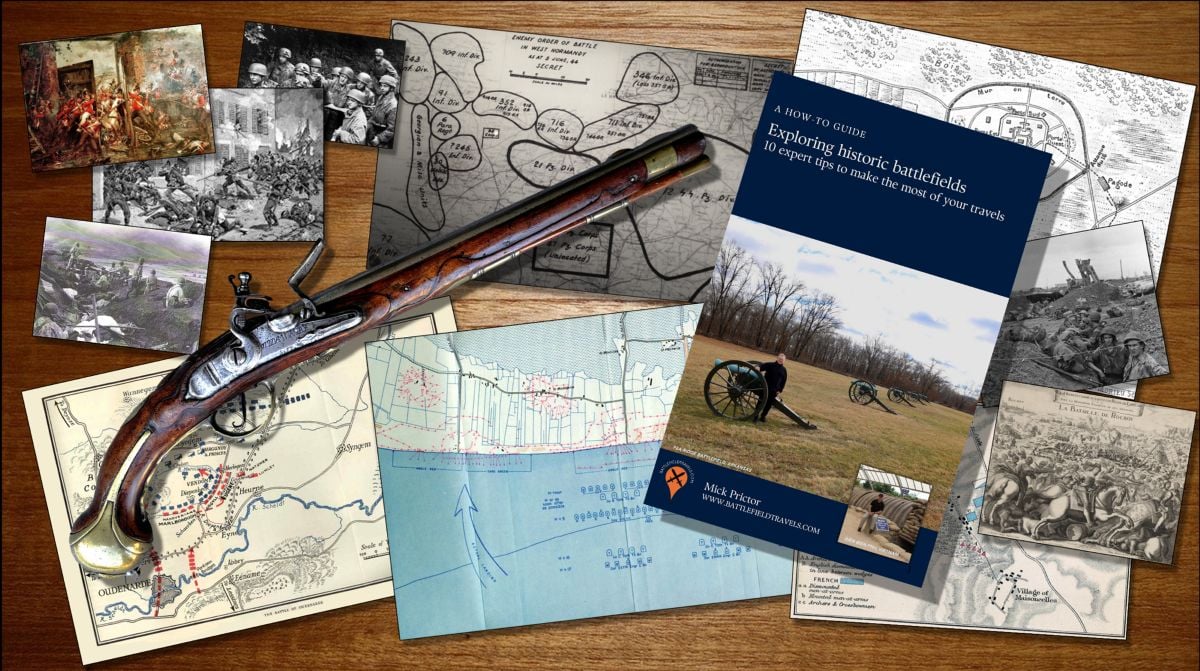
📘 A free eBook: 10 Tips for Exploring Historic Battlefields

📰 New battlefield studies straight to your inbox as they are published


Comments — I welcome your feedback and contributions
