Selected works on historic arms manufacturers
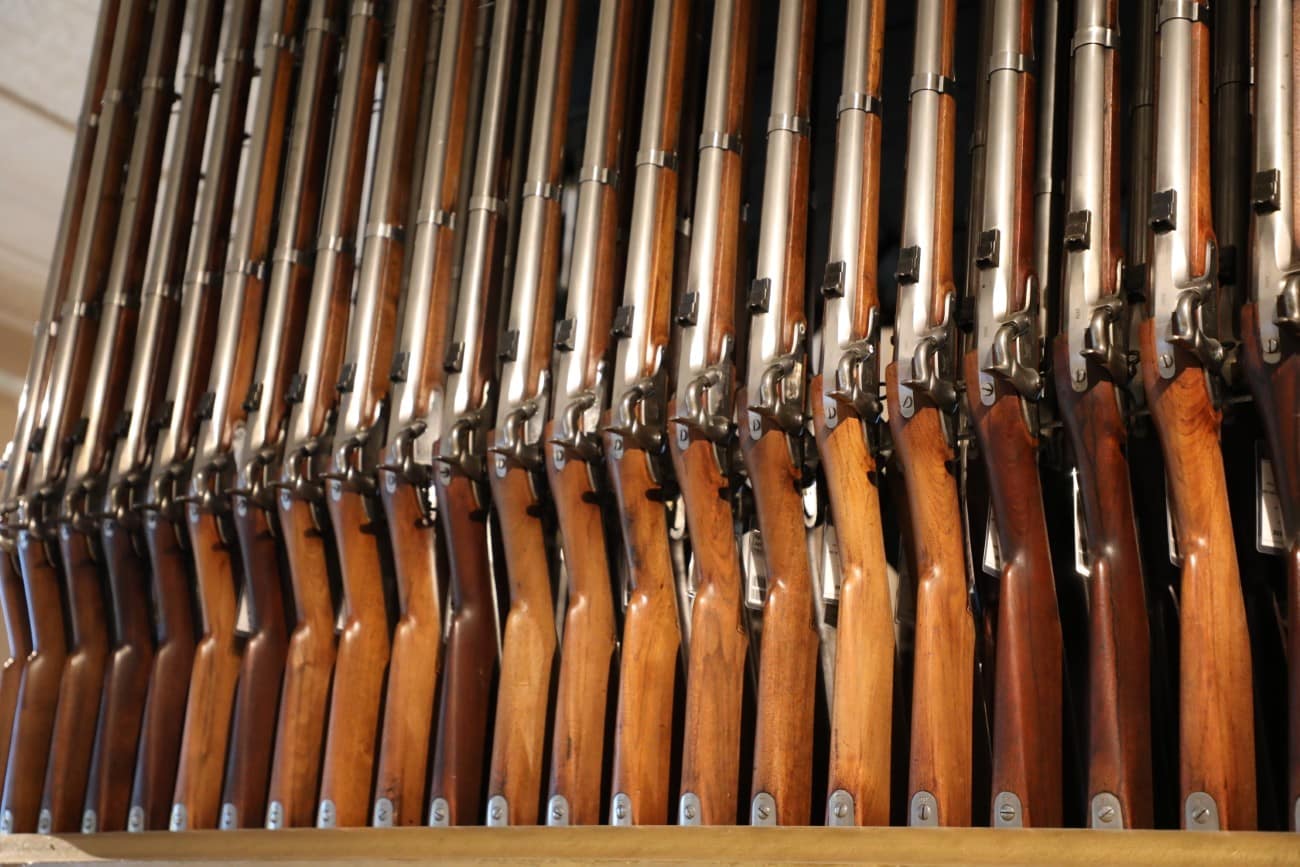
Small arms manufacturers
The industrial history of arms manufacture reveals as much about the evolution of warfare as any battlefield. From eighteenth-century arsenals to twentieth-century small-arms factories, armouries served as the technological backbone of national power. The pattern armouries of Charleville, Enfield, and Potsdam standardised flintlock musket production for their respective armies, providing interchangeable weapons for the massed formations of the Napoleonic era.
During the nineteenth century, the United States established federal armouries at Springfield and Harpers Ferry, pioneering mechanised production and precision tooling. Their influence extended globally, inspiring facilities such as Enfield in Britain and the Lithgow Small Arms Factory in Australia. The rise of private industry — exemplified by Colt, Winchester, and Remington — introduced mass production, revolvers, and repeating rifles that reshaped tactics and logistics.
In the Confederacy, the Tredegar Iron Works of Richmond became the South’s principal arsenal, producing cannon and shot under wartime siege conditions. By the mid-twentieth century, industrial small-arms production had evolved into a global enterprise blending engineering, chemistry, and state control. These armouries symbolised the convergence of craftsmanship and mechanisation that defined modern warfare and remain key heritage sites for military historians today.
Related Battle Studies, Museum Pieces & Reading Resources


The Amazon links on the Reading Room pages are powered by AAWP

Reading
The reference collection below includes the key books and references I have used in preparing for and exploring historic arms manufacturing facilities around the world.
Armouries


Authored by Mick Prictor, a retired military officer with 40 years’ service, and a military historian specialising in terrain-focused analysis of tactics, doctrine, and command decision-making in land warfare. His work draws on extensive battlefield fieldwork—more than 280 sites worldwide—and one of the world’s largest private collections of historic military arms, uniforms, and equipment. About me
FAQ – Arms Manufacturers Reading Room
This reading list is curated to focus on works that examine arms manufacturers in their historical, industrial, and military contexts. Priority is given to studies that explore the relationship between weapon design, production, doctrine, and battlefield use, rather than company histories written solely from a commercial or promotional perspective.
Yes. The selection includes works on small arms manufacturers as well as firms involved in artillery, ammunition, and industrial-scale weapons production, where these had a significant impact on military capability and operational practice.
Arms manufacturers shape the weapons available to soldiers and commanders, influencing tactics, training, logistics, and ultimately decision-making on the battlefield. Understanding how weapons were designed, produced, and adopted helps explain why armies fought the way they did in different periods.
While technical aspects are addressed where relevant, the emphasis is on historical analysis—how weapons moved from design to service, how they were employed in combat, and how industrial capacity constrained or enabled military operations.
No. This is a selective reading list intended to guide further study rather than provide exhaustive coverage. It focuses on manufacturers whose products had demonstrable influence on warfare and military practice.
Subscribe to Battlefield Travels and receive a free E-Book Battlefield Guide
Unlock expert battlefield analysis, campaign reconstructions, and historical insights drawn from firsthand exploration and primary sources.
🗺️ You’ll receive:
🎖️ Exclusive historical insights you won’t find elsewhere
📘 A free eBook: 10 Tips for Exploring Historic Battlefields
📰 New battlefield studies straight to your inbox as they are published

⚔️ Go deeper — Members get exclusive access to the Deep Research Collection, Field Notes, and monthly Research Dispatches. Try membership free for 7 days, cancel anytime. From $9/month.