This Reading Room selection brings together the most accurate, insightful, and strategically valuable books on the French Indochina War (1946–1954). Every title has been hand-curated based on its use of primary sources, operational clarity, and relevance to understanding the decisions, terrain, command dynamics, and campaigns of the conflict.
This is not an exhaustive bibliography — it is a best-in-class recommended reading list designed for serious readers, battlefield historians, and anyone seeking a deeper understanding of the Franco-Viet Minh war.
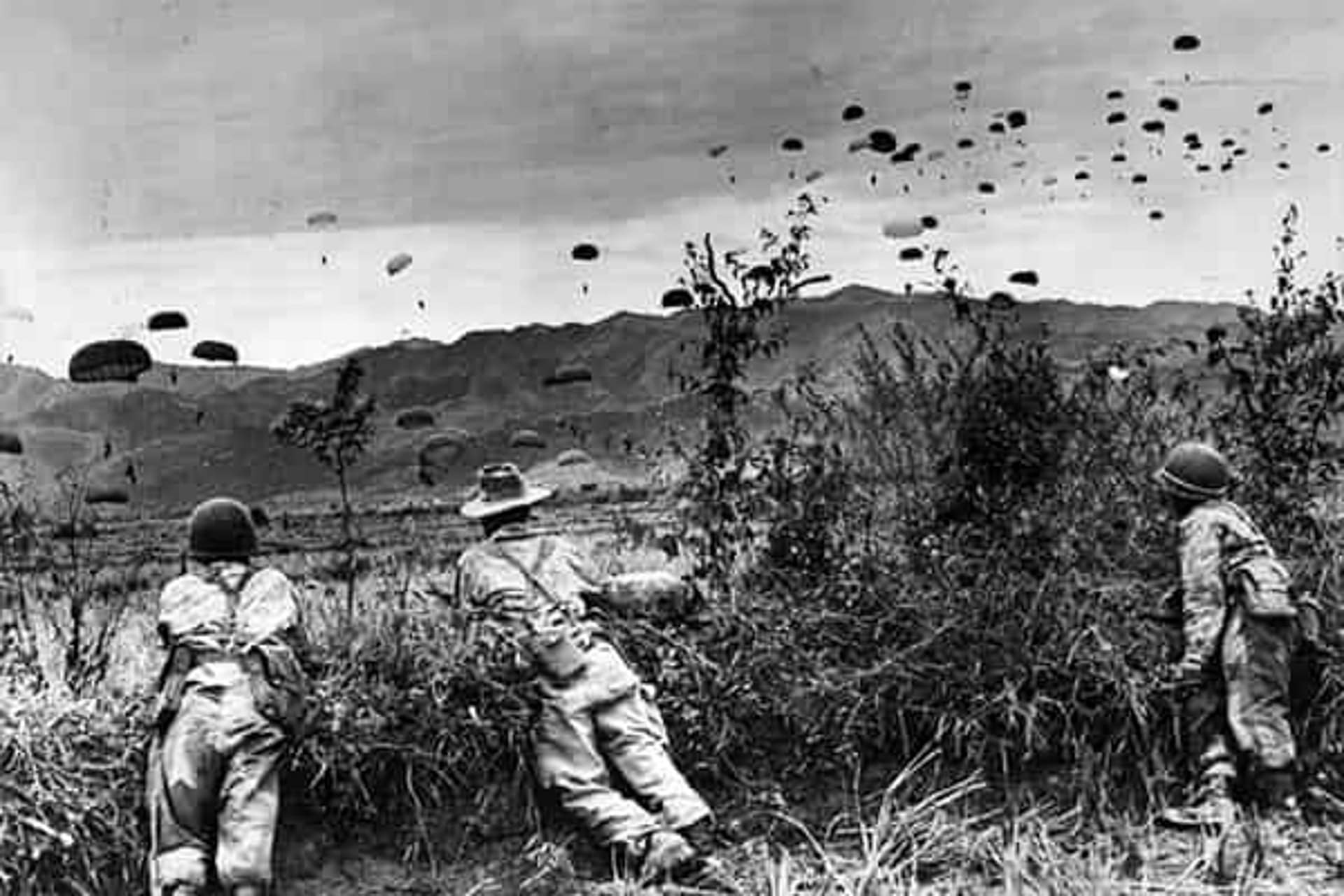
Understanding a complex decolonisation conflict through its historians and primary sources
The French Indochina War (1946–1954) has generated a rich and evolving body of literature, shaped by the perspectives of French officers, Viet Minh veterans, foreign observers, and modern scholars of insurgency and counterinsurgency. Unlike many mid-20th-century conflicts, the available sources span official reports, campaign journals, personal memoirs, and later analytical studies — each contributing to a deeper understanding of the strategic dilemmas, operational choices, and terrain-driven realities of the war.
Much of the early English-language reading on the conflict drew upon French officer memoirs and operational studies. Classics such as Bernard Fall’s Street Without Joy and Hell in a Very Small Place remain indispensable for their combination of tactical detail, political insight, and fieldwork-based observation. Fall’s ability to integrate interviews, battlefield exploration, and archival research made him the foundational Western historian of the war. French officers such as General Võ Nguyên Giáp (for the Viet Minh side), Paul Galula, and Roger Trinquier contribute additional layers of interpretation — from revolutionary warfare to counterinsurgency theory — helping readers understand how doctrine evolved in response to battlefield experience.
Modern scholarship has broadened the lens. Historians such as Martin Windrow, Henri Navarre, Pierre Journoud, Christopher Goscha, and Fredrik Logevall situate the war within the wider dynamics of nationalism, decolonisation, and Cold War geopolitics. Their work illuminates the tensions within the French high command, the political and logistical constraints shaping CEFEO operations, and the Viet Minh’s development into a capable and adaptive field army. Studies of the northern campaigns — particularly Route Coloniale 4, and the continuous fighting along the mountainous Sino-Vietnamese frontier — reveal how terrain, mobility, command culture and intelligence shaped outcomes long before the climactic battle at Điện Biên Phủ.
For the battlefield historian or serious reader, these books offer multiple avenues into the conflict: operational analysis, strategic debate, political context, personal testimony, and the lived experience of fighting in the jungles, highlands and river valleys of Indochina. The titles gathered here provide curated entry points into that literature, supporting deeper study of campaigns such as Phu Tong Hoa where the Viet Minh learned combined arms tactics, the RC4 disaster of 1950, the de Lattre counter-offensives, bold counterstrokes like Operation HIRONDELLE, and the final set-piece at Điện Biên Phủ.
Whether approaching the war from the perspective of military history, counterinsurgency, decolonisation, or battlefield terrain analysis, these works form the essential foundation for understanding how France lost Indochina — and how the Viet Minh learned to win.
Related Battle Studies, Museum Pieces & Reading Resources
 ⚔️🔒Operation LÉA,
(Việt Bắc Campaign), Tonkin,
Oct–Nov 1947
 ⚔️🔒Operation HIRONDELLE, (Raid on Lạng Sơn), Vietnam,
17-21 July 1953
 ⚔️🔒Battle of Route Coloniale 4,
(Cao Bang Ridge Disaster),
16 Sep-18 Oct 1950
 ⚔️🔒Battle of Phủ Tông Hoá, Tonkin, 25 July 1948
 ⚔️ Battle for Dien Bien Phu, Vietnam,
13 March – 7 May 1954
 🏛️ French Indochina War (1946–1954) Weapons and Equipment
The Amazon links on the Reading Room pages are powered by AAWP

Reading
The reference collection below includes the key books and references I have used in preparing for and undertaking French Indochina War battlefield studies.
French Indochina War overview


Best works on the Battle of Route Coloniale No. 4 (French)


Best works on the Battle for Dien Bien Phu


The legendary story of Bigeard’s 6th Colonial Paras at Tu Le (French)

Firsthand account by a French colonial paratrooper, Hoa Binh offensive


Authored by Mick Prictor, a retired military officer with 40 years’ service, and a military historian specialising in terrain-focused analysis of tactics, doctrine, and command decision-making in land warfare. His work draws on extensive battlefield fieldwork—more than 280 sites worldwide—and one of the world’s largest private collections of historic military arms, uniforms, and equipment. About me
Frequently asked questions – Indochina War
Bernard Fall’s Street Without Joy and Hell in a Very Small Place remain the most accessible introductions, blending operational detail with on-the-ground reporting. For a broader strategic overview, Fredrik Logevall’s Embers of War is an excellent starting point.
Martin Windrow, Christopher Goscha and Pierre Journoud are among the most influential contemporary scholars. Their work integrates Vietnamese, French and international sources, providing a balanced understanding of both the political and military dimensions of the war.
es. Memoirs by officers such as Roger Trinquier, Paul Galula and Henri Navarre provide invaluable insights into French doctrine, counterinsurgency thinking and the operational challenges faced by CEFEO forces. While subjective, they remain essential primary perspectives.
Viet Minh accounts vary in detail and transparency, but they offer crucial insights into organisation, logistics and political strategy. When combined with French archives, U.S. intelligence reporting and modern Vietnamese scholarship, they significantly enhance historical understanding.
Key debates include the effectiveness of French command and control, the impact of terrain on operations along the RC4 corridor, the evolution of Viet Minh strategy, and the extent to which the conflict foreshadowed later U.S. involvement in Vietnam.
Fall combined archival research with extensive fieldwork, interviews and first-hand observation of active combat zones. His ability to connect terrain, politics and military decision-making set a standard that has shaped scholarship ever since.
Subscribe to Battlefield Travels and receive a free E-Book Battlefield Guide
Unlock expert battlefield analysis, campaign reconstructions, and historical insights drawn from firsthand exploration and primary sources.
🗺️ You’ll receive:
🎖️ Exclusive historical insights you won’t find elsewhere
📘 A free eBook: 10 Tips for Exploring Historic Battlefields
📰 New battlefield studies straight to your inbox as they are published

⚔️ Go deeper — Members get exclusive access to the Deep Research Collection, Field Notes, and monthly Research Dispatches. Try membership free for 7 days, cancel anytime. From $9/month.