Selected works on the Korean War
Overview of the Korean War
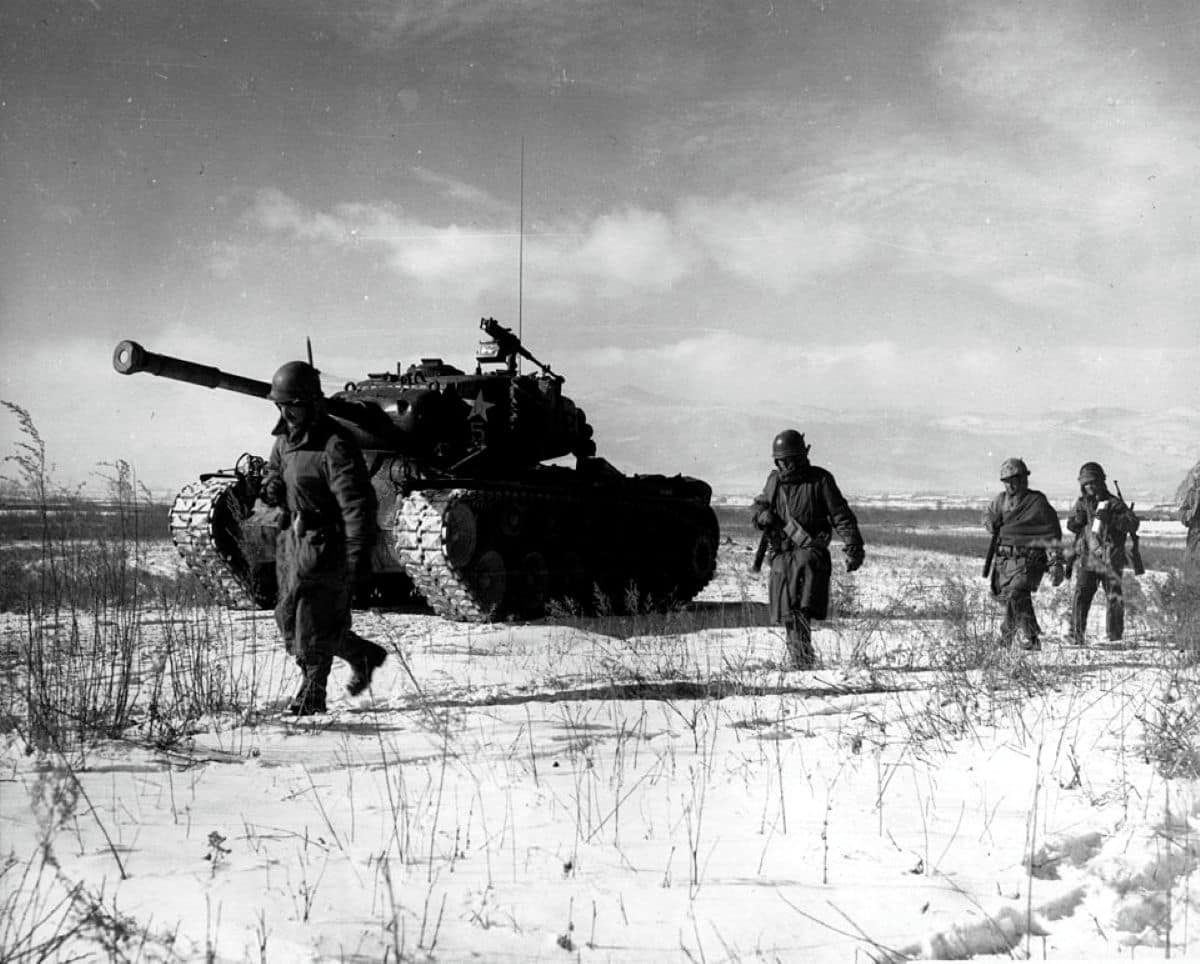
The Korean War (1950–1953) was the first major conflict of the Cold War and one of the most complex campaigns of the 20th century. Fought by a multinational United Nations coalition, led by the United States, with major contributions from the UK, Australia, Canada, Turkey, and others, against North Korean and Chinese forces, the war combined an opening phase of sweeping manoeuvre and rapidly changing fortunes, followed by a brutal but largely static phase of positional warfare. Korea’s mountains, narrow valleys, and harsh winters deeply influenced operations, including logistics and armour employment, to infantry tactics and air support.
From the Pusan Perimeter to the Inchon landing, from the Chosin Reservoir to the battles along the 38th Parallel, the conflict shifted rapidly between mobile warfare and protracted positional fighting. It also marked the first large-scale use of jet aircraft, integrated air-ground operations, and coalition command structures under modern conditions. The negotiations at Panmunjom dragged out for nearly two years while the fighting went on, and the war ended only with an agreement to an armistice.
This Reading Room section brings together the most authoritative books on the war’s strategy, operations, and individuals — from high-level decision-making in Washington, Beijing, and Moscow, to the experience of soldiers on the ground.
Related Battle Studies, Museum Pieces & Reading Resources
 📚 Sri Lankan Civil War (1983–2009),
Recommended Reading
 🏛️ Korean War (1950–1953) Weapons and Equipment
 🏛️ Vietnam War (1955–1975) Weapons and Equipment
 📚 Vietnam War (1955–75),
Recommended Reading
 ⚔️🔒The Son Tay Raid, North Vietnam,
21 November 1970
 ⚔️ Joint Security Area – Panmunjom, DMZ, North/South Korea, 1953 – ongoing
The Amazon links on the Reading Room pages are powered by AAWP

Reading
The reference collection below includes the key books and references I have used in preparing for and undertaking Korean War battlefield studies.
Korean War
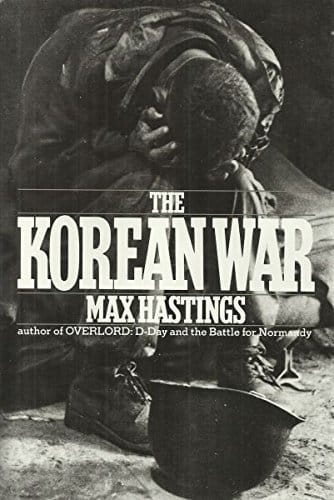
The Korean War by Max Hastings
It was the first war we could not win. At no other time since World War II have two superpowers met in battle. Now Max Hastings, preeminent military historian, takes us back to the bloody, bitter, struggle to restore South Korean independence after the Communist invasion of June 1950. Using personal accounts from interviews with more than 200 vets – including the Chinese – Hasting follows real officers and soldiers through the battles. He brilliantly captures the Cold War crisis at home – the strategies and politics of Truman, Acheson, Marshall, MacArthur, Ridgeway, and Bradley – and shows what we should have learned in the war that was the prelude to Vietnam


The Korean War by Matthew B. Ridgway
In December 1950 General Matthew B. Ridgway replaced General Walton Walker as commander of the Eighth Army, and in April 1951 he succeeded Douglas MacArthur as supreme commander of the United Nations forces in Korea and supreme commander of the United States Far East Command. In this spirited book, General Ridgway describes how he took a dispirited army and rebuilt it in a few short months, leading it into battle against the Chinese and North Korean forces, forcing them back over the 38th parallel and ”victory.” It is a book that takes a close look at MacArthur, his failings and brilliance, and a hard look at the idea of limited war. Infused with a humane leader’s appreciation for the ordinary fighting soldier, Ridgway’s history also teaches important lessons about Vietnam and any future conflict. Above all, he emphasizes: We should not involve ourselves in escalating warfare without a specific and attainable goal.

China’s Road to the Korean War by Jian Chen
This is one of the few books in the Reading Room that I don’t own. It will be fascinating to hear the perspectives from the CHinese side.
Through the use of recently released Chinese documents, conversations with People’s Republic of China scholars, and in-depth interviews with people who were present at key decision-making meetings, this book aims to discover China and the USSR’s roles in the outbreak of the Korean conflict.

The Battle of Kapyong: 3rd Battalion, the Royal Australian Regiment, Korea 23-24 April 1951
by Bob Breen
On the night of 22 April 1951, Chinese forces launched a major offensive against United Nations forces defending the South Korean capital, Seoul, and positions further east. Next morning the 27th British Commonwealth Brigade (including the 3rd Battalion, Royal Australian Regiment) was ordered to the valley of the Kapyong River about 60 kilometres north-east of Seoul, where South Korean forces were being driven back.
During a night of fierce fighting and throughout the daylight hours of 24 April the Australians and a Canadian battalion, supported by a New Zealand artillery regiment, stalled the Chinese advance before eventually withdrawing after dark. At a cost of 32 men killed, 59 wounded and three missing (taken prisoner), the Australians had helped hold up the Chinese 60th Division and inflicted heavy casualties which totalled more than 500 killed alone. For their contribution to this action, 3 RAR was awarded a US Presidential Citation.

Authored by Mick Prictor, a retired military officer with 40 years’ service, and a military historian specialising in terrain-focused analysis of tactics, doctrine, and command decision-making in land warfare. His work draws on extensive battlefield fieldwork—more than 280 sites worldwide—and one of the world’s largest private collections of historic military arms, uniforms, and equipment. About me
FAQ – Korean War Reading Room
This reading list is curated to prioritise works that examine the Korean War through operational analysis, command decision-making, terrain, and logistics. Preference is given to studies grounded in primary sources and campaign-level or tactical analysis rather than purely political or diplomatic histories.
While major campaigns are represented, the list also includes works that address less well-known actions, prolonged positional fighting, and the day-to-day realities of warfare in Korea’s mountainous and climatically severe terrain.
Terrain was a central factor. Korea’s rugged mountains, narrow valleys, river crossings, and limited road networks constrained movement, shaped logistics, and heavily influenced command decisions at every level, often overriding technological advantages.
The list includes both accessible overviews and more specialised studies. Readers new to the conflict may wish to begin with the general histories before moving on to campaign- or unit-level analyses.
No. This is a selective reading list intended to guide serious study rather than provide exhaustive coverage. Additional works may be added as research interests and available scholarship evolve.
Subscribe to Battlefield Travels and receive a free E-Book Battlefield Guide
Unlock expert battlefield analysis, campaign reconstructions, and historical insights drawn from firsthand exploration and primary sources.
🗺️ You’ll receive:
🎖️ Exclusive historical insights you won’t find elsewhere
📘 A free eBook: 10 Tips for Exploring Historic Battlefields
📰 New battlefield studies straight to your inbox as they are published

⚔️ Go deeper — Members get exclusive access to the Deep Research Collection, Field Notes, and monthly Research Dispatches. Try membership free for 7 days, cancel anytime. From $9/month.