Selected works on Medieval Warfare
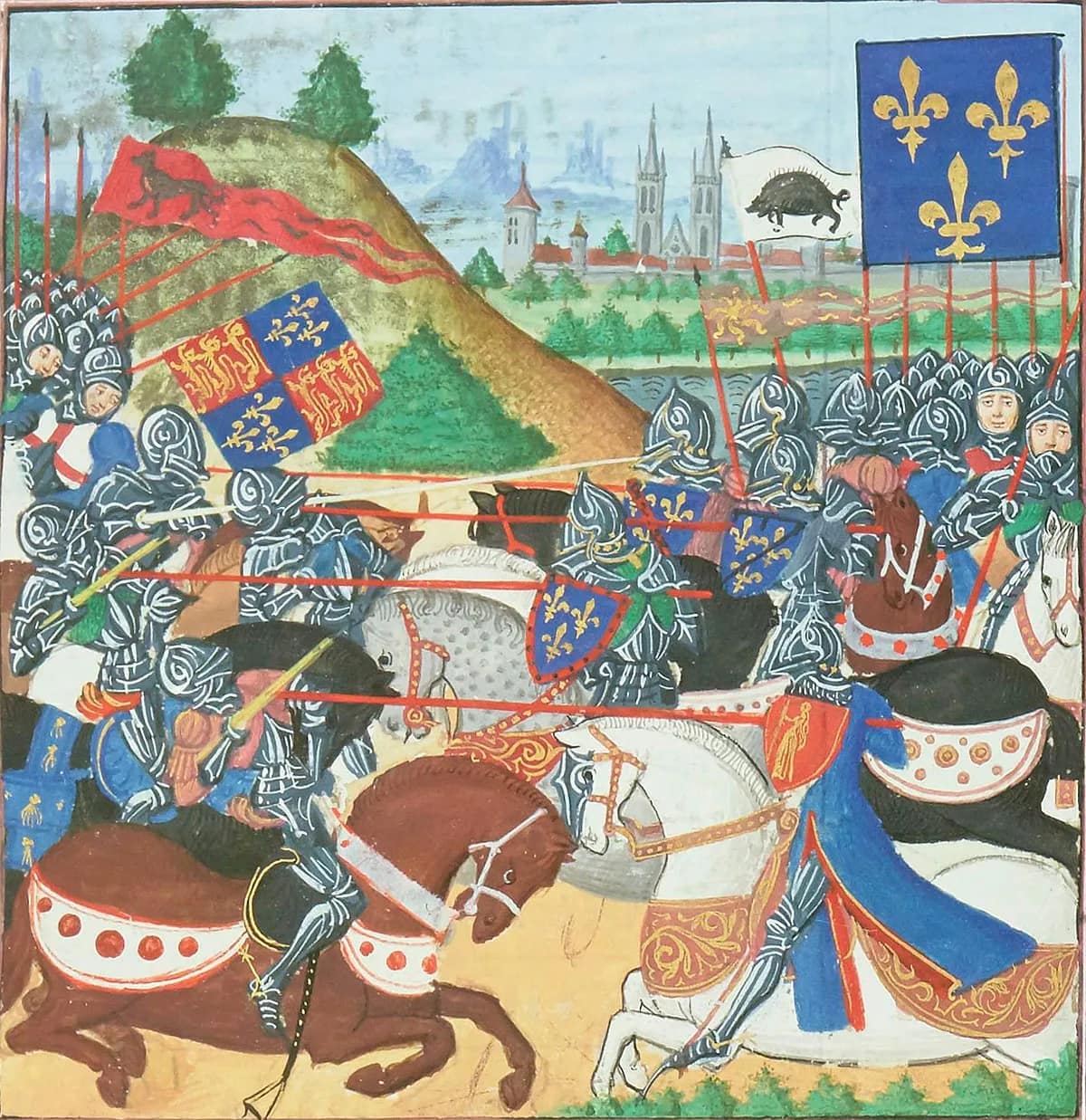
Understanding a thousand years of conflict through the historians who shaped the field
The study of medieval warfare spans more than a millennium of military, social and technological change, and its literature reflects the diversity and complexity of that evolution. Rather than a single historical arc, scholars have approached the medieval conflicts through multiple lenses: feudal obligation, chivalric culture, technological innovation, religious motivation, and the gradual emergence of centralised states. The result is a rich body of work that helps modern readers move beyond stereotypes of knights and castles to understand how and why medieval armies actually fought.
Much of the foundational scholarship centres on the structure of feudal military service, the development of the knightly class, and the shifting balance between cavalry, infantry and missile troops. Authors such as R. C. Smail, Hans Delbrück, and Charles Oman helped frame early academic debates, analysing the limitations of feudal levies and the tactical patterns visible from Hastings to the Crusades. More recent historians — including John France, Matthew Bennett, Christopher Gravett and David Nicolle — have brought sharper focus to campaign logistics, siegecraft, and the influence of terrain on medieval operations.
For the later Middle Ages, works by Jonathan Sumption, Anne Curry, Bertrand Schnerb, and Kelly DeVries offer detailed examinations of the Hundred Years’ War, exploring everything from longbow tactics at Crécy and Agincourt to the political and social factors behind shifting battlefield fortunes. Their studies also show how professionalism, paid armies and gunpowder warfare began to eclipse older feudal structures. On the eastern frontiers, the military histories of the Byzantine Empire and the Mongol conquests — illuminated by scholars such as John Haldon and Timothy May — reveal very different tactical systems and strategic cultures.
Together, these authors present a layered picture of medieval warfare: a world where faith, feudalism, technology, and emerging state power shaped how campaigns were fought and remembered. The Reading Room selections gathered here provide entry points into that vast scholarship, helping readers understand not just the battles themselves, but the historians and interpretations that define our modern understanding of the medieval battlefield.
Related Battle Studies, Museum Pieces & Reading Resources
 ⚔️ Battle of Patay, France,
18 June 1429
 ⚔️ Battle of Agincourt, France,
25 October 1415
 ⚔️ The Crusades: Kerak Castle under siege,
1183-1188
 ⚔️ 1337–1453 Hundred Years’ War, Battle Studies
 ⚔️ 1096–1291 The Crusades, Battle Studies
 📝🔒 Field Note: Siege of Orléans, France, May 1429 —battle for the Tourelles
The Amazon links on the Reading Room pages are powered by AAWP

Reading
The reference collection below includes the key books and references I have used in preparing for and undertaking studies of medieval battlefields.
Hundred Years War


The Crusades


Authored by Mick Prictor, a retired military officer with 40 years’ service, and a military historian specialising in terrain-focused analysis of tactics, doctrine, and command decision-making in land warfare. His work draws on extensive battlefield fieldwork—more than 280 sites worldwide—and one of the world’s largest private collections of historic military arms, uniforms, and equipment. About me
Frequently asked questions
Excellent entry points include works by Matthew Bennett, John France, and Christopher Gravett. These authors provide clear explanations of feudal military structures, tactical systems, and the evolution of arms and armour, making them ideal for readers new to the subject.
Medieval sources vary widely in reliability. Chronicles often blend fact, interpretation, and political messaging. Archaeology, manuscript illustrations, administrative records, and modern battlefield analysis help historians validate or challenge these accounts. Most modern scholarship cross-references multiple types of evidence.
Surviving records are fragmentary, and chroniclers rarely offer precise tactical detail. As a result, historians must interpret formations, weapon effects, and battlefield behaviour from limited evidence. This creates space for differing models of how knights, archers, infantry and crossbowmen actually fought.
Technological changes such as the stirrup, improved armour, the crossbow, the longbow, and early gunpowder weapons reshaped battlefield roles over time. Historians debate their relative impact, but most agree that combined-arms tactics and increasingly professional forces emerged from these innovations.
Today’s researchers combine traditional textual analysis with archaeology, GIS mapping, landscape study, experimental archaeology, and comparative tactical modelling. This interdisciplinary approach has transformed our understanding of battles such as Hastings, Crécy, and Agincourt.
Subscribe to Battlefield Travels and receive a free E-Book Battlefield Guide
Unlock expert battlefield analysis, campaign reconstructions, and historical insights drawn from firsthand exploration and primary sources.
🗺️ You’ll receive:
🎖️ Exclusive historical insights you won’t find elsewhere
📘 A free eBook: 10 Tips for Exploring Historic Battlefields
📰 New battlefield studies straight to your inbox as they are published

⚔️ Go deeper — Members get exclusive access to the Deep Research Collection, Field Notes, and monthly Research Dispatches. Try membership free for 7 days, cancel anytime. From $9/month.