Skip to content
Home » 📚The Reading Room » 📚 1756–1763 Seven Years War, Recommended Reading

📚 1756–1763 Seven Years War,
Recommended Reading

Selected works on the Seven Years War and the campaigns of Frederick the Great

Battle of Leuthen, Prussian Grenadiers assault on the Churchyard

Overview of the Seven Years War

The Seven Years War (1756–1763) was the first truly global conflict of the modern era, fought simultaneously in Europe, North America, the Caribbean, West Africa, and India. Sometimes described as the “world’s first world war,” it pitted Britain and Prussia against France, Austria, Russia, and Spain, with alliances shifting as the fighting spread across continents.

In Europe, the war was marked by Frederick the Great’s campaigns, where the Prussian army fought desperately for survival against numerically superior enemies. Battles such as Lobositz (1756), Rossbach (1757), Leuthen (1757), and Kunersdorf (1759) highlighted the discipline and tactical innovation that made Prussia a major power. Britain, meanwhile, waged its own global war at sea and in the colonies, fighting against France in Canada, the Caribbean, and India, including the Battle of Bushy Run (1763) and the Siege of Fort William Henry (1757).

The Seven Years’ War re-shaped the balance of power. Britain emerged as the dominant naval and colonial empire, while Prussia cemented its role as a central European power. The uniforms, muskets, artillery, and equipment of this period reflect the professionalisation of 18th-century armies, from Prussian grenadiers to French musketeers and British redcoats.

Explore the Seven Years’ War: [Battle Studies] · [Weapons & Equipment] · [Recommended Reading] · [Quiz]


Reading

The reference collection below includes the key books and references I have used in preparing for and undertaking battlefield studies all over the world.

The Seven Years War in North America

Crucible of War: The Seven Years’ War and the Fate of Empire in British North America, 1754-1766
In this engrossing narrative of the great military conflagration of the mid-eighteenth century, Fred Anderson transports us into the maelstrom of international rivalries. With the Seven Years’ War, Great Britain decisively eliminated French power north of the Caribbean — and in the process destroyed an American diplomatic system in which Native Americans had long played a central, balancing role — permanently changing the political and cultural landscape of North America. Anderson skillfully reveals the clash of inherited perceptions the war created when it gave thousands of American colonists their first experience of real Englishmen and introduced them to the British cultural and class system. We see colonists who assumed that they were partners in the empire encountering British officers who regarded them as subordinates and who treated them accordingly. This laid the groundwork in shared experience for a common view of the world, of the empire, and of the men who had once been their masters. Thus, Anderson shows, the war taught George Washington and other provincials profound emotional lessons, as well as giving them practical instruction in how to be soldiers.
A Journal Kept During the Siege of Fort William Henry, August 1757: With Additional Illustrations Pertaining to the Siege
This is a short monograph, only 3200 words, which speaks about the seige of Fort William Henry and the subsequent massacre of the defenders and camp followers after their surrender.
Massacre at Fort William Henry
Fort William Henry, located at the south end of Lake George in New York, was the northern-most outpost of British soldiers in the interior of colonial America. This small frontier fort was extemely vulnerable to attack from French and Native American forces. In early August 1757, under the leadership of the Marquis de Montcalm, French forces attacked the fort, and forced a British surrender. Indians attacked retreating British troops on their way to nearby Fort Edward. This attack, known as the “massacre, ” was both memorialized and distorted in James Fenimore Cooper’s The Last of the Mohicans. David R. Starbuck, drawing upon his archeological findings at the site of the fort, offers an engaging and sobering corrective to myths generated by popular depictions of this brutal conflict. Set against a visual backdrop of over 80 historical and contemporary views of the site and its artifacts, he interprets the remains of the tools and weapons of the Native Americans who first settled the region as well as subsequent French and British invaders. Like a modern-day forensic detective, Starbuck sets fact against fiction to expose what really happened prior to, during, and after this most infamous colonial battle.
Fort William Henry 1755–57: A battle, two sieges and bloody massacre (Campaign, 260)
This book details the French and Indian War massacre by Iroquois of British and colonial troops in the Hudson River Valley that was fictionalized in The Last of the Mohicans. After the British garrison of Fort William Henry in the colony of New York surrendered to the besieging army of the French commander the Marquis de Montcalm in August 1757, it appeared that this particular episode of the French and Indian War was over. The spirited defence by Lt. Col. Munro of the 35th Regiment secured the British and Colonial troops the full honours of war, allowing them to march away with colours flying. What happened next became the most infamous incident of the war – the ‘massacre’ of Fort William Henry. As the garrison prepared to march for Fort Edward a flood of enraged Native Americans swept over the column, unleashing an unstoppable tide of slaughter. The incident forms an integral part of James Fenimore Cooper’s classic novel The Last of the Mohicans. It is this version, later dramatically reconstructed in the film versions of the story, that has coloured our view of the incident to this day. But what really happened?
Never Come to Peace Again: Pontiac’s Uprising and the Fate of the British Empire in North America (Volume 7) (Campaigns and Commanders Series)
Prior to the American Revolution, the Ohio River Valley was a cauldron of competing interests: Indian, colonial, and imperial. The conflict known as Pontiac’s Uprising, which lasted from 1763 until 1766, erupted out of this volatile atmosphere. Never Come to Peace Again, the first complete account of Pontiac’s Uprising to appear in nearly fifty years, is a richly detailed account of the causes, conduct, and consequences of events that proved pivotal in American colonial history. When the Seven Years’ War ended in 1760, French forts across the wilderness passed into British possession. Recognizing that they were just exchanging one master for another, Native tribes of the Ohio valley were angered by this development. Led by an Ottawa chief named Pontiac, a confederation of tribes, including the Delaware, Seneca, Chippewa, Miami, Potawatomie, and Huron, rose up against the British. Ultimately unsuccessful, the prolonged and widespread rebellion nevertheless took a heavy toll on British forces.

Colonel Henry Bouquet and his campaigns of 1763 and 1764

The author delves into the events leading up to Bouquet’s decisive victory at Bushy Run, examining his tactics, leadership qualities, and diplomatic efforts. Beyond the historical narrative, the book explores the moral dilemmas and ethical considerations that shaped Bouquet’s actions, providing a nuanced understanding of his role in the conflict. Ultimately, this book illuminates the profound impact Bouquet had on the expansion of the British Empire in North America and offers insights into the enduring legacy of his military campaigns.

Cort, Reverend Cyrus (1883). Colonel Henry Bouquet and his campaigns of 1763 and 1764, Steinmen and Hentsel, Lancaster, PA. Accessed online 5 April 2025


Frederick the Great

Sale
Frederick The Great On The Art Of War
Frederick the Great (1712-1786), King of Prussia, initiated the Seven Years’ War in 1756; outfought the formidable French, Russian, and Austrian armies aligned against him; and established Prussia as a major power, thereby decisively influencing the next two centuries of European history. He was also a brilliant military thinker whose observations arose from extensive battlefield experience.This volume presents a balanced selection from Frederick’s writings on strategy, tactics, and mobility; the problems of logistics and a two-front war; the combined use of infantry, cavalry, and artillery; the history of the Prussian army; the critical battles of the Seven Years’ War; generalship as an art; and much more. A majority of this material is translated here for the first time in English and available nowhere else. The result is an invaluable glimpse into the inner thoughts of a military genius.
The Wars of Frederick the Great
Dr Showalter has written a gem of a book, examining the armies and warfare of the period, and the ways that social, economic and philosophical factors impacted them. This book is full of details, well-documented, and yet reads almost conversationally. This book belongs on the shelf of any 18-19th century military enthusiast. Highly recommended!
The military life of Frederick the Great
For tactical and strategic ingenuity, for daring and ruthless determination and the capacity to inspire troops, Frederick the Great was without equal. In this detailed life of Old Fritz, Christopher Duffy, who has written widely on the army of Frederick and on the armies of his adversaries, Austria and Russia, has produced a definitive account of his military genius.
Sale
Rossbach and Leuthen 1757: Prussia’s Eagle Resurgent (Campaign, 113)
Osprey’s examination of Prussia’s feats during the Seven Years’ War (1756-1763). By the autumn of 1757 Frederick the Great was beset by enemies on all sides. The French had invaded the territory of his Anglo-Hanoverian allies, a Franco-Imperial army was threatening Saxony, an Austrian army 110,000-strong had marched into Silesia and even the ponderous Russians had moved against him. Then within a month Frederick transformed his fortunes. At Rossbach on 5 November he smashed the Franco-Imperial army in barely 11/2 hours. Force-marching to Silesia he won perhaps his greatest victory exactly a month later, crushing the Austrian Army at Leuthen. The Emperor Napoleon considered Frederick’s lightning campaign ‘a masterpiece of manoeuvre and resolution’.


FAQ – Seven Years War Reading Room

How were the books in this Seven Years’ War reading list selected?

This reading list is curated to prioritise works that examine the Seven Years’ War through operational analysis, command decision-making, terrain, logistics, and doctrine. Emphasis is placed on studies grounded in primary sources that explain how armies manoeuvred and fought across very different theatres.

Does this reading list focus only on European campaigns?

No. While European operations are central, the list also includes works addressing colonial and maritime theatres, recognising that the Seven Years’ War was a global conflict in which terrain, distance, and logistics shaped outcomes as much as battlefield action.

How important was terrain in the Seven Years’ War?

Terrain was often decisive. Villages, ridgelines, rivers, forests, and road networks shaped deployment, manoeuvre, and fire. Commanders such as Frederick the Great and others repeatedly exploited micro-terrain to offset numerical inferiority or impose tactical disadvantage on their opponents.

Are these books suitable for readers new to the Seven Years’ War?

The list includes a mix of accessible overviews and more specialised operational studies. Readers new to the war may wish to begin with general histories before progressing to detailed campaign or battle analyses.

Is this intended to be a complete bibliography of the Seven Years’ War?

No. This is a selective reading list intended to guide serious study rather than provide exhaustive coverage. Additional works may be added as scholarship and research perspectives continue to develop.


Subscribe to Battlefield Travels and receive a free E-Book Battlefield Guide

Unlock expert battlefield analysis, campaign reconstructions, and historical insights drawn from firsthand exploration and primary sources.

🗺️ You’ll receive:

🎖️ Exclusive historical insights you won’t find elsewhere

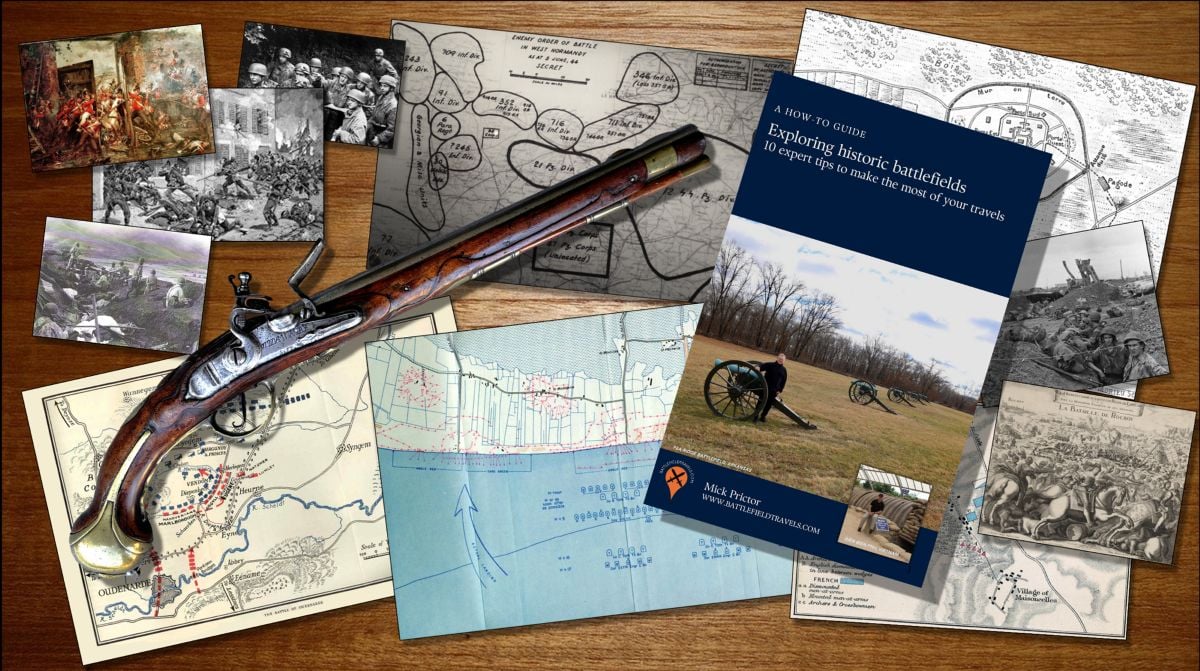
📘 A free eBook: 10 Tips for Exploring Historic Battlefields

📰 New battlefield studies straight to your inbox as they are published