Selected works on the Sri Lankan Civil War
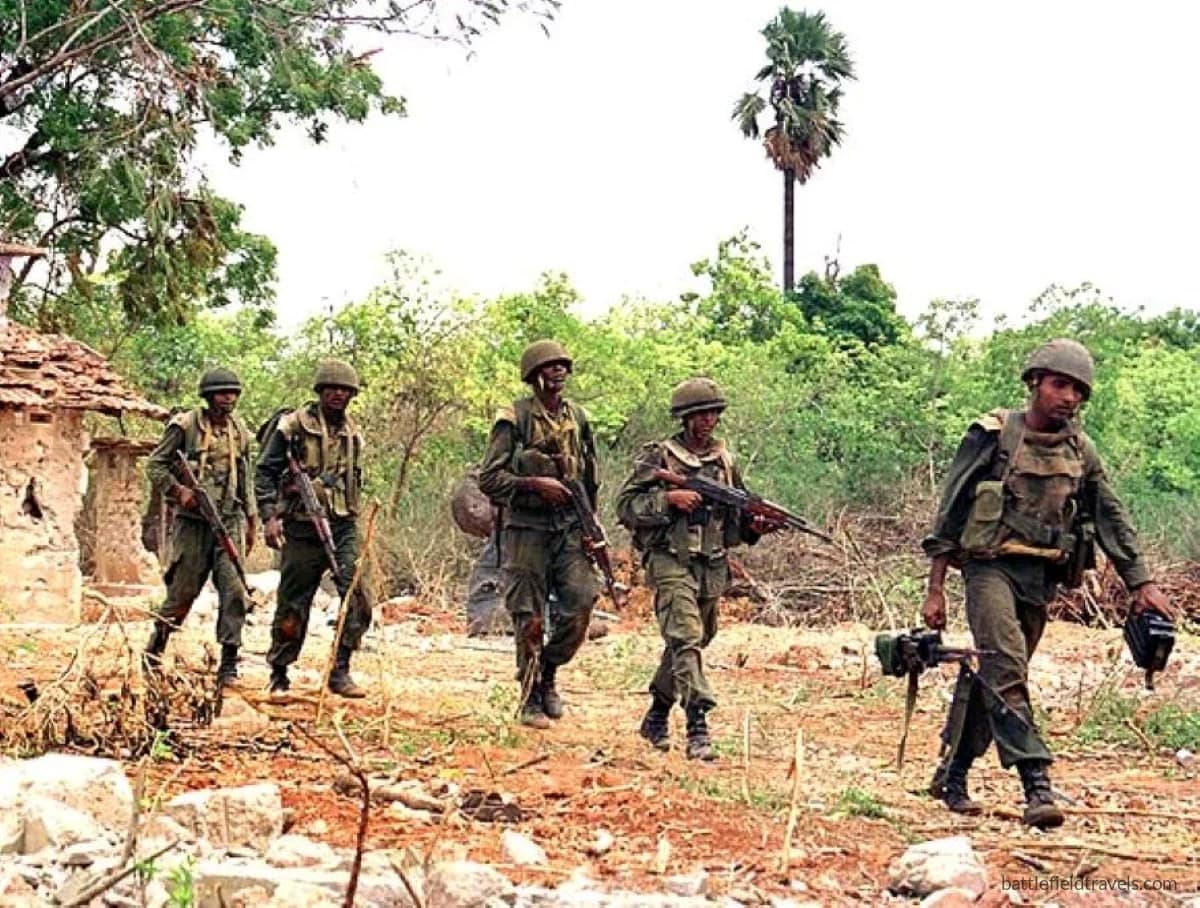
Overview of the Sri Lankan Civil War
The Sri Lankan Civil War was a prolonged and brutal conflict between the Government of Sri Lanka and the Liberation Tigers of Tamil Eelam (LTTE), fought from 1983 to 2009. Rooted in post-independence ethnic tension between the Sinhalese majority and Tamil minority, the war combined insurgency, terrorism, and conventional operations across three decades.
After communal violence in July 1983, the LTTE sought to establish an independent Tamil homeland in the island’s north and east. The conflict evolved through distinct phases: guerrilla campaigns in the 1980s; the Indian Peace Keeping Force intervention (1987–1990); large-scale conventional battles in the 1990s, including three battles for Elephant Pass; and a final government offensive from 2006 to 2009. Both sides employed intensive propaganda, and the civilian population suffered displacement, assassination, and atrocities.
The LTTE’s disciplined command, suicide units, and naval arm challenged successive Sri Lankan governments. However, sustained air and ground offensives under President Mahinda Rajapaksa ultimately destroyed the insurgent leadership in May 2009 at Mullaitivu. The war left over 100,000 dead and reshaped Sri Lanka’s political, ethnic, and humanitarian landscape.
Strategically, the conflict offers enduring lessons on counter-insurgency, maritime interdiction, and the integration of intelligence and technology in a developing-state context. It remains a case study in how protracted civil wars test national institutions, international diplomacy, and post-conflict reconciliation.
Related Battle Studies, Museum Pieces & Reading Resources


The Amazon links on the Reading Room pages are powered by AAWP

Reading
The reference collection below includes the key books and references I have used in preparing for and undertaking Sri Lankan Civil War battlefield studies.
Sri Lankan Civil War (1983–2009)


Authored by Mick Prictor, a retired military officer with 40 years’ service, and a military historian specialising in terrain-focused analysis of tactics, doctrine, and command decision-making in land warfare. His work draws on extensive battlefield fieldwork—more than 280 sites worldwide—and one of the world’s largest private collections of historic military arms, uniforms, and equipment. About me
FAQ – Sri Lankan Civil War Reading Room
This reading list is curated to prioritise works that examine the conflict through military operations, command decision-making, terrain, and adaptation over time. Emphasis is placed on studies that draw on primary accounts, operational analysis, and institutional learning rather than purely political or journalistic treatments.
No. The list includes works that address both Sri Lankan government forces and the LTTE, recognising that the conflict can only be understood by examining how opposing forces interpreted terrain, logistics, and force structure in different ways.
Terrain was a central factor throughout the conflict. Jungle, lagoon systems, urban areas, and limited infrastructure shaped movement, concealment, logistics, and the tempo of operations. Control and exploitation of micro-terrain often determined tactical outcomes.
The list includes a mix of accessible overviews and more specialised operational studies. Readers unfamiliar with the conflict may wish to begin with the general works before progressing to detailed analyses of specific phases or campaigns.
No. This is a selective reading list intended to guide further study rather than provide exhaustive coverage. Additional works may be added as new material and scholarship become available.
Subscribe to Battlefield Travels and receive a free E-Book Battlefield Guide
Unlock expert battlefield analysis, campaign reconstructions, and historical insights drawn from firsthand exploration and primary sources.
🗺️ You’ll receive:
🎖️ Exclusive historical insights you won’t find elsewhere
📘 A free eBook: 10 Tips for Exploring Historic Battlefields
📰 New battlefield studies straight to your inbox as they are published

⚔️ Go deeper — Members get exclusive access to the Deep Research Collection, Field Notes, and monthly Research Dispatches. Try membership free for 7 days, cancel anytime. From $9/month.