Selected works on the War of 1812
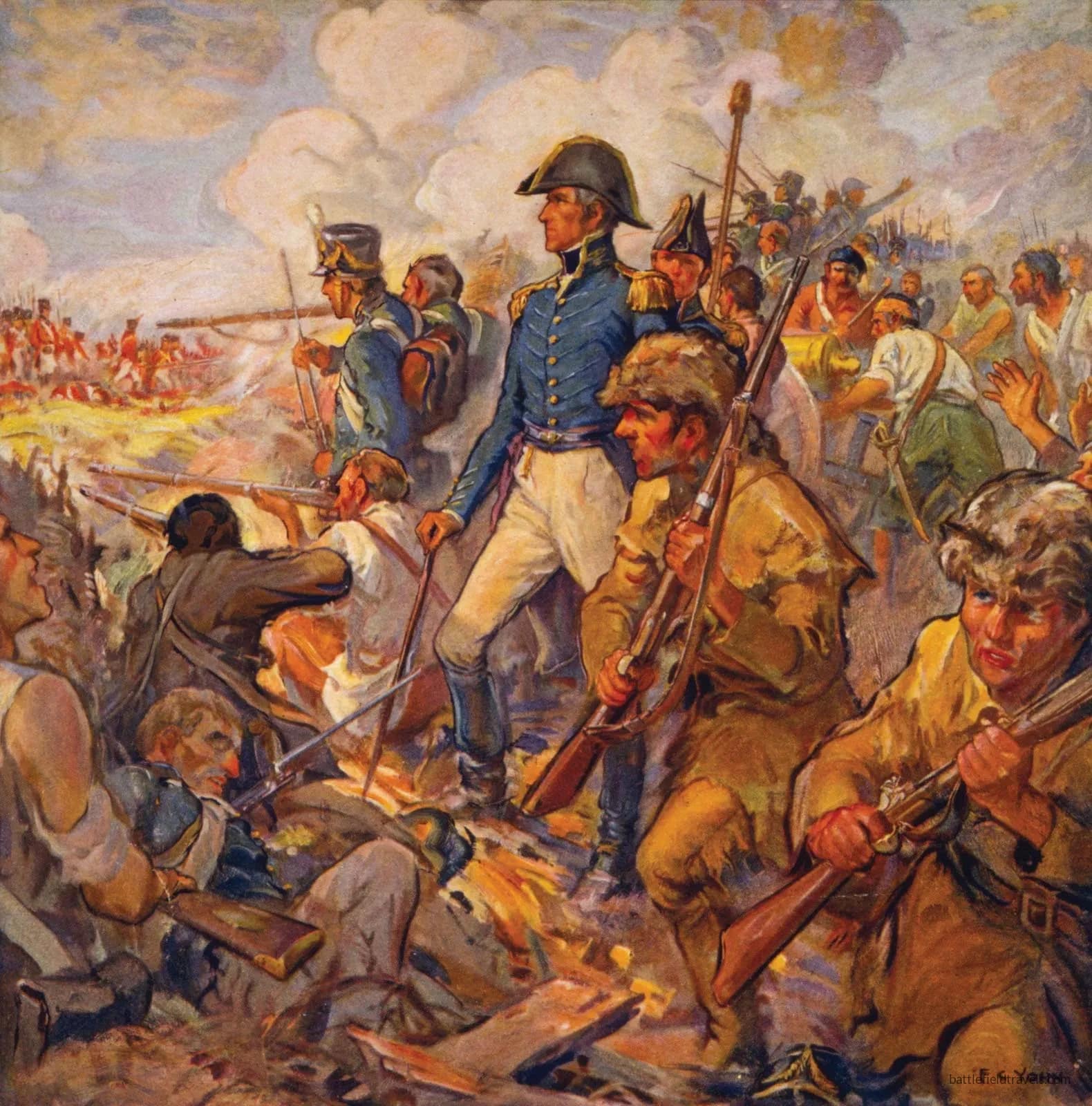
Overview of the War of 1812
The War of 1812 was fought between the United States and Great Britain from June 1812 to February 1815. It arose from maritime disputes during the Napoleonic Wars — including British trade restrictions, the impressment of American sailors, and frontier tensions over Indigenous alliances. For Britain it was a peripheral conflict; for the young United States it was a test of national endurance and sovereignty.
Early American attempts to invade Canada met determined resistance from small British–Canadian garrisons and Indigenous allies under leaders such as Tecumseh. Naval engagements on the Great Lakes and Atlantic Ocean became defining moments, with frigates like USS Constitution demonstrating that American seamanship could match the Royal Navy in single-ship actions. Control of the lakes shifted repeatedly, while raids and counter-raids devastated the border regions.
By 1814, Britain, freed from the Napoleonic struggle, launched major offensives along the Atlantic seaboard — burning Washington but failing to capture Baltimore. Andrew Jackson’s victory at New Orleans in January 1815, fought after the peace treaty had been signed, gave the United States a symbolic triumph.
The Treaty of Ghent restored pre-war boundaries but confirmed U.S. independence and maritime rights. The conflict fostered national identity in both the United States and Canada and ended effective Indigenous resistance east of the Mississippi. Strategically, it underscored the importance of naval power, logistics, and disciplined small-force operations in the early industrial age.
Related Battle Studies, Museum Pieces & Reading Resources


The Amazon links on the Reading Room pages are powered by AAWP

Reading
The reference collection below includes the key books and references I have used in preparing for and undertaking studies of the battlefields of the War of 1812.
War of 1812


Southern Theatre


Authored by Mick Prictor, a retired military officer with 40 years’ service, and a military historian specialising in terrain-focused analysis of tactics, doctrine, and command decision-making in land warfare. His work draws on extensive battlefield fieldwork—more than 280 sites worldwide—and one of the world’s largest private collections of historic military arms, uniforms, and equipment. About me
FAQ – War of 1812 Reading Room
This reading list is curated to prioritise works that examine the War of 1812 through operational analysis, command decision-making, terrain, logistics, and force employment. Emphasis is placed on studies grounded in primary sources rather than purely national or celebratory narratives.
No. While land operations are central, the list also includes works addressing naval warfare, littoral operations, amphibious actions, and the interaction between land and sea power, which was a defining feature of the conflict.
Terrain played a decisive role. Lakes, rivers, forests, swamps, road networks, and frontier settlements shaped movement, supply, and tactical options. Many campaigns were constrained by geography as much as by enemy action, influencing command decisions at every level.
The list includes a mix of accessible overviews and more specialised campaign- and battle-focused studies. Readers new to the conflict may wish to begin with the general works before progressing to detailed analyses.
No. This is a selective reading list intended to guide serious study rather than provide exhaustive coverage. Additional works may be added as scholarship and perspectives evolve.
Subscribe to Battlefield Travels and receive a free E-Book Battlefield Guide
Unlock expert battlefield analysis, campaign reconstructions, and historical insights drawn from firsthand exploration and primary sources.
🗺️ You’ll receive:
🎖️ Exclusive historical insights you won’t find elsewhere
📘 A free eBook: 10 Tips for Exploring Historic Battlefields
📰 New battlefield studies straight to your inbox as they are published

⚔️ Go deeper — Members get exclusive access to the Deep Research Collection, Field Notes, and monthly Research Dispatches. Try membership free for 7 days, cancel anytime. From $9/month.