Selected works on the First World War
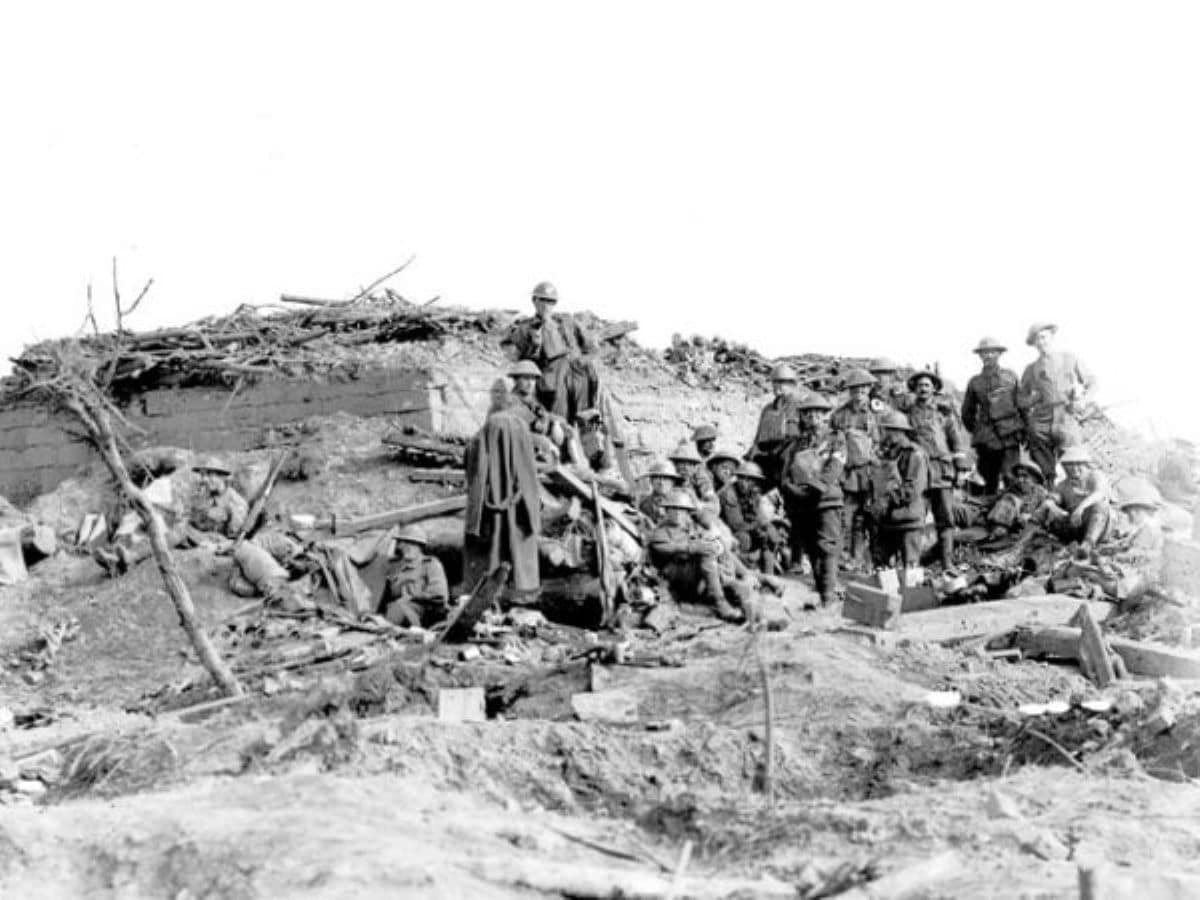
Overview of World War One
The First World War was the defining industrial conflict of the early twentieth century, fought between the Central Powers led by Germany and Austria-Hungary and the Allied Powers led by Britain, France, and later the United States. Triggered by the assassination of Archduke Franz Ferdinand at Sarajevo in June 1914, it rapidly escalated through the rigid system of European alliances.
Initial manoeuvre campaigns in 1914 gave way to entrenched stalemate on the Western Front, where artillery, machine guns, and barbed wire created killing zones of unprecedented scale. Battles at Verdun, the Somme, and Ypres epitomised attritional warfare, while on the Eastern Front and in the Middle East the fighting remained fluid with T.E. Lawrence and the Arab Army providing some glimpses into future manouevre warfare. At sea, the Royal Navy’s blockade and the German U-boat campaign reshaped global logistics and civilian life.
By 1917, exhaustion was widespread. Revolution forced Russia’s withdrawal, and the entry of the United States tipped the balance. The German offensives of spring 1918 failed to break the Allied line, and the counter-attacks of the Hundred Days drove the Central Powers to collapse. The Armistice of 11 November 1918 ended the fighting but not the turmoil: the peace settlements redrew borders, created new states, and set the conditions for another world war.
The First World War transformed strategy, technology, and society. It introduced air power, armour, and modern staff systems, marking the actual birth of industrialised warfare.
Related Battle Studies, Museum Pieces & Reading Resources
 🏛️ World War One (1914–1918) Weapons and Equipment,
PART 2. CENTRAL POWERS
 🏛️ World War One (1914–1918) Weapons and Equipment,
PART 1. ALLIED POWERS
 ⚔️🔒Capture of Aqaba by T.E. Lawrence and the Arab Army,
06 July 1917
 ⚔️ Battle of Polygon Wood,
26 September – 3 October 1917
 🏛️ Russian Civil War (1917–1922) Weapons and Equipment
 ⚔️ 1914–1918 World War One, Battle Studies
The Amazon links on the Reading Room pages are powered by AAWP

Reading
The reference collection below includes the key books and references I have used in preparing for and undertaking World War One battlefield studies.
Western Front

The Guns of August by Barbara W. Tuchman
PULITZER PRIZE WINNER • “A brilliant piece of military history which proves up to the hilt the force of Winston Churchill’s statement that the first month of World War I was ‘a drama never surpassed.’”—Newsweek
In this landmark account, renowned historian Barbara W. Tuchman re-creates the first month of World War I: thirty days in the summer of 1914 that determined the course of the conflict, the century, and ultimately our present world. Beginning with the funeral of Edward VII, Tuchman traces each step that led to the inevitable clash. And inevitable it was, with all sides plotting their war for a generation.


They Shall Not Pass: The French Army on the Western Front 1914-1918 by Ian Sumner
In May 1915, Italy declared war on the Habsburg Empire. Nearly 750,000 Italian troops were killed in savage, hopeless fighting on the stony hills north of Trieste and in the snows of the Dolomites. To maintain discipline, General Luigi Cadorna restored the Roman practice of decimation, executing random members of units that retreated or rebelled. Historian Mark Thompson relates the saga of the Italian front, the nationalist frenzy and political intrigues that preceded the conflict, and the towering personalities of the statesmen, generals, and writers drawn into the heart of the chaos.
Italian Front

The White War: Life and Death on the Italian Front 1915-1919 by Mark Thompson
In May 1915, Italy declared war on the Habsburg Empire. Nearly 750,000 Italian troops were killed in savage, hopeless fighting on the stony hills north of Trieste and in the snows of the Dolomites. To maintain discipline, General Luigi Cadorna restored the Roman practice of decimation, executing random members of units that retreated or rebelled. Historian Mark Thompson relates the saga of the Italian front, the nationalist frenzy and political intrigues that preceded the conflict, and the towering personalities of the statesmen, generals, and writers drawn into the heart of the chaos.

Isonzo: The Forgotten Sacrifice of the Great War
by John R. Schindler
This is the first account in English of a much-overlooked, but important, First World War battlefront located in the mountains astride the border between Italy and the Austro-Hungarian Empire. Not well known in the West, the battles of Isonzo were nevertheless ferocious, and compiled a record of bloodletting that totaled over 1.75 million for both sides. In sharp contrast to claims that neither the Italian nor the Austrian armies were viable fighting forces, Schindler aims to bring the terrible sacrifices endured by both armies back to their rightful place in the history of 20th century Europe. The Habsburg Empire, he contends, lost the war for military and economic reasons rather than for political or ethnic ones.
Gallipoli and Middle East Theatre

Gallipoli by Les Carlyon
Gallipoli remains one of the most poignant battlefronts of the First World War and Les Carlyon”s monumental account of that campaign has been rightfully acclaimed and a massive bestseller in Australia. Brilliantly told, supremely readable and deeply moving, Gallipoli brings this epic tragedy to life and stands as both a landmark chapter in the history of the war and a salutary reminder of all that is fine and all that is foolish in the human condition.


The Turkish General Staff Work on the War in Arabia ( Hicaz, Asir, Yemen Cepheleri / Ankara 1978 )
Experience of War

Infantry Attacks by Erwin Rommel
Infantry Attacks is a classic text in the field of military strategy and tactics. Written by Erwin Rommel, who would later become a Field Marshal, it was first published in 1937 as a narrative chronicle of the author’s experiences in World War I, and the lessons he learned there. He provides detailed accounts of a variety of tactical approaches he used against the French, British, Romanians and Italians, that refined his views on the relationship between firepower, mass, speed and initiative.

Storm of Steel Paperback – by Ernst Junger
‘As though walking through a deep dream, I saw steel helmets approaching through the craters. They seemed to sprout from the fire-harrowed soil like some iron harvest …’
Storm of Steel is one of the greatest works to emerge from the catastrophe of the First World War. A memoir of astonishing power, savagery and ashen lyricism, it illuminates like no other book the horrors but also the fascination of total war, presenting the conflict through the eyes of an ordinary German soldier. Storm of Steel has no equal.

Somme Mud: The War Experiences of an Infantryman in France 1916 – by E.P.F. Lynch
Somme Mud recounts the experiences of Edward Lynch, a young Australian private (18 when he enlisted) during the First World War. Lynch served with the 45th Battalion of the Australian Imperial Forces on the Western Front. He served at the Somme, and in the great battles of 1918. The original edition of twenty chapters, was written in pencil in twenty school exercise books in 1921, probably to help exorcise the horrendous experiences Private Lynch had witnessed during his three years at war from mid-1916 until his repatriation home in mid-1919.

The Soul of the War – by Philip Gibbs
Gibbs’s harrowing 1915 account of the British offensives at Neuve-Chapelle and Loos provides vivid insights into the hell of trench warfare. What Gibbs couldn’t know was that it would get worse in 1916 and 1917. A compelling addition to any collection of World War I literature, this book serves as a lasting testament to the strength and resilience of the human spirit in the face of unimaginable adversity.

Fighting the Bolsheviks: The Russian War Memoir of Private First Class Donald E. Carey, by Neil G. Carey
The journal of an American soldier from Michigan who enlists in the 339th Infantry to fight in France, but his unit is diverted to Archangel in northern Russia to protect allied war stocks following the Bolshevik Revolution. The combined Anglo-American force then gets drawn into the Russian Civil War and the fighting along the Dvina against the Bolsheviks. The war continues long after the war in Europe has ended.

Authored by Mick Prictor, a retired military officer with 40 years’ service, and a military historian specialising in terrain-focused analysis of tactics, doctrine, and command decision-making in land warfare. His work draws on extensive battlefield fieldwork—more than 280 sites worldwide—and one of the world’s largest private collections of historic military arms, uniforms, and equipment. About me
FAQ – First World War Reading Room
This reading list is curated to prioritise works that examine the First World War through operational analysis, command decision-making, terrain, and adaptation over time. Emphasis is placed on studies that engage with primary sources and explain how armies learned to fight under industrial-scale conditions.
No. While trench warfare is a central feature, the list also includes works on mobile operations, combined arms, artillery, infiltration tactics, and the differing character of warfare on the Western, Eastern, Italian, and Middle Eastern fronts.
Terrain was fundamental. Slight variations in ground, drainage, elevation, and cover often determined survivability, movement, and tactical feasibility. Micro-terrain—frequently measured in metres—shaped decision-making in an environment dominated by artillery and machine-gun fire.
The list includes a mix of accessible overviews and more specialised studies. Readers new to the war may wish to begin with the general works before exploring campaign- or theme-specific analyses.
No. This is a selective reading list intended to guide serious study rather than provide exhaustive coverage. Additional works may be added as research interests and available scholarship evolve.
Subscribe to Battlefield Travels and receive a free E-Book Battlefield Guide
Unlock expert battlefield analysis, campaign reconstructions, and historical insights drawn from firsthand exploration and primary sources.
🗺️ You’ll receive:
🎖️ Exclusive historical insights you won’t find elsewhere
📘 A free eBook: 10 Tips for Exploring Historic Battlefields
📰 New battlefield studies straight to your inbox as they are published

⚔️ Go deeper — Members get exclusive access to the Deep Research Collection, Field Notes, and monthly Research Dispatches. Try membership free for 7 days, cancel anytime. From $9/month.