Skip to content
Home » 📚The Reading Room » 📚 World War Two (1939–45), Recommended Reading

📚 World War Two (1939–45),
Recommended Reading

Selected works on World War Two
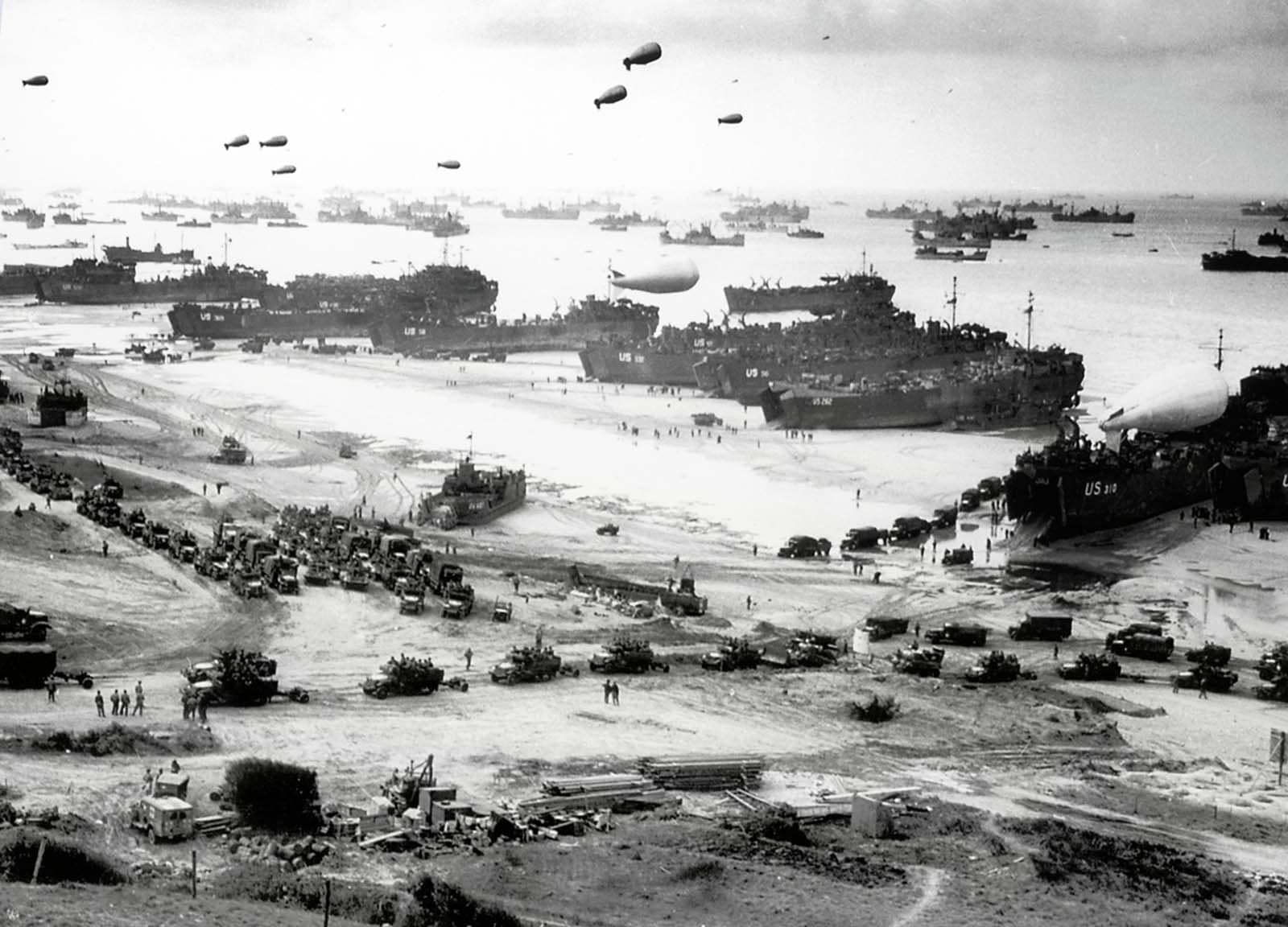
World War Two - Omaha Beach - Fox Red Sector, 6 June 1944
World War Two – Omaha Beach – Fox Red Sector, 6 June 1944

Overview of the Second World War

The Second World War was the largest and most destructive conflict in human history, fought across every continent and ocean between the Axis and Allied powers. It began with Germany’s invasion of Poland on 1 September 1939 and the subsequent declarations of war by Britain and France. Within two years, Axis forces under Hitler, Mussolini, and Imperial Japan had overrun most of Europe, North Africa, and large parts of East Asia.

German blitzkrieg operations brought rapid victories in 1940–41, but the failure to defeat Britain and the invasion of the Soviet Union in June 1941 fatally overstretched the Reich. Japan’s attack on Pearl Harbor in December 1941 drew the United States into a global alliance with Britain, the Soviet Union, and China. From 1942 onwards, the tide turned: the Soviet victory at Stalingrad, Allied success in North Africa, and the destruction of Japanese carrier power at Midway marked the beginning of Axis decline.

Allied strategy combined industrial mobilisation, air and sea control, and coordinated offensives on multiple fronts. Italy collapsed in 1943, France was liberated following the D-Day landings in June 1944, and Germany surrendered unconditionally in May 1945. Behind enemy lines, resistance groups struck back at the occupying powers. The Pacific war ended after the atomic bombings of Hiroshima and Nagasaki and Japan’s capitulation in August.

The war claimed over 60 million lives, redrew national borders, and ushered in the nuclear age and the bipolar world order of the Cold War. Its military, political, and moral consequences continue to shape international relations today.


Reading

The reference collection below includes the key books and references I have used in preparing for and undertaking Second World War battlefield studies. I will update this list as I continue to explore further campains and battles.


D-Day 1944 (General overview)

Sale
Longest Day: The Classic Epic of D Day
From the acclaimed author of A Bridge Too Far comes the unparalleled, classic work of history that vividly recreates the battle that changed World War II—the Allied invasion of Normandy. The Longest Day is Cornelius Ryan’s unsurpassed account of D-Day, a book that endures as a masterpiece of military history. In this compelling tale of courage and heroism, glory and tragedy, Ryan painstakingly recreates the fateful hours that preceded and followed the massive invasion of Normandy to retell the story of an epic battle that would turn the tide against world fascism and free Europe from the grip of Nazi Germany. This book, first published in 1959, is a must for anyone who loves history, as well as for anyone who wants to better understand how free nations prevailed at a time when darkness enshrouded the earth.
Sale
D-Day June 6, 1944: The Climactic Battle of World War II
The author of Eisenhower chronicles the events, politics, and personalities of this pivotal day in World War II, shedding light on the strategies of commanders on both sides and the ramifications of the battle. 100,000 first printing. BOMC & History Main. Reader’s Digest Cond Bks.
Overlord: D-Day and the Battle for Normandy
On June 6, 1944, American and British troops staged the greatest amphibious landing in history to begin Operation Overlord, the battle to liberate Europe from the scourge of the Third Reich. With gut-wrenching realism and immediacy, Hastings reveals the terrible human cost that this battle exacted. Moving beyond just the storming of Omaha beach and D-Day, he explores the Alliesâ push inward, with many British and American infantry units suffering near 100 percent casualties during the course of that awful summer. Far from a gauzy romanticized remembrance, Hastings details a grueling ten week battle to overpower the superbly trained, geographically entrenched German Wehrmacht. Uncompromising and powerful in its depiction of wartime, this is the definitive book on D-Day and the Battle of Normandy.
Sale
D-Day: The Battle for Normandy
Renowned historian Antony Beevor, author of Stalingrad and The Battle of Arnhem, and the man who “single-handedly transformed the reputation of military history” (The Guardian) presents the first major account in more than twenty years of the Normandy invasion and the liberation of Paris. This is the first book to describe not only the experiences of the American, British, Canadian, and German soldiers, but also the terrible suffering of the French caught up in the fighting. Beevor draws upon his research in more than thirty archives in six countries, going back to original accounts and interviews conducted by combat historians just after the action. D-Day is the consummate account of the invasion and the ferocious offensive that led to Paris’s liberation.

Easy Company ‘Band of Brothers’, 506th PIR

Sale
Band of Brothers: E Company, 506th Regiment, 101st Airborne from Normandy to Hitler’s Eagle’s Nest
Stephen E. Ambrose’s classic New York Times bestseller and inspiration for the acclaimed HBO series about Easy Company, the ordinary men who became the World War II’s most extraordinary soldiers at the frontlines of the war’s most critical moments. Featuring a foreword from Tom Hanks. They came together, citizen soldiers, in the summer of 1942, drawn to Airborne by the $50 monthly bonus and a desire to be better than the other guy. And at its peak—in Holland and the Ardennes—Easy Company was as good a rifle company as any in the world. From the rigorous training in Georgia in 1942 to the disbanding in 1945, Stephen E. Ambrose tells the story of this remarkable company. In combat, the reward for a job well done is the next tough assignment, and as they advanced through Europe, the men of Easy kept getting the tough assignments.
Sale
Beyond Band of Brothers: The War Memoirs of Major Dick Winters
“Tells the tales left untold by Stephen Ambrose, whose Band of Brothers was the inspiration for the HBO miniseries…laced with Winters’s soldierly exaltations of pride in his comrades’ bravery.”—Publishers Weekly Look for the Band of Brothers miniseries, now available to stream on Netflix! They were called Easy Company—but their mission was never easy. Immortalized as the Band of Brothers, they suffered 150% casualties while liberating Europe—an unparalleled record of bravery under fire. Winner of the Distinguished Service Cross, Dick Winters was their legendary commander. This is his story—told in his own words for the first time. On D-Day, Winters assumed leadership of the Band of Brothers when its commander was killed and led them through the Battle of the Bulge and into Germany—by which time each member had been wounded. Based on Winters’s wartime diary, Beyond Band of Brothers also includes his comrades’ untold stories. Virtually none of this material appeared in Stephen Ambrose’s Band of Brothers. Neither a protest against nor a glamorization of war, this is a moving memoir by the man who earned the love and respect of the men of Easy Company—and who is a hero to new generations worldwide. Includes photos
Sale
Brothers in Battle, Best of Friends: Two WWII Paratroopers from the Original Band of Brothers Tell Their Story
Tom Hanks introduces the “remarkable” (Publishers Weekly) true story of two inseparable friends and soldiers portrayed in the HBO® miniseries Band of Brothers. Look for the Band of Brothers miniseries, now available to stream on Netflix! William “Wild Bill” Guarnere and Edward “Babe” Heffron were among the first paratroopers of the U.S. Army—members of an elite unit of the 101st Airborne Division called Easy Company. The crack unit was called upon for every high-risk operation of the war, including D-Day, Operation Market Garden in Holland, the Battle of the Bulge, and the capture of Hitler’s Eagle’s Nest in Berchtesgaden. In his own words, Guarnere gives a gripping account of D-Day from the paratrooper’s perspective. Both men vividly re-create dropping into Holland to capture the roads and bridges between Eindhoven and Arnhem, known as Hell’s Highway. Through much of 1944 both friends fought side by side—until Guarnere lost his right leg in the Battle of the Bulge and was sent home. Heffron went on to liberate slave labor and concentration camps and capture Hitler’s Eagle’s Nest hideout. United by their experience, the two reconnected at the war’s end and were inseparable up until their deaths. Brothers in Battle, Best of Friends is a tribute to the lasting bond forged between comrades in arms under fire and to all the brave men who fought fearlessly for freedom. Includes photographs
Currahee!: Currahee! is the first volume in the series “Donald R. Burgett a Screaming Eagle”
Currahee! A Screaming Eagle at Normandy. Donald R. Burgett is a real Screaming Eagle, who jumped with that famed division at Normandy and survived to tell the tale. His memoir vividly portrays the tragic chaos of war: the blood and sweat, the glory and tears of one of the greatest battles of all time. Currahee! (this was the battle cry and motto of his regiment) begins with jump training and explodes in drama as they are parachuted into Normandy with orders to take and hold the high ground behind the beaches. It contains unforgettable incidents. The author’s almost dispassionate tone goes a long way toward explaining a particular set of psychological defenses which enabled these men to do their duty and-for some of them-to survive with their sanity intact. Currahee! is the only book on World War II that General Dwight D. Eisenhower ever endorsed, calling it “a fascinating tale of personal combat” that “portrays the courage, endurance, initiative and fighting qualities of an American soldier on a European battlefield of World War II.” Currahee! was originally published to critical acclaim in 1967. Donald R. Burgett holds the title of being the first enlisted man to write and publish on the Airborne.

D-Day – American Beaches

Sale
The Dead and Those About to Die: D-Day: The Big Red One at Omaha Beach
From the author of Fire and Fortitude and Island Infernos, a white-knuckle account of the 1st Infantry Division’s harrowing D-Day assault on the eastern sector of Omaha Beach—acclaimed historian John C. McManus has written a gripping history that will stand as the last word on this titanic World War II battle. Nicknamed the Big Red One, 1st Division had fought from North Africa to Sicily, earning a reputation as stalwart warriors on the front lines and rabble-rousers in the rear. Yet on D-Day, these jaded combat veterans melded with fresh-faced replacements to accomplish one of the most challenging and deadly missions ever. As the men hit the beach, their equipment destroyed or washed away, soldiers cut down by the dozens, courageous heroes emerged: men such as Sergeant Raymond Strojny, who grabbed a bazooka and engaged in a death duel with a fortified German antitank gun; T/5 Joe Pinder, a former minor-league pitcher who braved enemy fire to save a vital radio; Lieutenant John Spalding, a former sportswriter, and Sergeant Phil Streczyk, a truck driver, who together demolished a German strong point overlooking Easy Red, where hundreds of Americans had landed.
Sale
No Better Place to Die: Ste-Mere Eglise, June 1944―The Battle for la Fiere Bridge
The you-are-there story of one of the most ferocious small-unit combats in US history . . . As part of the massive Allied invasion of Normandy, three airborne divisions were dropped behind enemy lines to sow confusion in the German rear and prevent panzer reinforcements from reaching the beaches. In the dark early hours of D-Day, this confusion was achieved well enough, as nearly every airborne unit missed its drop zone, creating a kaleidoscope of small-unit combat. Fortunately for the Allies, the 505th Regimental Combat Team of the 82nd Airborne Division hit on or near its drop zone. Its task was to seize the vital crossroads of Ste Mère Eglise, and to hold the bridge over the Merderet River at nearby La Fière. Benefiting from dynamic battlefield leadership, the paratroopers reached the bridge, only to be met by wave after wave of German tanks and infantry desperate to force the crossing.
US Airborne Divisions in the ETO 1944–45 (Battle Orders, 25)
The delivery of entire divisions to battlefields behind enemy lines by parachute and glider was a unique feature of World War II. Failures at D-Day landings necessitated that, in order to avoid severe dispersion of paratroopers, US tactics be rethought and daylight airdrops be implemented. The new tactics were first put to the test in September 1944, with the landings by the 82d and 101st Airborne divisions as part of Operation Market Garden. Although the US landings were successful, the operation as a whole failed to secure its objectives. Nevertheless, both divisions subsequently played a vital defensive role withstanding the German Ardennes offensive.
Sale
Smashing Hitler’s Guns: The Rangers at Pointe-du-Hoc, D-Day 1944
Written by one of the world’s leading experts on D-Day, Smashing Hitler’s Guns is a ground-breaking new history of the legendary Rangers’ attack on Pointe-du-Hoc. The Ranger attack on the German gun batteries at Pointe-du-Hoc in the early morning hours of D-Day is the stuff of legend. The gun batteries were strategically positioned between the two American D-Day landing beaches, and were considered the main threat to the Operation Neptune landings. In spite of the confusion and chaos of the June 6, 1944 mission, the Rangers succeeded in scaling the 100-foot cliffs, but the guns were nowhere to be found. Spreading out in all directions, a Ranger team managed to find and spike the guns at their hidden location south of Pointe-du-Hoc. For two days, this small force fought off repeated German attacks, until an American relief force finally arrived on 8 June, by which time more than half the Rangers were casualties.

D-Day – British and Canadian Beaches

Sale
Monty’s Men: The British Army and the Liberation of Europe
Historian John Buckley offers a radical reappraisal of Great Britain’s fighting forces during World War Two, challenging the common belief that the British Army was no match for the forces of Hitler’s Germany. Following Britain’s military commanders and troops across the battlefields of Europe, from D-Day to VE-Day, from the Normandy beaches to Arnhem and the Rhine, and, ultimately, to the Baltic, Buckley’s provocative history demonstrates that the British Army was more than a match for the vaunted Nazi war machine. This fascinating revisionist study of the campaign to liberate Northern Europe in the war’s final years features a large cast of colorful unknowns and grand historical personages alike, including Field Marshal Sir Bernard Montgomery and the prime minister, Sir Winston Churchill. By integrating detailed military history with personal accounts, it evokes the vivid reality of men at war while putting long-held misconceptions finally to rest.
Victory In The West Volume I: The Battle Of Normandy: History Of The Second World War: United Kingdom Military Series: Official Campaign History
The first of two books in the 18-volume official British History of the Second World War dealing with D-Day and its consequences: the liberation of German-occupied western Europe in 1944-45. This volume begins by describing the origins and development of Operation ‘Overlord’ – the ambitious Anglo-American plan to invade Normandy. With subsidiary sections on such subjects as the French Resistance, attempts to assassinate Hitler, and new technology, – including the artificial ‘Mulberry’ harbours, – the authors describe D-Day itself with its airborne assaults, naval bombardment and seaborne landings on Gold, Juno, Sword, Utah and Omaha beaches. They narrate the hard fighting as the Allies secure their bridgehead and push inland, capturing Cherbourg and Caen, and enveloping the main German defending armies at the battle of the Falaise Gap. The book culminates with the liberation of Paris at the end of August, and ends with Eisenhower and Montgomery poised to cross the Rhine. Supported by ten appendices on the forces engaged, the book is lavishly illustrated with 5 general maps, 20 situation maps, 26 sketch maps and diagrams, and 63 photographs.
D-Day 1944 (4) Gold & Juno Beaches
The fourth title in Osprey’s survey of the D-Day landings of World War II (1939-1945). Operation Overlord, the Allied invasion of Normandy, was the greatest sea-borne military operation in history. At the heart of the invasion and key to its success were the landings of British 50th Division on Gold Beach and Canadian 3rd Division on Juno Beach. Not only did they provide the vital link between the landings of British 3rd Division on Sword Beach and the Americans to the west on Omaha, they would be crucial to the securing of the beachhead and the drive inland to Bayeux and Caen. In the fourth D-Day volume Ken Ford details the assault that began the liberation of Nazi-occupied Europe.
Fields of Fire: The Canadians in Normandy: Second Edition (Joanne Goodman Lectures) by Terry Copp (2014-04-24)
With Fields of Fire, Terry Copp challenges the conventional view that the Canadian contribution to the Battle of Normandy was a “failure” – that the allies won only through the use of brute force, and that the Canadian soldiers and commanding officers were essentially incompetent. His detailed and impeccably researched analysis of what actually happened on the battlefield portrays a flexible, innovative army that made a major, and successful, contribution to the defeat of the German forces in just seventy-six days. Challenging both existing interpretations of the campaign and current approaches to military history, Copp examines the Battle of Normandy, tracking the soldiers over the battlefield terrain and providing an account of each operation carried out by the Canadian army. In so doing, he illustrates the valour, skill, and commitment of the Allied citizen-soldier in the face of a well-entrenched and well-equipped enemy army.
Pegasus Bridge: D-day: The Daring British Airborne Raid
D-Day before dawn. Minute by minute, hour by hour the danger grows… In the early morning hours of June 6, 1944, a small detachment of British airborne troops stormed the German defence forces and paved the way for the Allied invasion of Europe. Pegasus Bridge was the first engagement of D-Day, the turning point of World War II. This gripping account by acclaimed author Stephen E. Ambrose brings to life a daring mission so crucial that, had it been unsuccessful, the entire Normandy invasion might have failed. Ambrose traces each step of the preparations over many months to the minute-by-minute excitement of the hand-to-hand confrontations on the bridge. This is a story of heroism and cowardice, kindness and brutality – the stuff of all great adventures.
Penguin (Transworld) Sword Beach The Untold Story of D-Days Forgotten Victory.
”With his wealth of knowledge and exacting eye for detail, [Fisher”s] book on D-Day is sure to impress a vast audience” Dan Snow ”Stephen Fisher… is a very rare beast – a man who can bring stunning research and scholarship hand-in-glove with the gifts of a fine storyteller” James Holland ”Written with verve and panache… It’s a brilliant evocation of one of the greatest days in history, and Fisher has done it proud. Bravo!” Robert Lyman, author of Victory to Defeat: The British Army 1918-1940 _________ 6th June 1944 saw the largest seaborne assault in human history: D-Day. The landings on the five Normandy beaches, Utah, Omaha, Gold, Juno and Sword, will go down in legend as the first footsteps on the journey to end the war in northern Europe.
D-Day Landing Beaches: The Guide
This spectacular, large format, full color, new book is quite simply the most impressive book of its type we have seen. Packed with over 200 photographs, maps and charts, the book is divided into the sectors associated with the Normandy landings in 1944. What’s more it is extremely reasonably priced.

D-Day – German perspectives

Daedalus Returned
limited 1,000 copy reprint of an extremely rare WWII memoir. This one of the few memoirs ever written by a former German paratrooper. The Baron was in command of a battalion of paratroopers in Crete, being dropped at zero hour near Canea and seven days later received the surrender of the town. This book is the full exciting account of preparation, landing and seven days of terrifying battle. This is an excellent read and the Baron has a flair with the pen. Captured in 1945 in the Ardennes the Baron was bitterly attacked for his anti-Hitler sentiments as a P.O.W., after the war he became a professor of law at the University of Wurzburg. This book does have a small photo section. Bound in full cloth using an exact copy of original dust jacket published originally in 1958!
Normandy 1944: German Military Organization, Combat Power and Organizational Effectiveness
At last, a single-source reference book which accurately details the German field forces employed in Normandy in 1944 and their losses. Chapters include: German Combat Organization (overview); Number of Soldiers Employed; Effects of Allied Air Power; German Armor in Normandy; German Losses in Normandy; Combat Efficiency; and, Unit Movements. In addition, there is a capsule history of every major formation employed in Normandy: infantry and Panzer divisions and separate formations; artillery and Werfer (rocket) units; corps and field-army formations and miscellaneous elements which could bring combat power to bear. Dr. Zetterling provides a sobering analysis of the subject matter and debunks a number of popular myths concerning the campaign (the effectiveness of Allied air power; the preferential treatment of Waffen-SS formations in comparison to their army counterparts; etc.). He supports his text with exhaustive footnoting and provides an organizational chart for most of the formations covered in the book. Includes numerous organizational diagrams, charts, tables and graphs.

Western Europe 1939-44

AAWP

The Fall of Eben Emael: The Daring Airborne Assault that Sealed the Fate of France: May 1940
Before the Germans invade France in 1940, they need to take out a bunker fortress in Belgium. Daring paratroopers are send in by gliders, and you follow them almost minute by minute as they complete their mission. Thoroughly executed attack. The Belgians don’t even see it coming.
Sale
Eben-Emael & the Defence of Fortress Belgium, 1940
In the early morning of 10 May 1940, the sky literally fell on the heads of the defenders of Fort Eben-Emael, considered to be Belgium’s most powerful fortress. This huge structure, with its powerful artillery and infantry weapons, was the key to the Meuse and Albert Canal defences. In the darkness of the pre-dawn, German DFS 230 gliders drifted silently over the southern Netherlands, landing one by one on top of Eben-Emael. Within minutes German Special Forces troops destroyed most of the fort’s weapons and observation capabilities. The following day, the garrison surrendered, and the door to Belgium and France was open.

Eastern Front

North Africa

Mediterranean

Pacific Theatre – Guadalcanal

Sale
With the Old Breed/Helmet for My Pillow (2 Volume Set)
The source material for HBO series ‘The Pacific’. With the Old Breed and Helmet for My Pillow. Robert Leckie’s classic account of Guadalcanal, Cape Gloucester and Peleliu, and Eugene Sledge’s diary from Peleliu and Okinawa.
Guadalcanal: The Definitive Account of the Landmark Battle
This volume, ten years in the writing, recounts the full story of the critical campaign for Guadalcanal and is based on first-time translations of official Japanese Defense Agency accounts and recently declassified U.S. radio intelligence, Guadalcanal recreates the battle—on land, at sea, and in the air—as never before: it examines the feelings of both American and Japanese soldiers, the strategies and conflicts of their commanders, and the strengths and weaknesses of various fighting units.
Sale
Guadalcanal’s Longest Fight: The Pivotal Battles of the Matanikau Front
The Matanikau battles proved to be the critical turning points in the land campaign for Guadalcanal—the campaign’s longest and bloodiest ground fight. A five-month conflict raged along the river and its basin. The real importance of this area has long remained unrecognized, yet the American and Japanese forces that fought over it knew that it was the key to the ultimate prize of Henderson Airfield. In this mile-long bloody tug-of-war from the river across to the hills and ravines were fought seven major battles and countless smaller skirmishes.
Guadalcanal’s Forgotten Fight: The U.S. Army’s Crucial Role
When the name Guadalcanal is mentioned, most picture Marines desperately fighting in the dense jungles and the U.S. Navy in dramatic surface battles. That story, though true, tells only part of the campaign. Less well known is the role played by the United States Army. While the Marines landed and fought off several Japanese counterattacks it was the Army’s soldiers who followed and bore a large share of the brutal ground fighting that stretched on for months. These fights were not “mopping up” actions normally associated with the Army, but brutal battles against a determined enemy.
Sale
Neptune’s Inferno: The U.S. Navy at Guadalcanal
The Battle of Guadalcanal has long been heralded as a Marine victory. Now, with his powerful portrait of the Navy’s sacrifice, James D. Hornfischer tells for the first time the full story of the men who fought in destroyers, cruisers, and battleships in the narrow, deadly waters of “Ironbottom Sound.” Here, in stunning cinematic detail, are the seven major naval actions that began in August 1942, a time when the war seemed unwinnable and America fought on a shoestring,
The Battle of Savo Island: The Harrowing Account of the Disastrous Night Battle Off Guadalcanal that Nearly Destroyed the Pacific Fleet in August 1942
Richard F. Newcomb is one of the true masters of military storytelling. The Battle of Savo Island is the story of the opening engagement of the Solomon Islands campaign, a unique chapter in naval history. It was the first surface encounter for a coordinated American force in nearly half a century and a very bad start. Courage and will were never lacking, but the Imperial Japanese Navy was about to hand the U.S. Navy the bitterest defeat in its history.
Quiet Waters: HMAS Canberra 1942
An account of HMAS Canberra and one of her sailors, and three USS cruisers and their men, who rest in the deep quiet waters of Iron Bottom Sound
The Thin Red Line
James Jones’ classic novel of the Guadalcanal campaign. Jones himself was a soldier in 2nd Battalion, 27th Infantry and fought in the Battle for Galloping Horse Ridge, depicted in the movie ‘Thin Red Line’.
Sale
Chesty: The Story of Lieutenant General Lewis B. Puller, USMC
The Marine Corps is known for its heroes, and Lieutenant General Lewis B. Puller has long been considered the greatest of them all. His assignments and activities covered an extraordinary spectrum of warfare. Puller mastered small unit guerrilla warfare as a lieutenant in Haiti in the 1920s, and at the end of his career commanded a division in Korea. In between, he chased Sandino in Nicaragua and fought at Guadalcanal, Cape Gloucester, and Peleliu.
Sale
Guadalcanal Diary (Modern Library War)
Unlike some of those on Guadalcanal in the fall of 1942, Richard Tregaskis volunteered to be there. An on-location news correspondent (at the time, one of only two on Guadalcanal), he lived alongside the soldiers: sleeping on the ground, only to be awoken by air raids; eating the sometimes meager rations; and braving some of the most dangerous battlefields of World War II. He more than once narrowly escaped the enemy’s fire, and so we have this incisive and exciting inside account of the groundbreaking initial landing of U.S. troops on Guadalcanal.

Resistance Movements


FAQ – WW2 Reading Room

How were the books in this Second World War reading list selected?

A: This reading list is curated to prioritise works that examine the Second World War through operational analysis, command decision-making, terrain, logistics, and doctrine. Emphasis is placed on studies that engage with primary sources and explain how armies fought, adapted, and made decisions under varying conditions.

Does this reading list focus on any particular theatre of war?

No single theatre dominates the list. The selection spans multiple theatres and types of warfare in order to reflect the diversity of terrain, forces, and operational problems encountered during the war.

How important was terrain in the Second World War?

Terrain remained a decisive factor despite advances in mechanisation and airpower. Mountains, rivers, urban areas, forests, and infrastructure frequently constrained movement, shaped logistics, and influenced command decisions at tactical and operational levels.

Are these books suitable for readers new to the Second World War?

The list includes a mix of accessible overviews and more specialised studies. Readers new to the subject may wish to begin with the general works before exploring theatre- or campaign-specific titles.

Is this intended to be a complete bibliography of the Second World War?

No. This is a selective reading list designed to guide serious study rather than provide exhaustive coverage. Titles may be added as new scholarship and perspectives emerge.


Subscribe to Battlefield Travels and receive a free E-Book Battlefield Guide

Unlock expert battlefield analysis, campaign reconstructions, and historical insights drawn from firsthand exploration and primary sources.

🗺️ You’ll receive:

🎖️ Exclusive historical insights you won’t find elsewhere

📘 A free eBook: 10 Tips for Exploring Historic Battlefields

📰 New battlefield studies straight to your inbox as they are published


Comments — I welcome your feedback and contributions
