Siege of Alesia, 52 BC – Caesar’s decisive victory over Vercingetorix!
On a windswept hill in Burgundy, Julius Caesar faced his greatest test. Encircling Vercingetorix and 80,000 Gauls inside Alesia while a vast relief army advanced for battle, Caesar relied on engineering genius and discipline to secure Rome’s conquest of Gaul. The fate of Gaul — and Caesar’s future — would be decided here.
Key facts
Google Earth map – location of Alesia Oppidum
🎧 Prefer to listen? This article is also available as a 41-minute podcast
On a windswept hill in Burgundy, Julius Caesar faced his greatest test. Encircling Vercingetorix and 80,000 Gauls inside Alesia while a vast relief army advanced for battle, Caesar relied on engineering genius and discipline to secure Rome’s conquest of Gaul. The fate of Gaul — and Caesar’s future — would be decided here.
Tip: If Podbean overlay appears after pausing, click the × in the top-right corner to return to the player controls.
Strategic context: The Gallic Wars
By 58 BC Julius Caesar, proconsul of Cisalpine Gaul, Illyricum, and later Transalpine Gaul, commenced a series of campaigns designed both to secure Rome’s northern frontier and to advance his own political standing. His Commentarii de Bello Gallico (Battles in Gaul) — composed in the third person — was as much propaganda as history, yet remains our most detailed source.
Over seven campaigning seasons (58–52 BC), Caesar confronted successive tribal coalitions, brutally crushing each in turn:
- 58 BC – Migration of the Helvetii checked at Bibracte.
- 57 BC – Belgae crushed at the Sabis (Sambre).
- 55–53 BC – Rhine crossings and first expeditions to Britain.
- 54 BC – Nervii campaign;
- 53–52 BC – Rising discontent across Gaul, culminating in the Averni-led revolt under Vercingetorix.
 Caesar’s 54BC campaign against the Nervii features in the opening episode of HBO’s series ‘Rome’ when Legionary Titus Pullo breaks ranks to fight the Gauls, and Centurion Lucius Varenus has to go after him. Titus Pullo and Lucius Varenus were real Roman soldiers – Caesar wrote specifically about them and their exemplary courage in battle with the Nervii in 54BC. The series also shows Vercingetorix taken prisoner after Alesia and imprisoned and executed by Caesar.
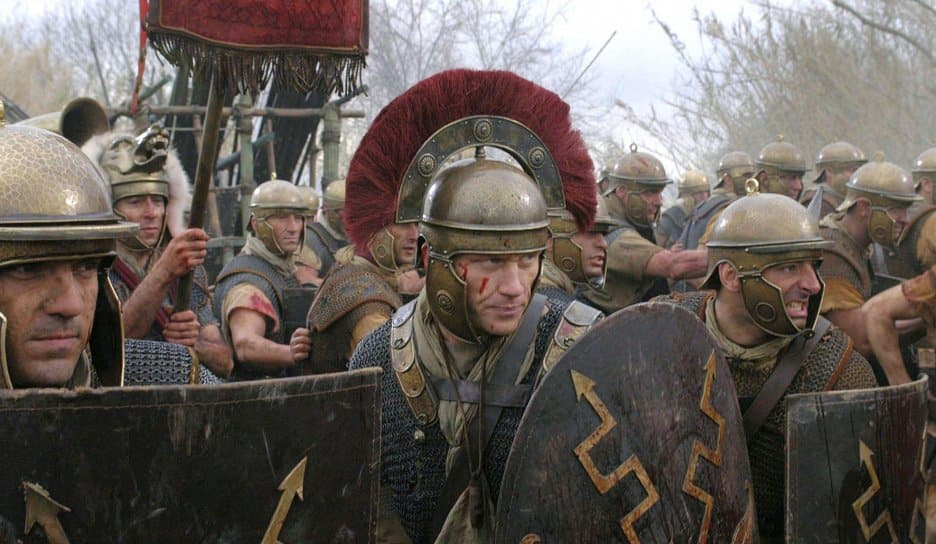
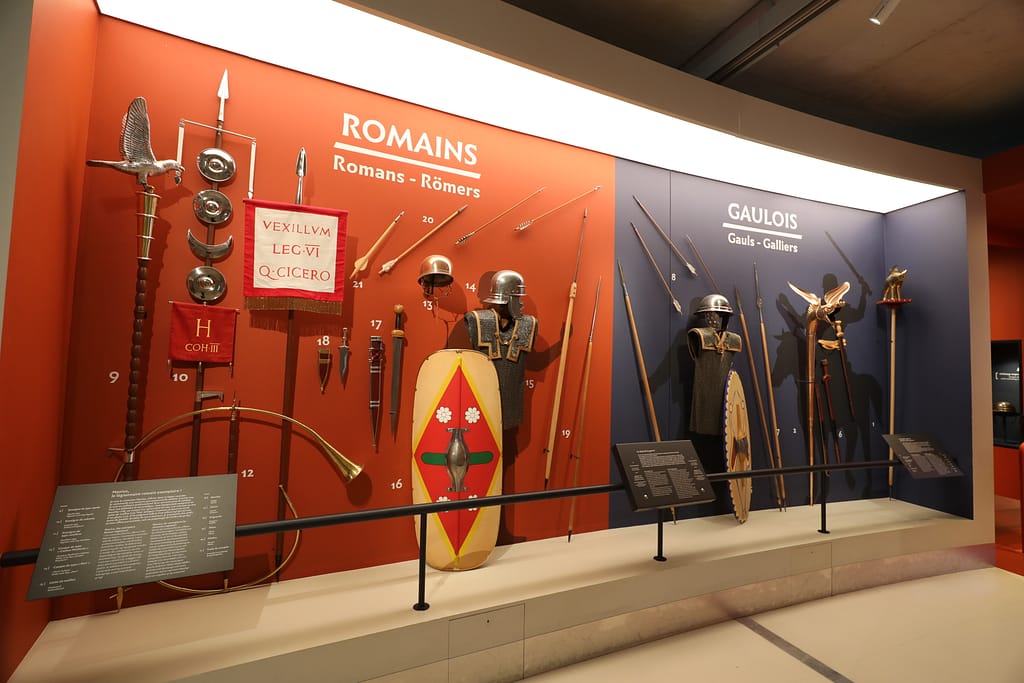
The main Roman advantage was Legionary discipline and engineering; including siegecraft, rapid entrenchment, and bridge-building. The Romans were also proficient in establishing logistics lines of supply from Italy, supplemented by foraging and requisitions. Roman cavalry was initially weak, but improved as Germanic horse auxiliaries were integrated into Caesar’s army.
The Gallic advantage lay in manpower and cavalry mobility. Individual tribes could field tens of thousands, but lack of unity left them vulnerable to Caesar’s divide-and-defeat strategy. Only in 52 BC did a general commander, Vercingetorix of the Averni, succeed in uniting disparate forces under a common strategy of resistance.
Vercingetorix’s Revolt
By early 52 BC, discontent in Gaul reached a breaking point. Roman requisitions, hostages, and garrisons had strained tribal loyalties, and Caesar’s temporary absence in Cisalpine Gaul gave space for revolt. Vercingetorix, a nobleman of the Arverni, emerged as the central figure. Though initially expelled by pro-Roman factions, he rallied supporters in the uplands of the Auvergne and was soon acclaimed as commander of a pan-Gallic coalition.
Strategy and early success
Vercingetorix adopted a strategy of attrition — avoiding pitched battle with the legions while denying them supplies. Villages were ordered burned, crops destroyed, and herds driven away in a scorched-earth policy designed to stretch Roman logistics. This was the first time the Gauls had embraced a unified strategic approach rather than fragmented tribal resistance.
In May 52 BC, Caesar suffered a setback at Gergovia (near modern Clermont-Ferrand). The Roman assault on the fortified oppidum faltered in rough terrain, leaving over 700 legionaries dead, including 46 centurions — a rare tactical defeat that shook Caesar’s prestige. Vercingetorix capitalised, persuading wavering tribes that Rome could be beaten.
Caesar regains the initiative
Caesar responded with speed and ruthlessness. Crossing into the territory of the Aedui (nominal Roman allies whose loyalty was wavering), he stabilised the situation by seizing hostages and restoring control. By midsummer, he concentrated his forces and struck at Gallic cavalry forces along the Vingeanne River (July 52 BC), defeating them with the aid of Germanic horse auxiliaries. This forced Vercingetorix into retreat.
The move to Alesia
Seeking a defensible position where he could withstand Roman pressure and await reinforcements, Vercingetorix withdrew to Alesia, the stronghold of the Mandubii. The oppidum stood on a hilltop plateau bounded by the Ose and Oserain rivers, with steep slopes on three sides — an ideal fortress for defence. With approximately 80,000 warriors under his command and expecting a massive relief effort from allied tribes, he prepared to make his stand.
Roman siege operations
Caesar’s strategic assessment
As Caesar’s legions closed on Alesia in September 52 BC, he immediately judged that a direct assault against the fortified oppidum on its commanding plateau would be too costly. Vercingetorix held the high ground with approximately 80,000 warriors and had sent out his cavalry to gather reinforcements from allied tribes. Caesar recognised that time rather than direct assault, would be his best strategy. His solution was to encircle Alesia with systematic siege works that would neutralise both the defenders inside and the massive relief force he anticipated outside.
⚔️ Go deeper — Members get exclusive access to the Deep Research Collection, Field Notes, and monthly Research Dispatches. Try membership free for 7 days, cancel anytime. From $9/month.
The Contravallation
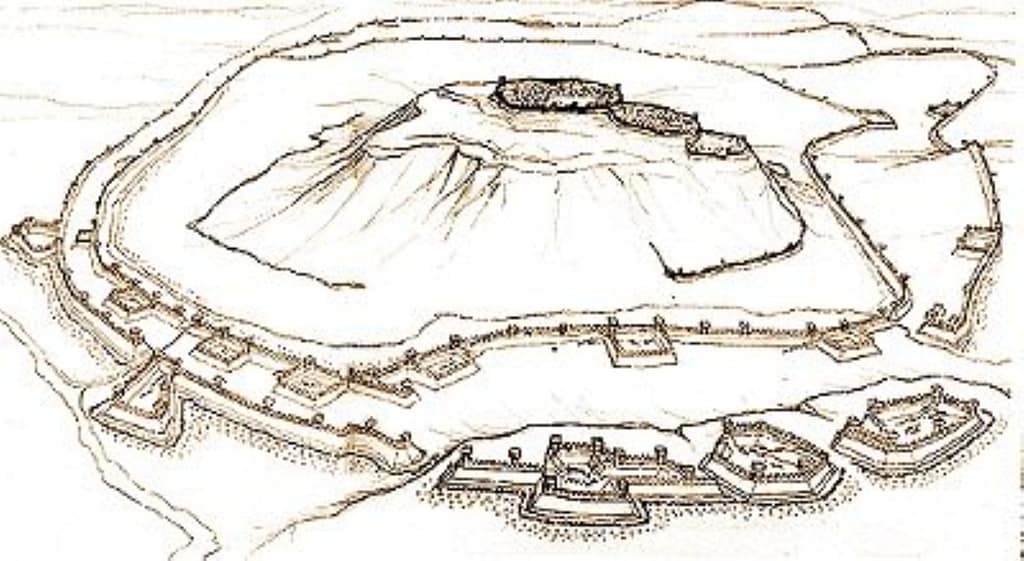
The first phase was the contravallation, a continuous inner line of fortifications facing towards Alesia, constructed by Caesar’s 12 legions (roughly 50,000–60,000 men). This inner circuit stretched about 18 kilometres, following the contours of the rivers Ose and Oserain. The works included:
- A ditch 20 feet wide and 9 feet deep, flooded with water where possible.
- Behind the ditch, a rampart and palisade about 12 feet high.
- Atop the rampart, towers at regular intervals for missile troops.
- Defensive obstacles known as cippi (rows of sharpened stakes), lilies (concealed pits with pointed stakes), and stimuli (iron hooks) placed forward of the ditch to disrupt assaults.
These features made breakout attempts costly and gave the legions a fortified line to hold against sorties from the town.
The Circumvallation
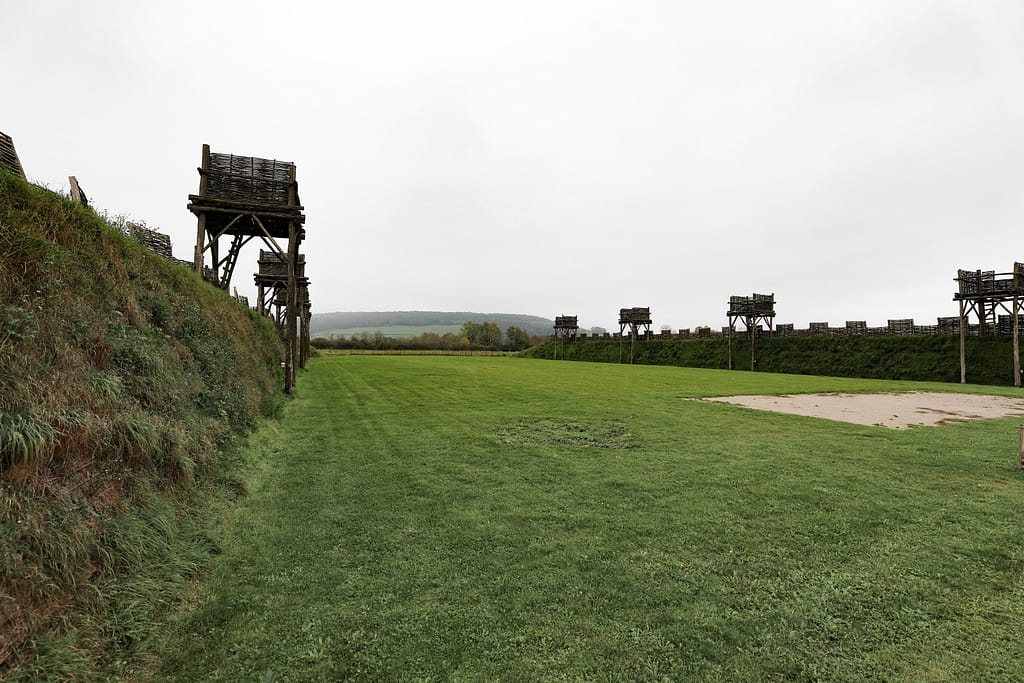
News soon arrived that Gallic tribes were assembling a vast relief army. To counter this, Caesar ordered the construction of an outer circumvallation, approximately 21 kilometres in length, facing outward. This mirrored the inner line but faced away from Alesia, effectively creating a double wall of fortifications. Between the two lines, Caesar left protected camps and redoubts to allow for rapid reinforcement of threatened sectors.
This dual-line system was unprecedented in Roman siegecraft and remains one of the most impressive feats of ancient military engineering. Caesar’s army, simultaneously besieger and besieged, could now fight on two fronts if necessary.
Conditions Inside Alesia
Within the oppidum, shortages quickly grew acute. Vercingetorix sought to preserve rations for his warriors by expelling the Mandubii civilians, along with the sick and elderly. Caesar, refusing to compromise his blockade, denied them passage through his lines. Trapped between the Roman ramparts and the Gallic fort, the civilians perished — a stark demonstration of Caesar’s determination to maintain pressure and avoid diversion of supplies.
The Gallic Relief Army and the climax of the Siege
The Gallic relief force assembles
In late September 52 BC, word reached Caesar that Vercingetorix’s cavalry had succeeded in rallying a massive relief force. Ancient sources estimate this army at 250,000–330,000 warriors drawn from almost every Gallic tribe, though modern historians suspect lower figures, perhaps 100,000–150,000. Even at the reduced estimate, the relief host outnumbered Caesar’s 60,000 men more than two to one. The Gallic commanders included leaders from the Aedui, Arverni, and Sequani, coordinating with Vercingetorix inside Alesia.
First assaults (late September)
The relief army launched its opening attacks against Caesar’s outer circumvallation, testing the Roman lines at multiple points. The Gallic infantry surged up the ditches and palisades while their cavalry probed for weak spots. Simultaneously, Vercingetorix ordered mass sorties against the inner contravallation, attempting to break out from Alesia. The Romans, spread thin, fought on two fronts.
Caesar employed reserves stationed in fortified redoubts, shifting legions rapidly to threatened sectors. Roman artillery — ballistae, scorpiones, and slings mounted on the towers — inflicted heavy losses on Gallic troops scaling the ramparts. After a day of continuous fighting, the relief force fell back to regroup, while Alesia’s garrison also withdrew inside their lines.
The major night attack
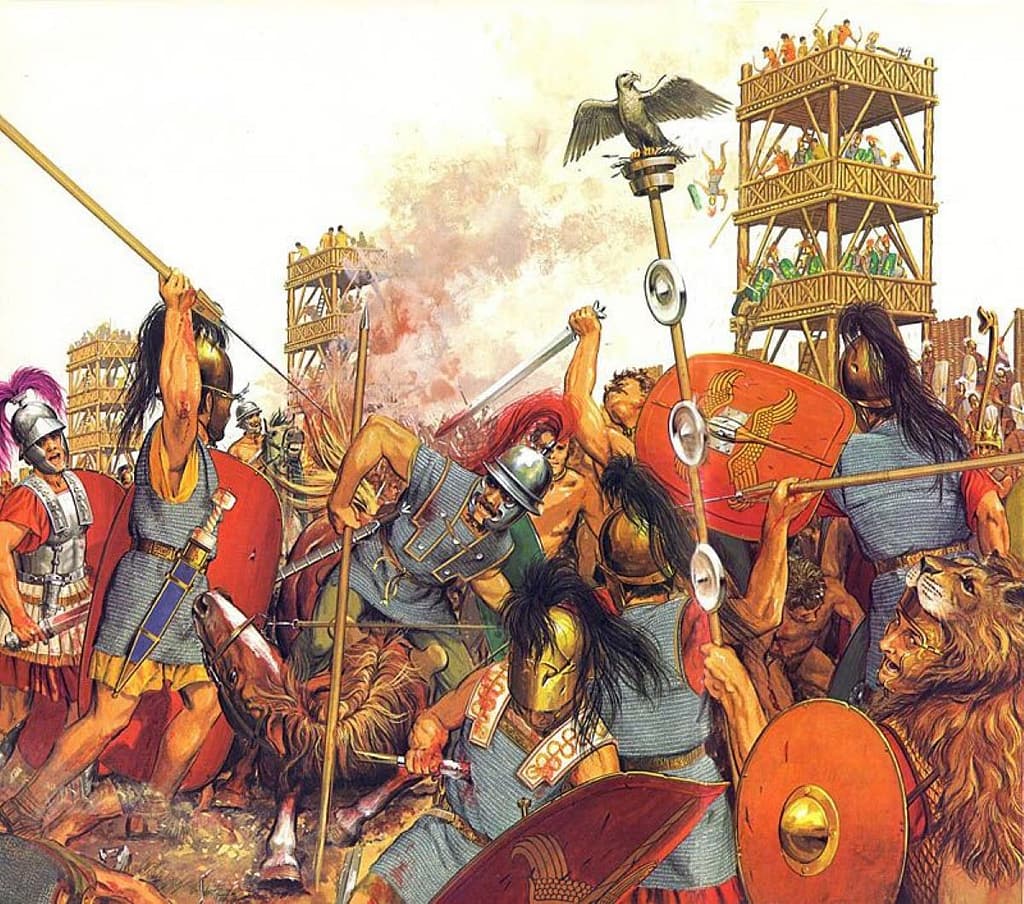
A coordinated assault followed the next night. The Gauls employed fascines and ladders to cross the ditches and pressed hard on the Roman defences under cover of darkness. Vercingetorix hurled his strongest warriors at the inner fortifications. Caesar reports that at one point the fighting was hand-to-hand on the ramparts, with both sides reinforcing desperately. Despite heavy pressure, the Roman fieldworks held, aided by prepared obstacles and disciplined counterattacks by legionaries fighting in depth.
The decisive engagement
The climax came with a massive general assault launched at dawn two days later. The relief army concentrated its effort on a weak sector near Mont Réa, where the terrain favoured an approach against the circumvallation. Simultaneously, Vercingetorix led a major sortie from Alesia, hurling the last reserves of his cavalry and infantry at the contravallation. Caesar, recognising the crisis, personally committed his Germanic cavalry auxiliaries on the outer line. In a sweeping manoeuvre, these horsemen outflanked the Gallic attackers, striking their rear and throwing them into confusion.
Inside, the legionaries repelled Vercingetorix’s sortie with pila volleys followed by close combat. The coordinated defence broke both Gallic assaults almost simultaneously. The relief army, shattered and demoralised, dissolved in retreat.
Vercingetorix’s surrender
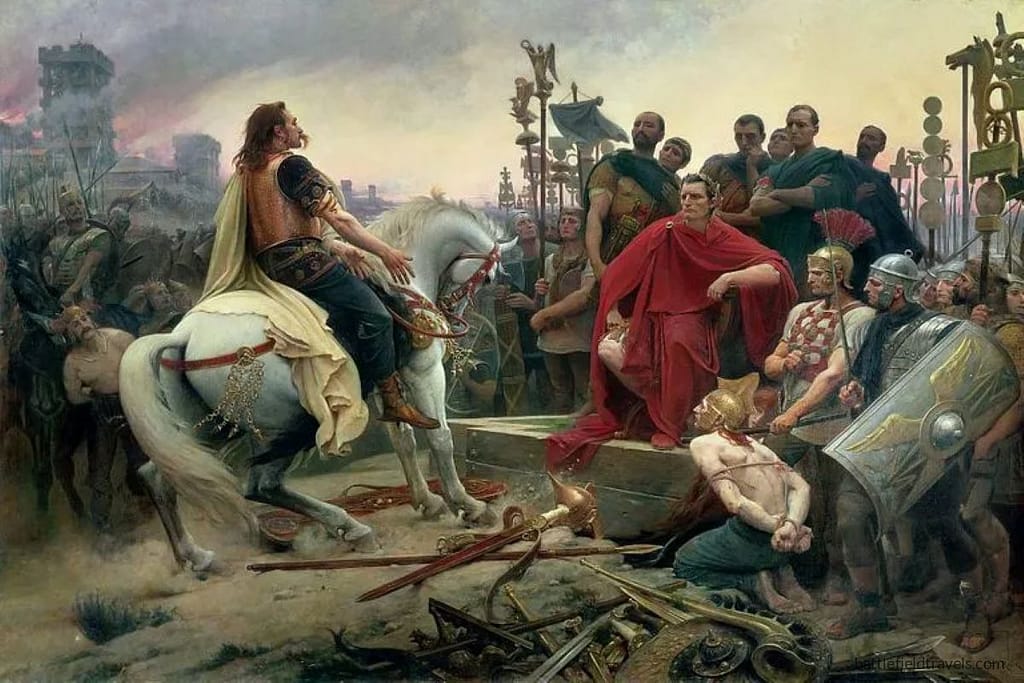
With no prospect of further relief, Vercingetorix convened a council of his chiefs. The following day, he rode out to Caesar’s camp, cast his arms at Caesar’s feet, and surrendered. Alesia fell, and with it the last hope of a united Gallic resistance. Caesar’s victory effectively secured Roman control of Gaul, a conquest that would underpin his political power in Rome and set the stage for the civil wars to come.
The Alesia battlefield today
Terrain and setting
The oppidum of Alesia is located near modern Alise-Sainte-Reine in Burgundy, eastern France. The site is a steep limestone plateau rising nearly 200 metres above the surrounding plain. The Mandubii tribe had fortified the hilltop with ramparts and gates, making it a naturally defensible stronghold. From the heights, one can still appreciate the dominating views across the valleys where Caesar’s legions constructed their siege lines. The natural amphitheatre of hills surrounding the plateau explains both the Gallic decision to defend it and Caesar’s opportunity to encircle it.
Archaeological discoveries
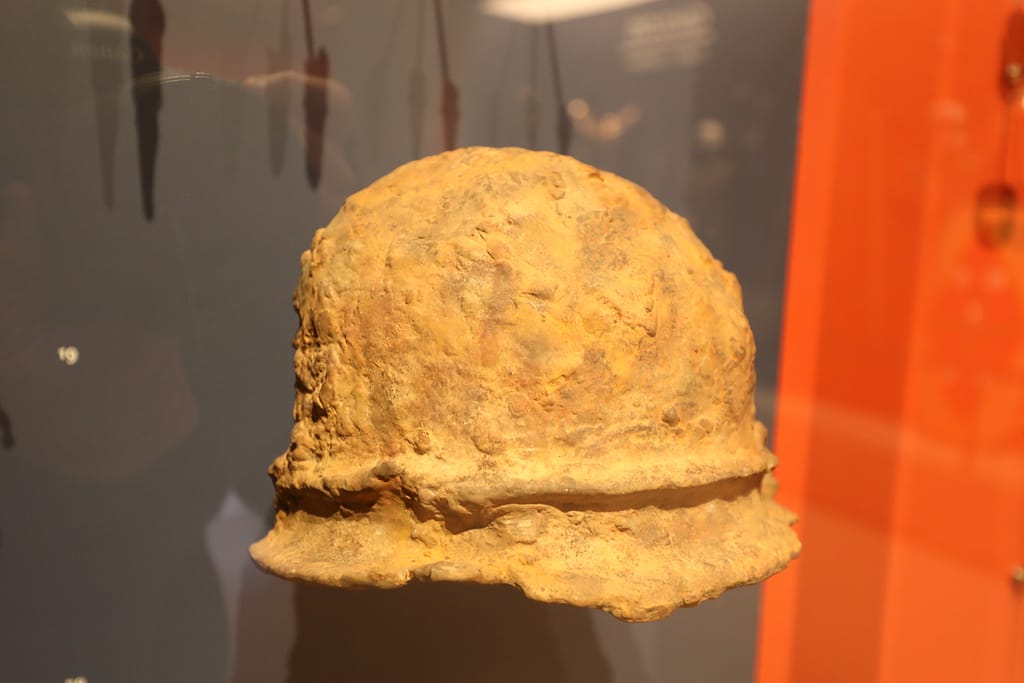
Systematic excavations began under Napoleon III in the 1860s, part of his effort to link his empire with the legacy of Caesar. French military engineers uncovered traces of ditches, palisades, and Roman camps, confirming key aspects of Caesar’s descriptions in Commentarii de Bello Gallico. Finds included iron weapons, pila heads, sling bullets, and coins, many now housed in local collections. Modern archaeological surveys using aerial photography and geophysical mapping have revealed even more detail of the Roman siege works, showing the scale and precision of the double line of fortifications.
Memorials and reconstructions
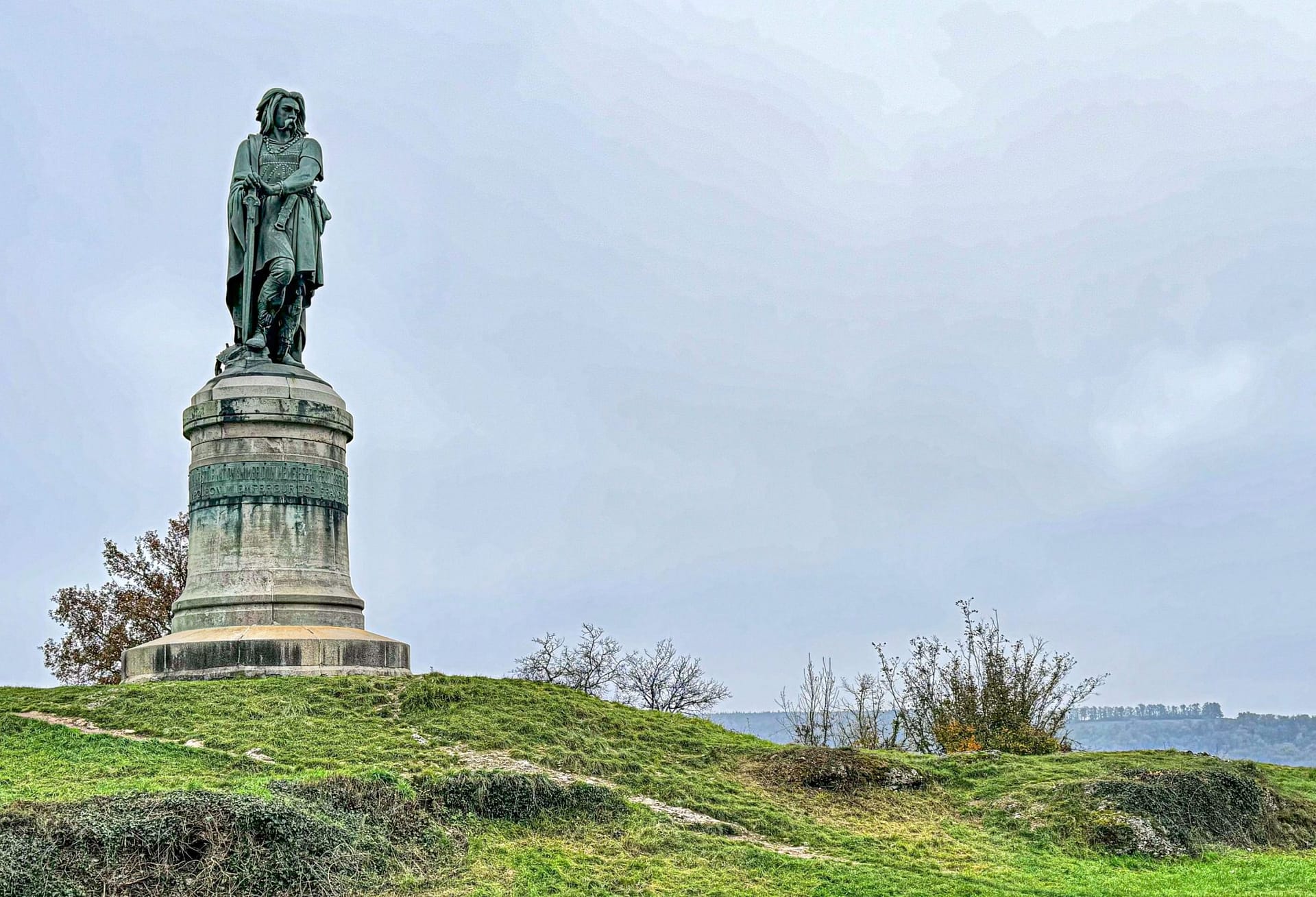
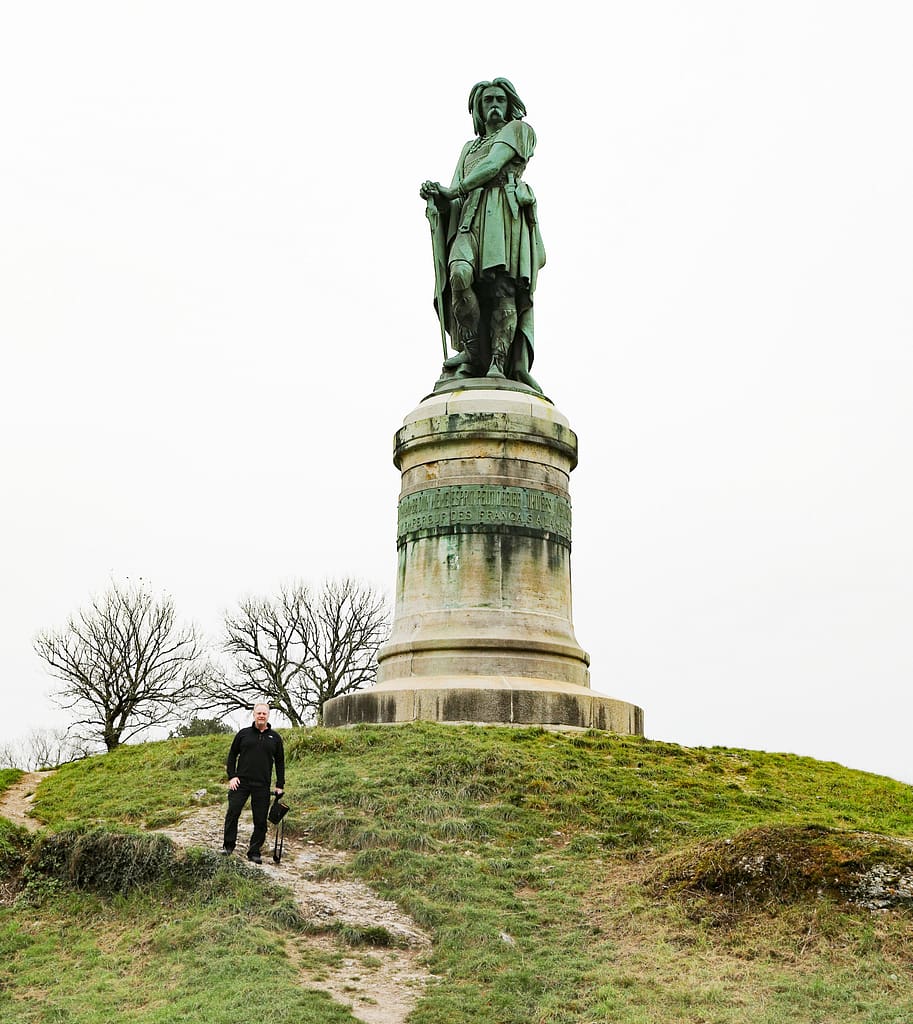
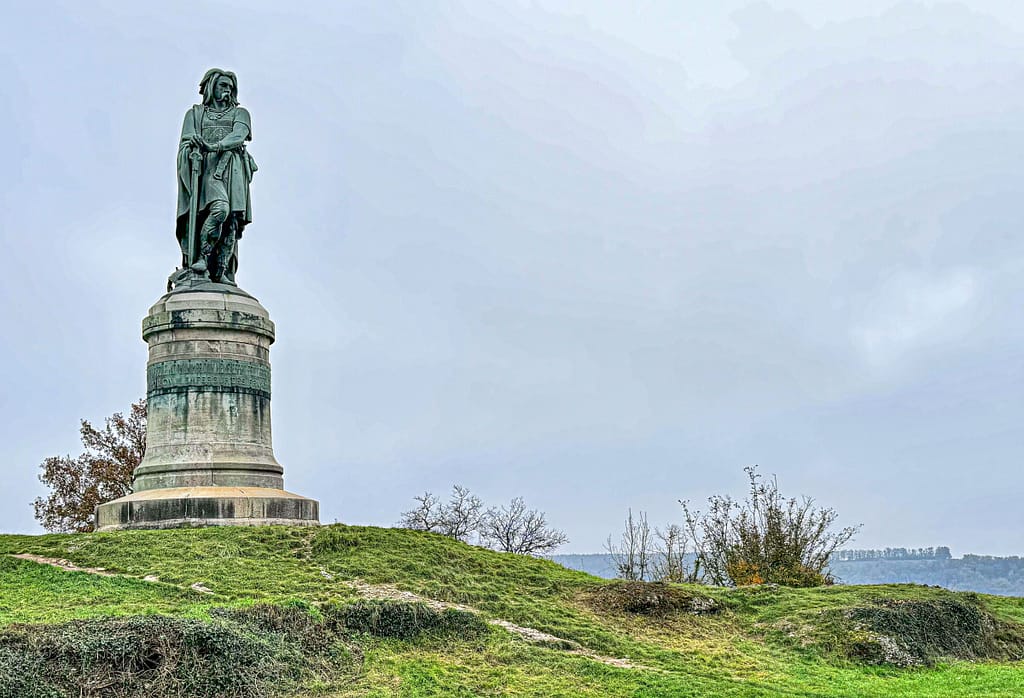
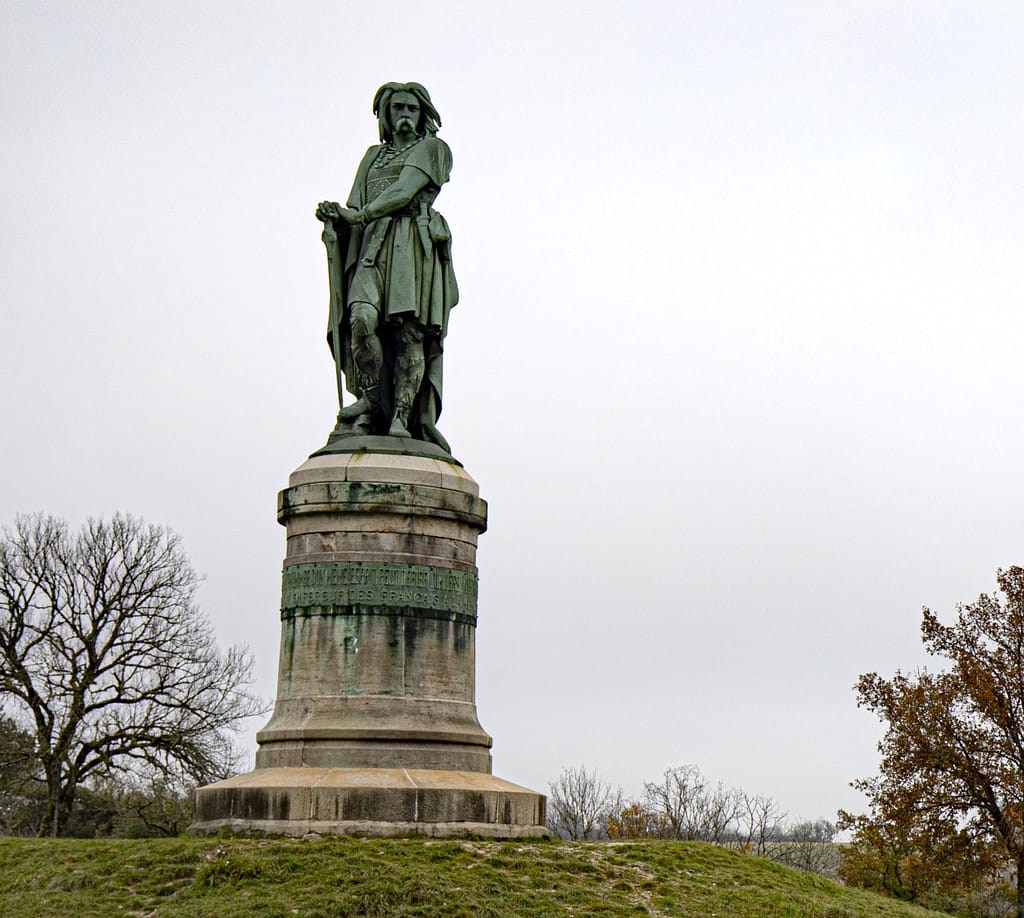
Napoleon III also commissioned the monumental bronze statue of Vercingetorix, erected in 1865 atop Mont Auxois. Designed by Aimé Millet, with an inscription by Prosper Mérimée, it symbolises national resistance against foreign conquest. The statue towers over the site, a deliberate counterpoint to Caesar’s victory.
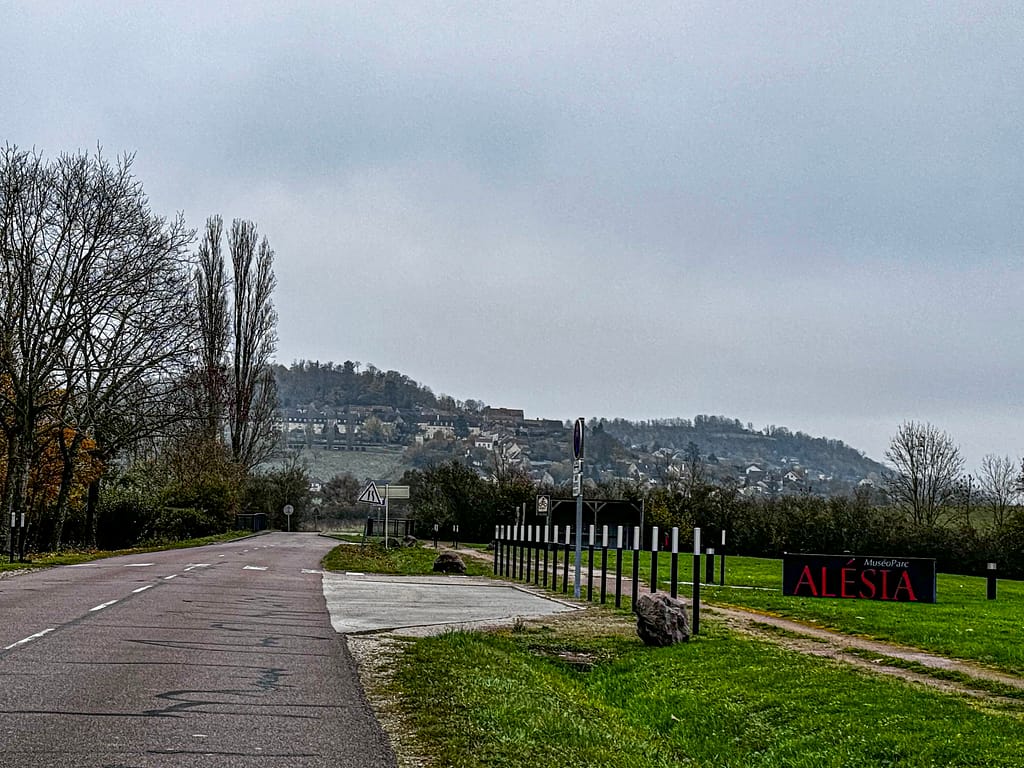
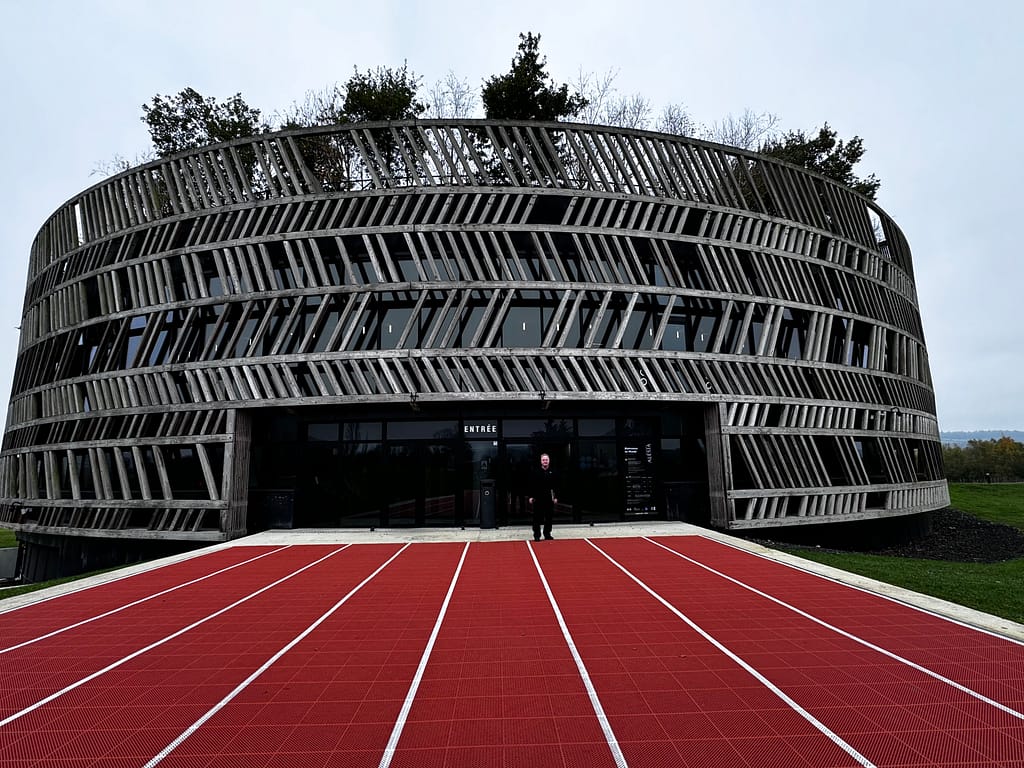
In 2012, the MuséoParc Alésia opened — a modern interpretive centre with exhibitions, reconstructions, and multimedia displays. Outside the museum, a full-scale section of Caesar’s circumvallation has been recreated, including ditches, ramparts, and wooden towers, allowing visitors to visualise the scale of Roman engineering. The permanent collection contains artefacts from excavations, Roman siege equipment models, and Gallic weaponry.
Link to the Alesia Museum Park website
Visiting the battlefield
Visitors today can tour both the museum and the hilltop oppidum, walking the ground where Caesar’s siege unfolded. Waymarked trails lead to surviving earthworks and offer panoramic views of the valleys where the relief army manoeuvred. The combination of reconstructed Roman lines, authentic archaeological remains, and the commanding terrain makes Alesia one of the most comprehensively presented battlefields of antiquity.
Alesia hilltop fort


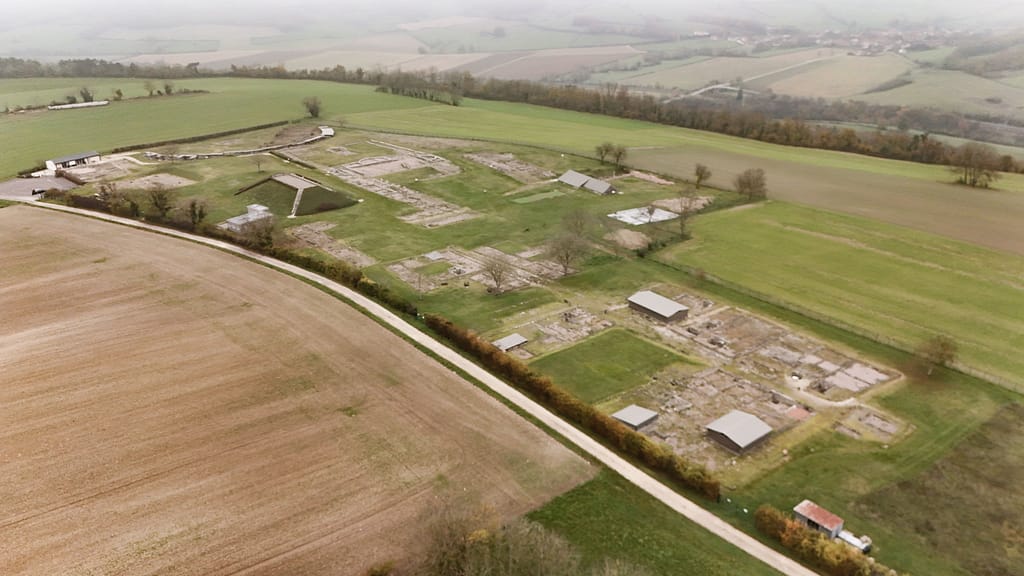
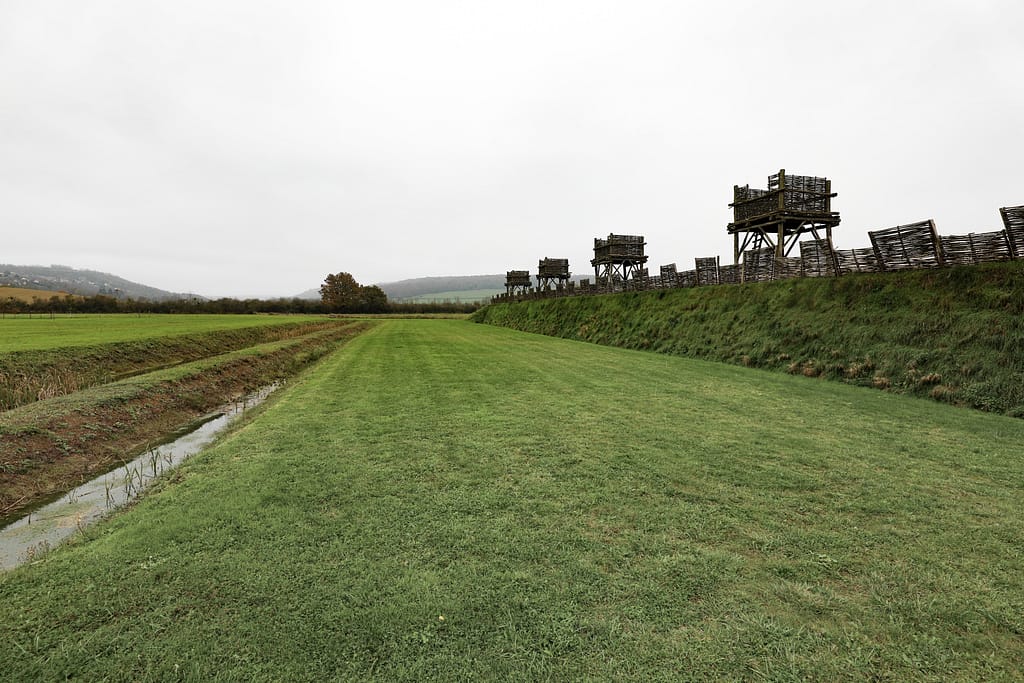
MuséoParc Alésia (Alise-Sainte-Reine)
The Battle of Alesia in popular culture
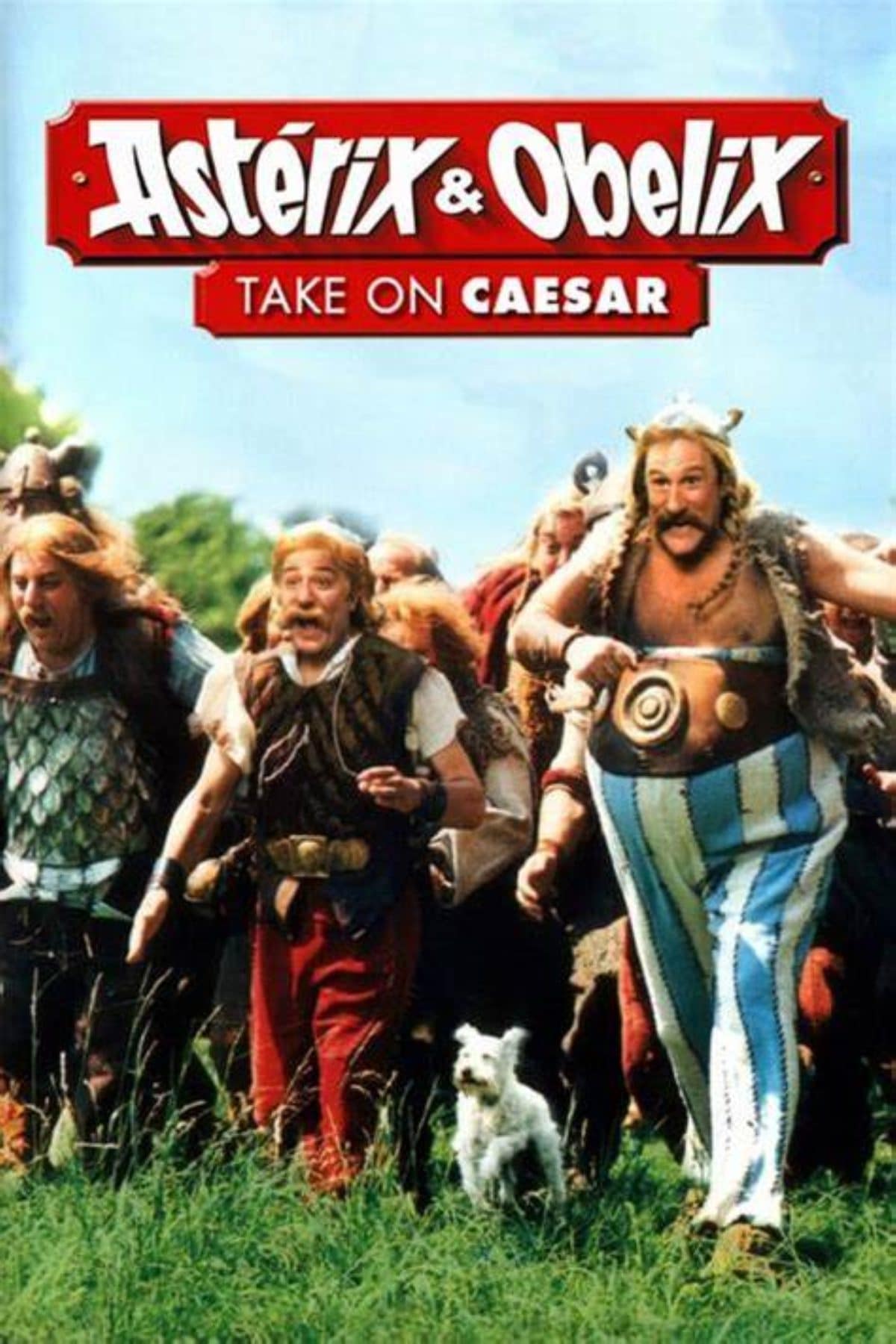
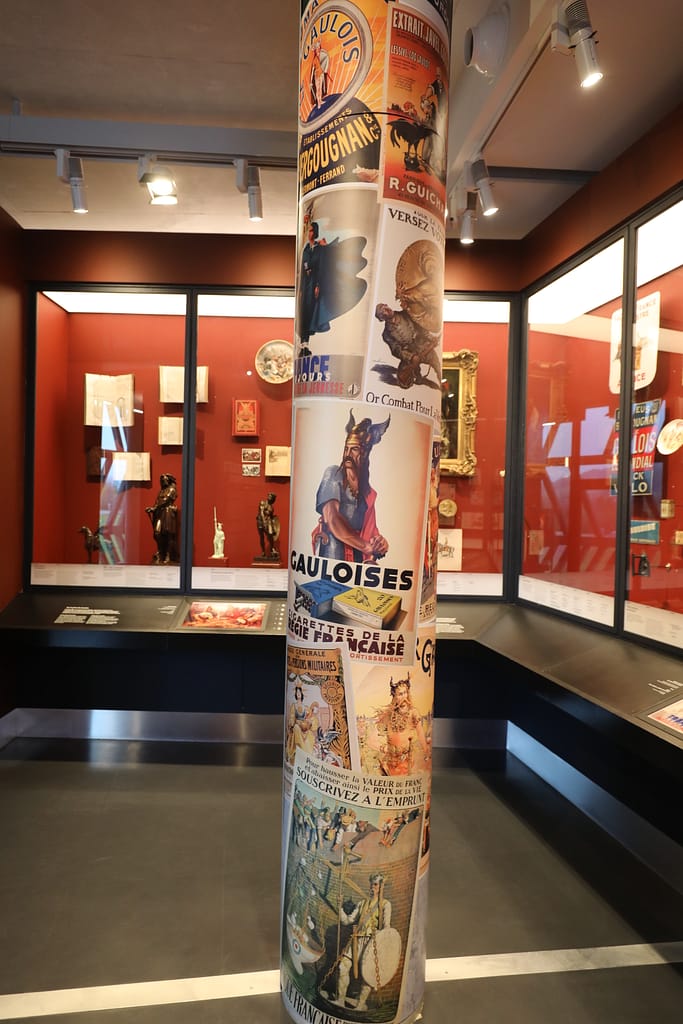
Found this useful? Buy me a coffee — it helps fund future battlefield research


Authored by Mick Prictor, a retired military officer with 40 years’ service, and a military historian specialising in terrain-focused analysis of tactics, doctrine, and command decision-making in land warfare. His work draws on extensive battlefield fieldwork—more than 280 sites worldwide—and one of the world’s largest private collections of historic military arms, uniforms, and equipment. About me
Sources & Further Reading
Sources
Julius Caesar. Battles for Gaul, Wilder Publications
Nic Fields (Author), Donato Spedaliere (Illustrator), 2014. Alesia 52 BC: The final struggle for Gaul (Campaign, 269). Osprey Publishing
📚 Further Reading – Roman Warfare
This battle study nests within the broader analytical framework explored in the Research Hub, where operational methods, operating environments, armies, commanders, and weapons are examined across conflicts and eras. The links below connect related studies across the wider body of battlefield analysis on the BattlefieldTravels site.
⚔️ Explore all battle studies from the Ancient Roman era
🏛️Explore the museum of Ancient and Medieval historic artefacts
The book list for this conflict includes the finest campaign studies, memoirs, and operational analyses available on ancient warfare, selected specifically to complement this battlefield study.
📚 Ancient Warfare– Recommended Reading
🗞️ For updates on new battlefield studies and research insights, you can subscribe to the Newsletter.
Related Battle Studies, Museum Pieces & Reading Resources
 🏛️ Ancient and Medieval World (500 BC to 1453 AD) Weapons and Equipment
 ⚔️🔒Battle of the Catalaunian Fields, France, ~20 June 451 AD
 ⚔️ 509 BC–AD 476 Roman Wars, Battle Studies
📚 Ancient Roman Warfare (c. 509 BC–AD 476),
Recommended Reading
 📝🔒 Field Note: Battle of Teutoburg Forest (Kalkriese), Germany, AD 9
🧭 Battlefield Travel Guide: Alesia
Getting There
- Nearest City: Dijon, ~60 km southeast; Montbard, ~15 km.
- Access: The site is at Alise-Sainte-Reine in Burgundy. By car, take the A6 motorway (exit at Bierre-lès-Semur) then follow local roads to Alise. Montbard station (TGV connections from Paris) is the closest rail access, with local buses/taxis to the site.
- Tickets: Entry to the MuséoParc Alésia museum and archaeological park is by ticket; the hilltop site and Vercingetorix statue are free to access.
Site Orientation
- Key Landmarks: The hilltop oppidum of Alesia; Napoleon III’s monumental statue of Vercingetorix; reconstructed Roman siege lines at the MuséoParc.
- Walking Routes: Trails run across the hilltop settlement remains, with marked viewpoints. Around the MuséoParc, reconstructed fortifications and ditches give an idea of Caesar’s circumvallation/contravallation.
- Best Vantage Points: From the hilltop near the statue for views over the surrounding plain, showing why Caesar chose the encirclement strategy.
Museums & Visitor Centres
- On-site: MuséoParc Alésia – a modern museum with models, artefacts, and immersive displays explaining the siege and Caesar’s campaigns.
- Nearby: Archaeological remains of the Gallo-Roman town at the foot of the hill, with temples, theatre, and forum outlines accessible.
On-Site Experience
- Interpretive Signage: The MuséoParc provides bilingual interpretation; trails on the hilltop and siege lines have panels explaining the archaeological evidence.
- Atmosphere: The hilltop is windswept and still commands the surrounding terrain. The reconstructed siege works and scale models make it easier to visualise Caesar’s engineering feat.
Nearby Points of Interest
- Related Sites: Other Gallic oppida in Burgundy (e.g. Bibracte, former capital of the Aedui).
- Broader Interest: Burgundy wine region; Dijon’s medieval quarter and museums; Semur-en-Auxois, a picturesque medieval town nearby.
Practical Tips
- When to Visit: MuséoParc is open year-round but with reduced hours in winter. Outdoor walking is best in spring or autumn when the site is less crowded.
- Facilities: The MuséoParc has a café, bookshop, and rest areas; accommodation is available in nearby villages and towns.
- Events: Occasional re-enactments and living history events bring the Roman and Gallic armies to life on site.
Subscribe to Battlefield Travels and receive a free E-Book Battlefield Guide
Unlock expert battlefield analysis, campaign reconstructions, and historical insights drawn from firsthand exploration and primary sources.
🗺️ You’ll receive:
🎖️ Exclusive historical insights you won’t find elsewhere
📘 A free eBook: 10 Tips for Exploring Historic Battlefields
📰 New battlefield studies straight to your inbox as they are published

⚔️ Go deeper — Members get exclusive access to the Deep Research Collection, Field Notes, and monthly Research Dispatches. Try membership free for 7 days, cancel anytime. From $9/month.