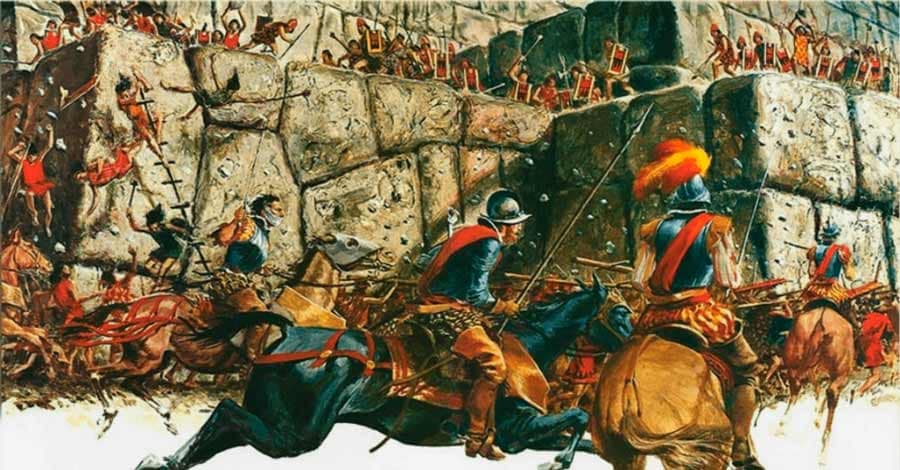
Manco Inca’s Siege of Cusco and the fight for Sacsayhuamán Fortress!
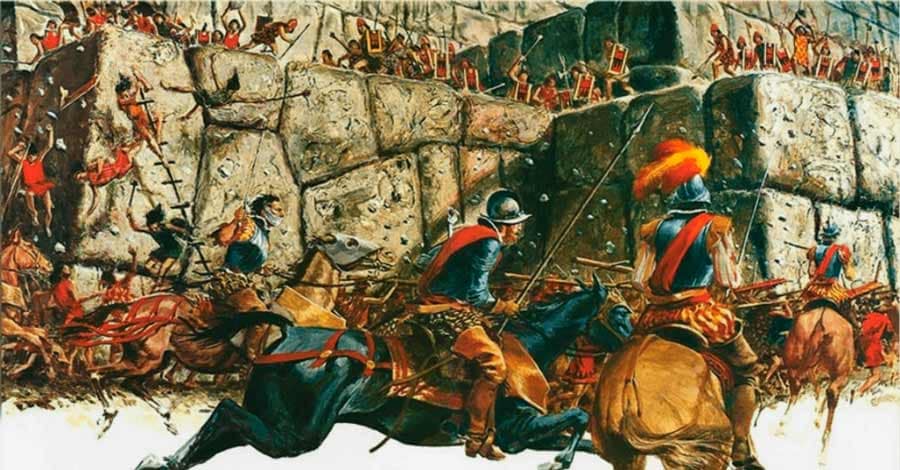
High in the Andes above Cusco, the massive fortress of Sacsayhuamán became the focal point of Manco Inca’s desperate rebellion against the conquistadors. In June 1536, tens of thousands of Inca warriors laid siege to Cusco—yet a few hundred Spaniards and their allies struck back from this mighty hilltop stronghold.
Key facts
Google Earth map – location of Sacsayhuamán fortress, Peru
🧭🥾 Walking the Battlefield
I visited Cusco, the old Inca capital, and the great fortress of Sacsayhuamán in February 2020. I had long been fascinated by the history of the Spanish conquest of the New World. How could a few hundred conquistadores — armed with little more than a handful of guns and cavalry — overthrow the mighty Inca Empire with armies numbering in the tens of thousands?
Walking the grounds at Sacsayhuamán fortress makes the accounts of the battle come alive. The unique saw-toothed walls reveal their defensive purpose immediately – mutual support, enfilade fire, and covering dead ground. Standing before the massive masonry, the scale of Inca craftsmanship is humbling: gigantic stone blocks fitted so tightly together that not even a blade of grass can slip between them.
And yet, despite these immense fortifications and overwhelming numbers, the Spanish captured the fortress in June 1536. To stand on this ground is to confront the paradox of the conquest — how technology, tactics, and audacity could compensate for such extraordinary numerical inferiority.
Strategic context – Spanish conquest of the Inca Empire
Atahualpa and the Spanish coup
The Battle of Sacsayhuamán in June 1536 unfolded at a pivotal moment in the Spanish conquest of the Inca Empire. Only three years earlier, Francisco Pizarro and his band of conquistadors had seized the Inca ruler Atahualpa at Cajamarca in one of the most audacious coups of the early modern age. The capture was followed by Atahualpa’s execution in 1533, leaving the empire leaderless and vulnerable. The Spanish installed a puppet ruler, Manco Inca Yupanqui, believing he would be pliable enough to secure their control over the vast Andean domains.
Initially, Manco cooperated with the Spaniards. He was young, ambitious, and understood the immediate danger of defying European invaders who seemed to wield supernatural power with their horses, armour, firearms, and cold steel. The Spanish, however, treated him with contempt and brutality. Accounts describe how Manco was humiliated by Spanish captains, deprived of his authority, and forced to endure the abuse of his queen by Spanish soldiers. Any illusion of coexistence between the conquerors and their appointed Inca ruler quickly collapsed.

Manco Inca’s Rebellion
By 1535, Manco had escaped from Cusco under the pretext of conducting a religious ceremony. Once free, he began raising an army from among the still-loyal Inca provinces. The resentment against Spanish domination was widespread: forced labour, the desecration of sacred temples, and the greed of the conquistadors had alienated both nobles and commoners alike. Within a year, Manco had assembled what chroniclers estimated as between 40,000 and 200,000 warriors. Even if Spanish sources exaggerated these figures to magnify the scale of their achievement, the mobilisation was immense — dwarfing the tiny garrison of Spaniards in Cusco.
The Inca plan was clear: retake Cusco, the sacred heart of Tawantinsuyu, and drive the foreign invaders from their land. To achieve this, Manco directed his forces to lay siege to the city in May 1536. Cusco, once the seat of the Sapa Inca, was now held by Hernando Pizarro with scarcely 200 Spanish soldiers, supported by several thousand Indian auxiliaries. The defenders were well aware that their survival depended on holding the heights surrounding Cusco — and above all, the fortress of Sacsayhuamán.
Sacsayhuamán fortress
Sacsayhuamán was not merely a stronghold but an engineering marvel. Constructed with enormous polygonal stone blocks, some weighing over 100 tons, its walls zigzagged across the ridge overlooking Cusco, providing a commanding position from which any attacker or defender could dominate the valley below. The Incas had built it as both a fortress and a ceremonial centre, embodying their mastery of highland architecture. Whoever held Sacsayhuamán controlled the approaches to Cusco.

Cusco besieged
For the Spanish, this presented both an opportunity and a mortal threat. If Manco’s warriors controlled Sacsayhuamán, they could bombard the city with missiles, cut off sorties, and prevent resupply. On the other hand, if the Spaniards could wrest control of the fortress from the besiegers, they might break the momentum of the siege and prolong their precarious hold on Cusco. Hernando Pizarro knew that victory or defeat hinged upon this fortress of cyclopean stones.
Thus, the stage was set: a tiny, desperate band of Europeans and their allies against the massed armies of a still-proud empire. The odds were overwhelming, yet the conquistadors’ blend of cavalry shock tactics, steel armour, and a ruthless determination to cling to their gains would decide the outcome. The battle for Sacsayhuamán would become the climactic struggle of Manco Inca’s rebellion — a contest not just of arms, but of will, strategy, and cultural survival.

Opposing Forces: Conquistadors versus Inca warriors
 The Inca Army under Manco Inca
 The Inca Army under Manco Inca
Manco Inca Yupanqui’s rebellion mobilised one of the largest forces ever assembled in the Andes. Chroniclers disagreed on the precise numbers — some suggested 40,000, others as high as 200,000 warriors. While these figures may contain exaggeration, there is no doubt that the Inca host outnumbered the Spaniards by at least several hundred to one.
The Inca army retained the core structure inherited from the imperial system of ‘Tawantinsuyu‘ (literally ‘land of four parts’ describing the Union of the Inca Empire). Troops were drawn from subject provinces under the ‘mit’a’ system of labour levies, with contingents organised by region and commanded by local nobles loyal to Manco. This gave the army immense size but variable quality: veteran warriors from the highland provinces fought with skill and ferocity, while hastily levied peasants had less training.
Weapons and Tactics
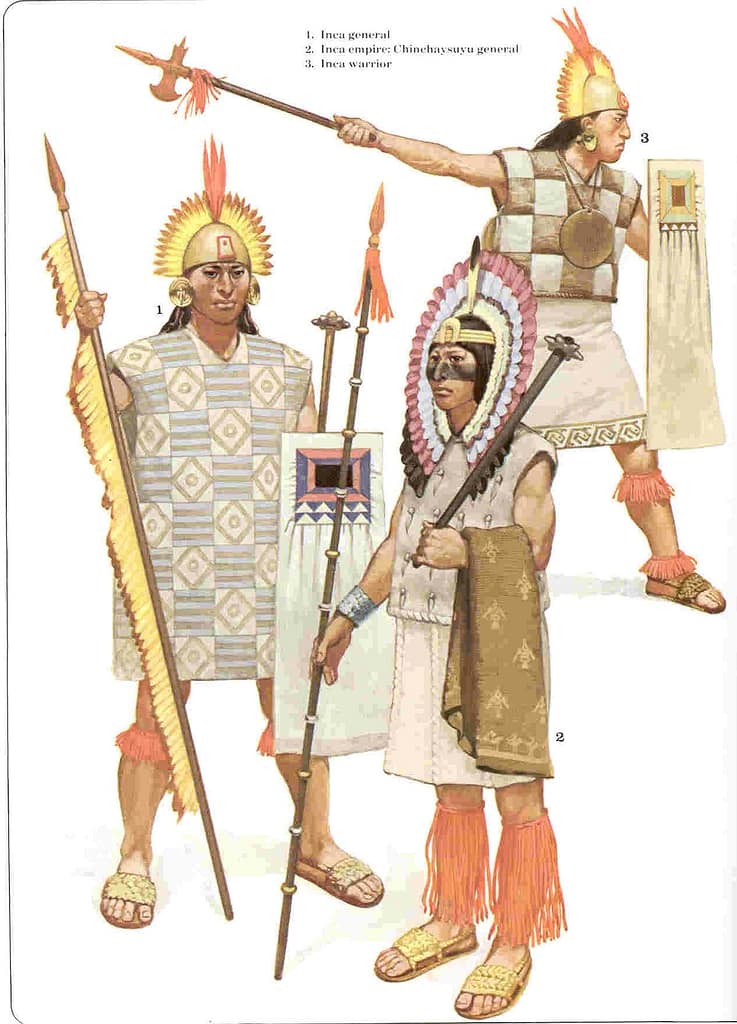
- Projectile weapons: The Incas relied heavily on slings, javelins, and bows. Their slings, made from woven llama wool, could hurl stones with lethal velocity, capable of smashing helmets or breaking bones. Fire-hardened javelins and throwing spears provided medium-range attack.
- Close combat weapons: Warriors carried macanas (wooden clubs with stone or bronze heads), axes, and daggers. Armour was typically quilted cotton, with wooden shields or helmets of wood, cane, or bronze.
- Siege warfare: Though unfamiliar with European-style siegecraft, the Incas demonstrated ingenuity in the 1536 rising. They set fire to Spanish houses with burning projectiles, attempted to block supplies, and used the fortress of Sacsayhuamán as a base of operations dominating Cusco.
- Purpose: The Incas fought with a sense of defending their homeland and sacred capital. They had the manpower to surround and besiege Cusco for months, and initially pressed their advantage vigorously.
Despite these strengths, the Inca army faced severe disadvantages. They lacked horses, steel weapons, and armour to match the Spaniards. Their command system, though hierarchical, struggled to coordinate such massive numbers across extended operations. And although their missile fire was formidable, it struggled to penetrate Spanish breastplates or stop cavalry charges once the horsemen closed.
 The Spanish and their Indian allies
 The Spanish and their Indian allies
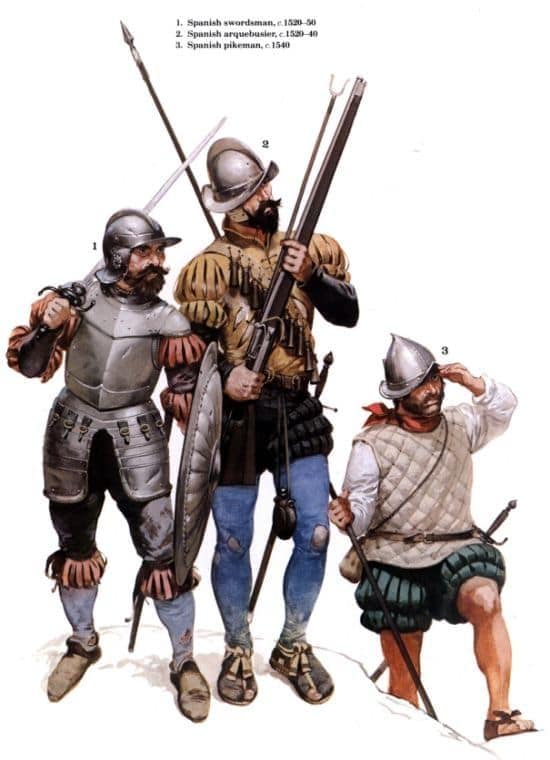
Facing this vast army was a tiny Spanish force under Hernando Pizarro. At the outbreak of the siege in May 1536, the Spaniards in Cusco numbered about 190–200 men, including:
Cavalry: Around 50–60 horsemen, the decisive arm of the Spanish conquistadors. Even a small cavalry charge could scatter masses of Inca troops. Horses also provided mobility and shock effect that the Incas could not match.
Infantry: Roughly 140 foot soldiers, a mix of swordsmen, crossbowmen, and harquebusiers. Their steel weapons and armour gave them resilience in close combat.
Artillery: The Spaniards had a small number of falconets and portable guns. Though slow to reload, their noise and destructive power terrified unarmoured opponents.
Indian Allies. Equally important were the several thousand Indian auxiliaries allied with the Spaniards. Many came from traditional Inca rivals — notably the Cañari and Chachapoya peoples — who saw Spanish conquest as a chance to escape domination by Cusco. Armed with traditional weapons, these allies fought on the Spanish side, provided supplies, and helped offset the overwhelming Inca numerical superiority.
Correlation of forces
On paper, the struggle appeared hopeless for the Spaniards. A few hundred Europeans and their allies could hardly expect to withstand tens of thousands of determined Inca warriors. Yet the balance of power was distorted by technology and tactics. Cavalry charges, steel swords, and disciplined formations enabled the conquistadors to inflict disproportionate casualties.
And yet, the Spaniards faced grave peril. They could not remain bottled up in Cusco indefinitely. Fire and missile attacks threatened to reduce Cusco to ashes, and if the Incas controlled Sacsayhuamán, the Spaniards would be hemmed in from above. It was this calculus that forced Hernando Pizarro into the desperate gamble of attacking the fortress itself — setting the stage for the ferocious battle that followed.
The Siege of Cusco begins
In May 1536, Manco Inca launched his rebellion with overwhelming force. His army poured down from the surrounding highlands and encircled Cusco. Spanish chroniclers describe the valley filling with warriors, their war cries echoing off the mountains, while fires were lit on ridgelines to signal reinforcements. The Spaniards inside Cusco — fewer than 200 Europeans and their Indian allies — suddenly found themselves under siege.
The Incas immediately applied pressure. Sling stones and javelins rained into the city, while teams of warriors hurled burning projectiles wrapped in cotton soaked with pitch. Spanish houses — mostly thatched — ignited quickly. Flames consumed whole quarters, and smoke hung heavy over Cusco. For days, the Spaniards fought not only the enemy but also the constant fires, carrying water and tearing down burning roofs.
From their vantage at Sacsayhuamán fortress, the Incas dominated the city. Perched on the heights above Cusco, its cyclopean walls provided a secure base. Inca warriors could descend swiftly into the streets, then retreat uphill to safety. Unless the Spaniards seized the fortress, their position would remain untenable.
Spanish desperation and the decision to attack
Hernando Pizarro and his brothers — Juan, Gonzalo, and Francisco (though the latter remained at Lima) — recognised the gravity of the situation. Staying inside Cusco meant slow strangulation. Supplies would run out, and the burning city would become uninhabitable.
The Spaniards devised a bold two-part plan:
- Diversionary cavalry sortie: Juan Pizarro would lead about 50 horsemen in a charge to draw Inca attention away from the fortress.
- Main assault on Sacsayhuamán: Meanwhile, a combined force of Spanish infantry and Indian allies would storm the fortress directly, climbing the steep approaches under heavy fire.
It was a desperate gamble. To attack uphill against overwhelming numbers was near-suicidal — but the Spaniards knew they had no alternative.
The assault on Sacsayhuamán fortress walls
The assault began with the Spanish advancing up the slopes toward the fortress. Inca defenders employed sling stones, arrows, and large rocks rolled downhill to disrupt the attack, causing casualties among the men moving forward in close formation.
Despite the resistance, the Spaniards continued their advance. Their Indian allies supported them, locating routes and positions from which to place ladders against the walls. Fighting developed at the base of the fortress. The Inca forces defended by thrusting spears through gaps, pushing away ladders, and maintaining a steady missile fire.
After several attempts, the Spaniards secured an entry point. Once inside the lower courtyards, their steel weapons gave them an advantage in close combat, where the Inca warriors’ arms were less effective against metal armour. The defenders withdrew in in a disciplined move into the higher towers — three prominent structures that dominated the rest of Sacsayhuamán.
⚔️ Go deeper — Members get exclusive access to the Deep Research Collection, Field Notes, and monthly Research Dispatches. Try membership free for 7 days, cancel anytime. From $9/month.
Fight for the towers
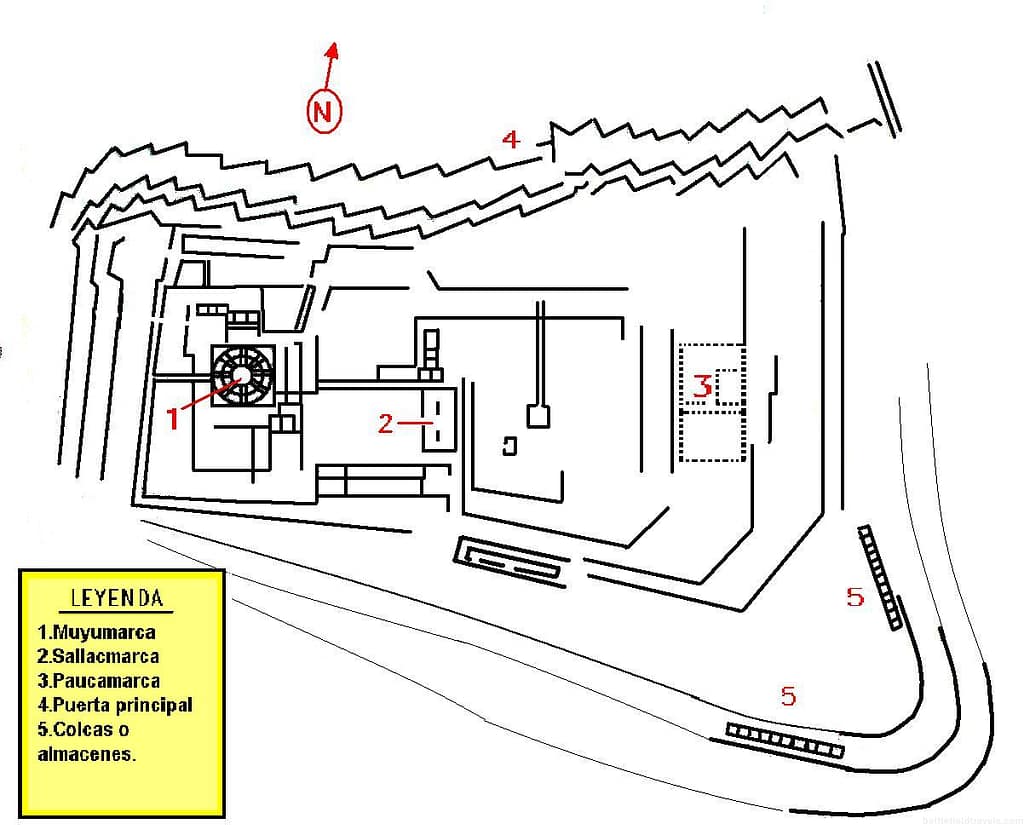
The three towers — known as Muyu Marca, Salla Marca, and Paucamarca — formed the last Inca redoubt. From these elevated stone bastions, warriors launched continuous missile fire into the Spanish ranks. The fight devolved into a bitter siege within a siege.
The Spaniards brought up ladders, attempting to storm the towers, but were beaten back repeatedly. Sling stones from above inflicted terrible wounds. At one point, the Spaniards considered retreating, but Hernando Pizarro urged them forward.
Juan Pizarro mortally wounded
Amid this struggle, Juan Pizarro — leading by example as always — was struck on the head by a massive stone hurled from above. His helmet buckled, his skull shattered, and he collapsed. Carried from the field, he lingered in agony for several days before dying. His death was a severe blow to morale: Juan had been one of the most energetic of the brothers, famed for his bravery and charisma.
Yet the Spaniards would not relinquish their assault. They devised new tactics — using burning pitch and firebrands to force defenders away from parapets. One by one, the towers were stormed. Fighting continued room by room inside the structures, until the last defenders were cut down.
Collapse of the Inca position
With the towers lost, Sacsayhuamán fell silent. The Inca resistance melted away, retreating into the surrounding hills. The Spaniards now held the fortress that dominated Cusco.
The loss was devastating for Manco Inca’s strategy. Without Sacsayhuamán as a base, his warriors could not control the high ground above the city. Spanish cavalry, once confined, now surged out in sorties, harrying Inca detachments and disrupting supply lines.
Although the Siege of Cusco continued into early 1537, its momentum was broken. The Spaniards regained confidence, their allies redoubled efforts, and Manco was forced to withdraw his great host to Ollantaytambo.
A walk through Sacsayhuamán Fortress on the outskirts of Cusco, the old Inca capital
Casualties and brutality
The cost of the battle was heavy. Chroniclers speak of thousands of Inca dead, their bodies strewn across the slopes of Sacsayhuamán. The Spaniards too suffered wounds, with many battered by sling stones or arrows, and Juan Pizarro’s death a grievous loss.
The aftermath was brutal. Captured Inca leaders at the fortress were executed, some thrown from the walls as an example. Yet even in defeat, Inca warriors had displayed astonishing courage, hurling themselves against cavalry and holding towers to the last man.
Outcomes of the Battle of Sacsayhuamán
Significance of the Battle
The fall of Sacsayhuamán marked the turning point of the 1536 rebellion. Had the fortress remained in Inca hands, Cusco would almost certainly have been lost. Spanish conquest in Peru might have ended within three years of Atahualpa’s capture. Instead, the desperate gamble succeeded, cementing Spanish control of the Inca heartland.
Immediate aftermath
The capture of Sacsayhuamán proved decisive for the survival of Spanish power in Peru. With the fortress secure, the Spaniards not only eliminated the most dangerous Inca stronghold but also restored morale within the besieged city of Cusco. From their new vantage point, they could launch raids into the valleys, strike at Inca supply convoys, and relieve pressure on their Indian allies who had wavered under the sheer size of Manco Inca’s host.
The death of Juan Pizarro left a lasting mark. Though one of the most ruthless of the brothers, he had been admired for personal bravery. His fall emboldened the Incas briefly, but the swift Spanish capture of the fortress dampened any hopes of a decisive victory.
For Manco Inca, the outcome was devastating. His gamble of a mass uprising had nearly succeeded — Cusco was almost retaken, and Spanish rule almost shattered. But once Sacsayhuamán fell, his army’s momentum dissipated. Incas still controlled much of the surrounding highlands, but they had lost the critical base that overlooked Cusco itself.
Manco Inca’s retreat
By early 1537, the siege had clearly failed. The Spanish and their allies were once more in control of Cusco, conducting aggressive patrols and counter-raids. Manco Inca ordered a withdrawal into the Sacred Valley, establishing his court at Ollantaytambo. There, he constructed defences, using terraced slopes and narrow valleys to his advantage.
At Ollantaytambo in 1537, Manco famously repelled a Spanish assault, demonstrating that the Inca could still resist. But he recognised the longer strategic reality: the Spaniards’ cavalry, steel weapons, and gunpowder, though few in number, conferred an advantage that mass levies of Inca warriors could not match in open battle. Eventually, Manco withdrew further into the Vilcabamba region, where he maintained a rump Inca state-in-exile for decades.
Spanish Consolidation of Peru
For the Spaniards, victory at Sacsayhuamán ensured the continuity of their conquest. Had Cusco fallen, Spanish forces would have been isolated and vulnerable; reinforcements from the coast would have faced immense difficulty penetrating the highlands. Instead, the Pizarros secured their base in the Inca heartland, allowing the further consolidation of Peru under Spanish rule.
The battle also reinforced Spanish reliance on native allies. Thousands of Indian auxiliaries, drawn from rival groups long resentful of Inca dominance, had fought alongside the conquistadors. Their contribution in scaling walls, supplying food, and holding ground was critical. This alliance system became a model for Spanish control elsewhere in the Americas.
The Siege of Cusco battlefield today
Sacsayhuamán fortress
The ruins of Sacsayhuamán lie on a hillside that dominates the northwestern edge of modern Cusco, at an elevation of over 3,600 metres (11,800 feet). From its terraces, visitors can look down into the former Inca capital, appreciating both the strategic significance of the site and the beauty of the surrounding Andes. The fortress occupies a vast ceremonial and military complex, constructed from massive limestone blocks quarried kilometres away and transported with incredible ingenuity.
The site is arranged in a series of zig-zagging defensive walls, rising in three great tiers. The lower walls alone stretch for more than 300 metres, with each level forming a series of projecting bastions from which defenders could launch missiles or descend to strike any attackers caught in the angles. Above these walls once stood towers, storerooms, and barracks — most were destroyed or dismantled after the Spanish conquest.
Surviving structures
The most striking remains are the cyclopean walls, some of whose blocks weigh more than 100 tonnes. Each stone was precisely shaped to interlock with its neighbours, without the use of mortar. The fit is so exact that not even a knife blade or sheet of paper can be slipped between the joints. The walls were deliberately inclined slightly inward, a design feature that helped them withstand the frequent earthquakes of the Andes. I noted that the Inca builders had incorporated a llama into the stone block structure of the walls!


Although much of the upper fortress was dismantled by the Spaniards — who carted away stone to build churches, convents, and mansions in Cusco — the foundations remain intact. The sheer scale of what survives conveys both the grandeur of Inca engineering and the defensive power the site once embodied.
Interpreting the battlefield
For anyone studying the Battle of Sacsayhuamán, the preserved walls allow a clear understanding of how the fortress controlled approaches to Cusco. From the upper terraces, it is easy to see how defenders could rain projectiles down on attackers, or why the Spanish were desperate to seize the high ground. Standing at the site, you can visualise the cavalry riding out from Cusco below, or Inca warriors pouring over the battlements in the desperate fighting of June 1536.
Modern reconstructions and site plans help visitors orient themselves. Archaeologists have identified the locations of the three towers — Muyucmarca, Sallaqmarca, and Paucamarca — that dominated the upper platform. Chroniclers describe how the last resistance clustered in these towers before the Spaniards stormed them.

The massive interlocking block walls of the Sacsayhuamán fortress
Preservation and tourism
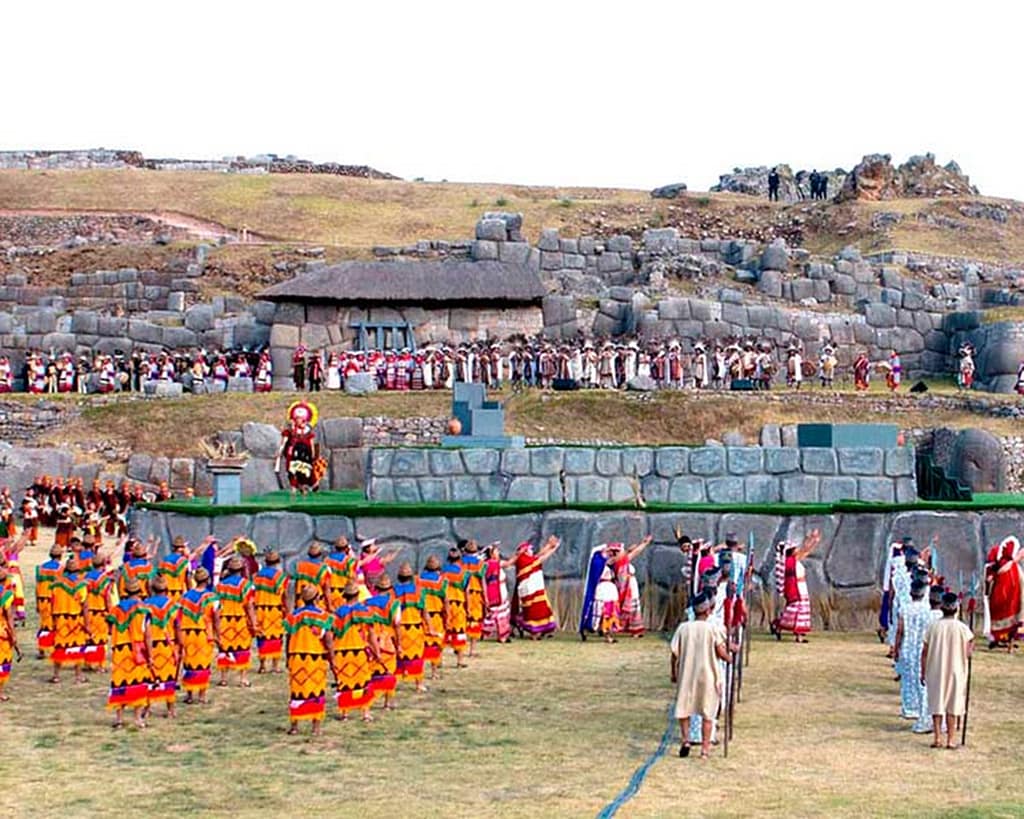
Today, Sacsayhuamán is protected as part of Cusco’s UNESCO World Heritage zone. The site is maintained both as an archaeological park and as a cultural venue. Each year in June, the Inti Raymi (Festival of the Sun) is re-enacted here, a celebration of Inca heritage that attracts thousands of Peruvians and foreign visitors alike.
Interpretive signage and guided tours provide historical context, though most presentations understandably emphasise the architectural achievements of the Incas rather than the bloody battle of 1536. Still, for those interested in military history, the juxtaposition of monumental walls and the narrative of desperate siege warfare is inescapable.
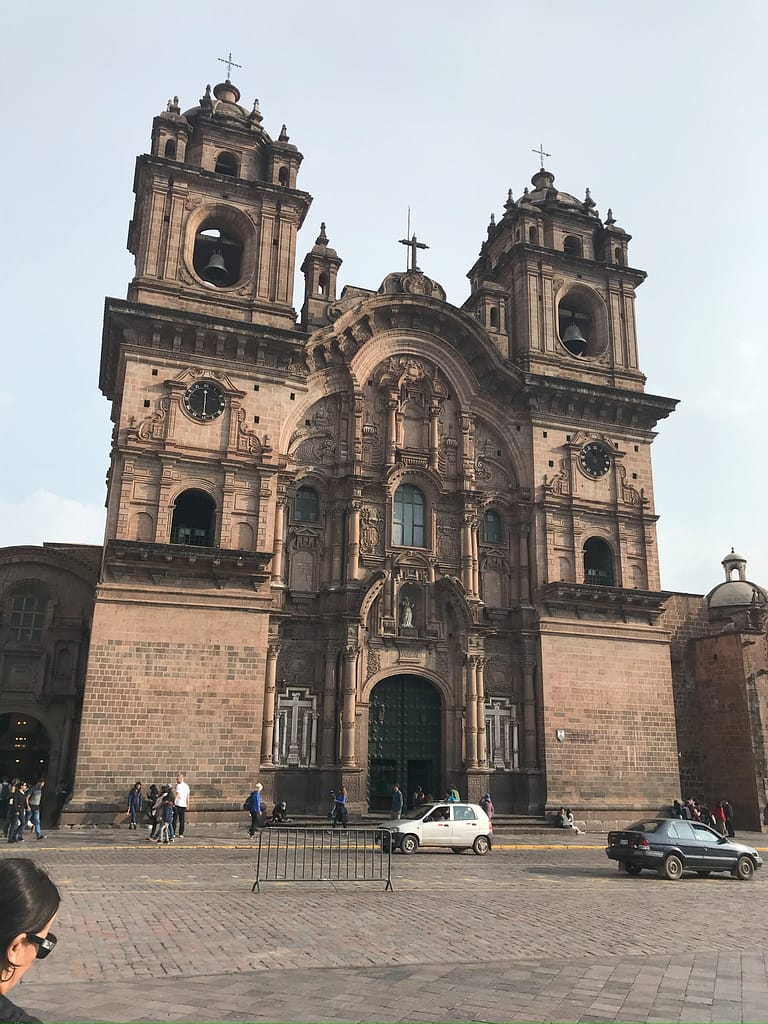
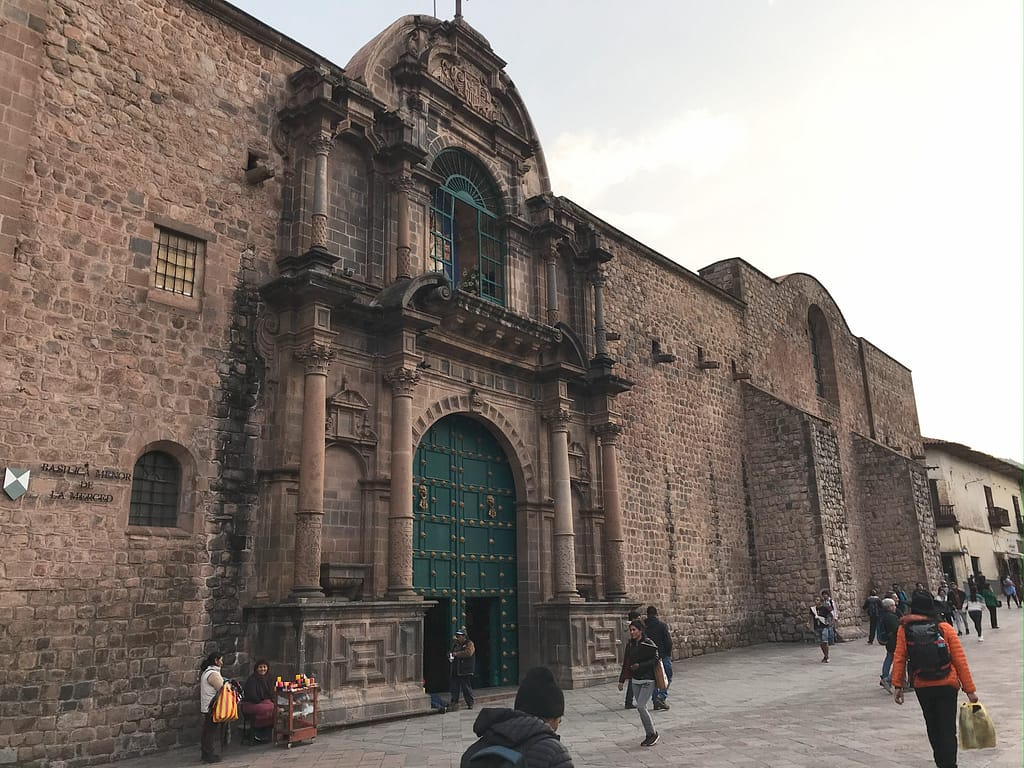
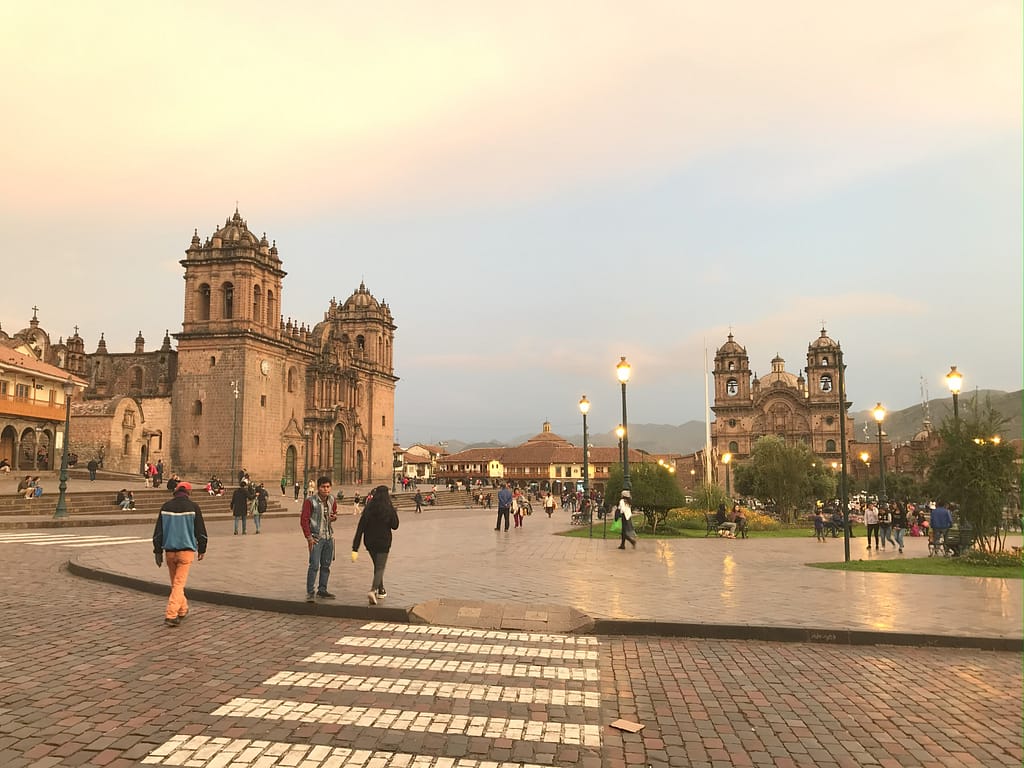
The best museum in the area is the Coricancha Museum in Cusco. It describes the Inca capital and provides insights into the Inca culture and history. Link to the Coricancha Inca Museum in Cusco website. Having said that, anywhere you walk in Cusco you can see the remnants of the old Inca capital. Usually the foundations and lower levels of a building are Inca, and the upper levels are Spanish.


Additional images of Sacsayhuamán
Sacsayhuamán fortress


Old Cusco



Found this useful? Buy me a coffee — it helps fund future battlefield research


Authored by Mick Prictor, a retired military officer with 40 years’ service, and a military historian specialising in terrain-focused analysis of tactics, doctrine, and command decision-making in land warfare. His work draws on extensive battlefield fieldwork—more than 280 sites worldwide—and one of the world’s largest private collections of historic military arms, uniforms, and equipment. About me
Sources
- Billy Wellman, 2023. The Inca Empire: An Enthralling Overview of the Incas, Their Civilization in Ancient Peru, and the Spanish Conquest. (Billy Wellman).
- Hiram Bingham, 2003. Lost City of the Incas (Phoenix Press)
- Kim MacQuarrie, 2008. The Last Days of the Incas. (Simon & Schuster).
📚 Further Reading: Spanish conquest of the New World
This battle study nests within the broader analytical framework explored in the Research Hub, where operational methods, operating environments, armies, commanders, and weapons are examined across conflicts and eras. The links below connect related studies across the wider body of battlefield analysis on the BattlefieldTravels site.
⚔️ Explore all battle studies from the Spanish conquest of the New World
🏛️Explore the museum of Spanish conquest of the New World artefacts
The book list for this conflict includes the finest campaign studies, memoirs, and operational analyses available on the Spanish conquest of the New World, selected specifically to complement this battlefield study.
📚Spanish Conquest of the New World– Recommended Reading
🗞️ For updates on new battlefield studies and research insights, you can subscribe to the Newsletter.
Related Battle Studies, Museum Pieces & Reading Resources
 ⚔️ Fortress of San Carlos,
Havana, Cuba,
1763-1774
 🏛️ Spanish conquest of the New World (1493–1833) Weapons and Equipment
 ⚔️ Battle of Flodden Field, Scotland,
9 September 1513
 ⚔️ 1493–1833 Spanish Conquest of the New World, Battle Studies
 📝🔒Field Note: Battle of Ollantaytambo, Peru, January 1537
 📚 Spanish Conquest of the New World (1492–1833),
Recommended Reading
🧭 Battlefield Travel Guide: Sacsayhuamán
Getting There
- Nearest City: Cusco (≈2 km).
- Access: 10–15 min by taxi or ~30 min uphill walk from Plaza de Armas.
- Tickets: Included in the Cusco Tourist Ticket (Boleto Turístico).
Site Orientation
- Key Landmarks: Zig-zag megalithic ramparts, main ceremonial plaza, foundations of the towers (Muyuqmarka), Inca water channels.
- Walking Routes: Clear paths across terraces; allow 1–2 hours for a full circuit.
- Best Vantage Points: Upper ramparts for sweeping views over Cusco and the surrounding Andes.
Museums & Visitor Centres
- On-site: Basic interpretation panels (Spanish/English).
- Nearby: Museo Inka (Cusco) for warfare/architecture context; Qorikancha/Santo Domingo for imperial-era exhibits.
On-Site Experience
- Interpretive Signage: Limited; a licensed local guide adds depth on the 1536 siege and construction methods.
- Atmosphere: Majestic and open; busiest mid-afternoon and in late June (Inti Raymi festival).
- Tours: Commonly paired on half-day circuits with Qenqo, Puka Pukara, and Tambomachay.
Nearby Points of Interest
- Related Sites: Qenqo, Puka Pukara, Tambomachay (all within ~10 km).
- Broader Interest: Cusco historic centre, Cathedral, San Pedro market.
Practical Tips
- When to Visit: Early morning for light and quieter paths; afternoons are busiest.
- Facilities: Restrooms at the entrance; food/water best bought in Cusco.
- Special Considerations: Altitude ~3,600 m — pace yourself, sun protection essential; uneven stone surfaces. Check local rules before flying drones at archaeological sites.
FAQ: Battle for Sacsayhuamán fortress
Sacsayhuamán is a massive Inca fortress overlooking Cusco, Peru. Built with cyclopean stone walls, it was both a ceremonial centre and a military stronghold.
Construction began in the 15th century under Inca rulers such as Pachacuti and continued under his successors. The complex represents the height of Inca stonework.
Sacsayhuamán was the site of a major battle in 1536, when Inca forces attempted to retake Cusco from the Spanish. The struggle there marked a turning point in the conquest of Peru.
Yes. The ruins are open to visitors, with panoramic views of Cusco. The scale of the stonework makes it one of Peru’s most impressive archaeological sites.
The Inca cut and fitted giant stones so precisely that they interlocked without mortar. Some stones weigh over 100 tons, yet fit together seamlessly.
Subscribe to Battlefield Travels and receive a free E-Book Battlefield Guide
Unlock expert battlefield analysis, campaign reconstructions, and historical insights drawn from firsthand exploration and primary sources.
🗺️ You’ll receive:
🎖️ Exclusive historical insights you won’t find elsewhere
📘 A free eBook: 10 Tips for Exploring Historic Battlefields
📰 New battlefield studies straight to your inbox as they are published

⚔️ Go deeper — Members get exclusive access to the Deep Research Collection, Field Notes, and monthly Research Dispatches. Try membership free for 7 days, cancel anytime. From $9/month.