Fort William Henry: The Siege, the Massacre, and the Struggle for Lake George!
Standing at the head of Lake George, Fort William Henry was the scene of one of the French and Indian War’s most infamous sieges. In August 1757, Montcalm’s French and Native allies forced its surrender—only for tragedy to follow. Today, a reconstructed fort and museum bring the story of empire, warfare, and massacre vividly to life.
Key facts
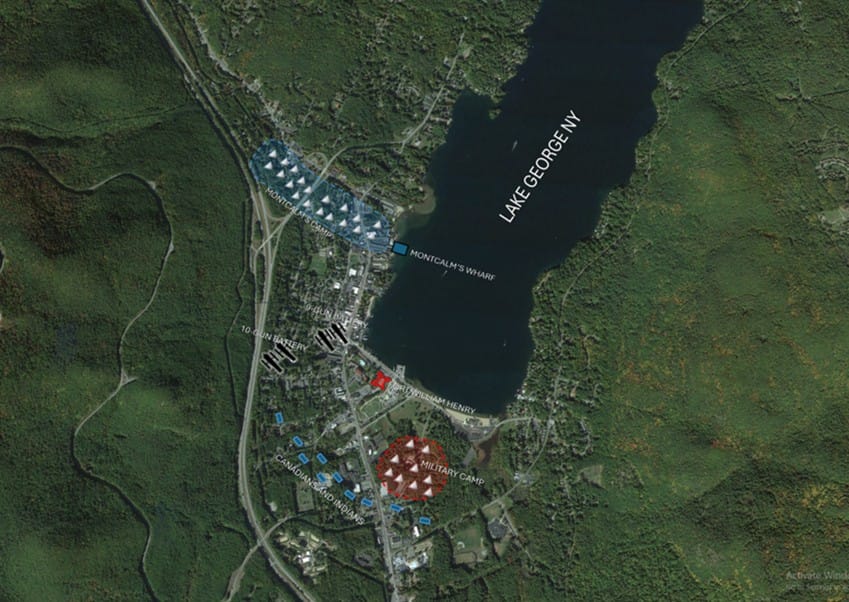
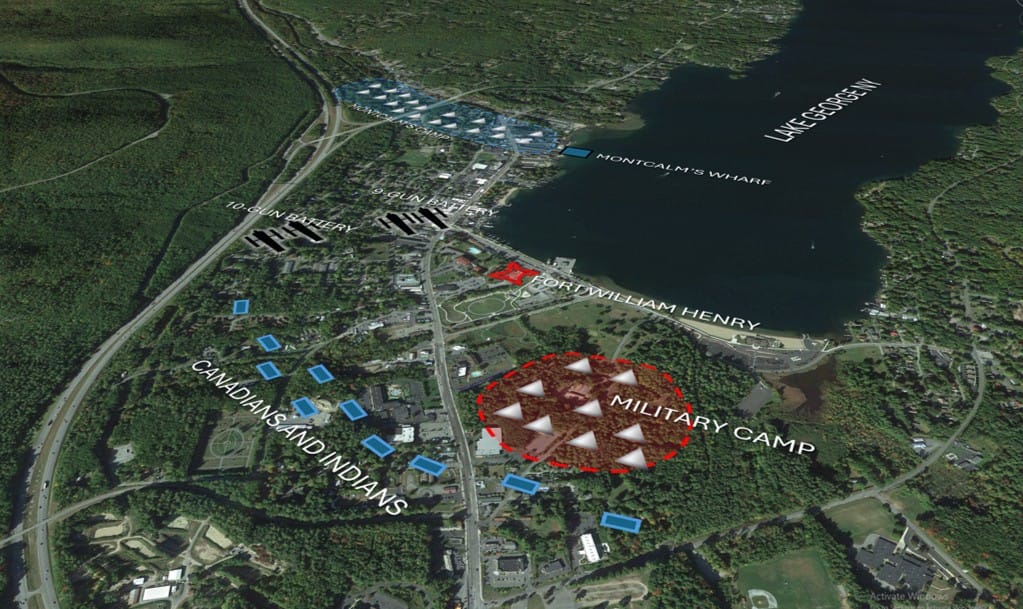
Google Earth map – Location of Fort William Henry battlefield
🎧 Prefer to listen? This article is also available as a 35-minute podcast.
Tip: If Podbean overlay appears after pausing, click the × in the top-right corner to return to the player controls.
🧭🥾 Walking the Battlefield
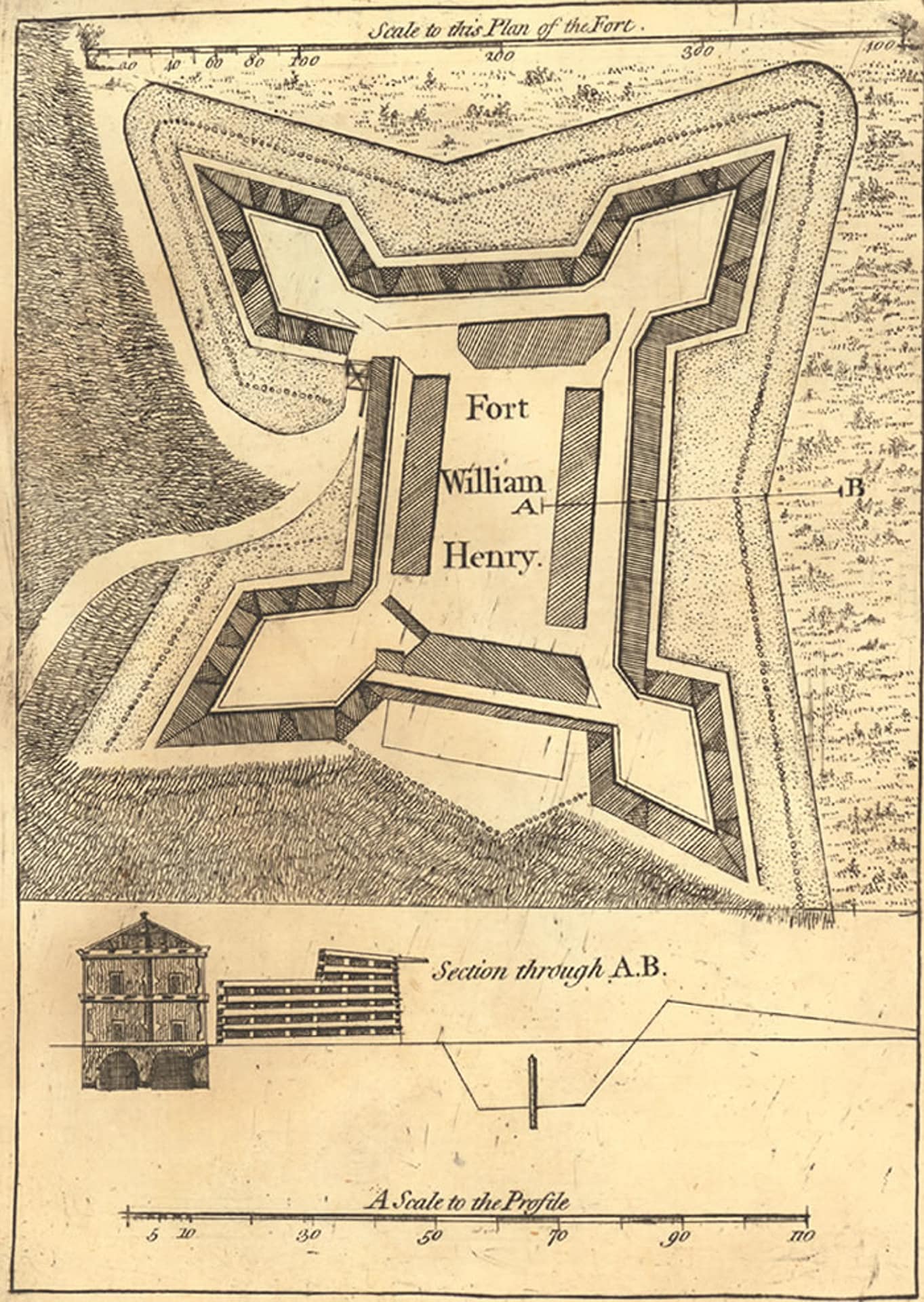
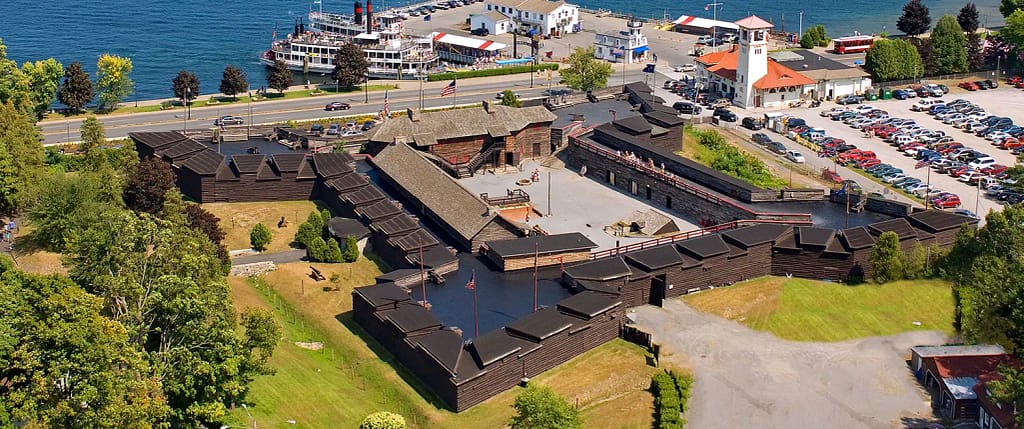
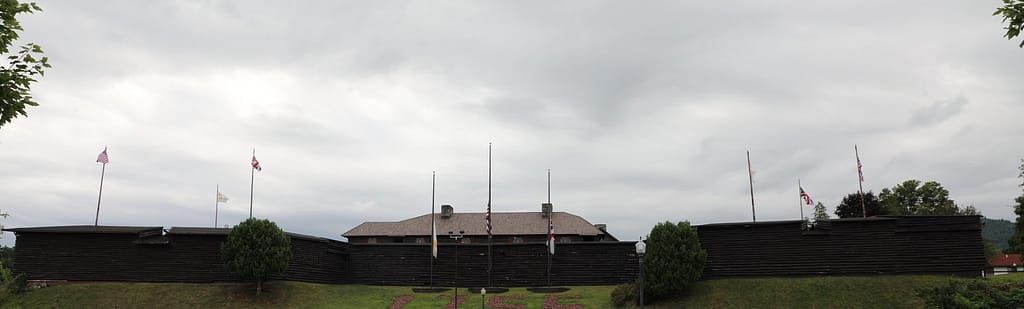
I have explored the Fort William Henry battlefield twice, in December 2011 and August 2018. The old fort was reconstructed on the site of the original back in the 1950s. The reconstruction was built using the original plans, so is quite accurate in plan view, although it lacks a defensive ditch around the perimeter so the walls appear low. Excavations continue beneath the fort grounds. The log fort is a typical bastion fort of the period as seen all over Europe and any place the Europeans colonised. Unfortunately, while the fort is quite an accurate recreation, the touristy parts of town surround the fort with very little space between. The fort has an excellent little museum displaying original artefacts from the siege, and has some excellent books and resources that you will not see elsewhere.
Strategic Context: The Seven Years War
The Seven Years War – a global conflict
By 1757, the Seven Years War (known as the French and Indian War in North America) was entering a critical phase. Britain and France were locked in a struggle not only for control of Europe but for global supremacy — and in North America the heart of the contest lay along the great inland waterways. Whoever commanded the corridor from the St. Lawrence River down through Lake Champlain, Lake George, and the Hudson Valley could split the continent and dictate the terms of colonial expansion.
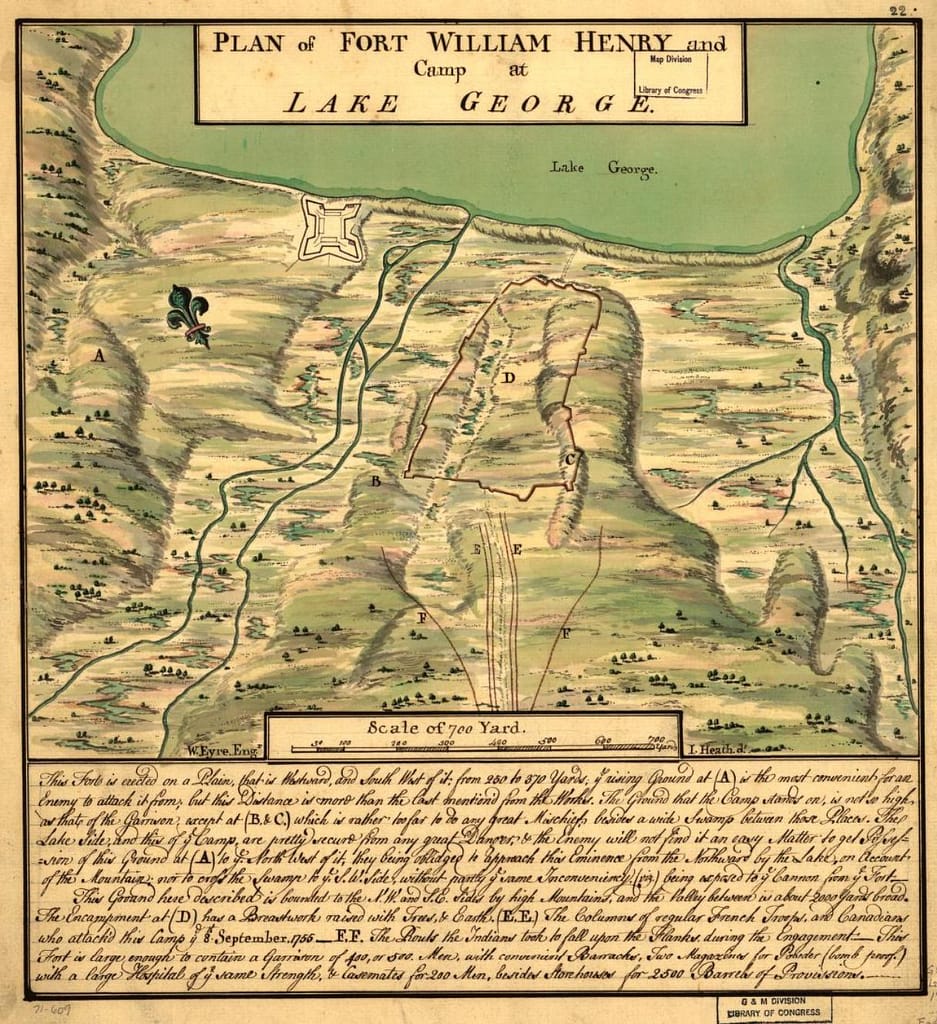
At the southern tip of Lake George, the British had established Fort William Henry after their victory at Lake George in 1755. This timber-built stronghold anchored their frontier, guarding the approaches to the Hudson Valley and threatening the French bastion of Fort Carillon (later Ticonderoga) only 35 miles to the north. To secure the route between New France and the British colonies, one or the other had to fall.
Objective: Fort William Henry
The British and their colonial allies were struggling to contain French advances in North America. The French commander, Louis-Joseph de Montcalm, recognised the strategic equation. A daring offensive against Fort William Henry offered both military and political dividends: it would check British momentum, reassure wavering Native allies of French strength, and dissuade the colonies from raising new provincial levies. The British, for their part, relied on the garrison under Lt. Colonel George Munro to hold the line until General Daniel Webb could bring reinforcements down from Fort Edward, barely a day’s march away.
The stage was set for one of the largest and most dramatic sieges of the war — a clash where European siegecraft, colonial endurance, and Native warfare converged in a deadly confrontation on the edge of the wilderness.
The siege in popular culture
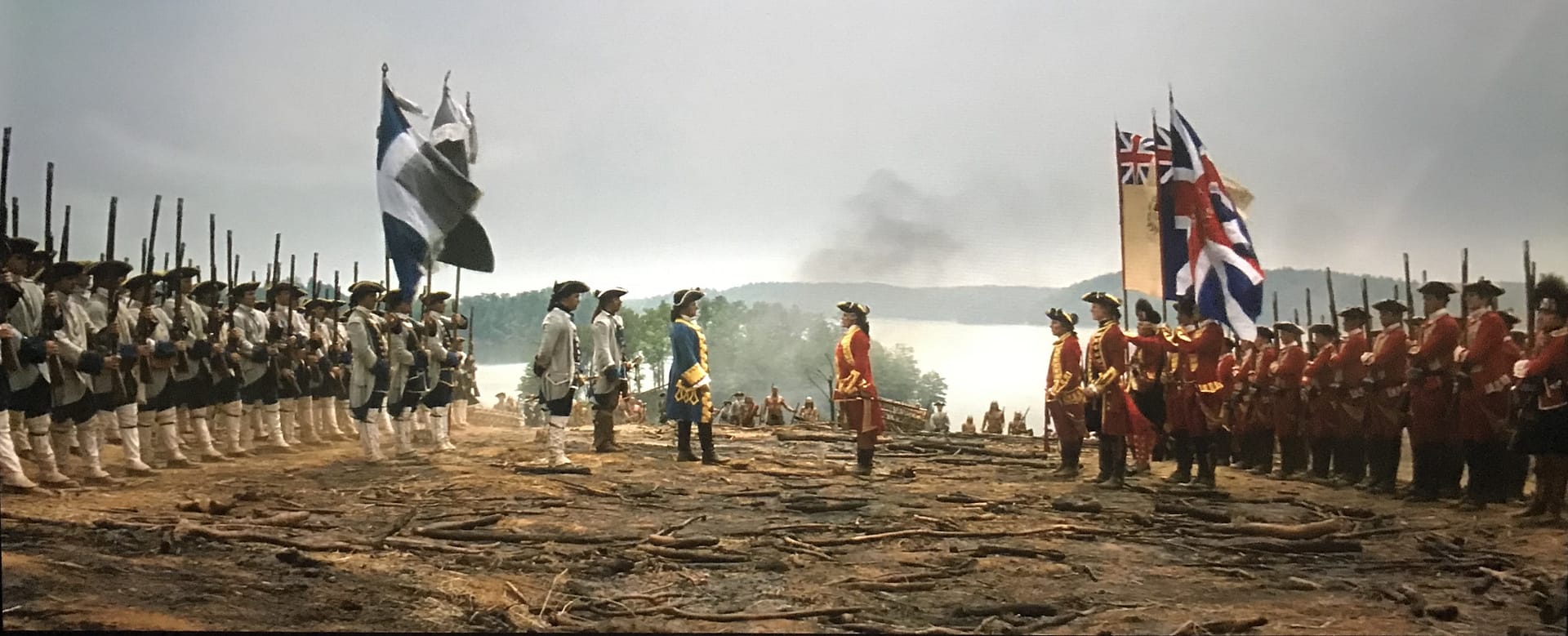
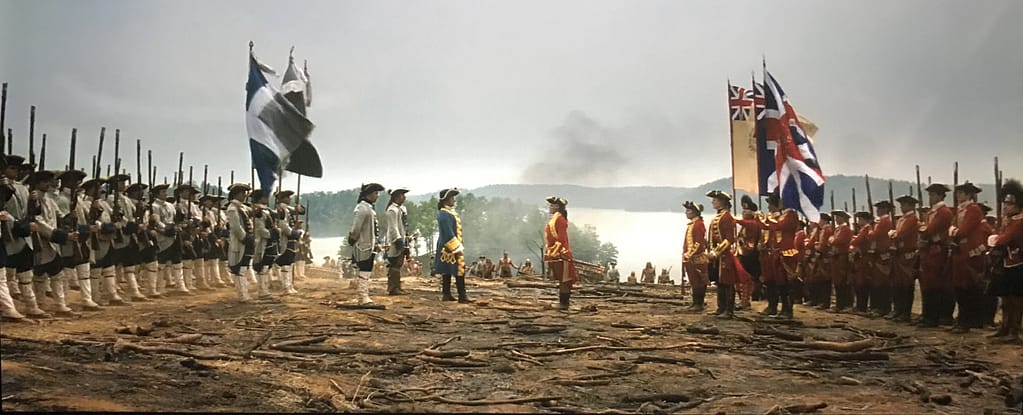
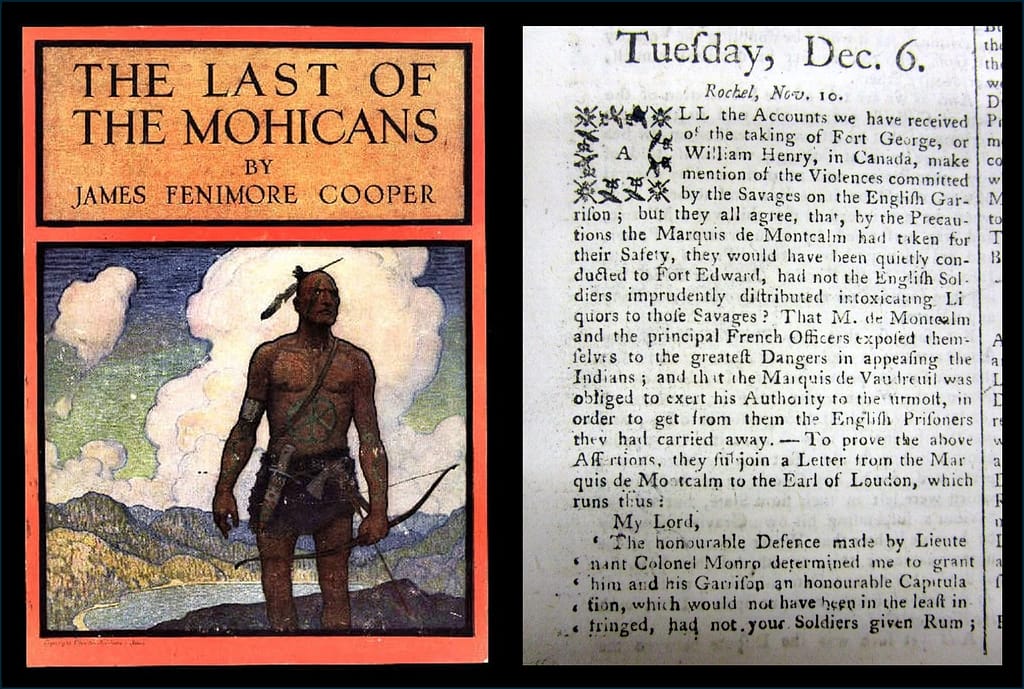
Fort William Henry would probably be an obscure footnote in the history of the global conflict that was the Seven Years War, except for two events. The first was the massacre of British prisoners at the hands of French-allied indian forces following the fall of Fort William Henry. Although not as dramatic as depicted in some hollywood depictions, it was regarded with some notoriety and horror in the newspapers of the time.
The second event was the publishing in 1826 of a novel by American author James Fennimore Cooper – ‘The Last of the Mohicans – a Narrative of 1757′ which covered the events before during and after the siege of Fort William Henry. The Last of the Mohicans has been in print ever since and has been adapted into at least 12 films, probably the most famous of which are the 1936 version starring Randolph Scott as Hawkeye, and the 1992 version starring Daniel Day Lewis in the same role.
The Opposing Forces
 The British Garrison
 The British Garrison
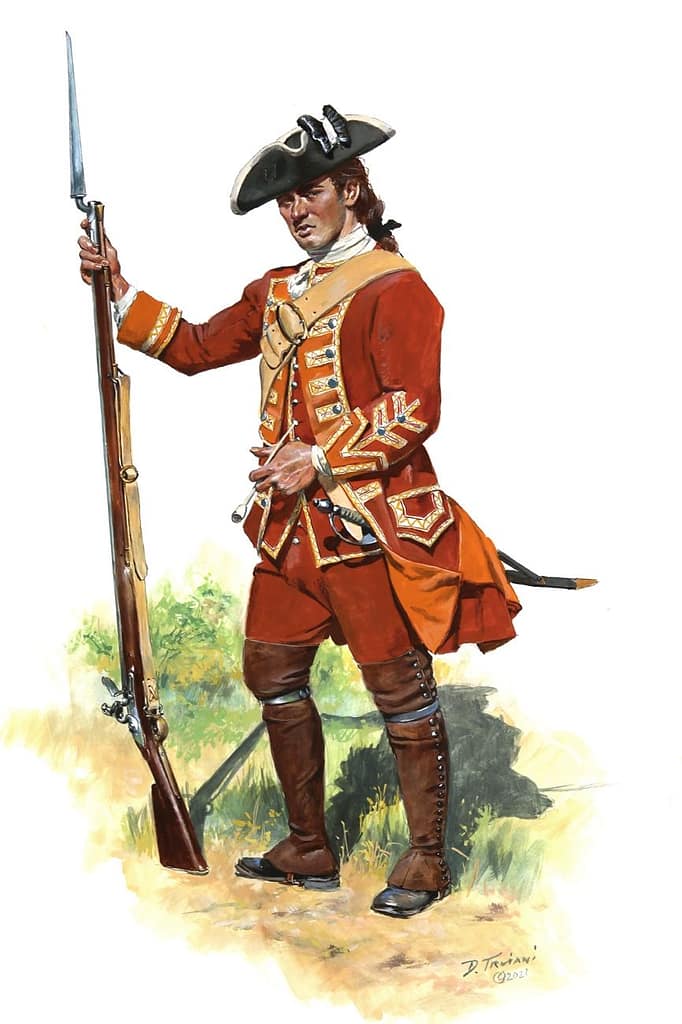
At Fort William Henry, the British garrison numbered roughly 2,200 men. The core consisted of seven companies of the 35th Regiment of Foot, regulars seasoned in European drill but unfamiliar with the harsh realities of frontier warfare. Alongside them were detachments of provincials from New England colonies, militiamen accustomed to the forests but less disciplined in siege conditions.
Their commander, Lt. Colonel George Munro, was a veteran officer of Scottish origin, known for his steady temperament but placed in a near-impossible situation. His men were short on supplies, especially ammunition and medical stores, and the fort itself, constructed hastily of timber and earth in 1755, lacked the masonry strength of European bastions. Its palisades and earthen ramparts could withstand musketry but not prolonged bombardment.
The garrison did, however, benefit from the support of Fort Edward, under General Daniel Webb, less than 20 miles away. Reinforcements, in theory, could march within a day. In practice, Webb hesitated, paralysed by rumours of overwhelming French numbers, leaving Munro isolated at the crucial hour.
 The French Besiegers
 The French Besiegers
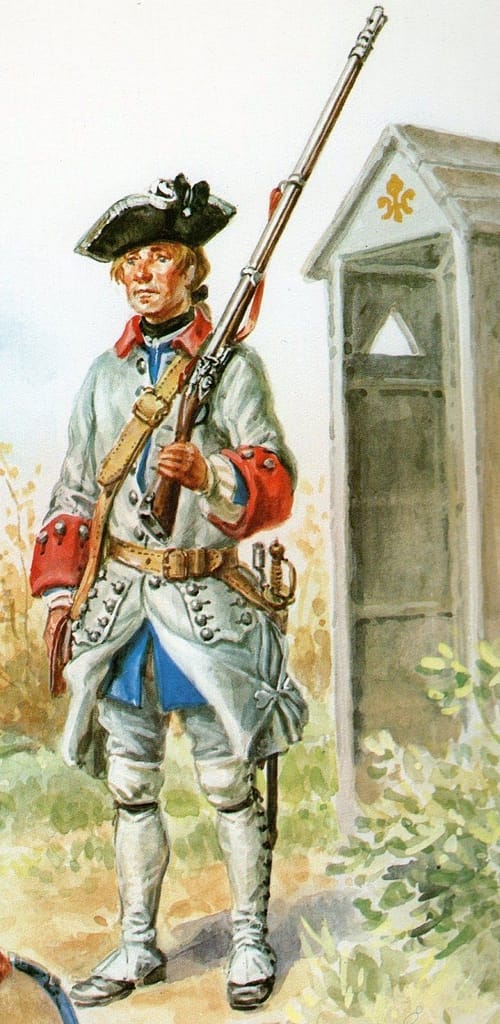
Opposing them was a formidable French force under the Marquis de Montcalm, numbering approximately 7,500 men. This composite army represented the diverse military power of New France:
- 3,000 French regulars, including battalions of the Béarn, La Sarre, Royal Roussillon, and Languedoc regiments, drilled in the formal arts of siege warfare.
- 3,000 Canadian militia, adept in irregular tactics but equally capable of digging parallels and manning entrenchments.
- 2,000 Native allies, primarily from Huron, Abenaki, and Ottawa nations, whose motives lay in preserving influence and securing spoils of war.
Montcalm, though trained in European strategy, had learned to balance these disparate elements. His regulars could execute a textbook siege, while his Native allies provided reconnaissance, harassment, and intimidation. Importantly, Montcalm recognised the political stakes: he had to demonstrate French resolve without losing Native trust. A victory without plunder would risk alienating his allies; too much licence, however, would risk atrocities. It was a delicate equilibrium.
Comparative Balance
On paper, the French outnumbered the British more than 3 to 1. In quality, too, they enjoyed the advantage of seasoned regulars, an artillery train of heavy cannon and mortars, and freedom of action. The British, confined within their stockade and dependent on reinforcements that never came, could only endure. Yet the stubborn defence Munro and his men mounted would stretch the siege into a test of endurance that nearly altered the outcome.
Phase 1: The French approach
Montcalm’s invasion force
By late July 1757, Montcalm had marshalled his forces at Crown Point and Ticonderoga. The advance down Lake George was as much a psychological operation as it was a military operation. Contemporary accounts describe the spectacle of more than 250 bateaux and canoes gliding in formation across the lake, banners and regimental colours snapping in the wind. French regulars sat in disciplined ranks, Canadians paddled with swift efficiency, and Huron, Abenaki, and other Native warriors darted along the flanks in their own craft. To any observer on the shoreline, it was clear that Montcalm intended to overawe as much as outfight.
Webb’s response
Within the British lines, the effect was unnerving. Scouts and rangers reported that the flotilla seemed endless, and rumours quickly exaggerated Montcalm’s strength. Colonel Munro, in command at Fort William Henry, sent repeated couriers to General Webb at Fort Edward. Each plea carried the same message: unless reinforced, the garrison would be isolated and crushed.
Webb, however, was paralysed. Reports exaggerated Montcalm’s force to nearly 10,000 men, though in reality the besieging army numbered closer to 7,500. Fearful of losing Fort Edward—the key to the Hudson corridor—Webb remained inert. His letter of 3 August was a blow to Munro: no reinforcements would march, and honour would be preserved by a “brave defence followed by surrender, should necessity demand.”
Phase 2. Investment of Fort William Henry
French advance at Lake George
On 3 August, Montcalm landed his force at the southern tip of Lake George, completely cutting off Fort William Henry. His engineers and Canadian militia threw up entrenchments, and work began immediately on the first parallel, using Vauban’s textbook siege methods. Siege artillery pieces—24-pounders and heavy mortars—were dragged laboriously into position, their muzzles pointed at the timber ramparts that Munro knew could not withstand sustained pounding.
Within the fort, discipline held. The garrison numbered roughly 2,300, including provincials, regulars, and camp followers. Timber walls were hastily reinforced with earth, internal trenches dug, and powder carefully rationed. To the east and south, Native skirmishers harassed British outposts, cutting off communication with the surrounding countryside. Attempts to send messages to Webb now meant running a gauntlet of musket fire.
The Bombardment Begins
At dawn on 6 August, the French batteries roared to life. The opening salvos shook the fort. Solid shot crashed through palisades and traverses, splintering timbers into deadly shards. Mortar bombs sailed overhead in arcs before detonating in showers of earth and iron within the cramped parade ground.
For six days, the fort endured unrelenting artillery fire. Inside, chaos reigned. Storehouses were set ablaze, requiring bucket lines to contain the flames. Barracks collapsed under repeated shelling. Ammunition had to be covered with hides and wet blankets to prevent explosion. Casualties mounted steadily, with men wounded not only by enemy fire but by falling beams, smoke inhalation, and even the crush of debris. One provincial officer recorded that “no man could move ten paces without hazard of death or mutilation.”
The garrison returned fire when possible, but their lighter pieces were rapidly dismounted or destroyed. Morale ebbed, shored up only by Munro’s resolve and the vain hope that Webb might yet march to their relief.
⚔️ Go deeper — Members get exclusive access to the Deep Research Collection, Field Notes, and monthly Research Dispatches. Try membership free for 7 days, cancel anytime. From $9/month.
Phase 3. Closing the Vice
By 7–8 August, the French parallels crept steadily closer. Saps zig-zagged toward the ramparts, and new batteries were opened at musket range. The fort was now raked from multiple angles, leaving no corner safe. Food ran short; water grew foul in the summer heat; dysentery and fever spread among the wounded crowded into makeshift hospitals.
At night, the bombardment was interspersed with eerie silence broken by Native war cries. The psychological strain was nearly as heavy as the physical. Some provincials began to speak openly of surrender, though Munro silenced talk of capitulation until all avenues were exhausted.
The Decision to Yield
The final blow came when Webb’s last communication arrived—couched in cautious words but unmistakable in meaning: no relief would come. Webb advised Munro that his honour was intact, his men had acquitted themselves bravely, and surrender under terms was preferable to annihilation.
On the morning of 9 August, Munro accepted reality. His men were exhausted, his guns largely silent, his supplies nearly gone. After six punishing days of bombardment, he raised the white flag.
Terms of Capitulation
Montcalm, who respected gallantry even in his enemies, offered generous terms. The garrison could march out with the honours of war: colours flying, drums beating, and muskets shouldered—though without ammunition. They would be escorted to Fort Edward under safe conduct, their personal baggage retained, and the sick and wounded left behind under French medical care.
Munro agreed. The defenders had endured beyond expectation, and in doing so preserved their dignity. Yet, even as the formal articles were signed, few could have foreseen that what followed—the breakdown of discipline among Montcalm’s Native allies and the massacre along the evacuation column—would eclipse the siege itself and sear Fort William Henry into transatlantic memory.
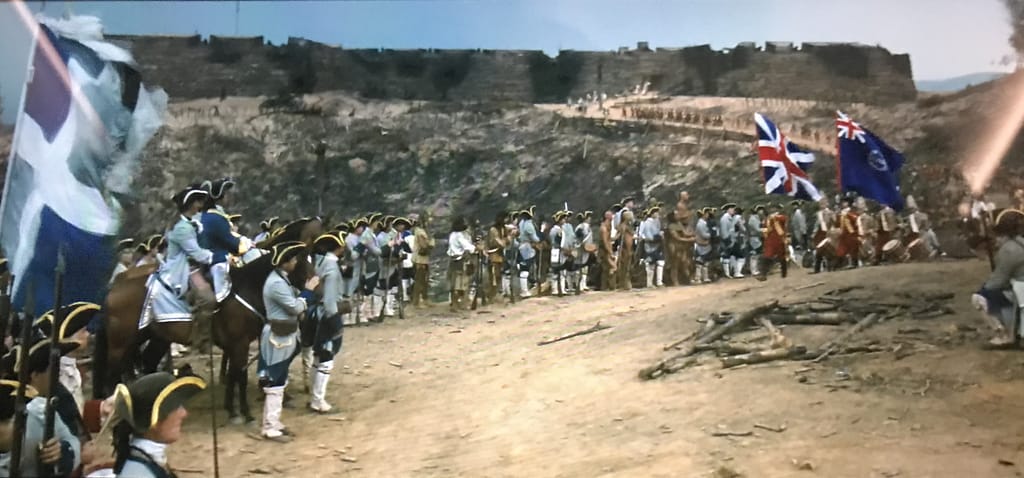
Aftermath and massacre at Fort William Henry
The massacre
For many of the Native warriors in Montcalm’s coalition, these terms of capitulation were deeply unsatisfactory. Warfare, in their tradition, was not only about territory but also about the acquisition of captives, plunder, and symbols of honour. Denied the spoils they believed were theirs by right, tensions began to boil over as the British column prepared to withdraw.
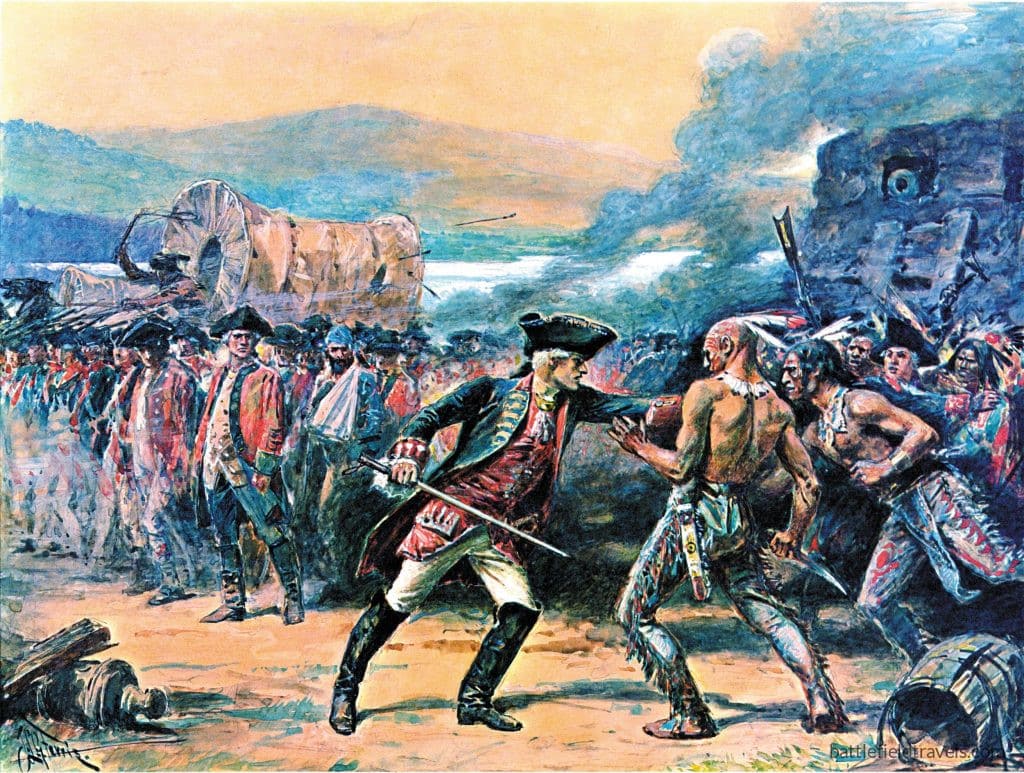
On the morning of 10 August, as the defeated garrison and its camp followers left the fort, discipline collapsed among some of the allied tribes. Warriors surged into the British column, seizing baggage, stripping prisoners, and attacking stragglers. The confusion was heightened by the presence of hundreds of women, children, and wounded moving slowly in wagons. Muskets were discharged, scalps taken, and captives dragged off into the forest. Estimates of the dead vary widely: some accounts suggest 150 were killed, while others put the figure closer to 70, with many more carried away as prisoners.
Montcalm attempts to intervene
Montcalm and his senior officers attempted to halt the violence. Eyewitnesses describe him riding into the fray, pleading with the warriors to stop, even personally shielding some of the British. But with thousands of people packed into a chaotic retreat and allied contingents acting independently, his authority meant little in the moment. The violence eventually subsided, but the damage was done.
Stories of the horror spread
The “massacre at Fort William Henry” shocked contemporaries and was rapidly amplified in colonial newspapers. In British North America, the episode was framed not only as a brutal betrayal but also as proof of French reliance on “savage allies.” The atrocity narrative overshadowed Montcalm’s chivalry and became a propaganda weapon, stoking calls for vengeance and stiffening British resolve in the campaigns that followed.
For the Native allies, the event reflected a cultural clash as much as a breakdown in discipline: in their view, captives and goods were integral to the conduct of war, not dishonourable excesses. Some of the prisoners were later adopted into Native communities, disappearing permanently from colonial records.
In hindsight, the massacre cast a long shadow. It became one of the most infamous episodes of the French and Indian War, immortalised in literature and popular memory, from contemporary pamphlets to James Fenimore Cooper’s Last of the Mohicans.
Strategic consequences of the siege and the massacre
Montcalm fails to exploit the victory
The fall of Fort William Henry and the subsequent massacre reverberated far beyond the shores of Lake George. Militarily, the loss of the fort opened a clear pathway for French forces into the Hudson Valley, threatening Fort Edward and even Albany. Yet Montcalm, mindful of limited resources and the difficulty of sustaining large forces deep in enemy territory, chose not to press his advantage. Instead, he destroyed the fortifications and withdrew, leaving the region in a state of fear and uncertainty rather than outright French occupation.
Massacre inspires new resolve against the French
For the British colonies, the psychological blow was profound. News of the massacre spread quickly, with lurid accounts in newspapers and pamphlets portraying French officers as complicit in atrocities. Colonial authorities capitalised on this outrage, rallying militia recruitment and stiffening resistance to further French incursions. What had been seen by many colonists as a distant European struggle now took on the urgency of a brutal, existential conflict on their own soil.
The event also strained French alliances. While Native auxiliaries remained essential to Montcalm’s operations, their actions at Fort William Henry widened the cultural gulf between European and Indigenous concepts of warfare. Montcalm himself lamented the episode, fearing that French honour had been tarnished in the eyes of both allies and enemies. At the same time, Native leaders felt betrayed by Montcalm’s attempt to restrict their traditional rights to captives and plunder. These frictions weakened trust at precisely the moment France most relied on Indigenous support.

Campaigns of 1758 and 1759
Strategically, the battle underscored a paradox. The French had won a dramatic success, but one that yielded little lasting control. By the following year, British resources and manpower surged, culminating in the counteroffensives on Lake Champlain and the Saint Lawrence River of 1758 and 1759. Fort William Henry, remembered less for its siege than for its bloody aftermath, became a rallying cry in a widening war that would ultimately engulf the globe.
In hindsight, the campaign revealed the precarious balance between European military conventions, colonial expectations, and Native traditions. It was not just a clash of armies, but a clash of worlds, foreshadowing the shifting alliances and brutal campaigns that would define the remainder of the French and Indian War.
The Fort William Henry battlefield today
Visitors to Fort William Henry at Lake George encounter a reconstructed fort that serves as both a museum and a focal point for interpreting the events of 1757. Although the original French siege and subsequent massacre left the site in ruins, archaeological excavations in the 1950s provided enough detail to guide a faithful reconstruction of the fort’s layout, dimensions, and materials.
The Reconstructed Fort
The current fort, built of timber and stone, stands on the footprint of the original British stronghold. Its bastions, curtain walls, and interior barracks give a sense of scale and defensive design typical of mid-18th century frontier warfare. Inside, living-history interpreters demonstrate musket drills, artillery firing, and the daily routines of soldiers and civilians, allowing modern visitors to connect tangibly with the experience of garrison life.
Museums and Exhibits
The Fort William Henry Museum houses artifacts recovered from the site: musket balls, uniform buttons, fragments of weaponry, and personal effects abandoned during the siege and its aftermath. Dioramas, interpretive films, and models present the larger context of the French and Indian War, highlighting not just the siege itself but the brutal choices and cultural misunderstandings that contributed to the massacre of captives.

The Landscape
The terrain around the fort has changed since 1757, but the setting still conveys the vulnerability of the post. Nestled at the southern end of Lake George, the fort was strategically placed to guard the water route north to Fort Carillon (Ticonderoga) and beyond to the St. Lawrence. Standing on the walls today, visitors can look across the lake and imagine the French encampments and artillery positions that once surrounded the fort. Memorial plaques and interpretive panels help orient visitors to the positions of Montcalm’s forces and the line of retreat taken by the British column.

Link to the Fort William Henry Museum and visitor centre website
Additional images of Fort WIlliam Henry


Found this useful? Buy me a coffee — it helps fund future battlefield research


Authored by Mick Prictor, a retired military officer with 40 years’ service, and a military historian specialising in terrain-focused analysis of tactics, doctrine, and command decision-making in land warfare. His work draws on extensive battlefield fieldwork—more than 280 sites worldwide—and one of the world’s largest private collections of historic military arms, uniforms, and equipment. About me
Sources
- Anderson, Fred (2000). Crucible of War: The Seven Years’ War and the Fate of Empire in British North America, 1754–1766. New York: Knopf
- David R. Starbuck (2002). Massacre at Fort William Henry. University Press of New England.
- I. Minis Hays (Author), A. Kendall Hall (Editor) (2016). A Journal Kept During the Siege of Fort William Henry, August 1757. W.K. Hawthorne, Publisher.
- Ian Castle (Author), Graham Turner (Illustrator) (2013). Fort William Henry 1755–57: A battle, two sieges and bloody massacre (Campaign, 260). Osprey Publishing
📚 Further Reading
This battle study nests within the broader analytical framework explored in the Research Hub, where operational methods, operating environments, armies, commanders, and weapons are examined across conflicts and eras. The links below connect related studies across the wider body of battlefield analysis on the BattlefieldTravels site.
⚔️ Explore all battle studies from the Seven Years War
🏛️Explore the museum of Seven Years War historic weapons and equipment
The book list for this conflict includes the leading campaign studies, memoirs, and operational analyses available on the Seven Years War, selected specifically to complement this battlefield study.
📚 Seven Years War – Recommended Reading
🗞️ For updates on new battlefield studies and research insights, you can subscribe to the Newsletter.
Related Battle Studies, Museum Pieces & Reading Resources
 ⚔️ Fortress of San Carlos,
Havana, Cuba,
1763-1774
 🏛️ Seven Years War (1756-1763 ) Weapons and Equipment
 ⚔️ Battle of Leuthen, Silesia (Poland),
5 December 1757
 ⚔️ Battle of Bushy Run, Pennsylvania,
05-06 August 1763
 ⚔️ 1756–1763 Seven Years War, Battle Studies
 📚 1756–1763 Seven Years War,
Recommended Reading
🧭 Battlefield Travel Guide: Fort William Henry (1757)
Getting There
- Location: Lake George Village, New York, USA.
- Transport: Accessible via I-87 (Adirondack Northway), exits 21 or 22.
- Parking: Paid parking lots available in the village and near the fort.
Site Orientation
- Key Landmarks: Reconstructed fort, museum galleries, parade ground, ramparts.
- Walking Routes: Compact site—1–2 hours covers museum, walls, and village context.
- Best Vantage Points: Ramparts overlooking Lake George; interior courtyard for understanding fort layout.
Museums & Visitor Centres
- Fort William Henry Museum: Interpreters in uniform, musket demonstrations, recreated barracks and armoury.
- Lake George Battlefield Park: Monuments and interpretive markers of the wider 1755–1757 campaigns.
- Nearby: Fort Ticonderoga (30 min north) for expanded French & Indian War context.
On-Site Experience
- Programs: Guided tours, artillery firing, and seasonal reenactments.
- Atmosphere: The timber reconstruction conveys the feel of an 18th-century frontier outpost.
- Guides: Costumed staff provide detailed accounts of the 1757 siege and aftermath.
Nearby Points of Interest
- Fort Ticonderoga: Pivotal stronghold in both the French & Indian War and the American Revolution.
- Lake George Battlefield Park: Monuments to provincial regiments and Revolutionary camps.
- Adirondack Museum: Broader cultural and regional history exhibits.
Practical Tips
- When to Visit: Summer and autumn are busiest; winter is quieter but atmospheric.
- Facilities: Restrooms, café, and gift shop; ample dining/lodging options in Lake George village.
- Special Notes: Family-friendly with interactive exhibits; allow time to explore the lakeside setting.
FAQ: Fort William Henry (1757)
In August 1757, French forces under General Montcalm besieged and captured Fort William Henry on Lake George during the French and Indian War.
A British garrison under Lieutenant Colonel George Monro held the fort with about 2,300 men.
As the garrison withdrew under terms of capitulation, some Native American allies of the French attacked the column, resulting in a massacre.
It became infamous for the post-surrender killings and was later dramatised in The Last of the Mohicans.
Yes. A reconstructed fort and museum stand on the original site at Lake George, New York.
Subscribe to Battlefield Travels and receive a free E-Book Battlefield Guide
Unlock expert battlefield analysis, campaign reconstructions, and historical insights drawn from firsthand exploration and primary sources.
🗺️ You’ll receive:
🎖️ Exclusive historical insights you won’t find elsewhere
📘 A free eBook: 10 Tips for Exploring Historic Battlefields
📰 New battlefield studies straight to your inbox as they are published

⚔️ Go deeper — Members get exclusive access to the Deep Research Collection, Field Notes, and monthly Research Dispatches. Try membership free for 7 days, cancel anytime. From $9/month.