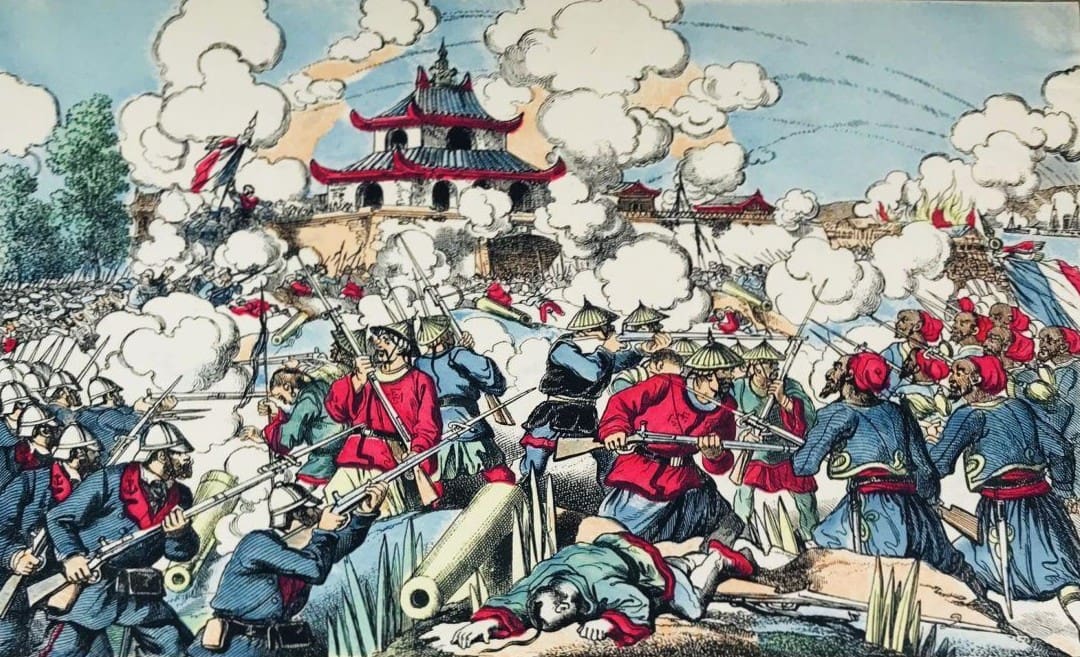
A dramatic clash between French colonial forces and the Chinese Black Flag Army!
The Son Tay Campaign in December 1883 was part of a series of escalatory conflicts between Chinese and French forces in Tonkin (northern Vietnam) over the period 1873-1886. For the French, the main protagonist was Liu Yongfu’s Black Flag Army, although Chinese regular forces played an increasing role as the conflict developed. Vietnamese forces also opposed the French, but they were generally less well trained and equipped.

Key facts
You may also be interested in these firsthand battlefield studies covering the Tonkin Campaign and Sino-French War: Tonkin Campaign / Sino-French War (1883-86) ♦ Sơn Tây Campaign (1883) ♦ Bắc Lệ Ambush (1884) ♦ Siege of Tuyên Quang (1884-85) ♦ Battle of Hòa Mộc (1885)
Google Map location of the Son Tay Citadel
🧭🥾 Walking the Battlefield
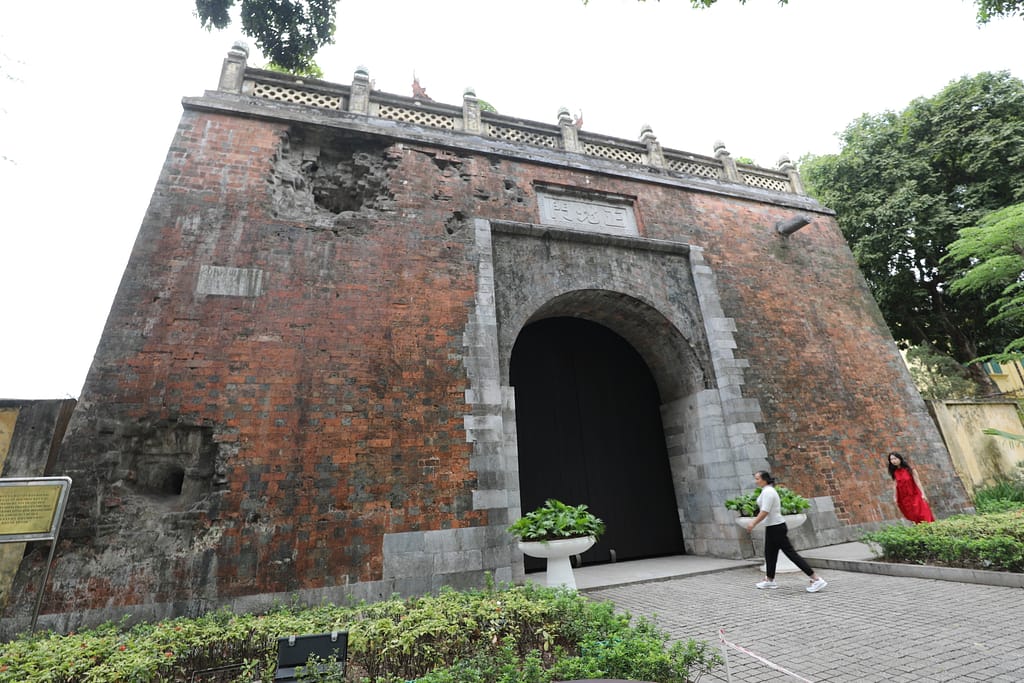
I visited Son Tay in April 2025 and explored the remnants of the old Citadel with its distinctive pagodas and bastion walls. All the outer works, including the Phu-Sa redoubt that gave the French so much trouble, are gone now. Most of the citadel walls have also been demolished or recycled over the years. The sections of wall and the gates that remain, along with the surrounding moat, demonstrate what a formidable defensive position this must have been in the 1880s. Fortunately, portions of the wall, including one of the main gates, the distinctive watchtower, the inner gate, and the central pagoda, are still intact and well-preserved.
Information on the Son Tay campaign was scarce until I found a copy of Admiral Courbet’s 14-page official report on the battle to the French Minister for the Navy and Colonies! A gold mine of detailed information on the battle.
Table of Contents
- Origins of the Black Flag Army
- The Black Flag War
- The road to war between France and China
- 🔒Opposing forces Involved in the Sơn Tây Campaign
- 🔒Assault on Sơn Tây
- 🔒Strategic significance of the Sơn Tây Campaign
- 🔒Images: Sơn Tây battlefield – Then and Now
- 🔒Images: Sơn Tây Citadel
- 🔒Sources
- 📚 Further Reading: Tonkin Campaign 1883-1886
- 🧭 Battlefield Travel Guide: Sơn Tây Campaign (1883)
- FAQ: Sơn Tây Campaign
Origins of the Black Flag Army
The Black Flag Army originated from remnants of the forces that had fought on the losing side in the Taiping Rebellion, a massive civil war in China from 1850 to 1864. Following the suppression of the rebellion in 1864, many displaced soldiers and bandits migrated southward into Tonkin (northern Vietnam). Among them was Liu Yongfu, who organised these groups into a cohesive fighting force known as the Black Flag Army. Initially, they operated as mercenaries, offering their services to the Nguyễn dynasty to combat local insurgents and maintain order in the region. They also, with approval from the Vietnamese authorities, gained revenue by taxing and extorting the civilian population.
The Black Flag Army’s name derived from their distinctive black banners. They established a reputation for military prowess and became a significant power in northern Vietnam, often operating with a degree of autonomy despite nominal allegiance to the Vietnamese court. Their reputation and the prospect of riches drew in European and American adventurers who served as junior officers with the Black Flags and trained them in modern techniques.
The Black Flag War
Garnier’s expedition 1873
The late 19th century was a period of intense colonial expansion, with European powers vying for influence across Asia. France had colonised southern Vietnam (Cochin China) between 1862 and 1867. French forces under Lieutenant Francis Garnier briefly conquered Hanoi in northern Vietnam (Tonkin) in 1873 but withdrew under a diplomatic settlement. Garnier was killed in battle with Chinese ‘Black Flag’ troops near Thủ Lệ on 21 December 1873.
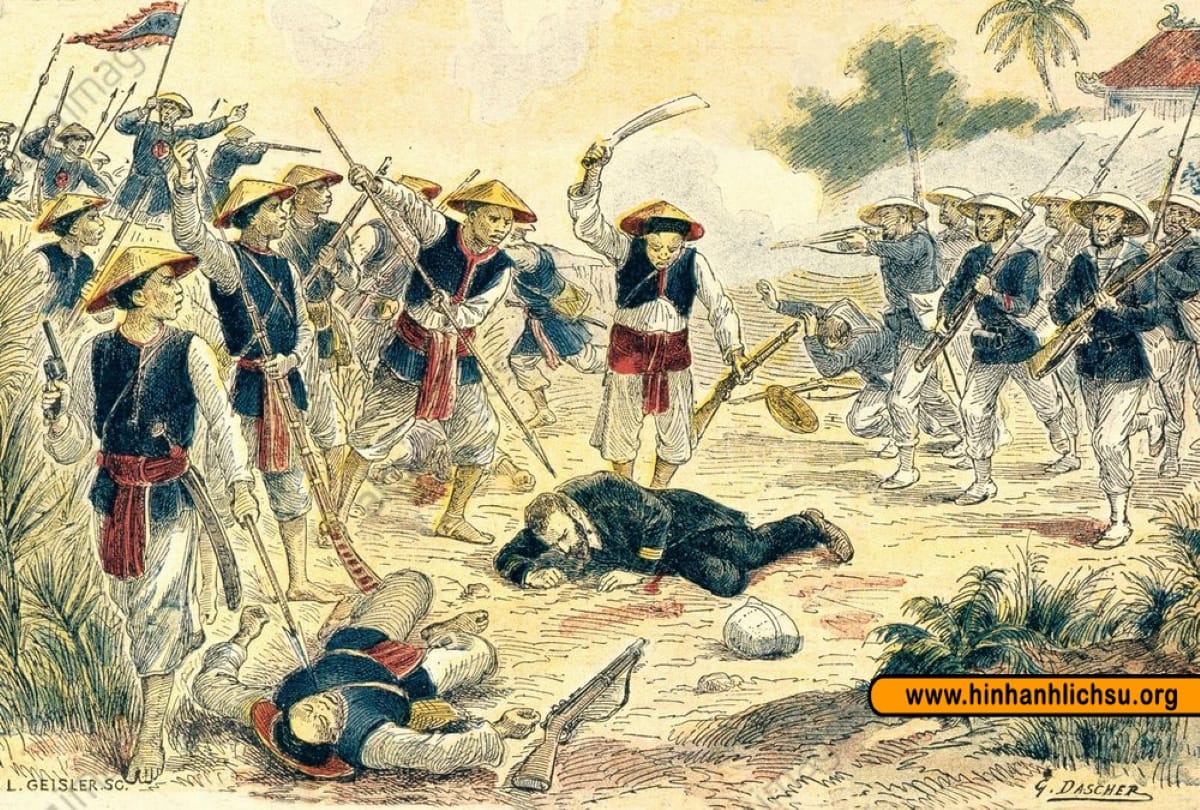
Seizure of Hanoi Citadel 1882
A second expedition led by Captain Henri Riviere in 1881 sought to resolve diplomatic tensions in Tonkin. On 25 April 1882, on his own initiative, Riviere bombarded and captured the Imperial Citadel of Hanoi, forcing the Governor and Vietnamese Emperor to accede to French demands. Both the Vietnamese and the Chinese Emperors were alarmed at this new French aggression.
With a weak army that was no match for the French, the Vietnamese emperor again sought assistance from Liu Yongfu’s Black Flag Army. Concerned by French expansion, the Chinese Emperor agreed to support the Black Flag Army covertly. The Chinese Yunnan and Guangxi armies also crossed the Tonkin border to occupy Lang Son, Bac Ninh, and other border towns. Alarmed at the prospect of war with China, French diplomats sought to defuse the situation and reach an agreement with the Chinese. Riviere ignored these diplomatic efforts and gained additional victories at Nam Dinh and Gia Cuc in March 1883.
Battle of Cầu Giấy (Paper Bridge)
On 10 May 1883, Liu Yongfu challenged the French to do battle by distributing insulting placards all over Hanoi.
“……You French bandits, if you think you are strong enough, send your rabble of soldiers to Phủ Hoài to fight in the open field with my tiger warriors, and then we will see who is the strongest. If you are afraid to come, cut off the heads of your chief men and present them to me. Then give back the cities you have taken. I am a merciful commander, and I will let you miserable ants live. But if you delay, my army will take your city and kill you all, and not even a blade of grass will mark where you stood….” (Excerpt from Liu Yongfu’s placard)
On 19 May, Henri Riviere led a force of about 550 troops to deal with the Black Flags. The two forces met at the ‘Paper Bridge’ (named because of the paper-product markets in the area) in Hanoi. Riviere had effectively walked into an ambush. The Black Flags were a well-equipped, disciplined force, and they outnumbered the French 3:1. As the French crossed the bridge, the Black Flags drew them into a close fight amongst the local villages. Liu Yongfu then deployed his highly-disciplined reserve force, which formed ranks and delivered a series of volleys into the now retreating French force. In a major French defeat, Riviere and 34 other French troops were killed and 46 were wounded.
Horrified by the defeat and Riviere’s death, the French government resolved to avenge the defeat and secure Tonkin for France. A new and larger expeditionary corps was raised and deployed to Tonkin.

The road to war between France and China
In October 1883, command of the Tonkin Expeditionary Corps was passed to Admiral Amédée Courbet. The French prepared for a major offensive to defeat the Black Flags. In parallel with military efforts, France also tried to persuade China to withdraw its support for Liu Yongfu, while seeking diplomatic support from the other European powers for the projected offensive. The Chinese refused to withdraw their garrisons of Chinese regular troops from Sơn Tây, Bắc Ninh and Lạng Sơn, even though they were certain to be engaged in any French offensive. In December 1883, French Prime Minister Jules Ferry authorised Admiral Courbet to attack Sơn Tây. The French cabinet accepted that an attack on Liu Yongfu’s Black Flags would risk war with China.
👉 Continue reading — this article is part of the BattlefieldTravels Deep Research Collection. The full 4,162-word analysis draws on eyewitness accounts of the 1883 Sơn Tây Campaign, operational records and reports, extensive GIS terrain analysis, firsthand fieldwork on the battlefield, and engagement with the local Sơn Tây community. Primary source examination, tactical conclusions, and notes & references that exist nowhere else in English. Try membership free for 7 days.
📚 Further Reading: Tonkin Campaign 1883-1886
This battle study nests within the broader analytical framework explored in the Research Hub, where operational methods, operating environments, armies, commanders, and weapons are examined across conflicts and eras. The links below connect related studies across the wider body of battlefield analysis on the BattlefieldTravels site.
⚔️ Explore all battle studies from the Tonkin Campaign 1883-1886
⚔️ Explore all battle studies involving the French Foreign Legion
🏛️Explore the museum of French colonial war historic artefacts
🗞️ For updates on new battlefield studies and research insights, you can subscribe to the Newsletter.
Related Battle Studies, Museum Pieces & Reading Resources
 ⚔️🔒Ambush at Bắc Lệ, Tonkin,
23-24 June 1884
 ⚔️ 1883–1886 Tonkin Campaign/ Sino-French War, Battle Studies
 🏛️ French Colonial Wars (1830–1940 ) Weapons and Equipment
 ⚔️🔒Battle of Hòa Mộc, Tonkin, 2-3 March 1885
 ⚔️🔒Siege of Tuyên Quang, Tonkin, 24 Nov 1884 – 3 March 1885
 📚 Tonkin Campaign/Sino-French War (1883–1886),
Recommended Reading
🧭 Battlefield Travel Guide: Sơn Tây Campaign (1883)
Getting There
- Nearest City: Sơn Tây, about 40 km west of Hanoi, Vietnam.
- Transport: Easy road access from Hanoi by bus, taxi, or private car. Journey takes around 60–90 minutes.
- Parking: Available near the Sơn Tây Citadel park and town centre.
Site Orientation
- Main Battlefield: The fortified citadel of Sơn Tây, defended by Black Flag forces, Chinese auxiliaries, and Vietnamese troops.
- Key Features: Citadel walls, gates, moats, and the surrounding plain where the French assault unfolded.
- Best Vantage Points: The surviving citadel gates and ramparts, which convey the defensive strength encountered by French columns in December 1883.
Museums & Visitor Centres
- Sơn Tây Citadel Park: Historic plaques and preserved walls; focus is mainly local heritage.
- Vietnam Military History Museum (Hanoi): Offers wider context on 19th-century French campaigns in Tonkin.
- Provincial museums: Smaller exhibits sometimes include references to the Black Flag Army and resistance.
On-Site Experience
- Interpretive Signage: Limited on French campaign events; bring secondary maps and accounts.
- Atmosphere: The moats, gates, and tree-lined ramparts provide a vivid sense of the 1883 assault’s challenges.
- Walking Routes: Short circuits along the citadel perimeter and through the bastions.
Nearby Points of Interest
- Đường Lâm Ancient Village: Preserved Vietnamese village with traditional houses.
- Ba Vì National Park: Offers landscapes and French colonial ruins from the later Indochina War period.
- Hanoi: About an hour away, with extensive museums, French colonial heritage, and relevant military archives.
Practical Tips
- When to Visit: Cooler, drier months (Nov–Feb) are best for walking the site.
- Facilities: Shops, cafés, and restrooms in Sơn Tây centre. The citadel area functions as a public park.
- Special Considerations: To understand the battle, consult French and Vietnamese accounts in advance — on site interpretation is limited.
FAQ: Sơn Tây Campaign
The French objective was to capture the fortified town of Sơn Tây, held by the Black Flag Army and allied Vietnamese forces, to secure control of the Red River corridor and establish a foothold for the conquest of Tonkin.
The expedition was commanded by Admiral Amédée Courbet, leading a composite Franco-naval force supported by marine infantry and artillery.
The main assault occurred between 14 and 17 December 1883, following preparatory bombardments and reconnaissance operations.
Courbet commanded around 9,000 men, while the defenders under Liu Yongfu’s Black Flags, Chinese Regulars, and Vietnamese regulars numbered roughly 11,000, entrenched behind multiple defensive lines.
The French stormed Sơn Tây on 16–17 December after heavy fighting. Despite success, the campaign exposed the cost of Tonkin operations and set the stage for further engagements in 1884–85.
The old citadel of Sơn Tây still exists as a historical site west of Hanoi, though much altered. The main battlefield area lies within modern urban expansion.
Subscribe to Battlefield Travels and receive a free E-Book Battlefield Guide
Unlock expert battlefield analysis, campaign reconstructions, and historical insights drawn from firsthand exploration and primary sources.
🗺️ You’ll receive:
🎖️ Exclusive historical insights you won’t find elsewhere
📘 A free eBook: 10 Tips for Exploring Historic Battlefields
📰 New battlefield studies straight to your inbox as they are published

⚔️ Go deeper — Members get exclusive access to the Deep Research Collection, Field Notes, and monthly Research Dispatches. Try membership free for 7 days, cancel anytime. From $9/month.