An audacious attempt to rescue American prisoners held in North Vietnam!
Operation KINGPIN. The Son Tay Raid, on the night of 20/21 November 1970, was a meticulously planned U.S. military operation aimed at rescuing American prisoners of war (POWs) from the Son Tay prison camp near Hanoi, North Vietnam. It was one of the most audacious operations in military history. The operation involved a joint force of U.S. Army Special Forces and Air Force personnel, plus a supporting diversionary effort by the US Navy. Despite the operation’s almost flawless execution, it failed to achieve its primary objective, as the POWs had been relocated to other sites prior to the assault.
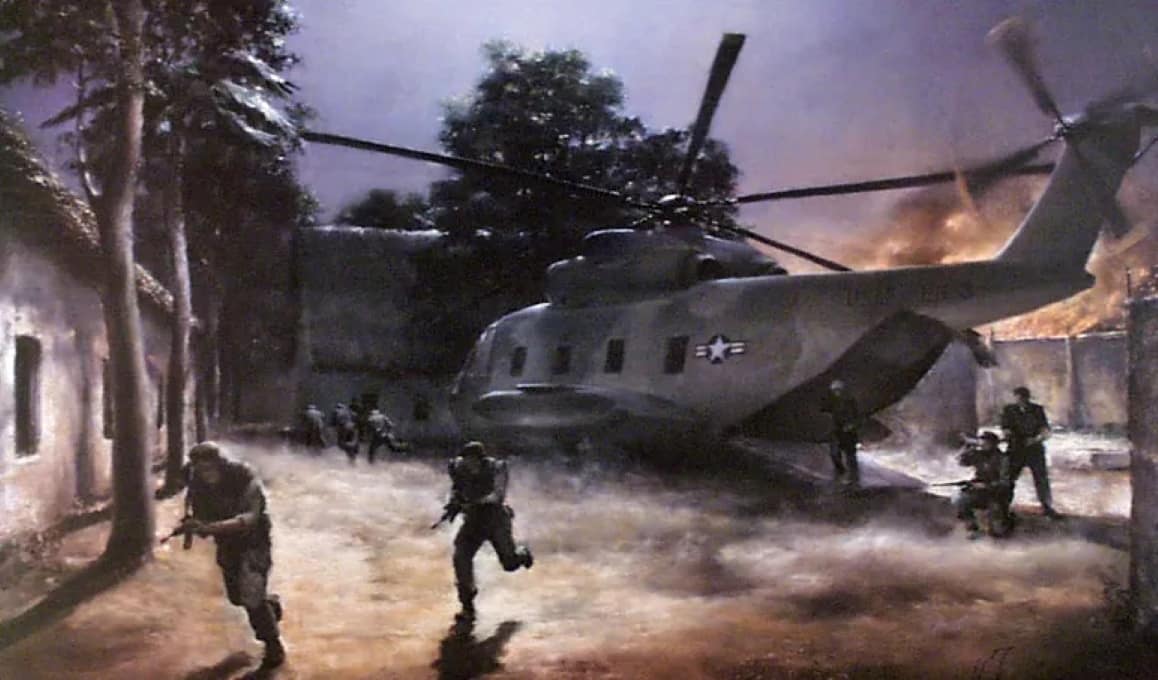
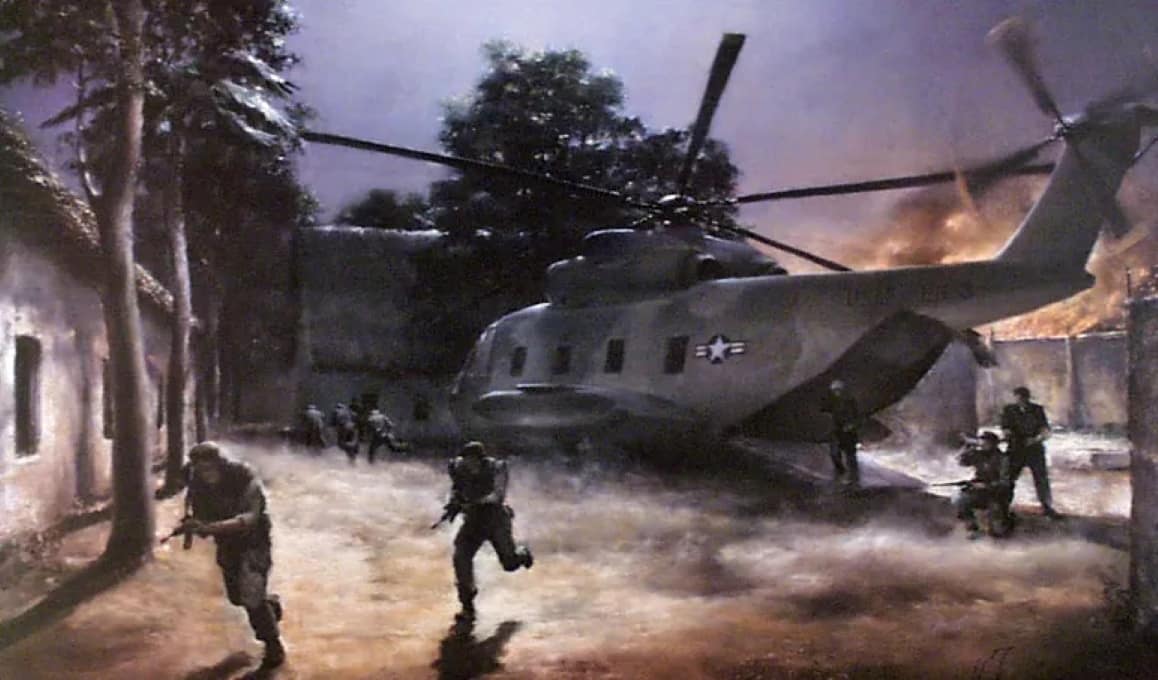
I met some of the Raiders when I was stationed at Fort Bragg in the late 1990s. They were at a stall outside the Post Exchange that was selling limited edition prints of Mikhail Nikiporenko’s ‘The Raid, Blue Boy Element’. Needless to say, I have a copy of the print, and I had some good conversations with the Raiders that day. I never thought I would be visiting the site of the raid 25 years later!
Key facts
Google Earth map – location of the Son Tay Raid
🎧 Prefer to listen? This article is also available as a 54-minute podcast
Tip: If Podbean overlay appears after pausing, click the × in the top-right corner to return to the player controls.
🧭🥾 Walking the Battlefield
I visited the site of the Son Tay Prison compound in April 2025. It was a genuine privilege to explore such a storied event, especially as a former assault helicopter guy! As a sub-unit/unit commander, I used the Son Tay Raid as a case study in mission, planning, rehearsal and execution. It really was a text-book example of how to pull together a joint team to plan and conduct an extremely complex mission in an extremely high threat environment.
The Son Tay prison site is not preserved in any way. Most of the buildings and the compound walls are now rubble. The entire site is overgrown with vegetation. Only the main prisoner barracks (Objective 5B for the raiders) is still standing, and in a very dilapidated state. I certainly think it will collapse at some stage. The area around the site is privately owned residential land and farmland, so access is very limited. I captured a range of range of images, 360 photos and video footage, including matching the current view to period photos where possible.
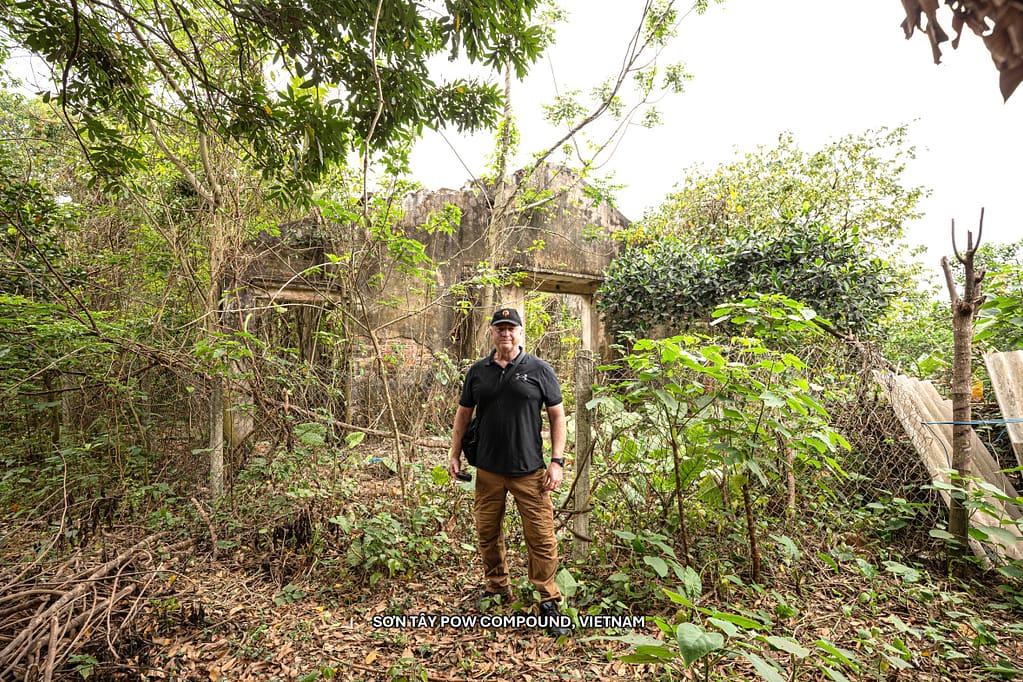
Table of Contents
- Radio transmission recordings from the Son Tay Prison Raid
- Operation IVORY COAST – planning the rescue
- Can we land a helicopter INSIDE the compound?
- 🔒Ground assault force
- 🔒Air component
- 🔒Son Tay Raid: Presidential mission approval
- 🔒Operation KINGPIN – staging for the Son Tay Raid
- 🔒Son Tay Raid: Air movement phase
- 🔒Assault on Son Tay prison compound
- 🔒Consequences and repercussions of the Son Tay Raid
- 🔒Son Tay Prison Compound Today
- 🔒Sources
- 📚 Further Reading: Vietnam War 1955-1975
- 🧭 Battlefield Travel Guide: Son Tay Prison Raid (1970)
Radio transmission recordings from the Son Tay Prison Raid
Operation IVORY COAST – planning the rescue
Strategic level planning
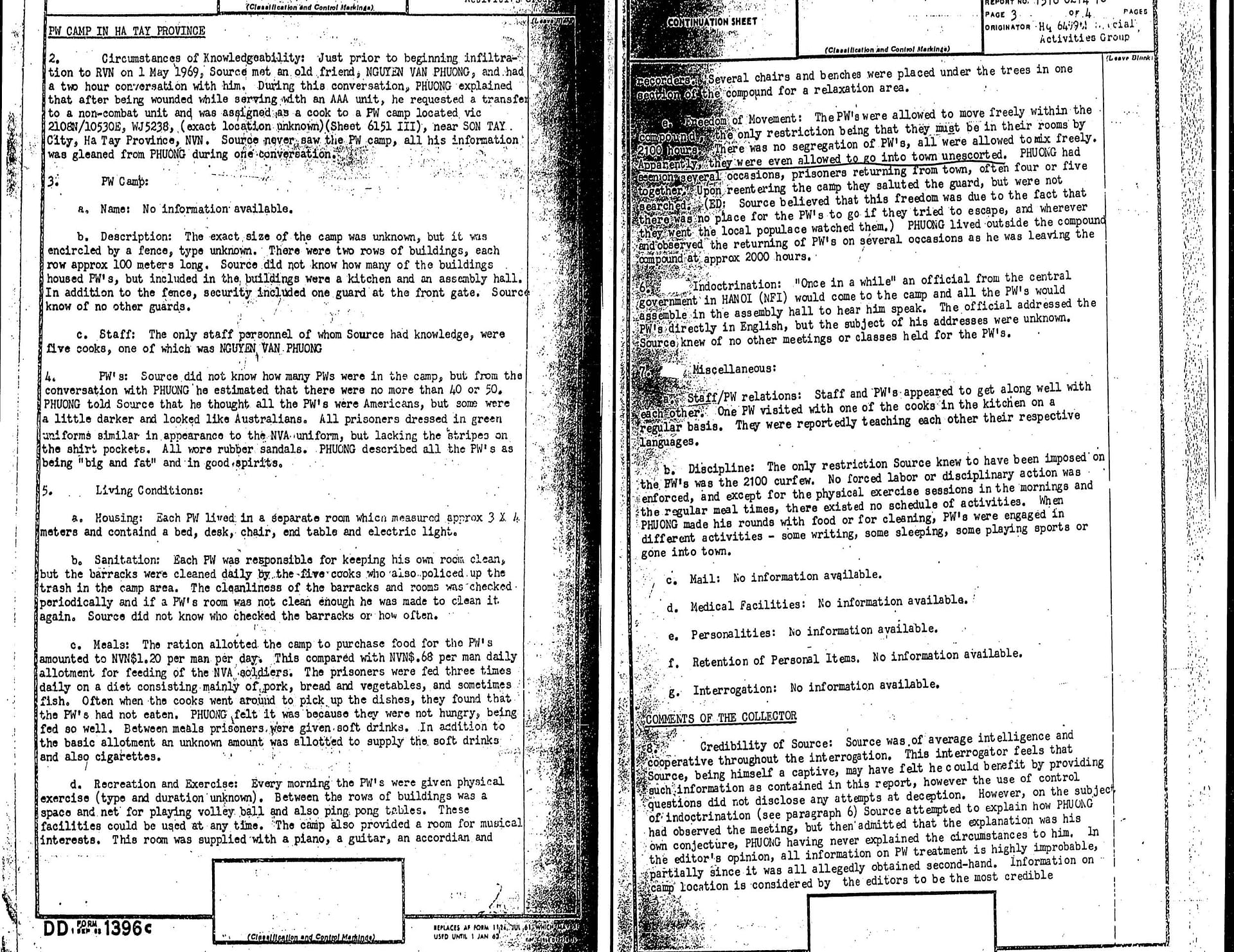
In May 1970, U.S. intelligence identified the Son Tay prison camp as a potential holding site for American POWs. SR-71 Blackbird reconnaissance missions showed clear indications that US prisoners were being held in the compound. The prisoners had laid out their laundry to spell ‘POW’ and other signs. In 1970, there was no standing Joint Special Operations Command to plan and execute the mission, so much of the early decision-making went all the way to the Chairman of the Joint Chiefs of Staff – General Earle Wheeler, and later Admiral Thomas Moorer. General Wheeler commissioned a feasibility study and by mid-June had concluded that a rescue mission was feasible.
Formation of the Task Force
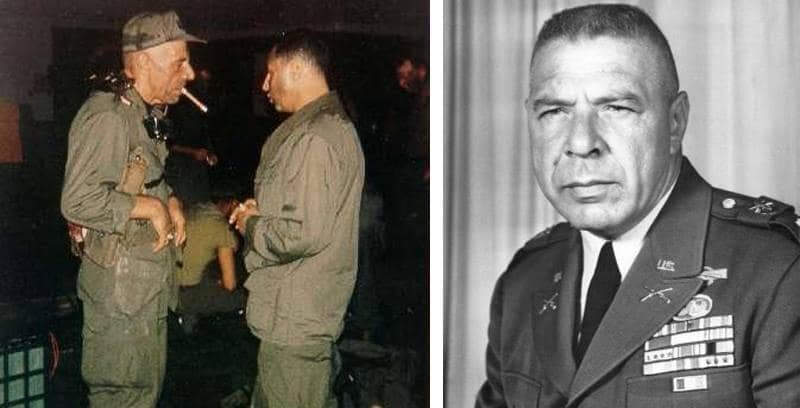
Brigadier General LeRoy J. Manor was appointed as the overall mission commander of the newly formed Joint Contingency Task Group, with Colonel Arthur D. “Bull” Simons as his deputy and ground assault leader. A team comprised of 56 Special Forces soldiers and 62 Air Force personnel were assembled for the operation. Training took place at Eglin Air Force Base in Florida, where a full-scale mock-up of the prison compound was constructed for rehearsals. All planning was conducted on a strict need-to-know basis. Despite the intense and realistic training, most of the Raiders did not know the actual raid objective until the final stages of preparation. The task force conducted more than 170 mission rehearsals to ensure precision and coordination.
Operational Planning
The date and time of the raid were crucial planning factors. The raid had to be executed at night for security, and the raid force would need sufficient moonlight to maintain formation (in the days before aviation night vision goggles). The raid would also occur during a ‘circadian low’ when the prison guard’s alertness would be reduced. Working within these constraints, there was a possible mission window between 21-25 October 1970. A second window would be available a month later around similar dates in November. Presidential approval was not gained in time, so the November window became the option.
Planning challenges
The raid planners had to resolve some complex challenges. The entire raid force first had to penetrate hundreds of kilometres of the most heavily defended airspace in the world. This would be resolved with the suppression of enemy air defences at multiple sites and an array of decoys and dummy attacks to dilute any North Vietnamese response.
The assault team would need to arrive over the compound on the first pass, there was no option for a ‘go around’ or second pass. With the limited navigation systems of the era, this was a major challenge. The solution was to lead the assault force with a C-130 Combat Talon, equipped with sophisticated navigation equipment and an early form of forward-looking infra-red system. The C-130 would fly directly over the compound, dropping flares to illuminate the objective for the following helicopters.
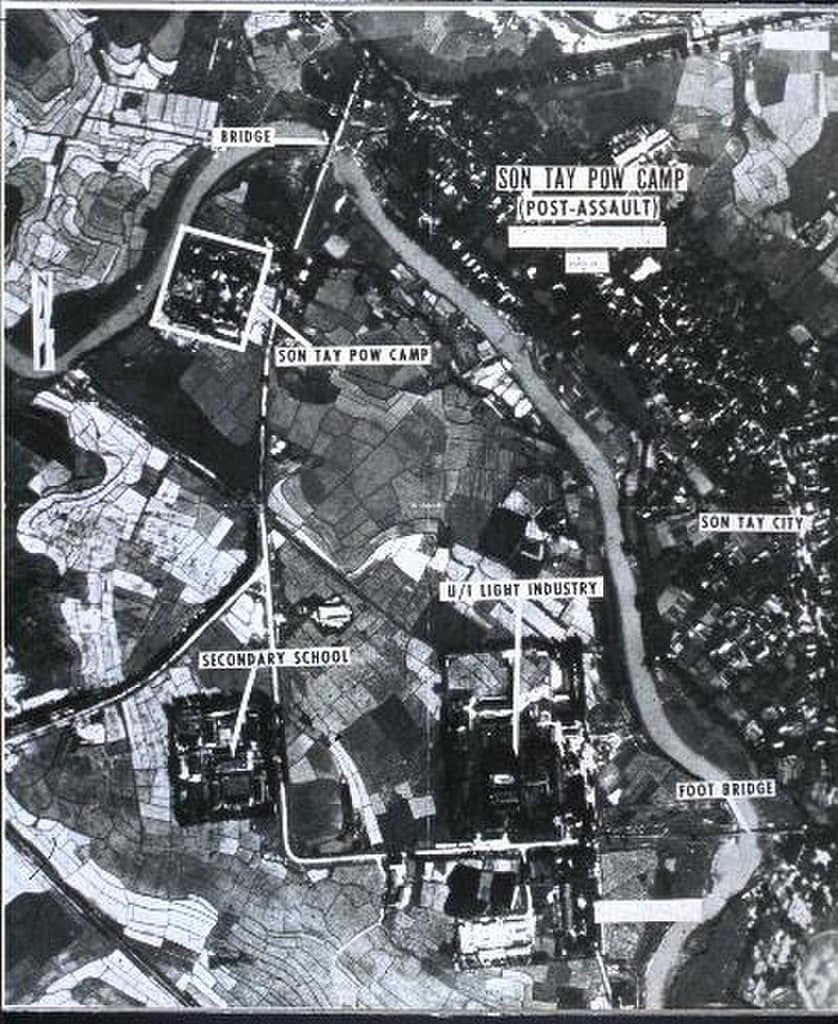
Can we land a helicopter INSIDE the compound?
The assault force needed to neutralise the guard force and preferably assault the compound from the inside-out, rather than from the outside-in, which would take much longer. The most appropriate helicopter to land inside the small compound would be the Army UH-I ‘Huey’. The problem was that the Huey was small and slow. It could only carry a maximum of 11 assaulters, it lacked the range to reach the objective, and it could not keep up with the C-130 Flight Lead.
Innovative solutions were tested, but the Huey just didn’t work. The crazy idea guys then proposed to use a much larger HH-3 Jolly Green Giant and crash-land it into the compound, in full knowledge that its rotor blades would strike the trees and buildings, and it would not be able to fly out again. Mattresses on the floor of the cabin would cushion the assaulters during the crash. The team settled on the HH-3 for the compound assault.
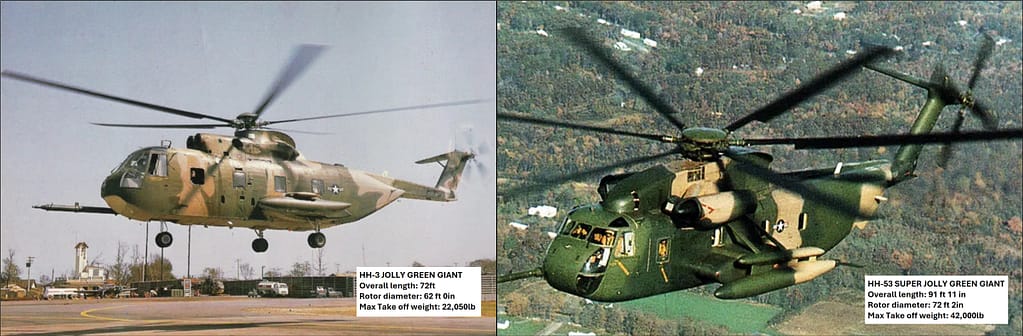
To suppress the prison guard force immediately before the assault force landing, one of the HH-53 helicopters would first fly over the compound and obliterate the guard towers, the guard barracks and any obvious targets with multi-barrelled 7.62mm Mini-guns
With the objective area assault plan coming together, the assault force needed to train as a mixed aircraft formation. The MC-130 would be flying at just above stall speed, while the helicopters were operating near their maximum limits. The force also needed to coordinate the arrival of the helicopters with the arrival of the A1-E Skyraider close air support aircraft. This was solved by launching the helicopters and the Skyraiders from different airfields and using navigation ‘doglegs’ to ensure they would all arrive on the objective at the same time.
👉 Continue reading — this article is part of the BattlefieldTravels Deep Research Collection. The full 5,255-word analysis draws on primary and secondary accounts of the 1970 Son Tay Raid (including the declassified Operations PLANS and ORDERS), GIS analysis and extensive fieldwork on the Son Tay Prison Compound site. Try membership free for 7 days.
📚 Further Reading: Vietnam War 1955-1975
This battle study nests within the broader analytical framework explored in the Research Hub, where operational methods, operating environments, armies, commanders, and weapons are examined across conflicts and eras. The links below connect related studies across the wider body of battlefield analysis on the BattlefieldTravels site.
⚔️ Explore all battle studies from the Vietnam War 1955-1975
⚔️ Explore all battle studies from the French Indochina War 1946-1954
🏛️Explore the museum of Vietnam War historic artefacts
🗞️ For updates on new battlefield studies and research insights, you can subscribe to the Newsletter.
Related Battle Studies, Museum Pieces & Reading Resources


🧭 Battlefield Travel Guide: Son Tay Prison Raid (1970)
Getting There
- Nearest City: Sơn Tây, about 40 km west of Hanoi, Vietnam.
- Transport: Best reached by car/taxi from Hanoi; allow 60–90 minutes depending on traffic.
- Parking: Street/lot parking around Sơn Tây Citadel park and town centre (arrange with local driver).
Site Orientation
- Key Landmarks: The 1970 prison-camp site area has been largely destroyed, demolished or repurposedy. SOn Tay CItadel is the most prominent landmark
- Walking Routes: Short loops around the citadel walls, gates, and moat; the surrounding streets approximate the urban fabric of the raid’s objective area.
- Best Vantage Points: Citadel gates and bastions provide the clearest sense of the town plan and approach corridors.
Museums & Visitor Centres
- Sơn Tây Citadel Park: Heritage plaques on the fort and town history (Vietnamese focus).
- Vietnam Military History Museum (Hanoi): Broader Vietnam War context, including POW/air operations.
- Hoa Lò Prison (Hanoi): Major POW museum (“Hanoi Hilton”) giving essential background to the raid’s purpose.
On-Site Experience
- Interpretive Signage: Minimal at the exact raid site; most detail must be brought by the visitor (maps, overlays, raid timelines).
- Atmosphere: A living Vietnamese town layered over the former camp area; the citadel precinct remains the most evocative anchor point.
- Guides & Tours: Some Hanoi-based war-history guides include Sơn Tây by arrangement; otherwise self-guided with prior research.
Nearby Points of Interest
- Đường Lâm Ancient Village: Traditional architecture and lanes just west of Sơn Tây.
- Ba Vì National Park: Scenic peaks and French colonial ruins (short drive from town).
- Thăng Long Imperial Citadel (Hanoi): UNESCO site linking earlier fortification traditions to the region’s military past.
Practical Tips
- When to Visit: Nov–Feb offers cooler, drier weather and clearer walking conditions.
- Facilities: Cafés, shops, and restrooms in Sơn Tây centre; no dedicated facilities at the former camp area.
- Special Considerations: Bring historic maps/satellite overlays to pinpoint features; be respectful when photographing public buildings and avoid restricted areas.
Subscribe to Battlefield Travels and receive a free E-Book Battlefield Guide
Unlock expert battlefield analysis, campaign reconstructions, and historical insights drawn from firsthand exploration and primary sources.
🗺️ You’ll receive:
🎖️ Exclusive historical insights you won’t find elsewhere
📘 A free eBook: 10 Tips for Exploring Historic Battlefields
📰 New battlefield studies straight to your inbox as they are published

⚔️ Go deeper — Members get exclusive access to the Deep Research Collection, Field Notes, and monthly Research Dispatches. Try membership free for 7 days, cancel anytime. From $9/month.
Read this a month ago and thoroughly enjoyed it! We knew the Sydnors at Ft Benning GA when he deployed to train & execute this mission. Thanks!
Those guys were legends. I met some of them at Bragg when I was in the 82nd back in the 1990s. They were at the PX signing copies of the print ‘The Raid’. A great honor to meet them.
Mick