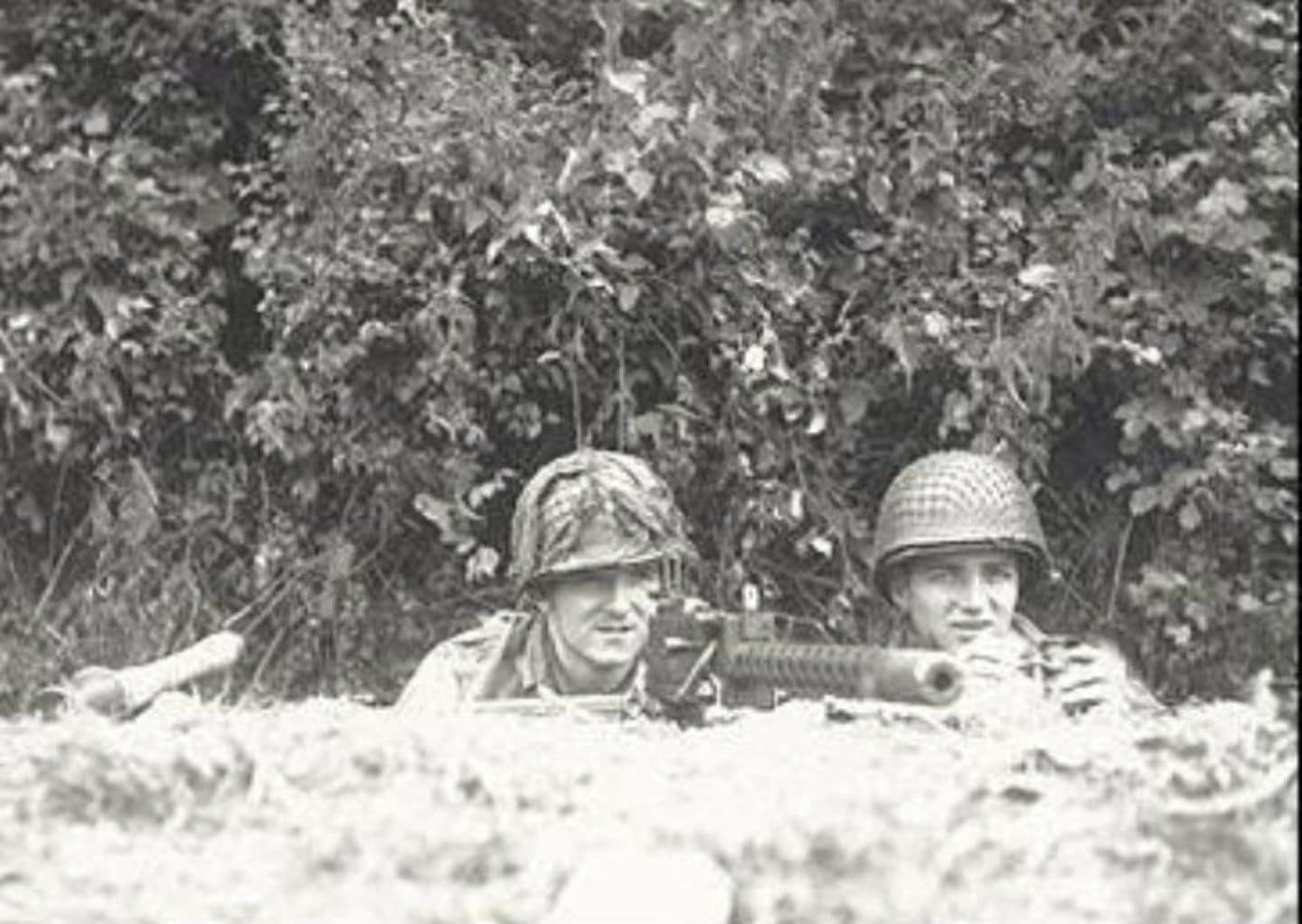
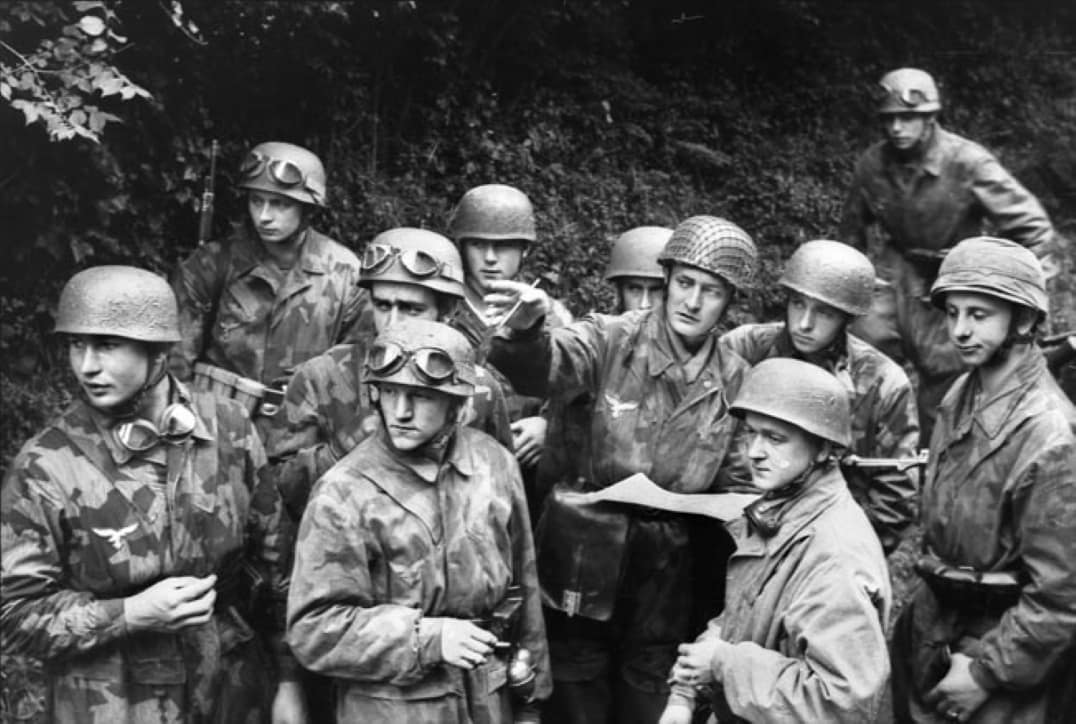
The 506th PIR, part of the 101st Airborne, executed key jumps on D-Day and fought across France, Holland and Belgium. Their combat record exemplifies elite airborne tactics and small-unit action.
Easy Company, 506th Parachute Infantry Regiment, fought from Normandy to the Netherlands, Bastogne and the final advance into Germany and Austria. Its story became famous through Stephen Ambrose’s Band of Brothers and the HBO series, but the history extends well beyond the screen. Test your knowledge with 20 questions covering the men, battles, commanders and campaigns of the real Easy Company.
September 2025, Randwijk, Netherlands. I am standing at the “Crossroads” made famous in Band of Brothers Episode 5: Crossroads. On 5 October 1944, a brief battle took place here, east of the village of Randwijk, in the area between the Rhine and the Waal known as “The Island.”
Firsthand battlefield analysis of the campaigns and battles involving the legendary Easy Company, 506th PIR ‘Band of Brothers’
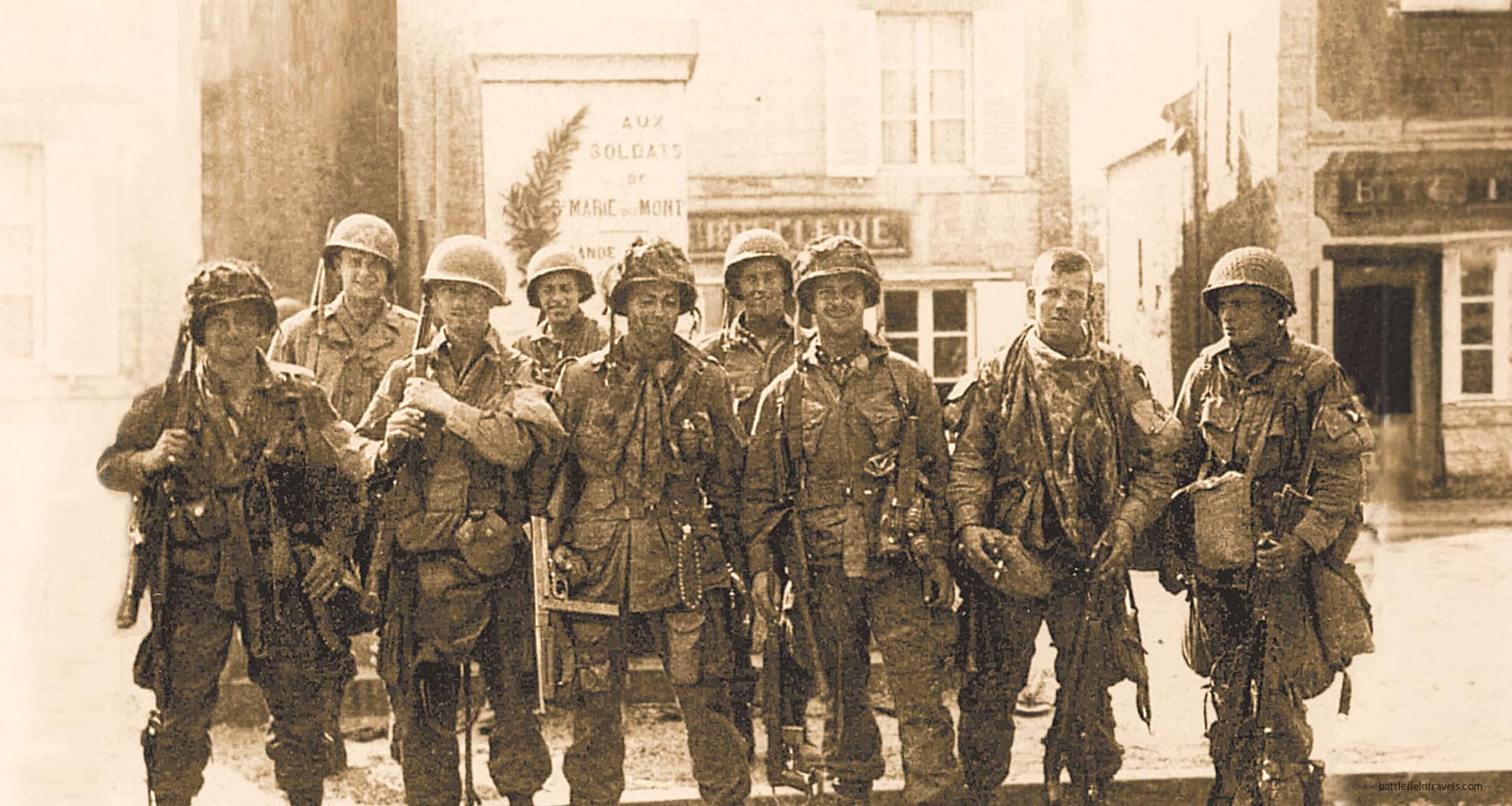
Members of Easy Company, 506th PIR ‘Band of Brothers’ in the main square of Sainte Marie du Mont on D-Day, 6 June 1944
Walking the battlefields of Easy Company 506th PIR ‘Band of Brothers’ (1944-45)
Easy Company, 2nd Battalion, 506th Parachute Infantry Regiment, 101st Airborne Division, immortalised by Stephen Ambrose and the HBO miniseries Band of Brothers, fought its way through some of the most consequential battles of the Northwest European theatre. Easy Company’s combat history formed part of the much larger World War Two battlefield campaigns examined across Battlefield Travels. Its first combat operations began during the D-Day and Normandy landings, before the company later fought in the Netherlands, the Ardennes and Germany.
This collection of battlefield studies goes beyond the screen. I have walked every battlefield in Easy Company’s combat journey, from the hedgerows of Normandy and the bridges of Holland to the frozen woods around Bastogne and the mountain approaches of Bavaria, combining first-hand fieldwork, terrain analysis, period maps and primary accounts to reconstruct how these battles actually unfolded on the ground.
Normandy
Easy Company’s war began around Sainte-Mère-Église in the early hours of 6 June 1944. Dick Winters landed outside the town, not far from where the aircraft carrying Easy’s commander, Lieutenant Thomas Meehan, crashed, killing all on board. Winters and a Little Group of Paratroopers clashed with a German convoy just east of Sainte-Mère-Église before moving south to the 506th PIR rally point near Sainte-Marie-du-Mont. Easy Company’s first major actions were the celebrated assault on the Brecourt Manor gun batteryand the subsequent push towards Carentan, where Easy Company fought through the causeways and streets to link the Utah and Omaha beachheads. The defensive battle at Bloody Gulch immediately afterwards tested them again as they held the line against German counterattacks.
Holland
Three months later, the 101st Airborne dropped into the Netherlands for Operation Market Garden, where Easy Company fought a very different campaign — a fast-moving, canal-lined, village-to-village battle across Eindhoven, Son Bridge, Helmond, Nuenen, Koevering and the defended dikes of ‘The Island’, fighting a small unit action against overwhelming odds at the Randwijk Crossroads. The terrain shifted again: open fields, raised roads, waterways, soft ground and long sightlines that favoured ambushes and defensive fire. At Son Bridge, Nuenen, and Koevering, I walked in the footsteps of Private David Webster, who so vividly described these actions in his memoir Parachute Infantry.
Ardennes
In December 1944, Easy Company entered the Ardennes to hold the line around Bastogne. Here, in the frozen woods of Bois Jacques overlooking Foy, they endured one of their harshest tests — days of bombardment, extreme cold, limited supplies and trench fighting under constant threat of German assault. Their advance into Foy in January 1945 became one of the 101st Airborne Division’s most lauded actions.
Bavaria and Austria
The final chapter carried Easy Company into Germany and Austria, through the collapsing Nazi heartland and ultimately to the symbolic heights of the Eagle’s Nest at Berchtesgaden.
This collection of Easy Company battlefield studies traces their combat path through detailed terrain analysis, field reconnaissance, period maps and first-hand accounts. I have walked the ground on every one of these battlefields, allowing readers to follow, step by step, one of the most celebrated combat journeys of the Second World War. New battlefield studies—from Bastogne and Foy to Nuenen, Veghel, Son Bridge, Koevering and Eagle’s Nest—will continue to expand the collection as they are completed.
🏛️Weapons & Equipment: World War Two
Explore original weapons and equipment from the Second World War, drawn from my personal collection.
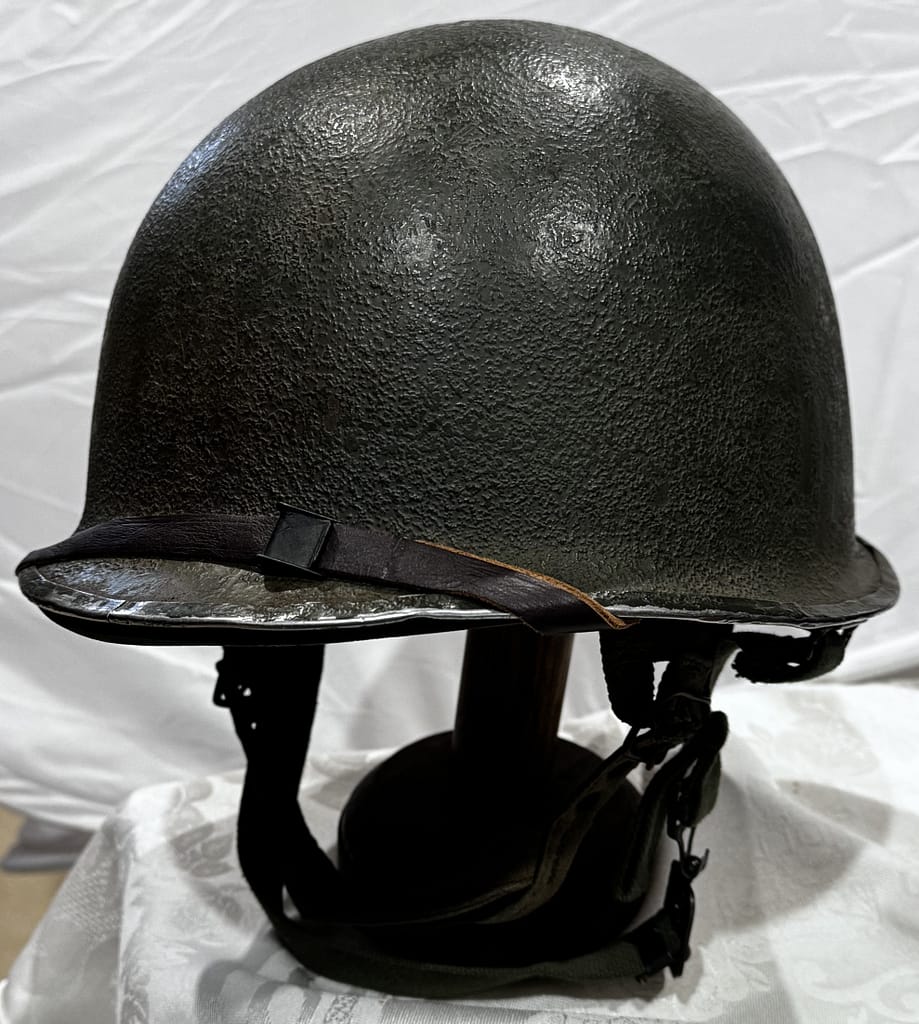
Uniforms, helmets, headgear, weapons, equipment from Australia, Britain, United States, Soviet Union, Germany, Japan, Italy, Romania, — personally handled, photographed and examined by me.
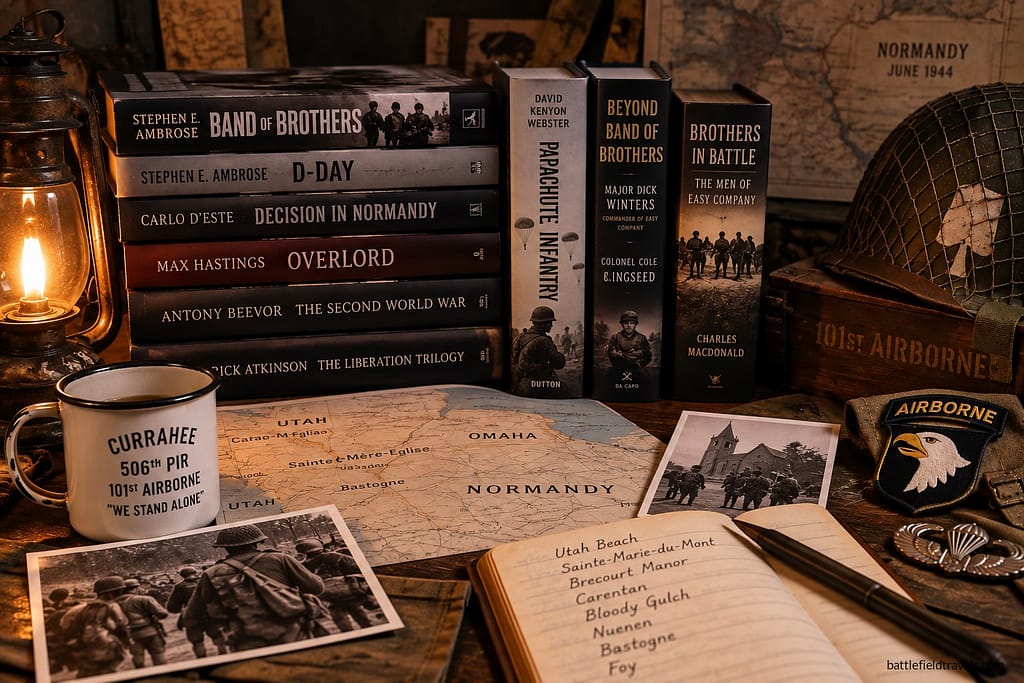
A curated reading list covering the Second World War across all theatres. Explore campaign histories, battlefield studies, biographies, primary accounts and contemporary military writings used in the research behind Battlefield Travels. The list will continue to grow as I publish new studies and draw upon new resources.
❓Easy Company Quiz. Test your ‘Band of Brothers’ knowledge!
Easy Company, 506th Parachute Infantry Regiment, fought from Normandy to the Netherlands, Bastogne and the final advance into Germany and Austria. Test your knowledge with 20 questions covering the men, battles, commanders and campaigns of the real Easy Company.
Here on 6 June 1944, Lieutenant Richard ‘Dick’ Winters, acting company commander for Easy Company, 506th Parachute Infantry Regiment, 101st Airborne Division, led a force of 23 paratroopers in a successful assault on a German force that outnumbered them more than 5 to 1. Easy Company’s action that day was depicted in the Steven Spielberg/Tom…
The Battle of Bloody Gulch was fought on 13 June 1944, just west of Carentan, Normandy. The battle followed immediately after 101st Airborne Division’s capture of Carentan on 12 June. Lightly armed American paratroopers from 506th (PIR) Parachute Infantry Regiment and 501st PIR faced a major armoured counterattack by the 17th SS Panzergrenadier Division and…
After the successful D-Day landings on June 6, the Allies needed to link the Utah and Omaha beachheads, build forces to cut off the Cotentin Peninsula, and be prepared for the expected German counterattack that they knew was coming. The key to all of that was the town of Carentan on the Cotentin – a…
As a former 82nd Airborne Division paratrooper, the town of Sainte-Mere Eglise in the Cotentin Peninsula of Normandy holds a special place for me. In the early hours of 6 June 1944, ahead of the Normandy Beach landings, the US 82nd and 101st Airborne Divisions parachuted into this area. The 82nd was to seize the…
September 2025, Randwijk, Netherlands. I am standing at the “Crossroads” made famous in Band of Brothers Episode 5: Crossroads. On 5 October 1944, a brief battle took place here, east of the village of Randwijk, in the area between the Rhine and the Waal known as “The Island.”
Authored by Mick Prictor, a retired military officer with 40 years’ service, and a military historian specialising in terrain-focused analysis of tactics, doctrine, and command decision-making in land warfare. His work draws on extensive battlefield fieldwork—more than 280 sites worldwide—and one of the world’s largest private collections of historic military arms, uniforms, and equipment. About me
⚔️ Go deeper — Members get exclusive access to the Deep Research Collection, Field Notes, and monthly Research Dispatches. Try membership free for 7 days, cancel anytime. From $9/month.
What battles and locations are covered in the Easy Company collection?
Published studies include Sainte-Mère-Église, Brecourt Manor, Carentan and Bloody Gulch. Forthcoming studies cover Eindhoven, Nuenen, Koevering, Market Garden approaches, “The Island,” Bastogne, Foy and Berchtesgaden.
How does this differ from other Band of Brothers resources?
These studies are grounded in on-site, terrain-focused fieldwork, supported by period maps, unit records and modern reconnaissance — allowing readers to understand the physical context of each battle.
Can readers follow Easy Company’s campaign chronologically?
Yes. The landing page and linked battle studies follow the unit’s real operational sequence from Normandy through Holland, the Ardennes and into Germany.
Are the battlefield locations accessible today?
Many sites — including Brecourt Manor, Carentan, Eindhoven, Bastogne and Foy — preserve key terrain features and can be visited in detail, with local museums and memorials along the route.
Will more Easy Company battlefield studies be added?
Yes. My 2025 and 2024 European reconnaissance trips will allow many additional locations to be documented and published, including Son Bridge, Nuenen, Koevering, the Crossroads, and Eagles Nest.
Subscribe to Battlefield Travels and receive a free E-Book Battlefield Guide
Unlock expert battlefield analysis, campaign reconstructions, and historical insights drawn from firsthand exploration and primary sources.
🗺️ You’ll receive:
🎖️ Exclusive historical insights you won’t find elsewhere
📘 A free eBook: 10 Tips for Exploring Historic Battlefields
📰 New battlefield studies straight to your inbox as they are published
Claim Your Free Battlefield Travel Guide
Get your free e-book, exclusive tips, and updates on new battlefield studies.
Thank you!
You have successfully joined our subscriber list.
⚔️ Go deeper — Members get exclusive access to the Deep Research Collection, Field Notes, and monthly Research Dispatches. Try membership free for 7 days, cancel anytime. From $9/month.
Here on 6 June 1944, Lieutenant Richard ‘Dick’ Winters, acting company commander for Easy Company, 506th Parachute Infantry Regiment, 101st Airborne Division, led a force of 23 paratroopers in a successful assault on a German force that outnumbered them more than 5 to 1.
Easy Company’s action that day was depicted in the Steven Spielberg/Tom Hanks series ‘Band of Brothers’ Episode 2 ‘Day of Days’.
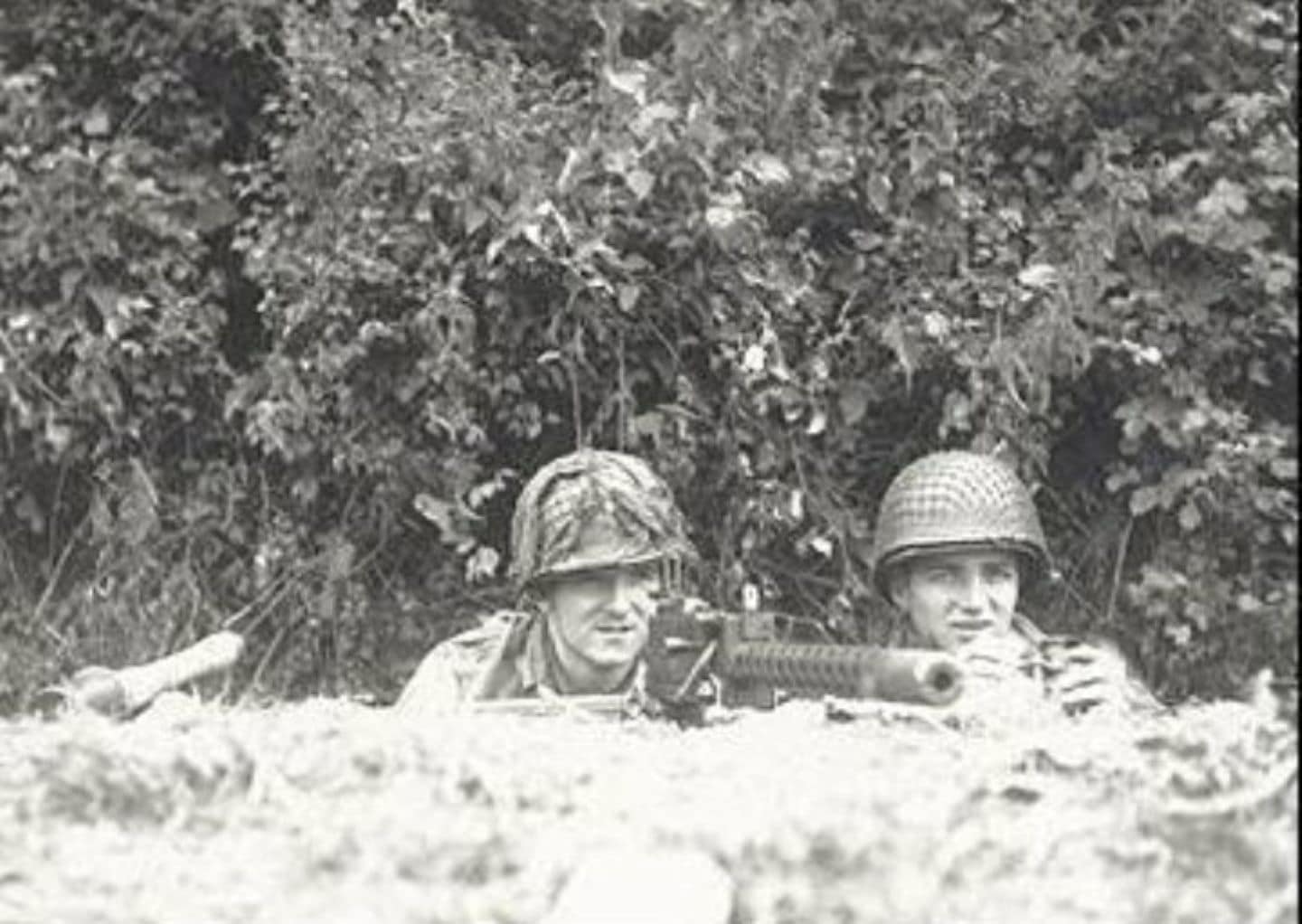
The Battle of Bloody Gulch was fought on 13 June 1944, just west of Carentan, Normandy. The battle followed immediately after 101st Airborne Division’s capture of Carentan on 12 June. Lightly armed American paratroopers from 506th (PIR) Parachute Infantry Regiment and 501st PIR faced a major armoured counterattack by the 17th SS Panzergrenadier Division and Fallschirmjäger-Regiment 6. The timely arrival of the American 2nd Armored Division saved the day and turned the battle into an allied victory.
After the successful D-Day landings on June 6, the Allies needed to link the Utah and Omaha beachheads, build forces to cut off the Cotentin Peninsula, and be prepared for the expected German counterattack that they knew was coming. The key to all of that was the town of Carentan on the Cotentin – a port city with major road and rail junctions.
The town was defended by tough German paratroopers from Fallschirmjäger-Regiment 6