Skip to content
Home » Arsenal

Arsenal

Reconstructing industrial and armaments heritage through Historic Site visits, terrain analysis, primary sources and on-site research
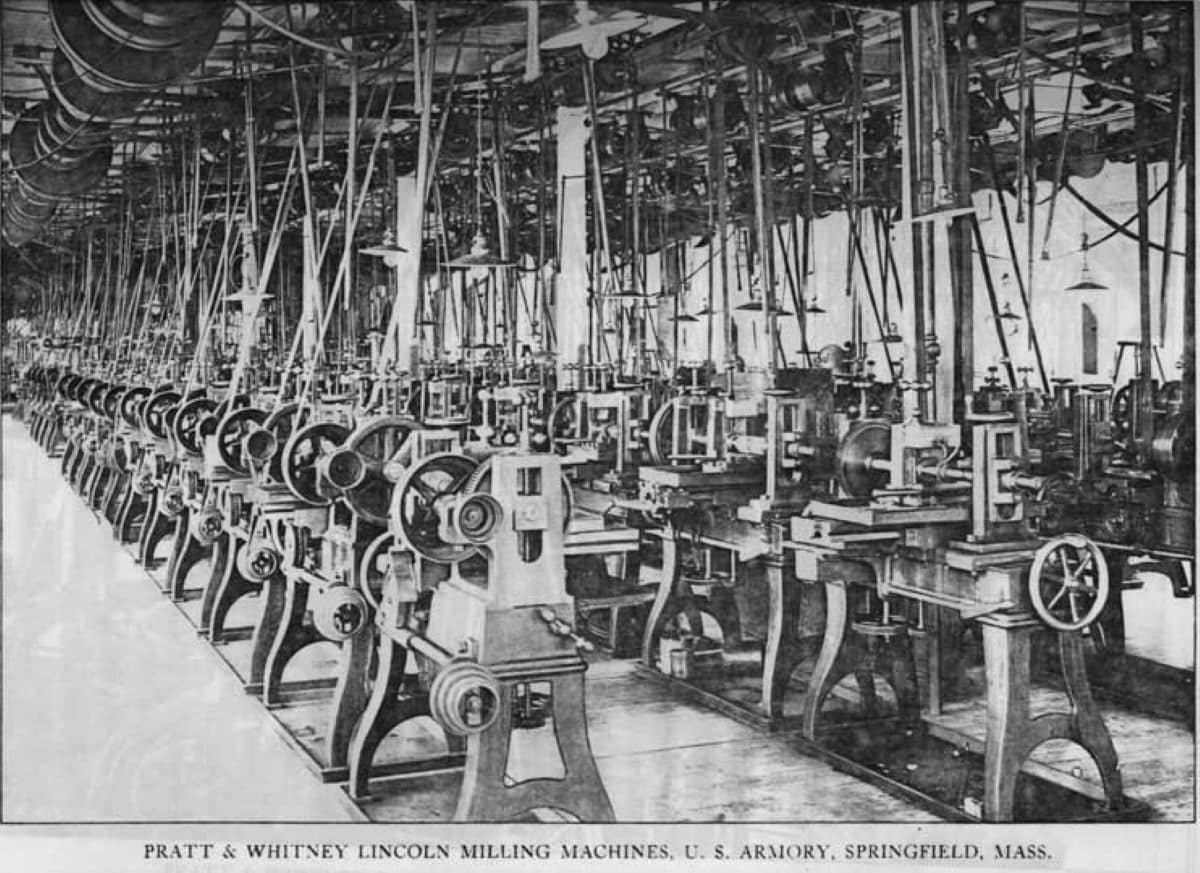
Pratt & Whitney precision arms manufacturing machine shop, Springfield Armory, Massachusetts

Walking the ground of the great armaments factories

Historic industrial sites and armouries offer a unique perspective on warfare, technology and national preparedness. Unlike battlefields, where tactics and terrain dominate, these sites reveal the industrial foundations that made warfare possible — from the forging of iron and steel to the mass production of rifles, artillery and ammunition.

This collection examines key historic sites such as the Springfield Armory, Colt’s Manufacturing Company and the Lithgow Small Arms Factory, alongside upcoming studies of Winchester, Tredegar and Harpers Ferry. Each location is approached through detailed on-site exploration, archival research, period photographs and analysis of surviving machinery, tooling and production layouts.

Together, these studies reveal how industrial capacity, technological innovation, and the organisation of labour shaped national military capabilities from the 18th through to the 20th century.


Historic site studies

Below are all current BattlefieldTravels historic site studies, including major armaments factories. New studies will be added as further battlefields are walked and analysed.

  • ⚔️ Springfield Armory, Massachusetts
    1794-1968

    ⚔️ Springfield Armory, Massachusetts 1794-1968

    Springfield Armory produced the weapons that armed America’s soldiers from the Revolution to Vietnam. Founded in 1794, it became the birthplace of U.S. precision manufacturing — a model for armouries worldwide. Today, the historic complex houses Springfield Technical Community College, carrying forward the legacy of industry, innovation, and craftsmanship. The old Main Arsenal building preserves…

    Read the full battle study →


  • ⚔️ Lithgow Small Arms Factory, NSW,
    1912 – Present

    ⚔️ Lithgow Small Arms Factory, NSW, 1912 – Present

    Hidden in the Blue Mountains of New South Wales, the Lithgow Small Arms Factory turned raw steel into the rifles that armed Australia’s soldiers in two world wars and beyond. When it was founded in 1912, it represented the leading edge of precision manufacturing. Today, its workshops and machinery remain as a rare time capsule…

    Read the full battle study →


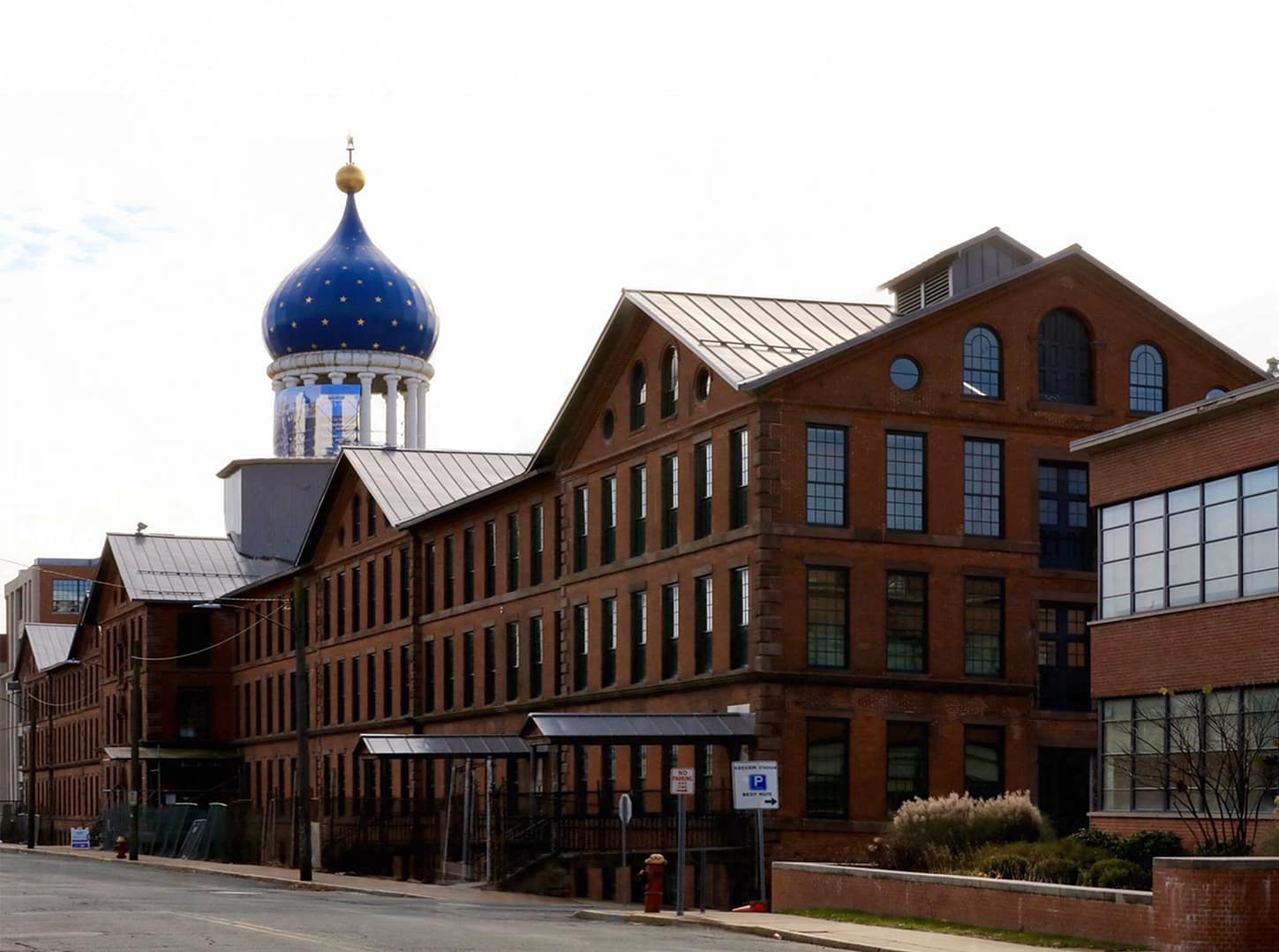
  • ⚔️ ‘Coltsville’ Colt Firearms, Hartford CT,
    1855-1994

    ⚔️ ‘Coltsville’ Colt Firearms, Hartford CT,  1855-1994

    The Colt Revolver is synonymous with America’s Old West, and this is where they were made! Samuel Colt was an American inventor and industrialist renowned for revolutionizing repeating firearms with his invention of the Colt revolver. In 1836, Colt patented his first revolver design, the Colt Paterson, which featured a rotating 5-round cylinder, and single-action…

    Read the full battle study →


Why are historic armouries and weapons factories important for battlefield studies?

Industrial sites reveal the technological, logistical and manufacturing foundations behind battlefield outcomes. Understanding how rifles, artillery, ammunition and equipment were designed and produced provides crucial context for why armies fought the way they did — including rate of fire, reliability, mobility, tactical doctrine and sustainment. Battles cannot be fully understood without knowing the industrial capabilities that armed the soldiers who fought them.

How does studying armouries enhance our understanding of a battle?

Many tactical decisions were shaped by what weapons could and could not do. The ability of an army to produce accurate rifles, robust artillery, smokeless powder, interchangeable parts or high-volume ammunition directly influenced battlefield performance. Armouries show the origin of these capabilities, revealing why certain weapons dominated specific eras and how this shaped tactics and terrain use.n, and Northern Europe.

What can onsite exploration of factories and foundries reveal that archives cannot?

Walking the production floor, examining surviving machinery and understanding the spatial layout of these sites provides insight into manufacturing scale, workflow, labour intensity and bottlenecks. This physical evidence often clarifies why certain weapons were produced in limited numbers, why some designs succeeded or failed, and how industrial strengths or weaknesses translated into battlefield effects.

How do industrial sites fit into the wider military history narrative?

Industrial centres like Springfield, Colt, Lithgow and Harpers Ferry acted as the technological engines of the conflicts they supported. They influenced national strategy, logistics, arms distribution and doctrine. Studying them connects the front line with the production line, completing the picture between technological innovation, operational planning and battlefield realities.

Do these sites still retain features useful for modern research?

Yes. Many historic armouries preserve original workshops, tooling, storage buildings, firing ranges, test facilities or foundations. These physical remnants allow researchers to assess scale, capacity and technological sophistication, offering a rare opportunity to interpret weapons history in its original environment.


Subscribe to Battlefield Travels and receive a free E-Book Battlefield Guide

Unlock expert battlefield analysis, campaign reconstructions, and historical insights drawn from firsthand exploration and primary sources.

🗺️ You’ll receive:

🎖️ Exclusive historical insights you won’t find elsewhere

📘 A free eBook: 10 Tips for Exploring Historic Battlefields

📰 New battlefield studies straight to your inbox as they are published


Selected works on historic arms manufacturers

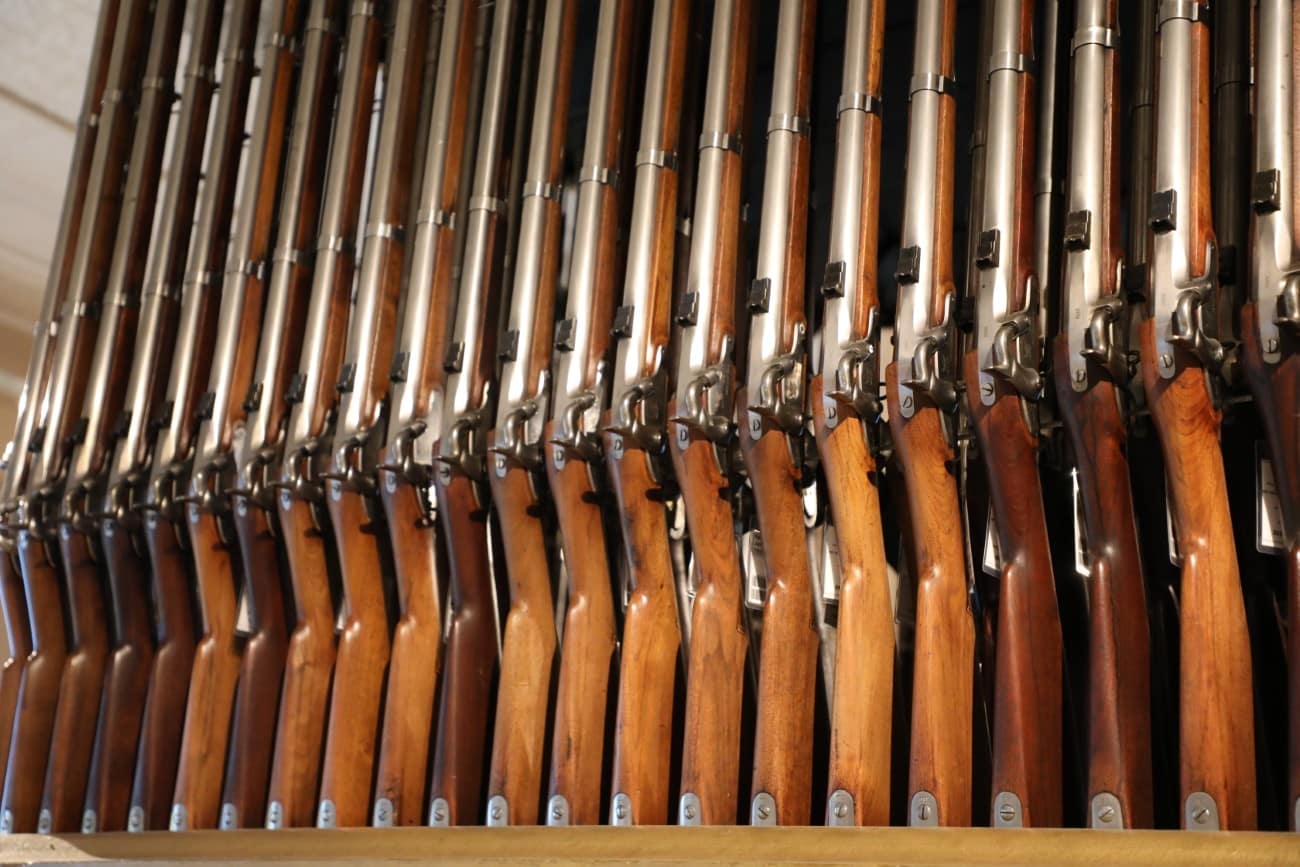
Historic arms manufacturers - Springfield Armory, Massachusetts - The 'Organ of Muskets'
Historic arms manufacturers – Springfield Armory, Massachusetts – The ‘Organ of Muskets’

Small arms manufacturers

The industrial history of arms manufacture reveals as much about the evolution of warfare as any battlefield. From eighteenth-century arsenals to twentieth-century small-arms factories, armouries served as the technological backbone of national power. The pattern armouries of Charleville, Enfield, and Potsdam standardised flintlock musket production for their respective armies, providing interchangeable weapons for the massed formations of the Napoleonic era.

During the nineteenth century, the United States established federal armouries at Springfield and Harpers Ferry, pioneering mechanised production and precision tooling. Their influence extended globally, inspiring facilities such as Enfield in Britain and the Lithgow Small Arms Factory in Australia. The rise of private industry — exemplified by Colt, Winchester, and Remington — introduced mass production, revolvers, and repeating rifles that reshaped tactics and logistics.

In the Confederacy, the Tredegar Iron Works of Richmond became the South’s principal arsenal, producing cannon and shot under wartime siege conditions. By the mid-twentieth century, industrial small-arms production had evolved into a global enterprise blending engineering, chemistry, and state control. These armouries symbolised the convergence of craftsmanship and mechanisation that defined modern warfare and remain key heritage sites for military historians today.


Reading

The reference collection below includes the key books and references I have used in preparing for and exploring historic arms manufacturing facilities around the world.

Armouries

Springfield Armory Shoulder Weapons 1795-1968
Springfield Armory Shoulder Weapons: 1795-1968, by author and military historian Robert W. D. Ball, thoroughly documents the 255 basic models of shoulder arms produced by the Springfield Armory from its inception in 1794 until its closing in 1968.
The northern armory: The United States Armory at Springfield Massachusetts, 1795-1859
A must have for any collector of American arms. This pairs with Whisker’s other work on Harpers Ferry Arsenal.
The M1 Garand, 1936-1957
The M1 Garand was the battle rifle issued to American forces during World War II and the Korean War. It was the first semiautomatic rifle design to be used by combat forces in any army of the world. It was standardized in 1936 and saw its first combat in the Philippines in December 1941. Few other rifles have developed such a distinguished record as both a battle rifle and a match target rifle. General George Patton called the M1 Garand the greatest battle implement ever devised. The semiautomatic M1 Garand gave the American soldier a distinct firepower advantage over enemy soldiers armed with bolt action rifles that had to be cocked before each shot. During World War II, nearly four million M1 Garands were built at the Springfield National Armory and Winchester Repeating Firearms factories. They were issued in every theater of the war.
Samuel Colt and Oliver Winchester: The Lives and Careers of America’s Most Influential Gunsmiths
As the civilian entrepreneur and the soldier became increasingly interdependent, the new corporate executives of arms companies became tycoons. Mass production and increasingly sophisticated marketing techniques helped to create the national and international arms merchant, a model upon which global governments expanded. With few exceptions, the nature of the modern firearm as an everyday utility enabled these giants to arm any ideology, or both sides of any conflict. In the manner that Samuel Colt broke open the single-shot tradition in hand weapons, Oliver Fisher Winchester and his celebrated rifle shared the title of “the gun that won the West.” In the arena of portable arms, these two men dominated much of the technological and promotive aspects of 19th century weaponry, alternating between resisting and collaborating with rivals. While Colt created the first effective revolver mechanism for the handgun based on the technology of the ship’s wheel, it was Oliver Winchester who instituted 140 years of branding dominance by virtue of the first reliable repeating rifle.
Sale
Samuel Colt: Arms, Art, and Invention
Samuel Colt (1814–1862) first patented his “Colt” revolver in 1835 and thereby redefined the architecture of handguns. This stunning book is the first to present in detail the evolution of his most famous invention and to document the unsurpassed Colt firearms collections held by the Wadsworth Atheneum. Colt designed his revolvers with an artistic sensibility––paying particular attention to form and beauty and juxtaposing colors and finishes to heighten the visual effects. He was also one of the first American manufacturers to secure celebrity endorsements and to commission paintings by renowned artists like George Catlin to promote his arms. Colt’s standards for excellence, industrial foresight, and quest for market domination are explored in light of primary documents that reveal his constant battles to protect his patents.
The Colt Model 1860 Army Revolver
The definitive history of the Colt Model 1860 Army revolver. This book serves as a reliable, easy-to-use reference for the collector and military historian. Using records from the Colt factory, regimental books, Ordnance Department/Bureau and the Treasury Department and surviving examples of the revolvers, the author has amassed a database that contains approximately 8,000 complete pistols. First placed on the market only six months before the start of the war, the Colt Model 1860 Army Revolver quickly became the preferred sidearm for both sides of the conflict. 8.5×11; 900+ b&w photos.
’51 Colt Navies
Here is a book that is a welcome addition to the bookshelves of the antique gun collecting fraternity. ’51 Colt Navies is the first antique gun book devoted entirely to the Model 1851 Colt Navy – one of the most popular Colt antique models. After six years of research, and fourteen months of writing, the author gives you the full story of the ’51 Navy. This book has approximately 167 plates. These plates show approximately 220 individual photos-not just a lot of “pretty” ’51 Navies to fill up space, for each photo shows a model, sub-model, variation, marking, exterior part, as well as charts, letters, maps, documents, etc. Each plate is discussed in the text. All of the Hartford models and sub-models are pictured and described. The three London models are pictures and described also. U.S. Martials (U.S. Army and U.S. Navy), foreign martials (England, Austria, Canada, and AUstralia), 4 screw cut for stock models, metallic cartridge models, and Brevetes are included.


FAQ – Arms Manufacturers Reading Room

How were the books in this Arms Manufacturers reading list selected?

This reading list is curated to focus on works that examine arms manufacturers in their historical, industrial, and military contexts. Priority is given to studies that explore the relationship between weapon design, production, doctrine, and battlefield use, rather than company histories written solely from a commercial or promotional perspective.

Does this reading list cover both small arms and heavy weapons?

Yes. The selection includes works on small arms manufacturers as well as firms involved in artillery, ammunition, and industrial-scale weapons production, where these had a significant impact on military capability and operational practice.

Why are arms manufacturers important to the study of military history?

Arms manufacturers shape the weapons available to soldiers and commanders, influencing tactics, training, logistics, and ultimately decision-making on the battlefield. Understanding how weapons were designed, produced, and adopted helps explain why armies fought the way they did in different periods.

Are these books focused on technical detail or historical analysis?

While technical aspects are addressed where relevant, the emphasis is on historical analysis—how weapons moved from design to service, how they were employed in combat, and how industrial capacity constrained or enabled military operations.

Is this intended to be a complete list of all arms manufacturers?

No. This is a selective reading list intended to guide further study rather than provide exhaustive coverage. It focuses on manufacturers whose products had demonstrable influence on warfare and military practice.


Subscribe to Battlefield Travels and receive a free E-Book Battlefield Guide

Unlock expert battlefield analysis, campaign reconstructions, and historical insights drawn from firsthand exploration and primary sources.

🗺️ You’ll receive:

🎖️ Exclusive historical insights you won’t find elsewhere

📘 A free eBook: 10 Tips for Exploring Historic Battlefields

📰 New battlefield studies straight to your inbox as they are published


The old Springfield Armory administration building is now the Springfield National Armory Historic Site.

⚔️ Springfield Armory, Massachusetts
1794-1968

Springfield Armory produced the weapons that armed America’s soldiers from the Revolution to Vietnam. Founded in 1794, it became the birthplace of U.S. precision manufacturing — a model for armouries worldwide. Today, the historic complex houses Springfield Technical Community College, carrying forward the legacy of industry, innovation, and craftsmanship. The old Main Arsenal building preserves original machinery and an outstanding collection of historic weapons.

Lithgow Small Arms Factory, circa 1920s, after wartime expansion during WW1

⚔️ Lithgow Small Arms Factory, NSW,
1912 – Present

Hidden in the Blue Mountains of New South Wales, the Lithgow Small Arms Factory turned raw steel into the rifles that armed Australia’s soldiers in two world wars and beyond. When it was founded in 1912, it represented the leading edge of precision manufacturing. Today, its workshops and machinery remain as a rare time capsule — a story of Australian industry, innovation, community and wartime service.

Photo-align-2019-2-2

⚔️ ‘Coltsville’ Colt Firearms, Hartford CT,
1855-1994

The Colt Revolver is synonymous with America’s Old West, and this is where they were made! Samuel Colt was an American inventor and industrialist renowned for revolutionizing repeating firearms with his invention of the Colt revolver. In 1836, Colt patented his first revolver design, the Colt Paterson, which featured a rotating 5-round cylinder, and single-action cocking.